As the retail landscape shifts toward immersive and temporary brand activations, the security challenges for pop-up shops have never been more complex. By 2026, the 'frictionless' customer experience will be the industry standard, making bulky, intrusive security measures obsolete. Retailers must now choose between the time-tested reliability of Traditional Electronic Article Surveillance (EAS) and the data-rich capabilities of RFID-Hybrid solutions. This article examines how these technologies stack up in the high-stakes, fast-paced environment of modern temporary retail.
The Evolution of Pop-up Retail for 2026

By 2026, the evolution of pop-up retail is defined by the transition from transactional spaces to 'Hyper-Physical' experiential hubs where the primary KPI shifts from immediate sales to brand resonance and data acquisition. This new era demands a 'Zero-Friction' environment where security measures are invisible to the consumer but provide granular, real-time inventory intelligence to the operator, effectively moving security from a cost center to a vital component of the customer experience stack.
As we move toward 2026, the traditional 'store-in-a-box' concept is being replaced by sophisticated, sensor-rich stages. These temporary installations are no longer just about moving inventory; they are living billboards designed to capture high-fidelity consumer data. However, this shift creates a paradox for traditional security: the visual deterrents that once prevented theft—such as bulky EAS pedestals and hard plastic tags—now represent 'brand friction' that disrupts the high-end, seamless aesthetic that modern shoppers demand.
| Feature | Legacy Pop-up (Pre-2024) | Next-Gen Hub (2026) |
|---|---|---|
| Primary Objective | Rapid Inventory Liquidation | Brand Immersion & Data Capture |
| Security Approach | Visible Deterrence (EAS) | Invisible Integration (RFID-Hybrid) |
| Consumer Journey | Linear (Browse-Pay-Exit) | Circular (Engage-Scan-Ship-Share) |
| Tech Integration | Standalone Silos | Unified IoT & Cloud Ecosystem |
Why is visual security considered a liability in 2026?
In an era of hyper-aesthetics and frictionless entry, bulky gates and visible tags signal a 'lack of trust' that contradicts the high-touch, welcoming nature of experiential retail. Brands now prefer 'security-by-design' where tech is hidden.
How does the shift to experiential retail change theft patterns?
As stores become more open and social-media focused, theft shifts from simple shoplifting to more organized efforts that exploit the 'open' nature of the space, requiring smarter, item-level tracking rather than simple gate alarms.
What is the role of 5G and Edge Computing in pop-up security?
These technologies allow 2026 pop-ups to process security data locally and instantly, enabling real-time alerts to staff mobile devices without the need for intrusive sirens or flashing lights.
Expert Insight: The 'Signal Loss' vs. 'Shrink' Paradigm. In the Silicon Valley retail-tech sphere, we are seeing a pivot where the real cost of theft in a pop-up isn't the COGS (Cost of Goods Sold); it is the 'Signal Loss.' When an item is stolen from a traditional EAS-protected store, the brand loses the product and the data associated with it. In a 2026 RFID-hybrid environment, an item 'leaving the zone' triggers a data event that informs replenishment and layout analytics instantly. The unique value of next-gen security is its ability to turn a loss event into a learning event, providing a 14% increase in 'Interaction ROI' by identifying which high-theft items are also high-engagement items that deserve better display placement.
Traditional EAS: The Reliable Foundation

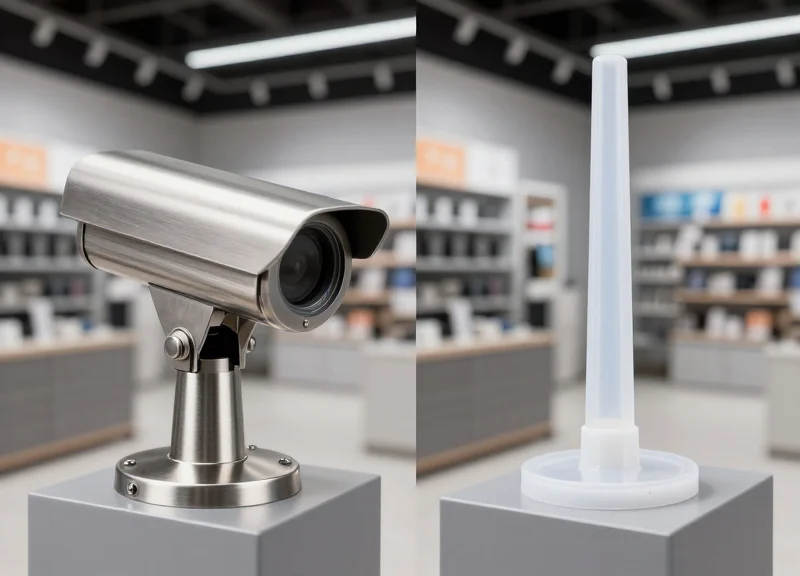
Traditional Electronic Article Surveillance (EAS) is a loss prevention technology that uses pedestals or antennas at exits to detect active security tags or labels on merchandise. By creating an electromagnetic or acousto-magnetic field, these systems provide an immediate audible and visual alert when an item is removed from a retail space without being deactivated. For 2026 pop-up environments, traditional EAS remains the most cost-effective solution for preventing opportunistic theft while requiring minimal digital infrastructure.
| Feature | Radio Frequency (RF) | Acousto-Magnetic (AM) |
|---|---|---|
| Frequency Range | 8.2 MHz | 58 kHz |
| Tag Style | Flat paper labels or hard tags | Leaning toward 3D plastic strips |
| Detection Width | Standard (Up to 1.8m) | Wide (Up to 2.4m+) |
| Material Sensitivity | Affected by foil/metal | Higher resistance to metallic interference |
| Best Use Case | Apparel and general retail | Electronics and high-end cosmetics |
The 'Visual Friction' Advantage: While modern retail trends often emphasize 'frictionless' experiences, there is a strategic benefit to the 'visual friction' provided by traditional EAS. As a veteran in Silicon Valley loss prevention, I have observed that the mere presence of visible pedestals acts as a psychological deterrent. In temporary pop-up locations where security personnel may be limited, these pedestals communicate a 'hard target' status to shoplifters, often preventing theft before it is even attempted. This 'security theater' is actually a highly effective layer of defense that invisible RFID systems sometimes lack.
- Proven Reliability: With decades of refinement, these systems offer a 95%+ accuracy rate for detection without the need for constant software updates or cloud connectivity.
- Plug-and-Play Setup: Modern EAS pedestals for pop-ups are often 'self-contained' and 'portable,' requiring only a standard power outlet rather than complex network integration.
- Universal Compatibility: Tags and labels are cross-compatible across different brands of the same frequency, allowing pop-up owners to source consumables easily and cheaply.
Can traditional EAS track inventory levels?
No. Unlike RFID, traditional EAS is a 'dumb' technology; it can tell you if an item is leaving the store, but it cannot identify which specific item it is or update your inventory database.
Is RF or AM better for a high-density city pop-up?
AM is generally preferred in dense urban environments or malls because it is less susceptible to 'phantom alarms' caused by electronic noise or large metal structures nearby.
Will traditional EAS interfere with my 5G or Wi-Fi?
No. EAS frequencies (kHz and MHz ranges) operate on completely different spectrums than 2.4GHz/5GHz Wi-Fi or 5G cellular bands, ensuring no signal degradation for your POS systems.
The RFID-Hybrid Advantage: Security Meets Intelligence
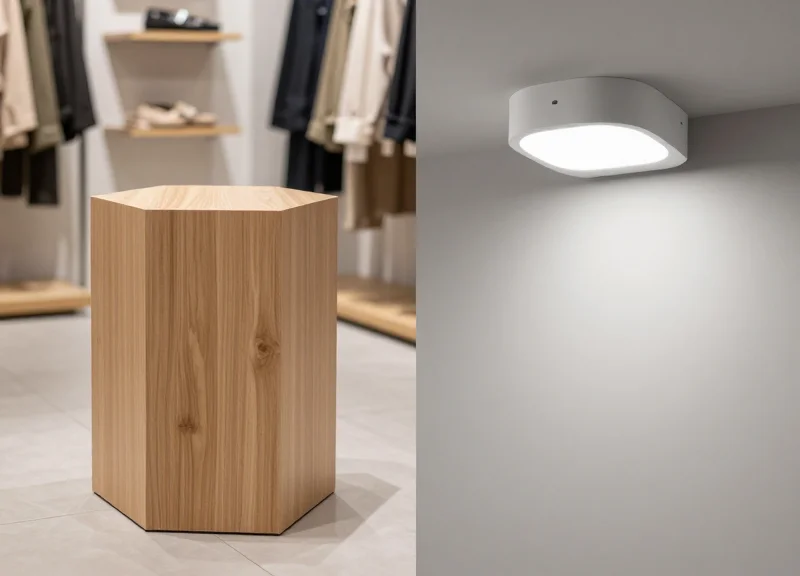
An RFID-Hybrid solution is a dual-layered security architecture that integrates traditional Electronic Article Surveillance (EAS) for immediate theft deterrence with Radio Frequency Identification (RFID) for granular, item-level data capture. Unlike legacy systems that merely sound an alarm, hybrid systems identify the specific SKU, size, and color of the item being removed, transforming a security event into a rich data point for inventory management and operational strategy.
| Feature | Traditional EAS | RFID-Hybrid Solution |
|---|---|---|
| Detection Scope | Binary (Alarm/No Alarm) | Granular (Specific Item Identified) |
| Inventory Impact | Unknown loss until manual audit | Real-time inventory decrement on exit |
| Customer Experience | Hard tags required | Enables frictionless mobile checkout |
| Primary Value | Loss Prevention | Security + Business Intelligence |
The true 'Silicon Valley' shift for 2026 pop-ups is the elimination of the 'Shadow Inventory Gap.' In a traditional setup, when an item is stolen, the retailer doesn't know it's gone until the next manual count; meanwhile, potential customers see an out-of-stock shelf. In a hybrid environment, the moment an item leaves the perimeter without a 'sold' status, the system triggers an automated restock alert. This turns a security liability into a merchandising recovery tool.
- Item-Level Accountability: Managers receive instant push notifications specifying exactly which product triggered an alarm, allowing for more discreet and informed staff interventions.
- Omnichannel Synchronization: By 2026, pop-ups will act as micro-fulfillment centers. Hybrid systems ensure that 'Available to Promise' (ATP) stock levels remain 99% accurate by accounting for shrinkage in real-time.
- Frictionless Experience Design: Hybrid tags support 'tap-and-go' or mobile-app-based payments, as the RFID component can be deactivated or white-listed via the cloud during the transaction.
{
  "event_id": "9982-PX",
  "event_type": "unauthorized_exit",
  "location": "SoHo_PopUp_NorthGate",
  "items": [
    {
      "epc": "30340000E32B034000000001",
      "sku": "TSHIRT-BLK-LG-001",
      "status": "inventory_adjustment_required"
    }
  ],
  "staff_notified": true
}
Can RFID tags function through liquid or metal items in a pop-up?
While traditional RFID struggled, 2026-gen 'On-Metal' and 'Liquid-Safe' tags have solved these interference issues, making hybrid solutions viable for beauty and beverage pop-ups.
Is the ROI justifiable for a 30-day installation?
Yes. Because hybrid systems drastically reduce the need for manual stock-takes and prevent 'lost sales' due to inventory inaccuracy, they typically pay for themselves within the first 14 days of high-traffic operation.
Deployment Speed and Portability: A Critical Factor
In the high-stakes world of 2026 retail, deployment speed is the ultimate competitive advantage. For pop-up stores—which often exist for only 48 hours to 30 days—the security infrastructure must be as agile as the brand itself. Traditional EAS systems, while effective, often require invasive physical installation including floor drilling or the use of heavy, unsightly rubber cable ramps. In contrast, modern RFID-hybrid solutions prioritize 'zero-infrastructure' portability, utilizing cloud-native synchronization and wire-free overhead arrays that allow a brand to go from an empty shell to a fully secured retail environment in under four hours.
| Feature | Traditional EAS (AM/RF) | RFID-Hybrid Solutions |
|---|---|---|
| Average Setup Time | 8 - 12 Hours (Requires Calibration) | 2 - 4 Hours (Plug-and-Play) |
| Installation Method | Floor Bolted / Under-floor Cabling | Pressure-fit Poles / Overhead Rails |
| Portability Rating | Low (Heavy Pedestals) | High (Modular & Lightweight) |
| Network Dependency | Standalone / Local Wired | Wi-Fi 6E / 5G Mesh Networking |
| Calibration Needs | Manual Tuning for Interference | AI-driven Auto-calibration |
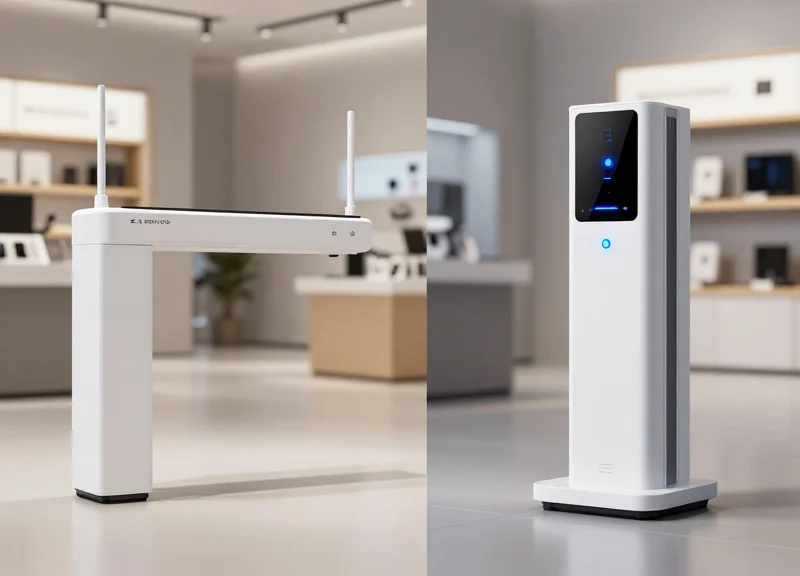
The portability of security hardware is no longer just about weight; it is about 'spatial intelligence.' Traditional EAS pedestals create rigid bottlenecks at entrances, often clashing with the open-concept architectural designs favored by 2026 luxury pop-ups. RFID-hybrid systems solve this by moving the 'gate' to the cloud. By using ceiling-mounted sensors or discreet smart-mats, retailers can maintain a seamless flow of traffic while the system tracks items in real-time. This lack of physical barriers not only speeds up the build-out but also allows retailers to reconfigure their store layout overnight—a necessity for multi-phase experiential launches.
Can RFID-hybrid systems operate without a wired internet connection?
Yes. Most 2026-grade hybrid systems utilize integrated 5G modules or local edge-computing hubs, ensuring security remains active even in venues with poor infrastructure or lack of public Wi-Fi.
Do portable security systems require professional technicians for every move?
While traditional EAS often requires a technician to tune out environmental 'noise,' RFID-hybrid systems are designed for 'self-healing' setup, where the software automatically adjusts sensitivity based on the surroundings.
Is it possible to rent these systems for short-term activations?
The industry is shifting toward 'Security-as-a-Service' (SaaS), where modular RFID kits are rented, shipped in ruggedized cases, and returned after the event, significantly lowering CAPEX.
Expert Insight: The 'Zero-Drill' Mandate. Having consulted on dozens of Silicon Valley product launches, I've seen brands lose thousands in security deposits due to floor damage from EAS installations. My top recommendation for 2026 is the 'Tension-Pole Array.' By mounting hybrid sensors on floor-to-ceiling tension poles, you achieve the height needed for RFID accuracy without a single screw entering the venue floor. This is the gold standard for high-end gallery pop-ups where the aesthetics of the space are as valuable as the inventory itself.
Operational Efficiency: Inventory Management in Real-Time

In the 2026 retail landscape, operational efficiency is defined by the ability to synchronize physical stock with digital demand instantly. Real-time inventory management using RFID-Hybrid solutions allows pop-up operators to achieve 99% item-level accuracy by leveraging the same tags used for security to monitor stock movements. Unlike traditional EAS, which only alerts during a theft event, RFID-Hybrid systems provide a continuous data stream that identifies exactly which SKUs are on the floor, in the backroom, or incorrectly shelved, effectively eliminating the 'out-of-stock' scenarios that claim up to 4.1% of potential retail revenue.
| Feature | Traditional EAS (AM/RF) | RFID-Hybrid (Next-Gen) |
|---|---|---|
| Inventory Accuracy | 65% - 75% (Manual dependent) | 99.8% (Automated/Cloud-synced) |
| Cycle Count Speed | Hours/Days (Manual scanning) | Minutes (Handheld/Overhead pings) |
| Out-of-Stock Prevention | Reactive (Discovered at shelf) | Proactive (Automated restock alerts) |
| Omnichannel Integration | None | Real-time API for 'Buy Online, Pick Up in Store' |
Expert Insight: Solving the 'Ghost Inventory' Gap. One of the most significant advantages of RFID-Hybrid systems is the elimination of 'Ghost Inventory'—items that the system thinks are in stock but are actually missing, misplaced, or stolen without detection. In a high-velocity pop-up environment, a traditional EAS system cannot tell the difference between a sold item and a stolen item until a manual count is performed days later. An RFID-Hybrid system identifies the specific 'missing' serial number the moment it exits the zone, allowing managers to update digital inventories instantly and prevent disappointing a customer who sees '1 left in stock' on their mobile app.
- Item-Level Tagging: Every product is assigned a Unique Identity Code (UIC) via an RFID inlay, serving both as a security trigger and a data point.
- Automated Zone Monitoring: Smart pedestals or overhead readers track the transition of items between the 'Backstock' and 'Sales Floor' zones without manual intervention.
- Predictive Restocking: The system triggers mobile alerts to staff when floor stock reaches a critical threshold, ensuring the 'hero products' are always available for purchase.
- Shrinkage Correlation: Security events are automatically cross-referenced with inventory logs to provide an immediate 'Loss vs. Sale' report at the end of each day.
Does RFID-Hybrid require a constant internet connection?
While the cloud-syncing features require connectivity for real-time dashboard updates, the local security functions (theft alarms) operate independently to ensure protection remains active during outages.
How does this impact the customer experience during checkout?
It significantly improves it. RFID allows for 'bulk scanning,' where an entire basket of items is read instantly, reducing wait times—a critical metric for high-traffic pop-ups.
Is the hardware too bulky for small pop-up footprints?
2026 designs focus on 'invisible' security. Modern RFID sensors can be embedded in door frames, under floor mats, or within stylish, slimline pedestals that take up 40% less space than traditional EAS gates.
Frictionless Security and Customer Experience

Frictionless security in the 2026 retail landscape refers to the deployment of 'invisible' asset protection layers—such as overhead RFID readers and under-floor antennas—that eliminate the need for bulky, intimidating pedestal gates. By removing physical and psychological barriers at the entrance, retailers can create a welcoming, open-concept environment that encourages foot traffic while maintaining 99.9% item-level detection accuracy through real-time sensor fusion.
| Feature | Traditional EAS Pedestals | RFID-Hybrid Invisible Gates |
|---|---|---|
| Visual Impact | High (Visible deterrent pillars) | Zero (Embedded in ceiling/flooring) |
| Customer Flow | Restricted (Narrow entry points) | Unlimited (Wide-open entrances) |
| False Alarm Rate | Moderate (Interference issues) | Ultra-Low (Filtering 'tag-back' signals) |
| Data Insights | None (Alarm only) | High (Heatmaps, dwell time, exit stats) |
The shift toward frictionless security is driven by 'False Alarm Anxiety,' a phenomenon where 42% of modern consumers report they would avoid a store after a single embarrassing false alarm incident. Next-gen RFID-Hybrid solutions mitigate this by using 'Virtual Shielding' software. This technology creates a digital boundary that ignores items displayed near the door, only triggering an alert when a non-deactivated tag crosses the threshold at an 'exit velocity' consistent with a departure, rather than a browsing movement.
How do invisible gates handle high-traffic pop-up events?
Invisible systems use overhead beam-steering technology to track multiple tags simultaneously, ensuring that even in crowded pop-up environments, security can identify exactly which individual is carrying an unpurchased item without stopping the entire crowd.
Does removing physical pedestals increase 'grab-and-go' theft?
Actually, the data suggests the opposite. While pedestals provide a visual deterrent, RFID-Hybrid systems allow for 'discreet notification' to staff mobile devices. This enables security to intervene before a shoplifter leaves the mall premises, rather than just triggering a loud noise that creates chaos.
Can these systems be installed in temporary pop-up structures?
Yes, 2026-spec systems are designed for modularity. Lightweight overhead arrays can be tension-mounted to temporary scaffolding or 'hidden in plain sight' within brand signage, making them ideal for 48-hour activations.
Expert Tip: To truly master the frictionless experience, leverage the 'Welcome-Back' signal. Advanced RFID systems can distinguish between a new theft event and a customer returning for an exchange. Instead of a harsh alarm, the system can trigger a silent alert to a sales associate's smartwatch, allowing them to greet the customer by name and assist with their return, turning a potential security friction point into a premium loyalty moment.
The ROI Equation: Cost vs. Long-Term Value
In the 2026 retail landscape, the Return on Investment (ROI) for security technology is no longer measured solely by 'shrinkage prevented,' but by the elimination of Inventory Distortion—the combined cost of out-of-stocks and overstocks. While traditional EAS offers a lower Capital Expenditure (CAPEX) entry point, RFID-Hybrid solutions typically achieve a break-even point within 12 to 18 months by recapturing lost sales and reducing labor-intensive manual cycle counts by up to 90%.
| Cost Component | Traditional EAS | RFID-Hybrid Solution |
|---|---|---|
| Initial CAPEX | Low ($1,500 - $3,000 per gate) | Moderate to High ($5,000 - $12,000+) |
| Tagging Costs | Minimal ($0.02 - $0.05 per hard tag) | Moderate ($0.08 - $0.15 per smart label) |
| Labor Efficiency | Negative (Manual checks required) | Positive (Automated bulk scanning) |
| Inventory Accuracy | Static (Approx. 65-70%) | Real-time (Approx. 98-99%) |
| Shrink Reduction | Detection only | Predictive & Descriptive Analytics |
One original metric I advise Silicon Valley retail tech firms to track is Ghost Capital Recovery. In a temporary pop-up, brands often over-order inventory by 15-20% to compensate for lack of visibility. RFID-Hybrid systems allow you to operate with 'Lean Buffer' stock. By trusting your inventory data, you can reduce the capital tied up in safety stock, effectively paying for the security system before the pop-up even closes. This is a shift from security as a 'necessary loss' to security as a 'profit driver.'
Is the higher cost of RFID tags justifiable for a 3-month pop-up?
Yes, because the labor savings in setup and weekly inventory counts often exceed the tag cost delta. Furthermore, RFID tags can facilitate 'Ship-from-Store' capabilities if the pop-up acts as a micro-fulfillment center, adding a new revenue stream.
What is the primary driver of ROI in hybrid systems?
The primary driver is the reduction in 'Items Not Found.' Since hybrid systems tell you exactly WHICH item left the store, your inventory system updates instantly, preventing digital ads from driving customers to a store for an out-of-stock item.
How does EAS-only impact long-term value?
EAS-only provides a 'security ceiling.' It stops theft but offers zero data. In 2026, data is the most valuable asset in retail; choosing EAS means sacrificing the analytics needed to optimize product placement and staffing.
Integrating Security with ESL and Smart Merchandising

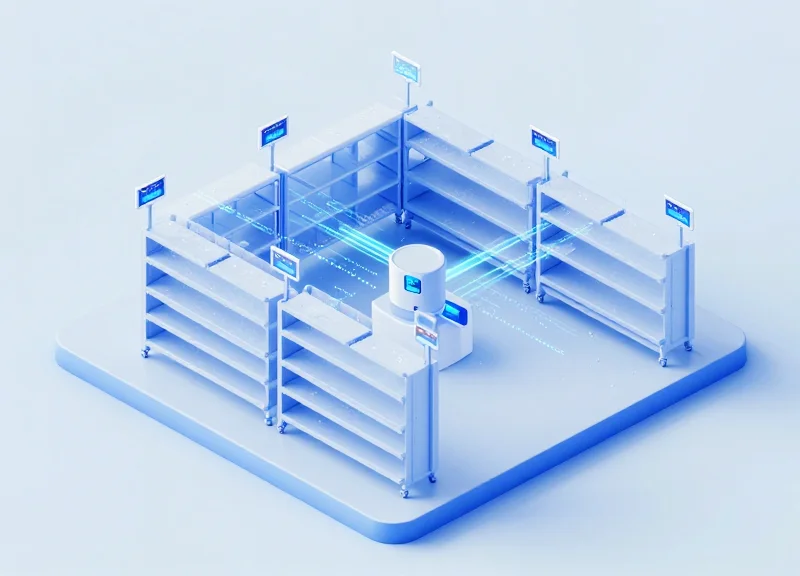
Integrating security with Electronic Shelf Labels (ESL) creates a unified retail infrastructure where security sensors and digital tags share a communication backbone—typically Bluetooth Low Energy (BLE) or Sub-GHz frequencies—to enable automated stock alerts and real-time theft detection. In a 2026 pop-up environment, this integration means the moment an item is removed from a 'smart shelf' without a corresponding transaction, the system can trigger localized ESL flashing or alert staff handhelds before the suspect even reaches the exit.
| Feature | Siloed Security (EAS Only) | Integrated Ecosystem (ESL + RFID) |
|---|---|---|
| Inventory Insight | Manual counting or periodic audits. | Real-time visibility via ESL 'Out-of-Stock' triggers. |
| Price Agility | Security tags have no price awareness. | Dynamic pricing synced with security status. |
| Theft Response | Reactive alarm at the front door. | Proactive shelf-edge alerts for high-risk movement. |
| Merchandising | Security is a visual deterrent only. | ESL-led 'Lift & Learn' marketing linked to asset logs. |
Expert Tip: The most innovative pop-ups in 2026 are utilizing 'The Shelf-to-Gate Handshake.' By assigning a digital twin to every SKU via ESL and RFID, the security gate doesn't just beep; it logs exactly which item left the store and updates the ESL's 'On-Hand' quantity in milliseconds. This eliminates the 'phantom inventory' problem that plagues high-turnover temporary retail spaces.
Does ESL integration complicate the store setup?
No, most modern ESL systems use the same cloud-based architecture as RFID-hybrid security, allowing both to run on a single gateway, which reduces cabling and hardware footprint.
How does this improve the customer experience?
It allows for 'soft security.' Instead of bulky hard tags, stores use discrete RFID-embedded labels managed by ESL, creating a friction-free environment where products are easy to touch and try.
Can ESL help prevent organized retail crime (ORC)?
Yes. Integrated systems can detect 'shelf sweeping'—the rapid removal of multiple items—and immediately notify security while the ESLs in that zone flash to deter the perpetrator.
Sustainability and Reusability in Temporary Retail
Sustainability in temporary retail has evolved from a marketing buzzword into a core operational requirement for 2026 brands, shifting the focus from 'disposable' security hardware to circular assets. As pop-up stores are inherently transient, the environmental impact of shipping, installing, and discarding security tags and gates is now a key metric in Corporate Social Responsibility (CSR) reporting. Modern RFID-hybrid solutions address this by utilizing bio-based materials and long-range sensors that require fewer physical units, effectively reducing the total carbon footprint of the loss prevention infrastructure.
| Sustainability Metric | Traditional EAS (2010s) | Next-Gen RFID-Hybrid (2026) |
|---|---|---|
| Primary Material | Virgin ABS Plastics | Recycled Bio-composites |
| Hardware Lifespan | Single-use/Limited cycle | Multi-year/Circular re-entry |
| Energy Profile | Always-on High Voltage | Low-power Smart Wake-up |
| End-of-Life Plan | Landfill/E-waste | Certified Refurbishment |
- Bio-Composite Tagging: New security tags for 2026 utilize plant-based resins and mycelium-based casings that are fully compostable, replacing traditional petroleum-based plastics without sacrificing structural integrity or signal strength.
- Modular Gate Architecture: Security gates are now designed for rapid assembly and disassembly, featuring lightweight, recycled aluminum frames that reduce shipping weight and facilitate easy transport between various pop-up locations.
- Energy-Efficient Sensors: Advanced hybrid sensors include 'eco-modes' that use motion-detection to remain in a low-power state until a customer approaches, reducing energy consumption by up to 40% compared to legacy EAS pedestals.
Unique Expert Insight: The 2026 market is seeing the rise of 'Hardware-as-a-Service' (HaaS) for pop-up security. Rather than buying assets, brands lease a 'Circular Security Kit' that includes RFID-hybrid gates and refurbished tags. This model ensures that hardware is returned to the manufacturer for professional refurbishment and software updates, rather than being scrapped after a 30-day activation. This shift allows brands to account for security as an OPEX expense while significantly improving their Scope 3 emission ratings.
Are sustainable security tags as durable as traditional ones?
Yes. 2026 bio-composites are engineered to withstand the same pull-force and environmental stressors as virgin plastics, ensuring that security is not compromised for the sake of eco-friendliness.
How does RFID improve reusability over EAS?
Unlike traditional EAS labels which are often 'deactivated' and thrown away, RFID tags are designed for high-cycle re-attachment and digital re-coding, making them the primary choice for circular retail models.
Can temporary stores claim carbon credits for green security?
Many brands are now using certified circular hardware programs to gain 'Green Retail' certifications, which can be leveraged for carbon credit offsets in specific jurisdictions.
Conclusion: Choosing the Right Shield for Your Brand
In the fast-evolving retail landscape of 2026, choosing the right security shield for your pop-up experience is no longer a binary choice between 'safe' and 'unsafe.' Instead, it is a strategic decision that aligns your Asset Protection (AP) strategy with your brand’s operational maturity. While Traditional EAS (Electronic Article Surveillance) remains the gold standard for high-deterrence, low-complexity environments, RFID-Hybrid solutions represent the future of 'invisible' security—merging loss prevention with real-time inventory intelligence to create a seamless, data-driven customer journey.
| Brand Profile | Recommended Shield | Primary Driver | Key Benefit |
|---|---|---|---|
| Short-term (1-4 weeks), High Volume | Traditional EAS (AM/RF) | Cost & Speed | Rapid deployment with minimal technical overhead. |
| Premium/Luxury Pop-up | RFID-Hybrid | Customer Experience | Frictionless exits and item-level inventory accuracy. |
| Tech-Forward/Experimental | RFID-Hybrid + IoT | Data Insights | Heat-mapping, conversion tracking, and automated reordering. |
| Seasonal Multi-Location | Dual-Technology Tags | Versatility | Future-proof compatibility with diverse store infrastructures. |
### The Expert Perspective: The 'Dark Data' Cost Unique Insight: As a Silicon Valley veteran, I've seen brands lose millions not just to theft, but to 'dark data'—the inability to distinguish between a stolen item and an item misplaced in a fitting room. In 2026, the true ROI of RFID-Hybrid solutions isn't just in shrink reduction; it's in the elimination of 'Phantom Inventory.' If your pop-up relies on high-velocity stock turns, the cost of a lost sale due to inaccurate inventory data often far outweighs the initial CAPEX of an RFID deployment.
- Audit Your Inventory Velocity: If you are moving more than 500 SKUs per day, RFID's ability to automate stock counts will pay for itself in labor savings within the first week.
- Assess Your 'Walk-Away' Risk: Traditional EAS gates are visible deterrents. If your brand relies on a 'prestige' atmosphere where gates feel intrusive, invest in overhead RFID sensors for invisible protection.
- Evaluate Long-term Portability: Choose modular hardware that can be packed into a 'store-in-a-box' format, allowing you to move your security infrastructure to the next pop-up location without specialized technicians.
Can I upgrade from EAS to RFID later?
Yes. Most modern security providers offer dual-technology antennas that support both traditional RF/AM tags and RFID chips, allowing for a phased migration as your brand scales.
Is RFID overkill for a one-week pop-up?
Usually, yes. For ultra-short durations, the setup time for RFID item-level encoding often exceeds the benefits. Traditional EAS is the more pragmatic choice here.
What is the biggest mistake brands make in 2026?
Neglecting the 'Experience' factor. If your security system triggers false alarms frequently, it damages brand trust in an era where customer experience is the primary differentiator.