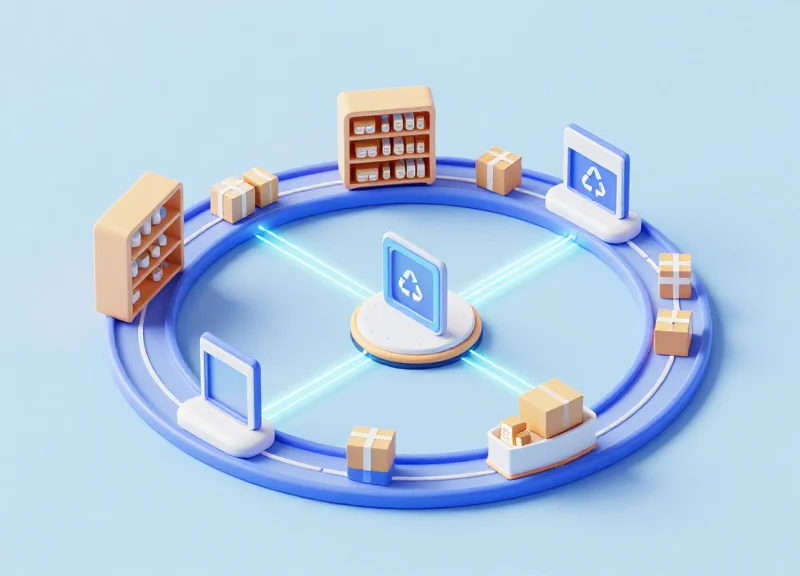
Retail is at a historical crossroads. As we approach 2026, the traditional Electronic Article Surveillance (EAS) model is undergoing a profound evolution into a data-driven ecosystem powered by RFID. This shift represents more than just a security upgrade; it is the fundamental backbone of the emerging circular economy, providing the granular visibility needed for sustainable product lifecycles. DragonGuardGroup explores how this technological leap will redefine retail security and operational efficiency for the next decade.
The Evolution of Retail Security: Why 2026 is the Turning Point

The year 2026 represents the critical intersection where traditional Electronic Article Surveillance (EAS) transitions from a standalone security tool to a legacy system. This turning point is driven by the convergence of the GS1 'Sunrise 2027' initiative—which moves the industry toward 2D barcodes and RFID—and the mandatory implementation of the EU Digital Product Passport (DPP). By 2026, retail security will no longer be defined by the ability to trigger an alarm at a door; it will be defined by 'Item-Level Intelligence,' where loss prevention data serves as the foundation for circular economy participation, real-time inventory accuracy, and frictionless checkout experiences.
| Feature | Legacy EAS (Pre-2024) | Next-Gen RFID (2026 Pivot) |
|---|---|---|
| Primary Function | Theft Deterrence (Beep at door) | Data Intelligence & Inventory Visibility |
| Granularity | Binary (On/Off state) | Unique Identity (Serial Number level) |
| Economic Model | Sunk Cost (Security Only) | Profit Driver (Omnichannel/Circular) |
| Regulatory Alignment | None | EU Digital Product Passport / ESG Compliance |
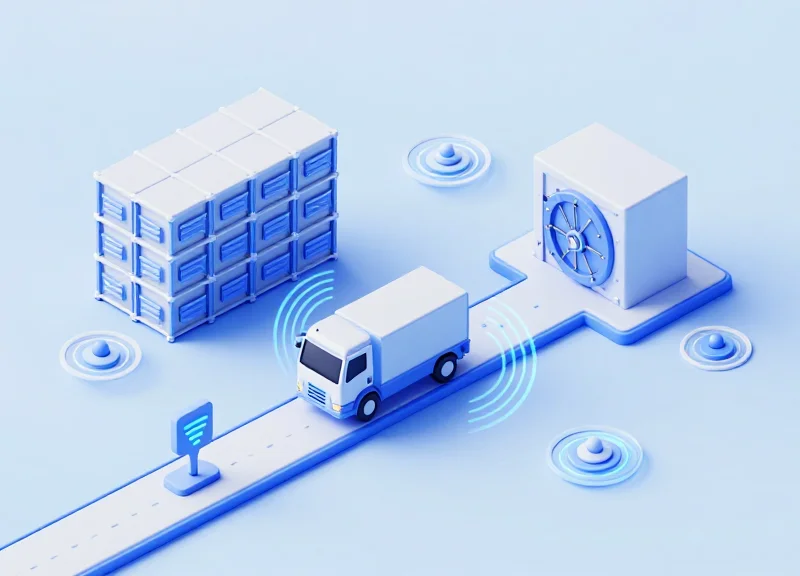
As a Silicon Valley veteran, I have observed that technology shifts only occur when the cost of inaction exceeds the cost of implementation. In 2026, the retail industry hits that threshold. The 'Circular Economy' is no longer a marketing buzzword; it is a logistical requirement. Retailers are now required to track a product's lifecycle from raw material to resale. RFID is the only technology capable of bridging the gap between loss prevention and the 'Digital Twin' needed for circularity. My unique insight for this transition: 2026 is the year 'Shrinkage' transforms from a financial loss on a P&L statement into a data-visibility problem that can be solved with automated supply chain reconciliation.
- The Labor Arbitrage Factor: With rising labor costs, retailers can no longer afford manual inventory counts. RFID allows for 99% accuracy in seconds, making security tags part of the operational automation strategy.
- Omnichannel Fulfillment Pressure: The 2026 consumer expects 'Buy Online, Pick Up In-Store' (BOPIS) to be 100% accurate. Traditional EAS can't tell you if an item is stolen or just misplaced; RFID identifies exactly what is missing in real-time.
- The Second-Hand Market Boom: Retailers are launching their own resale platforms. To do this, they need to verify the authenticity of returned or resold goods. RFID provides the 'provenance' data that legacy security systems lack.
Will EAS tags still work in 2026?
While traditional EAS will physically function, it will become an 'information silo.' Forward-thinking retailers are already deploying dual-technology tags (EAS+RFID) to bridge the gap during the 2026 transition.
Is the shift to RFID only for high-end luxury goods?
No. Due to the EU's Digital Product Passport mandates, even fast-fashion and home goods will require item-level tracking by 2026 to prove sustainability and recyclability credentials.
What is the biggest ROI of the 2026 shift?
Beyond reducing theft, the primary ROI is the reduction in 'phantom inventory'—items that the system thinks are in stock but aren't—which currently costs retailers billions in lost sales annually.
Beyond the Beep: Understanding the Limitations of Legacy EAS
Legacy Electronic Article Surveillance (EAS) systems function as a binary deterrent, utilizing Acousto-Magnetic (AM) or Radio Frequency (RF) technology to trigger an alarm when a non-deactivated tag passes through sensors. While effective as a visible theft deterrent, EAS lacks the ability to transmit item-level data, meaning it can tell a retailer that something was taken, but never what was taken, in what color, or in what size. This 'data silence' is the primary barrier preventing traditional loss prevention tools from supporting modern, data-driven retail operations.
In the fast-moving retail landscape of 2024–2026, the cost of 'not knowing' is often higher than the cost of the theft itself. When a legacy EAS system beeps, the interaction is purely reactive. The staff often treats the alarm as a nuisance or a false positive, and even if a theft is successful, the inventory system remains uncorrected. This creates a disconnect between the physical shelf and the digital storefront, leading to failed 'Buy Online, Pick Up In Store' (BOPIS) orders and customer dissatisfaction.
| Feature | Legacy EAS (AM/RF) | Next-Gen RFID |
|---|---|---|
| Data Granularity | Binary (Alarm/No Alarm) | Item-Level (Unique ID) |
| Inventory Accuracy | No Impact (~65%) | Real-Time (~99%) |
| Omnichannel Support | None | Critical (BOPIS/Ship-from-Store) |
| Self-Checkout | Requires Manual Detaching | Seamless Bulk Scanning |
| Circular Economy | No Traceability | Full Lifecycle Tracking |
- The Ghost Inventory Loop: A unique failure of legacy EAS is its contribution to 'Ghost Inventory.' When a product is stolen without item-level identification, the ERP system still lists it as 'In Stock.' This triggers a loop where digital shoppers order items that aren't physically present, leading to cancelled orders and SEO-damaging negative reviews. RFID fixes this by automatically reconciling the inventory the moment a specific item leaves the geofence.
Why is EAS considered a bottleneck for omnichannel retail?
EAS provides no visibility into stock levels. Omnichannel requires 95%+ inventory accuracy to safely offer store pickup; legacy EAS systems cannot provide the real-time stock counts necessary to prevent overselling.
Do legacy EAS systems work with the circular economy?
No. The circular economy requires tracking a product through resale, repair, and recycling. EAS tags are usually discarded or deactivated at the first point of sale, whereas RFID tags can carry a 'Digital Product Passport' throughout the item's entire lifecycle.
What is the 'False Positive' fatigue in legacy systems?
Legacy EAS is prone to interference from other electronics and 'tag pollution' (tags from other stores). This leads to frequent false alarms, which desensitizes staff and causes them to ignore actual theft events.
The RFID Revolution: Real-Time Intelligence in Loss Prevention

The RFID revolution in loss prevention (LP) represents a fundamental shift from binary alerts to granular, item-level intelligence. Unlike traditional Electronic Article Surveillance (EAS) which only triggers a generic alarm, Radio Frequency Identification (RFID) assigns a unique digital identity to every individual SKU. This allows retailers to move beyond 'knowing something was taken' to knowing precisely what was taken, when it crossed the threshold, and which exit was used. By integrating this real-time data with video management systems, retailers can transform theft incidents into actionable forensic evidence, effectively closing the visibility gap that has plagued the industry for decades.
| Intelligence Metric | Legacy EAS Capability | RFID-Enabled Intelligence |
|---|---|---|
| Identification Level | Generic (Bulk Category) | Unique (Individual Serial Number) |
| Event Context | Real-time alarm only | Timestamped movement history |
| Inventory Impact | Manual cycle count required | Automatic 'Out of Stock' update |
| Shrink Analysis | Estimated/Assumed | Forensic/Exact |
The true power of the RFID revolution lies in its ability to solve 'The Invisible Loss' problem. In a standard retail environment, a high percentage of shrink is discovered weeks after the event during a physical inventory count. RFID changes the timeline. Because the system tracks the specific electronic product code (EPC), loss prevention teams can immediately identify high-theft corridors and specific 'hot' SKUs that are being targeted by Organized Retail Crime (ORC) syndicates. This allows for dynamic labor allocation, where security personnel are deployed based on real-time threat data rather than static schedules.
How does RFID prevent 'Return Fraud' in a circular economy?
Because each item has a unique digital birth certificate, retailers can verify if an item was actually purchased or stolen before processing a refund. This is critical for the circular economy where authenticated resale is a core value proposition.
Can RFID distinguish between legitimate sales and theft at the exit?
Yes. RFID systems integrate with the Point of Sale (POS). If an item's status is not updated to 'Sold,' the overhead RFID sensors will trigger an alert when the item approaches the exit, whereas sold items pass through silently.
Does RFID replace the need for security cameras?
No, it enhances them. RFID provides the 'data trigger' that tells the camera system exactly which frame to bookend, saving investigators hours of manually scrubbing through footage to find a theft event.
Expert Insight: The 'Digital Kill-Switch' for Resale. My unique perspective for 2026 is the emergence of the 'Stolen Status' flag within the Digital Product Passport (DPP). In the circular economy, secondary markets will require a DPP scan to list an item. If an RFID-tagged item is flagged as stolen in the retailer's cloud, the digital passport is invalidated. This effectively kills the resale value of the stolen good, attacking the primary motive of professional shoplifters: the ability to flip stolen inventory for cash.
Synergy with the Circular Economy: Tracking Goods from Birth to Rebirth

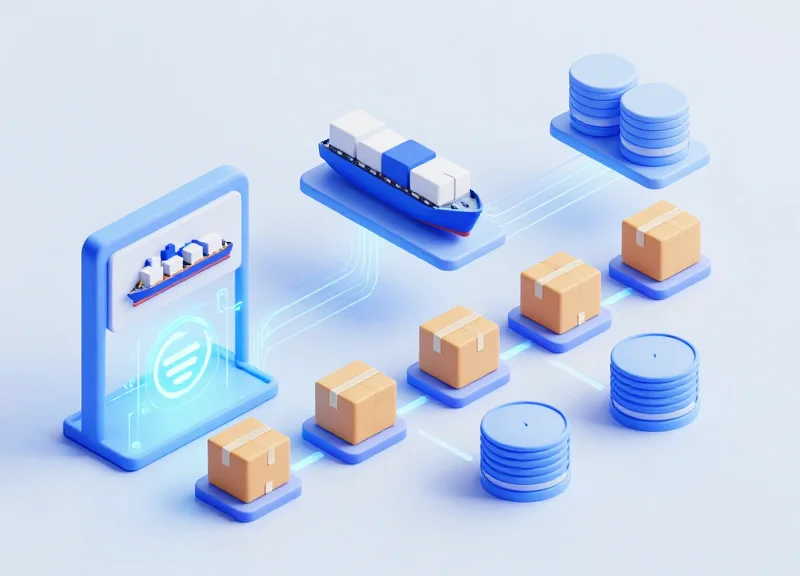
The synergy between RFID and the circular economy lies in the creation of a 'Digital Product Passport' (DPP). Unlike traditional EAS tags that are deactivated and discarded at the point of sale, RFID tags provide a permanent, unique identity that follows a garment or luxury item through its entire lifecycle. By 2026, this digital thread will be the primary mechanism for retailers to facilitate high-margin resale, verify authentic returns, and automate the sorting of materials for textile-to-textile recycling, effectively turning loss prevention hardware into a sustainability asset.
In a linear economy, a stolen item is a total loss. In a circular economy powered by RFID, the 'Birth to Rebirth' model ensures that every item in the ecosystem is accounted for. When a product is returned or enters the secondary market, the embedded RFID chip allows the brand to verify its provenance instantly. This eliminates 'return fraud'—where counterfeit or stolen goods are returned for cash—and provides the data necessary to repair, refurbish, or recycle the item with surgical precision.
| Feature | Linear Model (Legacy EAS) | Circular Model (Next-Gen RFID) |
|---|---|---|
| Tag Lifecycle | One-time use; killed at checkout. | Permanent; active through multiple owners. |
| Authentication | Visual/Manual only. | Digital verification of provenance. |
| Resale Value | Low (Unverifiable origin). | High (Authenticated digital history). |
| End-of-Life | Landfill (Unknown materials). | Automated recycling (Material data on-chip). |
Expert Insight: The Residual Value Multiplier. A unique advantage often overlooked is that RFID-backed products carry a 'Trust Premium' in the secondary market. When a consumer knows a brand can verify a product's authenticity via its original RFID signature, the resale value of that item increases. This higher residual value actually discourages theft for the purpose of illicit resale, as unverified stolen goods become harder to move on professional resale platforms that require digital authentication.
How does RFID help with the 'Right to Repair'?
RFID tags can link to specific schematics, manual links, and spare part numbers tailored to that exact unit, allowing third-party repair shops or owners to access accurate maintenance data.
Can RFID tags survive the recycling process?
Advanced wash-durable and heat-resistant RFID tags are designed to remain functional throughout a garment's life, and specialized sensors at recycling facilities use them to sort fabrics by chemical composition automatically.
Does this tracking invade consumer privacy?
Industry standards are moving toward 'privacy-by-design,' where personal data is never stored on the tag. Instead, the tag contains a unique ID that links to product attributes in a secure cloud, which can be 'opted-out' or masked after purchase.
Operational Gains: How RFID Reduces Shrinkage While Boosting Sales

RFID transforms loss prevention from a reactive cost center into a proactive profit driver by synchronizing inventory accuracy with security protocols. By providing real-time data on stock levels, RFID can reduce out-of-stock scenarios by up to 50% and drive a verified sales lift of 2% to 8%. Unlike legacy systems, RFID identifies exactly which units are missing, allowing retailers to reconcile inventory instantly and ensure that a 'lost' item doesn't result in a 'lost' customer sale.
| Operational Metric | Legacy EAS Capability | RFID-Enabled Impact |
|---|---|---|
| Inventory Accuracy | 65% - 75% (Manual Audits) | 98% - 99.5% (Real-time) |
| Shrink Attribution | Generic Alarm (Unknown Item) | Specific SKU, Color, and Size |
| Out-of-Stock Rates | High (Due to Phantom Inventory) | Low (Automated Replenishment) |
| Labor Efficiency | High (Manual tag detachment) | Low (Bulk scans & self-checkout) |
One of the most insidious threats to retail profitability is 'Phantom Inventory'—items that appear in the system as available but are actually missing due to theft or administrative error. Legacy EAS identifies the exit of an item, but rarely the specific identity. RFID solves this by providing a digital twin for every product. When an item is stolen, the system doesn't just register a loss; it triggers a replenishment alert. This ensures that the shelf is restocked immediately, capturing the next potential sale that would have otherwise been lost to a hole in the inventory.
How does RFID actually boost sales while preventing loss?
By maintaining 99% inventory accuracy, RFID ensures that omnichannel 'buy online, pick up in-store' (BOPIS) orders are never cancelled due to missing stock, directly increasing conversion rates.
Can RFID help with internal 'sweethearting' and employee theft?
Yes. Because RFID tracks the movement of items through every zone of the store, it creates a transparent chain of custody that identifies unusual patterns in backroom-to-floor transfers, significantly deterring internal shrink.
Does the transition to RFID require more labor?
On the contrary, RFID reduces labor costs by allowing employees to perform full-store counts in minutes rather than days, freeing them to focus on customer service and sales generation.
Expert Insight: The 'Halo Effect' of High-Visibility Security. A unique advantage of the 2026 RFID shift is the implementation of 'Dynamic Markdown Logic.' By knowing exactly how long a specific item has sat on the shelf through its unique RFID tag, retailers can trigger automatic, targeted discounts for slow-moving or 'recovered' items. This ensures that even items that were previously targeted for theft but recovered are moved through the circular economy cycle at peak value, rather than ending up in a liquidation bin or landfill. This synergy between loss prevention and inventory velocity is the ultimate ROI of the RFID transition.
The Hybrid Strategy: Transitioning from EAS to RFID Seamlessly
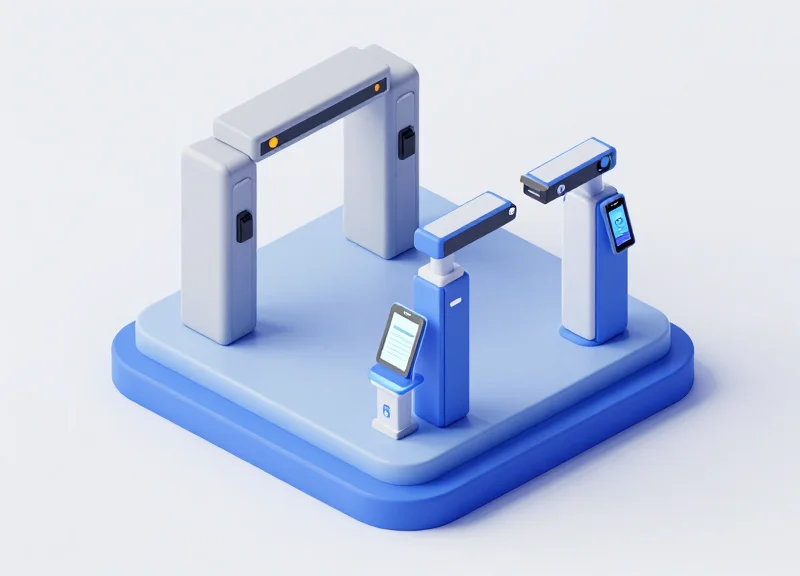
The hybrid strategy is a transitional framework where retailers utilize dual-technology hardware—combining Acousto-Magnetic (AM) or Radio Frequency (RF) EAS with Ultra-High Frequency (UHF) RFID—to maintain loss prevention standards while upgrading inventory visibility. This approach ensures that legacy EAS pedestals remain functional as theft deterrents while new RFID systems begin capturing the granular data required for 2026’s circular economy mandates. By bridging the gap, retailers avoid the 'rip-and-replace' financial shock and minimize operational downtime during the 2026 transition.
| Feature | Legacy EAS (AM/RF) | Hybrid Strategy (Transition) | Full RFID Ecosystem |
|---|---|---|---|
| Theft Detection | Bulk/Alarm Only | Dual Detection | Item-Specific Identification |
| Inventory Visibility | None | Partial/Zonal | Real-time & 99% Accurate |
| Circular Economy Support | None | Basic Tracking | Digital Product Passport (DPP) Ready |
| Cost Profile | Low Capex (Sunk) | Moderate (Staged) | High Efficiency ROI |
- Audit and Retrofit Infrastructure: Evaluate current EAS pedestals for RFID-upgradability. Many modern systems can be retrofitted with RFID inserts, allowing one unit to sense both traditional hard tags and new RFID-embedded soft labels.
- Deploy Dual-Technology Tags: Utilize labels that house both an EAS circuit and an RFID chip. This protects merchandise from theft while allowing the supply chain to start gathering item-level data immediately.
- Establish the Digital Thread: Integrate RFID data with your Point-of-Sale (POS) and inventory management software. This creates a record for every item, essential for future resale or recycling under circular economy regulations.
- Phased Pedestal Replacement: Gradually decommission legacy EAS-only gates at lower-risk exits while installing high-performance overhead RFID readers at main points of entry and loading docks.
Expert Tip: The 'Ghost Auditing' Technique. For a truly seamless transition, implement RFID 'Ghost Auditing' six months before switching off EAS. By running RFID readers in the background without active alarms, you can compare actual theft data (identified via RFID) against EAS alarm frequency. This often reveals that 30% of shrink occurs through non-monitored paths, allowing you to optimize your sensor placement for the final 2026 cut-over.
Do I need to replace all my existing security tags at once?
No. The hybrid strategy allows you to use dual-purpose tags on new inventory while slowly depleting your stock of legacy EAS tags on older or lower-value merchandise.
How does the hybrid approach help with circular economy compliance?
It allows you to start tagging products with 'Digital Product Passports' (DPP) today using the RFID component, ensuring that when the 2026 mandates hit, your products are already traceable for resale and recycling.
Is the ROI immediate for hybrid systems?
While the hardware cost is higher, the ROI is realized through a 15-25% reduction in out-of-stocks and the elimination of manual inventory counts, which far outweighs the cost of the tags.
Future-Proofing Your Retail Infrastructure with DragonGuardGroup
Future-proofing your retail infrastructure means moving beyond siloed security hardware toward a unified, data-centric ecosystem where Electronic Article Surveillance (EAS), Radio Frequency Identification (RFID), and Electronic Shelf Labels (ESL) work in concert. As the industry approaches the 2026 pivot point—where item-level tracking becomes the global standard for the circular economy—DragonGuardGroup provides the hardware and integration expertise to ensure that today’s loss prevention investments become tomorrow’s operational backbone. By bridging the gap between physical deterrents and digital intelligence, we help retailers mitigate shrink while simultaneously enabling real-time inventory precision and automated pricing.
- The Unified Digital Bridge: DragonGuardGroup’s hardware is designed to be multi-protocol. Our systems allow for the overlay of RFID data onto traditional EAS infrastructure, ensuring you don't have to 'rip and replace' existing assets to achieve 2026 readiness.
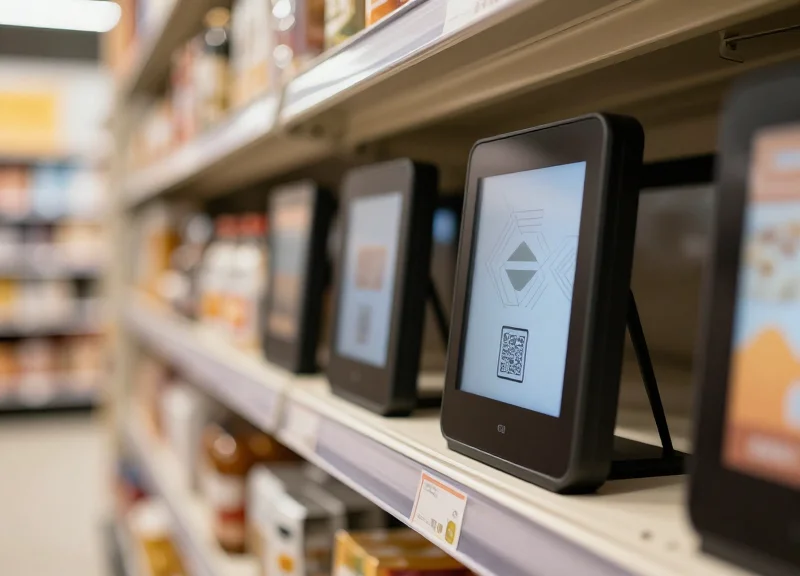
- ESL-RFID Integration: Our Electronic Shelf Labels do more than update prices; they act as localized beacons. When paired with RFID, they provide a 360-degree view of product movement, identifying 'misplaced' items before they are flagged as shrink.
- Global Scalability: With a manufacturing footprint capable of supporting tier-1 global retailers, our solutions are engineered for high-volume environments that require 99.9% read-accuracy and robust physical durability.
| Infrastructure Pillar | Traditional Function | Next-Gen Value Add (2026) | DragonGuard Advantage |
|---|---|---|---|
| EAS Systems | Theft Deterrence | Hybrid Data Capture | Dual-frequency AM/RF + RFID antennas |
| RFID Tags | Inventory Count | Product Authentication | Washable, durable tags for circular loops |
| ESL Labels | Price Management | Interactive LP Beacon | Integrated NFC for secure self-checkout |
Expert Insight: The Concept of 'Interference-Free Coexistence'. One of the most significant technical hurdles in the 2026 shift is signal congestion. As retailers deploy more RFID readers and ESL transmitters, the risk of 'spectral noise' increases, leading to false EAS alarms or failed inventory reads. DragonGuardGroup utilizes proprietary signal-filtering technology that ensures our EAS pedestals and RFID readers operate in total harmony. This 'Interference-Free' architecture is the 'secret sauce' that allows high-density retail environments to scale their technology stack without compromising security integrity.
Why is the 2026 shift so critical for my current EAS setup?
By 2026, major global retailers and logistics providers will mandate item-level digital identities. DragonGuardGroup’s hybrid EAS/RFID antennas allow you to comply with these mandates while maintaining your existing anti-theft protocols.
Can DragonGuardGroup solutions integrate with my existing POS?
Yes. Our systems are designed with open API architectures, allowing seamless data flow between the security gates, the inventory management software, and your Point of Sale system for real-time shrink analytics.
How does this infrastructure support the circular economy?
Our RFID solutions allow for 'Birth-to-Rebirth' tracking. When a product is returned or recycled, our systems verify the digital twin, ensuring authenticity and updating the lifecycle status in your global database instantly.