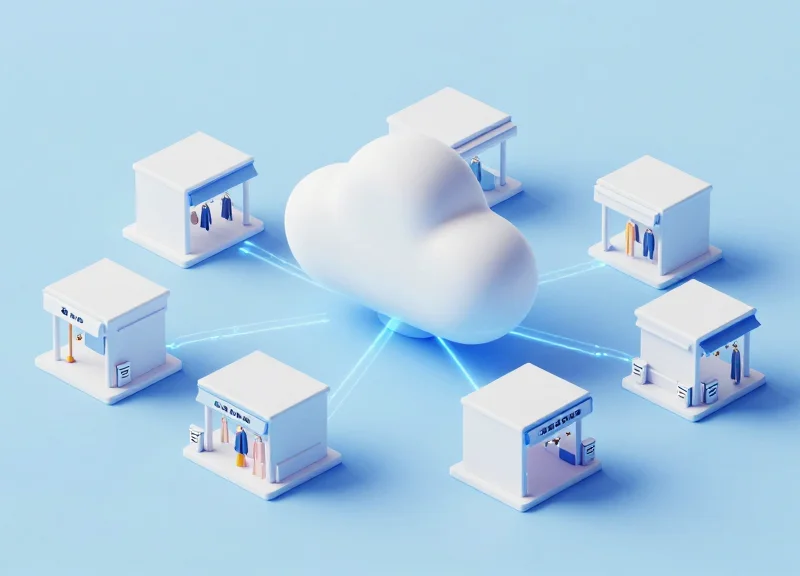
As we approach 2026, the global fashion industry is undergoing a digital metamorphosis. Traditional Electronic Article Surveillance (EAS) is no longer just about stopping shoplifters; it is evolving into a vital node in the retail IoT ecosystem. For global fashion chains, the transition to cloud-integrated EAS systems represents a strategic shift toward data-driven loss prevention and operational excellence. This article provides an authoritative roadmap for decision-makers to navigate this high-stakes technology investment, ensuring security systems contribute directly to the bottom line.
The Strategic Shift: From Hardware Alarms to Cloud Intelligence

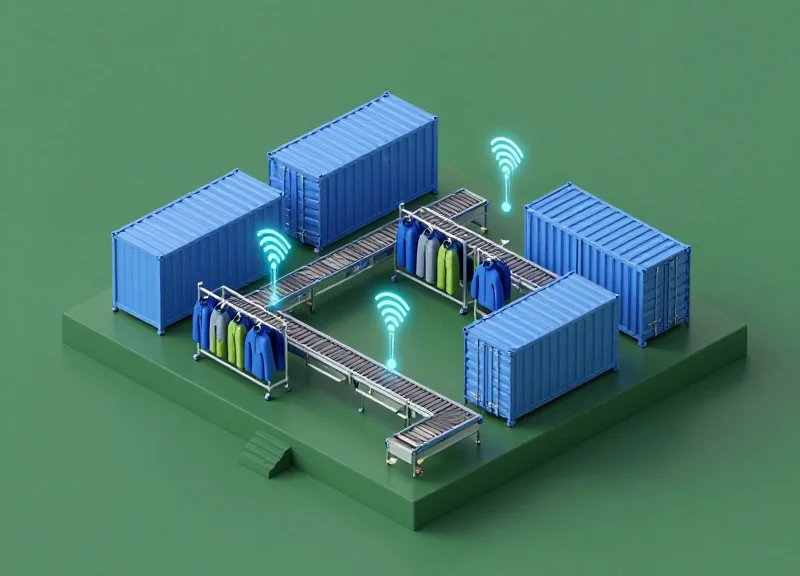
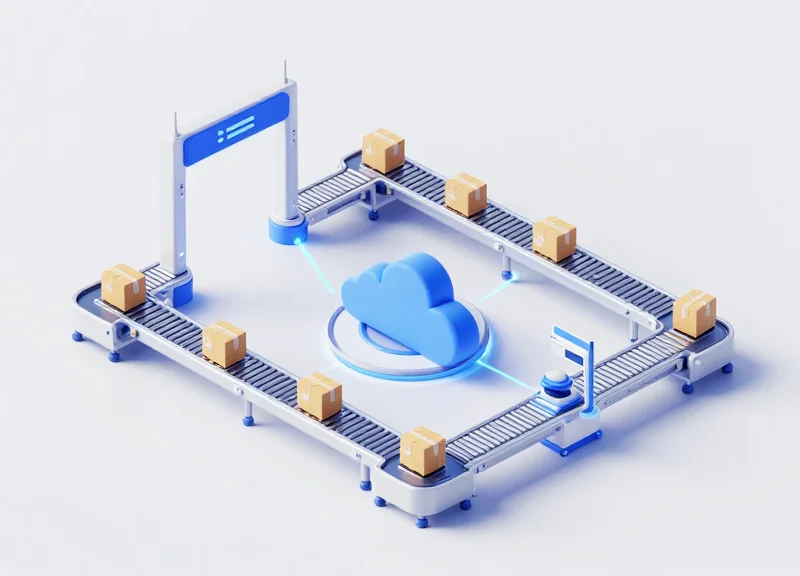
The transition from traditional Electronic Article Surveillance (EAS) to Cloud-Integrated EAS represents a move from localized, reactive hardware that merely alerts staff to theft, to a unified, data-driven ecosystem. In 2026, the 'Strategic Shift' means moving beyond the beep; it involves transforming every pedestal and sensor into an IoT edge device that transmits real-time telemetry to a centralized cloud platform. This allows global fashion chains to move from managing individual store incidents to orchestrating a synchronized, data-backed loss prevention strategy across thousands of international locations simultaneously.
For decades, EAS was a 'black box' technology. If an alarm triggered, the data stayed at the door. If a system failed, nobody knew until a high-theft event occurred. Cloud intelligence eliminates these blind spots by providing a 'Single Pane of Glass' view of a retailer’s entire security infrastructure. This shift is driven by the need for better ROI, as fashion brands realize that EAS hardware can do more than just prevent theft—it can provide store traffic insights, system health monitoring, and even inventory accuracy audits.
| Feature | Legacy Hardware EAS | Cloud-Integrated Intelligence |
|---|---|---|
| Data Accessibility | Local/On-site only | Global/Real-time via API |
| Maintenance | Reactive (Wait for failure) | Predictive (Remote diagnostics) |
| Insights | Simple alarm counts | Heatmaps, Shrinkage patterns, Traffic |
| Scalability | Manual store-by-store setup | Centralized configuration & updates |
Veteran Insight: The Rise of 'Signal-to-Noise' Efficiency. In my 20 years in Silicon Valley, I’ve seen that the most expensive part of any retail tech is not the hardware, but the 'noise'—the false alarms and unvetted data that distract employees. The true power of the Cloud-Integrated shift is its ability to use machine learning to filter out false positives (like 'tag-back' interference) and provide store managers with only high-probability alerts, directly increasing staff productivity by up to 15%.
Why is cloud connectivity essential for fashion chains in 2026?
It allows for centralized management of security policies and provides the necessary data to fight organized retail crime (ORC) by identifying patterns across different geographical regions.
Does cloud-integrated EAS replace existing security staff?
No, it empowers them. By providing data on peak theft times and high-risk zones, security teams can be deployed more strategically rather than standing at the door indefinitely.
What is the primary technical requirement for this shift?
A robust IoT backbone and secure MQTT or HTTPS protocols to ensure that data transmission from the pedestal to the cloud is encrypted and low-latency.
Decision Factor 1: Global Scalability and Centralized Remote Management

In 2026, global scalability in Electronic Article Surveillance (EAS) is no longer about shipping hardware; it is about software-defined security. For a fashion chain operating across multiple continents, the ability to manage thousands of pedestals from a 'Single Pane of Glass' is the primary driver of operational efficiency. This shift replaces the traditional model of 'isolated store silos' with a unified global network, where loss prevention (LP) directors can push policy updates, adjust alarm sensitivity, and monitor system health across 2,000 locations simultaneously without leaving their headquarters.
| Feature | Legacy EAS Systems | 2026 Cloud-Integrated EAS |
|---|---|---|
| System Maintenance | On-site technician (Truck-rolls) | Remote diagnostics & OTA updates |
| Policy Deployment | Manual per-store configuration | Global 'one-click' synchronization |
| System Visibility | Reactive (Wait for store report) | Proactive (Real-time health alerts) |
| Deployment Speed | Weeks of manual setup | Days via Zero-Touch Provisioning |
The true 'Silicon Valley' advantage in 2026 is Zero-Touch Provisioning (ZTP). This allows fashion retailers to ship EAS hardware to any new store globally, where a local manager simply plugs it into the network. The system automatically connects to the central cloud, identifies its location, and downloads the specific configuration and compliance settings required for that region. This eliminates the need for high-cost specialized engineers to travel for installations, drastically reducing the Total Cost of Ownership (TCO) and shortening the time-to-market for new store openings.
How does centralized management handle regional data privacy laws like GDPR?
Modern cloud EAS platforms utilize 'Data Residency Tagging,' allowing global chains to store system logs and traffic data within specific geographical boundaries while still maintaining a single global management interface.
What happens to the EAS system if the store's internet connection fails?
Leading 2026 systems use 'Edge-to-Cloud Orchestration.' The pedestal continues to function and log events locally using edge computing; once the connection is restored, it automatically syncs all data to the cloud dashboard.
Can remote management reduce false alarms?
Yes. Centralized teams can remotely tune the digital signal processing (DSP) filters of pedestals in real-time to account for new environmental interference or seasonal store layout changes, preventing 'alarm fatigue' among staff.
Decision Factor 2: Advanced Data Analytics and Predictive Shrink Insights

In 2026, the value of a Cloud-Integrated EAS (Electronic Article Surveillance) system is no longer measured by how loud the alarm sounds, but by the depth of the data it captures. Advanced Data Analytics involves using Machine Learning (ML) to analyze alarm events, foot traffic, and POS data in real-time. This allows global fashion chains to move from a reactive 'catch-and-recover' model to a proactive 'predict-and-prevent' strategy, identifying specific high-risk zones and time windows where theft is most likely to occur across thousands of global locations.
| Feature | Legacy EAS (On-Premise) | 2026 Cloud-Integrated EAS |
|---|---|---|
| Data Type | Binary (Alarm/No Alarm) | Contextual (Time, Item ID, Staff Count) |
| Insight Model | Descriptive (What happened?) | Predictive (What will happen next?) |
| Staff Impact | Interruption-based response | Data-driven labor allocation |
| Shrink Analysis | Manual monthly audits | Real-time heatmaps and risk scores |
The most significant shift in 2026 is the emergence of 'Predictive Shrink Insights.' By correlating EAS alarm density with external variables like seasonal footfall patterns, local event schedules, and even weather data, the cloud platform can issue 'Risk Alerts' to store managers. For example, if data shows a 30% increase in 'tag-shielding' attempts at similar demographic locations, the system can automatically suggest a 15-minute increase in floor presence during specific hours. This turns loss prevention from a cost center into an operational efficiency driver.
Expert Insight: The 'Ghost Alarm' Filter. A major differentiator for top-tier 2026 systems is their ability to use AI to filter out 'environmental noise' or 'ghost alarms' caused by interference. In Silicon Valley, we call this Signal-to-Noise optimization. By eliminating false positives in the cloud, retailers ensure that staff only respond to genuine threats, preventing 'alarm fatigue' and maintaining a premium customer experience.
How does predictive analytics reduce labor costs?
Instead of staffing all entrances equally, analytics identify 'Peak Theft Windows,' allowing managers to deploy high-visibility staff only when and where risk is statistically highest.
Can these systems identify organized retail crime (ORC)?
Yes. Cloud platforms track patterns across multiple stores. If a specific 'booster bag' signature or tag-detacher pattern is detected in one city, the system alerts all nearby stores in the chain instantly.
Is the data GDPR and CCPA compliant?
The best systems focus on anonymized tag and sensor data rather than visual PII (Personally Identifiable Information), ensuring global compliance while maintaining high security.
Decision Factor 3: Interoperability with RFID and ESL Ecosystems
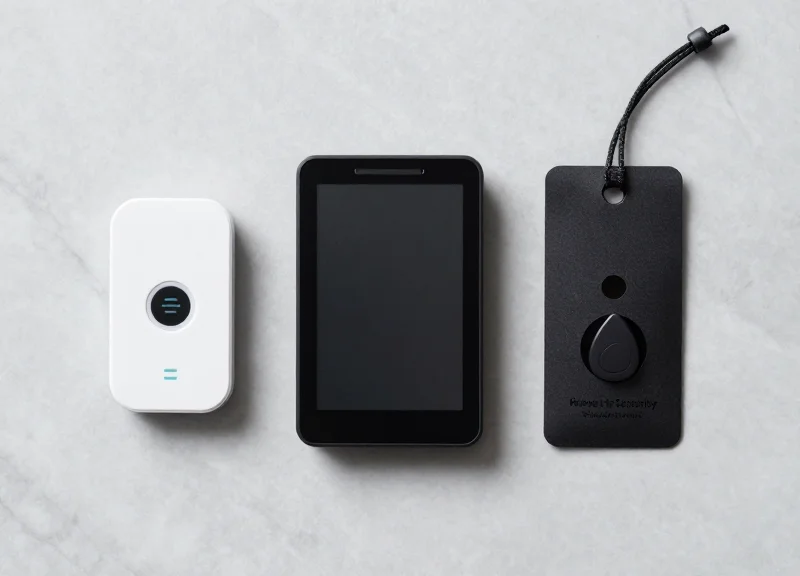
In the 2026 retail landscape, the most successful global fashion chains are moving away from 'Best-of-Breed' isolation toward 'Best-of-Platform' integration. Interoperability means your cloud-integrated EAS system must natively communicate with Radio Frequency Identification (RFID) for item-level accuracy and Electronic Shelf Labels (ESL) for operational agility. A system that cannot handshake with these adjacent technologies is a legacy liability that creates data silos and increases total cost of ownership (TCO).
| Feature | Siloed EAS (Legacy) | Interoperable EAS (2026 Standard) |
|---|---|---|
| Inventory Visibility | Binary (Alarm/No Alarm) | Item-level (Which specific SKU left the store) |
| ESL Interaction | Manual override required | Automated alert logic based on price-change status |
| Data Infrastructure | Proprietary local wiring | Open API / Webhook cloud-to-cloud |
| Hardware Footprint | Separate antennas for RFID/EAS | Hybrid AM/RF + RFID integrated pedestals |
The convergence of RFID and EAS is particularly critical for 2026 due to the rise of Circular Economy regulations and Digital Product Passports. When your EAS system identifies a specific item being removed, it should automatically update the global inventory cloud and the ESL on the floor to reflect real-time stock levels, ensuring the 'Phygital' experience remains consistent across all channels.
- Validate Open API Architecture: Ensure the vendor provides robust RESTful APIs that allow the EAS cloud to push real-time events to your ERP and ESL management software without custom middleware.
- Prioritize Dual-Technology Hardware: Invest in pedestals that house both traditional Acousto-Magnetic (AM) or Radio Frequency (RF) sensors and high-performance RFID readers to save floor space and reduce interference.
- Assess ESL Sync Capabilities: Look for features that allow ESLs to act as visual deterrents (e.g., flashing LEDs) when the EAS system detects a high-shrink SKU being moved suspiciously.
Expert Insight: By 2026, the 'Hidden ROI' of interoperability lies in Contextual Alarming. Traditional EAS systems suffer from 'alarm fatigue.' An interoperable system, however, can cross-reference an EAS event with the POS and RFID data in milliseconds. If an item triggers an alarm but was just verified as 'paid' via an RFID-enabled POS, the system can suppress the audible alarm and instead send a silent 'service' notification to a staff member's mobile device, preventing a negative customer experience.
Can RFID completely replace traditional EAS in 2026?
While RFID provides better data, traditional EAS (AM/RF) is often still needed for bulkier items or liquids where RFID performance may degrade. A hybrid approach is the current gold standard for global chains.
How does ESL integration reduce theft?
Integrated ESLs can dynamically update 'Protection Level' metadata. If the EAS cloud detects a spike in theft for a specific category, it can trigger ESLs to display QR codes for 'Assisted Selling,' encouraging staff presence in high-risk zones.
Does interoperability require a specific cloud provider?
No, but it requires a vendor that supports multi-cloud or cloud-agnostic deployments to ensure the EAS data can travel freely between AWS, Azure, or private retail clouds.
Decision Factor 4: Robust Cybersecurity and Cross-Border Data Compliance
For global fashion chains in 2026, cybersecurity is no longer a peripheral concern; it is the foundation of the Electronic Article Surveillance (EAS) ecosystem. As EAS systems evolve into sophisticated data collection nodes—capturing footfall, alarm triggers, and potentially integrated video snapshots—they become targets for cyberattacks. A truly robust system must employ end-to-end encryption, multi-factor authentication (MFA), and strictly adhere to international data sovereignty laws like GDPR and CCPA. Failure to secure these 'edge devices' can lead to massive data breaches and multi-million dollar regulatory fines.
| Compliance Standard | Scope of Coverage | Critical Requirement for 2026 |
|---|---|---|
| SOC2 Type II | Operational security and privacy | Third-party audits of data handling over a 6-12 month period. |
| GDPR / UK-GDPR | EU/UK Citizen data protection | Mandatory data residency options within EU borders for cloud storage. |
| ISO/IEC 27001 | Information security management | Standardized framework for risk management and system resiliency. |
| CCPA / CPRA | California/US consumer privacy | Granular user consent and the 'Right to Delete' retail activity logs. |
The 'Edge-to-Cloud' Security Gap: Many retailers overlook the vulnerability of the hardware itself. In 2026, your EAS pedestals and deactivators must be treated as secure IoT endpoints. This means moving away from default passwords and unencrypted legacy protocols toward a 'Zero Trust' architecture. Expert Tip: Ensure your vendor provides 'Data Residency Pinning.' This allows your New York stores to store data in US-East servers while your Paris flagship stores store data exclusively in EU-West clusters, preventing 'legal spillover' during cross-border audits.
Does the EAS provider offer end-to-end encryption for data in transit?
Yes, top-tier systems utilize TLS 1.3 or higher for data in transit and AES-256 for data at rest, ensuring that even if intercepted, the information remains unreadable to unauthorized parties.
How does the system handle 'Right to be Forgotten' requests?
Modern cloud EAS platforms include automated data retention policies that can purge specific store logs or individual-related data points upon request to stay compliant with local privacy laws.
What is the frequency of penetration testing for the cloud platform?
Enterprises should look for vendors that conduct quarterly third-party penetration tests and provide 'Letter of Attestation' (LoA) documents to their clients.
Ultimately, selecting a cloud EAS partner requires a deep dive into their 'Security by Design' philosophy. As global fashion brands expand, the ability to centralize security intelligence without compromising local data privacy will be the ultimate competitive advantage. By 2026, the cost of a single compliance breach will far outweigh the initial investment in a certified, high-security cloud platform.
Decision Factor 5: Future-Proofing Hardware for Sustainability and Longevity
Future-proofing EAS hardware for 2026 involves prioritizing systems that combine low energy consumption with a modular architecture, ensuring that equipment can be repaired or upgraded without full-unit replacement. As global fashion chains face increasing pressure from the Corporate Sustainability Reporting Directive (CSRD) and similar ESG frameworks, the 'Green ROI' of security hardware is no longer a secondary concern; it is a critical metric for long-term operational viability.
| Feature Category | Legacy EAS Systems | 2026 Sustainable EAS Standard |
|---|---|---|
| Energy Management | Always-on, high-wattage draw | Cloud-scheduled 'Eco-Modes' and PoE options |
| Service Model | Rip-and-replace hardware failure | Component-level modularity (Right to Repair) |
| Lifecycle Strategy | 5-7 year replacement cycle | 10+ years via OTA firmware enhancements |
| Compliance | Minimal environmental reporting | Detailed carbon footprint and material sourcing data |
A primary differentiator for 2026-ready systems is the shift toward Power over Ethernet (PoE) and ultra-low-power Bluetooth (BLE) communication. By reducing the reliance on heavy-duty electrical wiring and high-voltage pedestals, retailers can decrease their store-level carbon footprint by up to 30%. Furthermore, cloud-integrated systems now allow for remote diagnostics that identify specific faulty capacitors or sensors, enabling a 'surgical' repair approach that avoids the waste of disposing of entire pedestals.
Expert Insight: In the Silicon Valley hardware ecosystem, we are seeing the rise of the 'Total Carbon Cost of Ownership' (TCCO) metric. For global fashion chains, this means calculating the embedded carbon of the hardware plus its lifetime energy consumption. The most advanced systems in 2026 will utilize recycled plastics and bio-based resins for pedestal housings, making the hardware as sustainable as the eco-friendly apparel it protects.
Why is modularity more important than purchase price in 2026?
Modular systems allow retailers to swap out communication modules (e.g., upgrading from 5G to 6G or updating RFID chips) without replacing the pedestal structure, significantly extending the asset's lifespan and reducing capital expenditure over a decade.
How does cloud integration improve hardware sustainability?
Cloud platforms can remotely manage power states, dimming LED alerts or powering down sensors during non-trading hours across thousands of global locations simultaneously, resulting in massive cumulative energy savings.
What should fashion chains look for in hardware materials?
Prioritize vendors that offer take-back programs and use 'Design for Disassembly' principles, ensuring that at the end of the hardware's life, components can be easily sorted and recycled rather than sent to a landfill.
Total Cost of Ownership (TCO): Beyond the Initial Purchase Price
Total Cost of Ownership (TCO) for cloud-integrated EAS systems is a financial metric that encompasses the entire lifecycle of retail security—from procurement and installation to maintenance, software licensing, and eventual decommissioning. In 2026, the industry standard has shifted from prioritizing low Capital Expenditure (CapEx) to optimizing Operational Expenditure (OpEx). While legacy systems often present a lower upfront sticker price, cloud-integrated solutions typically deliver a 25-35% lower TCO over a five-year horizon by eliminating the hidden 'truck roll' costs associated with manual firmware updates and on-site hardware calibration.
| Expense Category | Legacy On-Premise EAS | Cloud-Integrated EAS (2026) |
|---|---|---|
| Initial Hardware | Moderate | Moderate to High |
| Software Updates | Manual / Paid Service Calls | Automated Over-the-Air (SOTA) |
| Maintenance | Reactive (On-site technicians) | Proactive (Remote diagnostics) |
| System Downtime | High (Hours to Days) | Near-Zero (Instant alerts) |
| Infrastructure | Local Servers / Cabling | Lightweight Cloud Gateway |
A critical driver of modern TCO is Software-over-the-Air (SOTA) capability. In a global fashion chain with 500+ locations, the logistical nightmare of dispatching technicians to update firmware for new security tag types can cost hundreds of thousands of dollars annually. Cloud systems solve this by pushing security patches and performance optimizations centrally. Furthermore, these systems prevent 'Silent Failures'—instances where an antenna is non-functional but appears active—by providing real-time health heartbeats to a central dashboard, ensuring your ROI isn't eroded by undetected theft windows.
How does cloud integration reduce long-term labor costs?
By utilizing remote tuning and diagnostics, IT teams can resolve over 80% of system alerts without sending a physical technician to the store, significantly reducing 'truck roll' expenses.
Is the subscription model more expensive than a one-time license?
While it involves recurring fees, the subscription covers continuous security updates and data storage, preventing the system from becoming obsolete and avoiding the massive 'rip-and-replace' costs every 5 years.
What is the impact of SOTA on global compliance?
SOTA allows fashion chains to instantly update data handling protocols across all regions simultaneously, avoiding heavy fines from evolving cross-border privacy regulations like GDPR or CCPA.
Expert Insight: The 2:8 Maintenance Ratio. Our analysis shows that for every $2 spent on legacy EAS hardware, $8 is spent on 'invisible' costs over its lifespan—energy inefficiency, missed theft during downtime, and manual data collection. Cloud systems invert this ratio by leveraging edge computing to optimize power usage and predictive analytics to fix hardware before it fails. For a global fashion brand, this shift from reactive to predictive maintenance is the single largest factor in achieving a sub-18-month ROI.
Evaluating Vendors: What Global Brands Should Ask in an RFP
Evaluating an Electronic Article Surveillance (EAS) vendor in 2026 requires moving past traditional hardware metrics to assess a provider's digital maturity and global service ecosystem. A robust Request for Proposal (RFP) must verify the vendor's ability to maintain 99.99% uptime for cloud-connected pedestals, their adherence to cross-border data residency laws, and their technological roadmap for AI-driven loss prevention. The primary objective is to identify a partner that views retail security as a high-velocity data source rather than a static expense, ensuring the system integrates seamlessly into the brand's broader digital transformation strategy.
| RFP Category | Critical Question for 2026 | Operational Impact |
|---|---|---|
| Cloud Resilience | What is your multi-region failover protocol for real-time theft alerts during ISP outages? | Prevents security blind spots if a regional data center goes offline. |
| Integration Maturity | Do you provide a documented Open-API sandbox for third-party ERP/POS integration? | Reduces deployment costs and allows for unified analytics across the tech stack. |
| Global Service SLA | What is the tiered response time for on-site hardware repairs in Tier-2 and Tier-3 cities? | Ensures consistent protection levels across a fragmented global store footprint. |
| Security & Privacy | Can your system mask PII (Personally Identifiable Information) at the edge before cloud transit? | Critical for maintaining GDPR and CCPA compliance without sacrificing data utility. |
The Expert's Edge: The 'Data Portability' Clause. In the Silicon Valley tech ecosystem, we've learned that 'vendor lock-in' is the greatest hidden cost of cloud services. When drafting your RFP, include a requirement for a 'Data Portability' guarantee. This mandates that the vendor allows you to export raw telemetry data (alarm logs, traffic counts, tag health) into your own data lake without exorbitant egress fees. This prevents your valuable shopper behavior data from being held hostage in a proprietary dashboard, allowing you to switch analytics providers without replacing your entire hardware fleet.
How do we verify a vendor's 'Future-Proof' claims?
Request a 3-year roadmap specifically detailing Firmware-Over-The-Air (FOTA) updates and hardware modularity. A vendor should demonstrate how a 2026 pedestal can be upgraded to support 2029 sensor standards without a total 'rip-and-replace' of the base unit.
Should we prioritize a 'Global Master' or 'Regional Specialized' support model?
For fashion chains, a 'Global-Local' hybrid is superior. Look for a vendor with a centralized cloud management platform but a certified network of local technicians who understand regional electrical codes and language nuances.
What is the most overlooked security question in an EAS RFP?
Ask: 'How do you manage credential rotation for field technicians accessing our local store network?' This reveals if the vendor follows Zero-Trust security protocols or if they rely on shared, vulnerable passwords for maintenance.
Implementation Strategy: Pilot Programs and Global Rollout Best Practices
Transitioning to a cloud-integrated Electronic Article Surveillance (EAS) system in 2026 is less about hardware installation and more about seamless data migration. For global fashion chains, the strategy must prioritize a 'Reverse-Waterfall' approach: initiating high-complexity pilot programs in flagship stores to stress-test cloud latency and API integrations before scaling to lower-volume regional outlets. This ensures that the digital backbone—connecting loss prevention data to inventory management—is resilient enough to handle the 10x increase in data packets generated by real-time cloud pings compared to legacy offline systems.
- Phase 1: The 'Shadow Mode' Pilot: Run the cloud EAS software in parallel with existing legacy hardware for 30 days. This allows the system to baseline 'normal' store traffic and calibrate AI-driven alarm filters without impacting live security operations.
- Phase 2: API and Edge Synchronization: Validate that the EAS cloud is communicating correctly with local POS systems. If a tag isn't deactivated at sale, the cloud must log the event within <200ms to trigger relevant store analytics.
- Phase 3: The 'Local Hero' Training Program: Identify top-performing store managers in each region to become internal experts. Peer-to-peer training reduces resistance to new digital workflows compared to top-down corporate mandates.
- Phase 4: Regional Cluster Rollout: Deploy by geographic clusters to optimize technician travel and ensure local data compliance (like GDPR or CCPA) is verified at the edge before full global activation.
Expert Tip: To prevent 'implementation fatigue,' avoid the 'Big Bang' rollout. Our analysis of top-tier retailers shows that chains using a phased cluster approach (50-100 stores per wave) achieve 40% higher staff compliance rates than those attempting a global weekend switch-over. The most critical failure point is usually not the hardware, but the 'data gap' where local store networks aren't configured to handle persistent cloud heartbeats.
| Implementation Metric | Pilot Phase Focus | Global Rollout Focus |
|---|---|---|
| Success Criteria | API Stability & Latency | Operational Consistency |
| Data Monitoring | Granular Error Logs | Aggregated Trend Analysis |
| Staff Engagement | Feedback Loops & UX Testing | Speed of Execution |
| System State | Hybrid (Cloud + Legacy) | Native Cloud Only |
How do we handle stores with poor internet connectivity during a cloud rollout?
Implement 'Edge-First' EAS controllers that can cache up to 72 hours of event data locally and sync to the cloud once the connection is restored, ensuring no loss of shrink data.
What is the biggest cause of pilot program failure?
Lack of data normalization. If the EAS system labels a 'black dress' differently than the ERP system, the cloud analytics will produce 'dirty data' that is useless for loss prevention.
Should we replace all pedestals at once?
No. Use modular 'Cloud-Ready' kits to upgrade existing pedestals where possible, focusing the budget on the cloud gateway and data integration rather than aesthetic hardware swaps.