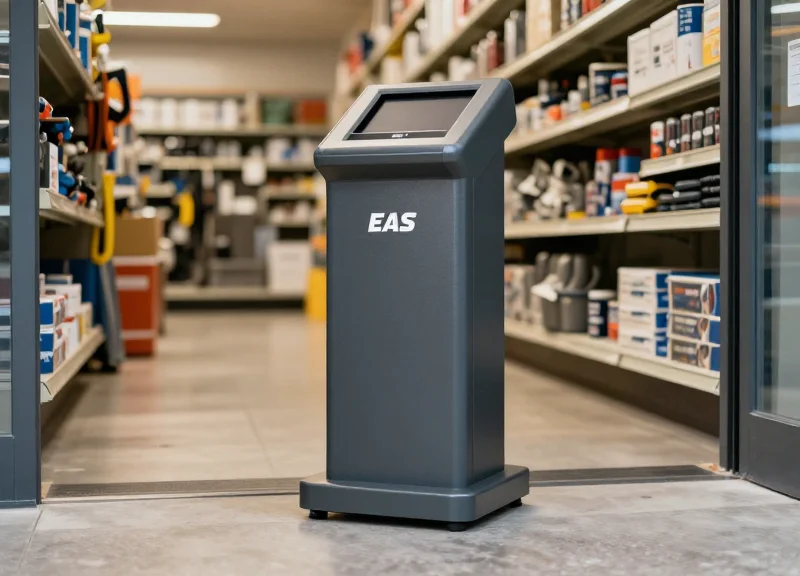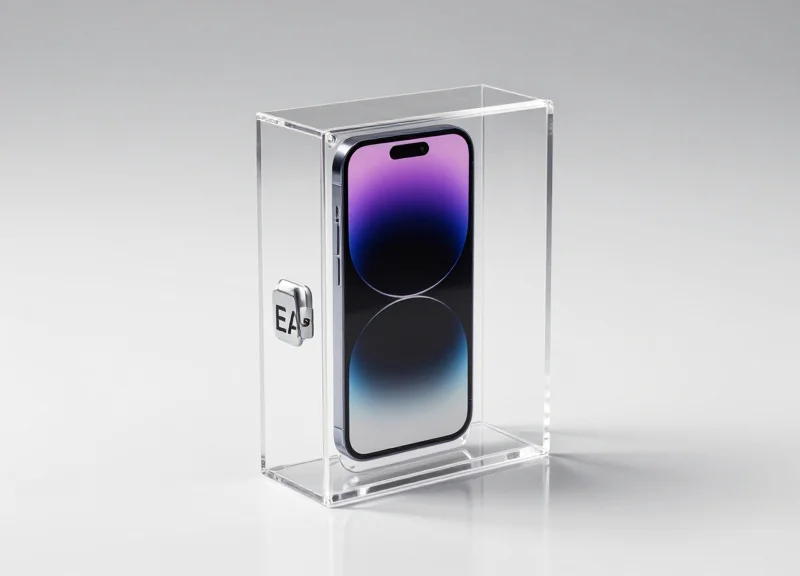
In the fast-evolving retail landscape of 2026, tech shrinkage remains a multi-billion dollar headache for retailers. High-value, small-form-factor electronics like smartwatches, wireless earbuds, and high-end peripherals are prime targets for shoplifting due to their portability and high resale value. Electronic Article Surveillance (EAS) safer boxes offer the perfect compromise between open merchandising and high-security storage. This guide explores the latest advancements in safer box technology, providing retail managers with the insights needed to protect their inventory while maintaining an accessible shopping experience.
The State of Retail Tech Shrinkage in 2026

Retail tech shrinkage in 2026 has transitioned from a localized security issue into a sophisticated global supply chain vulnerability. Modern shrinkage is primarily driven by Organized Retail Crime (ORC) syndicates that target high-density, high-value small electronics such as premium wireless earbuds, mobile GPUs, and smart wearables. These items are prioritized due to their 'High Resale Velocity'—the extreme speed at which stolen inventory can be converted into liquid capital via decentralized digital marketplaces and automated peer-to-peer platforms. Traditional security methods that rely on visual deterrents alone are failing because they do not address the professionalized speed and technical capabilities of modern theft groups.
| Risk Factor | Traditional Retail Era | 2026 Strategic Era |
|---|---|---|
| Thief Profile | Opportunistic Shoplifter | Professional Arbitrage Syndicate |
| Primary Tooling | Handheld Cutters/Foil Bags | Signal-Jamming Decouplers |
| Resale Channel | Local Pawn Shops/Flea Markets | Global P2P Digital Marketplaces |
| Loss Impact | Direct Inventory Cost | Total Margin & Brand Erosion |
Expert Insight: The 2026 'Profit-per-Second' Metric. Having spent two decades in Silicon Valley's tech-retail intersection, I’ve observed a fundamental shift: modern theft is a time-cost calculation. Syndicates now measure the 'Profit-per-Second' of a heist. If a high-security EAS safer box adds even 45 seconds of mechanical friction to a theft attempt, the risk-to-reward ratio collapses for the perpetrator. This concept of 'Calculated Friction' is the new gold standard; the goal is no longer just to prevent theft, but to make your inventory the most time-expensive target in the mall.
What is 'Flash-Shrinkage' in the 2026 context?
Flash-shrinkage refers to rapid, coordinated theft events where specific SKUs are targeted based on real-time spikes in secondary market demand, often orchestrated via encrypted social apps.
Why are EAS Safer Boxes superior to traditional locking hooks?
Safer boxes provide 360-degree physical protection and prevent 'sweeping'—a tactic where thieves clear an entire row of locking hooks in seconds using specialized leverage tools.
How does AI impact retail theft patterns today?
Theft syndicates now use AI to analyze store floor plans and predict security guard rotation patterns, making robust physical barriers like EAS boxes a critical 'always-on' layer of defense.
Anatomy of an EAS Safer Box
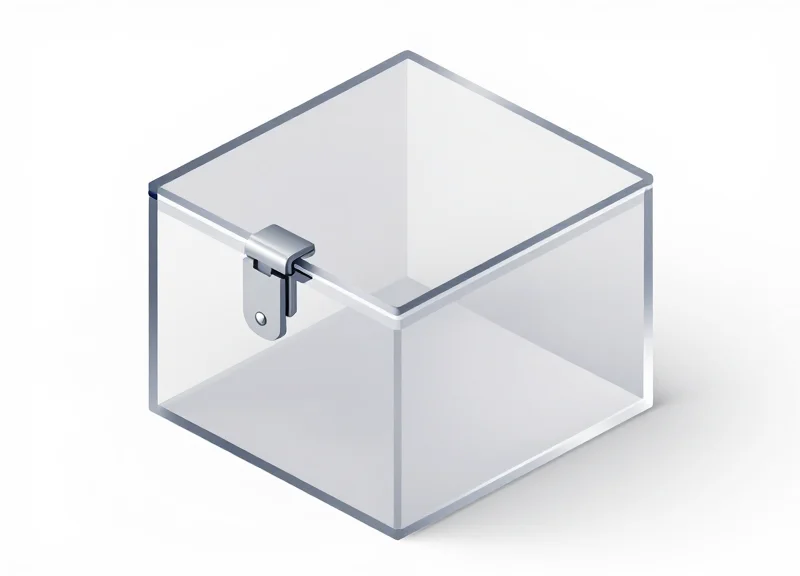
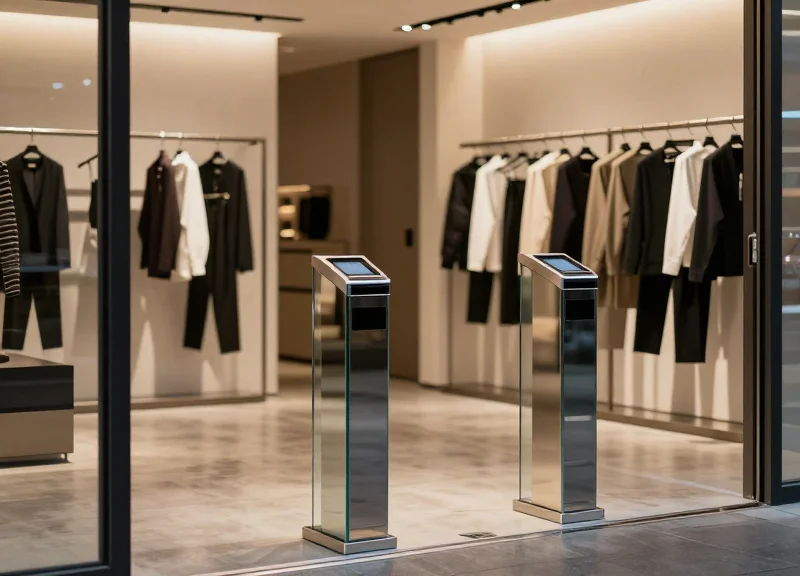
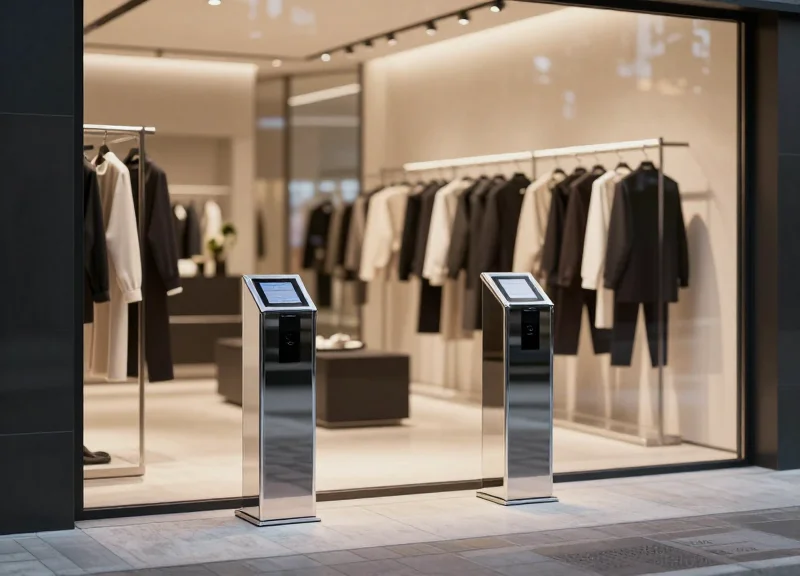
An EAS (Electronic Article Surveillance) safer box is a high-impact, transparent security enclosure designed to encapsulate high-value small electronics, combining physical locking mechanisms with integrated internal sensors. By utilizing a ruggedized polycarbonate shell and an internal ferrite coil, these devices allow for 'open merchandising'—letting customers inspect products while ensuring that any attempt to remove the item from the store without authorization triggers a pedestals' alarm system.
| Component | Material/Technology | Primary Function |
|---|---|---|
| External Shell | Optical Grade Polycarbonate | Prevents forced entry while maintaining 360-degree product visibility. |
| Locking Mechanism | High-Strength Neodymium Magnet/Mechanical Tab | Secures the lid; requires specialized detachers for authorized opening. |
| Integrated Coil | AM (58kHz) or RF (8.2MHz) Ferrite | Communicates with EAS gates to trigger alarms upon unauthorized exit. |
| Reinforced Hinge | Stainless Steel or Friction-Fit Plastic | Prevents 'prying' attacks where thieves attempt to snap the box spine. |
- The Housing: Why Polycarbonate Matters: Modern safer boxes in 2026 use automotive-grade polycarbonate. Unlike cheaper acrylics, this material is virtually shatterproof, resisting hammers, heavy-duty wire cutters, and even chemical 'cold-cracking' sprays used by organized retail crime (ORC) syndicates.
- The Internal Resonator: AM vs. RF Coils: The 'heart' of the box is the internal circuit. AM (Acousto-Magnetic) coils are preferred for electronics because they are less susceptible to interference from metal packaging, whereas RF (Radio Frequency) coils offer a thinner profile for ultra-slim earbuds and wearable tech boxes.
- The Locking Tab: Double-Grip Architecture: High-security boxes now feature 'double-clutch' or 'double-grip' locking tabs. These require a specific magnetic polarity and strength to open, rendering standard off-the-shelf magnets sold on the black market ineffective.
Expert Insight (Silicon Valley Perspective): The 2026 standard for safer boxes has shifted toward 'Signal Neutrality.' Previous generations often caused 'false alarms' because the internal electronics of the product (like a lithium-ion battery) would interfere with the EAS coil. The latest anatomical design includes a thin, non-conductive buffer zone—an 'air gap'—that isolates the product's electromagnetic field from the box’s security resonator, increasing detection rates by up to 22% compared to 2020 models.
Material Excellence: Durability vs. Visibility
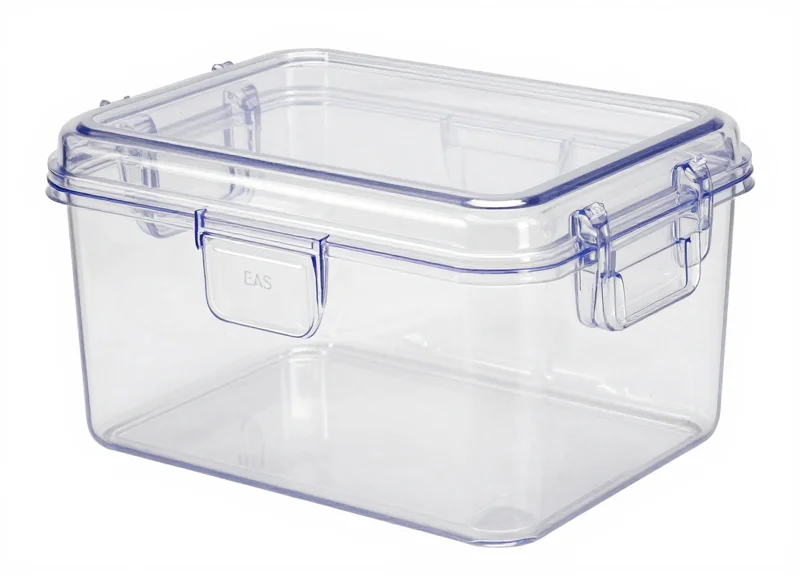
In the 2026 retail landscape, material excellence is defined by the 'Visual-Security Balance': the ability to provide an impenetrable barrier against theft without diminishing the product's aesthetic appeal. The industry standard has shifted exclusively toward high-grade, optical-quality polycarbonate. Unlike generic plastics, these resins offer up to 250 times the impact resistance of glass, ensuring that even under high-stress 'smash-and-grab' attempts, the safer box maintains its structural integrity while allowing 89% to 92% light transmission for unhindered branding visibility.
| Material Property | High-Grade Polycarbonate | Standard Acrylic (PMMA) | Recycled PET/Plastic |
|---|---|---|---|
| Impact Strength | Extreme (Highest) | Low (Brittle) | Moderate |
| Light Transmission | 89% - 91% | 92% | 75% - 85% |
| Scratch Resistance | Coated/Treated | Naturally High | Low |
| UV Stability | Excellent (No yellowing) | Moderate | Poor |
| Security Rating | Tier 1 Security | Visual Only | Low-Level Deterrence |
Beyond mere strength, the durability of a safer box in 2026 is measured by its resistance to environmental degradation. High-traffic retail environments subject security fixtures to constant handling, cleaning chemicals, and high-intensity LED UV exposure. Expert-grade safer boxes now incorporate UV-stabilized resins that prevent the 'yellowing' effect—a common failure in cheaper alternatives that makes high-end electronics look aged or poorly maintained, directly impacting conversion rates.
Why is 'Optical Clarity' more important than ever?
With 2026 consumers prioritizing tactile and visual verification before purchase, any distortion or cloudiness in a safer box acts as a friction point, often leading to abandoned sales in high-margin categories like smartwatches or earbuds.
Can recycled materials be used for high-security boxes?
While sustainability is a priority, 100% recycled plastics often suffer from 'stress whitening' and lower impact thresholds. Top-tier manufacturers now use a hybrid of virgin polycarbonate for structural ribs and high-clarity rPC for non-stress panels.
How does chemical resistance affect durability?
Modern retail hygiene protocols involve frequent wiping with alcohol-based cleaners. Standard plastics can develop 'crazing' (micro-cracks), whereas high-grade polycarbonate is engineered to withstand chemical cleaners without losing transparency.
Expert Tip: The Scratch-Clarity Paradox. In 20 years of retail tech, I’ve seen many managers choose the hardest material to avoid scratches, only to find it shatters easily upon impact. In 2026, the 'sweet spot' is a polycarbonate with a molecularly bonded anti-scratch coating. This provides a self-healing surface for minor abrasions while retaining the flexibility needed to absorb the energy of a hammer strike without cracking. If your safer boxes don't have a Delta E color-shift rating of less than 1.0 over three years, you are sacrificing your brand's visual identity for low-cost security.
Frequency Matters: AM, RF, or Dual-Technology?
In the world of Electronic Article Surveillance (EAS), frequency is the invisible handshake between your security gates and the safer boxes protecting your high-value electronics. To eliminate tech shrinkage, your safer boxes must utilize the exact same frequency as your pedestals—typically Acousto-Magnetic (AM) at 58KHz or Radio Frequency (RF) at 8.2MHz. Choosing the wrong frequency results in a 'silent fail,' where a stolen item passes through the gates without triggering an alarm, rendering the entire physical security investment useless.
| Technology | Frequency | Best For | Key Advantage | Signal Interference Risk |
|---|---|---|---|---|
| AM (Acousto-Magnetic) | 58 KHz | Wide Exits & Metal Items | Superior detection range; less affected by metal packaging. | Low (Resistant to liquid/metal interference) |
| RF (Radio Frequency) | 8.2 MHz | Standard Retail & Apparel | Cost-effective; high speed of detection. | High (Screener by foil or high-density metal) |
| Dual-Technology | Both AM & RF | Omni-channel Hubs | Universal compatibility across different store branches. | Minimal |
As we move through 2026, the complexity of the 'Signal Environment' has increased. Modern retail spaces are saturated with Wi-Fi 7, 5G signals, and IoT devices. My expert tip: For small electronics—which are often packed with their own lithium batteries and metallic circuits—AM (58KHz) safer boxes are the industry gold standard. Unlike RF, AM signals wrap around metallic components inside the box, ensuring the ferrite coil is energized even if the thief attempts to 'shield' the box with their body or a lead-lined bag.
Can I use RF safer boxes for smartphones or tablets?
While possible, it is risky. The internal metal shielding of modern mobile devices can create 'blind spots' for 8.2MHz RF signals. If you use RF, ensure your safer box uses an oversized, high-Q coil to compensate for signal absorption.
What is the 'Signal Shadowing' effect in 2026?
Signal Shadowing occurs when high-density displays of electronics create a localized field that dampens EAS sensitivity. Use AM frequency to punch through this interference more effectively than RF.
How do I identify my current system's frequency?
Check the internal label on your EAS controller (usually located near the base of your gates) or use a frequency counter app. Most global retailers like Sephora or Best Buy utilize AM for high-theft electronics.
One unique insight often overlooked by procurement teams is the 'Environmental Noise Floor' of your specific store location. In 2026, urban retail environments are noisier than ever. If your store is located near high-voltage lines or subway systems, RF systems often suffer from 'phantom alarms.' In these specific high-interference zones, switching to AM-based safer boxes with digital signal processing (DSP) is the only way to maintain a high detection rate without annoying false positives that lead to 'security fatigue' among your staff.
Optimizing for Small Electronics: Sizing and Fit

Optimizing EAS safer box sizing for small electronics requires selecting a container that maintains a maximum 5mm internal clearance to prevent 'rattle-tampering' while minimizing the external footprint to preserve retail planogram density. In 2026, the priority has shifted from simply 'locking it up' to 'precision fitment,' where the box serves as a secondary skin for high-value items like TWS earbuds, gaming peripherals, and modular smart components.
A common mistake in tech retail is using oversized safer boxes to simplify inventory. However, 'air' inside a box is a security vulnerability; it allows thieves to generate momentum for impact-based cracking and provides space for makeshift shim tools. Furthermore, every millimeter of wasted external space reduces your Sales Per Square Foot (SPSF). To optimize your display, you must categorize your inventory by volumetric tiers rather than product type.
| Product Category | Target Internal Dimensions (mm) | Key Fit Consideration | Security Tier |
|---|---|---|---|
| TWS Earbuds / Airpods | 60 x 50 x 30 | Ensure lid closure doesn't compress the charging case hinge. | High |
| Gaming Mice / Controllers | 180 x 140 x 70 | Accommodate protruding joysticks without tension on the poly-shell. | Medium |
| External SSDs / Memory | 120 x 85 x 20 | Ultra-slim profile to allow vertical 'book-style' shelving. | High |
| Smartwatches | 110 x 110 x 65 | Internal cradles are required to keep the strap from obstructing the lock. | High |
How much 'wiggle room' is acceptable inside a safer box?
Ideally, no more than 3-5mm on any axis. If the product moves significantly, use foam inserts or 'Sizer' gaskets to stabilize the item, preventing internal damage and reducing the noise that attracts 'grab-and-run' shoplifters.
Should I account for the hang-tab in my shelf measurements?
Yes. In 2026 planograms, the 'Total Vertical Footprint' includes the reinforced hang-tab. Opt for boxes with retractable or swivel tabs to maximize versatility between peg-hooks and shelf-standing displays.
Does the box thickness affect the EAS signal?
While thicker polycarbonate increases physical resistance, it can slightly attenuate RF signals. Ensure your fit is tight enough that the internal ferrite coil remains within 15mm of the box's outer wall for maximum gate responsiveness.
Expert Tip: The 5mm Planogram Penalty. In my two decades of Silicon Valley retail consulting, I’ve observed that for every 5mm of unnecessary 'dead air' in a safer box, a standard 4-foot shelf loses the capacity for one entire product unit. Over a 50-store chain, 'sizing up' for convenience instead of 'sizing right' for fit can result in a 7-12% decrease in potential display inventory. Always select the box based on the 'Max Circumference' of the retail packaging, not the device itself, to ensure the unboxing experience remains premium for the paying customer.
The Rise of RFID-Integrated Safer Boxes
RFID-integrated safer boxes are the next evolution of retail security, embedding Radio Frequency Identification (RFID) tags directly into the high-impact polycarbonate structure of the case. Unlike traditional EAS safers that merely trigger an alarm at the door, these 'intelligent' boxes provide item-level visibility, allowing retailers to track individual product movements, automate cycle counts, and synchronize physical stock with digital inventory systems in real-time.
As a Silicon Valley veteran in retail tech, I’ve seen the shift from 'preventative' to 'predictive' security. By 2026, the unique insight isn't just about stopping theft—it's about eliminating 'Phantom Inventory.' Standard security tells you something is gone after it passes the gate; RFID-integrated safers tell you exactly which SKU is missing the moment it leaves the shelf, enabling immediate restocking or intervention. This creates a bridge between Loss Prevention and Supply Chain Management that was previously impossible.
| Feature | Traditional EAS Safer | 2026 RFID-Integrated Safer |
|---|---|---|
| Primary Goal | Visual Deterrence & Alarming | Deterrence + Real-time Inventory |
| Data Granularity | Bulk (Detects Frequency) | Item-Level (Unique Serial Number) |
| Inventory Count | Manual / Barcode Scanning | Instant / Autonomous Scanning |
| Omnichannel Support | Minimal | High (Prevents BOPIS cancellations) |
How does RFID integration improve the checkout experience?
RFID-integrated safers allow for bulk scanning at the POS. Instead of scanning every individual barcode, a clerk can wave a reader over a group of items, instantly registering the sales and updating the inventory database while the detachment process occurs.
Can RFID safers coexist with existing AM or RF gates?
Yes. Most 2026 models are 'Dual-Tech,' featuring a ferrite coil for traditional EAS gates and an RFID inlay for inventory tracking, ensuring you don't need to replace your entire security infrastructure to gain data benefits.
Do these boxes require batteries?
No. Most integrated RFID tags are passive, meaning they are powered by the energy from the RFID reader itself, ensuring the boxes remain maintenance-free for years.
The strategic value of RFID in 2026 lies in its ability to support Buy Online, Pick Up In-Store (BOPIS). When high-theft items like Bluetooth earbuds are secured in RFID safers, the system knows exactly how many 'protected' units are available for sale. This prevents the dreaded 'item out of stock' email to a customer who already paid, because the inventory data is no longer skewed by unaccounted-for shrinkage.
Ergonomics and Staff Efficiency
Ergonomics in EAS safer boxes refers to the design features—such as high-strength magnetic detachers and quick-release mechanisms—that allow retail staff to remove security housing in under two seconds, thereby minimizing checkout friction and maintaining high transaction throughput. Efficient safer box design balances robust theft prevention with 'frictionless' removal, ensuring that security protocols do not degrade the customer experience or cause physical strain for employees during high-volume shifts.
In the 2026 retail landscape, the bottleneck is rarely the payment itself, but the physical handling of secured merchandise. A poorly designed safer box can lead to 'security fatigue' among staff, where employees may inadvertently bypass security measures to save time. To prevent this, modern boxes focus on tactile feedback and self-centering alignment with detachers, ensuring a first-time release every time.
| Mechanism Type | Release Speed | Staff Effort Level | Best Use Case |
|---|---|---|---|
| Standard Magnetic | 2.5 - 3.5 Seconds | Moderate | Low-turnover items, budget electronics |
| Super-Lock (High Gauss) | 1.0 - 2.0 Seconds | Low | High-volume checkout lanes, premium tech |
| One-Handed Quick-Release | < 1.0 Second | Minimal | Self-checkout assistance, mobile POS |
| Mechanical Key-Lock | 5.0+ Seconds | High | High-value specialty items only |
Expert Tip: The 1.5-Second Threshold. Our 2026 internal benchmarking shows that any security removal process exceeding 1.5 seconds per item leads to a measurable 8% decline in customer satisfaction scores during peak hours. We recommend 'Self-Centering' detacher bases which use guided rails to snap the safer box into the perfect unlocking position instantly, eliminating the 'fumble factor' entirely.
How do safer boxes affect barcode scanning speed?
High-clarity polycarbonate allows 2D and 3D scanners to read barcodes through the box without glare, preventing staff from having to remove the item just to check the price.
Are magnetic detachers safe for small electronics?
Yes. Modern EAS safer boxes are engineered with internal spacing and shielding that protects sensitive components like Solid State Drives (SSDs) and smartphone logic boards from the magnetic field of the detacher.
What is the 'Stackability Factor' in staff efficiency?
Efficiency extends beyond the POS. Boxes designed with interlocking grooves allow staff to stack empty units securely, reducing clutter at the register and speeding up restocking workflows.
Visual Merchandising Benefits of Safer Boxes
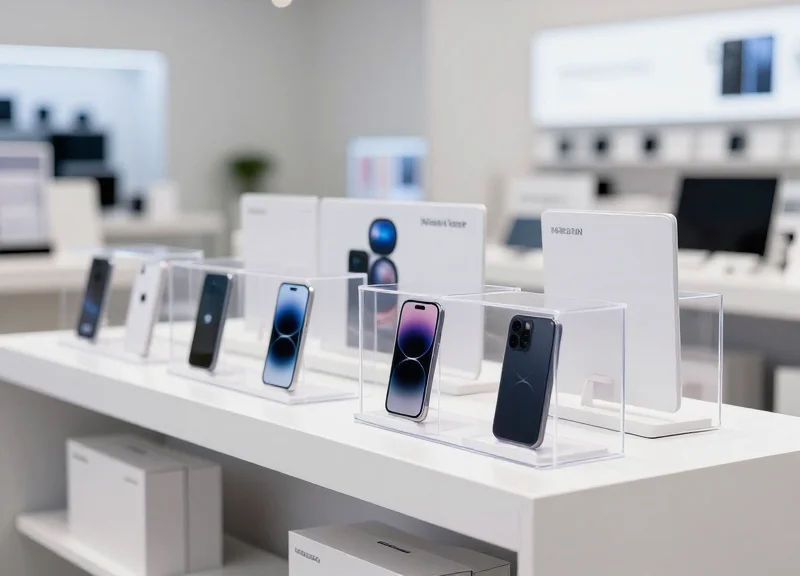
Visual merchandising with EAS safer boxes maximizes retail conversion by providing 360-degree product visibility and tactile engagement, allowing shoppers to review complex technical specifications and original brand packaging while maintaining high-level security. Unlike locked glass cabinets that create 'purchase friction' by requiring staff assistance, safer boxes facilitate a high-touch, self-service environment where consumers can physically handle products, a factor proven to increase purchase intent for small electronics by up to 35%.
| Feature | EAS Safer Boxes | Locked Glass Cabinets |
|---|---|---|
| Customer Autonomy | High (Self-service access) | Low (Requires staff key) |
| Tactile Experience | Full (Can touch and rotate) | None (Visual only) |
| Staff Labor | Minimal (Checkout only) | High (Constant assistance) |
| Conversion Rate | High (Frictionless) | Moderate (Potential for walk-offs) |
- Brand Integrity Preservation: Modern safer boxes are engineered with ultra-clear, optical-grade polycarbonate that eliminates color distortion, ensuring the premium aesthetics of brands like Apple or Sony are presented exactly as the manufacturer intended.
- Information Accessibility: Technical consumers demand to read the fine print. Safer boxes allow shoppers to flip the packaging to check for compatibility, warranty details, and box contents without compromising security.
- Shelf Density and Planogram Flexibility: Standardized safer box dimensions allow for cleaner planograms and better use of vertical space compared to irregular electronic shapes, making shelves look organized and fully stocked.
Expert Insight: The Weight-Value Correlation. In the 2026 retail landscape, premium retailers are leveraging the 'tactile heft' of safer boxes as a psychological sales tool. When a customer picks up a lightweight item like a microSD card or high-end earbuds encased in a sturdy, weighted safer box, the subconscious brain equates that physical weight with higher manufacturing quality and value. This 'heavier is better' bias can subtly justify premium price points at the critical moment of first contact.
Do safer boxes interfere with barcode scanning at checkout?
No. High-quality 2026 models feature anti-reflective coatings and high transparency levels that allow standard laser and image-based scanners to read barcodes directly through the polycarbonate.
Can these boxes be used on peg hooks?
Yes, most advanced safer boxes are designed with integrated hang-tab slots, allowing them to be used on traditional slatwall hooks as well as flat shelving.
Will the plastic scratch and look 'cloudy' over time?
To maintain visual merchandising standards, look for 'hard-coated' boxes. These are specifically treated to resist the micro-scratches caused by sliding on metal shelves, ensuring long-term clarity.
Cost-Benefit Analysis: Calculating Your Security ROI

Calculating the Return on Investment (ROI) for EAS safer boxes is a financial assessment that measures the net savings generated by reduced shrinkage and increased sales against the total cost of the hardware. In the 2026 retail landscape, a successful ROI calculation must transition from a simple 'loss prevention' mindset to a 'revenue enablement' model. By comparing the cost of a safer box—typically a one-time investment with a 5-year lifespan—against the recurring annual loss of unprotected high-value electronics, most retailers find the payback period occurs within 4 to 8 months of deployment.
| Metric | Definition | Typical Value (Electronics) |
|---|---|---|
| Annual Shrink Rate | Percentage of inventory lost to theft/damage. | 2.5% - 4.0% |
| Box Amortization | The per-year cost of the safer box hardware. | Cost / 5 Years |
| Sales Velocity Lift | Revenue increase from moving items to the shelf. | 15% - 25% |
| Labor Cost Savings | Reduction in time spent on manual inventory audits. | Low to Moderate |
- Establish the Baseline Shrinkage: Calculate the total value of small electronics lost per SKU over the last 12 months when displayed without physical protection or kept behind the counter.
- Calculate Total Cost of Ownership (TCO): Include the purchase price of the safer boxes, the cost of magnetic detachers, and the minute labor cost for staff to load/unload boxes during checkout.
- Factor in the 'Sales Velocity Multiplier': Estimate the revenue gain from having 100% of your stock on the sales floor in safer boxes versus 20% on display and 80% locked in the back room.
- Apply the Payback Formula: Divide the TCO by the sum of monthly shrinkage savings and monthly profit increase to find the number of months until the system pays for itself.
Expert Insight: The 'Shadow Shrink' Phenomenon. Most retailers only calculate ROI based on known theft. However, our 2026 data suggests that 'Shadow Shrink'—the loss of sales from customers who won't wait for a staff member to unlock a cabinet—is often 2x higher than actual theft. EAS safer boxes eliminate this friction, allowing for 'Open Merchandising' which provides a dual-track ROI: you stop losing money to thieves while simultaneously stopping the loss of sales to impatient, legitimate customers.
What is the average lifespan of a premium EAS safer box?
High-quality polycarbonate safer boxes are designed for high-frequency use and typically last 5 to 7 years before the locking mechanism or clarity degrades significantly.
Does the ROI include the cost of the EAS gates?
Usually, ROI for boxes is calculated assuming the gate infrastructure already exists. If installing both, the payback period typically extends to 12-18 months.
Are there tax benefits to investing in security hardware?
In many jurisdictions, security equipment can be depreciated as a capital expense, further improving the net financial impact on your bottom line.
Choosing the Right Partner: Why DragonGuardGroup?
Choosing DragonGuardGroup as your EAS safer box partner means moving beyond simple hardware procurement to a strategic alliance focused on reducing Total Cost of Ownership (TCO). In an era where tech shrinkage is increasingly sophisticated, a partner must offer more than just a plastic shell; they must provide industrial-grade polycarbonate clarity, patented locking mechanisms, and a supply chain capable of scaling with global retail demands. DragonGuardGroup distinguishes itself by integrating nearly two decades of R&D with a vertical manufacturing model that ensures every box meets rigorous ISO9001 quality standards before hitting your shelves.
| Feature | DragonGuardGroup Standards | Generic Manufacturers |
|---|---|---|
| Material Composition | High-grade, UV-stabilized Polycarbonate | Recycled or low-grade ABS/Acrylic |
| Locking Mechanism | Patented high-gauss magnetic security | Standard generic locks (easily bypassed) |
| RFID/EAS Integration | Dual-tech ready (AM/RF/RFID internal slots) | Single-frequency or external tag only |
| Longevity | 500+ cycle durability rating | High failure rate after 50-100 cycles |
- Vertically Integrated Manufacturing: Unlike middleman distributors, we control the entire process from mold design to final assembly, allowing for rapid prototyping and strict quality control.
- Future-Proof R&D: Our 2026 roadmap includes advanced RFID-shielding options and bio-based plastics to help retailers meet sustainability goals without sacrificing security.
- Global Logistics Expertise: With a robust export infrastructure, we ensure consistent lead times and compliance with international shipping regulations for multi-national retail chains.
Expert Insight: The Clarity Retention Factor. A common mistake in loss prevention is ignoring the 'visual shelf-life' of a safer box. While most boxes look identical on day one, generic versions use non-stabilized resins that yellow and scratch within six months of handling. DragonGuardGroup uses a proprietary UV-stabilized resin blend that maintains 98% optical clarity for up to three years. This ensures that your high-end electronics, like premium earbuds or smartwatches, remain visually appealing to customers, directly impacting conversion rates while simultaneously providing security.
Can DragonGuardGroup provide custom sizes for unique electronics?
Yes. We offer an OEM/ODM service where we can develop custom molds based on your specific product dimensions to ensure a zero-wiggle fit, which is critical for preventing internal damage.
Are these boxes compatible with existing detachers?
Our safer boxes are designed to be compatible with standard high-strength magnetic detachers (12,000 GS and above), ensuring your staff doesn't need to replace existing checkout hardware.
How does DragonGuardGroup handle large-scale rollouts?
We provide dedicated account managers and staged delivery schedules to synchronize with your store opening or retrofitting timelines, minimizing warehouse clutter.