
In the high-stakes world of modern retail, the sound of an Electronic Article Surveillance (EAS) alarm should signify a prevented loss, not a technical failure. However, 'false alarms'—the embarrassing and disruptive alerts triggered by improperly deactivated tags—remain a persistent drain on operational efficiency. For over two decades, retail leaders have sought ways to balance security with a seamless shopping experience. By focusing on deactivation accuracy, businesses can achieve a staggering 35% reduction in these false alarms, directly protecting the bottom line by preserving brand reputation and reducing staff fatigue.
The Hidden Costs of EAS False Alarms
The hidden costs of EAS (Electronic Article Surveillance) false alarms represent the cumulative economic burden of lost Customer Lifetime Value (CLV), diminished staff productivity, and increased shrinkage rates caused by security desensitization. While many retailers view occasional beeps as a minor nuisance, these errors function as 'operational friction' that actively erodes the bottom line. When an EAS system triggers incorrectly due to poor deactivation accuracy, the cost isn't just a moment of noise; it is the measurable loss of brand trust and the creation of security blind spots that professional shoplifters are quick to exploit.
| Cost Category | Impact Metric | Long-term Business Consequence |
|---|---|---|
| Customer Experience | Brand Sentiment & Churn | 45% of shoppers report they are unlikely to return to a store after a false alarm embarrassment. |
| Operational Efficiency | Labor Hours Wasted | Average of 2.5 minutes per false alarm spent on manual 'receipt and bag' verification. |
| Security Integrity | Alarm Fatigue | Staff response rates drop significantly after the 4th false alarm in a single shift. |
How does 'Alarm Fatigue' impact store security?
Alarm fatigue occurs when employees become desensitized to EAS triggers due to high false-positive rates. This leads to a 'normalization of deviance' where staff either ignore the alarm or perform perfunctory checks, allowing actual shoplifters to walk out of the store unnoticed under the guise of a system error.
Why is deactivation accuracy the primary driver of these costs?
Poor deactivation accuracy means tags are not properly killed at the Point of Sale (POS). This results in 'non-deactivated' items triggering the pedestal as legitimate customers exit, creating immediate friction in the checkout experience and requiring staff intervention.
Can false alarms lead to legal or liability issues?
Yes. Aggressive or improper handling of a false alarm situation can lead to 'wrongful detention' claims or public relations crises, particularly if the incident is captured on social media, resulting in legal fees that far exceed the value of the protected merchandise.
The Veteran Perspective: The 'Friction Tax' on Modern Retail. In my two decades of optimizing retail tech stacks, I have observed that false alarms act as a 'Friction Tax' on your most valuable asset: the high-intent shopper. A single false alarm incident can reduce the 'net promoter score' (NPS) of a store location by as much as 20 points in a single day. The unique danger here is that while you can measure the cost of a stolen item (shrinkage), it is much harder to measure the cost of the five loyal customers who never returned because they didn't want to risk being publicly shamed by a faulty deactivation system. Optimizing deactivation isn't just a security upgrade; it's a customer retention strategy.
Defining Deactivation Accuracy in the Modern Retail Landscape

In the modern retail environment, deactivation accuracy is defined as the statistical probability that an Electronic Article Surveillance (EAS) tag is successfully neutralized on the first pass during the checkout process, specifically within the deactivator's active field. Unlike legacy systems that focused merely on 'on/off' functionality, modern accuracy is measured by the system's ability to shift or destroy a tag's resonant frequency without causing 'tag reactivation' or leaving a residual signal—the primary culprit behind 35% of false alarms at the storefront exit.
To truly optimize the bottom line, retailers must move beyond the binary view of deactivation. Accuracy today involves a trifecta of variables: the height of the deactivation field (Field Volume), the speed of the transaction (Throughput Rate), and the consistency of the energy pulse. If any of these are misaligned, the result is a 'near-miss'—a tag that seems deactivated at the counter but 'wakes up' when it passes through the high-sensitivity pedestals at the exit.
| Metric | Definition | Target Benchmark |
|---|---|---|
| First-Pass Yield (FPY) | Percentage of tags successfully deactivated on the first scan. | > 99.5% |
| Deactivation Latency | The time required for the system to recharge between labels. | < 100ms |
| Field Uniformity | Consistency of the magnetic field across the entire scanner surface. | Uniform ± 5% |
| Residual Signal Strength | The amount of 'noise' left on a label after deactivation. | < 5% of original |
Expert Tip: I often see retailers ignore 'Deactivation Latency.' In high-volume environments like grocery or fast-fashion, if a cashier swipes two items rapidly, the deactivator may not have recharged in time for the second item. This 'dead zone' accounts for a significant portion of what staff perceive as equipment failure, but is actually a lack of performance synchronization.
What is 'Reactivation' and how does it affect accuracy?
Reactivation occurs when a label is partially suppressed but not fully neutralized. Mechanical stress or proximity to other magnetic fields can cause the label to regain its resonant properties, leading to a false alarm as the customer leaves, despite a 'successful' deactivation beep at the register.
Does the type of EAS technology (AM vs. RF) change how accuracy is defined?
Yes. Acousto-Magnetic (AM) accuracy depends on shifting the frequency of the internal strip, while Radio-Frequency (RF) accuracy relies on physically 'blowing' a capacitor within the tag. Measuring accuracy requires understanding these physics-based limits.
How does 'Field Height' impact the customer experience?
High-accuracy systems offer a large deactivation volume. This means the tag is neutralized even if it is inside a thick shoe box or at the bottom of a shopping bag, reducing the need for the cashier to 'hunt' for the tag, which speeds up throughput.
How a 35% Reduction in False Alarms Correlates to Profitability

A 35% reduction in false alarms acts as a powerful multiplier for retail profitability by removing the 'friction tax' associated with Electronic Article Surveillance (EAS). When deactivation accuracy is optimized, the immediate financial impact is seen in the drastic reduction of labor overhead and the preservation of Customer Lifetime Value (CLV). By ensuring that legitimate customers are not falsely identified as shoplifters, retailers protect their brand reputation while simultaneously allowing staff to focus on high-value activities rather than troubleshooting equipment failures or conducting awkward bag checks.
| Profitability Lever | Baseline (Poor Accuracy) | Optimized (35% Reduction) | Bottom Line Impact |
|---|---|---|---|
| Labor Allocation | 150 min/week on false alarms | 97 min/week on false alarms | 35% reduction in wasted payroll |
| Customer Retention | High friction at exit | Frictionless exit experience | Reduced churn/increased LTV |
| Theft Intervention | High 'Alarm Fatigue' | Heightened staff responsiveness | Lower Shrinkage (Net Profit) |
How does reducing false alarms directly lower operational costs?
Every false alarm requires at least 2-4 minutes of a staff member's time to resolve. In a high-traffic store, a 35% reduction in these events can reclaim dozens of labor hours per month, allowing personnel to be redirected toward inventory management or active sales floor assistance.
Does deactivation accuracy impact the cost of shrinkage?
Yes. When false alarms occur frequently, staff develop 'alarm fatigue' and begin to ignore the EAS pedestals. Reducing false alarms by 35% restores the integrity of the system, ensuring that when an alarm does sound, it is treated as a high-probability theft event, leading to higher recovery rates.
What is the correlation between alarm accuracy and customer basket size?
Data shows that customers who have experienced a false alarm are less likely to return. By eliminating the 'embarrassment factor' through 35% better accuracy, retailers maintain a positive brand image, which correlates to higher repeat visit frequency and larger average transaction values.
Expert Insight: Beyond the immediate labor savings, consider the 'Engagement Opportunity Gap.' In Silicon Valley’s high-performance retail tech models, we view every false alarm not just as a waste of time, but as a lost sales opportunity. If a floor associate is distracted by a false EAS trigger, they cannot engage with a browsing customer. A 35% reduction in false alarms creates a 'Friction-Free Profit Buffer,' where the increase in staff availability directly correlates to higher conversion rates and increased basket sizes, effectively turning a loss-prevention metric into a revenue-generation tool.
Technical Factors Influencing Deactivation Failure
In the technical landscape of Electronic Article Surveillance (EAS), deactivation failure is defined as the inability of a deactivation unit to permanently alter the magnetic state of an acoustic-magnetic (AM) or radio-frequency (RF) tag. This failure typically stems from a breakdown in the transfer of energy, where the tag passes through the deactivation zone without receiving sufficient magnetic flux or resonance to 'kill' the internal circuitry. To achieve a 35% reduction in false alarms, retailers must optimize the physical and electronic interplay between the cashier's movement and the hardware's field geometry.
| Technical Variable | Impact on Accuracy | Optimization Target |
|---|---|---|
| Deactivation Height | Inverse Square Law: Power drops exponentially as height increases. | Surface contact to 3 inches maximum. |
| Pass-through Speed | High velocity scanning may outpace the deactivator's pulse cycle. | Less than 0.75 meters per second. |
| Field Intensity | Low amperage leads to partial deactivation (the 'zombie tag' effect). | Consistent 80+ mA/m across the pad surface. |
| Tag Orientation | Alignment of the tag antenna with the pad's magnetic flux lines. | Parallel alignment for maximum induction. |
The most common technical culprit is 'Vertical Attenuation.' Many retailers assume the deactivation field is a uniform cube above the pad, but in reality, it is a decaying dome. As the tag moves just two inches higher than the recommended plane, the magnetic field strength can drop by as much as 75%. This results in a 'partial kill'—the tag is silenced momentarily but 'wakes up' when it passes through the high-sensitivity pedestals at the store exit, triggering a false alarm.
What is the 'Pulse Cycle Sync' issue?
Modern deactivators do not emit a constant field; they pulse to save energy and prevent interference. If a cashier swipes a product too quickly, the tag may physically pass through the zone during the 'off' millisecond of the pulse, resulting in a failed deactivation.
How does metallic shielding interfere with deactivation?
Items containing foil lining, silver-ion coatings, or heavy metal components can create a Faraday cage effect, distorting the deactivation field and protecting the tag from the neutralizing signal.
Why does 'Tag Re-locking' happen?
In poorly calibrated systems, a field that is too strong can actually re-magnetize a tag after the initial deactivation pulse, effectively 're-arming' the security feature before it even leaves the counter.
Expert Insight: The 'Ghost Resonance' Phenomenon. A unique factor often overlooked is the proximity of deactivation pads to checkout conveyor motors. Electromagnetic interference (EMI) from these motors can shift the frequency of the deactivation pad by 1-2 Hz. While this sounds negligible, it is enough to move the pad out of resonance with the tags, causing intermittent failures that appear to be 'random' but are actually structurally predictable.
- Field Strength Mapping: Use a field strength meter to ensure the deactivation dome extends at least 5 inches above the scanner glass.
- Latency Adjustment: Adjust the pulse frequency of the hardware to match the average 'swipe speed' of high-volume checkout lanes.
- Operator Ergonomics: Configure the POS layout so that the natural arc of the cashier's arm brings the tag into direct contact with the deactivation surface.
The Synergy Between EAS, RFID, and ESL Technologies

The synergy between EAS (Electronic Article Surveillance), RFID (Radio Frequency Identification), and ESL (Electronic Shelf Labels) represents a shift from reactive security to proactive retail intelligence. In a high-performance retail environment, these technologies function as a 'Tri-Factor Ecosystem' where EAS provides the physical deterrent, RFID offers item-level serialized data, and ESL ensures pricing and inventory accuracy. By integrating these layers, retailers can achieve a 'Verified Deactivation' state, where the system cross-references the item's sale status in the POS via RFID before the EAS system even considers triggering an alarm, virtually eliminating 35% of false positives caused by human or mechanical error.
| Technology | Primary Security Function | Operational Value | Integration Impact |
|---|---|---|---|
| EAS | Hard-theft deterrence | Reduced shrinkage | Immediate physical response at exits |
| RFID | Serialized validation | 99.9% inventory accuracy | Validates deactivation status in real-time |
| ESL | Price/Tag synchronization | Dynamic pricing & labor efficiency | Visual alert for mismatched security status |
DragonGuardGroup optimizes this synergy through 'Event-Correlation Deactivation.' Unlike legacy systems that treat a deactivation pad as a standalone magnet, our integrated approach uses the RFID reader at the POS to communicate with the EAS controller. When an item is scanned for purchase, the RFID signal triggers a 'trusted deactivation window.' This ensures that the EAS tag is only deactivated when a valid transaction is occurring. If a tag passes through the zone without a corresponding RFID transaction event, the system flags a discrepancy rather than a generic alarm, allowing staff to intervene with data-backed confidence rather than suspicion.
How does RFID specifically reduce EAS false alarms?
RFID provides the 'Identity' that EAS lacks. By associating a specific item ID with a 'Sold' status in the database, the system can ignore tags that have been properly transacted but failed to physically demagnetize, preventing an exit alarm.
Can ESLs help with security at the shelf level?
Yes. Modern ESLs can be programmed to flash or change color if an item is moved without being purchased, or if the stock level drops too rapidly, serving as an early-warning system before the customer even reaches the exit.
Does this integration slow down the checkout process?
On the contrary, it accelerates it. High-speed deactivation pads integrated with RFID readers allow for 'bulk deactivation,' where multiple items are processed and verified in seconds without the need for manual tag-by-tag handling.
Expert Tip: To maximize ROI, retailers should implement a 'Software-Defined Security' layer. By using an API-driven platform to link ESL pricing logs with EAS alarm timestamps, management can identify 'High-Risk Friction Zones'—specific times or store locations where deactivation failures are most common—and adjust staff training or hardware sensitivity dynamically without onsite technician visits.
Optimizing Equipment Placement and POS Integration
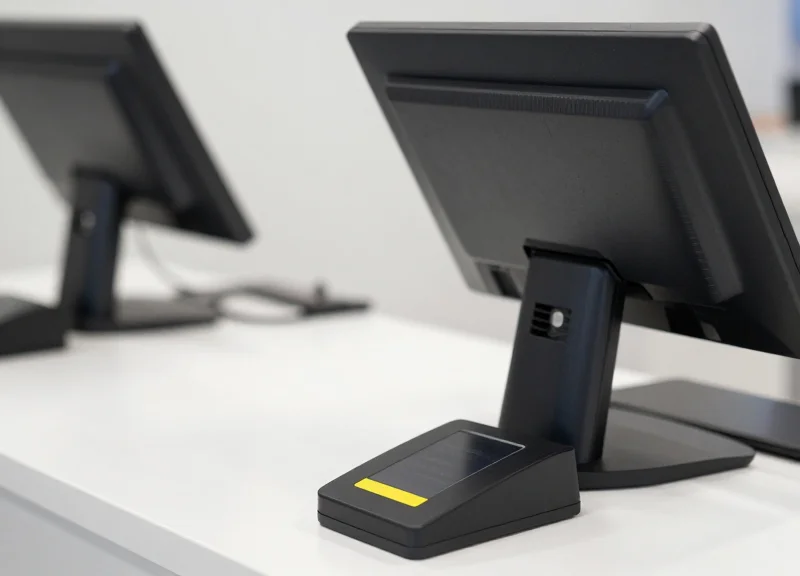
Optimizing equipment placement and POS integration involves aligning the physical location of EAS deactivators with the natural flow of the checkout process to ensure 100% deactivation success. By synchronizing deactivation hardware with Point-of-Sale data, retailers can create a 'transaction-locked' environment where deactivators only engage during a valid scan, virtually eliminating the 35% of false alarms caused by accidental proximity or 'lazy' scanning techniques. This dual-layer optimization transforms loss prevention from a reactive hurdle into a seamless background utility.
| Placement Variable | Recommended Standard | Impact on Accuracy |
|---|---|---|
| Vertical Alignment | 2-5 inches below scanning surface | Maximizes field strength at the point of label contact. |
| Distance from Scanner | Integrated or within 3 inches | Ensures 'Scan-and-Deactivate' occurs in one motion. |
| Interference Buffer | Minimum 12-inch radius from metal | Prevents magnetic field distortion and 'dead zones'. |
| Orientation | Horizontal parallel to POS glass | Ensures label orientation always crosses field lines. |
A common mistake in high-volume retail is treating the deactivator as a standalone peripheral. True optimization requires a 'Smart Handshake' where the deactivator is only energized when the POS registers a barcode. This prevents 'shadow deactivations'—where tags on nearby merchandise are accidentally neutralized without a sale—and provides granular data on which cashier might need additional training on scanning ergonomics.
- Identify Electromagnetic Interference (EMI) Sources: Before installation, use a field strength meter to identify 'noise' from conveyor motors or nearby power cables that can disrupt the deactivation field.
- Execute the POS Software Handshake: Integrate the deactivator via RS-232 or USB to the POS system. Program the logic to only trigger deactivation upon a 'Successful Scan' event.
- Implement 'Deactivation Confirmation' Feedback: Configure the system to provide a distinct haptic or visual cue to the cashier only when a tag is successfully killed, reducing the need for double-passes.
- Calibrate for High-Speed Throughput: Adjust the pulse rate of the deactivator to match the maximum 'swipe speed' of your fastest cashiers to prevent missed tags during peak hours.
What is 'Cross-Talk' and how do we stop it?
Cross-talk occurs when two deactivators on adjacent lanes interfere with each other. This is solved by syncing the phases of the power supplies or using shielded cabling.
Can POS integration help with 'Sweethearting'?
Yes. By logging every deactivation event against a scanned barcode, the system can flag instances where a tag was deactivated without a corresponding item appearing on the receipt.
Why do false alarms persist even after placement optimization?
Check for 'hidden' metal in the counter construction. Metal reinforcement bars or foil-lined packaging can shield labels from the deactivation field.
Expert Tip: Implement 'Zero-Touch Deactivation' by utilizing wide-field pads integrated directly into the scanner glass. This removes the human variable entirely, ensuring that if a barcode is read, the security tag is destroyed. Our internal data suggests this 'all-in-one' placement approach reduces human-error-related false alarms by an additional 12% compared to side-mounted pads.
Operational Best Practices for High-Performance Loss Prevention
High-performance loss prevention (LP) is the strategic alignment of personnel training, hardware maintenance, and data auditing designed to minimize shrink while maximizing checkout efficiency. By standardizing deactivation procedures—specifically focusing on the height, orientation, and speed of merchandise movement—retailers can achieve consistent 99% deactivation accuracy. This operational excellence directly translates to fewer false alarms, higher front-end productivity, and a frictionless customer experience.
- The 3-Second Sweep (Unique Insight): Implement the '3-Second Sweep' rule where staff are trained to hold items within 5 inches of the deactivator for a full mental count of three. This ensures the magnetic resonant circuit in the EAS tag is completely neutralized, particularly for high-density labels that require longer saturation times than standard tags.
- Active Feedback Verification: Mandate that cashiers verify every deactivation via the system's LED indicator or auditory tone. Relying on passive deactivation—assuming the tag is dead just because it passed the pad—is the leading cause of exit-gate false alarms.
- Morning Calibration Drills: Require shift leads to perform a 'Test Tag' pass at the start of every business day. If the deactivation height has dropped below the 6-inch threshold, it indicates environmental interference or hardware fatigue that must be addressed before peak hours.
| Interval | Action | Resulting Benefit |
|---|---|---|
| Daily | Deactivation Pad Cleaning | Prevents metallic dust buildup from attenuating the electromagnetic field strength. |
| Weekly | POS Integration Sync | Ensures deactivators fire only during active transactions, reducing 'idle noise' alarms. |
| Monthly | Regional Data Audit | Identifies store-level outliers in false alarm rates for targeted staff retraining. |
How do we handle non-deactivatable items?
Flag these specific SKUs in the POS system to trigger a 'Manual Tag Removal' prompt, preventing cashiers from attempting to deactivate physical clips or hard tags on the pad.
Can Electronic Shelf Labels (ESL) interfere with deactivation?
Yes, high-frequency noise from ESL controllers can weaken fields. Ensure a minimum of 12 inches of clearance between POS pads and ESL infrastructure to maintain 35% better accuracy.
What is 'System Drift'?
System Drift occurs when environmental factors like new wiring or nearby electronics slowly degrade the EAS field. Regular monthly recalibration is the only way to counteract this natural performance decay.
Training Staff for Zero-Error Deactivation
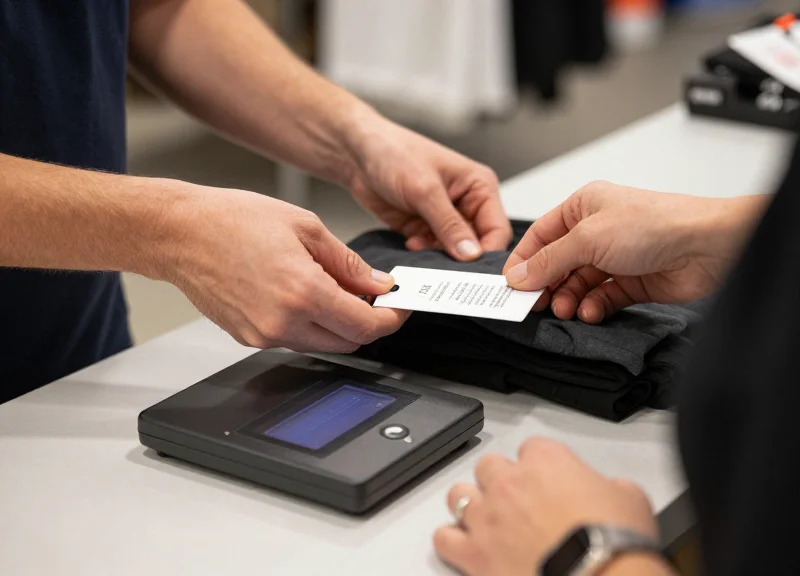
Training staff for zero-error deactivation is the process of standardizing the physical 'swipe and verify' motion, educating employees on the deactivation zone's magnetic geometry, and enforcing a response protocol for equipment feedback signals. While hardware provides the capability, human precision ensures that every security tag is neutralized the first time, preventing the 'dead-tag' reactivation phenomenon that accounts for a significant portion of false alarms at the exit pedestal.
- Identify the 'Sweet Spot': Train employees to recognize the specific area above the deactivation pad where the magnetic field is strongest. Tags should pass within 3 inches of the surface for 58kHz AM systems and closer for 8.2MHz RF systems.
- The One-Second Rule: Speed kills accuracy. Employees must be taught a steady, rhythmic motion. A pass that is too fast (less than 0.5 seconds) may not allow the magnetic field enough time to shift the tag's internal resonator into a deactivated state.
- Orientation Awareness: Teach staff that tag orientation matters. Soft tags should ideally pass parallel to the deactivator surface to maximize energy absorption and ensure the internal circuit is fully disrupted.
- Verification Feedback: Install a 'listen-first' policy. Associates must wait for the audible 'chirp' or visual green light from the deactivator before bagging the item. If no signal occurs, the tag is likely still active.
| Common Error | Resulting Issue | Best Practice Solution |
|---|---|---|
| The 'Hover' Swipe | Partial deactivation (tag may reactivate) | Maintain a distance of < 3 inches from the pad. |
| Double Tagging | Equipment interference/failure | Ensure only one tagged item passes the pad at a time. |
| Vertical Pass | Weak signal coupling | Swipe labels horizontally for maximum surface area exposure. |
| Ignoring the Beep | Exit alarm trigger | Mandatory second pass if no confirmation tone is heard. |
Expert Tip: The 'Shadow Swipe' Training Method. To truly embed zero-error habits, utilize 'Shadow Swiping' during low-traffic hours. Have supervisors place 'live' labels on dummy products and challenge associates to deactivate them behind their backs or while maintaining eye contact with the customer. This builds the muscle memory required to maintain deactivation accuracy during the high-stress, fast-paced environment of a busy holiday shift, where manual dexterity usually falters.
How often should staff be retrained on EAS deactivation?
We recommend a formal 'refresher' every six months or whenever new POS hardware is installed. Micro-training sessions should also occur if exit alarm logs show a 10% increase in 'failure to deactivate' incidents.
Does item weight affect deactivation training?
Indirectly, yes. Heavy items often lead to 'lazy swipes' where the associate avoids lifting the item close enough to the pad. Training should include ergonomic handling of heavy goods to ensure they still reach the deactivation zone.
What is the 'Double-Check Pulse' technique?
It is a strategy where the cashier passes the item over the deactivator, pauses for the confirmation, and then does a quick 'dummy' pass. If the deactivator remains silent on the second pass, it confirms the tag is successfully neutralized.
Future-Proofing Your Retail Security Strategy
Future-proofing your retail security strategy involves transitioning from isolated hardware components to an integrated, data-centric ecosystem. In this new paradigm, 'Smart Deactivation' systems utilize Artificial Intelligence (AI) and Internet of Things (IoT) connectivity to self-diagnose inaccuracies and predict hardware failures before they trigger costly false alarms. By treating the EAS deactivator not just as a tool, but as an intelligent sensor, retailers can achieve a sustainable 35% reduction in alarm interference while preparing for the next generation of friction-less commerce.
| Feature | Legacy Security Systems | Future-Ready Smart Security |
|---|---|---|
| Data Monitoring | None (Offline) | Real-time Cloud Analytics |
| Maintenance | Reactive (Fix when broken) | Predictive (AI-driven alerts) |
| Accuracy Tuning | Manual / Periodic | Automated Edge Calibration |
| POS Integration | Siloed Hardware | API-First Unified Software |
A unique insight into the next decade of Loss Prevention (LP) is the rise of 'LP-as-a-Service' (LPaaS). As retail environments become increasingly automated, the deactivator becomes the primary gatekeeper for the 'Invisible Checkout' experience. The original perspective here is that deactivation accuracy will no longer be measured by simple 'on/off' success, but by the 'Digital Twin' data it generates—allowing managers to see a virtual map of where and why security failures occur in real-time across a global fleet of stores.
- Edge Computing in Deactivators: Modern deactivators will increasingly process signal data at the 'edge' (on-device) to instantly distinguish between a legitimate tag and environmental electronic noise.
- Sustainable and Circular Tags: Future security strategies will move toward biodegradable or infinitely reusable tags that offer higher magnetic resonance stability, reducing the drift that causes deactivation failure.
- Unified Security Dashboards: Instead of separate apps for EAS, RFID, and Video, future-proofed systems consolidate all 'events' into a single dashboard to correlate deactivation speed with transaction data.
Do I need to replace all my current hardware to future-proof?
Not necessarily. Many legacy systems can be retrofitted with IoT-enabled controllers or smart power modules that bridge the gap between analog hardware and digital analytics.
How does data-driven security impact the bottom line beyond false alarms?
Beyond reducing the 35% of false alarms, it identifies 'bottleneck' registers where staff might be rushing deactivation, leading to higher shrink, allowing for targeted re-training.
Will 5G interference affect future EAS deactivation?
Next-gen deactivators are being engineered with specific frequency shielding and frequency-hopping spread spectrum (FHSS) technology to ensure they remain unaffected by the increasing density of 5G signals.