In the fast-paced world of luxury retail, the pop-up shop has become a vital strategic tool for brand engagement and market testing. However, balancing high-end aesthetics with robust loss prevention presents a unique financial and operational challenge. Traditional permanent hardware installations often lead to wasted capital, logistical headaches, and store damage. Today, a significant shift is occurring: 40% of luxury pop-up ventures are now opting for flexible EAS rentals to bolster their bottom lines. This article explores the economic and strategic advantages of this trend and how it reshapes modern retail security.
The Rise of the Luxury Pop-up and the Security Dilemma
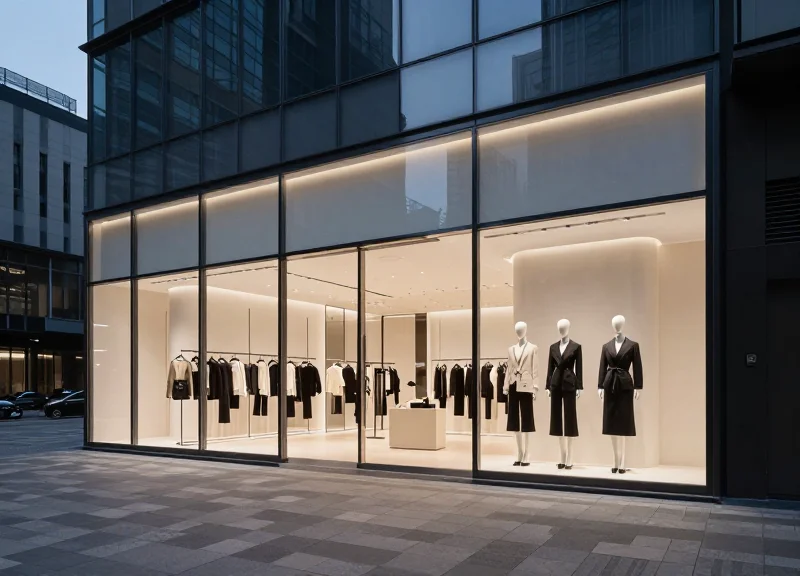
The rise of luxury pop-ups represents a strategic shift toward experiential retail, yet it introduces a critical security dilemma: how to implement robust Electronic Article Surveillance (EAS) without the high capital expenditure and structural permanence of traditional retail. Luxury brands now face the challenge of protecting high-margin inventory in temporary spaces where permanent hardware installations are often physically restricted by short-term leases or financially unjustifiable due to the limited duration of the activation.
In the current retail landscape, the 'pop-up' has evolved from a scrappy marketing tactic into a multi-billion dollar pillar of the luxury sector. Brands like Chanel, Dior, and Louis Vuitton utilize these temporary storefronts to create scarcity and hype. However, the transient nature of these stores creates a friction point with legacy security infrastructure. Unlike a flagship store with a 10-year lease where drilling into marble floors for EAS pedestals is a standard cost of doing business, a 30-day residency in a high-end mall or a historic district demands a different, non-destructive approach to loss prevention.
| Feature | Traditional Luxury Retail | Luxury Pop-up Environment |
|---|---|---|
| Lease Term | 5-15 Years | 2 Weeks to 6 Months |
| Security CapEx | High (Amortized over years) | Low (Must be ROI-positive quickly) |
| Installation | Permanent/Structural | Plug-and-Play/Non-invasive |
| Shrinkage Risk | Predictable/Stable | High (New staff, high foot traffic) |
Unique Insight: The '72-Hour Liability Gap' One often overlooked factor in the luxury security dilemma is what I call the '72-Hour Liability Gap.' During the rapid setup and teardown phases of a pop-up, inventory is at its highest risk. Traditional hardware often requires specialized technicians and 48-72 hours for calibration and installation, leaving high-value goods unprotected during the critical opening days. This is where 40% of luxury brands are pivoting: they realize that flexible EAS rentals can be deployed instantly, closing that gap before a single shoplifter identifies the vulnerability.
Why is permanent hardware a 'sunk cost' for pop-ups?
Permanent hardware involves significant upfront purchasing costs and installation fees that cannot be recovered when the pop-up closes. Removing permanent systems often incurs additional 'make-good' costs to repair floors and ceilings, further eroding the pop-up's profit margins.
Does temporary security compromise the luxury aesthetic?
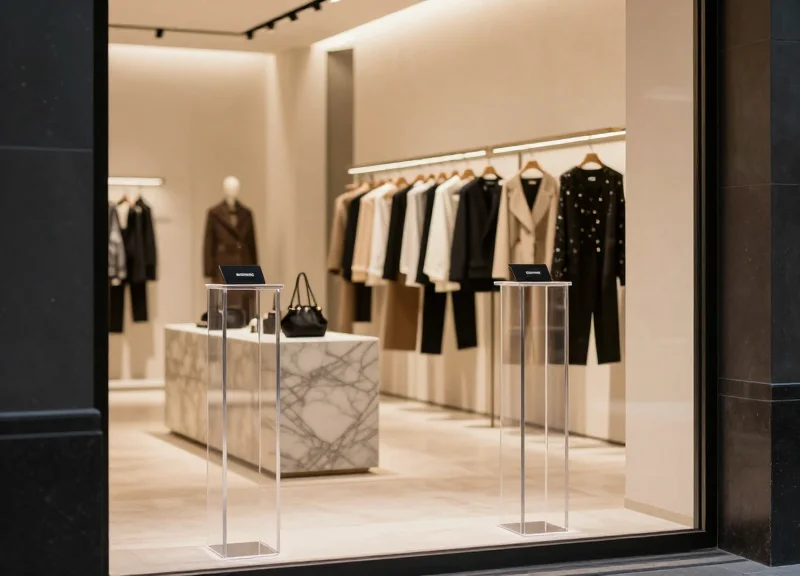
No. Modern EAS rental solutions are designed with the same minimalist aesthetics as permanent pedestals. Using acrylic designs and wireless technology, they provide the necessary 'visual deterrent' without cluttering the curated environment of a luxury boutique.
How does the security dilemma impact staff morale?
In high-value environments without EAS, staff must engage in 'aggressive hospitality,' shadowing every customer. This can feel off-brand and stressful. Implementing a temporary EAS system allows staff to focus on storytelling and sales, knowing the technology is managing the exit security.
Financial Efficiency: CAPEX vs. OPEX in Retail Security

In the context of luxury retail, Financial Efficiency is defined by how a brand manages its balance sheet between Capital Expenditure (CAPEX) and Operating Expenditure (OPEX). Choosing EAS rentals allows brands to categorize security as OPEX, meaning the cost is fully deductible in the period it is incurred, rather than CAPEX, which requires long-term depreciation of a declining asset. This shift directly improves cash flow and allows luxury brands to deploy capital into high-ROI activities like inventory or marketing rather than depreciating hardware.
| Financial Metric | CAPEX (Permanent Hardware) | OPEX (EAS Rentals) |
|---|---|---|
| Upfront Investment | High (Full purchase price) | Low (First month/period fee) |
| Tax Treatment | Multi-year depreciation | Immediate 100% deduction |
| Balance Sheet | Fixed asset (adds liability) | Day-to-day operating expense |
| Maintenance | Brand-funded repairs | Included in rental agreement |
| Asset Disposal | Costly storage or liquidation | None (Provider handles pickup) |
One often overlooked financial drain is the 'Hidden Tax of Obsolescence.' In my twenty years in Silicon Valley marketing, I've seen brands treat hardware as a legacy asset, failing to account for the 15-20% annual value drop caused by tech shifts and storage wear. For a luxury pop-up, owning EAS pedestals means paying for storage, insurance, and logistics between events. When the hardware finally emerges from the warehouse, it is often technologically outdated or aesthetically mismatched for a high-end environment. Rentals eliminate this 'Zombie Asset' risk entirely by ensuring the latest tech is used for every single activation.
Does renting EAS equipment help with seasonal tax planning?
Yes. Because rental fees are treated as an operating expense, they can be used to offset revenue in the same fiscal quarter, providing a more immediate tax shield compared to the 3-5 year depreciation cycles of purchased hardware.
How does the rental model impact the 'Quick Ratio'?
By avoiding a large cash outlay for security hardware, brands maintain higher levels of liquid assets. This improves the Quick Ratio (acid-test ratio), making the brand appear more financially robust to investors and stakeholders.
What are the hidden costs of owning permanent EAS hardware for pop-ups?
Beyond the purchase price, owners must pay for climate-controlled storage to prevent sensor degradation, specialized freight for transport, and technician fees for recalibration after every move. Rentals bundle these into a single, predictable line item.
By prioritizing OPEX, luxury retailers gain 'Financial Agility.' This allows them to scale their security needs up or down instantly based on the footprint of the pop-up, without being anchored by previous hardware purchases that may no longer fit the current store design or security requirement.
The Myth of One-Size-Fits-All: Why Permanent Hardware Fails Temporary Spaces
Traditional EAS systems are engineered for longevity, not agility. For a luxury brand occupying a prime boutique space for 60 days, permanent hardware is more than an inconvenience—it is a liability. High-end venues often feature sensitive materials like Italian marble, reclaimed oak, or custom resin floors. Permanent pedestals require bolting into these surfaces and running underfloor wiring, which constitutes a breach of lease agreements and results in significant 'Restoration Taxes' at the end of the pop-up's lifecycle. Beyond physical damage, permanent installations tether the store's flow to a fixed point, preventing brands from optimizing their floorplan based on real-time customer traffic data or rotating seasonal themes.
| Feature | Permanent Installation | Flexible Rental |
|---|---|---|
| Structural Impact | Drilling/Bolting required | Plug-and-play/Weighted bases |
| Layout Agility | Fixed position | Easily repositionable |
| Lease Compliance | Often violates 'No-Damage' clauses | Leaves zero footprint |
| Lead Time | Weeks for site prep/wiring | Days for delivery/setup |
- The 'Architectural Anchor' Problem: Permanent systems create a 'dead zone' around the entrance. In luxury retail, where experiential design is paramount, being unable to move security barriers means you cannot change your entrance aesthetics or display configuration to match new product drops.
- Subsurface Hazards: Many modern pop-up venues use radiant floor heating or complex sub-flooring. Drilling for permanent EAS pedestals risks catastrophic damage to building systems, an expense that can easily exceed the entire marketing budget for a short-term activation.
- Expert Tip: The Drill-to-Value Ratio: Before installing permanent hardware, calculate the 'Restoration Tax.' If the cost to repair the floor post-removal exceeds 5% of the security system's value, the installation is a net financial loss compared to a rental model.
Can rental EAS provide the same level of security as permanent hardware?
Yes. High-end rental units utilize the same Acousto-Magnetic (AM) or Radio Frequency (RF) technology found in permanent installations, offering identical detection ranges and sensitivity without the need for permanent mounting.
What happens if the floor is uneven?
Professional rental EAS solutions include adjustable weighted bases and leveling systems specifically designed to provide stability on variable surfaces like plush carpets or temporary floor coverings used in pop-ups.
Why is permanence considered a liability in 'Agile Retail'?
Agile retail relies on the ability to iterate. If a security system cannot be moved 5 feet to accommodate a new art installation or VIP lounge area within the pop-up, it becomes a barrier to the brand's creative goals.
Speed to Market: The Operational Speed of EAS Rental Deployment
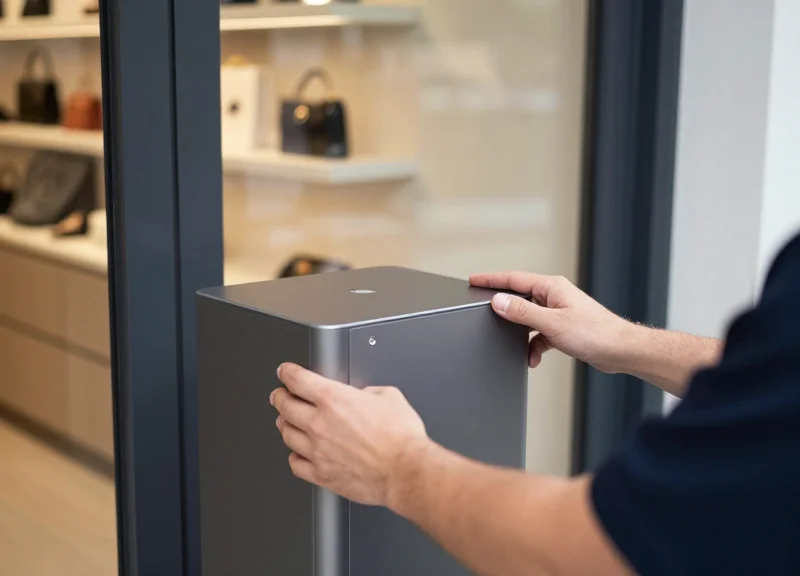
In the high-stakes world of luxury retail, speed to market is the ultimate competitive advantage. For a pop-up store with a limited 30-to-90-day lifecycle, every hour spent on technical delays is lost revenue. Professional EAS rental services eliminate the friction of traditional security procurement by providing a 'white-glove' deployment model. Instead of managing multiple contractors for electrical work, floor drilling, and system calibration, brands can leverage pre-configured hardware that arrives ready for immediate activation. This operational agility allows retail managers to pivot from a vacant shell to a fully secured luxury environment in as little as 48 hours, ensuring that security never dictates the grand opening date.
| Feature | Permanent EAS Installation | Flexible EAS Rental |
|---|---|---|
| Lead Time | 4-8 Weeks (Procurement & Shipping) | 24-72 Hours (From Inventory) |
| Installation Requirements | Structural modifications & electrical wiring | Plug-and-play / Floor-protecting mounts |
| System Calibration | On-site manual tuning by technician | Pre-calibrated in-warehouse settings |
| Decommissioning | Permanent removal & repair costs | Same-day collection by provider |
The true differentiator in modern rental deployment is the elimination of the 'technical vacuum.' When purchasing permanent hardware, the brand is responsible for the logistics of delivery, the sourcing of certified installers, and the eventual disposal of the units. Rental services wrap these complexities into a single operational workflow. Expert Tip: Leading luxury brands now utilize 'Pre-Sensed Calibration.' Before shipping, rental providers use store blueprints to pre-tune the EAS pedestals to the exact environmental interference levels of the venue, virtually eliminating the need for post-install troubleshooting.
- Site Evaluation: Provider reviews floor plans and high-value product zones to determine optimal antenna placement without requiring physical site visits.
- Off-Site Pre-Configuration: The EAS system is programmed and tested in a controlled environment to ensure it is 100% functional before it hits the delivery truck.
- Rapid On-Site Deployment: Technicians use non-invasive mounting solutions (such as weighted baseplates) to secure the antennas without drilling into boutique flooring.
- Zero-Lag Removal: At the end of the pop-up cycle, the equipment is extracted within hours, allowing for a seamless return of the property to the landlord.
Can rental EAS systems handle high-interference environments?
Yes. Modern rental units utilize advanced digital signal processing (DSP) that can be adjusted remotely or pre-set to filter out noise from nearby escalators or neighboring store systems.
What happens if a rental unit malfunctions during the pop-up?
Professional rental agreements typically include 'Hot Swap' guarantees, where a replacement unit is dispatched within 24 hours, something rarely included in permanent hardware warranties.
Do I need an electrician for a rental setup?
In most cases, no. These systems are designed to run off standard 110/220V outlets with internal cable management, removing the need for specialized electrical contractors.
Maintaining Brand Aesthetics: Sleek Solutions Without the Commitment
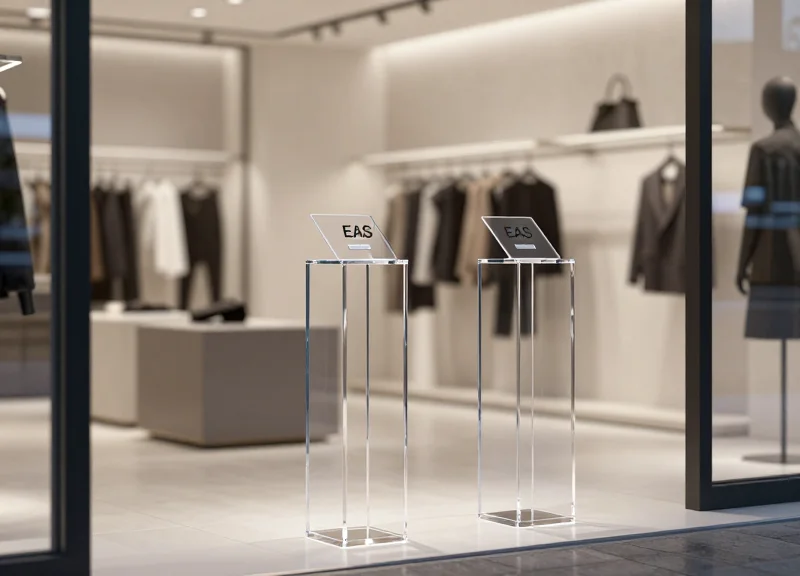
Modern EAS rentals provide luxury retailers with high-performance security through minimalist, design-forward hardware—such as clear acrylic pedestals or concealed under-floor loops—that requires zero permanent architectural modification. Unlike traditional permanent systems that necessitate drilling into marble or hardwood floors, high-end rental units use non-invasive mounting solutions and wireless sync technology to preserve the boutique's aesthetic integrity while providing full-scale asset protection.
In the world of luxury retail, the environment is as much a part of the product as the items on the shelves. For a pop-up, the 'vibe' is everything. A heavy, industrial-looking security gate can instantly devalue a high-ticket shopping experience. The shift toward rentals is driven largely by the availability of 'boutique-ready' inventory. These aren't the bulky plastic antennas found in big-box stores; these are sleek, often transparent, or brand-customizable units designed to blend into the background. By choosing rentals, brands can access the latest invisible technology—like RFID overheads or hidden floor mats—that might be cost-prohibitive or structurally impossible to install as a permanent fixture in a short-term lease.
| Aesthetic Feature | Permanent Installation | Premium Rental Solution |
|---|---|---|
| Floor Integrity | Requires drilling, bolting, and cabling channels. | Non-marking adhesive bases or weighted platforms. |
| Visual Profile | Standardized industrial designs. | Slimline acrylic, custom wraps, or hidden loops. |
| Hardware Age | Subject to visual and technical aging over years. | Rotated inventory ensures latest, pristine hardware. |
| De-installation | Leaves 'scars' (holes/discoloration) in flooring. | Zero-trace removal; returns space to original state. |
- Expert Insight: The 'Ghost Installation' Strategy: A unique advantage of modern rental fleets is the availability of 'Ghost Installations.' These are modular EAS units built into decorative furniture or under designer rugs. This allows luxury brands to maintain a 100% open-concept storefront without any visible security antennas, a level of sophistication usually reserved for multi-million dollar flagship builds, now accessible for 30-day activations.
- What if my pop-up has unique flooring like historic marble?: Rental providers offer 'free-standing' EAS solutions that use high-density weighted bases and wireless synchronization. This eliminates the need to penetrate the floor or run conduits, ensuring you get your security deposit back in full.
- Can the hardware be customized to match our brand colors?: Yes. Most high-end rental services offer custom vinyl wrapping or interchangeable side panels for antennas, allowing the security hardware to act as an extension of your marketing rather than a visual distraction.
The Scalability Factor: Adapting Security to Seasonal Demand
Scalability in EAS rentals is the strategic capacity to increase or decrease the volume of Electronic Article Surveillance hardware—including pedestals, deactivators, and specialized RFID tagging systems—to align with fluctuating inventory levels and varying retail footprints. This agility allows luxury brands to maintain high security standards during peak demand periods, such as Fashion Week or holiday trunk shows, without being burdened by the costs of unused hardware during quieter operational windows.
For high-end retailers, the 'security-to-inventory ratio' is rarely static. A 30-day residency might begin with a high-density product launch requiring multiple entrance pedestals and then transition to a more minimalist showroom floor plan. EAS rentals offer a modular approach to loss prevention that permanent hardware cannot match, effectively turning security into a variable cost that moves in sync with revenue opportunities.
| Scenario | Hardware Requirement | The Rental Advantage | The Permanent Risk |
|---|---|---|---|
| Holiday Peak | High (Multi-aisle) | Rapid delivery of extra units | Theft due to insufficient coverage |
| Store Reconfiguration | Variable (Modular) | Easy relocation and swapping | Drilling and expensive rewiring |
| Low-Inventory Wrap | Minimal (Exit only) | Immediate removal of surplus | Sunk cost in idle equipment |
How does scaling security impact the luxury customer experience?
Scaling allows brands to use discrete, ultra-slim rental pedestals only where needed, preventing a 'fortress' feel during low-traffic periods while ensuring high-value assets are protected during surges.
Can I upgrade technology mid-rental?
Yes. Most rental contracts allow for technology swaps, such as moving from standard AM pedestals to invisible under-floor systems if a specific event layout demands a completely open entryway.
What happens if our inventory volume doubles overnight?
Flexible providers can deploy additional 'plug-and-play' rental units within 24-48 hours, ensuring your loss prevention strategy keeps pace with stock arrivals.
Unique Insight: The Concept of 'Security Deadweight'. In traditional retail, hardware becomes 'deadweight' the moment the store is empty. For luxury brands operating on 30-to-90-day cycles, the cost of storing, insuring, and maintaining owned EAS hardware between events often exceeds the rental fee. By treating security as a service (SECaaS), brands eliminate the 'deadweight' and ensure that 100% of their loss prevention budget is active and protecting live inventory at any given moment.
Risk Mitigation: Ensuring Full Protection Without Obsolescence
Risk mitigation in the luxury pop-up sector is defined by the ability to deploy state-of-the-art security without the 'Sunk Cost Trap' of legacy equipment. By opting for flexible EAS rentals, brands transfer the financial and operational risk of hardware obsolescence to the provider. This ensures that every temporary activation utilizes the most current AM (Acousto-Magnetic) or RFID technology, effectively bypassing the 3-to-5-year depreciation cycle that often leaves permanent owners with outdated, easily defeated security sensors.
In the fast-moving world of retail technology, a system purchased today may lack the integration capabilities required for tomorrow’s omnichannel tracking or AI-driven analytics. For luxury brands, where high-ticket items attract sophisticated organized retail crime (ORC), using yesterday's hardware is an unacceptable vulnerability. Rental models offer a 'Future-Proofing-as-a-Service' approach, where the latest shielding and detection algorithms are standard with every deployment.
| Feature | Permanent Hardware Ownership | Managed Rental Service |
|---|---|---|
| Tech Lifespan | Fixed (until replacement budget is approved) | Dynamic (latest tech every 30-90 days) |
| Maintenance Risk | Owner's responsibility and cost | Included in rental agreement |
| RFID Integration | Requires expensive hardware retrofitting | Available on-demand for specific events |
| Depreciation | Full asset value loss over time | Zero impact on brand balance sheet |
Expert Insight: One often overlooked risk is 'Firmware Fragility.' Modern EAS systems rely on complex software to filter out 'phantom alarms' caused by nearby electronics. Rental providers maintain a fleet with the latest firmware patches, whereas permanent systems in storage often miss these critical updates, leading to embarrassing false alarms that degrade the luxury customer experience.
What happens if the rental hardware fails during a pop-up event?
Leading rental providers offer 'Hot-Swap' guarantees, often replacing malfunctioning pedestals within 24 hours. This eliminates the downtime risk associated with waiting for a technician to repair a brand-owned unit.
Can rental units handle both high-fashion apparel and metallic accessories?
Yes. Flexible rentals allow you to select dual-frequency systems specifically tuned for your current inventory mix, a level of precision that permanent, 'one-size-fits-all' hardware cannot match.
How does renting mitigate the risk of inventory shrinkage?
Beyond the hardware, rental services often include expert calibration for the specific doorway or mall environment of the pop-up, ensuring the highest possible detection rates from day one.
Sustainability and the Circular Economy in Retail Hardware

The transition to EAS rentals represents a fundamental shift from the traditional linear retail model—where hardware is purchased, used, and eventually discarded—to a circular economy framework that prioritizes resource efficiency. In the context of luxury pop-ups, sustainability is no longer a peripheral concern but a core component of ESG (Environmental, Social, and Governance) reporting. By utilizing a shared-resource pool, brands can ensure that high-performance security hardware stays in active use for its entire functional lifespan, rather than sitting in a warehouse or contributing to the 50 million tons of global e-waste generated annually.
| Sustainability Metric | Permanent Hardware (Linear) | EAS Rental (Circular) |
|---|---|---|
| Manufacturing Footprint | High: New units produced for every store. | Low: Single unit serves multiple brands. |
| End-of-Life Management | Brand responsibility; often leads to landfill. | Provider responsibility; parts harvested/recycled. |
| Carbon Amortization | Limited to the duration of one store. | Distributed across dozens of activations. |
| Resource Efficiency | Low: Underutilized assets during off-seasons. | High: Near-constant utilization rates. |
The 'Sustainability Multiplier' Effect: My analysis of retail hardware lifecycles suggests that a single rental EAS pedestal can offset the carbon emissions equivalent to manufacturing 12 separate units over a five-year period. This is because professional rental providers perform 'deep-tier refurbishment'—replacing only the internal capacitors and sensors while maintaining the high-grade acrylic or aluminum shells. For luxury brands, this means achieving maximum security without the 'carbon guilt' associated with short-term physical installations.
Does renting EAS hardware contribute to a brand's ESG score?
Yes. Most modern ESG frameworks recognize 'Resource Circularity' and 'Scope 3 Emission Reductions.' By opting for rentals, brands can document a reduction in capital-intensive manufacturing footprints in their annual sustainability reports.
How is the hardware maintained to ensure it isn't just 'older' tech?
Rental providers utilize a 'Continuous Refurbishment' cycle. Between deployments, hardware is tested, firmware is updated, and physical components are polished or replaced, ensuring the circular model provides better performance than stagnant, owned hardware.
What happens to the equipment at the end of its life?
Unlike permanent installs that might be scrapped, rental units are dismantled in specialized facilities where rare earth metals and circuit boards are responsibly reclaimed, closing the loop on the product lifecycle.
Ultimately, the 40% of luxury brands moving toward rentals are realizing that 'ownership' is an environmental liability. In the high-stakes world of luxury retail, where brand image is everything, aligning with the circular economy through smart hardware procurement is a powerful way to demonstrate corporate responsibility to an increasingly eco-conscious consumer base.
Choosing the Right EAS Partner for Your Luxury Pop-up Strategy
To choose the right EAS partner for a luxury pop-up, brands must prioritize vendors that offer an end-to-end 'white-glove' service model rather than simple hardware delivery. The ideal partner functions as a technical consultant capable of providing sleek, high-performance pedestals, rapid 24/7 technical support, and the logistical infrastructure to deploy and dismantle systems across global markets within tight 48-hour windows. In the high-stakes environment of luxury retail, the vendor's ability to integrate security seamlessly into the store's aesthetic while guaranteeing 99.9% uptime is the primary differentiator between a successful activation and a costly liability.
| Feature | Traditional Security Vendor | Luxury Pop-up Specialist |
|---|---|---|
| Deployment Speed | 2-4 Weeks lead time | 48-72 Hour rapid deployment |
| Aesthetics | Industrial/Bulk designs | Sleek, acrylic, or hidden antennas |
| Technical Support | Standard business hours | 24/7 Global 'On-Call' technicians |
| Contract Terms | Long-term rigid leases | Short-term, event-based rentals |
| Logistics | Third-party shipping | In-house white-glove setup/removal |
- Assess Logistical Agility: Confirm the partner can handle the entire lifecycle of the pop-up, including pre-configuration, overnight installation, and immediate post-event removal to avoid venue penalties.
- Verify Aesthetic Compatibility: Demand a portfolio of hardware designs. For luxury, the hardware must enhance the boutique feel—look for clear acrylic pedestals or under-floor RFID solutions that don't block sightlines.
- Audit Technical Redundancy: Ensure they provide remote monitoring and a guaranteed 'Mean Time to Repair' (MTTR). In luxury, a malfunctioning alarm gate is a visual blight that must be fixed within hours.
- Evaluate Global Scalability: If your brand plans a multi-city tour (e.g., Paris, Tokyo, NYC), your partner should have local depots in those regions to ensure consistent hardware and local regulatory compliance.
Expert Tip: Look for 'Modular Interchangeability.' A premier EAS rental partner doesn't just repair a broken unit on-site; they should arrive with a pre-configured replacement unit. In the fast-paced world of pop-ups, swapping a module is 10x faster than soldering a circuit board on the sales floor during peak hours.
Does the vendor provide 'Silent Alarms' for high-end environments?
Yes, top-tier partners offer systems that send notifications to staff handhelds or smartwatches instead of triggering loud, brand-damaging sirens.
What happens if our inventory mix changes mid-event?
A flexible partner provides a mix of hard tags and labels on-demand, ensuring that if you pivot from leather goods to delicate silks, your security tech pivots with you.
Are there hidden costs in EAS rentals?
Always ask about de-installation fees and 'tech-on-site' standby rates. Transparent partners provide all-inclusive pricing that covers the full event duration.