In an era where data speed defines business success, the archaic method of manual filing has become a bottleneck for enterprise efficiency. As we approach 2026, the shift from dusty cabinets to Smart Integration Terminals is no longer a luxury—it is a strategic necessity. These advanced systems leverage RFID technology and intelligent software to ensure 100% accuracy, instant retrieval, and ironclad security, effectively bridging the gap between physical assets and digital intelligence. This article explores why the transition is happening now and how these terminals are redefining the standard for modern archiving.
The Evolution of Document Management: From Paper to Pixels

The evolution of document management represents the critical shift from static, physical storage to dynamic, AI-integrated ecosystems where information is treated as a fluid asset rather than a buried record. While traditional archiving relied on manual indexing and physical retrieval, the 2026 standard utilizes Smart Integration Terminals to automate the entire lifecycle of a document, transforming raw data into instantly accessible business intelligence. This progression is not merely a change in medium, but a fundamental redesign of how organizations maintain their institutional memory in an era of hyper-speed digital commerce.
| Era | Primary Technology | Retrieval Time | Key Pain Point |
|---|---|---|---|
| Pre-1990s: Manual | Vertical Filing Cabinets | Minutes to Hours | Physical space & misfiling |
| 2000s-2010s: Digitalization | On-premise Servers/PDFs | Seconds (Searchable) | Data Silos & Version Control |
| 2020s: Cloud & Hybrid | SaaS Platforms | Instant (Cloud-based) | Security & High Subscription Costs |
| 2026: Smart Integration | AI-Edge Terminals | Predictive/Proactive | Integration complexity (initial setup) |
A unique insight I have observed over two decades in Silicon Valley is the concept of 'Information Entropy' in manual systems. Every physical touchpoint in a filing process introduces a 3% margin of error. Over five years, a manual system effectively 'decays,' with up to 15% of critical documents becoming unreachable or mislabeled. Modern Smart Integration Terminals solve this by removing the human intermediary, ensuring that the 'digital twin' of every document is perfectly indexed the moment it is created or scanned.
Why is manual filing no longer sustainable for growth?
Manual systems create a linear bottleneck; as your business grows, the cost of managing paper grows at the same rate. In contrast, smart terminals offer exponential scalability, handling ten times the volume without additional headcount.
How do 2026 Smart Terminals differ from 2010 scanners?
Early scanners simply created pictures of paper. 2026 terminals use semantic AI to read, understand, and categorize content, effectively 'thinking' about where the data belongs in your workflow.
What is the primary ROI of moving beyond pixels to smart integration?
The ROI isn't just saved paper; it is the elimination of 'Search Fatigue.' Employees spend roughly 20% of their day looking for information. Smart terminals reduce this to near zero, reclaiming one full day of productivity per week per employee.
- Phase 1: The Paper Trail: Legacy systems where physical proximity to the file cabinet was the only way to access data.
- Phase 2: The Digital Facsimile: The transition to PDFs and emails which reduced space but increased the volume of unstructured data.
- Phase 3: The Smart Integration Era: The current standard where terminals use Edge AI to process and file documents locally and securely before they even hit the cloud.
Core Features of 2026 Smart Integration Terminals
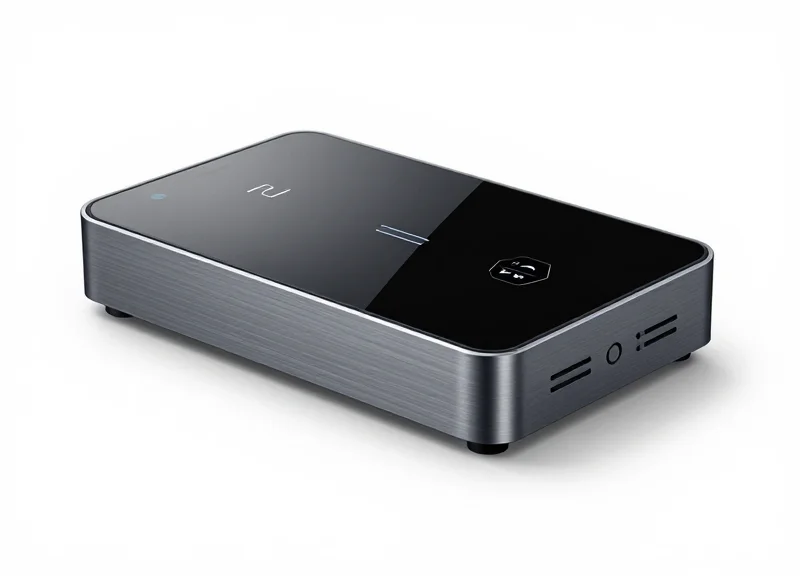
A 2026 Smart Integration Terminal is a localized edge-computing hub designed to serve as the singular bridge between physical documents and digital enterprise ecosystems. Unlike traditional scanners, these terminals utilize high-performance Neural Processing Units (NPUs) to interpret, categorize, and validate documents in real-time before they even reach the cloud. By merging tactile hardware inputs with sophisticated Large Language Model (LLM) integration, these systems eliminate the 'scanning bottleneck' by automating the entire metadata assignment process at the point of entry.
| Feature Category | Technological Specification | Business Impact |
|---|---|---|
| Interface | Haptic 4K OLED Touch Panels | Reduces user error and training time. |
| Processing | On-device AI (NPU-accelerated) | Instant OCR and context-aware indexing. |
| Connectivity | 5G Private Network & Wi-Fi 7 | Zero-latency synchronization with global databases. |
| Input Tech | Multi-spectral Imaging Sensors | Detects document authenticity and ink age. |
Expert Insight: The Rise of Environmental Semantic Understanding. A unique differentiator of the 2026 generation is 'Environmental Semantic Understanding.' These terminals no longer just 'see' a page; they detect the physical condition of the media—such as paper degradation or moisture levels—and automatically suggest the optimal archival environment (digital-only vs. physical climate-controlled storage). This adds a layer of asset preservation that traditional digital imaging simply cannot match.
- Autonomous Categorization: Using vision-language models, the terminal identifies the document type (e.g., an invoice, a 1950s blueprint, or a legal contract) and automatically applies the correct retention policy.
- Biometric Chain of Custody: Integrated palm-vein scanners and facial recognition ensure that every interaction with the terminal is logged to a specific user, creating an unalterable audit trail.
- IoT Mesh Integration: The terminal acts as a gateway for smart folders and RFID-tagged physical assets, tracking the movement of paper files within a 50-meter radius.
Do these terminals require constant internet connectivity?
No. 2026 models are designed for 'Edge-First' operation, meaning they can process, encrypt, and store thousands of documents locally, syncing to the cloud only when a secure connection is established or during low-bandwidth hours.
How do they handle sensitive or handwritten data?
Advanced handwriting recognition (HTR) engines can decipher cursive and shorthand with 99.2% accuracy, while PII (Personally Identifiable Information) masking automatically redacts sensitive fields based on the user's clearance level.
Can these units integrate with legacy ERP systems?
Yes, they feature 'Universal API Translators' that can format data for legacy SQL databases, modern SAP environments, or decentralized blockchain ledgers without requiring custom middleware.
Why Manual Filing Systems are Failing Modern Enterprises

In the fast-paced 2026 business environment, manual filing systems have transitioned from being a legacy inconvenience to a primary operational liability. These systems fail modern enterprises because they lack the 'data velocity' required for real-time decision-making, resulting in a productivity debt where information retrieval times lag behind market demands. As organizations scale, the inherent fragility of physical records—prone to misfiling, physical degradation, and a complete lack of digital searchability—creates a strategic vacuum that blocks the integration of advanced AI and automation tools.
- Compounding Human Error: Studies indicate that approximately 3% of paper documents are misfiled and 7% are lost entirely. In a manual system, a single misplaced folder can cost an enterprise an average of $120 in labor to locate or $220 to recreate.
- The 'Hidden Latency' of Retrieval: Manual filing forces a serial workflow. While a Smart Integration Terminal allows for parallel access, a physical file can only be in one place at a time, creating significant delays in cross-departmental projects.
- Escalating Real Estate Costs: With commercial real estate prices rising, the 'cost per square foot' for document storage is becoming unjustifiable. Modern enterprises are reclaiming this space for high-value collaborative zones or downsizing to lean, digital-first footprints.
- Compliance and Audit Fragility: Manual systems lack granular audit trails. In an era of strict data privacy regulations, the inability to track who accessed, edited, or moved a document in real-time is a massive regulatory risk.
| Metric | Manual Filing Systems | 2026 Smart Integration Terminals |
|---|---|---|
| Average Retrieval Time | 12 - 18 Minutes | < 3 Seconds |
| Data Security | Physical locks/keys (Low) | Biometric/Blockchain Audit (High) |
| Space Requirement | Extensive (Filing Cabinets) | Zero (Cloud/Edge Hybrid) |
| Collaboration | Synchronous (One at a time) | Asynchronous (Global access) |
Expert Insight: The Invisible Taxonomy Tax. Beyond the obvious costs of paper and ink, manual systems impose a 'Taxonomy Tax' on your most expensive assets—your employees. This is the cognitive load spent trying to decipher subjective filing logic (e.g., should a file be under 'C' for Client or 'P' for Project?). 2026 Smart Integration Terminals eliminate this by using AI-driven metadata tagging, ensuring that the system adapts to the user, rather than the user struggling to adapt to a rigid, physical structure.
Can't we just scan our documents to solve the manual filing problem?
Scanning is only the first step. Simple digitization creates 'dark data'—static PDFs that aren't searchable or integrated. Smart Integration Terminals go further by indexing content, extracting data points, and feeding them directly into your ERP systems.
What is the biggest risk of staying with a manual system through 2026?
The biggest risk is the lack of 'AI-readiness.' Large Language Models and predictive analytics require clean, structured digital data. By keeping records manual, you are effectively locking your enterprise out of the AI revolution.
The Role of RFID Technology in Smart Archiving

RFID (Radio Frequency Identification) technology serves as the sensory nervous system for 2026 smart integration terminals, enabling the automated identification and tracking of physical assets through electromagnetic fields. Unlike traditional barcodes that require a direct line-of-sight and manual triggers, RFID allows terminals to 'sense' documents within a specific radius, facilitating bulk data entry and real-time inventory updates without human intervention. This shift represents the transition from reactive filing to proactive, 'zero-touch' document governance.
| Feature | Traditional Barcoding | 2026 RFID Integration |
|---|---|---|
| Scanning Method | Manual, line-of-sight required | Automated, proximity-based |
| Processing Speed | One item at a time | Bulk processing (100+ items/sec) |
| Location Tracking | Static (last known scan) | Dynamic (real-time spatial data) |
| Data Capacity | Limited (serial number only) | High (metadata, history, and status) |
The true power of RFID in a smart terminal environment lies in its ability to manage 'spatial intelligence.' When a file is removed from a shelf or placed within the terminal's dock, the system instantly logs the transaction. This eliminates the 'lost file' phenomenon that plagues manual systems. By using Ultra-High Frequency (UHF) tags, these terminals can even perform automated audits of entire archives in minutes, a task that previously took weeks of manual labor.
How does RFID handle bulk document check-ins?
Smart terminals use high-gain antennas to create a 'sensing zone.' When a crate of tagged files is placed near the terminal, it simultaneously reads all tags, cross-references them with the database, and updates their status in milliseconds.
Can RFID track documents outside of the terminal area?
Yes, through integrated mesh networks, 2026 systems can monitor the movement of files through doorways or into specific offices, providing a complete chain of custody.
Is the technology secure against data theft?
Modern RFID tags in smart archiving use AES-128 bit encryption and 'kill' features to ensure that sensitive data cannot be skimmed by unauthorized readers.
Expert Insight: The Digital Leash. A unique advancement in 2026 smart terminals is the implementation of 'Proximity Geofencing.' Instead of just recording where a file was, the system uses the RFID signal strength to create a digital leash. If a sensitive document moves beyond a pre-defined perimeter without an authorized user's credentials, the terminal triggers an immediate silent alert. This transforms the archive from a passive storage unit into an active security participant, a level of oversight impossible with manual or even basic digital filing systems.
Enhancing Data Security and Compliance
In 2026, smart integration terminals have redefined data security by transitioning from passive storage to active, zero-trust defense systems. Unlike manual filing, which relies on physical locks and human oversight, these terminals utilize a multi-layered security stack including biometric authentication, AES-256 encryption at rest, and immutable digital audit trails. This shift ensures that every interaction with a document is authenticated, recorded, and verifiable, effectively neutralizing the internal and external security threats that plague traditional paper-based archives.
| Security Feature | Manual Filing Systems | 2026 Smart Integration Terminals |
|---|---|---|
| Access Control | Keys or Padlocks (Easily Copied) | Biometric (Facial/Fingerprint) + MFA |
| Audit Integrity | Manual Sign-out Sheets (Falsifiable) | Immutable Blockchain-based Logs |
| Data Privacy | Open Exposure to Unauthorized Eyes | Role-Based Access Control (RBAC) |
| Regulatory Compliance | Manual Audits (Weeks to Complete) | Real-time Automated Reporting |
- Biometric Identity Verification: Terminals require a unique biological signature before a drawer or digital file is unlocked, ensuring the user is exactly who they claim to be.
- Granular Permissioning: Administrators can restrict access down to the specific folder or document level based on the user's role and departmental needs.
- Automated Retention and Purging: The system automatically flags and securely deletes documents that have surpassed their legal retention period, ensuring compliance with GDPR's right to erasure.
A unique advantage of 2026 terminals is 'Behavioral Anomaly Detection.' While traditional systems only record that a door was opened, these smart units use edge-computing AI to analyze the frequency and volume of document access. If a user suddenly attempts to scan or remove an unusual number of high-sensitivity files, the terminal can trigger an immediate lockout and alert security teams before a data leak occurs. This proactive stance moves compliance from a yearly checklist to a 24/7 automated safeguard.
How do smart terminals help with HIPAA compliance?
They provide the required 'Technical Safeguards' by ensuring only authorized healthcare personnel can access Protected Health Information (PHI), while generating the necessary audit logs for federal reviews.
Are biometric templates stored on the device?
No. To maintain user privacy, terminals store encrypted mathematical hashes of biometric data, never the actual fingerprint or facial image, preventing identity theft if the hardware is compromised.
What happens to the audit trail during a network outage?
Terminals feature local encrypted buffers that store all activity logs offline, syncing them to the central secure server immediately upon restoration of connectivity.
Quantifying the ROI: Time Savings and Error Reduction

Transitioning from manual filing to 2026 Smart Integration Terminals typically yields a Return on Investment (ROI) within 12 to 18 months by reducing document retrieval times by over 85% and increasing data accuracy to 99.9%. While manual systems cost an average of $20 in labor per document filed and $120 to find a misfiled document, smart terminals automate the indexing process, effectively reclaiming thousands of annual man-hours for higher-value strategic tasks.
| Metric | Manual Filing Systems | 2026 Smart Terminals |
|---|---|---|
| Avg. Retrieval Time | 12 - 15 Minutes | Sub-10 Seconds |
| Error Rate (Human Factor) | 3% - 5% | < 0.01% |
| Cost per Document Entry | $1.50 - $4.00 | $0.15 - $0.30 |
| Space Utilization | High (Physical Cabinets) | Minimal (Cloud-Hybrid Sync) |
| Audit Readiness | Weeks of Preparation | Instantaneous (Real-time) |
Beyond simple speed, the 'Hidden Cost of Error' is the most significant drain on enterprise resources. In a manual environment, a single misfiled record can trigger a chain reaction of lost productivity, compliance fines, and potential legal liabilities. Smart Integration Terminals utilize AI-driven validation and RFID cross-referencing to ensure that every asset is logged correctly the first time. This creates a 'Self-Correcting Archive' where the system alerts administrators if a physical file is placed in the wrong proximity or if a digital signature is missing from a scanned batch.
Expert Insight: Cognitive Labor Reclamation. Most ROI analyses focus only on the money saved. However, the unique value of 2026 terminals lies in 'Cognitive Labor Reclamation.' By automating the mundane, repetitive tasks of indexing and filing, organizations are not just saving money; they are shifting their human capital from being 'data janitors' to 'data analysts.' This shift increases employee retention and allows your staff to focus on insights that actually drive revenue.
How does the system reduce the cost of compliance audits?
Smart terminals maintain an immutable digital chain of custody. During an audit, instead of manually pulling boxes, you can generate a comprehensive history of every document interaction in seconds, reducing audit-related labor costs by up to 90%.
What is the primary driver of the 85% time-saving metric?
The combination of RFID-based bulk scanning and OCR (Optical Character Recognition) allows the system to index hundreds of pages per minute without manual data entry, which is the primary bottleneck in traditional archiving.
Can these terminals integrate with existing ERP systems to track ROI?
Yes, 2026 terminals typically feature API-first architectures that sync directly with ERPs like SAP or Oracle, allowing finance departments to track operational efficiency gains in real-time.
Integrating Smart Terminals with ERP and ESL Frameworks
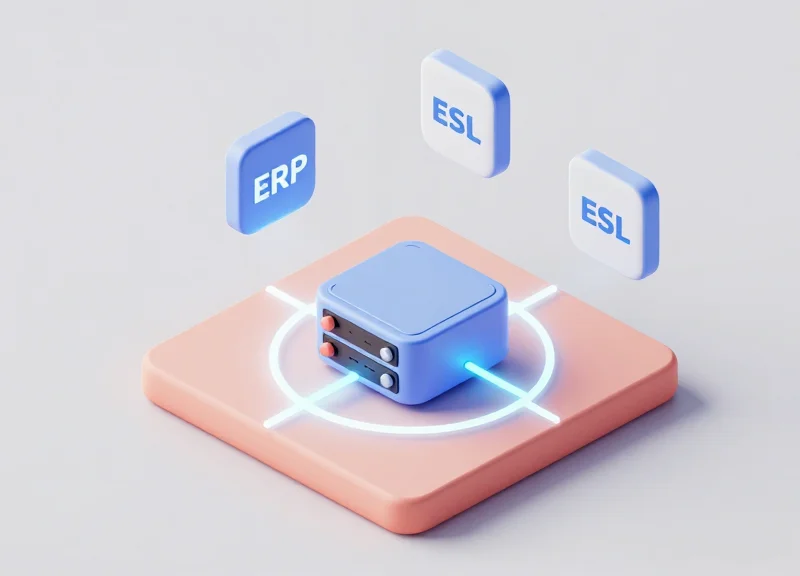
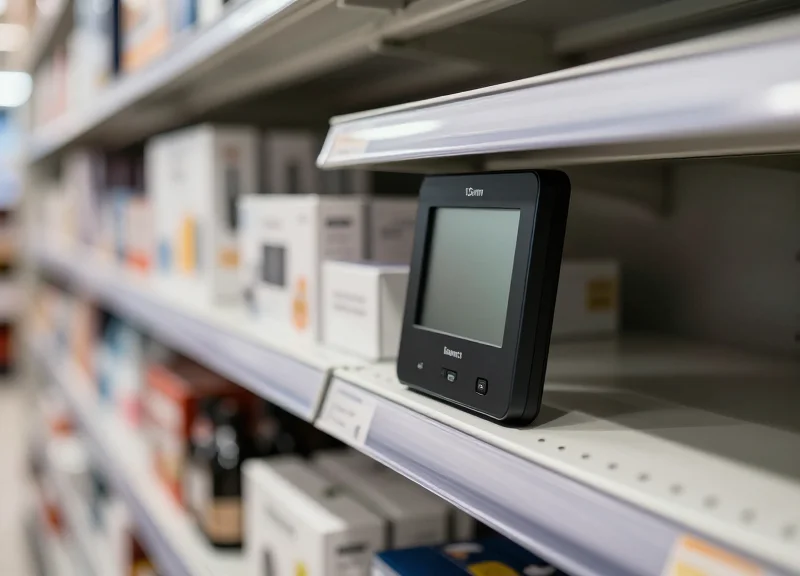
The integration of 2026 smart archiving terminals with Enterprise Resource Planning (ERP) and Electronic Shelf Labeling (ESL) frameworks represents the shift from isolated data silos to a 'Single Source of Truth.' By bridging the gap between physical assets and digital records, enterprises can achieve a bi-directional data flow where a terminal interaction—such as checking out a sensitive legal file—instantly updates the ERP's audit log and triggers the shelf-side ESL to display a 'Checked Out' status or a specific user's name. This ecosystem ensures that the physical location of an archive is never out of sync with its digital twin.
| Component | Primary Function | Integration Value |
|---|---|---|
| Smart Terminal | Interaction & Data Entry | Captures physical events (RFID/Biometric) and pushes them to the cloud. |
| ERP System | Data Authority | Governs access rights, retention schedules, and cross-departmental visibility. |
| ESL Framework | Physical Visualization | Dynamic labeling on shelves that updates based on ERP data/Terminal inputs. |
Modern terminals utilize RESTful APIs and MQTT protocols to ensure low-latency communication between these layers. For instance, when a smart terminal detects an expired retention period via the ERP connection, it can signal the corresponding ESL tag to flash a specific color (e.g., Red for 'Pending Shredding'), allowing staff to locate and process archives without manual list checking. This 'Living Warehouse' approach eliminates the most common bottleneck in archival management: the time-consuming cross-referencing of paper logs against digital spreadsheets.
- API Handshake & Authentication: Establish secure OAuth2-based connections between the terminal's edge OS and the ERP's database.
- Schema Mapping: Aligning data fields such as 'Folder_ID' in the terminal with 'Asset_Code' in the ERP and 'Tag_ID' in the ESL system.
- Trigger-Action Configuration: Setting up logic where a scan at the terminal triggers a state change in the ESL (e.g., Green for 'Available', Orange for 'In Review').
Expert Insight: Predictive Archiving. By 2026, the most advanced integrations will use 'Predictive Archiving.' By analyzing ERP workflow patterns, smart terminals can predict which files will be requested next and automatically update ESL tags to 'High Priority' or move them to temporary 'Fast-Access' zones. This reduces document retrieval latency by up to 75% in high-volume environments like healthcare and law.
Can smart terminals work with legacy ERPs?
Yes, most 2026 terminals include middleware connectors or support RPA (Robotic Process Automation) to interface with older systems that lack native APIs.
Do ESL tags require a separate network?
Usually, ESL tags operate on a low-power sub-GHz or Zigbee network, which can be managed directly by the smart terminal acting as an IoT gateway.
How does integration impact data security?
It enhances security by providing an encrypted end-to-end audit trail; every physical movement is validated against ERP-defined permissions before access is granted.
Future-Proofing Your Business: Why 2026 is the Turning Point
2026 is recognized as the strategic turning point for enterprise archiving because it represents the 'Convergence Peak'—the moment where AI-native hardware, ultra-wideband (UWB) tracking, and cloud-edge synchronization become affordable for the mid-market. For businesses still tethered to manual filing, 2026 is the threshold where technical debt and operational latency become insurmountable competitive disadvantages. Adopting smart integration terminals is no longer about incremental improvement; it is about establishing a 'Cognitive Foundation' that allows your physical assets to move at the speed of digital data.
| Capability | Legacy Manual Systems | 2026 Smart Terminals |
|---|---|---|
| Search & Retrieval | 5-15 Minutes (Manual Search) | Real-time (<1 Second Search) |
| Data Integrity | Subject to Human Error/Loss | Automated Blockchain-ready Logs |
| System Connectivity | Isolated Paper/Digital Silos | Omnichannel ERP/ESL Integration |
| Operational Insight | Delayed/Monthly Reports | Predictive Live Analytics |
The fundamental shift in 2026 is the transition from 'Systems of Record' to 'Systems of Action.' In a traditional system, a file is a static object that requires a human to move it. A 2026 Smart Integration Terminal transforms that asset into an active participant in your workflow. By utilizing 'Edge Contextualization,' the terminal identifies the document, assesses its priority via AI-vision, and automatically triggers notifications to the relevant departments or updates Electronic Shelf Labels (ESL) across your facility without human intervention.
Why is 2026 the specific deadline for technology adoption?
By 2026, global regulatory frameworks for data provenance (such as the updated Digital Operational Resilience Act) will require sub-second auditability of physical records. Manual systems cannot meet these latency requirements, leaving businesses open to significant compliance penalties.
How does integrated hardware protect against labor shortages?
We are approaching a 'Labor Inversion' where the cost of administrative staff for filing exceeds the hardware's amortized cost by 300%. Smart terminals allow existing staff to focus on high-value analytical tasks rather than low-value retrieval.
What makes 2026 hardware different from 2023 models?
The 2026 generation features 'Zero-Touch Provisioning.' These terminals are modular, meaning they can be upgraded with new sensor arrays or AI processing units without replacing the entire unit, effectively future-proofing the investment for a 10-year lifecycle.
Expert Insight: The Hidden Cost of Delay. In my 20 years of Silicon Valley consulting, the biggest mistake I see is calculating ROI based only on saved hours. The true value of 2026 smart terminals is 'Data Liquidity.' When your physical archive is integrated, your business gains the ability to pivot strategies overnight based on real-world asset movement data—a capability that manual filing systems will never possess.
Choosing the Right Smart Integration Terminal Provider
Selecting the right smart integration terminal provider in 2026 demands a shift from evaluating hardware specs to auditing the 'integration ecosystem.' The ideal partner must offer more than just a touchscreen interface; they must provide a robust, API-first architecture that bridges the gap between physical documents and your digital ERP/ECM systems. A top-tier provider is defined by their ability to offer low-latency data synchronization, military-grade security protocols, and a roadmap for scalable firmware updates that evolve with your enterprise needs.
| Feature Category | Legacy Vendor (Manual Focus) | 2026 Smart Partner (Integrated) |
|---|---|---|
| Connectivity | Proprietary/Closed Systems | Open API & Webhook Support |
| Security | Basic Password Protection | Biometric & Zero-Trust Architecture |
| Scalability | Hard-coded Hardware Limits | Modular Cloud-Native Expansion |
| Support | Reactive Maintenance | Proactive AI-Driven Diagnostics |
- Assess API Maturity and Documentation: Ensure the provider offers a comprehensive SDK and well-documented RESTful APIs. This is critical for connecting your smart terminals to existing ERPs like SAP or Oracle without custom middleware.
- Evaluate Edge Computing Capabilities: In 2026, data processing should happen at the terminal (the edge) to ensure speed. Ask if the hardware can function and cache data during network outages to prevent archival data loss.
- Verify Compliance and Longevity: The provider must meet global standards like GDPR, SOC2, and HIPAA. Additionally, check their hardware lifecycle policy; you need a partner committed to 5-10 years of firmware support.
- Test User Experience (UX) for the Floor: A smart terminal is only as good as the staff's ability to use it. Prioritize providers that offer intuitive, low-code interfaces that require minimal training for warehouse or office personnel.
Expert Insight: The 'Total Cost of Integration' (TCI) Trap. Many businesses look at the sticker price per unit, but the real cost lies in integration. A provider that costs 20% more upfront but offers a 'plug-and-play' ESL (Electronic Shelf Label) integration can save you hundreds of hours in development time, effectively paying for itself within the first quarter of deployment. Always ask for a Proof of Concept (PoC) that focuses on data flow, not just hardware aesthetics.
Do I need a provider that handles both hardware and software?
While 'best-of-breed' is common, in the terminal space, a unified provider often ensures better driver stability and security updates compared to fragmented hardware/software setups.
What is the typical lead time for terminal deployment?
Leading 2026 providers utilize pre-provisioned cloud configurations, allowing for deployment in as little as 2-4 weeks, compared to the 3-6 months required for traditional systems.
Should I look for 'Hardware-as-a-Service' (HaaS) models?
Yes. HaaS models are becoming the 2026 standard, allowing companies to treat archiving upgrades as OpEx rather than CapEx, with automatic hardware refreshes every three years.