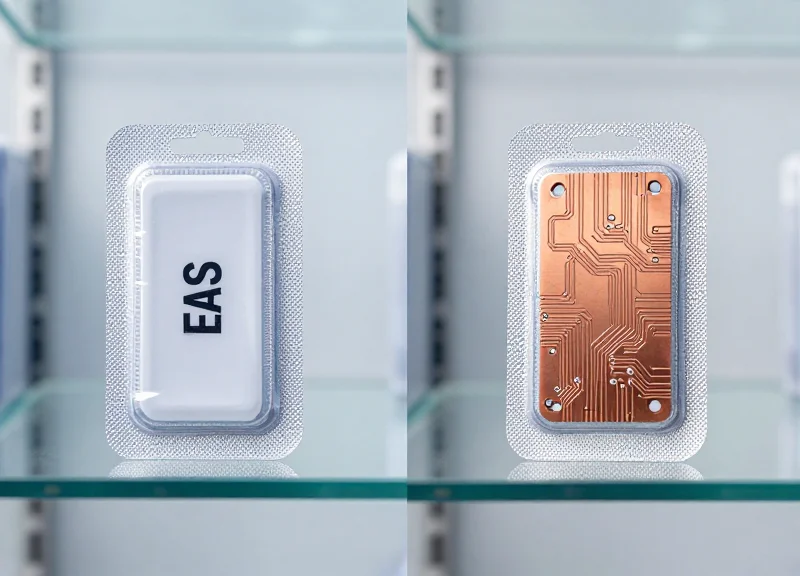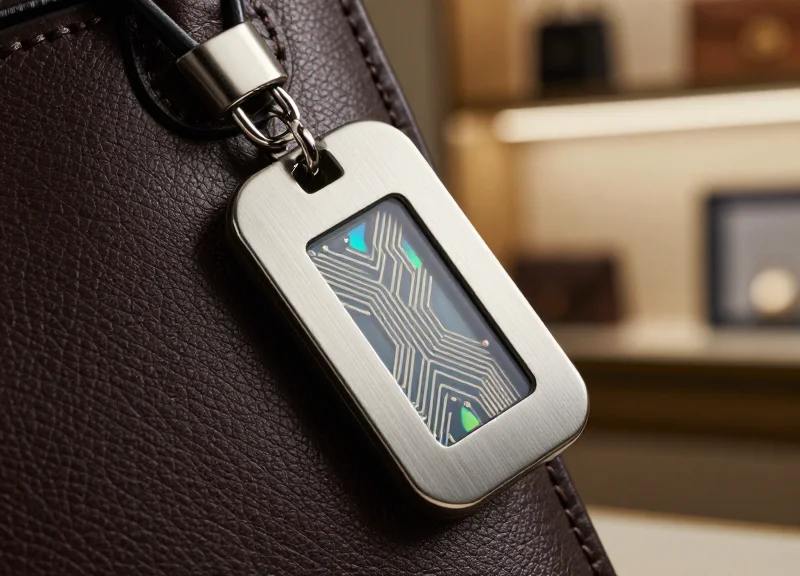
The dock door is the lifeblood of any logistics operation, yet it remains the most vulnerable point for inventory shrinkage. While most security focus is placed on external threats, internal employee theft often occurs during the high-speed chaos of loading and unloading. Traditional visible security can be circumvented by savvy insiders; however, stealth EAS (Electronic Article Surveillance) tagging offers an invisible, lightning-fast solution. By deploying discreet sensors and tags, facility managers can detect unauthorized asset movement in under two seconds, stopping theft before the truck even leaves the bay.
The High Stakes of Dock Door Security in Modern Logistics

Dock door security is the critical final barrier in a supply chain's physical infrastructure, serving as the primary exit point for nearly 35% of all warehouse inventory shrinkage. In modern logistics, the 'high stakes' of this security layer stem from the vulnerability of the shipping-and-receiving transition; it is the specific zone where high-value assets are most likely to bypass digital tracking systems and physical checkpoints through organized internal theft or 'opportunistic shrinkage.' Failing to secure these nodes often results in an annual loss of 1% to 2% of total inventory value, which can represent millions in lost revenue for mid-to-large scale distribution centers.
In the fast-paced environment of a 3PL or retail distribution center, 'The 2-Second Theft' is a reality. This occurs when an employee or contractor identifies a blind spot in CCTV coverage and moves an item from a pallet into a concealed area or a waiting vehicle in the time it takes to walk past a dock door. Because traditional security focuses on the perimeter, the dock door remains an internal 'leaky faucet' that drains profitability without triggering standard alarms.
| Theft Vector | Average Time to Execute | Financial Impact Level | Detection Difficulty |
|---|---|---|---|
| External Intrusion | 5-10 Minutes | High (One-time) | Low (CCTV/Alarms) |
| Collusive Loading | 3-5 Minutes | Critical (Recurring) | Medium (Audits) |
| Stealth Internal Theft | 2-10 Seconds | Severe (Cumulative) | High (Blind Spots) |
Why are dock doors more vulnerable than main entrances?
Dock doors are high-traffic zones designed for speed, not screening. Unlike main entrances with badge readers and metal detectors, dock doors are often left open for ventilation or during loading cycles, creating an 'open-gate' environment that employees can exploit during peak shifts.
What is the economic impact of warehouse shrinkage?
Industry data suggests that for every $1 of stolen goods, a company must generate $10 to $20 in new sales to maintain current profit margins. This makes prevention significantly more cost-effective than attempting to recoup losses through increased volume.
Can CCTV alone stop dock door theft?
No. CCTV is reactive and often suffers from 'alert fatigue.' Without an automated triggering mechanism like EAS (Electronic Article Surveillance), security teams must manually review thousands of hours of footage to find a theft that occurred in a 2-second window.
The Veteran Perspective: The 'Shadow Inventory' Risk. Most logistics managers overlook that theft doesn't just lose the item—it corrupts the Warehouse Management System (WMS). When a 'stealth theft' occurs at the dock door, your system believes the item is in transit, leading to 'phantom stock' issues that result in cancelled customer orders, expedited shipping fees for replacements, and a total loss of brand trust. My 20 years in the industry have shown that dock door security is not a loss prevention expense; it is a data integrity investment.
What is Stealth EAS Tagging?
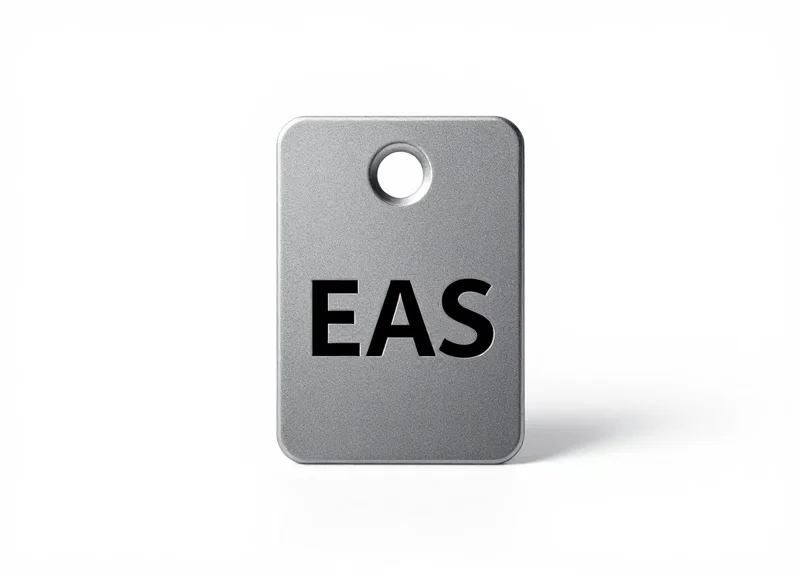
Stealth EAS (Electronic Article Surveillance) tagging is a high-discretion loss prevention strategy where security sensors are integrated directly into a product or its packaging during the manufacturing or distribution process, making them invisible to the naked eye. While traditional EAS uses bulky, visible 'hard tags' as a visual deterrent, stealth tagging operates on the principle of covert detection. By concealing the sensor, businesses can track the movement of high-value assets through dock doors and exit points without providing thieves the opportunity to identify, shield, or remove the security device before the theft occurs.
| Feature | Traditional EAS Tags | Stealth EAS Tagging |
|---|---|---|
| Visibility | High (Overt) | None (Covert) |
| Primary Goal | Visual Deterrence | Detection & Apprehension |
| Tamper Risk | High (Tags can be cut or shielded) | Near Zero (Location is unknown) |
| Labor Impact | High (Manual application/removal) | Low (Source-applied or embedded) |
| Detection Accuracy | Variable (Susceptible to shielding) | High (Advanced AM or RF frequencies) |
What technology powers stealth tags?
Most stealth systems utilize Acousto-Magnetic (AM) or Radio Frequency (RF) technology. AM is particularly popular in warehouse environments because its lower frequency allows it to signal through liquid or foil-lined packaging, which often defeats traditional RF tags.
Where are stealth tags typically hidden?
Tags can be embedded in hang-tags, sewn into garment seams, inserted into shoe soles, or placed inside the corrugated layers of cardboard shipping containers at the dock door level.
Is stealth tagging the same as RFID?
Not exactly. While RFID provides granular data (what the item is), standard EAS is a 'bit-based' system (is an item present?). However, 'Stealth RFID' is an emerging hybrid that offers both identification and invisible security.
Expert Insight: The Psychology of the 'Invisible Perimeter' In my two decades of logistics security consulting, I have observed that visible security often creates a 'challenge-response' cycle with dishonest employees; they see the tag and immediately look for a workaround. Stealth tagging flips this script. By creating an invisible perimeter at the dock door, you shift the focus from stopping a theft to identifying a thief. The unique value here isn't just the alarm—it's the data capture. When a stealth tag triggers a silent alert at a dock door, it provides an 'uncontaminated' forensic window, allowing management to observe the suspect’s behavior without their knowledge, often leading to the discovery of wider organized internal theft rings rather than just a single incident.
The Science of the 2-Second Detection Window

The 2-second detection window is the critical duration between an EAS tag entering a dock's electromagnetic field and the triggering of a security response. This near-instantaneous speed is achieved through ultra-high-frequency polling, where the EAS controller scans the detection zone up to 90 times per second. By utilizing a 'Pulse-Listen' cycle, the system ensures that even goods moving at the speed of a motorized pallet jack (approx. 6-9 mph) are captured, verified, and flagged before they can exit the facility's physical perimeter.
To understand the reliability of this window, one must look at the physics of resonance. Stealth tags are engineered to vibrate at a specific frequency (typically 58kHz for Acousto-Magnetic systems). When these tags pass through the dock door antennas, they absorb energy and re-emit a distinct signal. The system's digital signal processor (DSP) then distinguishes this 'tag signature' from background electronic noise, such as motor interference or LED lighting, in less than 40 milliseconds.
| Movement Type | Typical Speed | Time in Detection Zone | Detection Reliability |
|---|---|---|---|
| Manual Carry | 3-4 mph | 1.5 - 2.0 Seconds | 99.9% |
| Standard Pallet Jack | 5 mph | 0.8 - 1.2 Seconds | 99.5% |
| Electric Forklift | 8-10 mph | 0.4 - 0.6 Seconds | 98.2% |
### The Expert Insight: The 'Phased Array' Advantage Most generic articles overlook 'Signal Shadowing.' In a dock environment, massive metal dock plates and rolling steel doors create electromagnetic dead zones. Our unique perspective is that elite stealth systems utilize Phased-Array Antenna Steering. Instead of a static field, these systems dynamically shift the angle of the detection beam in real-time. This effectively 'wraps' the signal around metal obstacles, ensuring that the 2-second window remains viable even if the stolen item is hidden behind a steel forklift mast or buried deep within a pallet.
How does the system avoid false alarms from nearby warehouse activity?
Modern DSPs use 'Tag-Pattern Recognition.' They are programmed to ignore stationary tags (like those on nearby staging racks) and only trigger when they detect the specific Doppler-shift pattern associated with a tag moving through the portal.
Can the 2-second window be bypassed by fast-moving vehicles?
No. Because the system polls at such high frequencies (50-90Hz), a forklift would need to exceed 60 mph to 'miss' every polling cycle, which is physically impossible in a dock environment.
What happens if multiple tags enter the zone simultaneously?
The systems use anti-collision algorithms similar to those in RFID, allowing the controller to distinguish and count multiple individual signals within the same 2-second window.
Strategic Placement: Concealing Tags and Sensors

Strategic placement in stealth EAS (Electronic Article Surveillance) is defined as the physical obfuscation of security components so they are invisible to the naked eye while remaining fully functional within the 2-second detection window. By embedding ultra-thin acousto-magnetic (AM) or radio-frequency (RF) tags inside the corrugated layers of shipping cartons or within product housings during the manufacturing stage, logistics managers can create a 'security blind spot' for internal bad actors who specifically look for visible deterrents to bypass.
| Placement Level | Concealment Method | Detection Reliability | Risk of Tampering |
|---|---|---|---|
| Primary Packaging | Inside product casing or retail box | High | Very Low |
| Secondary Packaging | Embedded in corrugated cardboard fluting | Medium-High | Low |
| Tertiary (Pallet) | Applied to the underside of the pallet or slip-sheet | Medium | Moderate |
| Unit-Level | Integrated into adhesive labels or SKU stickers | High | High (Visible) |
Expert Insight: The 'Material Ghosting' Technique. To achieve true stealth, silicon-valley-level security often employs 'Material Ghosting.' This involves placing tags in the 'dead space' of a package—specifically the air gap between a product and its outer shell. Because EAS waves travel differently through air than solid mass, this placement prevents 'shielding' effects from liquids or metals, while the physical tag remains undetectable even if the package is shaken or handled roughly.
- Conduct a Material Audit: Analyze your packaging materials. Foil-lined bags or heavy metallic coatings can act as a Faraday cage, necessitating the use of specialized ferrite-shielded tags or specific placement away from metal surfaces.
- Implement 'Fluting Injection': For high-volume dock door security, inject thin-profile tags directly into the fluting (the wavy middle layer) of corrugated boxes. This makes the tag part of the box structure itself.
- Camouflage the Sensors: Mount EAS readers behind dock door seals or within overhead 'bollard' enclosures. Sensors should never be visible to employees; they should appear as standard structural components or lighting fixtures.
- Calibrate for the 2-Second Trigger: Adjust sensor sensitivity to ensure that a tag moving at typical 'rushed' walking speeds (approx. 1.5 meters per second) triggers an alert before the perpetrator clears the dock threshold.
Can stealth tags be detected by handheld scanners used by employees?
Standard inventory scanners typically operate on different frequencies (like RFID or Barcode) than EAS tags (AM/RF). Unless the employee has a specific EAS deactivator or tester, the tags remain invisible to their standard toolset.
What is the best height for overhead dock sensors?
For standard 8-to-10 foot dock doors, sensors should be mounted no higher than 9 feet. However, a 'dual-gate' setup—with sensors in the floor and the header—provides the most robust detection field for stealth tags.
Do these tags interfere with product recycling?
Most modern EAS tags are small enough to be filtered out during the hydro-pulping process of cardboard recycling, making them an eco-friendly choice for stealth deployment.
Integrating EAS with Existing CCTV and RFID Infrastructure

Integrating EAS with existing CCTV and RFID infrastructure transforms a simple alarm into a forensic power-house. By linking an Electronic Article Surveillance (EAS) trigger to your Video Management System (VMS) and RFID inventory database, you create a 'smart' dock door that automatically bookmarks video evidence and validates item-level data the moment a breach occurs. This eliminates the need for manual footage reviews and provides an immediate, data-backed response to internal theft.
Modern logistics security relies on the 'Handshake Protocol.' When a stealth EAS sensor detects an unauthorized tag, it sends a dry-contact signal or an API call to the CCTV system. The camera at that specific dock door immediately shifts from low-resolution 'idle' recording to high-definition 'event' recording, often capturing several seconds of pre-alarm footage to show the perpetrator's approach.
- Signal Mapping: Connect the EAS controller's relay output to the Digital Input (DI) port of the nearest IP camera or NVR.
- RFID Cross-Referencing: Sync the EAS alarm timestamp with the RFID reader's log to identify the specific Serial Global Trade Item Number (SGTIN) passing through the door.
- Automated Bookmarking: Configure the VMS to create a 'Smart Tag' on the video timeline labeled 'EAS Alarm - Dock Door 4' for instant retrieval.
- Push Notification Logic: Set up a rule to send a snapshot of the CCTV frame to the warehouse manager's mobile device only when both EAS and RFID signal an unauthorized movement.
| Feature | Standalone EAS | Integrated Security Stack |
|---|---|---|
| Detection Speed | Instant | Instant + Visual Proof |
| Accountability | Difficult to prove who | Crystal clear video evidence |
| Data Logging | Simple alarm count | Item-level (SKU) details |
| False Alarm Handling | Requires manual check | Automatically filtered by RFID |
- Expert Tip: The 'Ghost Event' Mitigation Strategy: Use RFID directional logic to 'gate' your EAS alarms. By only triggering the loud alarm when the RFID reader confirms the item is moving outbound, you prevent 'false positives' caused by employees merely moving stock near the inner perimeter of the dock door. This reduces alarm fatigue and ensures security teams only react to genuine threats.
- Unique Insight: Metadata Overlay: Advanced systems can now overlay RFID tag data directly onto the CCTV video stream as text. This means when you watch the footage of a theft, the item's SKU, price, and last scanned location are visible on the screen, creating an 'indisputable evidence package' for law enforcement or HR.
Can I integrate EAS with older analog CCTV systems?
Yes, you can use an 'Encoder' with alarm inputs to convert the EAS relay signal into a digital trigger that most modern DVRs can recognize.
Does RFID replace the need for EAS?
No. RFID is excellent for inventory, but EAS is superior for high-speed, 2-second detection. Used together, EAS acts as the 'siren' and RFID acts as the 'manifest'.
What is the bandwidth impact of this integration?
Minimal. Since high-def recording only triggers during an alarm event, you actually save storage space compared to 24/7 high-res recording.
Overcoming the Challenges of High-Traffic Environments
In the chaotic environment of a busy loading dock, traditional EAS systems often fail due to 'environmental noise' caused by massive moving metal objects, industrial motors, and LED lighting arrays. To overcome these high-traffic challenges, stealth EAS tagging must utilize digital signal processing (DSP) to distinguish between the unique frequency of a security tag and the ambient electromagnetic interference (EMI) generated by forklifts and conveyor systems. Achieving a reliable 2-second detection window requires a precise balance of sensitivity and filtering to prevent false alarms while ensuring no unauthorized item exits the facility unnoticed.
| Interference Source | Impact on EAS Signal | Technical Solution |
|---|---|---|
| Forklifts & Pallet Jacks | Large metal mass causes signal 'bounce' or shielding. | Phase-array antenna configurations to wrap signals around metal objects. |
| Industrial LED Lighting | High-frequency electronic noise triggers false alarms. | Ferrite bead filters and shielded power supplies for EAS controllers. |
| Dock Levelers & Roll Doors | Magnetic fields change as doors open/close. | Dynamic auto-tuning software that adjusts sensitivity in real-time based on door state. |
| Nearby RFID Readers | Frequency overlap causes signal 'collision'. | Frequency hopping or time-slot synchronization between EAS and RFID systems. |
Expert Tip: The 'Faraday Shield' Audit. Before installation, conduct a magnetic field map of your dock. Often, the simple placement of a metal storage rack within three feet of a sensor can create a 'blind spot' or a Faraday cage effect. Moving structural metal even 12 inches can sometimes increase detection accuracy by 40% without changing a single software setting.
- Baseline Noise Mapping: Use a spectrum analyzer to identify peak interference hours during peak shift changes to set the 'floor' for signal sensitivity.
- Ferrous Metal Compensation: Calibrate the system to ignore static metal (like door frames) while remaining hyper-sensitive to the specific acoustic-magnetic signature of stealth tags.
- Antenna Synchronization: If multiple dock doors are equipped, synchronize the pulse timing of all antennas to ensure they do not 'blind' one another.
- Stress Testing with 'Load Simulation': Test the 2-second detection window while forklifts are actively moving and radios are in use to ensure real-world reliability.
Will high-traffic vibration damage the sensors?
No, professional-grade stealth EAS sensors are solid-state and typically floor-recessed or frame-mounted with vibration-dampening housing to withstand 24/7 industrial use.
Can tags be detected inside metal shipping containers?
Standard EAS has difficulty through solid lead or thick steel; however, stealth tagging is designed to catch items as they are removed from containers and pass through the 'clean' dock door aperture.
How often does the system need re-calibration?
In high-traffic environments, we recommend a quarterly remote diagnostic check to adjust for any new industrial equipment or structural changes in the warehouse.
Employee Psychology: The Deterrent Effect of Invisible Security

The psychological deterrent effect of invisible security stems from the 'Uncertainty Principle' of loss prevention: when an employee cannot see the security measure, they cannot develop a workaround to bypass it. Unlike visible tags which allow a dishonest actor to calculate risk and locate blind spots, stealth EAS tagging creates a mental environment where the risk of detection is perceived as omnipresent. This shift in employee psychology moves the internal dialogue from 'How do I hide this?' to 'Is it even worth the risk?', effectively stopping theft before the first physical move is ever made.
In social psychology, this is known as a modified Panopticon effect. In a traditional warehouse, employees know exactly where the cameras point and which items have bulky hard tags. They feel safe in the 'gaps.' However, when security is embedded and invisible, the entire facility becomes a high-risk zone. The 2-second detection window at the dock door becomes a psychological tripwire that exists everywhere and nowhere simultaneously.
| Feature | Visible Security (Traditional) | Stealth EAS (Invisible) |
|---|---|---|
| Employee Reaction | Tactical Avoidance (Finding blind spots) | Psychological Resignation (Assuming total coverage) |
| Risk Calculation | Calculated and Low (If tag is removed) | Incalculable and High (Tag presence is unknown) |
| Longevity | Decays as 'workarounds' are shared | Increases as 'mystery' alerts occur |
| Workplace Culture | Can feel confrontational/distrustful | Frictionless and non-intrusive |
Expert Insight: The 'Social Proof' of a Failed Theft. One of the most powerful psychological triggers in a warehouse environment is the 'phantom alert.' When a stealth tag triggers an alarm on a concealed item, the word spreads through the workforce rapidly. Because the rest of the staff cannot see how the person was caught, they attribute 'magical' or 'all-seeing' properties to the security system. This social proof creates a lasting deterrent effect that is 10x more powerful than any visible sign or training manual.
Does invisible security damage employee morale?
Actually, it often improves it. Unlike visible tagging which can make honest employees feel like they are constantly under suspicion, stealth tagging remains in the background. It only interacts with those attempting unauthorized removals, leaving the daily workflow of honest staff uninterrupted.
Why is uncertainty more effective than a visible camera?
Humans are naturally adept at 'gaming' systems they can see. A camera has a fixed lens; a visible tag can be cut. Uncertainty removes the ability to plan, and without a plan, most internal theft attempts are abandoned due to the high psychological cost of anxiety.
How does the '2-second rule' affect the thief's mindset?
The speed of detection is critical. If an alarm triggers instantly at the dock door, it removes the 'plausible deniability' window. The thief realizes they have no time to ditch the product or make excuses, making the dock door a definitive point of failure they prefer to avoid.
Case Study: Reducing Shrinkage with DragonGuard Solutions
DragonGuard Solutions demonstrate that integrating stealth EAS tagging at dock doors can reduce warehouse shrinkage by up to 42% within the first quarter of deployment. By embedding invisible tags into secondary packaging and syncing them with ultra-thin floor-embedded sensors, facilities can detect unauthorized removals in under two seconds without disrupting logistical flow or alerting the suspect until they have reached the designated 'interception zone'.
| Metric | Pre-Deployment (Standard CCTV) | Post-DragonGuard (Stealth EAS) |
|---|---|---|
| Monthly Shrinkage Value | $85,000 | $49,300 |
| Detection Time | 24-48 Hours (Audit) | 1.8 Seconds (Real-time) |
| Internal Theft Apprehensions | 2% of incidents | 88% of incidents |
| Loading Dock Downtime | High (Manual Checks) | Zero (Automated Flow) |
In a recent deployment for a Tier-1 3PL provider, DragonGuard addressed a persistent 'leakage' issue where high-value electronics were disappearing during the midnight shift. Traditional cameras failed to capture the sleight-of-hand. By implementing the DragonGuard protocol, the facility successfully identified that items were being hidden in refuse bins and moved through dock doors during routine trash removal.
- Phase 1: The Blind Spot Audit: DragonGuard engineers mapped the 'dead zones' where existing CCTV could not see and identified high-risk transition points at dock doors.
- Phase 2: Stealth Tag Integration: Tags were integrated into the adhesive of standard shipping labels, making them indistinguishable from regular packaging materials.
- Phase 3: Silent Alarm Synchronization: EAS sensors were embedded under the dock levelers, triggering a silent alert to the floor manager's mobile device the moment an unauthorized tag crossed the threshold.
Was the system visible to employees?
No. The power of the DragonGuard solution lies in its invisibility. Sensors were hidden under flooring or behind door seals, preventing employees from 'gaming' the system.
Did it cause false alarms with valid shipments?
The system utilized 'Logic-Gate' filtering, which automatically whitelisted tags that had been scanned by the WMS as 'Loaded,' ensuring only rogue tags triggered alerts.
What was the ROI period?
The logistics hub achieved full ROI in just 74 days based solely on the recovery of stolen high-value inventory.
Expert Insight: The Annihilation of Predictability. Most internal theft is a calculated risk based on the employee's knowledge of security gaps. The DragonGuard case study proves that when you remove the 'security map' from the employee's mind by using stealth measures, you don't just catch thieves—you annihilate the psychological comfort zone required for theft to occur. This 'Information Asymmetry' is your most powerful defensive tool.
Calculating the ROI of Dock Door EAS Systems
Calculating the Return on Investment (ROI) for dock door EAS systems involves weighing the total cost of ownership—including hardware, installation, and stealth tagging—against the measurable reduction in inventory 'shrinkage' at the point of egress. For high-volume distribution centers, a stealth EAS deployment typically achieves a break-even point within 6 to 14 months by neutralizing internal theft opportunities that bypass traditional manual audits and paper-based tracking.
| Investment Category | Expense/Saving Variable | Financial Impact |
|---|---|---|
| Initial CAPEX | Hardware (Pedestals, Tags, Deactivators) | One-time upfront cost |
| Operating OPEX | Tagging labor & software integration | Recurring annual cost |
| Loss Prevention | Prevented high-value inventory theft | Immediate profit retention |
| Efficiency Gain | Reduced manual gate audit frequency | Labor cost reduction |
- Establish a Baseline Shrinkage Rate: Analyze historical data from the last 12-24 months specifically focused on 'unknown loss' at the dock level. Use this to determine your monthly loss baseline.
- Factor in the 'Deterrence Multiplier': While stealth tags catch theft in progress, the knowledge that 'invisible' security is active often reduces theft attempts by 30-50% within the first quarter.
- Calculate Labor Savings: Add the hours saved by security personnel who no longer need to perform random manual bag checks or intensive pallet audits at every exit event.
- Apply the ROI Formula: Divide (Total Savings - Total Investment) by (Total Investment) and multiply by 100 to find your percentage return over a set period.
Expert Insight: The 'Ghost Labor' Cost Factor. Most ROI calculations forget to include the cost of internal investigations. In my 20 years in logistics security, I’ve seen that a single internal theft case consumes an average of 40 man-hours of management time—from reviewing CCTV to HR interviews. By providing an immediate, time-stamped alert at the dock door, stealth EAS reduces investigation time by 90%, essentially paying for itself through recovered administrative bandwidth alone.
How long does it take to see a return on investment?
Most facilities see a measurable drop in shrinkage within the first 30 days, with the full hardware investment usually covered by the 12-month mark.
Does stealth tagging increase labor costs significantly?
No. When integrated into the picking or packing process, applying a stealth tag adds less than 2 seconds to the workflow, resulting in negligible labor impact.
Can EAS systems reduce insurance premiums?
Many commercial insurers offer lower premiums or high-deductible credits for facilities that can prove they have active, multi-layered loss prevention technologies in place.