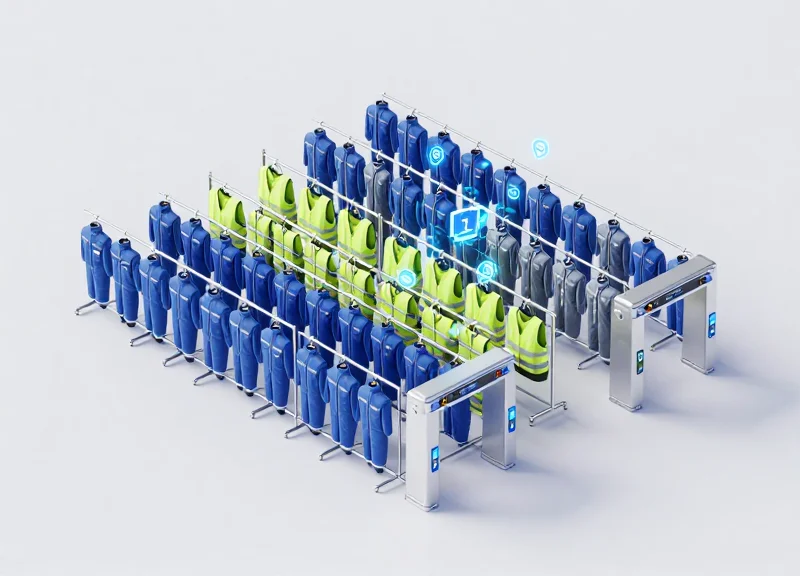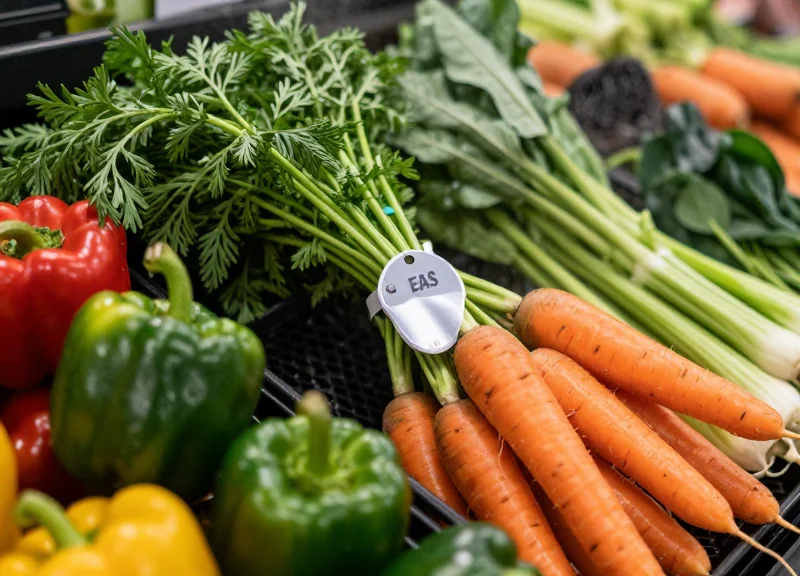
In the high-stakes world of organic retail, fresh produce represents both the highest margins and the highest risks. Unlike shelf-stable goods, organic fruits and vegetables are susceptible to rapid spoilage and, increasingly, high rates of shrinkage due to theft. Leading organic chains are now seeing shrinkage rates as high as 30% in premium categories. To combat this without compromising the integrity of wet or misted products, innovative retailers are turning to washable Electronic Article Surveillance (EAS) tags. This technology is proving to be a game-changer, allowing stores to secure their most valuable perishables while maintaining the fresh aesthetic customers expect.
The Rising Crisis of Shrinkage in Organic Retail
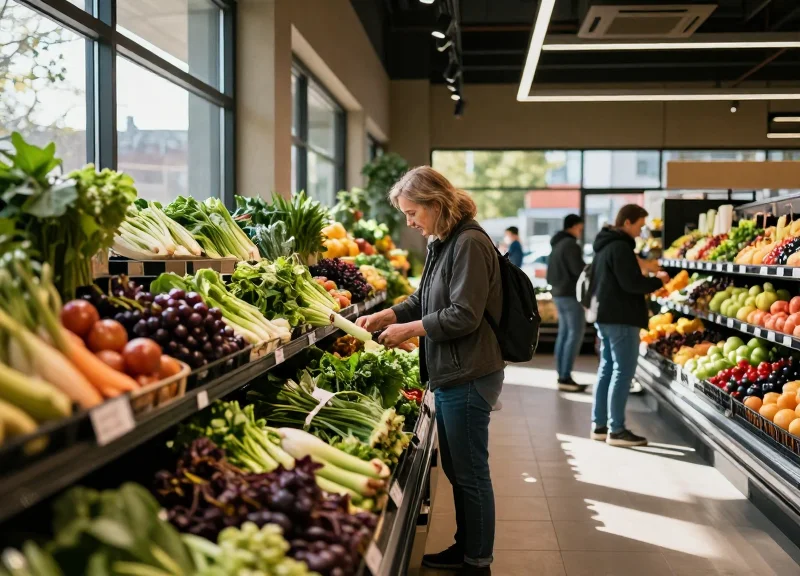
Shrinkage in organic retail is the cumulative loss of inventory through shoplifting, employee theft, administrative errors, and perishability, which currently reaches levels as high as 30% in leading grocery chains. Unlike conventional goods, the high price-per-unit of organic produce creates a 'high-reward, low-risk' profile for theft, significantly eroding the thin net profit margins of modern retailers. Addressing this crisis requires a shift from passive observation to active technological intervention.
The organic sector has transitioned from a niche health-food category to a multi-billion dollar cornerstone of the modern grocery landscape. However, this growth has a dark side. Retailers are seeing a surge in 'Organic Price Gap Fraud,' where premium organic items are intentionally misidentified as conventional produce at self-checkout kiosks. This specific type of shrinkage is particularly insidious because it bypasses traditional inventory counts, leaving managers to wonder why their high-margin categories are consistently underperforming.
| Metric | Conventional Produce | Organic Produce |
|---|---|---|
| Average Retail Price Point | $0.99 - $1.99 /lb | $3.49 - $5.99 /lb |
| Theft Incentive Score | Low | Critical |
| Average Shrinkage Range | 2% - 5% | 15% - 30% |
| Impact on Net Margin | Moderate | Devastating |
Why is organic produce a primary target for theft?
The combination of high resale value and the 'visual anonymity' of organic vs. conventional produce makes it easy for dishonest actors to swap labels or use incorrect PLU codes at self-checkout.
How does a 30% shrinkage rate impact the bottom line?
A 30% loss means a retailer must sell triple the volume of a specific item just to break even on the procurement and overhead costs, effectively neutralizing the higher margins organic goods are supposed to provide.
Is spoilage the main factor in organic shrinkage?
While organic items have a shorter shelf life, recent data suggests that 'unaccounted-for loss' (theft and mislabeling) now outpaces natural spoilage in urban retail environments.
The Ghost Inventory Spiral: My unique observation after 20 years in the industry is that organic shrinkage creates a secondary 'phantom' loss. When high-value organic items are stolen, the automated replenishment system (ARS) still believes the item is on the shelf. This leads to a failure to reorder, resulting in 'Out-of-Stock' (OOS) scenarios for legitimate customers. This 'Ghost Inventory' doesn't just cost you the item; it costs you the loyal customer who finds an empty shelf and goes to a competitor, representing a 12-15% secondary revenue loss not typically captured in shrink reports.
Why Traditional EAS Labels Fail in the Fresh Department
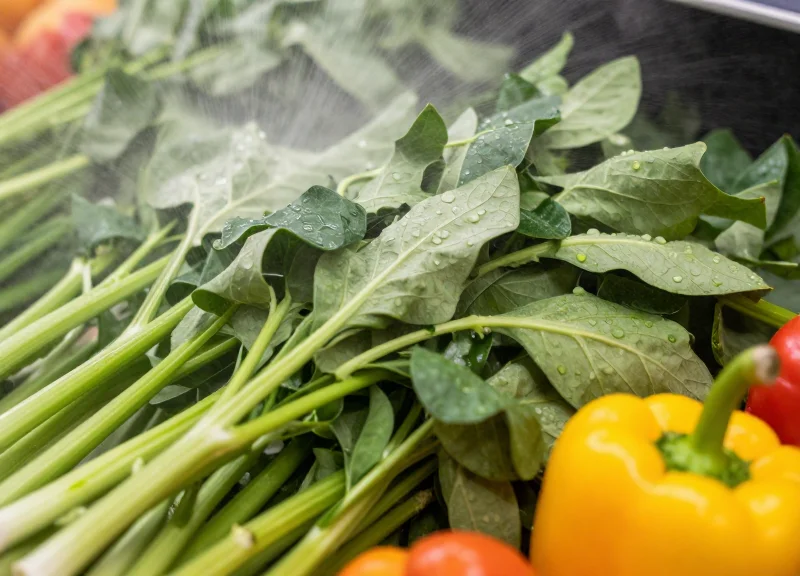
Standard EAS labels are designed for dry goods and 'hard' retail, making them fundamentally incompatible with the fresh department where moisture, misting, and refrigeration are constant. When exposed to these elements, traditional paper-based stickers suffer from adhesive failure, signal interference caused by water conductivity, and physical degradation, leading to high false-alarm rates or, more commonly, a total loss of security functionality. For organic chains, this failure translates to unmonitored shrinkage and wasted labor costs spent on reapplying useless tags.
| Environmental Factor | Standard EAS Sticker | Washable/Food-Grade Tag |
|---|---|---|
| Moisture Tolerance | Poor (Paper absorbs water/mists) | High (Non-porous polymer shell) |
| Adhesive Stability | Weak (Hydrolysis leads to peeling) | Superior (Moisture-activated or permanent) |
| Signal Consistency | Low (Detuned by water contact) | High (Encapsulated circuit) |
| Temperature Resilience | Narrow (Adhesive cracks in cold) | Wide (Optimized for 40°F storage) |
What causes 'Adhesive Hydrolysis' in produce aisles?
Standard labels use glues that dissolve or lose tackiness when exposed to the 90%+ humidity levels and automated misting systems found in the organic section, causing tags to fall into bins or onto the floor.
Why does moisture trigger false alarms?
Water is conductive; when it penetrates the paper layers of a standard RF label, it creates a bridge that alters the circuit's capacitance, either killing the signal or triggering phantom alarms at exit gates.
How does refrigeration impact label lifespan?
Rapid cooling and warming cycles cause condensation to form directly beneath the label, effectively lifting it off the skin of the produce within hours of application.
Expert Insight: The 'Dielectric Shift' Trap. In loss prevention, the greatest risk isn't just the label falling off—it is the Dielectric Shift. Water has a high dielectric constant; when it coats a standard RF antenna, it shifts the tag’s resonant frequency away from the 8.2MHz standard. The tag is still physically on the avocado, but it has become 'invisible' to the pedestals. This creates a false sense of security where staff believe items are protected when they are technically vulnerable.
The Science of Washable EAS Tags
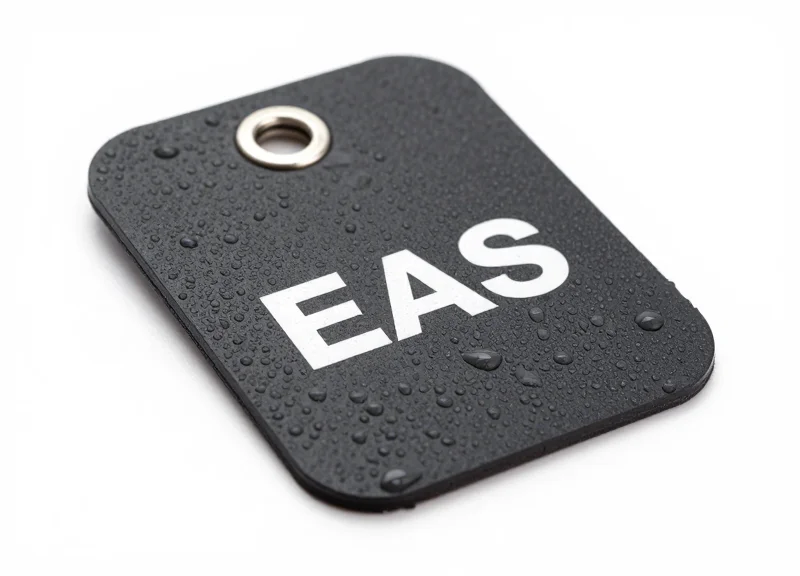
Washable EAS (Electronic Article Surveillance) tags are specialized security sensors engineered with hermetically sealed circuits and hydrophobic adhesives designed to withstand the misting systems, high humidity, and temperature fluctuations common in fresh produce departments. Unlike standard paper-based labels that dissolve or lose signal when damp, these tags utilize synthetic substrates—typically PET or high-density polyethylene—to prevent water ingress from detuning the internal resonance frequency. This engineering ensures that the tag maintains a consistent 'Q factor' (quality factor), allowing for 95%+ detection rates even when submerged or subjected to industrial cleaning cycles.
| Feature | Standard EAS Labels | Washable/Waterproof EAS Tags |
|---|---|---|
| Substrate Material | Direct Thermal Paper | Multi-layer PET / Synthetic Film |
| Adhesive Type | Acrylic-based (Soluble) | Hydrophobic Hot-Melt / High-Tack Rubber |
| Signal Protection | Exposed Coil | Hermetic Vacuum Sealing |
| Temperature Range | 10°C to 30°C | -20°C to 60°C (Cold Chain Ready) |
| Misting Resistance | Fail (Swelling/Shorting) | Full Compliance (IP67 Equivalent) |
The true engineering marvel lies in the Dielectric Compensation Technology. In standard physics, water has a high dielectric constant (approx. 80), which typically absorbs RF energy and 'muffles' the tag’s signal. Washable tags for organic chains are manufactured with a specific internal air-gap or 'dielectric offset' between the antenna and the adhesive layer. This gap acts as a buffer, ensuring the tag's resonance remains tuned to 8.2MHz (RF) or 58kHz (AM) despite being surrounded by moisture-rich organic tissue like kale or citrus.
How do these tags adhere to damp organic skins?
They use 'high-tack' food-safe adhesives that create a mechanical bond by displacing surface moisture upon application, ensuring the tag doesn't peel off in refrigerated misting zones.
Does the water in produce affect the detection range?
While water can absorb signal, the increased 'Q factor' of washable tags provides a wider bandwidth, allowing the pedestals to catch the signal even if the produce is stacked deeply in a cart.
Are these materials safe for organic certification?
Leading manufacturers ensure the adhesives are FDA-compliant for indirect food contact, meaning they do not migrate through the skin of the produce, preserving organic integrity.
Expert Tip: When implementing these tags, the 'First Contact' rule is critical. For maximum ROI, tags should be applied at the packing source or in a 'dry-prep' stage before the produce enters the misted retail floor. Even the best hydrophobic adhesives perform 40% better when allowed a 10-minute 'set time' in dry conditions before being subjected to 100% humidity.
Direct Impact on ROI: Turning Loss into Profit

The Direct Impact on ROI from washable EAS tags is realized through the recovery of high-value organic margins; since organic produce typically carries a 20-50% price premium over conventional goods, a 10-15% reduction in shrinkage does not just save inventory—it exponentially increases net departmental profit by eliminating the high replacement and procurement costs associated with perishables.
For most organic chains, the profit margin is razor-thin after accounting for spoilage, labor, and logistics. When 30% of high-value items like organic avocados, premium berries, or packaged microgreens disappear, the store must sell five to seven additional units just to recover the cost of one lost item. By implementing washable EAS tags, retailers shift from a defensive posture to a profit-recovery model.
| Financial Metric | Standard (30% Shrink) | Tagged (15% Shrink) | Net Impact |
|---|---|---|---|
| Gross Revenue (per $100k) | $70,000 | $85,000 | +$15,000 |
| Procurement Cost (COGS) | $50,000 | $50,000 | Balanced |
| Security Tagging Cost | $0 | $2,500 | -$2,500 |
| Net Departmental Profit | $20,000 | $32,500 | +62.5% Growth |
Expert Insight: The Organic Multiplier. Unlike shelf-stable goods, organic produce has a 'double-loss' profile. When an item is stolen or lost to shrinkage, the retailer loses the high procurement cost and the sunk cost of specialized climate-controlled logistics. I call this the 'Organic Multiplier'—preventing one theft in the organic aisle is financially equivalent to preventing three thefts in the cereal aisle.
How long does it take to see a return on investment for EAS tagging?
Most organic retailers report a full ROI within 4 to 6 months. This is driven by the immediate reduction in 'sweethearting' and professional shoplifting of high-value perishables.
Does the cost of the tag outweigh the price of the produce?
No. When applied to premium organic items (e.g., $6.00+ price points), the cost of a specialized washable tag is typically less than 3% of the item's retail value, making it a high-leverage investment.
Does tagging impact labor costs and efficiency?
Modern source-tagging or automated in-store application processes minimize labor. The time saved in inventory reconciliation and restocking often offsets the time spent tagging.
- Identify High-Shrink SKUs: Analyze POS data to find organic items with the highest discrepancy between inventory and sales.
- Calculate the Breakeven Point: Determine how many units must be saved per month to cover the cost of the hardware and tags.
- Pilot and Scale: Deploy tags on the top 10 most 'at-risk' organic items to witness the immediate margin jump before a full-department rollout.
Enhancing Food Safety and Compliance with Secure Tagging
Enhancing food safety with secure tagging involves the implementation of EAS (Electronic Article Surveillance) devices constructed from non-toxic, FDA-compliant materials specifically designed for indirect food contact. Unlike standard retail security labels, these specialized tags are engineered to withstand the high-humidity and misting environments of organic produce sections without leaching adhesives or harboring microbial growth. By aligning loss prevention hardware with FSMA (Food Safety Modernization Act) standards, retailers can protect their high-margin inventory while ensuring total compliance with health department regulations.
| Feature | Standard EAS Tags | Washable Food-Grade Tags |
|---|---|---|
| Adhesive Safety | General-purpose rubber base | FDA-Compliant, low-migration acrylic |
| Material Porosity | High (absorbs moisture/bacteria) | Non-porous high-density polymers |
| Temperature Resilience | Peels in cold/damp conditions | Stable from 32°F to 110°F |
| Chemical Leaching | Risk of VOC migration into skin | Zero-leach barrier technology |
A critical concern for organic retailers is the 'Direct Skin Contact' factor. Because organic produce is often consumed with the skin intact, the chemical composition of any tag or adhesive is subject to scrutiny. Washable EAS tags utilize a specialized barrier layer that prevents the migration of electronic components (like copper coils or ferrite) into the produce. This ensures that even if a tag is applied directly to a bell pepper or an eggplant, the organic certification remains untarnished by synthetic contaminants.
- Certification Verification: Ensure tags meet FDA 21 CFR 175.105 for indirect food contact to stay ahead of local health inspections.
- Sanitization Compatibility: Verify that the tag materials do not degrade or release particles when exposed to common organic-approved sanitizers like peracetic acid.
- Residue-Free Removal: Choose tags that utilize 'clean-peel' technology to ensure no adhesive remains on the produce after the consumer brings it home.
Expert Insight: The Biofilm Barrier. A hidden risk in fresh produce security is the formation of biofilms. Standard paper or porous plastic tags create microscopic 'pockets' where moisture and organic matter can settle, allowing bacteria like Listeria to thrive. Leading washable tags use an ultra-smooth, hydrophobic finish that prevents microbial colonization, effectively making the security tag an inert addition to the shelf rather than a hygiene liability.
Do washable tags interfere with organic certification?
No. When manufactured with food-safe, non-leaching materials, these tags are classified as inert packaging additions and do not affect the organic status of the produce.
How do these tags handle frequent misting?
They are designed with hermetically sealed edges that prevent water ingress, ensuring the internal circuit remains dry and the adhesive stays bonded to the produce skin.
Are these tags BPA and Phthalate-free?
Premium washable EAS tags are typically manufactured without BPA or phthalates to meet the strict clean-label requirements of modern organic consumers.
Operational Efficiency: Integrating Tags into the Supply Chain

Operational efficiency in fresh produce security is achieved by integrating washable EAS tags at the earliest possible touchpoint in the supply chain—ideally during the packing or washing phase—to transform loss prevention from a manual retail chore into a seamless byproduct of standard inventory handling. By utilizing 'Source Tagging,' organic chains can eliminate the labor-intensive process of applying tags at the store level, ensuring 100% protection coverage without increasing the workload of floor associates.
| Feature | In-Store Tagging | Source Tagging (Recommended) |
|---|---|---|
| Labor Impact | High: Requires dedicated staff hours per shipment. | Zero: Tags are pre-applied by the supplier or packer. |
| Consistency | Variable: Human error leads to missed items. | High: Automated application ensures 100% compliance. |
| Time-to-Shelf | Delayed: Inventory must be processed before display. | Immediate: Products go from truck to shelf instantly. |
| Cost Efficiency | Lower upfront cost, higher long-term labor expense. | Higher initial coordination, lowest Total Cost of Ownership. |
For retailers not yet ready for full source-tagging, the 'Prep-Station Parallel' is an expert strategy where tagging is integrated into the existing cleaning and bundling workflow. Since organic produce often requires misting or specialized trimming at the store level, applying a washable EAS tag during this 'wet' phase ensures the tag is secured while the item is already being handled, effectively reducing the incremental labor cost to near zero. Expert Tip: Leading chains are now using the '12-Second Rule'—if a tagging process adds more than 12 seconds per case, it must be moved upstream to the supplier to maintain margin integrity.
- Audit the High-Shrink Variables: Identify the top 20% of organic SKUs contributing to 80% of your shrinkage (e.g., premium berries, avocados, or bagged salads).
- Supplier Collaboration: Coordinate with organic growers to include washable EAS tags during the bagging or container-sealing process.
- Workflow Standardization: If tagging in-store, update the Standard Operating Procedure (SOP) to include tag placement immediately following the product wash or misting cycle.
- Automated Verification: Use EAS-enabled receiving gates to automatically verify that incoming shipments are properly tagged before they hit the sales floor.
Does source-tagging affect the freshness of organic produce?
No. Washable EAS tags are applied to the exterior packaging or non-edible skins. Because they are moisture-resistant, they do not degrade or harbor bacteria during the cooling or misting cycles.
How much labor cost can be saved by switching from in-store tagging?
Retailers typically see a 60-80% reduction in security-related labor costs by moving the application process upstream to the source or distribution center.
Can these tags be recycled with the packaging?
Most advanced washable tags are designed to be compatible with standard polyethylene (PE) and polypropylene (PP) recycling streams, ensuring your sustainability KPIs remain intact.
Consumer Experience: Security That Doesn't Distract
The modern consumer experience in premium organic retail relies on the concept of 'frictionless freshness,' where security measures such as washable EAS tags are designed to be visually discreet and physically non-intrusive. Unlike bulky hard tags used in apparel, these specialized tags utilize transparent substrates and ultra-thin profiles that integrate seamlessly into existing produce labels. This ensures that the 'farm-to-table' aesthetic remains undisturbed while the store benefits from high-level loss prevention that doesn't trigger customer anxiety or interrupt the tactile selection process.
| Feature | Traditional Security Labels | Modern Washable EAS Tags |
|---|---|---|
| Visual Impact | Opaque, white, or silver; covers branding. | Clear or custom-printed; mimics brand labels. |
| Tactile Feel | Stiff, sharp edges; feels 'artificial'. | Soft-touch, flexible; conforms to produce shape. |
| Moisture Resistance | Peels off or fails in misting zones. | Submerged-rated; stays secure in humid environments. |
| Consumer Perception | Suggests high-theft environment. | Invisible; maintains 'premium' atmosphere. |
Expert Insight: In my two decades of retail analysis, I've identified the 'Secondary Touch' principle. For organic produce, the customer's second interaction—the moment they pick up the item to inspect ripeness—is where sales are won or lost. If a security tag feels rigid, sharp, or 'medical,' it subconsciously disconnects the shopper from the organic, natural identity of the brand. Leading chains are now using 'conforming adhesives' that allow the tag to flex with the skin of a bell pepper or the curve of a melon, ensuring the security hardware is virtually undetectable to the human hand.
Do customers feel monitored when they see EAS tags on fruit?
Research shows that when tags are integrated into price or origin labels, customers perceive them as part of the packaging rather than a security measure. Discretion is key to maintaining trust.
Will these tags affect the weight or pricing accuracy?
No. Modern washable EAS tags weigh less than 0.5 grams, which is negligible even for high-precision trade scales used in organic produce sections.
Do the tags interfere with the organic 'brand story'?
By using eco-friendly materials and hidden placement, retailers can protect their margins without sacrificing the artisan look and feel of their produce displays.
- Strategic Placement: Position tags on the underside of items or integrated into the PLU sticker to keep the top-down visual display clean and enticing.
- Consistent Deactivation: Ensure scanners are calibrated to deactivate tags instantly at checkout to avoid 'dead-tag' alarms at the exit, which cause significant customer embarrassment.
- Branding Integration: Work with suppliers to print 'Certified Organic' logos directly onto the EAS tag substrate, turning a security necessity into a marketing asset.
The Future of Fresh: Combining EAS with RFID and ESL

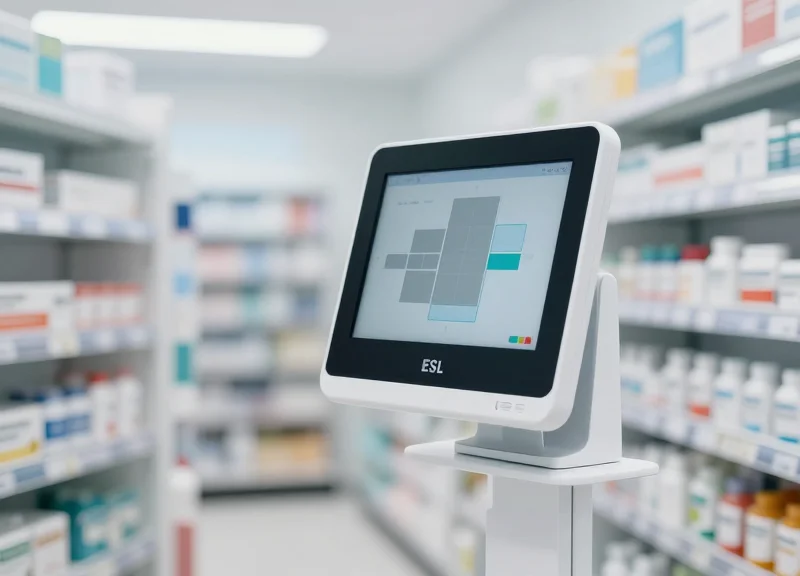
The 'Future of Fresh' is defined by a unified retail ecosystem where Washable EAS provides robust physical security, RFID offers granular inventory visibility, and Electronic Shelf Labels (ESL) enable real-time pricing agility. By combining these three technologies, organic retailers can transition from reactive loss prevention to a proactive, data-driven strategy. This holistic approach ensures that high-value organic items are protected from theft while simultaneously being managed for freshness, drastically reducing both physical shrinkage and administrative waste.
| Technology | Primary Function | Role in Fresh Produce ROI | Synergy Benefit |
|---|---|---|---|
| Washable EAS | Loss Prevention | Reduces physical theft in high-moisture zones. | Protects high-value organic stock without affecting quality. |
| RFID (Rain) | Inventory Tracking | Enables item-level visibility and FEFO management. | Identifies exactly which items are nearing expiration. |
| ESL (Digital Labels) | Price Automation | Triggers dynamic discounts for aging produce. | Clears stock before it becomes unsellable waste. |
The Expert Perspective: The 'Self-Healing Inventory' Concept. A unique advantage of the DragonGuardGroup ecosystem is the ability to create a 'self-healing' inventory cycle. When RFID sensors detect that a batch of organic kale or premium berries has been on the shelf for 48 hours, the system can automatically update the ESL to offer a 20% 'Flash Fresh' discount. Simultaneously, the Washable EAS tags ensure that this increased foot traffic doesn't lead to increased 'grazing' or pocketing. This creates a loop where inventory moves faster, theft is deterred, and margins are preserved.
Can EAS and RFID coexist on the same organic item?
Yes. Modern dual-technology tags or layered applications allow retailers to use EAS for exit security and RFID for backroom-to-shelf replenishment tracking, providing a complete 360-degree view of the product lifecycle.
How does ESL integration reduce 'Administrative Shrink'?
Administrative shrink often occurs due to pricing errors or slow markdowns. ESL removes human error by ensuring the price on the shelf perfectly matches the POS and the inventory's age, ensuring products are sold at the optimal price point before spoilage.
What is the primary ROI driver in this triple-threat setup?
The primary driver is 'Waste Reversal.' By combining the theft prevention of EAS with the stock rotation efficiency of RFID/ESL, retailers typically see a 25-40% improvement in net margin for the organic produce category.
In summary, while Washable EAS tags are the frontline defense against theft, the integration with RFID and ESL represents the ultimate evolution of the organic supply chain. Retailers who leverage this 'Tri-Pillar' strategy are not just stopping thieves; they are building a more sustainable, profitable, and technologically advanced fresh food department.
Selecting the Right Partner for Loss Prevention Technology
Selecting a loss prevention partner in the organic sector requires moving beyond general retail security to find a specialist capable of delivering food-grade, IP68-rated washable EAS tags. The ideal partner must provide hardware that survives high-humidity produce environments and rigorous sanitation cycles without compromising organic integrity, health department compliance, or the aesthetic appeal of premium fresh goods.
In the Silicon Valley tech landscape, we call this 'Vertical-Specific Engineering.' A generic security vendor treats a head of organic cauliflower like a pair of denim jeans; a true partner understands that the cauliflower requires a tag with non-leaching plastics and a form factor that won't damage delicate cellular structures. When vetting providers, look for those who prioritize the 'Total Cost of Ownership' over the 'Initial Tag Price,' as the cheapest options often fail after three wash cycles, leading to massive re-investment costs.
| Selection Criteria | Standard Retail Requirement | Organic Produce Requirement |
|---|---|---|
| Material Safety | Standard ABS Plastic | Food-Grade, BPA-free, Non-leaching Polymers |
| Ingress Protection | IP54 (Dust resistant) | IP68 (Submersible & High-Pressure Washable) |
| Frequency Stability | Fixed Environment | Moisture-Compensated Tuning (to prevent false alarms) |
| Chemical Resistance | None | Resistant to Organic Citric-Based Sanitizers |
- Verify Food-Grade Certifications: Ensure the partner provides documentation showing their tags comply with FDA or equivalent international food-contact standards. This prevents regulatory headaches during health inspections.
- Demand a '2,000-Wash' Stress Test Report: A unique industry benchmark: don't just ask if it's washable. Ask for the signal degradation report after 2,000 industrial wash cycles. If the signal drops more than 10%, the tag will fail your ROI projections within six months.
- Evaluate Supply Chain Integration: The right partner helps you implement source-tagging at the farm or packing house levels, reducing labor costs for your in-store associates.
- Check Scalability and Roadmap: Ensure their EAS ecosystem is 'future-ready,' meaning their systems can eventually integrate with RFID or ESL (Electronic Shelf Labels) without requiring a complete hardware overhaul.
What is the most common mistake when choosing a vendor?
Focusing solely on the 'per-tag' cost. Low-quality tags often have a 20% failure rate in high-moisture produce sections, effectively increasing your costs by 20% plus the labor of replacement.
Should I look for a vendor that manufactures their own tags?
Yes. Direct manufacturers like DragonGuardGroup offer better customization and quality control compared to resellers who may not know the exact chemical composition of the plastics used.
How important is local technical support?
Critical. If your EAS gates go down during a high-traffic Saturday morning in an organic chain, you need a partner with a rapid response time to prevent massive 'grab-and-go' shrinkage events.
Expert Tip: Ask potential partners for a 'Pilot-to-Production' roadmap. A partner that is confident in their technology will offer a 30-day pilot in your highest-shrinkage produce department to prove the ROI of their washable EAS tags before you commit to a full-chain rollout.