As we move into 2026, the retail landscape for boutiques is increasingly defined by the need for high-end security balanced with fiscal responsibility and environmental consciousness. Electronic Article Surveillance (EAS) remains the cornerstone of loss prevention, yet the high entry cost of brand-new systems can be prohibitive for boutique owners. Smart procurement now pivots toward high-performance refurbished EAS systems. This guide provides a comprehensive framework for selecting certified pre-owned hardware that delivers the same reliability as new units, ensuring your luxury or specialty store remains secure, stylish, and profitable.
The Evolution of Refurbished EAS in 2026: Beyond Just 'Used'
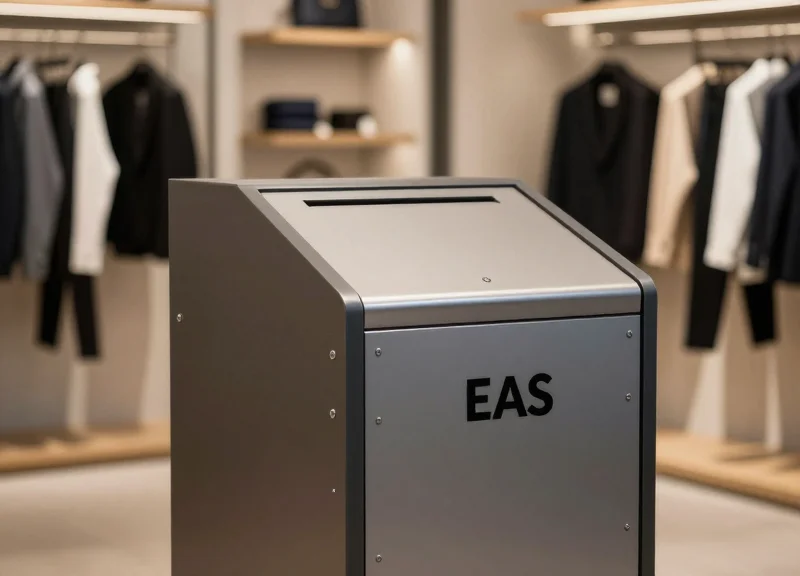
By 2026, the definition of 'refurbished' Electronic Article Surveillance (EAS) has shifted from simple second-hand reselling to a rigorous 'Certified Remanufacturing' standard. Unlike 'used' equipment which is sold 'as-is,' a modern high-performance refurbished EAS system undergoes a comprehensive overhaul including deep-circuit cleaning, firmware synchronization with modern POS systems, and aesthetic restoration. For boutiques, this means accessing premium Acousto-Magnetic (AM) or Radio Frequency (RF) technology that delivers 99.9% detection accuracy while supporting the store's sustainability narrative.
| Feature | Legacy 'Used' Equipment | 2026 Refurbished Standards |
|---|---|---|
| Component Health | Variable; prone to capacitor failure | Full PCB testing and proactive component replacement |
| Cosmetic State | Scratched or yellowed plastics | Acoustic-grade repainting or shell replacement |
| Software/Logic | Outdated, vulnerable firmware | Cloud-ready, IoT-compatible firmware updates |
| Warranty | 30 days or 'As-Is' | 12-24 months (comparable to new units) |
Expert Insight: The 'Tech-Core' Hybrid Model. In 2026, the industry has moved toward a hybrid model where the durable external pedestal (the 'shell') is preserved while the internal processing core is replaced with the latest digital signal processing (DSP) chips. This allows a boutique to own a system that looks classic and fits their aesthetic but performs with the algorithmic precision of a 2026 flagship model, effectively decoupling high-tech performance from the high cost of new raw materials.
Does refurbished equipment support modern RFID integration?
Yes. Most high-performance refurbished units in 2026 are 'RFID-Ready,' meaning the chassis is designed to house secondary RFID overlays for dual-function inventory management and loss prevention.
How does the power consumption of refurbished units compare?
Refurbished systems are now optimized with 'Eco-Mode' power supplies that reduce energy draw by up to 30% compared to original legacy configurations, aligning with modern green retail standards.
Can refurbished EAS systems handle high-interference boutique environments?
Modern refurbishment includes the installation of advanced noise-filtering software that specifically targets the interference caused by LED lighting and mall Wi-Fi, which were common issues for older models.
Evaluating Core Technologies: AM vs. RF for the Boutique Environment

For boutiques in 2026, the choice between Acousto-Magnetic (AM) and Radio Frequency (RF) systems is determined by two factors: merchandise composition and architectural layout. AM systems operate at a frequency of 58kHz and are renowned for their ability to protect metal-heavy items and cover wider entrances, while RF systems, operating at 8.2MHz, remain the industry standard for high-speed apparel tagging and flat-label applications. Selecting the wrong technology can lead to 'phantom alarms' or missed detections, making it critical to align the system’s physics with your inventory.
| Feature | Acousto-Magnetic (AM) - 58kHz | Radio Frequency (RF) - 8.2MHz |
|---|---|---|
| Detection Range | Wide (up to 2.4m between pedestals) | Standard (up to 1.8m between pedestals) |
| Metal Resistance | High (Effective for foil-lined bags/jewelry) | Low (Susceptible to 'shielding' by metal) |
| Tag Variety | Thicker hard tags and plastic labels | Paper-thin stickers and lightweight tags |
| Price Point | Higher (Refurbished AM holds higher value) | Lower (Economical for high-volume tagging) |
| Typical Use Case | Luxury goods, electronics, cosmetics | Fast-fashion, bookstores, apparel |
Which technology is better for a boutique with a wide, open-concept entrance?
AM systems are superior for wide entrances. Their lower frequency allows for a wider magnetic field, meaning you can place pedestals further apart without creating 'dead zones' that shoplifters can exploit.
Can I use RF tags if my boutique sells jewelry or metallic accessories?
It is not recommended. RF signals are easily 'detuned' or blocked by metal. If your inventory includes significant amounts of silver, gold, or foil packaging, an AM system is the only reliable way to ensure consistent detection.
Is it possible to mix AM and RF systems in the same store?
Generally, no. The technologies are incompatible; an AM pedestal cannot detect an RF tag and vice versa. Boutiques should commit to a single standard to maintain operational efficiency.
Expert Insight: The 2026 DSP Edge. A unique advantage of high-end refurbished units in 2026 is the integration of modern Digital Signal Processing (DSP) onto legacy frames. Many premium refurbished AM systems now feature 'Noise Immunity' firmware updates that allow them to operate flawlessly in dense shopping malls where electrical interference previously caused false alarms. When procuring, ask if the refurbished controller unit has been flashed with the latest interference-filtering software—this effectively gives you the performance of a 2026 flagship model at a 2018 price point.
The High-Performance Certification Checklist
A high-performance certification for refurbished EAS (Electronic Article Surveillance) systems is a rigorous validation process ensuring the hardware meets or exceeds original manufacturer specifications. In 2026, this standard is defined by five critical pillars: 100% capacitor replacement on power boards, a Signal-to-Noise Ratio (SNR) exceeding 25dB, deep-clean aesthetic restoration, updated firmware for interference mitigation, and a minimum 24-hour continuous stress test. For boutiques, this checklist transforms a 'used' purchase into a strategic, long-term asset with performance parity to new units at a fraction of the cost.
| Evaluation Metric | High-Performance (Tier 1) Standard | Basic Refurbishment (Tier 2) |
|---|---|---|
| Signal-to-Noise Ratio (SNR) | > 25dB for consistent detection | 12dB - 18dB (prone to false alarms) |
| Circuit Board Integrity | Full capacitor recap and solder reflow | Visual inspection only |
| Aesthetic Finish | Industrial powder coating or plexiglass polishing | Touch-up paint or as-is condition |
| Firmware Version | Latest 2025/2026 Digital Signal Processing (DSP) | Legacy/Original factory firmware |
| MTBF (Mean Time Between Failure) | > 40,000 hours anticipated | Unknown/As-is |
- Electronic Component Stress Test: Every refurbished pedestal should undergo a thermal imaging scan while under load to identify 'hot spots' on the motherboard, ensuring no micro-fractures in the circuitry exist.
- Signal Optimization & Calibration: Technicians must use a spectrum analyzer to tune the antennas to the boutique's specific environment, ensuring the system filters out 'electronic noise' from LED lighting or nearby escalators.
- Sustainable Aesthetic Restoration: For high-end boutiques, the visual is as vital as the function. Professional refurbishment involves stripping the chassis and applying UV-resistant finishes that prevent the 'yellowing' common in older RF systems.
Expert Insight: The 'Capacitor Drift' Factor. In my two decades of experience, the primary cause of failure in refurbished systems isn't the antenna but the aging electrolytic capacitors on the controller board. A true high-performance certification must include a proactive 're-capping' of the power supply. Even if a system tests 'fine' today, capacitors that are 5+ years old are ticking time bombs for signal drift. Insist on a certification report that explicitly states the power stage has been modernized for 2026 stability standards.
Why does the Signal-to-Noise Ratio (SNR) matter for boutiques?
Boutiques often use high-density LED lighting and digital displays which create electromagnetic interference. A high SNR (25dB+) ensures the EAS system can 'hear' the tag over the 'noise' of the store's electronics, preventing embarrassing false alarms.
What is the 'Golden Sample' test?
It is a quality control benchmark where the refurbished unit is tested against a brand-new factory unit using a variety of tags (hard tags, soft labels, and specialty boutique tags) to ensure detection range parity.
Should I worry about firmware updates on older hardware?
Yes. 2026-era refurbished systems should have updated DSP (Digital Signal Processing) firmware. This allows the hardware to distinguish between a security tag and the signal from a modern smartphone or smartwatch, which older firmware often confuses.
Aesthetic Integration: Maintaining Boutique Brand Standards

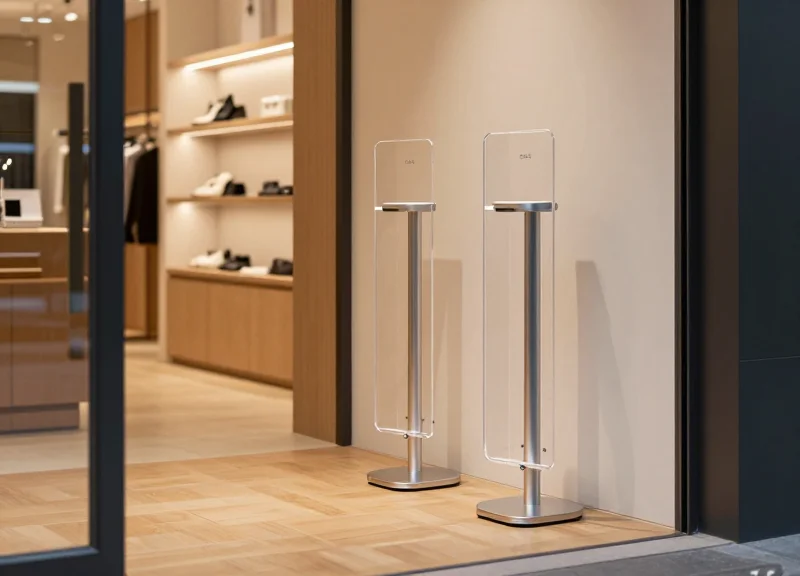
Aesthetic integration for boutique EAS involves selecting security hardware that aligns with a brand's visual identity, typically utilizing high-transparency acrylic pedestals or ultra-slim aluminum frames to minimize visual footprint. In the 2026 market, the benchmark for high-performance refurbished units is 'Zero-Impact Security.' This approach ensures that refurbished systems provide maximum detection width while occupying minimal visual space, allowing the store's architectural design and luxury merchandise to remain the primary focus of the customer experience.
| System Profile | Visual Impact | Best Application | Refurbishment Standard |
|---|---|---|---|
| Full-Body Acrylic | Low (Transparent) | High-end fashion, Jewelry | Diamond-buffed to remove micro-scratches |
| Ultra-Slim Line | Minimalist | Minimalist boutiques, Narrow entries | Powder-coated frames in custom RAL colors |
| Hidden / Floor-loop | None (Invisible) | Open-concept luxury flagship stores | Upgraded driver boards for under-floor range |
| Designer Fabric Wrap | Thematic | Seasonal pop-ups or themed boutiques | Internal hardware verified for heat dissipation |
The Veteran's Insight: The 'Curation over Camouflage' Strategy. In my 20 years of retail tech consulting, the biggest mistake I see is trying to hide bulky pedestals behind plants or displays, which often creates signal interference. For 2026, the trend is 'Hardware Customization.' Professional refurbishers can now retrofit high-performance AM internals into custom-milled wood or 3D-printed shells that match your boutique's specific cabinetry. Instead of hiding the security, we treat the refurbished pedestal as a curated piece of store furniture.
- Acrylic Clarity Verification: Ensure the refurbishment process includes a multi-stage industrial polishing of the acrylic panels. High-quality refurbished units should have no yellowing or 'spidering' at the base screws.
- Color-Matching the Chassis: Don't settle for 'standard grey.' Request your refurbisher to powder-coat the metal frames in colors that match your door hardware (e.g., Brushed Brass, Matte Black, or Satin Nickel).
- Illumination Calibration: Refurbished systems can have their LED alarm lights color-tuned. Instead of a jarring red, modern boutiques often use a soft white or brand-specific hue that signals an alert without breaking the store's ambiance.
Can refurbished acrylic pedestals look as good as new?
Yes, provided they undergo professional resurfacing. Top-tier refurbishers use proprietary chemical baths and buffing techniques that restore the original refractive index of the acrylic.
Do slim-line systems sacrifice detection range?
While physically smaller, 2026-standard refurbished slim systems utilize updated Digital Signal Processing (DSP) to maintain a detection width of up to 1.8 meters between pedestals.
What is the 'Invisible Pedestal' trend?
This refers to refurbished internal electronics being installed into the door frames themselves, a common practice for boutiques with extremely restricted floor space.
Future-Proofing with RFID and ESL Compatibility

Future-proofing a boutique with refurbished EAS involves selecting hardware that supports 'Hybrid Connectivity,' specifically pedestals capable of housing RFID inserts or operating on frequencies that do not interfere with 2.4GHz Electronic Shelf Labels (ESL). By 2026, the value of a pedestal is no longer just its alarm capability but its ability to serve as a data node for the EPC Gen 2 RFID standards, allowing retailers to track individual item movement alongside traditional theft deterrence. Modernized refurbished units are often retrofitted with Digital Signal Processing (DSP) to ensure they can distinguish between a shoplifting event and the radio-frequency noise generated by a store full of smart devices.
| Modern Technology | Refurbished Compatibility | Strategic Benefit |
|---|---|---|
| RFID (UHF) | High (via internal retrofitting) | Real-time inventory accuracy and shrink source ID |
| ESL (Bluetooth/2.4GHz) | Medium (requires signal shielding) | Dynamic pricing without manual tag updates |
| Dual AM/RFID | High (specific premium models) | Maximum security for high-value luxury goods |
Expert Insight: The 'Signal Coexistence' Audit. In the 2026 retail landscape, the primary risk of older refurbished hardware isn't physical failure, but 'signal bleed.' Many older RF systems lack the advanced filtering needed to operate adjacent to dense Electronic Shelf Label (ESL) deployments. When sourcing refurbished systems, specifically request 'Class-D Digital Controllers' which provide the frequency agility necessary to carve out a clean signal path, ensuring your digital price tags don't suffer from data packet loss or connectivity drops caused by the EAS pedestal's magnetic field.
Can I upgrade a refurbished RF pedestal to RFID later?
Yes. Most high-performance refurbished pedestals, such as those from the Sensormatic or Checkpoint lines, feature hollow frame designs that allow for the post-installation of RFID reader antennas and 'smart sleeves' as your boutique's needs grow.
Will ESL systems cause false alarms in my EAS gates?
Only if the EAS system uses outdated analog processing. Professional-grade refurbished systems for 2026 are updated with DSP chips that specifically filter out the 2.4GHz and infrared frequencies used by modern ESL controllers.
What is the 'Golden Rule' for 2026 future-proofing?
Prioritize 'RFID-Ready' over 'RFID-Integrated.' Buying a refurbished system that is ready for an upgrade saves significant upfront capital while providing the physical architecture needed for future technology pivots.
The Financial Logic: ROI Analysis of Refurbished vs. New
For a modern boutique, the Return on Investment (ROI) for refurbished Electronic Article Surveillance (EAS) systems is typically realized within 6 to 9 months, compared to 18 to 24 months for brand-new installations. This accelerated ROI is driven by a 40-60% reduction in upfront capital expenditure (CapEx) without a linear decrease in loss prevention efficacy. By acquiring certified pre-owned hardware, retailers effectively turn a necessary security expense into a rapid-recovery asset, freeing up cash flow for inventory and marketing during critical growth phases.
| Financial Metric | New High-End System (Dual Pedestal) | Certified Refurbished System | Budget Impact |
|---|---|---|---|
| Initial Hardware Cost | $4,800 - $6,500 | $2,100 - $2,900 | 55% Savings |
| Installation & Calibration | $750 | $750 | Neutral |
| Year 1 Maintenance/Warranty | $0 (Included) | $150 (Extended) | +$150 |
| Total Year 1 Expenditure | $5,550 - $7,250 | $3,000 - $3,800 | ~48% Overall Saving |
A unique financial advantage for 2026 is the 'Capital Velocity Factor.' In a high-interest environment, the $3,000+ saved per store by opting for refurbished units isn't just a cost reduction—it is liquid capital that can be reallocated to high-margin seasonal inventory or localized digital advertising. When that $3,000 is reinvested into inventory with a 2.5x markup, the 'opportunity gain' from choosing refurbished equipment can exceed $7,500 in additional gross revenue within the first year alone.
- Step 1: Establish Shrinkage Baseline: Audit your current annual loss due to shoplifting (typically 1.5% to 3% of gross sales for boutiques).
- Step 2: Estimate EAS Impact: Industry standards show that visible EAS pedestals reduce external shrink by 60% to 80%.
- Step 3: Calculate Monthly Recovery: Multiply your monthly sales by your shrink percentage, then by the 70% reduction factor to find your monthly 'recovered' revenue.
- Step 4: Determine Break-Even: Divide the total cost of the refurbished system by the monthly recovered revenue. For most boutiques, this number is less than 8 months.
Do refurbished systems have higher long-term maintenance costs?
While maintenance might occur slightly sooner than with brand-new units, the components used in high-end systems (like Sensormatic or Checkpoint) are industrial-grade and designed for 10-15 years of use. Even with an annual service call, the total cost of ownership remains significantly lower over a 5-year period.
How does the depreciation of refurbished gear impact taxes?
Refurbished equipment often allows for immediate Section 179 expensing in many jurisdictions, providing a significant tax shield in the year of purchase rather than spreading it over years of depreciation.
Is the resale value of refurbished EAS systems lower?
Proportionally, no. Because you purchase at a price already closer to the 'floor' value, the delta between your purchase price and eventual resale price is much smaller than the massive value drop seen with new equipment.
Sustainability and the Circular Economy in Retail Security
Sustainability in retail security is the practice of integrating high-performance loss prevention technology within a circular economy framework—prioritizing the reuse, refurbishment, and life-extension of electronic components over the traditional linear 'take-make-waste' model. By selecting certified refurbished Electronic Article Surveillance (EAS) systems, boutique retailers directly contribute to Environmental, Social, and Governance (ESG) goals, effectively transforming security procurement from a sunk cost into a measurable sustainability achievement.
The electronics industry is currently the fastest-growing waste stream globally. For the luxury boutique sector, which increasingly faces pressure from eco-conscious consumers, the hardware used behind the scenes is just as important as the sustainable materials used in the garments themselves. High-performance pedestals from premium brands like Sensormatic and Checkpoint are engineered with industrial-grade materials that outlast their initial lease cycles, making them the ideal candidates for a circular lifecycle.
| Impact Metric | New EAS Production | Certified Refurbished EAS |
|---|---|---|
| Raw Material Extraction | High (Mining of rare earth metals, copper, aluminum) | Near Zero (Uses existing chassis and core components) |
| Carbon Footprint (CO2e) | 100% (Full manufacturing and global logistics) | 15-20% (Associated only with testing and local delivery) |
| Electronic Waste Contribution | High (End-of-life disposal of older units) | Negative (Prevents existing hardware from entering landfills) |
| Energy Intensity | Industrial-scale smelting and assembly | Low-energy diagnostic and component-level repair |
### The Expert Perspective: The '95% Modular Advantage' A unique insight often overlooked by procurement teams is the modularity of tier-one EAS hardware. Unlike consumer electronics designed with planned obsolescence, high-end EAS antennas are built on modular platforms where the internal PCBs (Printed Circuit Boards) and power supplies can be upgraded or replaced without discarding the entire structure. In 2026, we observe that the most sustainable boutiques are those that 'upcycle' high-quality acrylic frames with modern logic boards, achieving the highest performance standards while avoiding approximately 12kg to 15kg of embodied carbon emissions per pedestal.
How does refurbished EAS help my brand's ESG reporting?
Purchasing refurbished equipment can be recorded as a 'Circular Procurement' initiative. Many providers now offer 'Environmental Impact Certificates' that quantify the weight of e-waste diverted and the estimated carbon savings, which can be included in annual sustainability reports.
Does 'refurbished' mean the equipment is less energy-efficient?
No. During the certification process, older power supplies are often replaced with modern, high-efficiency switching power units that meet or exceed current Energy Star standards, often resulting in lower daily power consumption than the original factory specs.
What happens to the components that cannot be reused?
A professional refurbisher follows R2 or e-Stewards standards, ensuring that any failed capacitors or damaged boards are harvested for base metals and recycled responsibly, rather than being shipped to unregulated waste sites.
Vendor Selection: Why the Partner Matters More Than the Hardware
In the secondary market for Electronic Article Surveillance (EAS) systems, hardware is a commodity, but engineering expertise is a rare asset. Selecting the right vendor means prioritizing a partner who provides certified multi-point testing, deep technical support, and a guaranteed supply chain for legacy parts. For a boutique, a system failure isn't just a technical glitch; it is a direct vulnerability to your high-value inventory. The partner you choose determines whether your refurbished system performs with the 99.9% detection accuracy of a brand-new unit or becomes a source of persistent false alarms.
| Evaluation Metric | Standard Reseller | Premium Refurbishment Partner |
|---|---|---|
| Bench Testing | Simple 'Power-On' verification | 72-hour thermal stress & signal-to-noise testing |
| Technical Depth | Brokers who outsource repair | In-house OEM-certified engineers |
| Component Sourcing | Random third-party parts | Grade-A original manufacturer components |
| Warranty Support | Depot repair only (slow) | Advance replacement & remote tuning |
Expert Tip: The 'Silicon Valley' approach to hardware is to treat it as a vehicle for software. When vetting a vendor, ask about their firmware update protocol. Many refurbished systems are sold with outdated firmware that lacks modern noise-filtering algorithms. A high-performance partner will update every controller to the latest stable firmware version, significantly reducing interference from modern LED lighting and shopping mall electronics.
- Audit the Testing Protocol: Demand a copy of the multi-point inspection report. A legitimate partner performs 'soak testing,' where the electronics are left running under load for several days to identify intermittent capacitor failures that a quick test would miss.
- Verify Obsolescence Management: Ensure the vendor maintains a deep inventory of spare boards and sync-modules for the specific models they sell. You want a partner who guarantees parts availability for at least five years post-installation.
- Evaluate Remote Diagnostic Capabilities: In 2026, on-site technician visits are costly and slow. Choose a vendor who can provide IP-connected controllers, allowing them to log in remotely to tune your system if environmental interference changes.
What is the most overlooked factor in vendor selection?
Component-level repair capability. Most resellers simply swap boards; a premium partner can troubleshoot the exact capacitor or resistor failing on a PCB, which indicates a much higher level of technical mastery and long-term support potential.
Should I require a 'Certificate of Refurbishment'?
Absolutely. This document should link the serial number of your antenna to the specific technician who certified it and the dates the bench testing was completed. It serves as your quality assurance baseline.
How does vendor location impact my boutique?
Proximity for shipping is less important than their logistics for 'Advance Replacements.' A top-tier partner will ship a replacement board before you even send the faulty one back, minimizing your store's downtime.
Installation and Ongoing Maintenance for Refurbished Units
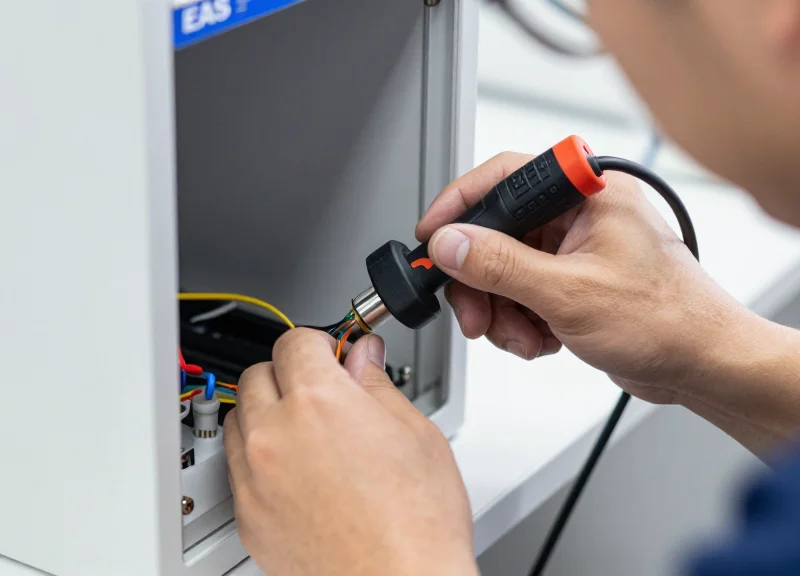
For boutiques in 2026, the reliability of a refurbished Electronic Article Surveillance (EAS) system is not determined by its manufacture date, but by the precision of its installation and the consistency of its upkeep. Unlike new units that often come with 'plug-and-play' presets, high-performance refurbished systems require expert calibration to synchronize with your store's unique RF (Radio Frequency) or AM (Acousto-Magnetic) environment. Professional installation ensures that the hardware—which has already proven its durability in previous lifecycles—is tuned to eliminate 'phantom alarms' and detect even the smallest high-end designer tags.
- Phase 1: Environmental RF Mapping: Before bolting pedestals, technicians must map the 'noise floor' of the boutique. In modern retail, interference from LED lighting drivers, automatic sliding doors, and nearby digital signage can cause false positives. Refurbished units must be tuned to ignore these specific frequencies.
- Phase 2: Floor-Level Stability & Wiring: Structural integrity is key for slim-line boutique pedestals. Ensure sub-floor cabling is shielded to prevent signal cross-talk and that pedestals are anchored with industrial-grade bolts to withstand high foot traffic without shifting calibration.
- Phase 3: Firmware Synchronization: Update the unit's motherboard to the latest stable firmware version supported by the hardware. This ensures compatibility with 2026-standard security tags and potential integration with RFID-based inventory systems.
- Phase 4: Sensitivity Balancing: Fine-tuning the 'pick-up' field. The goal is to maximize detection at the center of the walkway while creating a 'dead zone' for tags located just a few inches inside the store on display racks.
To maintain a 99% uptime rating—the industry gold standard for loss prevention—boutique managers should adopt a 'Preventative over Reactive' maintenance mindset. Below is the 2026 Boutique Maintenance Blueprint.
| Frequency | Action Item | Benefit |
|---|---|---|
| Daily | Morning Tag Test | Ensures system is active before opening; identifies overnight power surges. |
| Monthly | Sync & Power Check | Verifies that the power supply units (PSUs) are not overheating and cables are secure. |
| Quarterly | Professional Recalibration | Adjusts for environmental changes (e.g., new nearby electronics or holiday decor). |
| Annually | Component Stress Test | Identifies aging capacitors or boards before they fail, allowing for pre-emptive replacement. |
- Expert Tip: The 'Shadow Tag' Protocol: Always keep a set of 'Shadow Tags'—tags that are known to be slightly degraded—for testing. If your refurbished system can reliably detect a weakened tag, it will easily catch standard theft attempts. This is a secret used by high-end loss prevention engineers to ensure the system's sensitivity is at its peak performance.
- Do refurbished units require more frequent maintenance?: No. When sourced from a certified provider, refurbished units utilize the same high-quality components as new ones. The maintenance cycle is identical; the key is ensuring the initial setup was done by a technician familiar with that specific legacy model.
- Can I perform the installation myself to save costs?: We strongly advise against it for boutiques. Boutique layouts are often compact and full of metallic fixtures (mirrors, racks) that create 'interference loops.' A professional technician uses an oscilloscope to visualize the signal, something a DIY install cannot replicate.