The automotive accessory landscape in 2026 presents a unique challenge for retailers: managing a vast, diverse inventory that ranges from tiny high-value electronic chips to bulky, heavy-duty mechanical components. As shoplifting techniques become more sophisticated, traditional security measures often fall short. This comprehensive guide provides an authoritative look at how Electronic Article Surveillance (EAS) systems are evolving to meet these specific needs, ensuring that your profit margins are protected while maintaining an open, customer-friendly shopping environment. We will dive deep into the technical selection criteria and strategic deployments necessary to defend your inventory in this specialized retail sector.
The Unique Theft Profile of Auto Accessory Retailers
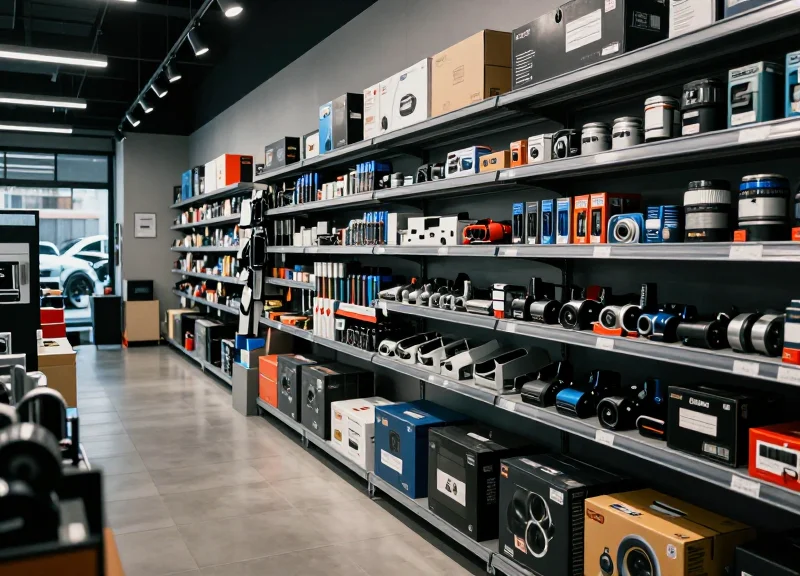
The theft profile of auto accessory retailers is uniquely complex, defined by a 'high-value, high-portability' paradox where small, expensive components like performance chips and LED modules are easily concealed yet yield massive black-market returns. Unlike traditional big-box retail, auto accessory shops must defend a diverse inventory ranging from bulky heavy-duty tires to intricate electronic sensors, requiring a multi-layered Electronic Article Surveillance (EAS) approach that accounts for both professional organized retail crime (ORC) syndicates and opportunistic DIY enthusiasts.
| Product Category | Risk Level | Primary Theft Driver | Common Method |
|---|---|---|---|
| Tech & Diagnostics | Critical | High Resale Value | Box-stuffing / Tag swapping |
| Small Performance Parts | High | Ease of Concealment | Pocketing / Pocket-lining |
| Cosmetic Accessories | Moderate | Impulse Theft | Open-box pilferage |
| Specialized Fluids/Additives | Low-Moderate | Necessity-driven | Bulk-grab and run |
Why are automotive electronics the primary target for 2026?
As vehicles become more software-dependent, hardware like OBD-II scanners, dash cams, and tuning modules have high secondary market demand and low traceability, making them the #1 target for ORC groups.
How does the 'Open-Box' culture impact shrink?
Auto retailers often allow customers to inspect parts for fitment. This creates 'blind spots' where internal components are swapped or removed from their original EAS-protected packaging.
What is the role of 'Technical Shoplifting' in this industry?
Unlike general retail, auto theft often involves 'technical shoplifters' who know exactly which sensors or modules are the most expensive, often ignoring larger items for high-value micro-components.
Expert Insight: The 'Compatibility' Vulnerability. A unique 2026 trend we are seeing is the 'Fitment Swap.' Shoplifters will bring in a broken or lower-grade version of a high-end part (like a performance fuel injector), remove the new part from its box in a blind spot, and place the old, broken part back inside. To the cashier, the box looks full and the weight feels correct. Combatting this requires not just external EAS tags, but internal 'source tagging' inside the product housing itself.
AM vs. RF Technology: Selecting the Right Frequency for Metal-Heavy Environments
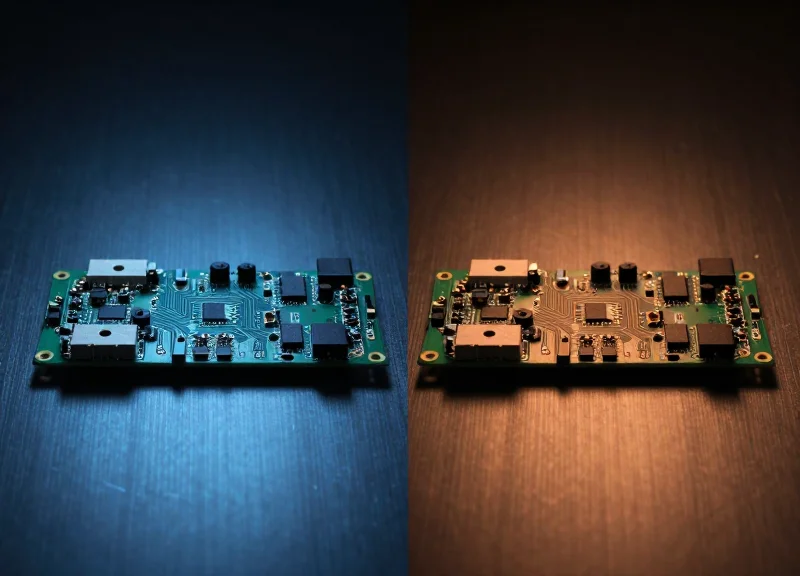
For auto accessory retailers, selecting between Acousto-Magnetic (AM) and Radio Frequency (RF) technology is not merely a preference but a technical necessity. AM systems, operating at 58 kHz, are the gold standard for environments dense with metallic inventory like brake rotors, mufflers, and chrome trims. Unlike RF systems (8.2 MHz), which are highly susceptible to 'detuning' when in proximity to conductive materials, AM signals easily penetrate metal-heavy zones, ensuring that high-value auto parts remain protected without the constant risk of false alarms or signal shielding.
| Feature | Acousto-Magnetic (AM) - 58 kHz | Radio Frequency (RF) - 8.2 MHz |
|---|---|---|
| Metal Interference | Low: Minimal signal attenuation near metal. | High: Signal often blocked or detuned by metal. |
| Detection Width | Superior: Up to 2.4m between pedestals. | Moderate: Typically maxes at 1.8m. |
| Tag Variety | Includes 3D labels and robust hard tags. | Mostly thin paper labels and lightweight tags. |
| Best Use Case | Auto parts, hardware, and liquid products. | Apparel, soft goods, and groceries. |
The fundamental challenge in auto retail is the 'Faraday Cage' effect. When metallic items are stacked—such as boxed alloy wheels or heavy-duty tools—they create a localized electromagnetic shield. In an RF environment, the high-frequency 8.2 MHz wave is absorbed or reflected by the metal before it can energize the tag. Expert Insight: In 2026, the industry is seeing a shift toward 'Liquid-Stable' AM tags. While most retailers focus on metal, auto shops deal with fluids (oils, coolants) which also interfere with RF. AM remains the only frequency capable of maintaining a consistent 95%+ pick-up rate when tags are placed directly onto foil-backed gaskets or within metallic engine component packaging.
Why does RF fail near chrome or steel?
RF technology relies on an LC (Inductor-Capacitor) circuit. Metal objects nearby act as a parasitic capacitor, shifting the tag's resonance away from 8.2 MHz, making it invisible to the system sensors.
Can AM tags be applied to metal surfaces?
While no EAS tag works perfectly if fully enclosed in metal, AM tags with a small foam spacer can be applied to metallic parts and still trigger an alarm, whereas RF labels typically fail instantly on contact with metal.
Which system is more cost-effective for 2026?
RF systems generally have a lower initial hardware cost, but for auto retailers, the 'Total Cost of Ownership' is lower with AM due to drastically reduced false alarms and higher recovery rates of high-shrink metallic inventory.
- Assess Inventory Density: If more than 30% of your stock is composed of metal or liquid components, prioritize AM systems.
- Measure Aisle Width: Auto parts stores often use wide aisles for carts/trolleys; AM pedestals offer the necessary range to cover these gaps without extra hardware.
- Test for Environmental Noise: Auto shops often have heavy machinery or power lines; ensure your chosen EAS provider performs a site survey to tune out localized electromagnetic interference (EMI).
Specialized Tagging for Diverse Inventory Shapes and Sizes

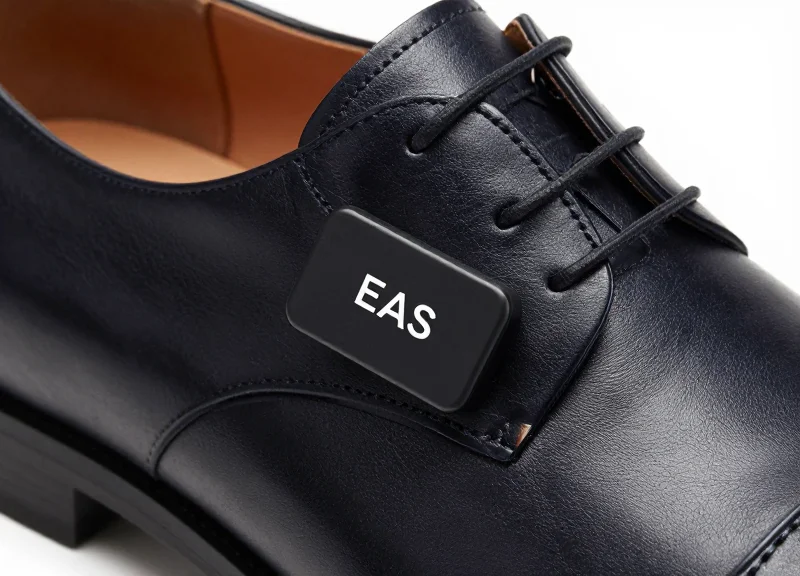
In the automotive retail sector, specialized tagging involves utilizing a multi-layered Electronic Article Surveillance (EAS) strategy that moves beyond standard security labels to include heavy-duty cable tags, flexible lanyards, and high-bond adhesive sensors. Because auto inventory ranges from bulky, rigid metal engine parts to flexible rubber mats and chemical-slicked fluid containers, the tagging hardware must be selected based on the product’s geometry and surface energy to ensure the tag cannot be easily bypassed or removed without damaging the merchandise.
| Product Category | Recommended Tag Type | Key Feature |
|---|---|---|
| Rims & Wheels | Steel Lanyard Cable Tags | Cut-resistant, plastic-coated wire |
| Leather/Vinyl Mats | Clutch-style Soft Hard Tags | Pin-less application to prevent puncture |
| Engine Components | High-Bond Adhesive Labels | Oil-resistant backing for metallic surfaces |
| Fluid Additives | Bottle Cap Multi-Grip Tags | Prevents cap removal and theft of contents |
| Wiper Blades | Slimline Long-Strap Tags | Low-profile design for narrow packaging |
Expert Insight: The 'Surface Tension' Factor. One of the most common failures in auto-retail security is label peel-off caused by manufacturing residues. Many metal parts come from the factory with a microscopic layer of oil or rust-inhibitor. For 2026, we recommend specifying 'Aggressive-Tack' adhesive labels (often designated as S3 or high-tack) which are chemically engineered to bond with cold-rolled steel and oily plastics where standard retail labels fail within 48 hours.
- Assess Material Vulnerability: Identify if the product can be punctured (fabrics) or if it requires a non-invasive cable wrap to avoid aesthetic damage.
- Match Tag Weight to Product Scale: Ensure heavy metal parts use tags with reinforced locking mechanisms that won't shear off if the product is dropped or manipulated.
- Test for Metallic Interference: For items like brake pads, use ferrite-backed labels or standoff tags that provide a physical gap between the metal and the EAS antenna.
Will cable tags scratch high-end chrome rims?
No, specialized automotive cable tags are typically coated in a soft PVC or silicone sleeve to prevent metal-on-metal contact and preserve the finish.
Can adhesive labels be used on batteries?
Yes, but they should be placed away from terminals and vents. Acid-resistant topcoats are recommended for long-term shelf stability.
Are there tags small enough for spark plugs?
For very small items, source-tagging (embedding the EAS circuit inside the packaging during manufacturing) is the most effective solution.
The 2026 Shift: Integrating EAS with RFID for Intelligent Tracking

By 2026, the boundary between security and operations will vanish. The integration of Electronic Article Surveillance (EAS) with Radio Frequency Identification (RFID) creates a hybrid ecosystem where a single tag not only triggers an alarm at the door but also provides item-level data throughout the supply chain. For auto accessory retailers, this means moving beyond 'knowing something was stolen' to 'knowing exactly which SKU is missing,' enabling automated reordering and precise shrink analytics that traditional systems simply cannot match.
| Feature | Traditional EAS | Integrated EAS + RFID |
|---|---|---|
| Primary Goal | Theft Deterrence | Loss Prevention + Inventory Intelligence |
| Data Granularity | Binary (Alarm/No Alarm) | Item-Level (SKU, Batch, Serial Number) |
| Inventory Accuracy | Manual/Cyclical (approx. 65-75%) | Real-Time/Automated (up to 99%) |
| Recovery Potential | Low (alarm sounds after exit) | High (identifies specific missing stock for recovery) |
| Operational Impact | Siloed Security | Supply Chain & Omnichannel Optimization |
Expert Insight: The 'Digital Twin' Strategy. In my two decades of Silicon Valley tech consulting, I've seen 'Digital Twin' technology revolutionize manufacturing; in 2026, it arrives in auto retail. By using RFID-enabled EAS, you create a digital replica of your physical stock. When a high-value item like a performance ECU or a carbon-fiber spoiler is moved, its digital twin updates instantly. This allows for 'Predictive Shrink Modeling'—identifying patterns where specific items are staged for theft before they even reach the exit pedestals.
- Unified Tagging: Utilize dual-technology tags (AM/RFID or RF/RFID) to reduce labor costs, allowing a single application process for both security and tracking.
- Smart Pedestal Deployment: Install EAS-RFID overhead readers that distinguish between items being sold at the POS and items moving toward the exit without a 'paid' status.
- Analytics Integration: Feed RFID data into your ERP system to automatically reconcile physical inventory with digital records, eliminating 'ghost stock' discrepancies.
Will RFID tags work on metallic auto parts?
Yes. Advanced 'on-metal' RFID tags and flag tags are engineered specifically for metallic environments, preventing the signal interference that plagued earlier iterations.
Is the ROI justifiable for smaller retailers?
By 2026, the reduction in labor hours for manual cycle counts and the elimination of out-of-stock scenarios typically result in a 12-18 month payback period for most auto accessory shops.
Does this replace the need for security cameras?
No, it enhances them. Integrated systems can trigger cameras to bookmark footage exactly when an RFID-tagged item exits the store without a transaction record.
Mitigating Shielding: Advanced Detection for Boosted Bags and Foil
Mitigating shielding refers to the deployment of Electronic Article Surveillance (EAS) systems equipped with integrated Metal Detection (MD) sensors designed to identify Faraday cages, commonly known as "boosted bags." These foil-lined containers work by blocking the electromagnetic signal between a security tag and the pedestal, allowing stolen auto parts to pass through undetected. In a modern retail environment, advanced detection acts as a proactive deterrent, identifying professional shoplifting tools at the store entrance or exit before the inventory is even compromised.
| Feature | Standard EAS (AM/RF) | Advanced Metal Detection (AMD) Integrated |
|---|---|---|
| Detection Trigger | Active security tag or label | Conductive foil, large metal masses, or magnetic tools |
| Primary Threat Counter | Casual Shoplifting | Organized Retail Crime (ORC) & Boosted Bags |
| Alert Timing | As the thief exits the store | Proactive: Upon entry or proximity to the zone |
| Auto Part Compatibility | Affected by metal interference | Uses DSP to filter merchandise from theft tools |
The 2026 Expert Insight: Signature Density Analysis. A common challenge for auto accessory retailers is the 'Metal Paradox'—how do you detect a foil-lined bag in a store filled with metal mufflers and chrome rims? The latest 2026 systems utilize Digital Signal Processing (DSP) to analyze 'Signature Density.' Rather than just sensing metal, the system evaluates the movement pattern and electromagnetic footprint. A stationary metal car part has a different 'signature' than a moving, high-conductivity foil lining, allowing the system to ignore your inventory while flagging the professional thief's equipment.
- Detection at Entry: Integrated sensors identify the presence of foil-lined bags as the individual enters the store, sending a silent alert to security staff.
- Signal Filtering: The system applies algorithms to filter out legitimate metallic items like shopping carts or heavy-duty car batteries.
- Multi-Phase Alerting: If the shielded bag approaches a high-value zone (like high-end GPS units), the system can trigger localized CCTV recording.
- Verification and Deterrence: Staff receive a discrete notification via mobile app or earpiece, enabling a 'customer service' intervention that disrupts the theft attempt.
Will metal car parts trigger false alarms on these systems?
Modern systems use specialized 'Metal-Ignore' logic. By calibrating the system to the store's static environment, it learns to ignore the metallic inventory and only trigger on the specific electromagnetic interference caused by aluminum foil or magnetic detachers.
Can these systems detect magnetic detacher tools?
Yes. Most 2026-grade MD systems include Magnet Detection, which identifies the high-strength magnets used by professional thieves to remove hard tags illegally in the aisles.
Is an audible alarm necessary for metal detection?
No. Most retailers prefer a 'Silent Alarm' for metal detection, which notifies loss prevention without alerting the suspect, allowing for a controlled and safe intervention.
Strategic Placement of Pedestals and Deactivators

Strategic placement of EAS hardware involves the calculated positioning of detection pedestals at exit points and deactivation pads at the Point of Sale (POS) to create a 'fortress' effect without disrupting shopper flow. For auto accessory retailers, this requires maintaining a balance between the detection field’s power and the store's physical constraints, such as metal door frames or nearby tire displays. The goal is to ensure every tagged item is neutralized at the counter and every active tag is identified at the door, specifically accounting for the high-density metallic environment typical of automotive retail.
| Placement Type | Optimal Distance | Target Objective | Key Consideration |
|---|---|---|---|
| Standard Single Aisle | 0.9m - 1.2m | Single exit lane coverage | Minimize proximity to metal doors |
| Wide Dual Aisle | 1.6m - 2.4m | High-traffic main entrance | Requires synchronized AM pedestals |
| POS Deactivator | Within 15cm of scanner | Seamless checkout/neutralization | Avoid interference with card readers |
| Concealed Floor Antennas | Sub-floor depth 5cm | Aesthetic-first luxury showrooms | Requires specialized floor substrate |
- The 'Metal-Free Buffer Zone' Audit: Before mounting pedestals, establish a 1-meter radius free of large moving metal objects (like shopping carts) to prevent false alarms and signal distortion.
- Syncing Deactivation with Scanning: Integrate deactivators beneath the counter or flush-mounted within the scanning zone. In 2026, the best practice is 'Scanned-to-Deactivate' logic, where the EAS pad only energizes when a barcode is successfully read.
- Height-Variable Tagging Calibration: Ensure the pedestal's detection field extends from the floor to at least 1.5 meters high to catch tags hidden in low-hanging bags or high-held bulky auto parts.
Expert Insight: The 'Aisle-End Guarding' Strategy. While exit pedestals are standard, 2026 trends show top-tier auto retailers are moving toward 'Aisle-End Guarding.' This involves placing mini-antennas at the ends of high-value aisles (like performance electronics or premium lighting). By detecting the movement of specific high-risk items before the thief reaches the exit, staff receive a silent 'heads-up' alert, drastically increasing the chances of a non-confrontational recovery.
Will metal shelving near the entrance interfere with my pedestals?
Yes, large metal fixtures can act as shields or reflectors. We recommend a minimum 50cm clearance between pedestals and permanent metal shelving to maintain signal integrity.
Can I hide the pedestals to improve store aesthetics?
Absolutely. Modern 2026 systems offer 'Invisible EAS' solutions, including overhead sensors or under-floor loops, though these require higher-output AM technology to maintain the same detection width.
Why do tags reactivate near the door?
This is usually 'non-deactivation' rather than 're-activation.' If the deactivator is too far from the scanner, the cashier may miss the tag. Ensuring the deactivator is integrated into the barcode sweep-path is critical.
ESL and EAS Synergy: Pricing Accuracy as a Security Layer
The synergy between Electronic Shelf Labels (ESL) and Electronic Article Surveillance (EAS) represents the next frontier in retail loss prevention, moving beyond simple detection to proactive price integrity. By synchronizing digital pricing with EAS-tagged inventory, auto retailers eliminate the 'pricing friction' that thieves often exploit—such as barcode swapping or claiming 'wrong price' at the register to mask under-ringing. In a 2026 retail environment, this integration ensures that the price on the shelf, the price at the POS, and the security status of the EAS tag are a single, immutable data point.
| Feature | Traditional Paper Labels | ESL + EAS Integrated System |
|---|---|---|
| Price Swapping Risk | High: Labels easily peeled/swapped. | Negligible: Digital displays are fixed/encrypted. |
| Inventory Visibility | Manual audit required. | Real-time sync between shelf and EAS pedastal. |
| Theft Masking | Common (Bait-and-switch pricing). | Prevented via automated POS reconciliation. |
| Staff Response | Reactive to pricing errors. | Proactive: Alerts if high-value items move without sale. |
One of the most significant security benefits of ESL is its ability to act as a psychological deterrent. In auto accessory retail, where high-value items like diagnostic scanners or specialized LED kits are often targets, a digital ecosystem signals to 'professional' shoplifters that the store's inventory is tracked in real-time. When a customer picks up a product, the ESL can trigger a 'soft alert' to the EAS system, logging the interaction and potentially increasing surveillance focus on that zone—a concept known as 'Dynamic Zone Monitoring'.
How does ESL prevent internal shrink?
ESL eliminates the opportunity for 'sweethearting' or staff-driven price overrides at the register by ensuring that the price on the floor is always the authorized price in the central database, which the EAS system also references during deactivation.
Can ESLs be used to trigger EAS alarms?
While ESLs themselves don't typically alarm, advanced 2026 models include BLE (Bluetooth Low Energy) or IR sensors that communicate with EAS pedestals to flag when high-value items are moved from shelves during high-risk hours.
Does pricing accuracy actually impact shoplifting behavior?
Yes. Research suggests that a lack of pricing clarity provides 'moral licensing' for some shoplifters. By maintaining 100% accuracy through ESL, retailers remove the 'confusing store' excuse used during apprehensions.
Expert Insight: The 'Silent Audit' Protocol. For 2026, the most advanced auto retailers are implementing what I call the 'Silent Audit.' This is where the EAS system cross-references the ESL's 'stock-on-hand' display. If the EAS pedestal detects a tag leaving the store that hasn't been processed at a POS terminal, it doesn't just alarm—it instantly updates the ESL to reflect a missing unit, triggering an immediate inventory recount. This closes the loop between loss prevention and operations, ensuring you aren't just stopping theft, but accurately measuring its impact on your supply chain in seconds.
Cost-Benefit Analysis: Calculating ROI on Modern Security Infrastructure
Calculating the Return on Investment (ROI) for modern EAS systems involves more than just subtracting theft losses from equipment costs. In 2026, the ROI formula for auto accessory retailers is defined as the sum of Annual Shrinkage Reduction, Labor Efficiency Gains, and Inventory Accuracy Credits, divided by the Total Cost of Ownership (TCO). While traditional systems focused solely on deterrence, modern intelligent infrastructure typically pays for itself within 12 to 18 months by reducing 'phantom stock' and automating the detection of high-value professional theft.
| Financial Metric | Legacy EAS Impact | 2026 Intelligent EAS Impact |
|---|---|---|
| Shrinkage Reduction | 15-25% | 45-70% |
| Labor Allocation | Manual Audits Required | Real-time Automated Alerts |
| Sales Velocity | Neutral | Positive (Reduced Out-of-Stocks) |
| Maintenance Cost | High (Frequent Calibration) | Low (Cloud Diagnostics) |
To build a robust business case, retailers must look beyond the initial CAPEX. Modern systems utilize AI-driven analytics to identify peak theft times, allowing for smarter staff scheduling. This 'labor reallocation' often represents a hidden 15% boost to the ROI that legacy calculators overlook.
- Step 1: Establish Your Baseline: Audit your current shrinkage rate specifically for high-risk categories like OBD-II scanners, LED kits, and premium detailing chemicals.
- Step 2: Calculate Total Cost of Ownership (TCO): Include hardware, installation, cloud subscription fees, and tag replenishment costs over a 5-year lifecycle.
- Step 3: Factor in the 'Halo Effect': Estimate the increase in sales generated by having high-demand items openly displayed rather than locked in glass cases.
- Step 4: The Recovery Multiplier: Apply a 1.5x multiplier to shrinkage savings to account for the reduction in tax-loss carryforwards and administrative overhead.
- What is the 'Shadow Inventory' benefit?: Modern EAS/RFID integration eliminates 'phantom stock'—stolen items that remain in your system as 'available.' By correcting this data in real-time, you prevent missed sales opportunities and avoid over-ordering unnecessary replacement stock, which can improve gross margins by 1-2% annually.
- How does EAS affect insurance premiums?: Many commercial insurers offer a 5-10% discount on 'Stock and Contents' premiums when certified EAS systems are integrated with 24/7 monitoring, further accelerating the break-even point.
- Expert Tip: The 10% Rule: In the auto accessory niche, 10% of your SKUs usually account for 80% of your theft value. Focus your highest-tier EAS investment on these 'super-thief' magnets to maximize immediate ROI without over-tagging low-margin items like fasteners or gaskets.
Future-Proofing Your Store: Scalable Security Solutions
Future-proofing your auto accessory store means investing in Electronic Article Surveillance (EAS) infrastructure that transitions from simple theft detection to total inventory visibility through modular hardware and software-defined security. In the 2026 retail landscape, scalability is defined by 'Hybrid-Ready' systems—pedestals and controllers that support traditional AM or RF frequencies today but are engineered with the internal circuitry to support RFID, BLE (Bluetooth Low Energy), and AI-visual sensors tomorrow without requiring a full hardware overhaul.
| Feature | Legacy Static Systems | Future-Proof Scalable Systems |
|---|---|---|
| Hardware Lifespan | 3–5 years (Technology lock-in) | 10+ years (Modular upgrades) |
| Integration Type | Siloed / Standalone | Unified (Cloud & API-driven) |
| Maintenance | Manual on-site technician | Remote diagnostics & firmware OTA |
| Data Utility | Alarm counts only | Predictive shrink & shopper analytics |
The most significant shift in scalable security is the move toward Software-Defined EAS (SDE). Unlike traditional hardware that performs a single task, SDE platforms allow retailers to activate new features—such as 'Directional Sensing' to distinguish between entering and exiting customers—via simple software licenses. This eliminates 'rip-and-replace' cycles. My expert tip: When vetting vendors, demand an 'Open API' guarantee. This ensures your security pedestals can talk to your inventory management software, foot-traffic counters, and even your smart lighting systems, creating a unified IoT ecosystem rather than a collection of isolated gadgets.
Can I transition from AM to RFID without replacing my pedestals?
Yes, provided you select 'Hybrid-Ready' pedestals. These units feature dual-purpose antennas that can run 58kHz AM for bulkier metal-heavy auto parts and 860-960MHz RFID for high-value electronics simultaneously.
How does cloud connectivity impact scalability for multi-store owners?
Cloud-connected EAS allows you to benchmark performance across 50 stores as easily as one. It enables centralized management of alarm sensitivity and provides 'Health-Check' alerts before a system fails, ensuring 100% uptime.
What is the 'Sensor Fusion' concept in 2026 security?
Sensor Fusion is the integration of EAS pedestals with overhead CCTV and AI. It allows the system to correlate an alarm event with a specific high-definition video clip automatically, providing actionable evidence without manual searching.
By prioritizing a modular architecture, auto accessory retailers can protect a shifting inventory mix—from traditional lubricants and tools to high-tech EV components and software-laden head units—ensuring that the security investment made today remains an asset rather than a liability in 2030.