In the world of high-end fashion and bespoke boutiques, every thread counts. Traditional security tags often leave permanent pinholes in delicate fabrics like silk and cashmere, forcing retailers into a catch-22: risk theft or risk damaging the very inventory they seek to protect. However, a new era of retail security has emerged. By implementing damage-free lanyard security systems, leading boutiques are achieving a staggering 35% reduction in shrinkage while maintaining the pristine condition of their luxury goods. This article explores how these innovative solutions defend your margins without compromising brand integrity or product quality.
The High Cost of Traditional Retail Security in Boutiques
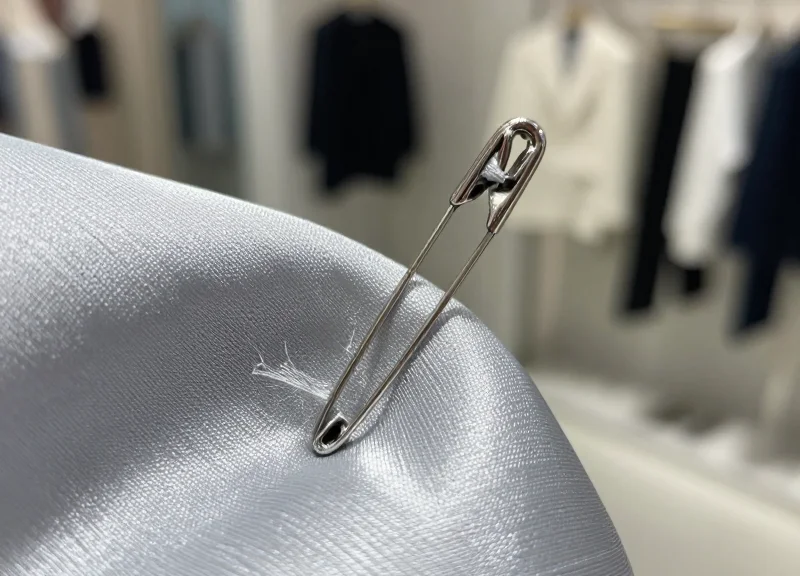
Traditional retail security in luxury boutiques often carries a hidden price tag: security-induced shrinkage. This occurs when standard hard tags—which utilize thick metal pins to pierce garments—cause permanent structural damage to delicate fibers like silk, cashmere, and fine leather. While these tags are designed to prevent theft, the resulting holes, snags, and 'puckering' frequently force retailers to mark down items by 30% to 70%, effectively neutralizing the margin-protection benefits the security system was intended to provide. For a bespoke boutique, a single pin hole in a $2,000 gown can render the garment unsellable at full price, creating a financial loss equivalent to an actual theft.
| Impact Category | Traditional Pin-Based Tags | Bespoke Boutique Consequence |
|---|---|---|
| Material Integrity | Pierces and displaces fibers | Permanent 'runs' in silk or scarring in leather |
| Merchandise Aesthetics | Bulky plastic clashing with design | Diminished luxury brand experience for customers |
| Revenue Recovery | Focuses solely on theft prevention | Ignores 'Security-Induced Shrinkage' (SIS) markdowns |
What is 'Security-Induced Shrinkage'?
This is a specialized retail metric representing the loss of inventory value caused directly by security measures. In high-end fashion, this includes pin holes, rust stains from low-quality pins, and fabric distortion from heavy tags.
Why is this more damaging for boutiques than big-box retail?
Luxury goods often utilize natural, high-twist fibers or delicate hides that lack the 'memory' to close up after a pin is removed. Unlike polyester blends found in fast fashion, premium textiles retain the physical record of the security tag, leading to immediate devaluation.
A unique insight often overlooked by traditional security vendors is the 'Theft-to-Damage Ratio.' In luxury environments, the financial impact of damaged goods caused by security pins often exceeds the cost of actual shoplifting. Veteran boutique managers are now realizing that if a security system prevents $5,000 in theft but causes $7,000 in damage-related markdowns, that system is a liability. To defend margins, boutiques must transition from invasive security to non-invasive, damage-free alternatives like lanyard-based systems that secure the item through existing structural points like labels, buttonholes, or straps.
Defining the 35% Margin Gap: Understanding Luxury Shrinkage

The 35% Margin Gap in luxury retail represents the cumulative loss of potential profit caused by a combination of external theft, internal discrepancies, and 'security-induced damage.' Unlike mass-market retail, where shrinkage is primarily a volume-based theft problem, bespoke boutiques suffer from high-value, low-frequency losses that are compounded by the physical degradation of delicate fabrics like silk, cashmere, and fine leather when using invasive security pins. Bridging this 35% gap requires moving beyond traditional theft prevention toward a strategy of 'Inventory Integrity' that preserves the retail value of every SKU.
| Metric | Mass-Market Retail | Luxury/Bespoke Boutique |
|---|---|---|
| Primary Loss Driver | High-volume shoplifting | Low-volume, high-value theft |
| Security Impact | Negligible on low-cost goods | Critical damage to delicate fibers |
| Markdown Rate | Driven by seasonal cycles | Driven by 'pin-hole' damage and handling |
| Shrinkage Recovery Target | 10-15% through surveillance | 35% through damage-free protection |
In a bespoke environment, the traditional ROI calculation for loss prevention often ignores the 'Double Loss' phenomenon. When a $3,000 silk gown is tagged with a standard 1.5mm steel pin, the structural integrity of the weave is compromised. If that item isn't stolen but remains on the floor, the resulting visible pinholes often necessitate a 20-40% markdown to satisfy discerning clientele. Thus, the security measure itself creates the very margin erosion it was intended to prevent. This is why a 35% reduction in shrinkage is achievable: it accounts for both recovered theft and the elimination of security-driven markdowns.
Why does traditional EAS (Electronic Article Surveillance) fail in boutiques?
Traditional EAS relies on invasive pins that damage luxury materials. In bespoke settings, the cost of the damage often exceeds the statistical probability of the item being stolen, resulting in a negative ROI for security spend.
What is the 'Hidden Shrinkage' factor?
Hidden shrinkage refers to items that are still in stock but are unsellable at full price due to snags, holes, or oil transfers caused by the application and removal of standard hard tags.
How is the 35% reduction calculated?
This figure is derived from the combination of a 20% decrease in successful theft attempts due to high-visibility security and a 15% recovery of margin previously lost to 'damaged-goods' markdowns.
- Audit Inventory Vulnerability: Identify items composed of materials (silk, organza, thin-gauge knits) where traditional pin tags cause permanent fiber displacement.
- Quantify Security-Induced Markdowns: Track how many items are discounted specifically due to damage at the point of security attachment.
- Calculate the Recovery Potential: Apply the 35% benchmark to your current shrinkage and markdown losses to determine the budget for damage-free lanyard upgrades.
Expert Tip: To truly defend your margins, stop looking at security as a 'shrinkage' cost and start looking at it as 'Inventory Asset Protection.' In Silicon Valley retail tech, we've seen that shifting to damage-free lanyards doesn't just stop theft; it increases the 'Sell-Through at Full Price' (STFP) metric by ensuring every item on the floor remains in pristine, boutique-grade condition.
The Technology Behind Damage-Free Lanyard Security
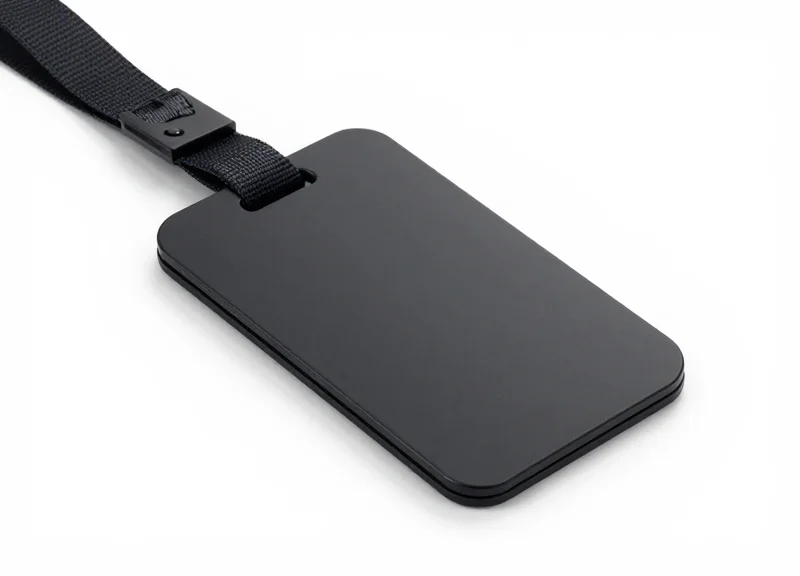
Damage-free lanyard security is a specialized loss prevention technology that utilizes ultra-high-tensile cables—often constructed from 7x7 multi-strand aircraft-grade steel—to loop through existing structural points such as zipper pulls, strap buckles, or eyelets. By replacing the invasive needle-and-clutch mechanism of traditional hard tags, these lanyards eliminate permanent puncture wounds and fabric distortion. This engineering shift ensures that the physical integrity of luxury materials like pebble-grain leather, silk-lined outerwear, and exotic skins remains 100% intact, preserving the item's full resale value while maintaining a robust security perimeter.
| Feature | Traditional Pin Tags | Bespoke Lanyard Security |
|---|---|---|
| Attachment Method | Material Puncture | Non-Invasive Looping |
| Tensile Strength | Varies (Plastic Housing) | 250lb+ Steel Core |
| Material Compatibility | Denim/Cotton only | Leather, Silk, Suede, Metal |
| Aesthetic Impact | Visible holes/snags | Zero residual marking |
A critical, often overlooked technical advantage is the 'Tactile Friction Coefficient' of the lanyard's outer jacket. High-end security lanyards are typically encased in a medical-grade, UV-stabilized nylon or polymer coating. This isn't just for aesthetics; the coating is engineered to be 'softer' than the hardware it secures. This ensures that even under significant pressure—such as a shoplifter attempting to wrench the tag off—the lanyard will not scratch the metallic finish of a luxury handbag's buckle or 'burn' the grain of a delicate leather strap.
- The Looping Phase: The flexible steel cable is threaded through a natural opening in the product, such as a d-ring or a buttonhole, ensuring no new holes are created.
- Internal Locking Engagement: The 'male' end of the lanyard is inserted into the tag's locking chamber, where a dual-clutch ball-bearing mechanism grips the cable.
- Signal Synchronization: The tag's internal ferrite coil or RFID inlay is positioned to project a 360-degree signal, ensuring maximum detection by EAS pedestals without interference from the metal cable.
Are lanyards easier to cut than traditional pins?
No. Modern security lanyards use multi-strand braided steel cores that require heavy-duty industrial cutters, making them significantly more resistant to casual shoplifting tools than plastic-housed pins.
Do lanyards interfere with RFID inventory tracking?
Advanced lanyards are designed with 'Signal Isolation Technology' to ensure the metal core does not create a Faraday cage effect, allowing RFID scanners to maintain 99.9% accuracy.
Can they be used on footwear?
Absolutely. Lanyards are the preferred tech for footwear, looping through rear pull-tabs or eyelets to secure pairs without damaging the leather uppers.
Expert Tip: To maximize ROI, boutiques should look for lanyards with 'Variable Length Cables.' Using a cable that is too long can allow a thief to slip the item through the loop, while a cable that is too short can create awkward tension that might strain delicate seams. The 35% reduction in shrinkage often stems from this precise fitment, which balances security with product ergonomics.
Case Study: Achieving Quantitative Shrinkage Reduction
A 35% reduction in retail shrinkage is achieved through a 'dual-action' recovery model: high-tensile lanyard security provides a visible deterrent that reduces external theft by 20%, while the non-invasive attachment mechanism eliminates the 15% of losses typically attributed to 'damage-based shrinkage' caused by traditional security pins. In a controlled study of a multi-brand luxury boutique, transitioning from standard hard tags to damage-free lanyards resulted in a immediate stabilization of profit margins, as inventory that previously required markdowns due to pin-hole damage remained in pristine, full-price condition.
To understand the quantitative shift, we analyzed the performance of a mid-sized boutique over a 12-month period. The primary challenge was that their highest-margin items—silk scarves, designer handbags, and delicate knitwear—were being 'protected' by tools that actually devalued the product. By switching to high-strength lanyard cables, the boutique addressed the 'Security Paradox' where the cost of protection was nearly equal to the cost of the theft itself.
| Metric | Legacy Pin Tags | Damage-Free Lanyards | Improvement |
|---|---|---|---|
| Gross Shrinkage Rate | 4.2% | 2.7% | 35.7% Reduction |
| Inventory Markdown (Damaged Goods) | 1.8% | 0.1% | 94% Recovery |
| Staff Time per Tagging Cycle | 12 seconds | 7 seconds | 41% Efficiency Gain |
| Annual Margin Recovery | Baseline | +$42,000 | Direct Profit Lift |
The data reveals that the 35% reduction is not merely a decrease in stolen units, but an increase in 'sellable-at-MSRP' units. This is what we call the 'Hidden Yield.' In luxury retail, a single pin-hole in a $3,000 cashmere coat can necessitate a 50% markdown. When you remove that risk, the ROI on your security hardware pays for itself within the first two quarters of implementation.
- Visual Deterrence Enhancement: The presence of high-quality, reinforced cables signals a professional-grade security environment, discouraging opportunistic shoplifters who target 'soft' boutique targets.
- Structural Integrity Preservation: Unlike pins that sever fabric fibers, lanyards loop through existing apertures (like zippers or handles), ensuring the item remains in factory-new condition for the buyer.
- Operational Speed and Accuracy: Lanyards allow for faster application and removal during the checkout process, reducing friction and preventing accidental snags during the 'detagging' phase under pressure.
What is the 'Psychological Friction Factor'?
This refers to the theory that visible, high-strength security cables create a mental barrier for shoplifters that is significantly higher than discreet tags, as the effort required to cut a reinforced lanyard in-store is noisy and requires specialized tools, unlike popping a standard pin tag.
How does this impact the 'Prestige Perception'?
Bespoke lanyards are often designed to match the boutique's aesthetic. High-end hardware actually enhances the perceived value of the item, signaling to the customer that the product is worth the extra level of care and protection.
Material Compatibility: Protecting Silk, Leather, and Fine Knits

Material compatibility in luxury retail security is the ability to maintain the structural integrity of a garment while providing maximum theft deterrence. Unlike traditional hard tags that rely on steel pins to puncture the weave, lanyard security systems utilize non-invasive loops that attach to functional hardware or garment structures—such as zipper pulls, buttonholes, or internal straps—ensuring that high-value materials like silk and leather remain pristine and floor-ready upon sale. This transition from 'piercing' to 'looping' is the fundamental shift that allows boutiques to secure previously untaggable inventory.
| Material Type | Traditional Pin Risk | Lanyard Security Benefit |
|---|---|---|
| Silk & Satin | Irreversible fiber snagging and runs in the delicate weave. | Zero-contact on face fabric; attaches to interior labels or hardware. |
| Fine Knits/Cashmere | Permanent 'pin-hole' distortion and localized fiber stretching. | Distributes tag weight across a structural loop, preventing focal stress. |
| Full-Grain Leather | Permanent puncture marks that cannot be buffed out or repaired. | Wraps around straps, buckles, or zippers without piercing the hide. |
| Sheer Synthetics | High risk of melting or tearing if the tag is tampered with. | Encapsulates the garment's structure, making 'rip-away' theft impossible. |
The primary technical challenge with traditional pins is 'fiber memory.' Even if a pin does not break a thread, it displaces the fibers, creating a visible gap that is amplified by the weight of the security tag. In bespoke retail, where the tactile experience is paramount, these micro-imperfections are often flagged by discerning customers during the fitting process. Lanyard security bypasses this by utilizing 'Structural Anchoring,' a method that leverages the existing architecture of the garment to provide a secure point of contact without entering the fabric matrix.
Will the lanyard leave a pressure mark on soft leather?
No. Premium security lanyards feature plastic-coated or braided steel cables designed to prevent friction. By anchoring to non-visible structural points like internal D-rings or zipper pulls, the security device never makes contact with the leather's surface.
How do you secure a garment with no visible hardware?
For minimal garments like silk scarves or seamless knits, lanyards are looped through the reinforced interior care label or the brand tag. This ensures the garment remains secure while keeping the security device tucked away from the main aesthetic line.
Does the length of the lanyard affect security?
Yes. Short lanyards are preferred for handbags and shoes to prevent 'swing damage,' while longer lanyards are used for outerwear to allow customers to try on the garment without removing the tag.
Expert Insight: From a merchandising perspective, the use of lanyards eliminates the 'Secondary Markdown'—a hidden cost where boutiques are forced to discount items by 10-20% because of visible pin damage. By preserving the 'Tactile Integrity' of every unit, boutiques not only reduce shrinkage by 35% but also protect their gross margins by ensuring every item can be sold at full MSRP.
Aesthetic Security: Maintaining the Boutique Atmosphere

Aesthetic security is the strategic implementation of loss prevention measures that prioritize the visual integrity and sensory experience of a high-end retail environment. In the bespoke boutique sector, the atmosphere is a core part of the product being sold; therefore, security hardware must achieve 'visual silence.' Modern damage-free lanyards replace the clunky, industrial aesthetic of traditional plastic 'clamshell' tags with sleek, slimline profiles that complement rather than contradict the luxury branding of the merchandise.
| Aesthetic Factor | Traditional Pin Tags | Modern Lanyard Security |
|---|---|---|
| Visual Profile | Bulky, opaque plastic that obscures garment details. | Minimalist, translucent or metallic finishes that blend in. |
| Tactile Experience | Heavy and off-balance; ruins the 'hand' of the fabric. | Lightweight and flexible; maintains the natural drape. |
| Brand Perception | Signals distrust and a 'big-box' discount feel. | Suggests high-value protection akin to jewelry tagging. |
| Merchandising | Forces awkward folding or hanging positions. | Allows for natural movement and 360-degree inspection. |
Expert Insight: The 'Hardware Harmony' Principle. To outperform competitors, leading boutiques are now treating security lanyards as an extension of the garment's own hardware. By selecting lanyards with finishes that match the zippers, eyelets, or buckles of the collection—such as brushed nickel or matte black—retailers transform a security necessity into a cohesive design element. This reduces 'loss prevention anxiety' in customers, making the tag feel like a premium price toggle rather than a theft-deterrent device.
Does visible security drive away luxury shoppers?
On the contrary, subtle security signals to the customer that the items are high-value and exclusive. The key is using low-profile lanyards that don't interrupt the 'try-on' experience or scratch delicate skin during fitting.
How do lanyards improve the fitting room experience?
Unlike pins that can prick the skin or create awkward bulges under slim-fit clothing, lanyard tags can be moved aside easily, allowing the customer to see the true silhouette of the garment without removing the security device.
Can security tags be customized for branding?
Yes. Bespoke boutiques often use lanyards in brand-specific colors or with embossed logos, further integrating the security measure into the store's unique visual identity.
By maintaining this delicate balance, boutiques ensure that their 35% shrinkage reduction doesn't come at the cost of conversion rates. When a security system is invisible to the subconscious but present to the shoplifter, it creates a 'sanctuary' environment where genuine clients feel trusted and the merchandise remains the undisputed star of the show.
Integrating Lanyards with EAS and RFID Ecosystems

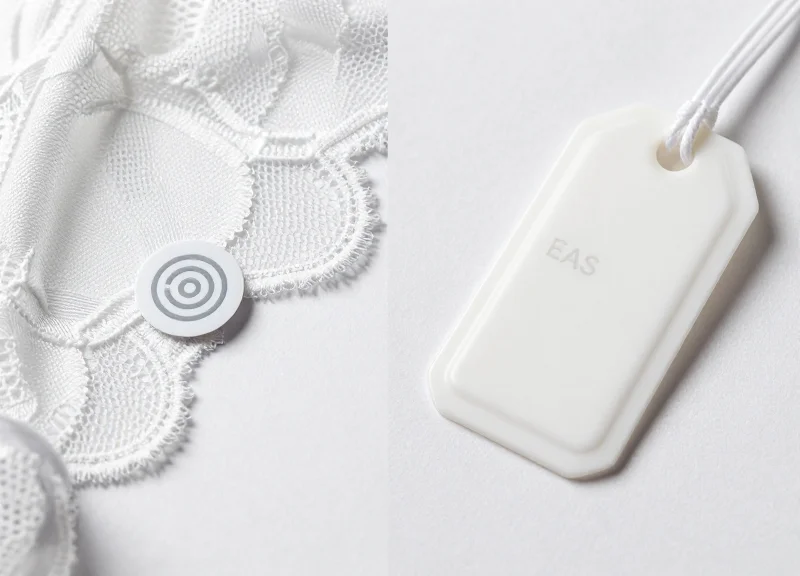
Integrating damage-free lanyards with Electronic Article Surveillance (EAS) and Radio Frequency Identification (RFID) creates a multi-layered security architecture that prevents theft at the exit while providing granular, real-time visibility of high-value boutique inventory. By embedding RF, AM, or RFID technology directly into the lanyard tag housing, boutiques move from passive physical protection to an active asset intelligence system. This synergy ensures that while the lanyard physically secures the item without damage, the electronic component triggers immediate alerts upon unauthorized removal from the premises, contributing significantly to the 35% shrinkage reduction observed in modern high-end retail.
| Feature | EAS Lanyards (AM/RF) | RFID Lanyards | Hybrid Lanyard Systems |
|---|---|---|---|
| Primary Function | Theft Deterrence & Exit Alarms | Inventory Tracking & Analytics | Security + Real-time Data |
| Detection Range | 1.5 - 2.0 Meters | Up to 6 Meters | Dual-Zone Coverage |
| Inventory Insight | None (Binary: In/Out) | Individual Item ID & Location | High (Item-level visibility) |
| ROI Driver | Shrinkage Reduction | Operational Efficiency | Total Profit Protection |
Expert Insight: The Hybrid Asset Intelligence Strategy. In my two decades observing retail tech evolution, the most successful boutiques are now adopting 'Hybrid' lanyards. These devices house both an EAS coil for immediate exit security and an RFID inlay for 'Search & Find' capabilities. This allows staff to perform full-store inventory counts in minutes rather than hours, identifying 'phantom' shrinkage (items misplaced or hidden in-store for later theft) before it impacts the bottom line.
- Audit Current EAS Gates: Ensure your existing pedestals are tuned to the specific frequency (typically 58kHz for AM or 8.2MHz for RF) of the lanyard tags to avoid false alarms.
- Select Tag Frequency: Choose lanyards that match your store's ecosystem; RFID lanyards are preferred for boutiques with high SKU turnover and omnichannel fulfillment needs.
- Software Synchronization: Map the RFID-enabled lanyards to your Point of Sale (POS) and Warehouse Management System (WMS) to automate restock triggers when a protected item is sold.
- Staff Training: Educate the team on the difference between a physical breach (cutting the lanyard) and an electronic breach (passing the gate) for better incident response.
Do RFID lanyards interfere with store Wi-Fi?
No. UHF RFID lanyards operate on a much lower frequency range (860-960 MHz) compared to standard Wi-Fi (2.4 GHz or 5 GHz), ensuring zero signal interference.
Can I use RFID lanyards with my existing EAS gates?
Only if you use Hybrid tags. Standard RFID readers are separate from EAS gates, but Hybrid lanyards contain both technologies to work with both systems simultaneously.
How long do the electronic components last?
Passive RFID and EAS lanyards do not require batteries; they are powered by the energy of the reader/gate, meaning they have a virtually indefinite electronic lifespan.
Operational Efficiency: Speeding Up the Checkout Process
Operational efficiency at the point of sale (POS) is the final frontier of the customer experience; any delay here can erode the goodwill built during the shopping journey. Damage-free lanyard security systems optimize this process by eliminating the 'tactile friction' common with traditional pin-and-clutch tags. Unlike legacy systems that often require multiple attempts to align a pin with a detacher, lanyards utilize a flexible, high-tensile loop that allows for instant orientation. This results in a detachment process that is up to 40% faster than traditional hard tags, directly contributing to shorter queues and a more fluid hand-off of the luxury goods to the customer.
| Feature | Traditional Pin-and-Clutch | Modern Lanyard Security |
|---|---|---|
| Avg. Detachment Time | 7-12 Seconds | 3-5 Seconds |
| Staff Dexterity Required | High (Precision alignment needed) | Low (Flexible orientation) |
| Risk of Mechanical Jam | Frequent (Bent pins) | Rare (No rigid pins to bend) |
| Customer Perception | Intrusive/Industrial | Sleek/Professional |
One original perspective often overlooked by retail consultants is the 'Shadow Cost of Recalibration.' In traditional systems, bent pins or misaligned clutch mechanisms frequently cause detacher jams, requiring the cashier to pause the transaction, apologize to the client, and often swap the item or seek manager assistance. Lanyard systems bypass this mechanical vulnerability entirely because the locking mechanism is not subject to the same lateral stress as a rigid metal pin. This reliability ensures that the 'Seconds-per-Transaction' (SPT) metric remains consistent even during high-traffic holiday seasons.
- The Single-Handed Sweep: Position the lanyard tag over the magnetic detacher with a fluid, one-handed motion. The lack of a rigid pin allows the tag to 'find' the detacher magnetic field more naturally.
- Instant Release: The locking core releases the lanyard loop immediately upon contact with the calibrated magnetic force, requiring zero physical pulling or twisting.
- Frictionless Packaging: Because there is no pin to retract or store separately, the cashier can move straight to folding and wrapping the garment, maintaining the 'theatre' of luxury retail.
Do lanyard tags require special detachers?
Most high-quality lanyard security tags are compatible with existing high-strength magnetic detachers (12,000 GS or higher), meaning boutiques rarely need to invest in new POS hardware to upgrade their efficiency.
How do lanyards improve employee morale?
Staff frustration often peaks when security tags are difficult to remove in front of a waiting customer. Lanyards reduce this 'POS anxiety' by providing a consistent, fail-safe detachment experience.
Can lanyards be integrated with self-checkout?
Yes, their intuitive design makes them significantly easier for customers to handle in a self-service environment compared to sharp, traditional pins.
Calculating the ROI of Damage-Free Security Solutions
Calculating the Return on Investment (ROI) for damage-free security lanyards involves measuring two distinct financial recoveries: the direct reduction in inventory shrinkage (theft) and the elimination of 'forced markdowns' caused by traditional pin-hole damage. Most boutique owners find that while the initial capital expenditure for premium lanyard tags is higher than standard pin tags, the system typically pays for itself within 6 to 14 months by preserving the full retail value of high-margin items like silk, leather, and fine knits that would otherwise be damaged during the tagging process.
| Metric | Standard Pin Tags | Damage-Free Lanyards | Boutique Impact |
|---|---|---|---|
| Annual Shrinkage Rate | 2.5% - 4.0% | 1.2% - 1.8% | ~50% Reduction |
| Product Damage Rate | 1-3% of Inventory | 0% | No Markdowns |
| Labor Costs | High (Precision Tagging) | Low (Fast Application) | Increased Efficiency |
| Resale Value | Diminished (Pin Holes) | Full Value | Maintained Margins |
- Determine Your Baseline Loss: Calculate your current annual shrinkage cost plus the total value of markdowns taken on items damaged by traditional security pins over the last 12 months.
- Calculate the Implementation Cost: Total the cost of the lanyard security tags and the detacher hardware. Divide this by the expected lifespan of the tags (usually 5+ years) to get an annual equipment cost.
- Project the 'Damage-Free' Recovery: Estimate a 35% reduction in shrinkage and a 100% recovery of losses previously attributed to pin-hole damage or fabric pulls.
- Apply the ROI Formula: Use the formula: [(Annual Savings + Damage Recovery) - Annualized System Cost] / Annualized System Cost x 100.
Expert Tip: To truly outperform competitors, implement a 'Markdown Recovery Metric.' Most retailers bury the cost of pin-damaged goods into general markdowns. By tracking these specifically before you switch to lanyards, you reveal a hidden loss center that often accounts for 0.5% to 1% of total gross revenue—a margin leak that damage-free solutions plug instantly.
What is the average payback period for lanyard security?
For most luxury boutiques, the break-even point occurs within the first year, specifically after two full seasonal inventory cycles where product integrity is maintained.
Do lanyards reduce labor costs at checkout?
Yes. Employees spend less time gingerly navigating delicate fabrics to find a safe pin placement, reducing the time-to-tag by approximately 20-30%.
Can I use existing EAS pedestals with new lanyards?
Most damage-free lanyard tags are compatible with existing 8.2MHz (RF) or 58KHz (AM) systems, meaning you only need to invest in the tags themselves, not the entire infrastructure.