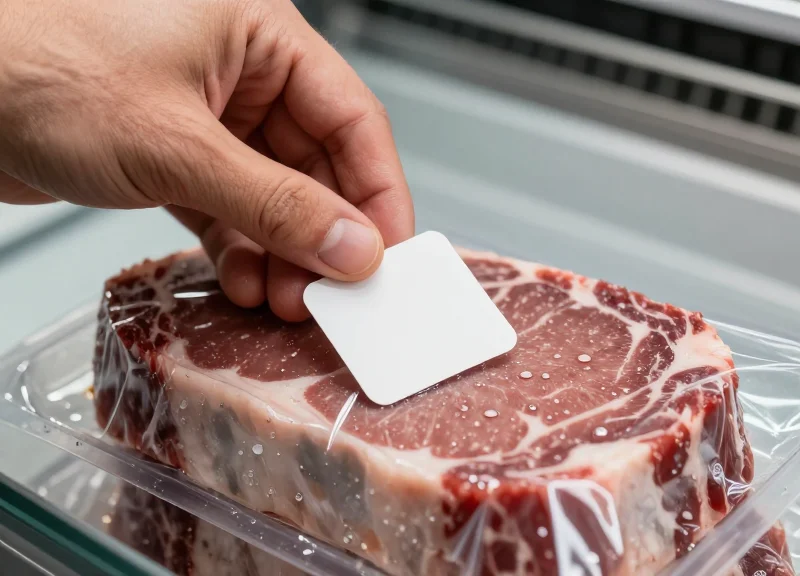
Loss prevention in the fresh food sector is a high-stakes challenge. Chilled meat and seafood are among the most frequently stolen items, yet their wet, cold environments make standard anti-theft labels fail. Moisture compromises adhesives and deactivates circuits, leading to false alarms or undetected theft. In this ultimate guide, we dive deep into the technical requirements and application best practices for 100% moisture-resistant EAS soft labels, ensuring your high-value perishables remain secure from the processing plant to the checkout counter.
The Science of Failure: Why Standard EAS Labels Fail in Cold Chains
Standard EAS (Electronic Article Surveillance) labels fail in cold chains primarily due to two factors: adhesive crystallization and dielectric interference. In chilled environments (0°C to 4°C), conventional pressure-sensitive adhesives reach their glass transition point, becoming brittle and losing the 'tack' required to stay bonded to plastic films or meat trays. Simultaneously, condensation acts as a lubricant, penetrating the label layers and causing 'winging'—where edges curl upward. From a technical standpoint, the presence of moisture near the internal resonator or antenna shifts the circuit's resonant frequency, rendering the label undetectable by security gates.
| Failure Factor | Standard EAS Label Response | Moisture-Resistant EAS Label Response |
|---|---|---|
| Adhesive State | Glass transition (crystallization) leads to brittleness and peeling. | Specially formulated polar adhesives maintain flexibility at sub-zero temps. |
| Surface Moisture | Acts as a barrier, preventing the adhesive from 'wetting' the surface. | Aggressive initial tack displaces moisture for a permanent bond. |
| Electronic Integrity | Water entry changes the dielectric constant, detuning the frequency. | Hermetic sealing or hydrophobic coatings protect the resonant circuit. |
| Physical Durability | Paper top-layers absorb water, causing structural disintegration. | Synthetic polymer layers (PE/PP) provide a 100% waterproof barrier. |
Beyond the adhesive, the electronic failure is often misunderstood. EAS technology relies on a precise resonant frequency (typically 8.2MHz for RF or 58kHz for AM). Water has a high dielectric constant (~80) compared to air (~1). When condensation seeps into a standard paper-based label, it changes the capacitance of the internal circuit. This 'Dielectric Shift' moves the label's signal outside the detection window of the EAS pedestals. This is why a label might still be physically attached to a steak package but fail to trigger an alarm at the exit—a phenomenon known as a 'silent failure' that directly impacts shrink rates.
Why does condensation cause false alarms or non-detections?
Condensation creates a micro-conductive layer that can short-circuit RF antennas or dampen the mechanical vibration of AM resonators, leading to a total loss of signal strength.
Does 'pre-chilled' packaging affect the application process?
Yes. Applying standard labels to already-cold surfaces is the leading cause of failure. The thermal shock prevents the adhesive polymers from flowing into the microscopic valleys of the packaging material.
What is the 'Expert Tip' for testing label resilience?
Perform a '24-hour Soak Test.' Submerge your labeled mock-ups in a 4°C water bath. If the edges show any transparency or lifting after 24 hours, the adhesive is non-polar and will fail in a real-world chilled meat supply chain.
Technical Specifications of 100% Moisture-Resistant EAS Labels
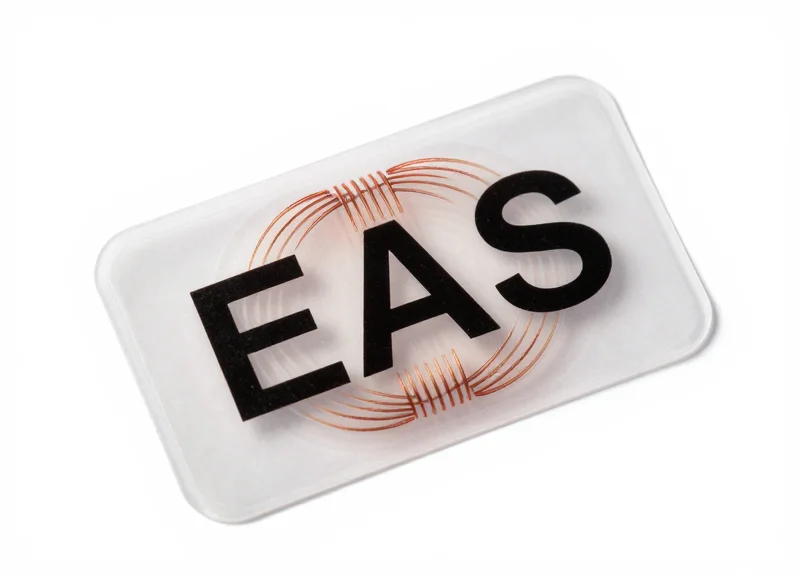
100% moisture-resistant EAS labels are high-performance security tags engineered with multi-layered synthetic substrates and aggressive cold-chain adhesives. Unlike standard paper labels that disintegrate when exposed to condensation, these specialized tags utilize hermetically sealed polyethylene (PE) or polypropylene (PP) top-coats to protect the internal resonance circuit. This design ensures the Electronic Article Surveillance (EAS) signal remains stable and detectable even when the packaging is subjected to ice melt, blood runoff from meat products, or extreme humidity fluctuations during transit.
| Feature | Moisture-Resistant Spec | Standard Label Spec |
|---|---|---|
| Primary Substrate | Waterproof Synthetic (BOPP/PE) | Thermal or Bond Paper |
| Adhesive Chemistry | High-Tack Cold-Grade Acrylic | Standard Pressure-Sensitive Adhesive |
| Operating Temperature | -20°C to +50°C | 10°C to +30°C |
| Signal Protection | Ultrasonic Edge Welding | Die-Cut Edge (Open to Air) |
| Frequency Stability | High (Resists Capacitance Drift) | Low (Fluctuates with Wetness) |
- RF and AM Compatibility: Available in both 8.2MHz (Radio Frequency) and 58KHz (Acousto-Magnetic) formats to integrate seamlessly with existing retail security gates.
- Encapsulated Circuitry: The internal aluminum or copper coil is vacuum-sealed between layers of plastic film, preventing oxidation and frequency shifting caused by water molecules.
- Direct Thermal Compatibility: Many variants feature a top-coat compatible with direct thermal printing, allowing retailers to print prices or barcodes directly onto the security label.
The Expert Insight: The 'Glass Transition' Advantage. From a materials engineering perspective, the secret to these labels lies in the Glass Transition Temperature (Tg) of the adhesive layer. Standard adhesives reach their Tg at around 0°C, becoming brittle and losing 'grip.' Technical-grade moisture-resistant labels use polymers with a Tg as low as -30°C. This ensures the adhesive remains in a flexible, 'rubbery' state, allowing it to flow into the microscopic textures of damp plastic wrap or condensation-covered styrofoam for a permanent bond.
Can these labels withstand deep-freeze cycles?
Yes, provided they are applied to a dry surface at room temperature before the blast-freezing process begins.
Are moisture-resistant labels thicker than standard labels?
Slightly. Due to the multi-layer synthetic construction, they typically measure 200-250 microns, whereas paper labels are roughly 150-180 microns.
Do they affect food safety or metal detection?
These labels are for external packaging use only. While they contain thin metal foils for the circuit, they are usually calibrated to pass through food-grade metal detectors without triggering false positives if the detector is set for 'packaged meat' parameters.
Choosing the Right Technology: RF vs. AM for Meat and Seafood

When protecting chilled meat and seafood, the choice between Radio Frequency (RF) and Acousto-Magnetic (AM) technology hinges on 'liquid interference.' While RF systems (operating at 8.2 MHz) are the industry standard for general retail due to cost-efficiency, AM systems (operating at 58 kHz) typically offer superior performance in high-moisture environments because lower-frequency waves more effectively penetrate the high water content and conductive brine solutions found in fresh protein packaging.
| Feature | Radio Frequency (RF) 8.2 MHz | Acousto-Magnetic (AM) 58 kHz |
|---|---|---|
| Moisture Tolerance | Low (Susceptible to detuning) | High (Stable resonance) |
| Detection Range | Standard (Up to 1.8m) | Superior (Up to 2.4m+) |
| Metallic Foil Performance | Poor (Signal shielding) | Good (Better penetration) |
| Label Thickness | Ultra-thin / Paper-like | Thicker / Plastic housing |
| Deactivation Height | Low (Near-contact required) | High (Non-contact deactivation) |
### The Technical Breakdown: Why Moisture Matters In the context of the cold chain, the moisture content of the product acts as a dielectric material. For RF technology, water molecules can cause 'detuning,' where the resonant frequency of the label shifts away from 8.2 MHz, making it invisible to the security gates. AM technology is less affected by this because it relies on mechanical vibration of magnetostrictive strips within a plastic housing, which is physically shielded from the electrical conductivity of the meat's surface.
- RF Pros & Cons for Meat: Pros: Extremely cost-effective for high-volume items and can be integrated into thin, printable paper labels. Cons: High false-alarm rate if labels get damp or if placed directly against high-sodium (brine) seafood.
- AM Pros & Cons for Meat: Pros: Highly reliable detection through liquids and near foil-lined trays; lower false-alarm rate. Cons: Labels are more expensive and have a distinct 'bump' profile that may be easier for shoplifters to identify and peel.
Expert Insight: The 'Brine Factor' One often overlooked variable is the salinity of the product. Seafood packaged in brine or meats with high salt injections (like processed poultry) creates a 'Faraday Cage' effect for RF signals. If your inventory includes high-sodium products, AM technology is almost mandatory to ensure a detection rate above 90%, as the conductivity of salt water can render standard RF labels completely inert.
Can I use RF labels on vacuum-sealed frozen fish?
Yes, but only if the label is applied to a dry outer sleeve. If the label is in direct contact with the film where condensation forms during thawing, an RF signal will likely be suppressed.
Which technology is better for source-tagging at the factory?
AM is generally preferred for source-tagging meat because it is more 'forgiving' of varied packaging materials (foils, liquids, absorbers) across a diverse product line.
Does cold temperature affect AM labels?
While the technology is stable, the adhesive is the weak point. Always ensure you are using a specialized cold-temp adhesive regardless of the EAS technology chosen.
Surface Preparation and Application Environmental Requirements
To ensure 100% moisture-resistant EAS labels perform as intended, the application surface must be free of liquid water, ice crystals, and organic oils at the moment of contact. The critical success factor is the 'Application Window'—a specific range of temperature and humidity where the adhesive can achieve maximum 'wet-out' on the substrate before condensation forms. Successful application requires a surface temperature at least 3°C above the dew point and the use of mechanical pressure to force the adhesive into the microscopic pores of the packaging film.
| Environmental Parameter | Optimal Specification | Impact on Adhesive Bond |
|---|---|---|
| Application Temperature | 2°C to 10°C (35°F to 50°F) | Prevents adhesive 'glassing' and maintains tackiness. |
| Surface Humidity | Below 80% Relative Humidity | Minimizes micro-condensation layers between film and label. |
| Surface Condition | Dry & Lipid-Free | Ensures high-energy bonding; oils act as a release agent. |
| Dwell Time | 24 Hours at Chilled Temps | Required for the adhesive to reach full structural integrity. |
- Mechanical Moisture Removal: Use a lint-free industrial wipe to remove visible condensation or 'sweat' from the meat tray film. Even if a label is waterproof, it cannot bond to a layer of moving water.
- The 'Thumb-Roll' Pressure Technique: Apply the label and use a firm, rolling motion with the thumb from the center outward. This evacuates air pockets and ensures the moisture-resistant adhesive penetrates the film surface.
- Thermal Equilibrium Alignment: Ensure labels have been acclimated to the processing room temperature for at least 2 hours. Applying 'warm' labels to 'ice-cold' packaging triggers instant condensation at the interface.
Expert Insight: The 'Invisible Biofilm' Factor. Most retailers ignore that meat and seafood packaging environments often have aerosolized proteins and fats. These settle on packaging surfaces, creating a low-energy 'biofilm' that causes standard adhesives to fail. To overcome this, moisture-resistant labels utilize a high-coat-weight adhesive specifically designed to 'bite' through these microscopic residues. If you experience flagging, the culprit is likely surface energy interference rather than simple moisture.
Can I apply labels inside a 0°C walk-in freezer?
No. While the label is moisture-proof once set, the initial bond (wet-out) requires the adhesive to be above its glass transition temperature. Apply labels in the 4°C-7°C processing zone before moving products to deep-chill.
Do 'Wash-Down' procedures affect the labels?
If applied correctly with a 24-hour dwell time, 100% moisture-resistant labels can survive standard retail wash-downs. However, high-pressure direct spray can still delaminate edges if the seal isn't perfect.
How does packaging film type affect the bond?
Polyethylene (PE) and Polypropylene (PP) films are common in meat packing but have low surface energy. Ensure your EAS label is specified for 'LSE' (Low Surface Energy) substrates for the best results.
Optimal Placement Strategies for Maximum Detection
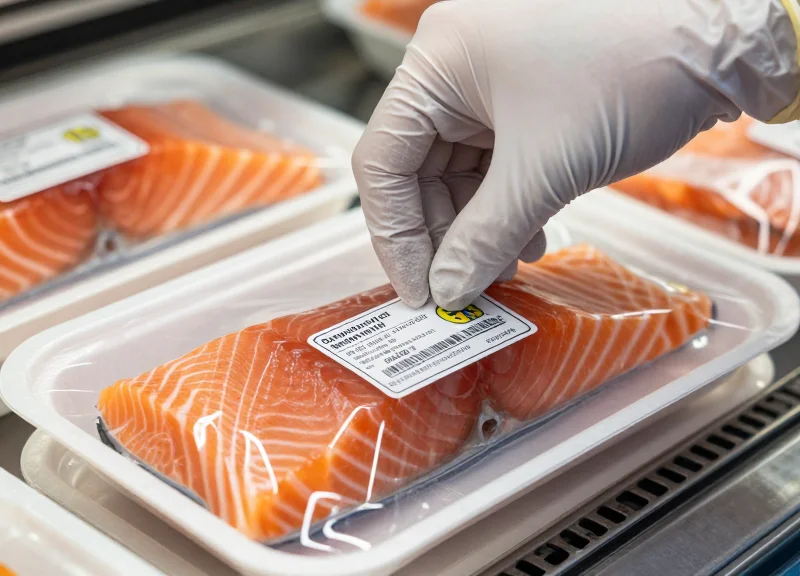
To achieve maximum detection rates for 100% moisture-resistant EAS labels on chilled proteins, the label must be positioned to avoid signal shielding from high-dielectric materials like saltwater and the 'Faraday cage' effect of metallic packaging. Optimal placement typically requires a minimum 2cm offset from metalized films and a location that maintains a clear line-of-sight to the EAS pedestals, ensuring that the label's electromagnetic field is not collapsed by the conductive properties of the meat or fish itself.
- Identify the 'Low-Moisture Zone': Apply the label to the driest part of the packaging, typically the upper corner or the side of a rigid tray, to reduce the impact of internal condensation buildup on the RF/AM signal.
- Avoid Metallic Interference: If the packaging uses metalized film or foil-lined trays, the label must be placed on a plastic lid or a non-metallic window. Labels placed directly onto metal will be completely deactivated or 'shielded' from the detection system.
- Orientation Consistency: Align labels vertically on the side of the package. This 'vertical polar' orientation ensures the label is parallel to the gate antennas as the customer exits, maximizing the signal pickup regardless of the package's depth.
- Avoid High-Fat and Bone Areas: Internal fluids and bone marrow can act as signal absorbers. For vacuum-sealed bags, place the label over a 'lean' area of the product where water content is more stable.
| Packaging Type | Primary Placement Zone | Detection Efficiency | Shielding Risk |
|---|---|---|---|
| MAP Trays (Modified Atmosphere) | Upper side-wall or flange | 98-99% | Low (unless foil-lined) |
| Vacuum-Sealed Bags | Center-back (away from seals) | 92-95% | High (liquid pooling) |
| Styrofoam Trays with Wrap | Bottom center (under tray) | 96-98% | Medium (surface moisture) |
| Metalized Stand-up Pouches | Clear window only | 85-90% | Critical (Faraday effect) |
Expert Tip: Utilize the 'Air Gap' advantage. When labeling rigid trays, placing the label over an area with a slight internal air pocket—common in Modified Atmosphere Packaging (MAP)—significantly improves the Q-factor of the label circuit. This small buffer of gas reduces the capacitive loading caused by the proximity of the moist protein, allowing the label to resonate more cleanly at its target frequency (8.2MHz for RF or 58kHz for AM).
Can labels be placed inside the packaging?
While possible with 'food-safe' certified labels, surface application is preferred for chilled goods. Internal placement subjects the label to direct liquid contact (blood/purge), which can eventually penetrate even moisture-resistant barriers and dampen the signal.
How does ice buildup affect detection?
Frost and ice act as insulators but can shift the resonant frequency of an EAS label. Moisture-resistant labels are designed to counteract this, but labels should still be placed where ice is least likely to accumulate, such as the vertical sides.
Does the label size matter for detection in cold chains?
Yes. In high-moisture environments, a larger label surface area generally provides a stronger signal-to-noise ratio, helping the security system distinguish the label from the 'background noise' caused by the water content in the meat.
Source Tagging vs. In-Store Application: Which is Better?
For most high-volume retailers and processors, source tagging—the process of applying EAS labels at the point of manufacture or packaging—is the most effective strategy. By integrating 100% moisture-resistant labels into the production line, businesses eliminate the labor-intensive task of manual application at the store level and ensure that every item is protected before it enters the high-shrink retail environment. While in-store application offers flexibility for low-volume specialty items, it often struggles with inconsistent placement and poor adhesion caused by surface condensation on chilled packages.
| Feature | Source Tagging (Manufacturer) | In-Store Application (Retailer) |
|---|---|---|
| Labor Costs | Low (Automated integration) | High (Manual labor required) |
| Adhesive Reliability | Maximum (Applied to dry surfaces) | Variable (Applied to cold/damp surfaces) |
| Placement Consistency | Precision-guided by machinery | Prone to human error |
| Shrink Reduction | 100% of inventory protected | Only tagged items protected |
| Aesthetics | Discreet or integrated placement | Visible, often obscuring branding |
The Expert Perspective: The 'Adhesion Window' Advantage. A critical, often overlooked factor in the source vs. store debate is the 'adhesion window.' When moisture-resistant labels are applied at the source, they are typically bonded to dry packaging materials at room temperature before the meat or seafood is chilled. This allows the pressure-sensitive adhesive to 'wet' into the substrate, creating a permanent chemical and mechanical bond. Labels applied in-store must battle 'flash condensation'—a microscopic layer of water that forms the moment a cold package hits warmer store air—which can act as a barrier, preventing even the strongest adhesives from achieving a secure hold.
- Reduced 'Floor-Ready' Time: Products arrive at the dock ready for the shelf, allowing staff to focus on merchandising rather than security prep.
- Hidden Security (Over-Labeling): Source tagging allows labels to be placed under the brand's decorative sleeve or thermal label, making them harder for shoplifters to identify and remove.
- Supply Chain Visibility: RFID-enabled moisture-resistant labels applied at the source allow for granular tracking from the processing plant to the retail checkout.
Can small-scale local meat processors benefit from source tagging?
Yes. Even small processors can utilize semi-automated label applicators to provide 'value-added' security services to their retail partners, making their products more attractive to major grocery chains.
What is the biggest risk of in-store application for frozen seafood?
The primary risk is 'label flagging,' where the corners of the label lift due to frost or moisture, causing the label to snag on freezer shelving or fail to trigger the EAS pedestals.
Does source tagging require specific packaging materials?
While it works with most materials, source tagging is most effective on smooth surfaces like vacuum-sealed plastic or PET trays where the moisture-resistant adhesive can form a complete seal.
Food Safety Compliance and Regulatory Considerations
Food safety compliance for EAS soft labels in the meat and seafood industry necessitates that all anti-theft tags are constructed from non-migratory, non-toxic materials designed specifically for indirect food contact. To meet global standards such as FDA 21 CFR 175.105 or EU Framework Regulation (EC) No. 1935/2004, labels must be applied to the exterior of primary packaging, ensuring the adhesive and functional components never touch the raw product. Compliance also dictates that security tags must not obstruct mandatory regulatory information, such as 'Use-By' dates, country of origin, or nutritional facts, which are critical for consumer safety.
| Regulatory Body / Standard | Applicability | Key Requirement for EAS Labels |
|---|---|---|
| FDA 21 CFR 175.105 | USA - Adhesives | Adhesives must be separated from food by a functional barrier or meet specific safety thresholds. |
| EU No. 10/2011 | Europe - Plastics | Strict limits on the migration of chemical substances from packaging into food items. |
| REACH / RoHS | Global - Chemicals | Ensures the absence of hazardous substances like lead or phthalates in the label electronics. |
| HACCP | Global - Operations | Labels must be monitored to ensure they do not become physical contaminants (e.g., peeling off). |
When deploying labels in a chilled environment, the risk of 'label migration'—where chemicals from the adhesive penetrate the packaging material—is a primary concern for health inspectors. Using 100% moisture-resistant labels significantly mitigates this risk. Because these labels utilize specialized synthetic top-sheets and high-tack acrylic adhesives, they remain chemically stable at temperatures between 0°C and 4°C, preventing the breakdown of polymers that could lead to contamination.
Can EAS labels be placed directly on meat or fish?
No. EAS labels are classified for indirect food contact only. They must always be applied to the outside of the film, tray, or wrap. Direct contact can result in chemical contamination and is a violation of international food safety laws.
Will labels interfere with metal detectors or X-ray inspection?
Standard RF (Radio Frequency) labels generally do not trigger food-grade metal detectors. However, AM (Acousto-Magnetic) labels contain metallic strips that may interfere with sensitive equipment. It is essential to calibrate your inspection systems after choosing your EAS technology.
Is it legal to cover the price or weight with a security label?
In most jurisdictions, covering mandatory weight, pricing, or health warning information is illegal. Best practice is to place the EAS label on the back or bottom of the tray, or in a designated 'security zone' on the branded sleeve.
Expert Tip: To maintain an 'Audit-Ready' status, always maintain a digital folder containing the Declaration of Compliance (DoC) and the Technical Data Sheet (TDS) for your specific EAS labels. Health inspectors often look for evidence that the adhesive used in your store or processing plant is rated for 'indirect food contact' at low temperatures. Having these documents readily available from your label supplier can prevent costly delays or fines during a surprise safety audit.
Testing and Quality Control in the Cold Case
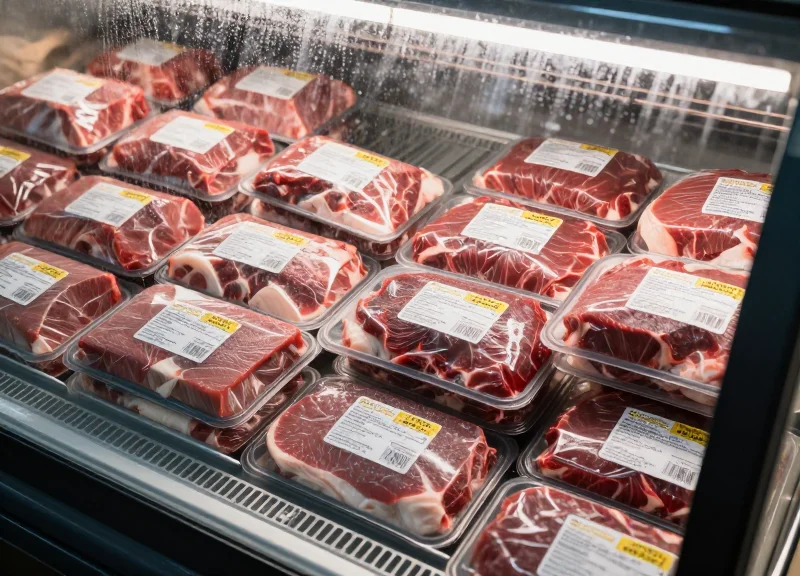
Testing and quality control for 100% moisture-resistant EAS labels is the process of auditing the 'Cold Chain Reliability' of anti-theft tags to ensure they maintain signal integrity and physical adhesion despite constant exposure to condensation and temperatures between 34°F and 38°F. Unlike standard labels, moisture-resistant variants must be validated against 'signal drift'—a phenomenon where water ingress shifts the label's frequency—and adhesive crystallization, which can lead to labels popping off in high-humidity display cases.
| Audit Type | Frequency | Success Criteria | Required Tool |
|---|---|---|---|
| Detection Sweep | Daily (Opening) | 98%+ Pick-up Rate | Handheld Verifier |
| Adhesive Pull-Test | Every 48 Hours | Zero lift at edges | Visual Inspection |
| Deactivation Audit | Weekly | Clean Kill at 10cm | POS Deactivator |
| Saturation Test | Monthly | Signal Stability @ 72hrs | EAS Gate System |
A veteran industry secret is the '72-Hour Saturation Peak.' Most moisture-resistant labels perform flawlessly for the first 24 hours. However, the true test occurs between the 48 and 72-hour marks, when the label has endured multiple defrost cycles in the refrigerated bunker. During these cycles, ice crystals can form and melt underneath the label edges, causing 'micro-delamination.' If a label survives the 72-hour mark with its resonance intact, it is likely to remain effective for the entire shelf life of the meat or seafood product.
- Randomized Batch Sampling: Select three items from the bottom, middle, and top of the chilled display to account for temperature and humidity variances within the case.
- The Resonant Signal Check: Pass the items through a handheld EAS verifier. If the signal is weak or intermittent, moisture may have breached the circuit's protective poly-barrier.
- Mechanical Bond Verification: Attempt to peel the corner of the label. In a quality application, the label should show 'fiber tear' or packaging deformation rather than a clean release.
- Simulated POS Deactivation: Verify that the label can still be deactivated through the thickest part of the product, ensuring high-moisture protein content isn't shielding the deactivation field.
Why do labels stop working after three days in the cold case?
This is usually caused by 'detuning.' If the label's moisture barrier is even slightly compromised, water molecules change the dielectric constant of the circuit, shifting the frequency away from the 8.2MHz (RF) or 58kHz (AM) standard.
Can labels cause false alarms if they get too wet?
No, moisture-related failure typically results in a 'non-alarm' state. If you are getting false alarms, it is likely due to 'phantom tagging' or interference from nearby refrigeration compressors.
What is the most common reason for label fall-off?
Applying the label to an already chilled, damp surface. Quality control starts at application; the surface must be 'above dew point' when the label is first pressed down.
Cost-Benefit Analysis: The ROI of Specialized EAS Labels

The Return on Investment (ROI) for specialized moisture-resistant EAS labels is determined by calculating the delta between the increased cost of premium labels and the reclaimed revenue from reduced shrinkage, labor efficiency, and 'open merchandising' sales lifts. While standard paper labels may appear cheaper on a per-unit basis, their 40-60% failure rate in chilled environments results in 'security theater' that fails to stop theft. In contrast, specialized labels ensure a near 100% detection rate, meaning that for high-value proteins like ribeye or lobster, preventing just one or two thefts per week can cover the labeling costs for the entire department's inventory.
| Metric | Standard EAS Labels | 100% Moisture-Resistant Labels |
|---|---|---|
| Average Unit Cost | $0.015 - $0.025 | $0.045 - $0.060 |
| Adhesion Failure Rate (Cold/Damp) | 35% - 55% | < 0.5% |
| Deactivation Reliability | Inconsistent (Moisture interference) | High (Shielded Circuitry) |
| Merchandising Strategy | Limited / Locked Cases | Full Open Merchandising |
| Estimated Shrink Reduction | 5% - 10% | 25% - 45% |
Expert Insight: The Open Merchandising Multiplier. Most retailers view EAS labels purely as a loss prevention tool, but the real ROI driver is sales growth. Data shows that moving high-theft meat and seafood items from locked service counters or behind-the-glass cabinets to open refrigerated shelves increases sales volume by 15% to 25%. Specialized labels provide the security confidence necessary to make this transition, effectively turning a loss prevention expense into a revenue-generating investment.
- Establish a Baseline: Audit your current 'unknown loss' in the meat and seafood departments over a 90-day period before implementing specialized tagging.
- Factor in Labor Costs: Account for the time employees spend replacing fallen labels or responding to false alarms caused by moisture-damaged standard labels.
- Calculate the Break-Even Point: Divide the total monthly cost of premium labels by the average retail price of your highest-theft items (e.g., Filet Mignon). This reveals how many 'saves' are required to break even.
- Monitor 'Ghost' Shrink: Track items that are scanned at the point of sale versus inventory levels to see the immediate reduction in scanning errors and theft.
Do moisture-resistant labels require different deactivators?
No, they are designed to work with standard Acousto-Magnetic (AM) or Radio-Frequency (RF) deactivation systems; the 'moisture-resistance' refers to the physical housing and adhesive, not the frequency.
Is source tagging more cost-effective than in-store application?
Yes, source tagging typically reduces the total cost per label by 20% by eliminating in-store labor and ensuring the label is applied in a controlled, dry environment before the product is chilled.
How does this impact the customer checkout experience?
Reliable labels reduce 'false positives' at the gate, which prevents customer embarrassment and ensures that security personnel only intervene when a legitimate threat is detected.