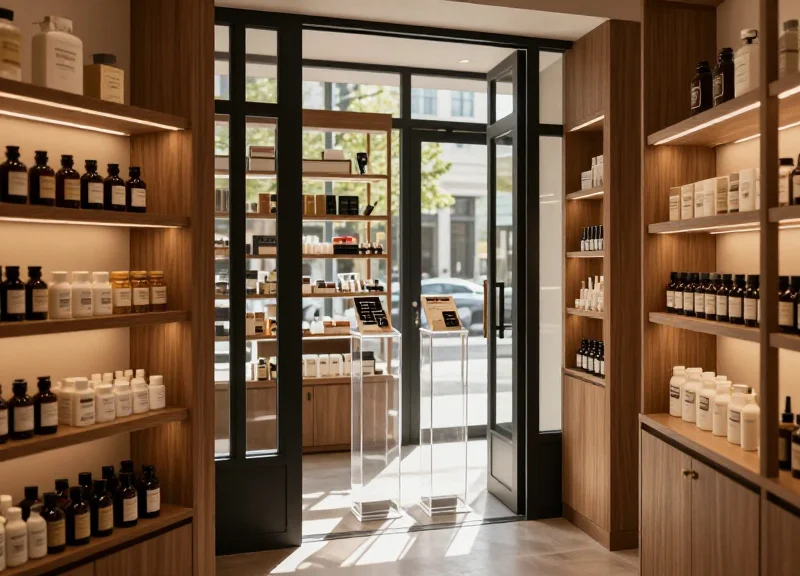
The pharmacy landscape is undergoing a radical transformation. No longer just dispensaries for prescriptions, modern boutique health and wellness pharmacies have become high-end retail destinations stocking luxury skincare, organic supplements, and specialized medical devices. However, this shift brings a unique security challenge: protecting a diverse inventory that includes both metallic-packaged goods and small, high-value items. As we look toward 2026, the industry is moving away from fragmented, single-frequency systems toward Hybrid EM/AM EAS solutions. This transition isn't just about theft prevention; it's about operational efficiency and maintaining a premium customer experience in an increasingly competitive market.
The Evolution of Pharmacy Retail: From Clinical to Boutique

The evolution of pharmacy retail represents a fundamental shift from the traditional 'clinical' model—characterized by sterile white environments and transaction-focused prescription counters—to the 'boutique' model, which prioritizes a holistic wellness experience and high-end retail aesthetics. As we approach 2026, pharmacies are increasingly functioning as lifestyle destinations that blend professional healthcare with premium retail categories like medical-grade skincare, nutraceuticals, and organic lifestyle products. This transition necessitates a departure from legacy security protocols, as the open-concept layouts and high-value inventory of boutique pharmacies require a more sophisticated, less intrusive approach to loss prevention.
| Feature | Traditional Clinical Pharmacy | Modern Boutique Wellness Pharmacy |
|---|---|---|
| Primary Focus | Prescription fulfillment & basic OTC | Integrative wellness & preventative care |
| Store Layout | Linear aisles, high counters, fluorescent lighting | Open-concept, experiential zones, ambient lighting |
| Inventory Profile | Low-margin generics & household sundries | High-margin dermo-cosmetics & niche supplements |
| Customer Experience | Transactional and utilitarian | Consultative, high-touch, and educational |
| Security Requirement | Visible deterrents (standard AM/RF gates) | Invisible or design-integrated Hybrid EAS |
This evolution is driven by the 'Experience-Security Paradox.' In a boutique setting, the goal is to remove barriers between the consumer and the product to encourage tactile engagement with luxury items. However, removing these barriers increases the risk of 'shrink' from high-value items that are often small, easy to conceal, and highly liquid on secondary markets. Traditional security methods often fail here because they either disrupt the high-end aesthetic or are incompatible with the metallic packaging often found in premium wellness brands.
Why is the 'Boutique' shift happening now?
Consumer demand has shifted toward preventative health and 'self-care' rituals. Pharmacies are capturing this market by offering a curated selection of products that require a more inviting, spa-like retail environment than a traditional drug store provides.
What are the specific security risks of the boutique model?
Boutique pharmacies carry 'hot products'—items with high resale value like specialized probiotics or premium serums. Their open floor plans eliminate the natural surveillance of high counters, making traditional AM-only or RF-only systems insufficient for 2026's retail landscape.
How does 'aesthetic integrity' impact security choices?
In a luxury environment, bulky plastic tags and massive pedestals diminish the brand value. Modern pharmacies require 'Hybrid' solutions that offer the wide-exit coverage of AM technology with the discreet, item-level tagging capabilities of EM or RFID.
Expert Insight for 2026: We are seeing the rise of 'Pharma-Connoisseurship.' Customers now treat medical-grade skincare and high-potency supplements with the same level of discernment as fine wine or luxury electronics. This means your security strategy must protect the 'Visual ROI'—the tags must be as premium as the products they protect. A cheap, clunky sensor on a $150 serum doesn't just prevent theft; it devalues the brand in the eyes of the consumer.
Understanding the Hybrid Advantage: What is EM/AM EAS?

A Hybrid EM/AM EAS (Electronic Article Surveillance) solution is a dual-frequency security framework that integrates Electro-Magnetic (EM) and Acousto-Magnetic (AM) technologies into a single hardware ecosystem. By operating simultaneously, these systems allow boutique pharmacies to protect high-sensitivity pharmaceutical items like foil-wrapped blister packs (via EM) while securing wide-exit retail spaces for luxury wellness products and cosmetics (via AM). In the 2026 retail landscape, this hybrid approach is the 'gold standard' for pharmacies that refuse to compromise between clinical security and open, aesthetic retail design.
| Feature | EM (Electro-Magnetic) | AM (Acousto-Magnetic) |
|---|---|---|
| Primary Strength | Detection on metals, foils, and small surfaces. | High detection rate at wide exits (up to 2.4m). |
| Label Discreetness | Ultra-thin strips, easily hidden in packaging. | Thicker 3D labels, visible but harder to shield. |
| Deactivation | Reversible (can be activated/deactivated). | Permanent deactivation upon sale. |
| Typical Use Case | Prescription meds, foil packs, small cosmetics. | Supplements, luxury skincare, larger boxed items. |
The 'Hybrid Advantage' lies in eliminating the security gaps found in single-technology systems. Traditional pharmacies often had to choose: either adopt EM for their clinical goods but suffer frequent false alarms and narrow exits, or adopt AM for their retail goods but lose protection on anything containing foil or metal. A hybrid system utilizes a unified controller to process signals from both frequencies, ensuring that whether a customer is carrying a foil-wrapped box of premium probiotics or a bottle of luxury CBD oil, the system maintains a 98%+ detection rate.
Can EM and AM signals interfere with each other?
No. Modern hybrid systems utilize digital signal processing (DSP) to isolate the 58kHz AM frequency from the low-frequency EM signals, preventing cross-talk and ensuring zero-interference operation.
Why is EM specifically necessary for boutique pharmacies?
Many high-end wellness products use metallic packaging or foil seals to preserve ingredient integrity. AM signals are often 'detuned' or shielded by these materials, whereas EM strips remain effective even when placed directly on or inside metallic surfaces.
Is the hardware bulkier because it uses two technologies?
Actually, the 2026 trend focuses on 'invisible' integration. Hybrid systems are now housed in slim, transparent acrylic pedestals or concealed floor-loops, maintaining the minimalist aesthetic of a boutique wellness space.
Expert Insight: The 'Signal Masking Gap' in Boutique Retail. In my 20 years of observing security trends, the biggest vulnerability in high-end pharmacies has been 'Layered Masking.' Savvy shoplifters often place an AM-tagged item inside a foil-lined bag or next to a foil-wrapped medication to disrupt the signal. A hybrid system is the only solution that closes this loop—the EM component triggers on the very material being used to mask the AM tag, creating a redundant security layer that is virtually impossible to bypass without detection.
The Limitations of Traditional Security in Modern Wellness Hubs
Traditional Electronic Article Surveillance (EAS) systems—specifically legacy standalone Acousto-Magnetic (AM) or Radio-Frequency (RF) platforms—are increasingly obsolete in boutique wellness hubs due to their inability to penetrate metallic-foiled packaging and the physical constraints of tagging high-value, micro-sized health products. As pharmacies transition into 'wellness destinations' featuring premium supplements, organic beauty oils, and metallic-cased health tech, these single-frequency systems create a false sense of security while suffering from significant 'shielding' blind spots.
| Technology Type | Common Failure Point | Impact on Boutique Pharmacies |
|---|---|---|
| Standalone RF (8.2 MHz) | Metallic Interference | Foil-lined vitamin pouches and metal-capped skincare render tags invisible to the sensors. |
| Standalone AM (58 kHz) | Tag Size/Aesthetics | Bulky tags ruin the premium look of boutique items and are easily stripped from small cosmetic tubes. |
| Legacy EM (Low Freq) | Limited Detection Range | Requires narrow entryways that contradict the open, airy 'boutique' architectural aesthetic. |
The primary technical hurdle is known as the 'Shielding Effect.' In a modern wellness hub, inventory often includes luxury items packaged in foil-blister packs, metallic-finished canisters, or tubes containing high-density liquids. For a traditional RF system, these materials act as a Faraday cage, reflecting or absorbing the signal before it can reach the security tag. This creates a high 'false-negative' rate, where premium items can be removed from the store without ever triggering an alarm.
Why do traditional tags fail on small health items?
Most boutique items, such as essential oil vials or concentrated serums, have a small surface area. Standard AM/RF tags are too large for these products, leading to 'tag-stripping' where shoplifters simply peel off the security measure because it cannot be integrated into the packaging.
Does the 'boutique' store layout affect security performance?
Yes. Modern wellness hubs prioritize wide, welcoming entrances. Traditional systems often require narrow 'bottlenecks' to maintain detection strength, forcing retailers to choose between an inviting customer experience and effective loss prevention.
What is the '2026 Boutique Blindspot'?
This is an emerging trend where the increase in metal-cased health wearables and smart-tech products in pharmacies creates a high-interference environment that legacy RF systems simply weren't designed to navigate.
Expert Insight: In my two decades of loss prevention consulting, the most frequent mistake I see boutique owners make is prioritizing 'invisible' security over 'functional' physics. By 2026, the cost of 'undetected shrink'—loss that occurs because the system never alerted the staff—is projected to surpass the cost of visible theft for pharmacies that rely solely on 8.2MHz RF technology. The evolution of packaging towards sustainable (often metallic or dense recycled) materials is the final nail in the coffin for single-frequency traditional security.
Why 2026 is the Tipping Point for Hybrid Technology

The 2026 tipping point is driven by the 'Value-Complexity Intersection,' a market state where the rising street value of boutique wellness products and sophisticated theft tactics render single-frequency security systems mathematically insufficient. For modern pharmacies, 2026 represents the moment when the 'Protection Gap'—the financial loss incurred from unprotectable metallic and liquid-based inventory—surpasses the depreciating capital expenditure of hybrid EM/AM hardware. As boutique pharmacies increasingly stock high-margin, small-form-factor items like specialized peptides and foil-sealed nutraceuticals, the adoption of hybrid systems becomes an operational mandate for survival rather than a discretionary upgrade.
| Market Variable | 2021 Baseline | 2026 Projection |
|---|---|---|
| Hybrid Hardware Cost | Premium/Prohibitive | Mainstream/Accessible |
| Organized Retail Crime (ORC) Impact | Moderate/Localized | High/Systemic |
| Inventory Material Mix | Standard Plastics/Paper | High-Foil/Liquid/Metal-Heavy |
| Labor Costs (Manual Auditing) | Manageable | Critical/Automated Dependency |
Beyond simple economics, the rise of Organized Retail Crime (ORC) has evolved. By 2026, theft rings have optimized their techniques specifically for 'soft targets' like boutique pharmacies that still rely on 8.2MHz RF (Radio Frequency) or standalone AM systems. These traditional systems are easily bypassed using simple shielding or 'booster' bags. Hybrid EM/AM solutions offer a dual-layered defense that creates a 'Security Mesh,' making it impossible for sophisticated shoplifters to predict which frequency will trigger the alarm, thereby acting as a powerful psychological and physical deterrent.
The Boutique Armor Paradox (Unique Insight): One of the most significant yet overlooked factors in 2026 is the packaging evolution. To justify high price points, boutique wellness brands have moved toward 'Luxury Armor'—packaging that includes heavy metallic inks, aluminum seals, and dense liquid suspensions. While this packaging enhances brand value, it creates a 'Faraday Cage' effect for traditional AM tags. Only Hybrid systems utilizing ultra-low frequency EM (Electro-Magnetic) can penetrate this luxury packaging reliably. In 2026, if you are selling high-end wellness products without EM capability, you are essentially leaving your most expensive inventory unprotected.
Is Hybrid technology still significantly more expensive than traditional systems in 2026?
No. While there is a slight premium, the manufacturing of dual-frequency sensors has scaled globally, reducing the price gap to within 15-20% of high-end single-frequency systems, while offering a 40% better recovery on shrink.
Why can't I just use RFID for security instead of Hybrid EM/AM?
RFID is superior for inventory accuracy, but it is notoriously weak at the 'pedestal' for security because its signal is easily blocked by the very liquids and foils common in boutique pharmacies. Hybrid EM/AM remains the gold standard for active loss prevention.
Will I need to retrain my staff to handle Hybrid tags?
Minimal training is required. Modern 2026 hybrid systems use unified deactivators that handle both frequencies in a single swipe, making the process invisible and seamless for the pharmacy technician.
Protecting High-Value Assets: Supplements, Skincare, and Small Cosmetics

In the boutique health and wellness sector, protecting high-value assets requires more than just a generic alarm; it demands a system capable of piercing through complex packaging. Hybrid EM/AM EAS solutions represent the gold standard for 2026 because they address the 'shielding effect' inherent in premium products—where metallic foils in supplement seals or the high mineral content in luxury skincare can render standard RF or single-frequency AM systems useless. By utilizing EM (Electro-Magnetic) for items with metal-based packaging and AM (Acousto-Magnetic) for wider-aisle detection of bulky items, boutique pharmacies can finally secure their highest-margin inventory without compromising on aesthetic presentation or shelf accessibility.
| Product Category | Primary Security Challenge | The Hybrid Advantage |
|---|---|---|
| Premium Supplements | Induction foil seals and metallic labels shield signals. | EM strips penetrate metallic packaging that blocks AM/RF frequencies. |
| Organic Skincare | High liquid density and glass packaging cause signal detuning. | AM technology provides superior performance near liquids and glass. |
| Small Cosmetics | Compact surface area makes standard tags bulky and unsightly. | Ultra-thin EM microwires are virtually invisible on lipsticks and liners. |
| Nutraceuticals | High price-to-size ratio makes them prime targets for ORC. | Dual-layered protection ensures detection even if one tag is shielded. |
Why do traditional security tags fail on high-end facial serums?
Many premium serums use glass bottles with high lead content or metallic-ink labels. These materials create an 'interference bubble' around the product. Hybrid systems bypass this by using AM frequencies that are less susceptible to liquid interference and EM strips that are immune to metallic shielding.
Can hybrid systems handle the 'booster bag' tactics used by shoplifters?
Yes. While standard tags are easily defeated by foil-lined bags, modern hybrid pedestals often include integrated metal detection that alerts staff the moment a shielded bag enters the store, providing a preemptive layer of security.
Will EM strips damage the magnetic strips on customer credit cards?
No. The low-intensity magnetic field used for deactivating EM microwires is localized and designed to be safe for modern EMV chip cards and mobile payment devices.
A critical, often overlooked insight for 2026 is the rise of 'Package-Integrated Security.' As boutique brands move toward sustainable, minimalist packaging, the ability to hide security measures is paramount. The unique advantage of hybrid systems is the 'Microwire'—an EM element so thin it can be embedded directly into the cardboard of a supplement box or the cap of a lipstick during the manufacturing process. This 'invisible' security prevents the 'sweep theft' common in high-end pharmacies, where thieves target products they believe are untagged due to the lack of visible plastic hard-tags.
Balancing Aesthetics and Security in Boutique Environments
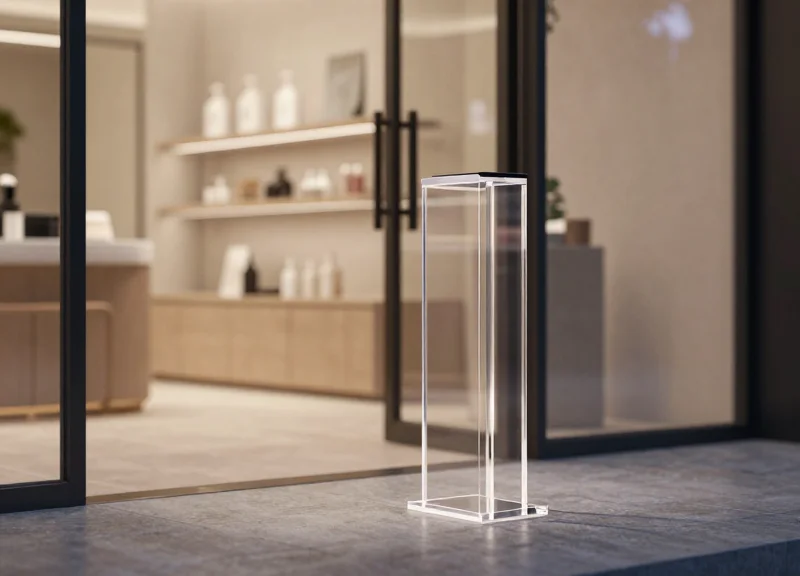
Balancing aesthetics and security in boutique environments means moving away from the 'fortress mentality' toward 'invisible protection.' In 2026, hybrid EM/AM EAS solutions achieve this by utilizing ultra-slim acrylic pedestals, under-floor sensors, and customizable hardware that blends into high-end pharmacy interiors. This approach ensures that the visual identity of a wellness brand remains premium while the dual-technology sensors provide the industry's most robust protection against theft of small, high-value skincare and supplements.
| Feature | Traditional Security (Legacy) | 2026 Hybrid Boutique Solutions |
|---|---|---|
| Visual Impact | Bulky, opaque plastic gates | Transparent acrylic or hidden floor loops |
| Footprint | Wide pedestals obstructing entry | Ultra-slim profiles (< 2 inches thick) |
| Brand Integration | Standard gray/white industrial | Custom LED accents and brand engraving |
| Customer Psychology | Intimidating/Loss of trust | Discreet/Seamless luxury experience |
- Acrylic Transparency: Modern hybrid antennas are constructed from aircraft-grade acrylic, providing a 360-degree view of the store layout and ensuring sightlines to luxury product displays are never blocked.
- Customizable Lighting Schemes: Internal RGB-LED lighting allows pharmacies to match the security system's glow to their brand colors or use 'calm' lighting that only shifts to 'alert' mode during a breach.
- Under-Floor and Over-Door Options: For the ultimate minimalist look, 2026 hybrid systems can be embedded into the floor substrate or mounted above the doorframe, offering total invisibility for the most exclusive boutique settings.
Expert Insight: The Concept of 'Cognitive Security' — My 20 years in Silicon Valley retail tech have shown that the best security doesn't just prevent theft; it enhances the customer's perceived value of the product. In 2026, the trend is 'Cognitive Security,' where the lack of visible barriers signals to high-net-worth clients that they are in a high-trust, high-tier environment. Hybrid systems are the only ones capable of maintaining this illusion because they don't require the massive, 'beeping' overhead sensors that older AM-only systems often necessitate.
Can hybrid systems be hidden within custom woodwork?
Yes. EM (Electro-Magnetic) components are particularly effective when concealed within non-metallic furniture or designer wooden checkout counters, allowing for 'invisible' deactivation zones.
Do slim pedestals sacrifice detection range?
Not in 2026 models. Advances in Digital Signal Processing (DSP) allow hybrid antennas to maintain a wider detection lane (up to 2.4 meters) even with a significantly smaller physical footprint.
How does this impact the customer 'walk-in' experience?
By utilizing 'Zero-Obstruction' design, boutique pharmacies can keep entryways wide and welcoming, which is statistically proven to increase foot traffic and 'linger time' in health and beauty aisles.
Future-Proofing Your Business: Integration with RFID and IoT

In the 2026 retail landscape, future-proofing your boutique pharmacy means transitioning from reactive security to proactive 'Invisible Infrastructure.' Hybrid EM/AM EAS platforms serve as the foundational hardware layer that allows for seamless integration with RFID (Radio Frequency Identification) and IoT (Internet of Things) sensors. Unlike legacy systems that operate in a silo, modern hybrid solutions are designed as modular data hubs. They enable a 'Digital Twin' of your inventory—tracking high-value items from the stockroom to the point of sale, while providing the dual-frequency protection necessary for varied wellness products like metallic-packaged supplements and liquid-based organic skincare.
| Feature | Legacy EAS Systems | IoT-Integrated Hybrid Systems |
|---|---|---|
| Primary Function | Theft Deterrence Only | Loss Prevention + Inventory Intelligence |
| Data Granularity | Binary (Alarm / No Alarm) | Item-Level (What, When, and How many) |
| Inventory Accuracy | 65-70% (Manual Audits) | 98-99% (Real-Time RFID Sync) |
| IoT Connectivity | None | WiFi/BlueTooth/Cloud Analytics Ready |
The true ROI of upgrading to a hybrid system lies in its ability to eliminate 'Ghost Inventory.' In boutique wellness environments, where high-potency serums or specialized supplements have high turnover and high cost, knowing exactly what is on the shelf is as important as stopping it from leaving through the front door. By 2026, we expect to see 'Smart Shelf-to-Gate Synchronicity'—a process where IoT sensors alert staff via wearable devices the moment a high-theft item is removed from a shelf, allowing for customer service intervention long before a security alarm is triggered.
Can hybrid systems work with my existing RFID tags?
Yes, many 2026-spec hybrid pedestals include 'empty space' for RFID reader inserts, allowing you to run security and inventory management through a single aesthetic portal.
How does IoT improve the customer experience?
By automating inventory counts, staff spend less time in the backroom and more time providing consultations, while IoT data helps ensure your best-sellers are never out of stock.
Is the data from these systems secure?
Modern hybrid hubs utilize end-to-end encryption and localized edge computing to ensure that store traffic and inventory data remain compliant with pharmacy privacy standards.
Expert Tip: When selecting a hybrid system, look for 'API-First' hardware. This ensures that as new AI-driven analytics tools emerge in late 2026 and 2027, your security pedestals can feed data directly into your management software without requiring a total hardware overhaul.
Cost-Benefit Analysis: The ROI of Transitioning to Hybrid Systems
The Return on Investment (ROI) for hybrid EM/AM EAS solutions in boutique pharmacies is calculated by measuring the reduction in total shrinkage—often falling by 30-45%—against the initial capital expenditure (CAPEX) and the ongoing reduction in operational labor costs. Unlike legacy systems that force a choice between high-sensitivity protection for small cosmetics (EM) and wide-exit coverage for bulkier wellness items (AM), a hybrid system consolidates these costs into a single infrastructure. Most boutique environments achieve a full break-even point within 14 to 22 months, depending on their high-value inventory turnover.
| Metric | Legacy EM or AM Only | Hybrid EM/AM Solution | Economic Impact |
|---|---|---|---|
| Shrinkage Rate | 2.5% - 4.0% | 1.2% - 1.8% | Up to 55% reduction in loss |
| Tagging Labor | High (Dual tagging required) | Low (Single-tag efficiency) | Saved 15-20 staff hours/month |
| False Alarms | Frequent (Interference issues) | Minimal (Advanced filtering) | Increased sales via 'open' feel |
| Maintenance | Dual systems to maintain | Unified platform | 30% lower long-term OPEX |
### The 'Silent Labor Tax' Insight. In my two decades observing retail tech cycles, the most overlooked cost in boutique pharmacies is what I call the Silent Labor Tax. When pharmacies run separate security platforms, staff often spend $0.20 to $0.50 per item in labor costs alone just to decide which tag to apply or to apply both for maximum security. Hybrid systems eliminate this decision-making friction, allowing for a standardized tagging workflow that recovers hundreds of management hours annually—time better spent on high-margin consultations and personalized patient care.
Does the initial high cost of hybrid hardware outweigh the benefits?
While the upfront CAPEX is 20-30% higher than single-technology systems, the reduction in 'unprotected inventory' (items that previously didn't fit a single tech's profile) covers the price gap within the first year of operation.
How does a hybrid system affect insurance premiums?
Many specialized retail insurers offer lower premiums or lower deductibles for pharmacies that implement dual-spectrum theft prevention, as it demonstrates a higher tier of risk mitigation.
Can existing tags be reused?
Yes. One of the greatest ROI drivers is the ability to use your existing stock of EM strips for small items and AM hard tags for larger goods simultaneously without upgrading your entire tag inventory.
- Baseline Audit: Conduct a 90-day review of current inventory shrinkage, categorized by product size and price point.
- Labor Costing: Track the time spent by staff on manual tagging and security gate troubleshooting over a standard work week.
- TCO Projection: Calculate the Total Cost of Ownership (TCO) over 5 years, factoring in the hardware, installation, and reduced replacement costs for stolen goods.
- Net Present Value (NPV) Comparison: Compare the NPV of staying with legacy tech versus the cash-flow positive trajectory of a hybrid transition.