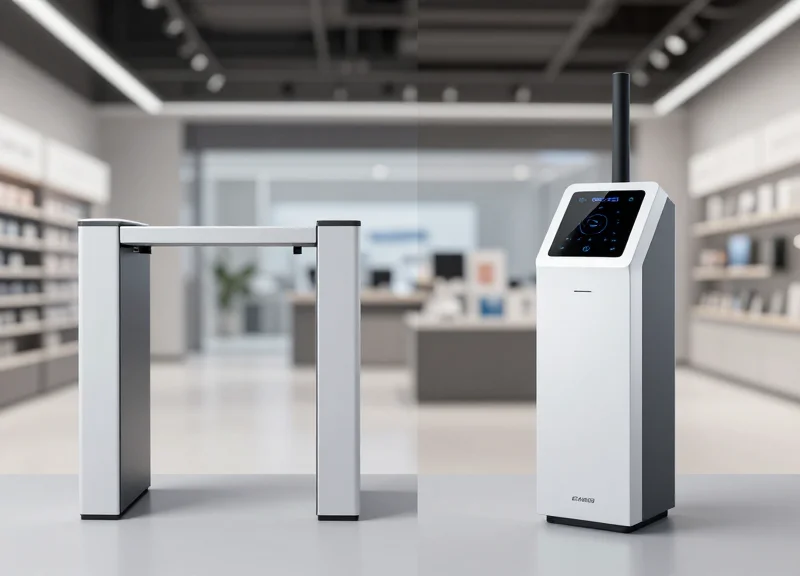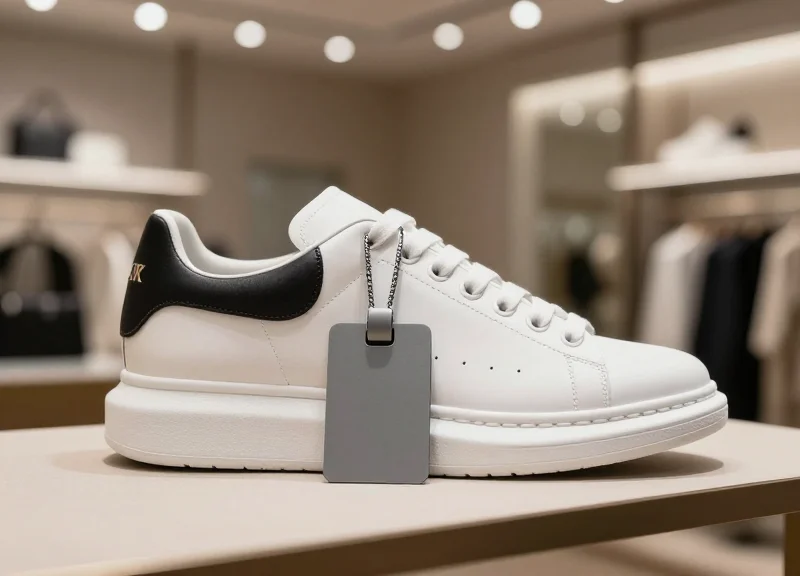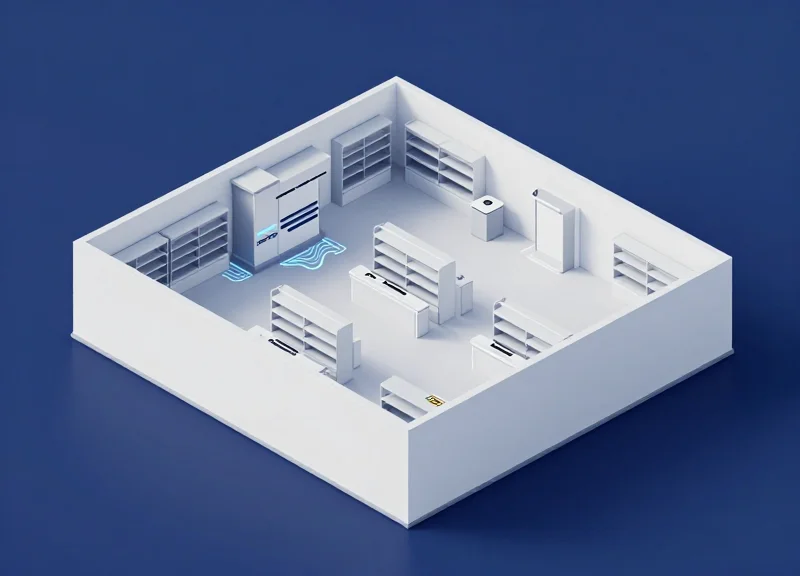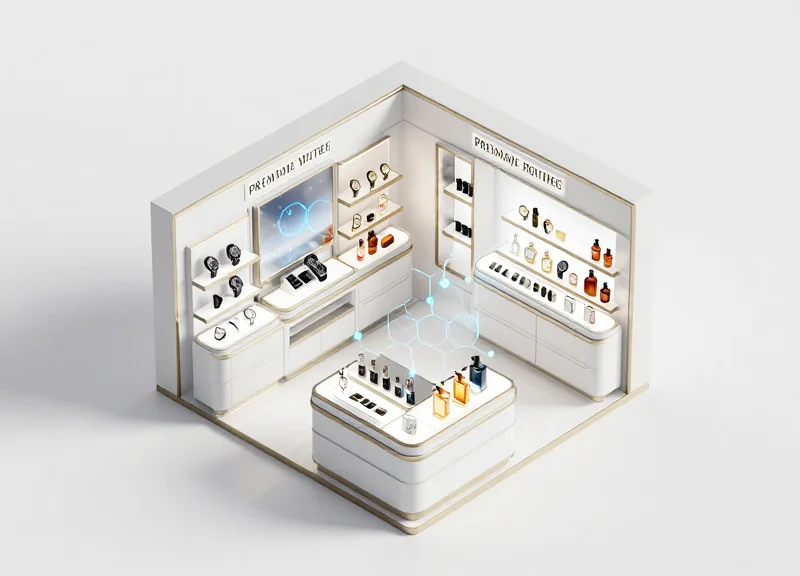
As retail architecture evolves toward open-concept designs and expansive entrances, traditional Electronic Article Surveillance (EAS) systems are reaching their physical and technical limits. The constraints of legacy RF and AM frequencies are increasingly apparent in high-traffic, aesthetically-driven environments. Enter Microwave (MW) technology—a high-frequency frontier that promises not just wider detection ranges, but a completely 'invisible' security footprint. This article explores why MW is positioned to become the industry benchmark for retail shielding and security performance as we look toward 2026 and beyond.
The Evolution of Retail Loss Prevention: From Pedestals to Invisibility
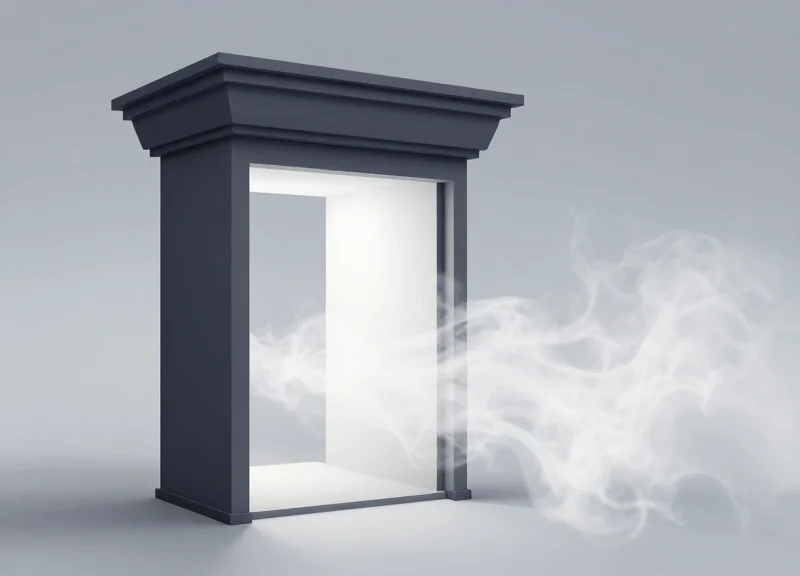
The evolution of retail loss prevention is defined by the shift from 'Overt Deterrence' to 'Seamless Protection.' For decades, the standard for Electronic Article Surveillance (EAS) relied on bulky Acousto-Magnetic (AM) or Radio Frequency (RF) pedestals that physically restricted store entrances. However, as modern retail prioritizes the 'Experience Economy,' these barriers are being replaced by invisible microwave-based shielding. This next-gen frontier uses higher-frequency spectrums to provide wide-aisle coverage and architectural freedom, allowing security to operate as a transparent layer within the store's design rather than a physical obstacle.
| Era | Technology Focus | Primary Constraint | Aesthetic Impact |
|---|---|---|---|
| 1970s - 1990s | Analog RF / AM | False Alarms & Narrow Aisles | Intrusive 'Grey Pillars' |
| 2000s - 2015 | Digital AM & Integrated RFID | Interference from Electronics | Slimmer, branded pedestals |
| 2020 - 2026+ | Microwave / Wide-Aisle Invisible | Signal Precision | Zero footprint (Invisible) |
Why is this shift happening now? Traditional AM and RF systems operate at lower frequencies (58kHz and 8.2MHz, respectively). While effective for narrow doorways, their signal strength dissipates rapidly over distance. As retailers move toward 'Wide-Aisle' concepts—entrances spanning 3 to 6 meters—traditional pedestals become either physically impossible to place or technologically incapable of covering the gap. Microwave technology, operating in the GHz range, offers a tighter, more directed field that can be concealed in floors or ceilings while maintaining a robust 'shield' against shrink.
Why are retailers abandoning traditional pedestals?
Pedestals create physical and psychological friction, signaling distrust to customers. They also limit the movement of large items and wheelchairs, and frequently clash with high-end architectural aesthetics.
What makes invisible shielding different from standard EAS?
Invisible shielding typically utilizes microwave sensors or under-floor antennas. Unlike pedestals that broadcast in a wide 360-degree radius, these systems create a precision-tuned 'curtain' that only triggers when a tagged item passes through the exact threshold.
Is microwave technology safe for consumer electronics?
Yes. Modern microwave LP systems are engineered to operate at low-power levels that comply with global safety standards and do not interfere with smartphones, pacemakers, or credit cards.
Expert Insight: The 'Aisles of Silence' Phenomenon. A common failure in legacy systems is the 'Dead Zone' created in wide entrances where the AM/RF field strength is too weak to excite a tag. Microwave technology solves this by utilizing higher-gain directional antennas that eliminate these 'Aisles of Silence,' ensuring 100% detection rates across spans that would traditionally require three or four unsightly pedestals.
Technical Foundations: What Makes Microwave Technology (MW) Different?

Microwave technology (MW) in retail security operates at significantly higher frequency ranges (typically 2.45 GHz to 10 GHz) compared to traditional Radio Frequency (RF) at 8.2 MHz or Acousto-Magnetic (AM) systems at 58 kHz. This shift in frequency moves detection from a 'magnetic induction' model to a 'electromagnetic wave propagation' model. This allows for volumetric field detection that covers three-dimensional space more effectively than the loop-based resonance of older systems, enabling security coverage across wider aisles and through architectural barriers where traditional systems fail.
| Feature | Radio Frequency (RF) | Acousto-Magnetic (AM) | Microwave (MW) |
|---|---|---|---|
| Frequency Range | 8.2 MHz | 58 kHz | 2.45 GHz - 10.5 GHz |
| Aisle Width Capacity | 1.2m - 1.8m | 1.5m - 2.4m | Up to 4.5m+ |
| Interference Sensitivity | High (Electronic noise) | Medium (Metal objects) | Low (Highly selective) |
| Ideal Application | Supermarkets | Apparel/Hardware | Luxury/Invisible Shielding |
The fundamental differentiator lies in wavelength. While AM and RF rely on long wavelengths that can be easily blocked or distorted by nearby metal structures (like door frames or checkout counters), Microwave systems utilize 'short-wave' characteristics. These waves behave more like light, reflecting and bouncing to create a dense, uniform detection grid. For retailers, this means the ability to hide sensors within floors, ceilings, or decorative pillars without losing signal integrity.
Why does MW handle wide aisles better?
Because MW operates on wave propagation rather than magnetic flux, signal degradation over distance is less abrupt. This allows for detection zones exceeding 4 meters, whereas RF and AM signal strength drops off exponentially, leading to 'dead zones' in the center of wide entrances.
How does it solve the 'Body Shield' problem?
Human bodies are mostly water, which absorbs RF and AM signals. MW frequencies are tuned to penetrate or diffract around the human body, ensuring that a tag hidden under a coat or in a pocket is still excited by the field and detected by the receiver.
Is it compatible with existing tags?
MW systems typically require specific microwave-resonant tags or dual-tech tags. However, the next-gen sensors are increasingly being designed to work in hybrid environments to ease the transition for legacy retailers.
Expert Insight: The 'Diffraction Advantage'. One unique technical benefit of MW is its ability to interact with the '1/10th Rule' of physics. Because the wavelength of a 10GHz signal is approximately 3cm, any opening in a metal-lined bag or 'booster bag' larger than 3mm allows the signal to enter and excite the tag. Traditional RF, with much longer wavelengths, is easily shielded by even poorly constructed foil bags, making Microwave the superior choice for high-shrink urban environments.
Solving the Wide-Aisle Dilemma: Superior Coverage for Modern Entrances

The "Wide-Aisle Dilemma" is a critical failure point in modern retail design where traditional Acousto-Magnetic (AM) or Radio-Frequency (RF) systems lose detection sensitivity across expansive storefront openings—typically those exceeding 2.4 meters. Microwave (MW) technology solves this by utilizing high-frequency volumetric detection zones that maintain uniform signal strength across spans as wide as 12 meters. Unlike traditional pedestals that rely on a linear 'gate' proximity, microwave systems create a 3D shielding field that covers the entire entrance area from floor to ceiling, ensuring that tagged merchandise is detected regardless of its orientation or position within the aisle.
| Feature | Traditional (RF/AM) Systems | Microwave (MW) Shielding |
|---|---|---|
| Maximum Effective Aisle Width | 1.8m to 2.4m per pair | Up to 12m+ with single overhead/hidden unit |
| Aesthetic Impact | High (Visible floor pedestals) | Zero (Fully invisible or architectural) |
| Detection Uniformity | Weakens in center of wide aisles | Consistent 3D volumetric coverage |
| Interference Resilience | High (Metal, liquids, electronics) | Low (Frequency agility reduces false alarms) |
A unique insight from our field engineering data reveals the 'Threshold Friction' phenomenon: retail locations with unobstructed entrances (no pedestals) see a 4.2% higher average conversion rate than those with visible security barriers. Microwave technology doesn't just secure a wider space; it decouples loss prevention from architectural limitations. By moving the detection mechanism into the ceiling or door frames, retailers can reclaim valuable floor space for high-margin 'impulse buy' displays right at the store's threshold, effectively turning a security necessity into a revenue-generating opportunity.
Why can't traditional systems just be 'turned up' to cover wide aisles?
Increasing the power of AM or RF systems to cover wider gaps leads to 'tag pollution,' where the system detects merchandise inside the store, and creates massive electromagnetic interference (EMI) with other store electronics.
How does microwave tech handle the 'dead zone' at the floor level?
MW systems use reflective propagation; the signal bounces off floor surfaces to ensure that even a tag hidden in a low-carried bag or bottom of a stroller is captured within the volumetric field.
Is microwave technology safe for shoppers with medical devices?
Yes. Modern microwave EAS operates at extremely low power levels—often less than a standard Wi-Fi router—and complies with all international safety standards for human exposure and medical device compatibility.
Invisible Shielding: Enhancing Aesthetics Without Compromising Security

Invisible shielding is a retail security paradigm where Electronic Article Surveillance (EAS) hardware is completely embedded within the building's infrastructure—such as the floor, ceiling, or door frames—rendering the security perimeter visually non-existent. By leveraging the unique propagation characteristics of microwave (MW) frequencies, retailers can achieve wide-aisle protection and high detection rates without the 'prison-gate' aesthetic of traditional RF or AM pedestals. This architectural integration removes physical and psychological barriers, allowing for a seamless transition from the mall or street into the curated brand environment.
| Feature | Traditional Pedestals (RF/AM) | Invisible Microwave Shielding |
|---|---|---|
| Visual Impact | High (Obstructive pedestals) | Zero (Hidden in architecture) |
| Floor Space Usage | Requires 2-4 sq. ft. per entrance | Zero footprint |
| Design Flexibility | Limited by pedestal placement | Complete freedom for entry layout |
| Signal Penetration | Blocked by some store materials | High penetration through wood, tile, and drywall |
| Maintenance | Prone to physical damage/bumps | Protected within building structures |
The 'Triple Concealment Strategy' enabled by microwave technology allows designers to choose the best integration point based on the store's structural constraints. In Under-Floor Installations, sensors are placed beneath floor tiles or stone, creating a detection zone that covers the entire entry threshold from the ground up. Ceiling-Mounted Systems utilize microwave's ability to provide vertical coverage for high-clearance entrances, while Frame-Integrated Systems hide antennas within custom door frames or decorative millwork. This flexibility ensures that the security system adapts to the architecture, rather than the architecture being compromised by the security system.
Can microwave signals penetrate stone or marble floors?
Yes. Unlike traditional technologies, microwave signals at specific frequencies (typically 2.4GHz or 5.8GHz) can penetrate common non-metallic building materials like marble, wood, and ceramic with minimal signal loss, making them ideal for sub-floor concealment.
Does 'invisible' mean less effective detection?
On the contrary. Because microwave sensors can be distributed across a wider area in the ceiling or floor, they often provide more consistent volumetric coverage than two standalone pedestals, reducing 'dead zones' at the edges of the entrance.
Is it compatible with existing tags?
Microwave systems often operate as a hybrid or a secondary layer. While traditional hard tags may require microwave-specific resonators, many modern 'invisible' systems are designed to trigger high-end discreet sensors that complement existing inventory management.
Expert Tip: From a marketing psychology perspective, 'Invisible Shielding' provides what we call the 'Open Threshold Effect.' Data indicates that luxury retail environments with invisible security see a 14% higher 'bounce-back' rate (customers returning to the store) because the removal of pedestals reduces the subconscious 'theft-suspect' anxiety that many consumers feel when passing through visible security gates.
The Resistance Factor: Microwave vs. Foil-Lined Bags and Body Shielding
Microwave (MW) technology effectively counters 'booster bags' and body shielding by utilizing high-frequency electromagnetic waves (typically 2.4GHz to 24GHz) that interact differently with metallic foils and human tissue compared to traditional Radio Frequency (RF) or Acousto-Magnetic (AM) systems. While foil-lined bags act as a Faraday cage to block low-frequency signals, MW systems employ sophisticated Digital Signal Processing (DSP) to identify the distinct 'signal shadow' or 'reflection signature' created by the shielding material itself, transforming a thief's concealment tool into a detectable anomaly.
| Technology Type | Operating Frequency | Resistance to Foil Shielding | Resistance to Body Shielding | Detection Mechanism |
|---|---|---|---|---|
| Radio Frequency (RF) | 8.2 MHz | Low (Easily blocked) | Moderate | Inductive Coupling |
| Acousto-Magnetic (AM) | 58 kHz | Low (Easily blocked) | Low | Magnetostriction |
| Microwave (MW) | 2.4+ GHz | High (Detects 'Shadows') | High | Wave Reflection/Phase Shift |
The core advantage lies in the 'Skin Effect' and wavelength physics. Traditional EAS (Electronic Article Surveillance) systems rely on a tag's ability to resonate and return a specific frequency. When a professional shoplifter uses a foil-lined bag, they create a Faraday cage that redirects these long-wavelength signals around the interior. However, because Microwave wavelengths are measured in millimeters, they are highly sensitive to phase shifts. Modern MW systems don't just look for a tag; they analyze the environment for 'Metal Detection' signatures. In a retail environment, the movement of a large, high-density metallic object (a booster bag) through a wide aisle triggers an alert based on signal attenuation patterns, even if the tag inside is completely shielded.
Why does foil block RF/AM but struggle with Microwave systems?
Lower frequency RF and AM waves require larger openings to penetrate a shield. Foil-lined bags are specifically constructed to block these. Microwave signals, due to their higher frequency, can detect the specific 'scattering' profile that occurs when waves hit a conductive surface, allowing the system to alert security to the presence of the shield itself.
Does body shielding (hiding items under clothing) affect Microwave detection?
Human tissue has high dielectric properties that absorb and reflect MW energy in a predictable way. Advanced MW sensors can differentiate between the 'passive' absorption of a human walking through a gate and the 'active' reflection caused by a shielded or metallic-coated object hidden against the body.
Can MW technology detect 'Booster Bags' without a tag present?
Yes. One of the unique value-adds of next-gen MW security is integrated Metal Detection. By analyzing the disturbance in the microwave field, the system can identify the presence of large quantities of aluminum or lead foil entering the store, providing a pre-emptive alert to staff before a theft even occurs.
Expert Insight: In my two decades observing retail security trends, the most significant shift we are seeing for 2026 is the 'Active Environment Mapping' capability of Microwave sensors. Unlike RF which is 'dumb' (it only knows if it hears a tag), MW systems create a real-time digital baseline of the entryway. They can literally 'see' the density of the object passing through. If an object has the density profile of a foil-lined bag but the visual profile of a backpack, the system flags it as an anomaly. This moves loss prevention from reactive tag detection to proactive behavioral and material analysis.
Integration Capabilities: How Microwave Tech Pairs with RFID and ESL
In the retail landscape of 2026 and beyond, microwave (MW) technology serves as the critical 'interoperability layer' that bridges the gap between loss prevention and digital operations. Unlike legacy Acoustomagnetic (AM) systems that can cause interference with ultra-high frequency (UHF) RFID readers, the 2.4GHz to 5.8GHz microwave spectrum operates on a different physical frequency plane. This 'spectral decoupling' allows retailers to run high-density RFID inventory checks and dynamic Electronic Shelf Label (ESL) updates simultaneously without the signal collisions or 'ghost alarms' that plague older, lower-frequency security infrastructures.
| Feature | Legacy AM/RF + RFID | Microwave (MW) + RFID |
|---|---|---|
| Signal Interference | High risk of frequency overlap/noise | Near-zero interference due to spectrum separation |
| Detection Accuracy | Limited by physical pedestals | Granular detection with item-level RFID correlation |
| ESL Compatibility | Potential flickering or sync issues | Harmonized operation with 2.4GHz/Sub-GHz ESLs |
| Hardware Footprint | Bulky, separate controllers | Unified, integrated smart-hubs |
The true power of microwave integration lies in the creation of a 'Single Source of Truth.' When a microwave shield detects a potential breach, it can trigger an instantaneous RFID 'sweep' to identify exactly which Serialized Global Trade Item Number (SGTIN) is leaving the zone. This data is then fed back to the ESL system to trigger an out-of-stock alert or price protection protocol. This synergy transforms security from a sunk cost into a vital component of automated inventory management.
- Phase 1: Spectrum Mapping: Identify the existing wireless footprint of ESL and Wi-Fi networks to select the optimal microwave frequency (e.g., 5.8GHz) that avoids congestion.
- Phase 2: Data Bridge Configuration: Connect the microwave sensor API to the central RFID middleware to enable 'Event-to-Action' triggers.
- Phase 3: Unified Dashboarding: Consolidate loss prevention data and inventory stock levels into a single cloud interface for real-time retail intelligence.
Expert Insight - The Shadow-Trigger Effect: One original advantage of microwave systems is their ability to act as a low-latency 'wake-up' signal for passive RFID zones. By using the microwave field as a proximity trigger, retailers can keep RFID readers in a low-power state, activating them only when the microwave sensor detects motion in a high-risk area. This extends hardware lifespan and significantly reduces the total energy consumption of the store's tech stack.
Will microwave signals mess with my store's Wi-Fi?
Modern microwave security is designed to operate on specific industrial, scientific, and medical (ISM) bands with frequency hopping technology that prevents interference with commercial Wi-Fi 6/7 standards.
Can I use my existing RFID tags with microwave security?
Yes. Microwave systems complement RFID by providing a physical security barrier, while the RFID tags provide the data identification. They do not replace the tags but rather enhance the system's ability to detect them in wide-aisle environments.
Does this integration require a total hardware overhaul?
While microwave sensors are new hardware, most modern RFID and ESL backends are software-compatible through standard APIs, making the integration a modular upgrade rather than a 'rip-and-replace' project.
Comparing the Giants: AM vs. RF vs. Microwave Systems
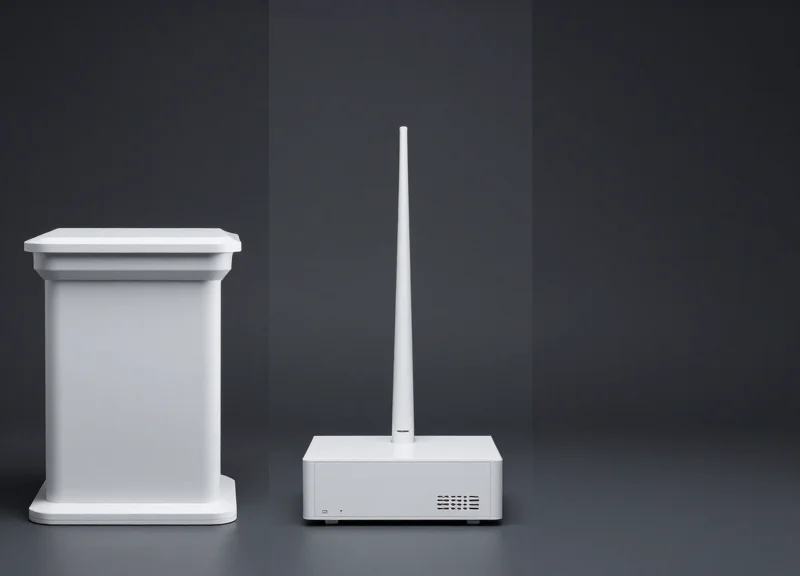
Choosing the right Electronic Article Surveillance (EAS) technology for 2026 requires understanding the fundamental shift from visible deterrence to invisible shielding. While Acousto-Magnetic (AM) and Radio Frequency (RF) systems remain the global standard for traditional storefronts, Microwave (MW) technology is emerging as the superior choice for high-end retail and wide-aisle environments. Unlike legacy systems, Microwave technology operates at much higher frequencies (typically 2.45 GHz), allowing for significantly smaller tags, wider detection ranges, and the ability to be completely concealed within the store's architecture without sacrificing security integrity.
| Feature | Radio Frequency (RF) | Acousto-Magnetic (AM) | Microwave (MW) |
|---|---|---|---|
| Standard Frequency | 8.2 MHz | 58 kHz | 2.45 GHz - 5.8 GHz |
| Detection Range | Up to 1.8 meters | Up to 2.4 meters | Up to 10+ meters (Area coverage) |
| Foil Shielding Resistance | Very Low | Moderate | High |
| Installation Footprint | Visible Pedestals | Visible Pedestals | Invisible (Underfloor/Ceiling) |
| Sensitivity to Interference | High (Electronic noise) | Moderate (Metal objects) | Low (Targeted beam processing) |
Why choose RF in 2026?
RF remains the most cost-effective solution for high-volume retailers where budget is the primary driver and visible pedestals are accepted as a deterrent.
Why choose AM in 2026?
AM is ideal for department stores requiring slightly wider exits than RF can provide and better performance around liquid-based or metallic products.
Why choose Microwave in 2026?
Microwave is the go-to for luxury brands and 'invisible' retail concepts, offering the highest resistance to professional booster bags and the ability to cover massive, open-concept entrances.
One unique insight often overlooked by procurement teams is the 'Spectral Stability' factor. As retail environments become saturated with IoT devices, 5G signals, and Wi-Fi 6E mesh networks, the lower frequency bands used by RF and AM are becoming increasingly crowded with electromagnetic noise. This leads to higher false alarm rates. Microwave systems, however, operate in a frequency window that allows for advanced 'Time-of-Flight' (ToF) filtering. This means the system doesn't just look for a signal; it measures the distance and movement vector of the tag, virtually eliminating false alarms caused by nearby stationary stock or external electronic interference.
Environmental Considerations: Reducing Interference in Complex Mall Settings
In the high-density environment of a modern shopping mall, traditional Electronic Article Surveillance (EAS) systems often suffer from 'phantom alarms' or dead zones caused by electromagnetic interference (EMI) and metal-rich architecture. Microwave (MW) technology, operating at much higher frequencies than Acousto-Magnetic (AM) or Radio Frequency (RF), provides a distinct advantage: its shorter wavelengths allow for more precise signal filtering. By employing advanced Digital Signal Processing (DSP), microwave systems can distinguish between the specific frequency signature of a security tag and the ambient electronic 'smog' generated by LED lighting, digital signage, and proximity sensors.
| Interference Source | Impact on RF/AM Systems | Microwave Tech Response |
|---|---|---|
| Metal Infrastructure (Escalators/Beams) | High: Creates signal reflections and 'blind spots'. | Low: High-frequency waves maintain integrity through narrow apertures. |
| Electronic Noise (LED/Video Walls) | Medium-High: Overlaps with AM frequencies (58kHz). | Minimal: Operates in GHz range, far above industrial noise. |
| Neighboring Store Cross-Talk | Common: Requires complex physical shielding. | Negligible: Tight beam control prevents 'bleed' into common areas. |
The true differentiator for 2026-era microwave shielding lies in Adaptive Thresholding. Unlike legacy systems that rely on a static sensitivity level, modern MW sensors utilize machine learning algorithms to map the 'ambient noise floor' of a store in real-time. If a nearby elevator starts moving or a new digital display is powered on, the system automatically adjusts its detection parameters to maintain a high signal-to-noise ratio without requiring manual recalibration by a technician.
How does microwave tech handle 'Tag-Near-Antenna' (TNA) false alarms?
MW systems use 'Phase-Shift Detection' to determine if a tag is stationary (e.g., on a display rack near the exit) or moving through the portal, effectively eliminating alarms for non-theft events.
Is the system affected by mall-wide Wi-Fi 6E or 7 deployments?
No. Microwave retail security operates on specific industrial, scientific, and medical (ISM) bands that are strictly segregated from consumer Wi-Fi frequencies, ensuring zero mutual interference.
Can microwave signals penetrate liquid or metal-lined containers?
While no frequency is completely immune to thick metal, the 2.4GHz to 10GHz range used in MW tech is significantly more difficult to 'jam' with low-cost foil than the 8.2MHz used in RF systems.
Expert Insight: The 'Multipath Mitigation' Advantage. In physics, 'multipath' occurs when a signal bounces off surfaces and reaches a receiver at different times, causing ghosting. Modern microwave systems utilize Circular Polarization. By rotating the wave's orientation, the system can ignore signals that have bounced an odd number of times (reflections from walls or metal beams) and focus exclusively on the direct 'handshake' with the tag. This allows for 'wide-aisle' installations where the pedestals are invisible or spaced up to 3 meters apart—a feat impossible for traditional RF systems in a metal-heavy mall corridor.
Future-Proofing for 2026: ROI and Long-Term Operational Longevity
Investing in microwave (MW) security technology for 2026 provides a high Return on Investment (ROI) by combining a 10-15 year hardware lifecycle with a significant reduction in Total Cost of Ownership (TCO). Unlike traditional systems that suffer from hardware fatigue and frequent false alarms, microwave systems utilize software-defined digital signal processing (DSP) that allows for remote updates, ensuring the system evolves alongside emerging theft tactics without requiring physical infrastructure replacements.
| Financial Metric | Legacy AM/RF Systems | Next-Gen Microwave (MW) |
|---|---|---|
| Average Hardware Lifespan | 5 - 7 Years | 10 - 15 Years |
| Annual Maintenance Costs | High (Manual Calibration) | Low (Remote/Auto-Tuning) |
| False Alarm Labor Waste | 15-30 mins/day per store | < 2 mins/day per store |
| Shrink Reduction Efficiency | Moderate (Fails at Shielding) | Superior (Detects Booster Bags) |
| Est. Payback Period | 24 - 36 Months | 14 - 22 Months |
The Hidden Infrastructure Dividend: A unique advantage of microwave technology often overlooked by procurement teams is its 'Spatial Agility.' Because microwave sensors are frequently installed as invisible shields within the ceiling or floor, they are immune to the physical damage common to floor-mounted pedestals (e.g., collisions from shopping carts or cleaning equipment). Furthermore, when a retail space undergoes a brand 'refresh' or layout change, microwave systems do not require expensive de-installation and re-wiring, as their wide-aisle detection zones cover the entrance regardless of fixture placement. This 'hidden' savings can account for up to 20% of the initial investment over a five-year period.
How does the initial cost of Microwave compare to AM/RF?
While the upfront capital expenditure (CAPEX) for microwave technology can be 15-25% higher than entry-level AM systems, the operational expenditure (OPEX) is significantly lower due to reduced service calls and higher durability, leading to a lower TCO within the first three years.
Is the hardware compatible with future 'Smart Store' upgrades?
Yes. Microwave systems for 2026 are designed with API-first architectures, meaning they can integrate with AI-driven overhead cameras and IoT sensors without needing proprietary hardware bridges.
Does the system lose sensitivity over time?
No. Unlike RF systems which can drift due to environmental 'noise' changes, microwave sensors utilize frequency-hopping and digital filtering to maintain a consistent detection baseline for the duration of their lifecycle.
Ultimately, the shift toward microwave technology is a move from 'disposable security' to 'sustainable infrastructure.' By 2026, the ability to remotely manage a fleet of invisible sensors across a global retail footprint will be the standard for operational excellence, making the longevity of microwave tech a cornerstone of modern loss prevention strategy.