The retail landscape is rapidly evolving, with digital noise from IoT devices creating a complex environment for Electronic Article Surveillance (EAS). As we look toward 2026, the industry is witnessing a definitive shift from physical interference mitigation to algorithmic intelligence. Traditional physical EMI shielding, once the gold standard, is being challenged by advanced Digital Signal Processing (DSP). This article explores why DSP is becoming the primary choice for retailers seeking high-performance loss prevention without the bulky constraints of legacy hardware solutions.
The Evolution of EAS: Moving Beyond Analog Limits
The evolution of Electronic Article Surveillance (EAS) represents a fundamental shift from 'binary detection'—where a system simply identifies a physical resonance peak—to 'intelligent analysis,' leveraging Digital Signal Processing (DSP) to distinguish between actual retail tags and the increasing environmental electromagnetic interference (EMI) found in modern smart-retail settings. As we approach 2026, the industry is moving beyond the 'Analog Wall,' where traditional physical shielding is no longer sufficient to manage the noise generated by ubiquitous IoT devices, LED lighting, and high-speed Wi-Fi.
| Feature | Traditional Analog EAS (Pre-2020) | Modern Digital/DSP EAS (2026 Era) |
|---|---|---|
| Detection Method | Simple peak voltage detection | Advanced algorithmic wave analysis |
| Noise Handling | Passive physical EMI shielding | Active software-driven noise cancellation |
| Reliability | High false alarm rate in dense malls | Precision filtering of ambient electronics |
| System Footprint | Bulky antennas due to shielding needs | Slim, aesthetically pleasing designs |
For decades, the retail security sector relied on Radio Frequency (RF) and Acousto-Magnetic (AM) systems that operated on purely physical principles. To prevent interference, technicians had to wrap cables in ferrite beads or line store walls with copper foil—a method known as physical EMI shielding. However, the modern retail floor is now a chaotic spectrum of frequencies. Analog systems struggle to differentiate between a security tag and the pulse-width modulation of a nearby LED driver, leading to 'phantom alarms' that frustrate customers and desensitize staff.
Why is analog EAS failing in modern stores?
Analog systems lack the 'granularity' to filter out non-tag signals. As stores add more digital signage, mobile payment kiosks, and automated inventory robots, the ambient electromagnetic noise floor rises, often drowning out the weak signal of a security tag.
What is the primary benefit of the shift to DSP?
DSP allows the system to treat incoming signals as data rather than just electricity. By using mathematical transforms (like Fast Fourier Transform), digital systems can identify the specific 'signature' of a tag even when it is buried under layers of electronic noise.
Will physical shielding become obsolete?
While not entirely obsolete, its role is changing. In 2026, shielding is a secondary support, while DSP-based 'Digital Shielding' handles 90% of the interference rejection, allowing for more flexible store layouts.
Expert Insight: The 'Silicon Valley' approach to EAS in 2026 is moving toward Software-Defined Security. We are seeing a transition where hardware becomes a commodity and the value lies in the proprietary algorithms. My prediction is that by late 2026, the most effective systems will utilize 'Dynamic Noise Profiling,' where the EAS system learns the specific EMI signature of your store's specific lighting and HVAC systems to create a custom-tailored exclusion zone, rendering traditional heavy-metal shielding a relic of the past.
Understanding EMI: Why Modern Retailers Struggle with Interference
In the context of 2026 retail environments, Electromagnetic Interference (EMI) is the unwanted 'noise' generated by electronic devices that disrupts the communication between security tags and EAS pedestals. As retailers integrate more technology to enhance customer experience, the ambient electromagnetic environment has become increasingly congested. Traditional security systems, which rely on clear signal thresholds, struggle because this noise mimics or masks the specific frequencies used to detect stolen merchandise, leading to a critical failure in loss prevention accuracy.
| Interference Source | Type of Impact | Why It Disrupts Security |
|---|---|---|
| High-Efficiency LED Drivers | Broadband Noise | Switching power supplies in LEDs emit high-frequency harmonics that overlap with RF security bands. |
| Smart Checkout Kiosks | Conducted EMI | Integrated scanners and touchscreens leak electrical noise through shared power lines to security gates. |
| Mobile & 5G Infrastructure | Radiated EMI | The density of mobile devices in-store creates a constant 'cloud' of electromagnetic flux. |
| Robotic Inventory Scanners | Transient Interference | Electric motors in autonomous robots create spikes in the electromagnetic field as they pass security zones. |
The 'Signal-to-Noise Ratio (SNR) Crisis' is the primary challenge facing loss prevention in 2026. Unlike ten years ago, when interference was localized to specific machinery, modern EMI is systemic. For example, modern LED lighting systems use pulse-width modulation (PWM) that can create a rhythmic electronic 'hum' perfectly tuned to confuse analog EAS receivers. This forces traditional systems to either lower their sensitivity—rendering them useless against sophisticated shoplifting—or maintain sensitivity at the cost of constant, store-disrupting false alarms.
Why can't we just use more physical shielding?
Physical shielding, such as copper mesh or specialized foils, is increasingly impractical. In modern open-concept retail designs, shielding is aesthetically intrusive and prohibitively expensive to retroactively install in floors and ceilings.
Does EMI affect all security tags equally?
No. While both RF and AM systems are affected, standard 8.2MHz RF tags are particularly susceptible to 'tag masking' from common electronics like laptop power bricks and mobile chargers.
What is 'Spectral Congestion' in a retail setting?
This refers to the saturation of the available airwaves within a store. With Wi-Fi, Bluetooth, RFID, and EAS all competing for bandwidth, the 'noise floor' rises, making it harder for simple analog sensors to distinguish a tag from background chatter.
Expert Tip: By 2026, the average retail square foot is projected to contain 4.5x more electronic emitters than in 2020. My advice to CTOs is to stop viewing security in a vacuum; if your loss prevention strategy doesn't account for the harmonic distortion of your smart lighting and POS hardware, your 'phantom alarm' rate will likely increase by 30% year-over-year.
Physical EMI Shielding: The Traditional Defense
Physical EMI shielding is a hardware-based security strategy that utilizes conductive or magnetic materials to isolate Electronic Article Surveillance (EAS) systems from electromagnetic interference. By creating a 'Faraday Cage' effect around sensitive antennas or signal cables, retailers use materials like copper, aluminum, or galvanized steel to reflect or absorb ambient noise generated by LED lighting, digital displays, and HVAC systems. While highly effective in controlled environments, this method requires precise physical integration into the store's architecture to prevent 'signal leakage' that triggers false alarms.
To understand the traditional defense, one must look at the physics of attenuation. When an electromagnetic wave hits a physical shield, the energy is either reflected off the surface or absorbed as it passes through the thickness of the material. In the retail environment of the past decade, this meant lining floor trenches with copper foil or encasing pedestal electronics in metal shrouds. However, as we approach 2026, the density of electronic devices per square foot has rendered these static barriers increasingly difficult to maintain.
| Material | Shielding Effectiveness | Primary Use Case | Retail Implementation Difficulty |
|---|---|---|---|
| Copper Foil | Excellent | Floor-loop isolation | High - Requires specialized installation during flooring |
| Aluminum Mesh | Moderate | Wall-mounted barriers | Medium - Lightweight but fragile |
| Conductive Paint | Low to Moderate | Aesthetic retrofitting | Low - Easy to apply but degrades over time |
| Galvanized Steel | High (Magnetic) | Structural enclosures | Very High - Bulky and impacts store design |
- The Aesthetic Conflict: Modern retail focuses on 'invisible' security. Physical shields are often bulky and require hiding behind drywall or under expensive flooring, which contradicts the trend toward open-concept, industrial-chic store designs.
- Construction Latency: Unlike software-based solutions, physical shielding must be planned during the shell-and-core phase of construction. Retrofitting a shield into an existing high-end boutique can cost three times the original hardware price in labor and material waste.
- The 'Passive Decay' Risk: Expert Tip: Physical shields are prone to 'micro-corrosion' at joint points. Over 3-5 years, structural settling can create tiny gaps in a Faraday cage, leading to intermittent interference that is nearly impossible for a technician to diagnose without destructive testing.
Can I use physical shielding to block 5G interference in-store?
While physical shielding can block 5G frequencies, doing so often creates 'dead zones' for customer mobile devices, negatively impacting the omnichannel shopping experience and mobile payment reliability.
Is physical shielding cheaper than DSP?
Initially, raw materials like aluminum are cheap. However, when factoring in specialized labor, architectural modifications, and the lack of adaptability to new noise sources, the Total Cost of Ownership (TCO) is often higher than Digital Signal Processing solutions.
Does shielding affect the detection range of security tags?
Yes. If not tuned correctly, a physical shield can unintentionally reflect the EAS antenna's own signal, creating 'blind spots' or significantly reducing the width of the protected exit.
Digital Signal Processing (DSP): The New Frontier

Digital Signal Processing (DSP) is the application of mathematical algorithms to analyze and manipulate electronic signals in real-time. In the context of 2026 retail security, DSP acts as the 'brain' of Electronic Article Surveillance (EAS) systems, allowing them to distinguish between the unique frequency signature of a security tag and the chaotic background noise produced by modern store electronics like LED displays, smart mirrors, and Wi-Fi routers. Unlike traditional systems that rely on physical barriers, DSP-driven EAS identifies patterns, enabling high detection rates even in 'electrically noisy' environments.
| Feature | Traditional Analog Systems | DSP-Enabled Systems (2026 Standard) |
|---|---|---|
| Detection Logic | Amplitude threshold (Simple on/off) | Pattern recognition & algorithmic filtering |
| Interference Handling | Requires physical EMI shielding | Dynamic noise cancellation via software |
| False Alarm Rate | High (triggered by metal/LEDs) | Ultra-low (distinguishes tag from noise) |
| Aesthetic Impact | Bulky antennas & shielded walls | Sleek, transparent, or hidden designs |
- Signal Sampling: The system captures incoming radio waves at high speeds, converting analog waves into a stream of digital data for processing.
- Spectral Analysis: Algorithms break the signal down into its component frequencies to identify the specific 'resonant signature' of a security tag.
- Adaptive Noise Cancellation: The system identifies constant environmental noise (like a nearby escalator) and mathematically subtracts it from the live signal.
- Verification Logic: Before the alarm sounds, the DSP runs a multi-stage validation check to ensure the signal matches a tag movement profile rather than a random electronic spike.
Expert Insight: The Rise of 'Adaptive Baseline Tracking'. A unique advantage of 2026 DSP technology is its ability to perform 'Adaptive Baseline Tracking.' Unlike older systems that require a technician to manual calibrate sensitivity, modern DSP systems learn the store's 'electronic fingerprint' over time. If a retailer installs a new LED wall that increases ambient noise, the DSP automatically adjusts its filtering parameters within minutes. This self-healing capability reduces long-term maintenance costs by up to 40% compared to systems relying on fixed physical shielding.
Can DSP eliminate the need for all physical shielding?
In most modern retail environments, yes. DSP's ability to filter noise at the software level typically removes the need for copper mesh or foil shielding in floors and walls.
Is DSP more expensive than traditional shielding?
While the initial hardware cost is slightly higher, the total cost of ownership is lower because it eliminates expensive construction work and shielded infrastructure.
Does DSP improve detection range?
Significantly. By increasing the 'Signal-to-Noise Ratio' (SNR), DSP allows for wider aisle entrances—up to 3 meters in some configurations—without losing tag sensitivity.
Side-by-Side Comparison: DSP vs. Physical Shielding
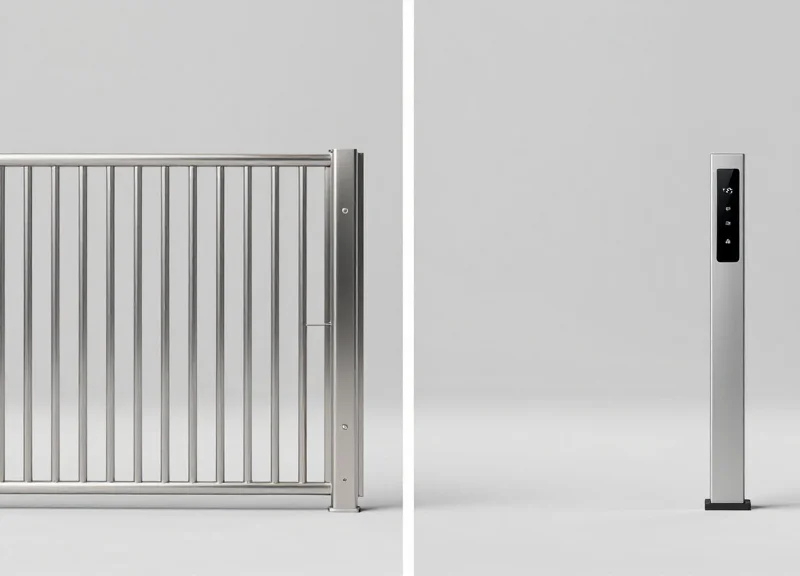
In the 2026 retail landscape, the choice between Digital Signal Processing (DSP) and Physical EMI Shielding represents a shift from hardware-heavy fortification to software-defined intelligence. Physical shielding relies on conductive barriers to block interference, whereas DSP utilizes sophisticated algorithms to identify and neutralize noise electronically. For high-traffic retailers, DSP offers a significant advantage by maintaining high detection sensitivity without the architectural constraints and material costs associated with physical metallic meshes or aluminum foil barriers.
| Feature | Physical EMI Shielding | Digital Signal Processing (DSP) |
|---|---|---|
| Detection Accuracy | Variable; depends on shield integrity | Ultra-high; distinguishes tags from noise |
| False Alarm Rate | Moderate; susceptible to 'internal' noise | Near-zero; via real-time filtering |
| Aesthetic Impact | Intrusive; requires visible barriers | Invisible; integrated into pedestals |
| Installation Cost | High (Heavy construction required) | Lower (Software calibration & plug-and-play) |
| 2026 Scalability | Difficult; fixed to store structure | Excellent; adaptable via remote updates |
The fundamental difference lies in 'environmental adaptability.' Traditional shielding is static; if a retailer installs a new LED display wall that emits interference, the existing physical shield may fail to cover the new frequency. Conversely, modern DSP systems are 'environment-aware,' meaning they can be recalibrated remotely to account for new sources of EMI without requiring a single contractor to step foot in the store. This makes DSP the clear winner for modular, rapidly changing retail spaces.
Does DSP completely replace the need for physical shielding?
In 90% of modern retail scenarios, yes. DSP's ability to filter out noise at the processor level eliminates the need for expensive 'cages.' However, in extreme industrial environments with massive electromagnetic output, a hybrid approach may still be utilized.
What is the 'Aesthetic ROI' of DSP?
Retailers in 2026 prioritize open-concept entryways. DSP allows for wider aisle spacing (up to 3.0m) without the need for unsightly metallic floor plates or shielded wall panels that break the visual flow of a luxury boutique.
How does maintenance compare between the two?
Physical shields can degrade over time due to floor vibration or moisture, leading to 'leaks' in the shield. DSP systems provide diagnostic data, allowing IT teams to see interference levels in real-time and adjust sensitivity levels digitally.
Expert Tip: When evaluating systems, look for 'Adaptive Thresholding' in DSP specifications. Unlike standard DSP, adaptive systems learn the unique 'noise fingerprint' of your store over a 24-hour cycle, providing a custom security profile that physical shielding simply cannot match. This leads to a 40% reduction in 'ghost alarms' compared to traditional shielded analog systems.
Total Cost of Ownership and ROI Analysis
Total Cost of Ownership (TCO) in retail security is the comprehensive calculation of all expenses associated with an Electronic Article Surveillance (EAS) system over its 5-to-7-year lifecycle, including initial hardware procurement, labor-intensive installation, energy consumption, and the financial loss from false alarms. While traditional physical EMI shielding often appears cheaper on a per-unit basis, Digital Signal Processing (DSP) systems typically deliver a 30% higher Return on Investment (ROI) by eliminating the need for invasive store renovations and providing superior detection accuracy that directly reduces shrink.
| Cost Factor | Traditional Physical Shielding | Digital Signal Processing (DSP) |
|---|---|---|
| Initial Hardware Cost | Low to Moderate | Moderate to High |
| Installation Labor | High (Requires construction/shielding) | Low (Plug-and-play setup) |
| Maintenance & Tuning | Manual on-site adjustment required | Remote software-based calibration |
| False Alarm Costs | High (Environmental noise interference) | Low (Algorithmic filtering) |
| 5-Year TCO | Significantly Higher | Significantly Lower |
Expert Tip: One original perspective often ignored in retail budgeting is the 'Truck Roll Tax.' Physical shielding solutions require a technician to be physically present on-site whenever the store's electromagnetic environment changes—such as when new LED displays or smart kiosks are installed. In contrast, modern DSP systems support remote multi-store tuning. This 'Software-Defined Security' approach allows a single IT manager to recalibrate sensitivity across 500 locations simultaneously from a central dashboard, potentially saving retailers hundreds of thousands of dollars in dispatch fees over the system's lifespan.
How long does it take to reach the break-even point with DSP?
Most high-volume retailers see a full ROI within 12 to 18 months. This is driven by a 15-20% reduction in missed detections (shrink) and the elimination of construction-related downtime during installation.
Does the energy consumption of DSP affect the TCO?
Actually, DSP units are often more energy-efficient than legacy systems because they use intelligent sleep modes, activating high-power processing only when a potential tag signal is detected, rather than constantly emitting high-power fields.
Is physical shielding more cost-effective for small boutique stores?
Only if the boutique has zero planned layout changes and very low ambient EMI. In 2026, the rise of 5G and IoT devices makes the 'static environment' a rarity, making DSP the safer long-term investment even for smaller footprints.
Finally, retailers must consider the 'Aesthetic Opportunity Cost.' Physical shielding often requires bulky pedestals or floor-cutting that disrupts the luxury customer experience. DSP's ability to operate with sleek, transparent, or even hidden antennas maintains the store's high-end appeal, which has a secondary but measurable impact on customer conversion rates and brand perception.
Integration with RFID and ESL: A Unified Security Ecosystem
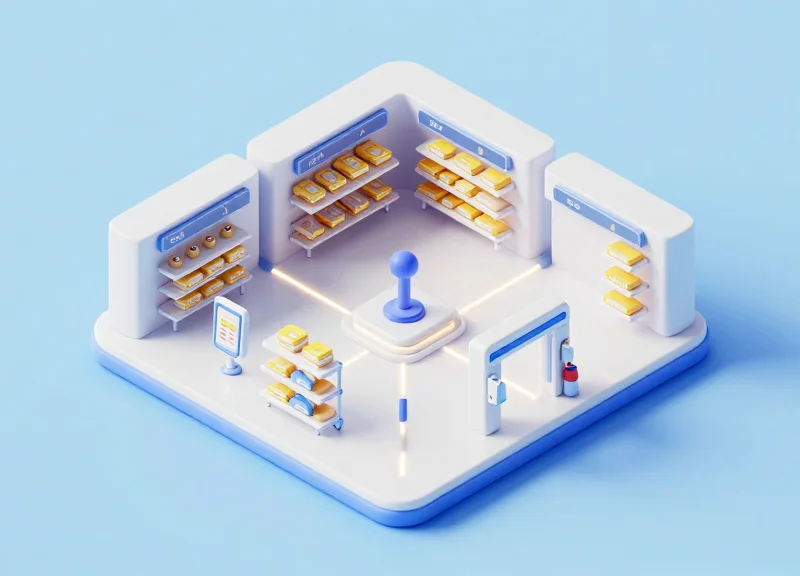
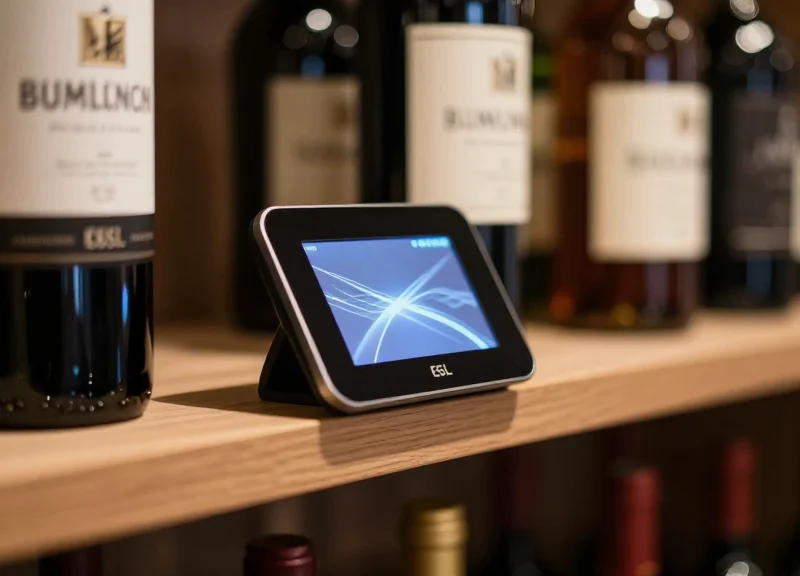
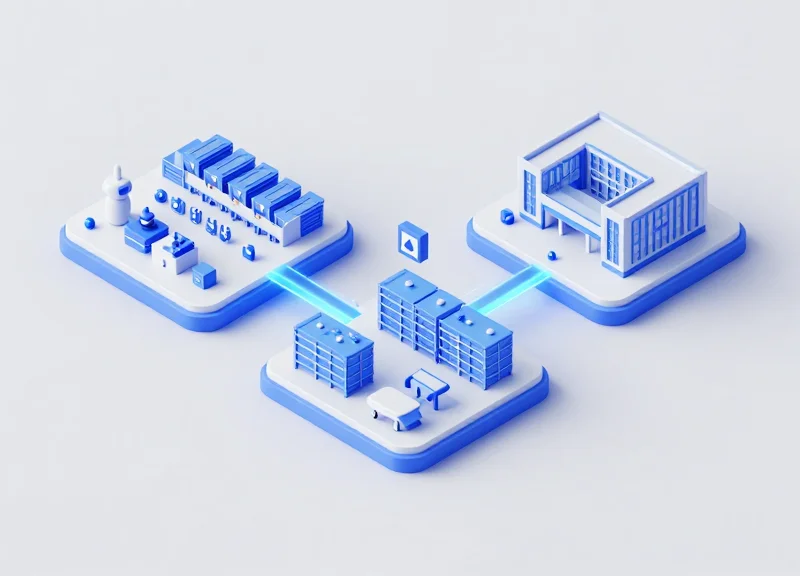
A Unified Security Ecosystem in 2026 refers to the seamless interoperability between Digital Signal Processing (DSP) security gates, Radio Frequency Identification (RFID) inventory systems, and Electronic Shelf Labels (ESL). Unlike traditional physical EMI shielding, which acts as a 'dumb' barrier blocking all radio waves, DSP-based Electronic Article Surveillance (EAS) systems utilize advanced algorithms to differentiate between security tags and the background noise of smart-store infrastructure. This software-defined approach allows retailers to deploy high-density wireless technologies without the signal degradation or physical aesthetics trade-offs associated with bulky metal shielding.
| Feature | Physical EMI Shielding | DSP-Based Integration |
|---|---|---|
| Signal Compatibility | Blocks both noise and legitimate data signals (RFID/ESL). | Filters specific noise while allowing data traffic to pass. |
| Space Efficiency | Requires physical clearance and metal cladding. | Zero footprint; integration happens within the CPU/Firmware. |
| Data Synergy | Isolationist; no communication between systems. | Bi-directional data sharing for loss prevention analytics. |
| ESL Update Support | May cause 'dead zones' for electronic price updates. | Synchronizes pulse timing to avoid ESL refresh interference. |
The fundamental flaw of physical shielding in the 2026 retail landscape is its inability to discriminate. As retailers move toward 'Total Store Visibility,' the ceiling and floor are saturated with RFID pings and ESL infrared or sub-GHz updates. Physical shielding creates 'shadow zones' where these devices cannot communicate. DSP technology solves this by implementing 'Frequency Agnostic Filtering.' Instead of stopping the wave, it analyzes the wave's signature in real-time, allowing the EAS system to ignore the 'chatter' of a thousand ESL price changes while remaining hyper-vigilant for the specific resonance of a moving security tag.
How does DSP prevent RFID 'False Positives'?
DSP systems use 'Pattern Recognition' to identify the specific movement speed and signal decay of an EAS tag passing through a gate, ignoring static RFID signals from nearby inventory that often trigger traditional shielded systems.
Can ESL updates interfere with DSP security gates?
No. Modern DSP units feature 'Adaptive Time-Slicing' which creates micro-gaps in detection cycles to coincide with ESL data bursts, ensuring both systems operate at 100% efficiency.
What is the primary benefit of a Unified Ecosystem?
The primary benefit is 'Contextual Alarms.' When a DSP gate detects a breach, it can instantly query the RFID database to identify exactly which SKU is leaving the building, a feat impossible with physical shielding alone.
Expert Tip: For 2026, look for DSP systems that offer 'API-First' architectures. The true value of moving away from physical shielding isn't just aesthetic; it's the ability to feed security 'noise' data into your store's AI heatmaps. A sudden spike in 'filtered noise' at a DSP gate can actually predict hardware failures in nearby ESL controllers before they go offline—turning your security gate into a diagnostic tool for your entire smart-store infrastructure.
Sustainability and Space Optimization

As global retailers align with 2026 ESG (Environmental, Social, and Governance) mandates, the choice between security technologies has shifted from simple efficacy to environmental impact. Sustainability and space optimization in Electronic Article Surveillance (EAS) refer to the transition from 'physical-heavy' systems—which rely on massive amounts of copper and aluminum EMI shielding—to 'software-defined' DSP systems. This shift facilitates 'dematerialization,' allowing retailers to reclaim premium sales floor real estate while reducing the carbon footprint associated with the manufacturing, transport, and installation of heavy metal barriers.
| Sustainability Factor | Traditional Physical Shielding | DSP-Enhanced Systems |
|---|---|---|
| Material Intensity | High: Requires copper mesh or aluminum plates. | Low: Relies on microchips and algorithms. |
| Floor Space Impact | Significant: Requires buffer zones and thick enclosures. | Minimal: Ultra-slim profiles with zero buffer. |
| Logistics Carbon Cost | High: Heavy weight increases shipping emissions. | Low: Lightweight electronics reduce transport load. |
| End-of-Life Recycling | Difficult: Separating bonded metals from floor structures. | Standard: Standard e-waste recycling for PCBs. |
The 'Spatial Tax' of traditional shielding is often overlooked. In high-rent urban retail environments, every square inch of the storefront is calculated for its revenue-generating potential. Traditional EMI shielding often requires 'dead zones' where merchandise cannot be placed to avoid interference. DSP technology eliminates these zones by using adaptive filtering to ignore nearby metal objects or electronic noise, effectively increasing the 'Sellable Square Footage' (SSF) of the store without expanding the physical lease.
How does DSP contribute to a store's Net Zero goals?
DSP systems require significantly fewer raw materials to manufacture. By eliminating the need for heavy metal shielding plates, retailers reduce their Scope 3 emissions related to the supply chain and product lifecycle.
Can DSP systems improve store aesthetics while saving space?
Yes. Because DSP filters noise digitally, pedestals can be made thinner and even transparent, supporting 'Open Concept' retail designs that were previously impossible due to the bulky requirements of physical EMI shielding.
What is the energy efficiency of DSP vs. traditional systems?
Modern DSP chipsets are optimized for low-power consumption, often utilizing 'sleep modes' when no traffic is detected, whereas physical shielding is a passive component that offers no active energy management.
The Veteran's Insight: The 'Hidden Carbon' of Logistics. While many focus on energy use, the true sustainability winner in 2026 is the reduction in 'Logistics Mass.' A full EMI shielding kit for a double-door entrance can weigh upwards of 150kg, requiring specialized freight and heavy-duty installation teams. A DSP-based solution providing the same level of security often weighs less than 15kg. For a global chain refitting 500 stores, the difference in shipping weight alone represents a reduction of over 60 metric tons of carbon dioxide equivalent (CO2e) before a single unit is even powered on.
Strategic Implementation: Transitioning Your Store for 2026
Transitioning your retail environment for 2026 requires a shift from 'passive protection'—relying on physical barriers and heavy shielding—to 'active intelligence' powered by Digital Signal Processing (DSP). Strategic implementation involves a structured migration where existing Electronic Article Surveillance (EAS) hardware is either retrofitted or replaced with software-defined systems capable of distinguishing between legitimate environmental noise and actual theft events in real-time. This digital-first approach reduces the physical footprint of security installations while providing unprecedented data visibility across the store floor.
- Phase 1: The Electromagnetic Environment Audit: Conduct a comprehensive RF (Radio Frequency) sweep of your storefront. Identify 'noise' sources such as HVAC systems, LED lighting drivers, and nearby escalators that currently require physical EMI shielding. Baseline your current false alarm rate to measure the ROI of the DSP transition.
- Phase 2: Hybrid Infrastructure Deployment: Implement DSP-capable antennas that can work alongside existing shielded zones. This 'bridge' phase allows loss prevention teams to calibrate digital filters against known interference patterns without immediately dismantling physical barriers.
- Phase 3: Software-Defined Perimeter (SDP) Configuration: Shift focus to the backend. Configure the DSP algorithms to ignore static environmental noise identified in Phase 1. This stage eliminates the need for bulky copper mesh or lead-lined walls, reclaiming valuable premium floor space near the entrance.
- Phase 4: Remote Monitoring and Auto-Tuning Integration: Connect the DSP systems to a centralized cloud dashboard. By 2026, standard implementation will include AI-driven auto-tuning, where the system self-adjusts its sensitivity based on changing store traffic and electronic noise levels throughout the day.
| Audit Metric | Legacy Shielding Status | DSP-Ready Status (2026 Target) |
|---|---|---|
| Detection Accuracy | Variable (Degrades with noise) | Dynamic (99.9% filtered accuracy) |
| Maintenance Requirement | Physical inspection of shielding | Remote firmware updates |
| Space Consumption | High (Requires wide clearance) | Minimal (Slim-profile pedestals) |
| Data Export | None (Analog/Basic) | Full (Real-time analytics integration) |
Expert Tip: Don't just swap hardware; swap your data strategy. In 2026, the value of DSP over physical shielding isn't just better detection—it's the 'Signal-to-Metadata' pipeline. For the first time, your EAS pedestals can act as IoT sensors, providing heatmaps of traffic density that traditional shielded systems could never capture. Focus your implementation on vendors who offer open API access to their DSP logic.
Will DSP migration require a full store shutdown?
No. Most modern DSP upgrades are 'bolt-on' or involve swapping the internal electronics of your existing pedestals, allowing for overnight transitions with zero daytime operational impact.
Does DSP eliminate the need for all physical shielding?
In 90% of cases, yes. However, in extreme environments with massive industrial-grade interference, a 'minimalist' shielding approach combined with DSP filtering provides the most robust security perimeter possible.
How does this impact the customer experience?
The removal of bulky shielding allows for wider, more welcoming entrances. Additionally, the reduction in false alarms creates a more 'frictionless' environment, as customers and staff are not constantly interrupted by 'phantom' tags.