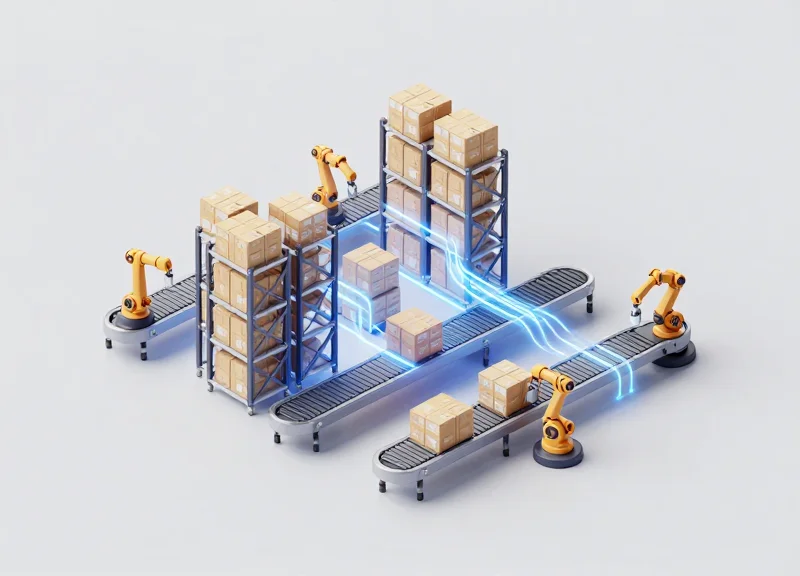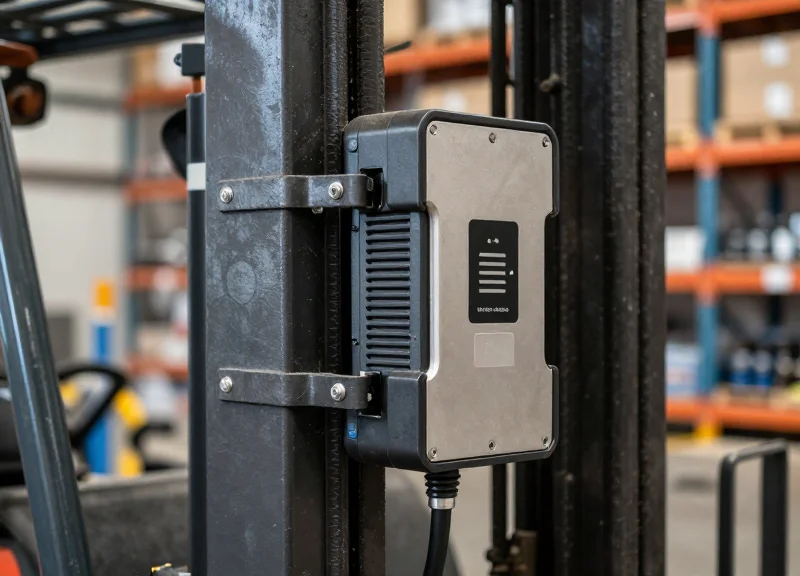
In the high-stakes world of cold chain logistics, the difference between profit and loss often melts away in the face of spoilage. Current industry data suggests that nearly one-third of all perishable goods are lost due to logistics inefficiencies. However, a technological revolution is underway. By integrating advanced Radio Frequency Identification (RFID) systems, smart warehouses are now achieving a staggering 40% reduction in perishable waste. This article explores how RFID serves as the backbone of modern cold storage, transforming invisible supply chain gaps into actionable data that directly bolsters your bottom line and operational ROI.
The Global Crisis of Cold Chain Inefficiency

The global cold chain crisis is a systemic failure characterized by the loss of approximately 1.3 billion tons of food annually—enough to feed 2 billion people—alongside a staggering 25% of all vaccines reaching their destination in a degraded state. In monetary terms, this inefficiency translates to an annual loss of over $1 trillion for the global economy. These losses are not merely the result of mechanical failures in refrigeration; they are the consequence of 'visibility debt,' where stakeholders lack real-time, granular data to intervene before perishable integrity is compromised during transit and storage.
| Sector | Estimated Annual Waste | Primary Root Cause | Economic Impact (USD) |
|---|---|---|---|
| Fresh Produce | 45% of total volume | Temperature fluctuations & overstocking | $400 Billion |
| Pharmaceuticals | 25% of vaccines/biologics | Cold chain breakage during last-mile | $35 Billion |
| Meat & Dairy | 20% of total volume | Processing delays & poor tracking | $310 Billion |
Beyond the balance sheet, the environmental cost of cold chain failure is immense. Food waste accounts for roughly 8% of global greenhouse gas emissions. When a shipment of perishables is discarded due to a thermal breach, we are not just losing the product; we are wasting the energy, water, and labor consumed during production. In the Silicon Valley logistics landscape, we refer to this as the 'Thermal Blind Spot'—the critical period where a pallet sits on a tarmac or in a loading dock without active monitoring, rendering traditional batch-logging obsolete.
Why is cold chain waste increasing despite better refrigeration technology?
While hardware has improved, the complexity of global trade routes has outpaced monitoring capabilities. Fragmented hand-offs between carriers create 'data silos' where temperature compliance is assumed but rarely verified at the item level.
What is the 'Visibility Debt' in logistics?
Visibility Debt is the cumulative cost of making decisions based on delayed or incomplete data. In cold storage, relying on manual checks instead of automated sensing means you only discover a failure after the financial loss has already occurred.
How does inefficiency affect consumer prices?
Logistics providers often bake a 10-15% 'shrinkage buffer' into their pricing models. Reducing waste through technology directly lowers the cost of goods sold (COGS), providing a competitive advantage in low-margin markets.
The fundamental shift required to solve this crisis is moving from reactive recovery to predictive intervention. Currently, most cold chain operators use 'passive' data—loggers that are read only after a shipment arrives. To eliminate 40% of waste, the industry must transition to 'active' digital twins for every pallet, ensuring that temperature excursions are detected and corrected in real-time, rather than documented as a post-mortem loss.
RFID Technology: The New Standard for Temperature-Controlled Environments

Radio Frequency Identification (RFID) has emerged as the gold standard for cold chain logistics because it eliminates the physical limitations of line-of-sight scanning. Unlike barcodes, RFID tags utilize electromagnetic fields to automatically identify and track tags attached to objects. In a temperature-controlled environment, this means assets can be scanned through packaging, frost, and even heavy ice at distances of up to 15 meters, ensuring 99.9% data accuracy without human intervention or the need to open freezer doors, which preserves the thermal integrity of the facility.
| Feature | Traditional Barcode | Passive/Active RFID |
|---|---|---|
| Line of Sight | Required (Manual Scan) | Not Required (Automated) |
| Read Speed | 1-2 items per second | Up to 1,000 items per second |
| Durability | Degrades with frost/moisture | Encapsulated for sub-zero use |
| Data Capacity | Low (Fixed ID only) | High (Batch, Expiry, Temp logs) |
| Range | Short (Centimeters) | Long (Up to 15+ Meters) |
A critical 'Silicon Valley' perspective often overlooked is the impact of 'Thermal Cycling Condensation.' In typical cold storage workflows, assets move between different temperature zones. Traditional labels suffer from adhesive failure and ink smudging due to the rapid transition from -20°C to ambient loading docks. Industrial-grade RFID tags are encapsulated in ruggedized polymers, making them immune to the physics of condensation and ice buildup that typically renders 15-20% of barcodes unreadable in peak season.
- Bulk Processing Power: RFID allows for the simultaneous scanning of entire pallets. In a cold storage environment, this reduces the time workers spend in 'danger zone' temperatures, protecting staff health and reducing energy loss from open bay doors.
- Automated Expiry Management: RFID tags can store more than just a serial number; they can encode production dates and batch numbers. This enables 'First-Expired, First-Out' (FEFO) logic to be executed by automated software rather than manual human inspection.
- Real-time Locating Systems (RTLS): With fixed readers at portal gates and ceiling-mounted antennas, RFID provides a live 'digital twin' of the warehouse, showing the exact location of perishable inventory without a single manual cycle count.
Does extreme cold affect RFID battery life?
For passive RFID, there is no battery to fail, making them ideal for -30°C environments. For active RFID tags, specialized low-temperature lithium-thionyl chloride batteries are used to maintain a 3-5 year lifespan even in deep freeze.
Can RFID read through metallic foil packaging?
While metal can interfere with RF signals, modern 'on-metal' tags and UHF (Ultra High Frequency) spacers allow for high read accuracy even when items are wrapped in foil or stored in metal containers.
Is the cost of RFID tags justifiable for low-margin perishables?
When factoring in the 40% reduction in waste, the labor savings from automated inventory, and the prevention of shipment rejections, the ROI typically realizes in under 12 to 18 months.
Achieving Real-Time Visibility in the Darkest Corners
In cold storage logistics, 'dark corners' refer to the blind spots in the supply chain where visibility into asset location and environmental status vanishes—typically during cross-docking, deep-freezer storage, and transit transitions. RFID bolsters ROI by providing non-intrusive, automated data capture that penetrates frost and packaging, allowing managers to monitor temperature, humidity, and movement in real-time without ever opening a refrigeration door or breaking the thermal seal. This creates a continuous 'digital thread' that ensures product integrity from the moment of harvest or manufacture to the point of delivery.
- Automated Check-ins: Fixed RFID portals at loading docks capture thousands of data points per second as pallets move through, eliminating manual scanning and human error at the most critical transition points.
- Environmental Sensing Tags: Advanced RFID tags now integrate semi-passive sensors that log temperature fluctuations at the individual carton level, providing granular data that bulk sensors in a room might miss.
- Signal Penetration: Unlike vision-based systems, Ultra-High Frequency (UHF) RFID signals can travel through condensation and heavy frost, ensuring data flows even in the harshest cryogenic conditions.
| Feature | Traditional Manual/Barcode | RFID-Enabled Smart Storage |
|---|---|---|
| Inventory Velocity | Slow; requires line-of-sight and manual handling. | Instantaneous; bulk scanning of entire pallets. |
| Thermal Integrity | Compromised by frequent door openings for checks. | Maintained; data is read through the doors/insulation. |
| Data Accuracy | 70-85% due to human fatigue and entry errors. | 99.5%+ through automated sensor logging. |
| Waste Attribution | Reactive; found only when spoilage is visible. | Proactive; alerts triggered before thresholds are hit. |
Expert Insight: One of the most overlooked ROI drivers in smart cold storage is the elimination of 'Phantom Inventory.' In traditional systems, items misplaced in a -20°C freezer are essentially lost because the labor cost of a manual search in that environment is prohibitive. RFID enables 'Geofencing' within the warehouse; if a pallet of high-value biologics is placed in the wrong zone, the system triggers an immediate alert. This prevents the 3-5% of annual waste typically attributed to 'lost-in-warehouse' scenarios that occur when manual logs fail to match physical reality.
How does moisture affect RFID in cold storage?
While water absorbs RF energy, modern specialized 'on-metal' or 'liquid-safe' RFID tags use spacers and specific frequencies to ensure high read rates even in high-humidity or condensation-heavy environments.
Can RFID track temperature without a battery?
Yes. Passive sensor tags use the energy from the RFID reader to power a brief temperature measurement and transmit it back, providing a cost-effective way to monitor every single pallet without the maintenance of batteries.
The 40% Factor: How RFID Pinpoints and Prevents Spoilage

The '40% Factor' represents the average reduction in inventory shrinkage achieved when cold storage facilities transition from reactive manual tracking to proactive RFID-enabled management. By providing granular, real-time data on every pallet and individual SKU, RFID allows logistics providers to eliminate the 'lost inventory' phenomenon—where products expire in the back of a freezer simply because they weren't visible—and transition to a precision-based First-Expired-First-Out (FEFO) model that ensures goods reach their destination while still in peak condition.
| Capability | Traditional Barcode/Manual | RFID-Enabled Smart Storage |
|---|---|---|
| Inventory Methodology | FIFO (First-In-First-Out) | FEFO (First-Expired-First-Out) |
| Rotation Accuracy | 65-75% due to human error | 99.9% automated validation |
| Expiration Awareness | Batch-level / Periodic checks | Item-level / Real-time alerts |
| Locating 'Hidden' Stock | Manual search required | Instant digital localization |
In traditional cold storage, spoilage is often a result of 'inventory invisibility.' When workers use barcodes, they must physically see and scan a tag. In a high-density freezer, items often get buried behind newer shipments. RFID eliminates this by using radio waves that penetrate packaging and navigate around obstacles. This allows the system to identify an aging pallet at the bottom of a stack and alert the Warehouse Management System (WMS) to prioritize that specific unit for the next outgoing shipment, directly attacking the root causes of waste.
- Automated FEFO Routing: The WMS automatically assigns picking tasks based on the earliest expiration date rather than the arrival date, ensuring the shortest remaining shelf life moves first.
- Micro-Climate Violation Alerts: If a specific zone in the warehouse experiences a temperature spike, RFID sensors identify exactly which items were exposed and recalculate their remaining shelf life instantly.
- Transit Time Optimization: By tracking the precise moment a pallet enters and exits various temperature zones, RFID pinpoints bottlenecks in the loading dock that lead to 'thermal abuse' and subsequent spoilage.
### The Expert Insight: Kinetic Shelf Life Tracking A unique advantage of advanced RFID implementation is the transition from 'Static' to 'Kinetic' shelf life tracking. Most logistics operations rely on the expiration date printed on the box. However, an item's true shelf life is a variable of its thermal history. Sophisticated RFID tags with integrated temperature loggers allow for 'Dynamic Expiry'—if a shipment of produce was kept 2 degrees colder than required, the system can actually extend its sell-by date in the database. Conversely, if it sat on a hot dock for 30 minutes, the RFID system automatically 'pulls forward' its expiration, preventing a shipment of spoiled goods from ever reaching the retailer.
Calculating Your ROI: The Financial Impact of Smart Logistics

Calculating ROI for RFID in cold storage is the comprehensive measurement of operational savings, including a 30-50% reduction in manual labor costs and a significant increase in inventory accuracy from 65% to 99.9%. To determine the financial impact, firms must subtract the initial investment (CAPEX) and ongoing maintenance (OPEX) from the total value of recovered waste, salvaged man-hours, and improved asset utilization. In high-velocity cold chains, most enterprises achieve a full return on investment within 12 to 18 months.
| Financial Metric | Manual Cold Storage | RFID-Enabled Smart Logistics | Projected Impact |
|---|---|---|---|
| Manual Labor Hours | 100% (Baseline) | 45-60% (Automated) | Up to 55% reduction in OPEX |
| Inventory Accuracy | 70% - 85% | 99.5% + | Reduced buffer stock and OOS events |
| Product Shrinkage | 8% - 12% Average | 2% - 4% Average | 40-60% reduction in waste costs |
| Audit & Compliance | High (Manual logs) | Low (Auto-generated) | 90% faster compliance reporting |
- Establish Your Baseline: Document current annual losses from spoilage, labor hours dedicated to inventory counts, and the cost of expired goods.
- Factor in Total Cost of Ownership (TCO): Include the cost of active or passive tags, reader infrastructure, middleware integration, and staff training.
- Quantify Operational Gains: Calculate the value of recovered floor space, faster truck turnaround times (demurrage savings), and reduced insurance premiums.
- Calculate the Payback Period: Divide the total investment by the monthly savings to identify the exact month the system becomes a profit generator.
Expert Insight: The 'Compliance Dividend.' Beyond direct labor and waste, a often-overlooked factor in ROI is the reduction in insurance premiums and the avoidance of regulatory fines. Many insurance providers now offer lower rates for cold chain operators who can prove 100% thermal consistency via RFID data logs, as it significantly lowers the risk of large-scale product liability claims.
What is the typical lifespan of cold-chain RFID infrastructure?
Industrial-grade readers and fixed infrastructure generally last 7-10 years, while tags are either consumable for single-use shipments or reusable for asset tracking (pallets/totes) for up to 5 years.
Can RFID ROI be achieved in small-scale facilities?
Yes, smaller facilities often see ROI faster through 'lean' implementations focusing on high-value choke points like loading docks rather than full-facility saturation.
What is the biggest hidden cost of implementation?
The most significant hidden cost is often data integration. Ensuring your ERP or WMS can process real-time RFID pings effectively is crucial for realizing the promised labor savings.
Regulatory Compliance: Using RFID to Meet FSMA and HACCP Standards
RFID technology facilitates regulatory compliance in cold storage by automating the collection of Key Data Elements (KDEs) and Critical Tracking Events (CTEs) required by the FDA's FSMA Rule 204 and HACCP protocols. By replacing manual, error-prone paper logs with real-time, sensor-driven data, RFID ensures that temperature records and chain-of-custody documentation are accurate, timestamped, and instantly retrievable during a regulatory audit.
| Regulatory Requirement | Traditional Manual Method | RFID-Enabled Solution |
|---|---|---|
| FSMA Rule 204 Traceability | Manual entry of lot codes and shipping times | Automated electronic records of every pallet movement |
| HACCP Temperature Monitoring | Periodic manual thermometer checks and logs | Continuous, automated sensor logging with instant alerts |
| Audit Readiness | Hours/Days to compile paper files | Instant generation of digital reports and histories |
| Corrective Action Documentation | Handwritten notes on deviations | Automated logs of time-out-of-refrigeration (TOR) |
- Critical Control Point (CCP) Identification: RFID tags with integrated temperature sensors act as constant monitors at CCPs, automatically flagging any deviation from safe thermal thresholds without human intervention.
- Immutable Record Generation: Every time an RFID-tagged asset passes a reader, a digital 'handshake' is recorded. This creates a non-fungible trail of where the product has been and who handled it.
- Automated Corrective Action: Under HACCP, deviations must be documented. RFID systems automatically log when a pallet exceeds temperature limits and record the subsequent cooling or disposal action taken.
Unique Insight: The concept of 'Passive Compliance.' Traditional compliance is an active burden that requires labor-intensive documentation, often leading to 'dry-labbing'—where employees falsify logs after the fact to meet deadlines. RFID shifts compliance to a passive byproduct of operational movement. Because the data is captured automatically as goods move through the facility, the compliance record is 100% accurate and impossible to retroactively manipulate, providing a level of 'Audit Integrity' that manual systems simply cannot match.
Does RFID help with FSMA Rule 204?
Yes, RFID is specifically designed to handle the increased record-keeping requirements for the Food Traceability List (FTL), providing the granular data needed for rapid recalls.
Can RFID replace traditional HACCP logs?
While the HACCP plan structure remains, RFID replaces the physical task of logging data, serving as the primary source of truth for temperature and movement audits.
How does RFID reduce legal liability?
By providing a precise, timestamped digital history of a product's environmental conditions, companies can prove their adherence to safety standards, protecting themselves against unfounded claims of negligence.
Integrating RFID with Electronic Shelf Labels (ESL) for Dynamic Control
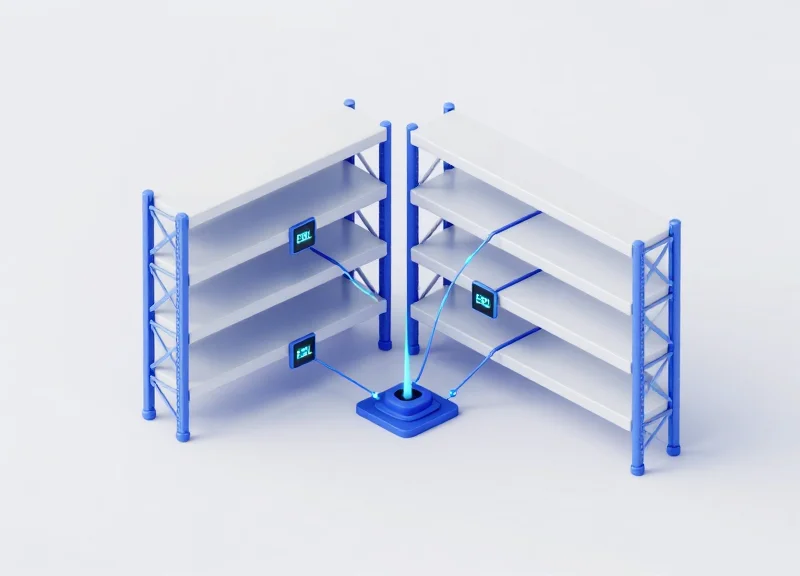
The integration of Radio Frequency Identification (RFID) with Electronic Shelf Labels (ESL) transforms cold storage logistics from a passive tracking system into an active, dynamic retail ecosystem. By linking the unique batch data captured by RFID tags in the warehouse directly to the digital displays on store shelves, businesses can ensure that First-In-First-Out (FIFO) or First-Expiring-First-Out (FEFO) protocols are executed automatically. This 'closed-loop' system eliminates the risk of human error, ensuring that aging inventory is priced to move before it becomes waste, thereby maximizing recovery on perishable assets.
| Feature | Manual Management | RFID + ESL Integration |
|---|---|---|
| Inventory Rotation | Visual checks; high error rate | Automated alerts; 100% accuracy |
| Pricing Strategy | Static or reactive | Dynamic (based on real-time shelf life) |
| Labor Requirement | High (manual scanning/labeling) | Low (automated updates) |
| Waste Risk | High (forgotten/hidden stock) | Minimal (tracked end-to-end) |
Expert Insight: While most companies focus on FIFO, the real ROI lies in shifting to FEFO (First-Expiring-First-Out). Integrated systems can utilize RFID temperature-history data to determine if a specific pallet has undergone 'thermal stress.' If a batch arriving later has a shorter biological shelf life due to a mid-transit temperature spike, the ESL system can prioritize its sale via automated markdowns, a level of granularity impossible with manual systems.
- Data Synchronization: The WMS (Warehouse Management System) shares expiration dates and batch IDs with the ESL server via a centralized API.
- Proximity Triggering: As RFID-tagged stock moves from cold storage to the sales floor, the ESL gateway recognizes the arrival of specific batches.
- Automated Dynamic Pricing: Based on pre-set logic, the ESL updates prices as the expiration date approaches, incentivizing customers to purchase older stock first.
- Real-time Auditing: Sensors verify that the items on the shelf match the data displayed on the ESL, providing a 'digital twin' of the inventory.
Does ESL work in sub-zero environments?
Yes, specialized e-Paper ESL displays are designed to operate in temperatures as low as -25°C without ghosting or battery failure.
How does this integration reduce labor costs?
It eliminates the need for staff to manually check expiration dates and apply markdown stickers, a process that can take hundreds of hours per month in large grocers.
Can RFID/ESL systems prevent 'Shrinkage'?
Absolutely. By providing a real-time count of what should be on the shelf versus what has passed through the POS, managers can instantly identify internal theft or misplacement.
Overcoming Implementation Hurdles in Cold Storage
Implementing RFID in cold storage environments is significantly more complex than standard warehouse setups due to the physical properties of sub-zero temperatures and high humidity. To overcome these hurdles, businesses must prioritize 'Environmental Resilience'—selecting hardware specifically engineered to withstand thermal shock, frost accumulation, and moisture ingress. Failure to account for these variables often leads to brittle tag adhesives, cracked reader housing, and signal attenuation caused by ice crystals on antennas. By focusing on industrial-grade IP67-rated equipment and specialized low-temperature inlays, organizations can ensure 99.9% read accuracy even in the harshest arctic conditions.
| Component | Cold Storage Challenge | Technical Solution |
|---|---|---|
| RFID Tags | Adhesive failure and inlay brittleness at -30°C | Cryogenic-grade adhesives and PET/Polyimide face-stocks |
| Fixed Readers | Internal condensation during defrost cycles | IP67/68 rated enclosures with integrated heating elements |
| Antennas | Signal interference from metal racking and frost | Circularly polarized high-gain antennas to penetrate ice |
| Handhelds | Battery drain and screen fogging | Low-temp lithium-ion batteries and heated display glass |
A unique insight often overlooked by generalist providers is the 'Thermal Shock Buffer Zone.' When goods move from a -20°C freezer to a 4°C loading dock, rapid condensation forms on the tag surface. This microscopic water layer can act as a Faraday shield for UHF signals. Expert tip: Implement 'Condensation-Aware Middleware' that uses redundant read cycles or multi-frequency bursts during these transition points to ensure data continuity despite environmental fluctuations.
- Phase 1: Thermal Mapping: Identify 'Cold Spots' and 'Transition Zones' where moisture and temperature fluctuations are most extreme to determine optimal reader placement.
- Phase 2: Tag-to-Product Matching: Test tag performance against the product's dielectric properties, specifically for high-water content or metallic-packed perishables.
- Phase 3: Network Resilience Testing: Ensure edge-computing capabilities are in place so that data is cached locally if the facility's Wi-Fi fluctuates due to thick insulation or interference.
How does moisture affect UHF RFID signals in cold storage?
Water and ice absorb UHF energy, which reduces read range. Overcome this by using high-sensitivity chips (like Impinj M700 series) and placing antennas closer to the point of transit.
Can standard passive tags be used in freezers?
Standard tags often fail because their adhesives lose 'tack' and fall off. Specialized cryogenic tags use rubber-based adhesives designed to bond with frozen surfaces.
What is the biggest cause of reader failure?
Internal component corrosion from condensation. Always select readers with 'Gore vents' or internal heaters that manage pressure and humidity levels inside the housing.
The Future of Smart Warehousing: AI and IoT Convergence

The convergence of Artificial Intelligence (AI) and the Internet of Things (IoT) represents the 'brain-to-body' connection in modern logistics. While RFID and IoT sensors serve as the nervous system—capturing real-time data on temperature, humidity, and location—AI acts as the cognitive engine, processing this massive influx of Big Data to shift warehouse operations from reactive 'sense and respond' models to proactive 'predict and prevent' strategies. In the context of cold storage, this means the system no longer just alerts you when a pallet is too warm; it predicts the exact remaining shelf life of that pallet and automatically optimizes its routing to ensure it reaches a consumer before spoilage occurs.
| Feature | Standard Smart Warehouse (IoT Only) | Future Intelligent Warehouse (AI + IoT) |
|---|---|---|
| Data Utilization | Descriptive: Tells you what is happening now. | Prescriptive: Tells you what to do to avoid waste. |
| Inventory Logic | FIFO (First-In, First-Out) based on date. | FEFO (First-Expired, First-Out) based on biological health. |
| Demand Forecasting | Based on historical seasonal trends. | Real-time adjustment based on external variables (weather, events). |
| Waste Management | Detection of spoilage after it happens. | Prevention of spoilage through automated rerouting. |
One unique insight often overlooked by industry analysts is the concept of 'Prescriptive Shelf-Life Pricing.' In the near future, AI models fed by RFID data will not only manage logistics but will integrate directly with ERP and retail systems to dynamically adjust pricing. If an AI model detects that a specific batch of produce has a 15% faster decay rate due to a minor temperature fluctuation during transit, it can trigger an immediate promotional discount at the point of sale or reroute the batch to a closer distribution center. This ensures the product is sold and consumed while still at peak quality, effectively turning a potential 100% loss into a 90% recovered sale.
- Data Harmonization: Consolidate raw RFID tag reads and sensor telemetry into a centralized 'Data Lake' where AI models can identify patterns between environmental stressors and product longevity.
- Digital Twin Implementation: Create virtual replicas of the cold chain to run 'what-if' simulations, allowing managers to see the impact of route changes or power outages before they happen.
- Autonomous Decisioning: Empower AI to make low-level tactical decisions, such as adjusting the cooling output of specific HVAC zones based on the specific thermal requirements of the goods currently in that aisle.
Will AI eventually replace human warehouse managers?
No. AI is designed to augment human decision-making by handling high-velocity data processing, allowing managers to focus on strategic exceptions and supplier relationships.
What is the biggest barrier to AI and IoT convergence?
Data silos. Many organizations have IoT data that isn't accessible to their AI analytics tools. Interoperability between hardware and software is the primary hurdle to overcome.
How does this convergence impact the 40% waste reduction goal?
By moving to a FEFO (First-Expired, First-Out) model powered by AI, facilities can eliminate the 'hidden' waste where products look fine but have compromised internal quality.