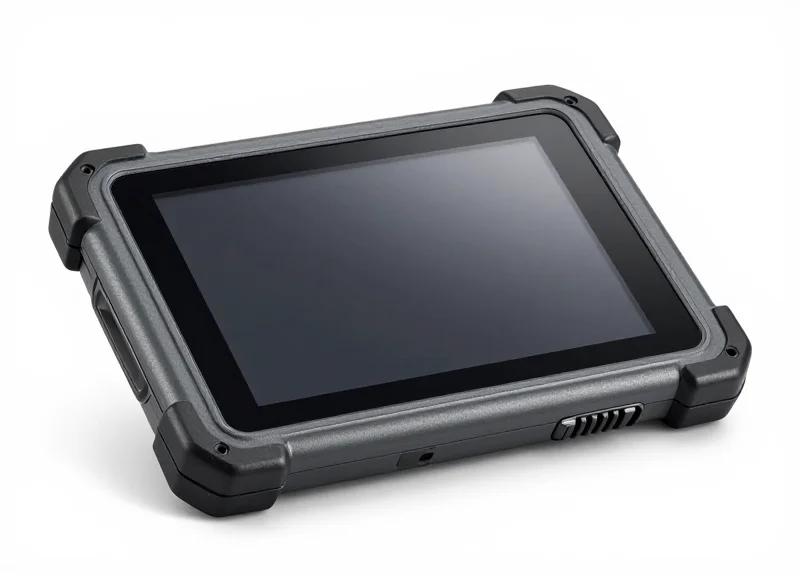
As we approach 2026, the demands of industrial inventory management have moved far beyond simple barcode scanning. In harsh warehouse and outdoor logistics environments, the reliability of your hardware is the difference between seamless operations and costly downtime. An IP67-rated rugged PDA is no longer a luxury; it is a critical infrastructure component. This guide explores the evolving technological landscape, helping procurement managers and IT directors select high-performance handheld devices that combine extreme durability with the latest data capture and connectivity standards.
Understanding IP67: Why It Matters for Industrial 2026 Standards
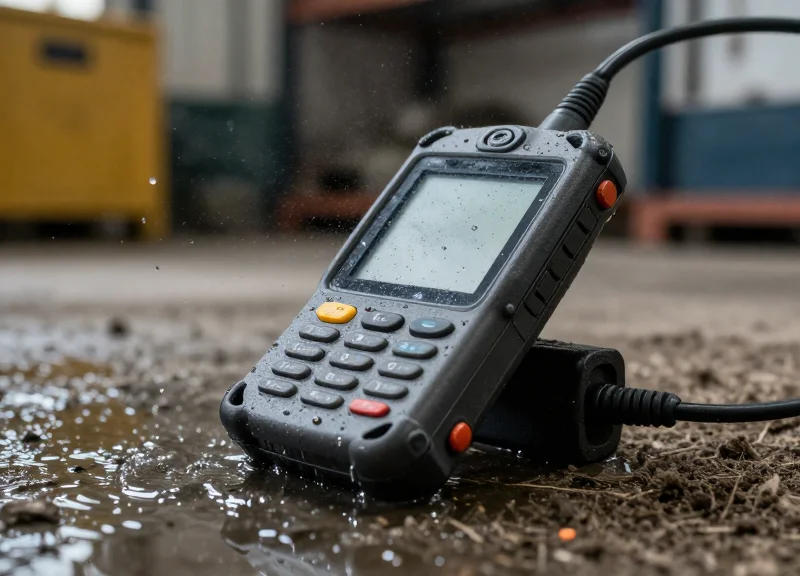
IP67 is a technical rating defined by the IEC 60529 standard, where the '6' represents a 'dust-tight' seal that prevents any solid particle ingress, and the '7' indicates the device can survive immersion in up to 1 meter of water for 30 minutes. In the 2026 industrial landscape, this rating is no longer a premium feature but a baseline requirement for PDAs operating in high-velocity warehouses and smart factories where particulate matter and liquid exposure are daily operational hazards.
| IP Digit | Protection Level | Industrial Impact |
|---|---|---|
| First Digit (6) | Dust-Tight | Protects internal sensors and PCBs from conductive metal dust and micro-debris in automated facilities. |
| Second Digit (7) | Immersion (1m) | Ensures device survival during cleaning cycles or accidental drops into coolant, chemicals, or rainwater. |
As we move into 2026, the complexity of inventory management hardware has increased due to the integration of 5G antennas and high-speed scan engines. These components are hypersensitive to internal corrosion. An IP67-rated chassis acts as a pressurized vault, ensuring that the 'Total Cost of Ownership' (TCO) remains low by eliminating the most common cause of hardware failure: internal contamination from humid or dusty air cycles.
Is IP67 better than IP65 for inventory management?
Yes. While IP65 protects against low-pressure water jets, IP67 offers protection against full immersion. In 2026 environments where devices may fall into drainage troughs or be left in wash-down zones, the '7' rating provides a necessary safety margin that IP65 lacks.
Does IP67 protect against chemicals found in 2026 factories?
IP67 strictly measures water ingress. However, the high-quality silicone seals and gaskets required to achieve an IP67 rating typically offer superior resistance to common industrial solvents compared to lower-rated devices.
How often should IP67 seals be inspected?
For 2026 high-utilization workflows, we recommend a visual gasket inspection every 12 months, as environmental heat cycles can eventually degrade the polymer seals that maintain the IP67 integrity.
Expert Insight: The 'Micro-Vibration' Factor. In 2026, the rise of high-frequency automated sorting systems creates constant micro-vibrations in warehouse environments. Standard devices often suffer from 'seal-creep,' where vibration creates microscopic gaps in the casing. Choosing an IP67 PDA ensures the chassis is structurally reinforced to maintain its seal even under the constant kinetic stress of a modern 24/7 automated facility—a detail often overlooked in generic specification sheets.
Display and Ergonomics: Balancing Durability with Usability
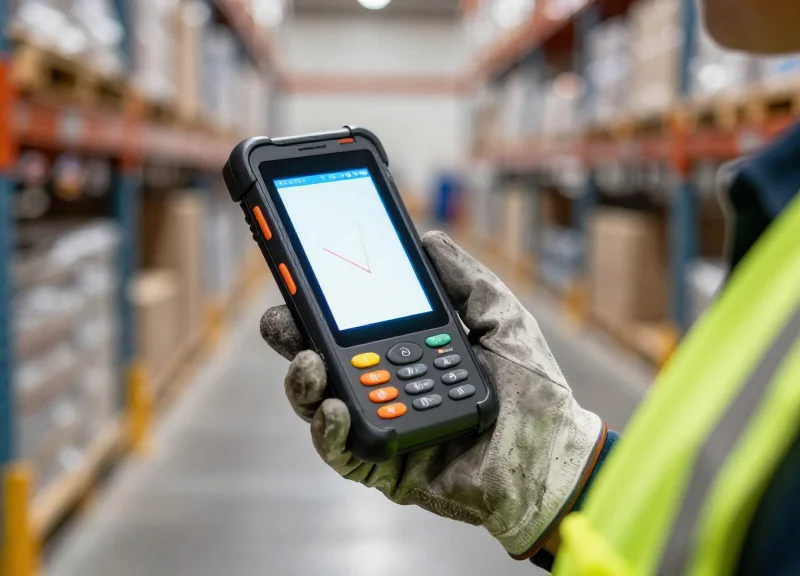
For 2026 industrial standards, the ideal rugged PDA display utilizes Corning® Gorilla® Glass 5 with optical bonding to achieve 500+ nits of brightness for outdoor readability, paired with an ergonomic chassis weighing under 300g to minimize worker fatigue. Achieving this balance is critical because a screen that is too thick may survive a drop but fail to register glove-touch inputs, while a device that is too heavy will lead to a 15% decrease in scanning speed by the end of a 10-hour shift.
| Feature | Recommended Spec (2026) | Industrial Impact |
|---|---|---|
| Brightness | 500 - 800 Nits | Ensures visibility under high-bay LED lighting and direct sunlight. |
| Durability | Gorilla Glass 5 / IK05 | Protects against impact and scratches without sacrificing touch sensitivity. |
| Touch Mode | Wet/Glove Sensing | Allows seamless operation in cold storage or humid environments. |
| Weight Distribution | Balanced Center of Gravity | Reduces wrist strain during high-volume repetitive scanning. |
Ergonomics in 2026 goes beyond just 'weight.' Expert procurement teams now look for the 'Weight-to-Balance Ratio.' A PDA might be light, but if the scan engine is top-heavy, the user's wrist must constantly compensate for the forward tilt. Look for designs that place the center of gravity directly in the palm. Additionally, the integration of physical scan triggers on both sides of the device ensures that both left- and right-handed employees can operate with equal efficiency, reducing the risk of Repetitive Strain Injuries (RSI).
Why is Optical Bonding superior to traditional air-gap screens?
Optical bonding eliminates the air gap between the touch layer and the LCD. This reduces internal reflections by up to 400%, improves contrast, and prevents internal condensation in temperature-controlled warehouses.
Is a larger screen always better for inventory management?
No. While 6-inch screens provide more data real estate, they increase the 'leverage' effect on the wrist. A 5.0 to 5.5-inch display is currently the 'Goldilocks zone' for balancing data legibility with ergonomic safety.
What role does haptic feedback play in ergonomics?
In noisy industrial environments, visual cues aren't enough. Advanced haptic feedback (active vibration) confirms a successful scan, preventing workers from repeatedly checking the screen, which saves seconds per task and reduces neck strain.
Expert Insight for 2026: We are seeing a shift toward 'Modular Ergonomics.' The most cost-effective PDAs in 2026 allow for snap-on pistol grips. This allows the same device to be used for lightweight cycle counting in the morning and high-volume cross-docking in the afternoon, maximizing your hardware ROI.
Processing Power and OS: Preparing for AI-Driven WMS
To future-proof your industrial operations for 2026, the 'brain' of your rugged PDA must transition from basic data entry to edge computing. Modern AI-driven Warehouse Management Systems (WMS) now utilize local machine learning models for predictive picking and real-time slotting optimization. This necessitates hardware with at least an octa-core processor (6nm architecture or better) and a dedicated NPU capable of handling on-device inference. Furthermore, the Operating System must be Android 14 or higher, with a guaranteed upgrade path to Android 16, to ensure compatibility with the latest enterprise security protocols and AI APIs.
| Feature | Minimum (Legacy Support) | Recommended (2026 AI-Ready) |
|---|---|---|
| Processor | Quad-core 2.0GHz | Octa-core 2.7GHz+ (e.g., Qualcomm QCM6490) |
| RAM (Memory) | 4GB LPDDR4 | 8GB to 12GB LPDDR5 |
| AI Hardware | None (CPU emulation) | Integrated NPU (Dedicated AI Engine) |
| Android Version | Android 11 / 12 | Android 14 / 15 (AER Certified) |
Expert Insight: The Latency-Battery Paradox. As a 20-year veteran in the space, I've seen many firms prioritize raw CPU clock speed over NPU integration. This is a mistake in 2026. Without a dedicated AI accelerator, your PDA will use the primary CPU for visual recognition and predictive tasks, leading to a 'Latency-Battery Paradox' where worker productivity drops due to UI lag while battery life diminishes by up to 30% per shift. True industrial efficiency now relies on hardware-level AI offloading.
- Android Enterprise Recommended (AER) Status: Ensure the device is part of Google's AER program, which guarantees specific performance benchmarks and timely security patches.
- OS Upgrade Roadmap: Verify a commitment from the manufacturer for at least two major OS version upgrades to keep pace with evolving WMS software.
- Security Lifecycle: Look for devices offering 5 to 7 years of monthly security updates to protect sensitive supply chain data.
Why is 8GB of RAM necessary for a warehouse scanner?
Modern WMS apps are no longer thin clients; they run complex local databases and AI models for offline functionality, requiring higher memory overhead to prevent app crashes during multi-tasking.
Can I run 2026 AI software on Android 11?
While possible, it is not recommended. Newer Android versions provide specialized ML-Kit optimizations and enhanced memory management that legacy versions lack, leading to poor performance.
What is the benefit of a 6nm chipset in a PDA?
The smaller nanometer process increases transistor density, which significantly improves thermal efficiency and extends battery life—critical for devices running high-load AI tasks over a 12-hour shift.
Advanced Data Capture: Integrated RFID and 2D Scanning
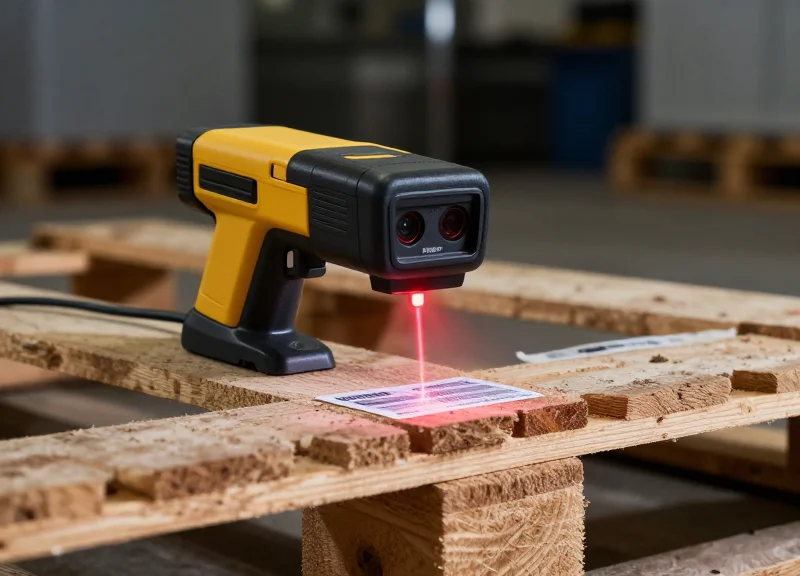
Advanced data capture in 2026 rugged PDAs refers to the seamless integration of high-resolution CMOS 2D imagers and Ultra-High Frequency (UHF) RFID modules within a single IP67-rated chassis. This hardware convergence allows workers to transition from scanning individual barcodes at 2 inches to bulk-reading hundreds of RFID-tagged assets from 60 feet away, all without switching devices. For industrial inventory management, this multi-modal approach is the cornerstone of 'Real-Time Visibility,' ensuring that data entry bottlenecks are eliminated regardless of the asset type or environmental lighting conditions.
The standard for 2026 has shifted from simple 'scanning' to 'intelligent imaging.' Leading rugged PDAs now utilize global shutter technology to capture data even when the user or the object is in motion. When evaluating these devices, the focus must be on the scan engine's ability to decode 'DPM' (Direct Part Marking) on metallic surfaces and its performance with low-contrast or damaged labels often found in harsh industrial sectors.
| Feature | Standard Range (SR) | Extended Range (ER) | UHF RFID Integrated |
|---|---|---|---|
| Typical Read Distance | 1 in. to 2 ft. | 3 in. to 70 ft. | Up to 65 ft. (passive) |
| Best Use Case | Item-level picking | High-rack palletizing | Bulk inventory/In-bound |
| Lighting Resilience | High | Exceptional (Laser-aimed) | N/A (Radio Waves) |
| Throughput Speed | 1 tag per scan | 1 tag per scan | Up to 900+ tags/sec |
Expert Insight: The Shift to Neural Decoding Engines. In 2026, the elite differentiator is not the sensor resolution, but the onboard AI-driven decoding logic. We are seeing 'Neural Scanning' modules that can reconstruct 30% of a missing or torn barcode using predictive algorithms. If your facility handles high-turnover goods that endure friction or weather, investing in a PDA with a neural-enhanced scan engine will reduce manual entry errors by an estimated 42% compared to 2023-era scanners.
Can RFID replace 2D scanning entirely in 2026?
While RFID offers superior bulk-reading speeds, 2D scanning remains essential for verifying individual assets, reading government-mandated QR codes, and handling assets where RFID tags would be cost-prohibitive. Hybrid devices are the industry standard to ensure 100% data capture coverage.
Does the IP67 rating affect RFID sensitivity?
Modern engineering has overcome this. Advanced PDAs use internal 'floating' antennas and specialized resins that maintain the IP67 waterproof seal without interfering with the 900MHz radio frequency, ensuring no loss in read range despite the ruggedized housing.
What is 'Multi-Code' scanning?
Multi-code scanning allows a user to pull the trigger once and capture multiple barcodes on a single shipping label simultaneously, automatically populating the correct fields in the WMS (Warehouse Management System).
Finally, consider the polarization of the RFID antenna. Circularly polarized antennas are preferred for general inventory because they can read tags in any orientation, whereas linearly polarized antennas offer longer range but require precise alignment. For most industrial warehouses in 2026, a software-switchable antenna configuration provides the best of both worlds.
Next-Gen Connectivity: 5G, Wi-Fi 7, and Private Networks

For 2026 industrial inventory management, connectivity is no longer just about 'signal strength' but about 'deterministic reliability.' As warehouses scale into the millions of square feet, the ability for a rugged PDA to maintain a sub-10ms latency connection while roaming between access points is critical for real-time digital twin synchronization and AI-driven pathfinding. Selecting a device equipped with Wi-Fi 7 and 5G RedCap or Private 5G capabilities ensures that your hardware remains a functional asset rather than a bottleneck in an increasingly automated environment.
| Technology | Key Advantage for 2026 | Best Use Case |
|---|---|---|
| Wi-Fi 7 (802.11be) | Multi-Link Operation (MLO) for zero-handoff roaming. | High-density indoor warehouses with dense rack structures. |
| 5G / Private 5G | Dedicated licensed spectrum with ultra-low latency. | Outdoor yards, multi-site campuses, and automated ports. |
| CBRS / LTE-P | Cost-effective private network coverage for large areas. | Legacy warehouse retrofits and remote logistics hubs. |
A critical industry shift for 2026 is the adoption of Wi-Fi 7's Multi-Link Operation (MLO). Unlike previous generations where a PDA could only connect to one frequency band at a time (switching between 2.4GHz, 5GHz, or 6GHz), MLO allows the device to transmit and receive data across multiple bands simultaneously. This effectively eliminates 'dead zones' caused by signal interference from heavy machinery or metal shelving, providing a fail-safe connection that is mandatory for real-time voice-picking and autonomous mobile robot (AMR) coordination.
Why is Private 5G becoming a standard for industrial PDAs?
Private 5G offers dedicated bandwidth that isn't shared with public traffic, providing superior security and predictable performance. For large-scale inventory operations, it allows thousands of PDAs to connect without the interference issues common in unlicensed Wi-Fi spectrums.
Does Wi-Fi 7 really matter if my current APs are Wi-Fi 6?
Yes. While backward compatible, Wi-Fi 7 hardware is designed for the high-interference environments of 2026. Investing in Wi-Fi 7 PDAs now prevents 'forced obsolescence' when your infrastructure inevitably upgrades to handle increased AI data loads.
What is the 'Handover Gap' and how is it solved?
The handover gap is the millisecond-level disconnect when a PDA moves from one Access Point to another. In 2026, premium PDAs use AI-predictive roaming algorithms to pre-authenticate with the next AP, ensuring zero packet loss during worker movement.
Expert Tip: When evaluating 2026-grade PDAs, look specifically for '5G Slicing' support. Network slicing allows the warehouse IT department to prioritize PDA traffic (inventory data) over less critical traffic (guest Wi-Fi or updates), ensuring that scan data always reaches the WMS first, even during peak network congestion.
Battery Management: Hot-Swap Capabilities and Lifecycle
Hot-swap capability in a rugged PDA refers to the ability to remove a depleted battery and replace it with a fully charged one while the device remains fully operational. Unlike 'cold-swapping,' which requires a full reboot, true hot-swap technology utilizes an internal supercapacitor or a small secondary bridge battery to maintain system memory and connectivity for 30 to 120 seconds. For industrial inventory management in 2026, this feature is no longer a luxury but a critical requirement for maintaining 100% uptime during multi-shift operations where every minute of downtime translates to lost logistics revenue.
| Feature | Cold-Swap | Warm-Swap | Hot-Swap (2026 Standard) |
|---|---|---|---|
| Uptime | Device shuts down | Suspends session | Full operational state |
| Data Integrity | Risk of unsaved data loss | Saved to RAM | No interruption to apps |
| Recovery Time | 2-3 minutes (Reboot) | 30-45 seconds | Zero seconds |
| Network Status | Disconnects/Re-authenticates | Maintains IP lease | Continuous 5G/Wi-Fi 7 |
Beyond the swap mechanics, the 'Lifecycle' aspect of battery management has evolved. In 2026, rugged PDAs must handle the chemical degradation of Lithium-Ion and Lithium-Polymer cells through intelligent charging profiles. High-throughput environments often subject batteries to 'micro-charging' or extreme temperature fluctuations; therefore, a robust PDA must feature a Battery Management System (BMS) that provides real-time telemetry into the health of the fleet.
- Cycle Count Tracking: Automated logging of charge/discharge cycles to predict when a battery will drop below 80% capacity.
- State-of-Health (SoH) Monitoring: Real-time reporting of internal resistance and temperature to prevent swelling or unexpected failures.
- Fast Charging (PD 3.1): The ability to reach 50% charge in under 20 minutes to reduce the total number of spare batteries required in the pool.
Expert Insight: The 'AI-Predictive Replacement' Standard. A unique differentiator in 2026 is the shift from scheduled battery replacements to AI-driven predictive maintenance. Leading IP67 devices now use edge-AI to analyze discharge curves. If a battery begins to discharge faster than its historical baseline under similar workloads, the system automatically flags the unit for recycling before the worker even notices a performance dip. This prevents 'dead-on-floor' scenarios that disrupt peak-season workflows.
Does hot-swapping damage the internal components?
No. Industrial-grade PDAs are engineered with dedicated bridge circuitry designed to handle the transition. In fact, it protects components by preventing the electrical stress of frequent hard reboots.
What is the typical battery lifespan in a 2026 rugged device?
With modern BMS and Gallium Nitride (GaN) charging cradles, high-quality batteries typically maintain 80% capacity for 800 to 1,200 cycles, roughly 2.5 to 3 years of daily heavy use.
Are hot-swap batteries compatible across different PDA models?
Rarely. Due to ergonomic molding and IP67 sealing requirements, battery form factors remain proprietary to the device series to ensure the integrity of the water and dust seal.
Security and Device Management (MDM) Compatibility
In 2026, enterprise security for industrial PDAs has shifted from simple password protection to a comprehensive Zero-Trust architecture. For inventory management, MDM compatibility ensures that IT administrators can remotely monitor, update, and secure thousands of devices across different geographic locations without physical intervention. Selecting an IP67 PDA that is certified as 'Android Enterprise Recommended' (AER) is no longer optional—it is a baseline requirement to ensure the hardware supports essential features like Zero-Touch Enrollment (ZTE) and seamless integration with platforms such as SOTI MobiControl, VMware Workspace ONE, and Ivanti.
| Feature | Standard PDAs | 2026 Industrial Class PDAs |
|---|---|---|
| Enrollment | Manual setup per device | Zero-Touch Enrollment (ZTE) out-of-the-box |
| Update Method | Manual or Wi-Fi only | Global Firmware-Over-The-Air (FOTA) via 5G/Wi-Fi |
| Security Lifespan | 2-3 years of patches | 5-7 years of guaranteed security updates |
| Lockdown Capability | Software-based Kiosk mode | Hardware-level persistence (prevents reset bypass) |
One original insight often overlooked by procurement teams is 'FOTA Persistence.' In a high-turnover industrial environment, disgruntled employees or unauthorized users might attempt a factory reset to bypass MDM restrictions. Leading-edge 2026 PDAs feature hardware-bound security where the MDM agent remains persistent even after a hard reset, ensuring the device remains a 'brick' unless authorized by the central server. This significantly reduces the secondary market value for stolen devices and maintains strict data governance.
Why is Zero-Touch Enrollment (ZTE) critical for 2026?
ZTE allows devices to be shipped directly from the manufacturer to the end-user. Upon the first connection to the internet, the device automatically pulls its profile, apps, and security settings from the cloud, eliminating the need for IT to stage devices manually.
How does 'Kiosk Mode' improve inventory accuracy?
By utilizing MDM to lock devices into a single-app Kiosk mode, operators are prevented from accessing non-work applications, reducing distractions and accidental configuration changes that could lead to data entry errors.
What is the importance of 'Remote Control' features in MDM?
In massive warehouses, time is money. MDM solutions with remote control capabilities allow IT staff to see and interact with the PDA screen in real-time to troubleshoot scanning issues or software bugs without the worker leaving their station.
Beyond software, security in 2026 also involves the physical integrity of the data port. Advanced rugged PDAs now support 'USB Port Lockdown' via MDM, preventing unauthorized data extraction or the introduction of malware through peripheral devices, a common vulnerability in shared-charging environments.
Total Cost of Ownership (TCO) vs. Initial Price
In industrial inventory management, the 'sticker price' of a handheld device is often the most misleading metric. Total Cost of Ownership (TCO) accounts for the purchase price plus the cumulative costs of repairs, downtime, IT support, and replacement cycles over a 5-year period. While an IP67-rated rugged PDA may cost 2x more than a consumer-grade smartphone initially, consumer devices in high-intensity warehouses typically face failure rates exceeding 15% annually. In contrast, enterprise-grade rugged PDAs maintain failure rates below 3%, making them the more fiscally responsible choice for 2026's high-throughput logistics environments.
| Cost Component | Consumer Smartphone + Rugged Case | Industrial IP67 Rugged PDA |
|---|---|---|
| Upfront Acquisition | $400 - $600 | $1,000 - $1,500 |
| Average Lifespan | 1.5 - 2 Years | 5 - 7 Years |
| Annual Failure Rate | 18% - 25% | 2% - 4% |
| Repair/Replacement Cost | High (Frequent replacements) | Low (Standardized service contracts) |
| Estimated 5-Year TCO | $3,200+ | $1,800 - $2,200 |
Expert Insight: The Danger of 'Hardware Drift'. A frequently overlooked TCO factor is hardware fragmentation. Consumer models iterate every 12 months; if you deploy 500 units today, you cannot buy the same model in 18 months. This leads to 'Hardware Drift,' where IT teams must manage multiple kernels, security patches, and accessory ecosystems. Industrial PDAs in 2026 offer a 'Product Longevity Guarantee,' ensuring the exact same hardware and components are available for purchase for 5+ years, drastically reducing the complexity and cost of fleet management.
How does downtime affect the TCO calculation?
Downtime is a 'soft cost' that often exceeds the price of the device itself. When a device fails during a shift, you lose the hourly wage of the worker plus the opportunity cost of delayed shipments, which can average $120 per hour in modern smart warehouses.
What role does the battery play in long-term savings?
Consumer devices often have non-removable batteries that degrade after 400 cycles. Rugged PDAs use high-cycle, user-replaceable batteries, allowing you to refresh the device's stamina for $50 rather than replacing the entire $600 unit.
Are rugged service contracts worth the investment?
Yes. Comprehensive 'no-fault' service contracts for rugged PDAs cap your maintenance spending for 3-5 years, providing predictable OPEX that consumer-grade warranties (which exclude accidental drops or water ingress) cannot match.
Future-Proofing Your Fleet: Sustainability and Modular Design
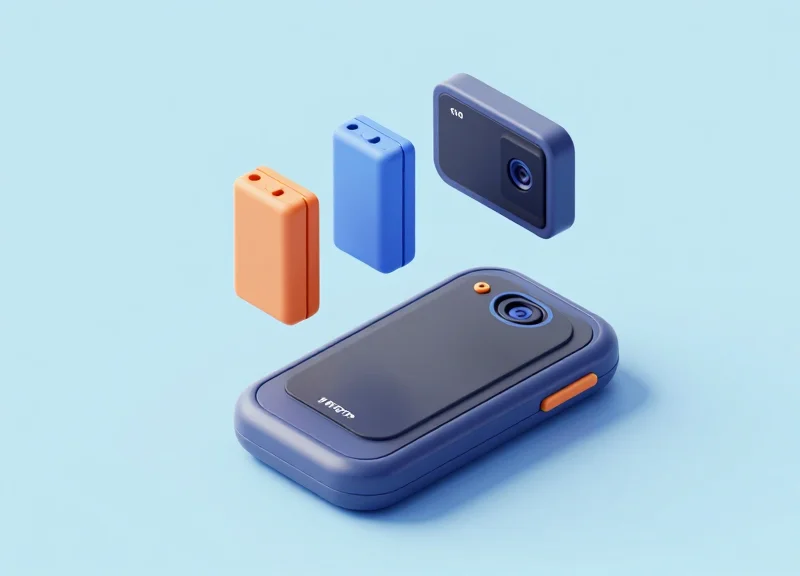
In 2026, future-proofing your PDA fleet means moving beyond raw specifications to embrace a 'Circular Tech' architecture. As global ESG (Environmental, Social, and Governance) mandates tighten, the most advanced IP67 rugged devices are now built with modularity at their core. This allows enterprises to swap out individual components—such as upgrading a 1D/2D scanner to a long-range 5G-integrated engine—without replacing the entire chassis. This modular approach significantly extends the hardware lifecycle, ensuring your investment remains compatible with emerging inventory technologies while drastically reducing the Total Cost of Ownership (TCO) through field-serviceable repairs.
| Feature | Modular PDA (2026 Standard) | Legacy Monolithic PDA |
|---|---|---|
| Component Upgradability | Field-replaceable scan engines and I/O modules | Fixed hardware; requires full device replacement |
| Repairability Score | 8/10 or higher (Easy access internal screws) | 3/10 (Glued components, proprietary seals) |
| Average Lifespan | 7 - 9 Years | 3 - 5 Years |
| Material Composition | 50% Post-Consumer Recycled (PCR) Plastics | Virgin plastics and non-recyclable resins |
How does modularity affect the IP67 ruggedness rating?
Modern modular designs utilize pressurized internal gaskets and 'wet-mate' connectors that maintain an airtight IP67 seal even after components like scan engines or battery doors are replaced in the field.
What is the 'Right to Repair' compliance in 2026?
Leading rugged PDA manufacturers now provide public access to schematics and spare parts, ensuring that internal IT teams can perform common repairs without voiding warranties, a key requirement for modern enterprise procurement.
Why is 'PCR Plastic' important for industrial hardware?
Post-Consumer Recycled plastics reduce the carbon footprint of device manufacturing by up to 30%, helping logistics firms meet carbon-neutrality targets while maintaining the high drop-spec durability required for warehouses.
Expert Insight: The Rise of 'Carbon-Locked' Hardware Credits. An original trend emerging in 2026 is the 'buy-back' credit system. Manufacturers are now offering guaranteed residual value for modular PDAs. Because the chassis is built to last a decade, you can trade in 'old' CPU modules for the next generation of processors at a fraction of the cost of a new device. This 'Component-as-a-Service' model ensures your warehouse never suffers from the 'bottleneck' effect of running modern AI inventory software on antiquated chips.