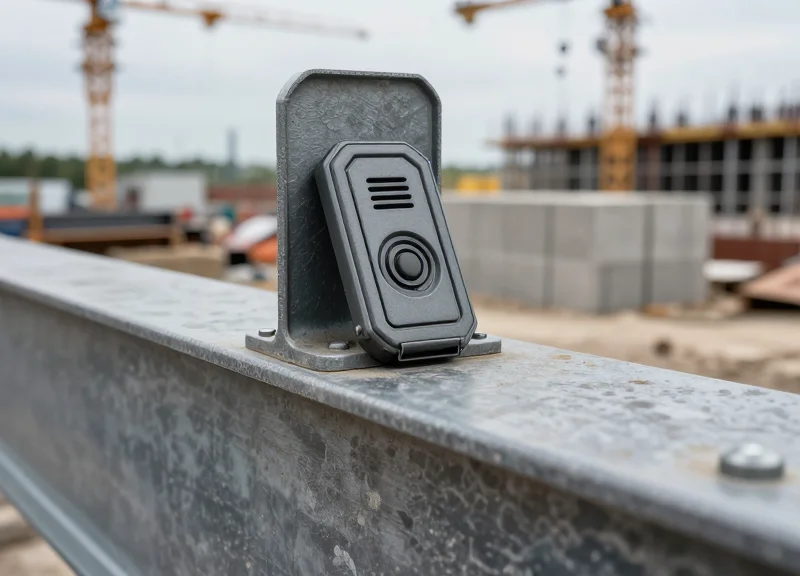
In the rapidly evolving landscape of Construction 4.0, real-time asset visibility is no longer a luxury—it is a requirement. However, tracking steel beams and precast concrete elements presents a unique challenge: the physics of metal and the density of concrete. As we head into 2026, advancements in on-metal RFID technology are revolutionizing how project managers handle supply chain logistics and onsite installation. This guide explores the critical factors for choosing the right RFID tags that withstand extreme weather, mechanical impact, and electromagnetic interference, ensuring your project stays on schedule and under budget.
The Evolution of RFID in Construction 4.0

In the context of Construction 4.0, Radio Frequency Identification (RFID) has evolved from a simple inventory tool into a critical sensory layer for the industrial internet of things (IIoT). By 2026, the technology serves as the primary bridge between physical structural components—like heavy steel beams and precast concrete slabs—and their digital twins. This evolution enables autonomous site monitoring, where 'smart' materials report their own installation status, logistical history, and safety certifications directly to a centralized Building Information Modeling (BIM) platform without human intervention.
The journey to this stage has been driven by the need to eliminate the 'information black hole' that typically occurs between the fabrication shop and the construction site. Historically, steel and precast assets were tracked using manual paper logs or fragile barcodes that frequently failed in the mud, rain, and abrasive conditions of a high-rise build. Today, the convergence of high-memory on-metal tags and long-range readers allows for a seamless data flow that is the hallmark of the Fourth Industrial Revolution.
| Era | Primary Method | Data Integration | Steel/Precast Context |
|---|---|---|---|
| Construction 1.0 - 2.0 | Manual / Paper | None (Siloed) | High loss rates; difficult to locate specific beams in laydown yards. |
| Construction 3.0 | Barcodes / Basic RFID | Batch Uploads | Improved inventory, but line-of-sight issues and tag durability remained. |
| Construction 4.0 (2026) | UHF On-Metal RFID / BLE | Real-time BIM Sync | Automated receipt of goods; 100% visibility of structural components. |
Why is the 2026 standard different for steel and precast?
Modern tags utilize specialized ceramic or encapsulated housings that leverage the metal surface as an antenna extension rather than being interference victims, a technical leap from older 'spacer' designs.
How does RFID support ESG goals in 2026?
By providing a 'Digital Product Passport,' RFID tags track the carbon footprint and recyclability of steel and concrete, meeting new regulatory transparency requirements.
Can RFID work through wet concrete?
Advanced low-frequency (LF) or ruggedized UHF tags are now specifically engineered to survive the casting process and transmit through the high moisture content of curing precast modules.
Expert Insight: The most significant shift we are seeing in 2026 is the move from 'Passive Identification' to 'Decentralized Intelligence.' Previously, a tag was just a pointer to a database. Today’s high-capacity RFID tags for steel and precast act as a 'Black Box' for the component, storing critical structural data—such as mill test reports (MTRs) and weld inspections—locally on the item. This ensures that even if the site’s cloud connectivity is interrupted, the physical asset remains an authoritative source of its own engineering truth.
Understanding the Metal Problem: Why Standard Tags Fail

Standard RFID tags fail on steel and precast concrete because metal surfaces reflect radio frequency (RF) energy and create parasitic eddy currents that 'detune' the tag's antenna, effectively canceling out the signal. In a construction environment, placing a generic inlay directly onto a steel beam or a rebar-heavy precast slab causes the metal to act as a ground plane, shifting the resonant frequency of the tag and preventing the reader from energizing the microchip.
To understand the failure, we must look at the physics of Ultra-High Frequency (UHF) waves. When a standard dipole antenna approaches a conductive surface, the electromagnetic field is reflected 180 degrees out of phase. This destructive interference creates a 'null zone' at the surface level where the electric field strength drops to zero. Without specialized engineering, a standard tag sitting in this zone is effectively invisible to the scanner, regardless of its proximity.
| Phenomenon | Impact on Standard RFID | Resulting Performance Issue |
|---|---|---|
| Antenna Detuning | Parasitic capacitance shifts the resonant frequency. | Tag cannot be powered or read by standard frequencies. |
| RF Reflection | Metal reflects waves, causing destructive interference. | Signal cancellation and massive reduction in read range. |
| Eddy Currents | Metal surfaces dissipate energy through induction. | Reduced energy efficiency for the passive chip. |
| Faraday Cage Effect | Dense rebar in precast blocks signal penetration. | Internal components cannot be tracked through the slab. |
Can't I just use a thicker adhesive to create a gap?
While a physical gap helps, a simple foam spacer is rarely sufficient for construction. Standard tags require a specific dielectric material between the antenna and the metal to manage the 'impedance matching' necessary for the tag to remain tuned to the correct frequency.
Why does precast concrete behave like metal?
Modern precast elements contain high-density rebar grids and prestressed steel cables. This metallic matrix creates a multi-path interference environment that mimics a solid metal surface, requiring the same 'on-metal' technology used for structural steel.
The 2026 Perspective: The 'Surface-Area' Myth. A common misconception is that a smaller tag will have less interference. In reality, modern on-metal tags utilize the metal surface itself as an extension of the antenna (coupled-loop designs). Expert Tip: For 2026 projects involving carbon-fiber reinforced concrete, standard on-metal tags may still struggle; you must specify tags with high-dielectric spacers to account for the semi-conductive nature of carbon-fiber additives.
Key Features of High-Performance On-Metal RFID Tags
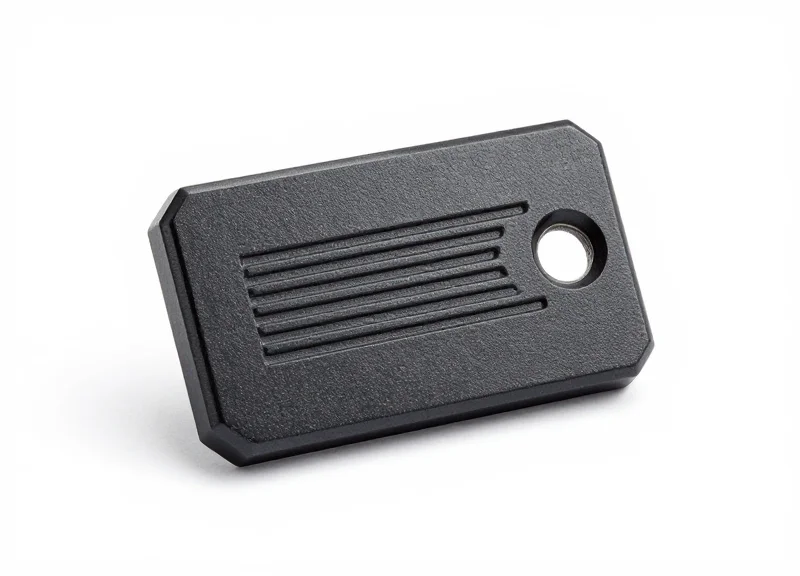
High-performance on-metal RFID tags are engineered with a specialized dielectric spacer that creates a physical and electromagnetic buffer between the tag's antenna and the metallic surface. Unlike standard tags that suffer from signal detuning and eddy current interference when placed on steel or rebar, these advanced components utilize the metal substrate as a 'ground plane' to stabilize and, in some cases, amplify the reflected signal. For a tag to be considered 'construction-grade' in 2026, it must maintain a consistent impedance match across the entire UHF 860-960 MHz spectrum, ensuring global compatibility and high read rates despite the dielectric constants of the mounting surface.
| Feature Category | Requirement | Benefit for Construction |
|---|---|---|
| Spacer Material | High-Dielectric Ceramic or FR4 | Prevents detuning and maintains low profile. |
| Enclosure Rating | IP68 or IP69K | Protects against pressure washing and concrete slurry. |
| Attachment Method | Structural Adhesive or Weld-on | Ensures the tag remains attached during heavy handling. |
| Temperature Range | -40°C to +150°C | Withstands the exothermic heat of concrete curing. |
- Tuned Antenna Geometry: Modern on-metal tags feature complex antenna designs, such as PIFA (Planar Inverted-F Antenna), which are specifically tuned to account for the electrical conductivity of steel, preventing the 'dead zones' common in cheaper alternatives.
- High-Memory ICs: Beyond simple IDs, 2026-spec tags often include extended User Memory to store onsite batch data, maintenance logs, or certification links directly on the physical asset.
- UV-Stable Encapsulation: Extended exposure to sunlight on-site can degrade plastics; high-performance tags use UV-stabilized resins or specialized polymers to prevent casing brittleness over 10-20 year lifecycles.
Expert Insight: The 'Parasitic Benefit' of Modern Design. While legacy engineering viewed metal as a hindrance, 2026-tier tags employ a design philosophy where the metal asset acts as a parasitic element of the antenna system. By precisely calculating the distance between the chip and the steel surface, engineers can actually achieve read ranges of up to 15-20 meters—outperforming the same tag in free space. This 'Metal-Agnostic Plus' performance is what differentiates premium industrial tags from generic on-metal labels.
Can I use the same tag for both steel beams and precast concrete?
Generally, yes. While concrete has different dielectric properties than pure steel, 'Wide-Band' on-metal tags are designed to handle both surfaces effectively by centering their tuning to account for high-permittivity environments.
Does the thickness of the spacer matter?
Yes. Thinner tags are more prone to interference. A high-performance tag balances 'low profile' with enough 'stand-off' distance to ensure the electromagnetic field can propagate without being absorbed by the metal.
How do these tags handle the curing process of concrete?
Top-tier on-metal tags for precast are tested for chemical resistance against alkaline concrete mixtures and the thermal spikes (up to 80-90°C) occurring during the hydration process.
Precast Concrete Challenges: Tracking from Pour to Placement

In the 2026 construction landscape, precast concrete tracking is no longer just about identification; it is about real-time logistics and quality assurance. Tracking a precast element from the moment it is poured to its final placement on-site presents a unique challenge because concrete is a 'RF-unfriendly' material. Initially, the high water content in wet concrete absorbs UHF signals, and as it cures, the dense internal rebar structure creates a multi-path interference environment that can shield or detune standard tags. To achieve 100% read rates, engineers must account for the dielectric properties of the concrete and the physical proximity of the tag to the reinforcement steel.
| Installation Method | Primary Advantage | Key Risk Factor | Typical Application |
|---|---|---|---|
| Embedded (Internal) | Maximum protection from physical damage | Signal attenuation due to moisture/depth | Standard structural beams and columns |
| Surface-Applied (Recessed) | Higher signal strength and read range | Vulnerability to shear forces during transport | Architectural panels and facade elements |
| Tie-Wire Attachment | Zero-adhesive requirement | Interference from direct rebar contact | Heavy civil engineering projects (bridges) |
- The Casting Phase: Tags must withstand the high-frequency vibrations used during concrete consolidation and the exothermic heat generated during the curing process, which can peak at 80°C (176°F).
- The Yard Management Phase: Once cured, thousands of identical-looking segments are stacked in storage yards. RFID allows for 'Geofencing' of assets, ensuring the oldest cast items are shipped first (FIFO) via long-range handheld or portal readers.
- The Logistics & Transit Phase: Tags must remain readable while nested on flatbeds, where the combination of concrete density and metal trailers creates a complex RF environment.
- The Erection Phase: Final validation at the hook ensures the right piece is installed in the right sequence, preventing costly structural errors and rework.
Expert Insight: The 2026 'Dielectric Offset' Strategy. By 2026, leading firms are moving away from generic tags toward 'concrete-tuned' RFID. My recommendation is to maintain a minimum 50mm (2-inch) clearance from internal rebar. Modern tags now utilize specialized high-permittivity ceramic spacers that actually leverage the concrete’s dielectric constant to improve antenna gain, rather than fighting against it. Furthermore, integrating temperature sensors into the RFID chip allows for 'Maturity Method' tracking, providing real-time data on when a slab has reached structural strength to be lifted.
Will the rebar cage block the RFID signal entirely?
If a tag is placed too deep or directly touching rebar, it creates a Faraday Cage effect. Using specialized on-metal tags with a stand-off layer ensures the signal can escape the concrete matrix.
How does moisture in 'green' concrete affect the read range?
Fresh concrete has high dielectric loss. Expect a 40-60% reduction in read range during the first 48 hours. Using high-memory tags allows for data to be stored locally until the signal improves as the concrete dries.
Can RFID tags survive the chemical environment of concrete?
Yes, provided they are encased in IP68 or IP69K rated materials (like PPS or epoxy) that resist the high alkalinity (pH 12-13) of the cement paste.
Durability Standards: IP Ratings and Chemical Resistance

In the context of 2026 construction standards, durability is no longer just about 'ruggedness'—it is about ensuring the data link remains unbroken throughout the 50-year lifecycle of a structural asset. For RFID tags used on steel and precast, durability standards are defined by Ingress Protection (IP) ratings and the ability to withstand the 'chemical cocktail' of a modern job site. To qualify for on-metal performance in harsh environments, a tag must achieve at least an IP68 rating for continuous submersion and, ideally, an IP69K rating to survive high-pressure, high-temperature washdowns often used to clean concrete forms or steel slag.
| Rating/Standard | Protection Level | Construction Application |
|---|---|---|
| IP67 | Dust-tight; 30-min water immersion | Indoor steel racking or temporary asset tracking. |
| IP68 | Dust-tight; continuous immersion | Precast components stored outdoors in wet climates or buried assets. |
| IP69K | Dust-tight; high-pressure steam jets | Heavy machinery attachments and reusable precast molds. |
| ASTM B117 | Salt spray resistance | Coastal construction and marine-grade steel infrastructure. |
Beyond water and dust, chemical resistance is the silent killer of RFID integrity. Precast concrete production involves caustic release agents, while steel components are often treated with acidic pickling agents or volatile primers. If the tag’s encapsulation material—typically high-performance epoxy, PPS, or ceramic—cannot resist these substances, the housing will embrittle and crack, leading to internal antenna corrosion and total signal failure.
Why is UV resistance critical for precast tracking?
Precast elements often sit in storage yards for months. Standard plastics degrade under prolonged UV exposure, leading to 'chalking' and eventual casing failure. 2026-grade tags use UV-stabilized polymers to prevent this structural decay.
Can RFID tags survive the heat of curing concrete?
Yes, but they require high-temperature ratings. Hydration in large concrete pours can reach 80°C (176°F). Tags must be rated for these thermal peaks to avoid internal circuit expansion and breakage.
What chemicals are most hazardous to on-metal tags?
Petroleum-based form oils, sulfuric acid (used in steel cleaning), and high-alkaline concrete slurries. Always verify the tag's material compatibility data sheet (MDS) against your site's specific chemical profile.
Expert Insight: The 'Plasticizer Migration' Risk. While many buyers focus on external chemical splashes, our 2026 analysis highlights a hidden failure mode: plasticizer migration. When RFID tags are mounted on painted steel or within specialized form liners, the chemicals in the paint or liner can migrate into the tag's housing over time. This 'molecular leaching' makes the tag brittle even without direct exposure to weather. Always specify 'chemically inert' encasements like Polyphenylene Sulfide (PPS) for long-term structural embedding to mitigate this risk.
Selection Criteria: Read Range, Frequency, and Memory
To ensure reliable tracking in 2026's hyper-connected construction sites, the selection of RFID tags must prioritize three technical pillars: read range (the distance at which a tag can be energized and decoded), frequency tuning (ensuring the tag operates within the 860-960 MHz UHF spectrum despite metal interference), and memory capacity (the local storage for EPC and user-specific data). For on-metal and precast applications, these specs are not just about performance—they are about ensuring data integrity when environmental factors like rebar density and steel conductivity threaten to 'blind' the system.
| Use Case | Target Read Range | Preferred Frequency | Recommended Memory |
|---|---|---|---|
| Steel Beam Inventory | 8 - 12 Meters | UHF Global (860-960 MHz) | 128-bit EPC / 0-bit User |
| Precast Maintenance | 3 - 5 Meters | UHF Narrow (Region Specific) | 96-bit EPC / 2k-bit User |
| Tool/Equipment Tracking | 1 - 3 Meters | UHF Wide-band | 128-bit EPC / 512-bit User |
The transition to UHF Gen 2 V2 (ISO 18000-63) has become the non-negotiable standard for 2026. This protocol provides the anti-collision algorithms necessary to read hundreds of tagged steel components simultaneously as they pass through a gantry. However, frequency tuning is where most projects fail; an 'on-metal' tag tuned for the European ETSI range may lose up to 60% of its read range if deployed on a North American FCC-regulated site, as the metal substrate shifts the tag's resonant frequency.
What is the importance of EPC vs. User Memory?
EPC (Electronic Product Code) memory is for the unique ID linked to a cloud database, while User Memory stores data directly on the tag. In construction, high User Memory (512 bits or more) is vital for storing inspection timestamps or 'birth certificates' of precast slabs for offline access.
How does read range change after embedding in concrete?
Expect a 20-30% reduction in read range when a tag is embedded compared to surface mounting. This is due to the dielectric constant of concrete, which slows the signal and requires tags with high-gain internal antennas.
Is more memory always better?
No. Larger memory chips often require more power to write data, which can slightly decrease the effective read range. Only specify high user memory if you need to store data locally in areas with poor 5G/Wi-Fi connectivity.
Expert Tip: The 'Edge-First' Memory Strategy. In 2026, we are seeing a shift toward 'Edge-First' data locality. Instead of relying solely on a cloud lookup, savvy contractors are using tags with 2k-bit user memory to store a 'Digital Twin Fragment'—specifically the last three safety inspection dates and the maximum load capacity. This allows a site worker with a mobile reader to verify safety protocols instantly, even in a basement or remote site where the cloud connection is non-existent. This 'shadow data' acts as a fail-safe that significantly reduces liability.
Installation Best Practices: Adhesives vs. Mechanical Fasteners
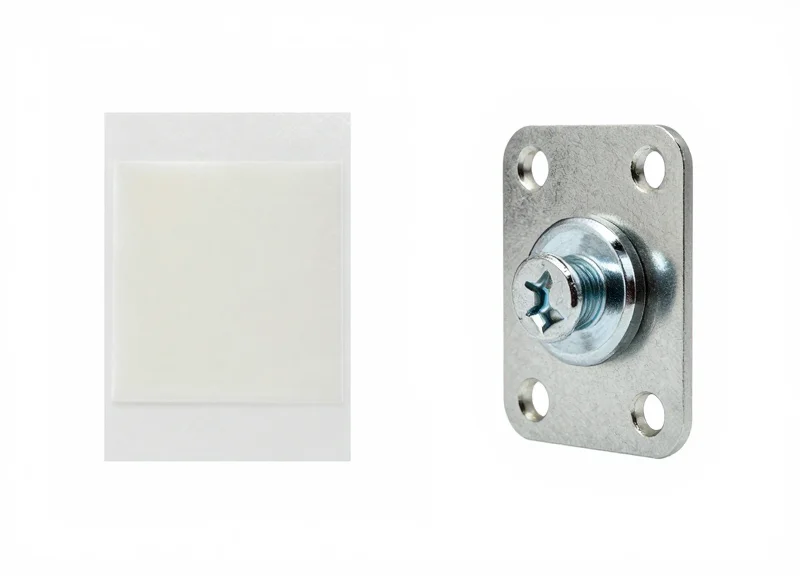
In 2026, the reliability of an RFID system for steel and precast depends less on the tag's internal chip and more on its physical bond to the asset. The choice between industrial adhesives and mechanical fasteners is a strategic decision: adhesives offer rapid deployment and zero structural impact on precast concrete, while mechanical fasteners provide the ultimate redundancy against the extreme thermal expansion and mechanical shear forces found in heavy steel fabrication and bridge construction.
| Feature | Industrial Adhesives (VHB/Epoxy) | Mechanical (Screws/Rivets) | Welding / Metal Straps |
|---|---|---|---|
| Installation Speed | Fast (Seconds per unit) | Slow (Requires drilling) | Very Slow (Specialized labor) |
| Substrate Integrity | Non-destructive | Intrusive (Point of failure) | Permanent / Material change |
| Vibration Resistance | High (Dampens energy) | Medium (Risk of loosening) | Extreme |
| Surface Requirement | Clean, smooth, dry | Can be rough or oily | Bare metal required |
Proper surface preparation is the 'silent killer' of RFID deployments. Even the highest-grade 3M VHB tape will fail if applied to oxidized steel or 'dusty' precast concrete. In 2026, we are seeing a shift toward hybrid methods—using a primary adhesive for speed with a secondary sealant bead to prevent moisture ingress behind the tag antenna, which is critical for maintaining the tuned air gap required for on-metal performance.
- Surface Debridement: Remove all rust, scale, or concrete laitance using a wire brush or abrasive pad to expose the structural substrate.
- Chemical Activation: Clean the area with a 70% Isopropyl Alcohol solution. For precast, use a silane-based primer to create a waterproof chemical bridge between the concrete and the adhesive.
- Pressure Application: Pressure-sensitive adhesives (PSAs) require significant initial force—typically 15 psi—to flow into the microscopic valleys of the surface for maximum 'wet-out'.
Can I weld an RFID tag directly to a steel beam?
Direct welding of the tag is rare; instead, use 'weldable' metal brackets or carriers that house the tag. This prevents the high heat of the welding process from delaminating the internal antenna or damaging the IC.
Which method is best for precast concrete exposed to salt spray?
Mechanical countersinking is preferred. Recess the tag into a pre-cast or drilled pocket and secure it with a stainless steel masonry screw, then fill the void with a non-conductive epoxy to protect against chloride ion ingress.
Does the fastener material affect the read range?
Yes. Using ferromagnetic screws can slightly alter the tag's radiation pattern. Always use 316 stainless steel or nylon fasteners where possible to minimize interference with the tag’s electromagnetic field.
Expert Insight: The 'Curing-to-Climate' Coefficient. In 2026, construction project managers must account for 'thermal shock' during installation. If an adhesive is applied in the morning at 40°F (4°C) but the steel heats to 120°F (49°C) by noon, the thermal expansion mismatch can shear the bond before it fully cures. Always specify 'High-Bond' tapes with an acrylic core designed specifically for high-coefficient thermal expansion substrates to prevent 'pop-off' during the first 24 hours of exposure.
Cost-Benefit Analysis: ROI of RFID in Infrastructure
The Return on Investment (ROI) for RFID in infrastructure is the net financial gain achieved by replacing manual tracking processes with automated on-metal sensing, measured against the Total Cost of Ownership (TCO) of tags, hardware, and software. In large-scale steel and precast projects, ROI is typically realized through three primary channels: a 70-90% reduction in inventory audit time, the total elimination of 'Double Handling' costs, and the avoidance of liquidated damages caused by missing mission-critical components during the assembly phase. For a standard 2026 infrastructure project, most firms see a full capital recovery within 12 to 18 months of deployment.
| Metric | Manual Tracking | RFID-Enabled Tracking | Financial Impact |
|---|---|---|---|
| Audit Speed | 4-8 minutes per item | 3-5 seconds per item | 85% reduction in labor cost |
| Data Accuracy | 82% - 90% (human error) | 99.9% (automated) | Eliminates re-ordering costs |
| Search Time | Up to 2 hours/day/worker | Near instantaneous | Regains 10-15% of daily productivity |
| Location Updates | Periodic/Batch | Real-time/Gate-based | Reduces 'Idle Asset' insurance premiums |
To accurately forecast your project's fiscal performance, follow this four-step quantification framework to move beyond 'soft' benefits into 'hard' dollar savings.
- Identify the 'Search and Sort' Baseline: Calculate the average hourly rate of field engineers and yard managers. Multiply this by the total hours spent manually locating specific precast slabs or steel beams each week.
- Quantify Material Loss and Replacement: Infrastructure projects often lose 2-5% of smaller components due to misplacement in vast staging yards. RFID eliminates the cost of expedited fabrication and hot-shot delivery for these 'lost' parts.
- Factor in Schedule Acceleration: Missing one critical-path component can stall a 50-person crew. Calculate the cost of 'idle labor' for 4 hours and credit that to the RFID preventive budget.
- Analyze the Total Cost of Ownership (TCO): Include the cost of rugged on-metal tags, handheld readers, and cloud integration. Subtract these from your total savings to find your Net Present Value (NPV).
Expert Insight: Beware of the 'Shadow Labor' Tax. In construction, many firms fail to account for the secondary labor costs of searching for items—the fuel for heavy machinery moved to 'clear a path' to find a buried piece of steel. RFID-driven spatial awareness eliminates this hidden operational drain, which can account for up to 12% of total yard management costs.
How does the higher cost of on-metal tags affect ROI?
While on-metal tags cost more than standard labels, their 10-year durability in concrete and steel environments prevents 'tag failure' costs, which include the labor-intensive process of re-tagging items mid-project.
Can RFID reduce insurance and liability costs?
Yes. Many insurers now offer 'Smart Site' discounts for infrastructure projects that use RFID for digital chain-of-custody, as it significantly reduces the risk of structural errors and material theft.
Future Trends: Integrating RFID with Digital Twins and BIM

In 2026, the 'Digital Twin' is no longer a static 3D rendering used only in the design phase; it is a living document powered by the real-time telemetry of RFID-tagged steel and precast components. Integrating RFID with Building Information Modeling (BIM) bridges the physical-digital divide, allowing project managers to visualize the exact status of materials—from fabrication and transit to onsite installation—directly within their 6D BIM environment. This synchronization ensures that the 'As-Built' model perfectly reflects the 'As-Is' physical reality of the job site, eliminating the data silos that traditionally lead to costly delays and rework.
| Feature | Traditional BIM (Pre-2024) | RFID-Integrated Digital Twin (2026+) |
|---|---|---|
| Data Update Frequency | Manual entry, weekly or monthly updates | Real-time, automated via RFID gate readers |
| Inventory Visibility | Subject to human error and manual audits | 100% accuracy with automated location tracking |
| Lifecycle Management | Disconnected post-handover | Continuous loop for maintenance and decommissioning |
| Material Origin | Paper-based certificates and PDF logs | Encrypted 'Material Passports' on the tag |
The most significant shift we are seeing is the move toward 'Dynamic Data Feedback Loops.' As an RFID-tagged precast panel passes through a smart gate, its status automatically updates in the Digital Twin. This triggers automated scheduling updates for cranes and labor crews, optimizing site logistics with surgical precision. Furthermore, the 2026 standard emphasizes the 'Circular Economy,' where tags store carbon footprint data and recycling instructions, facilitating more sustainable decommissioning processes decades down the line.
How does RFID improve 4D and 5D BIM scheduling?
By providing precise arrival times of steel and precast units, RFID feeds the 4D (Time) and 5D (Cost) BIM dimensions with actual data, allowing for predictive delay mitigation and real-time budget tracking.
What is the role of 5G in RFID-BIM integration?
5G acts as the high-speed pipeline that connects onsite RFID readers to cloud-hosted Digital Twins, ensuring that thousands of tag reads per second are processed with sub-millisecond latency.
Can RFID tags assist in structural health monitoring within a BIM model?
Yes, high-end 2026 tags now feature integrated sensors for temperature and moisture, allowing the Digital Twin to alert engineers if a precast element is curing outside of optimal parameters.
Expert Tip: To maximize ROI, don't just treat RFID as a tracking tool; treat it as the 'Hardware Key' for your Digital Twin. By embedding the unique ID of the tag into the GUID of the BIM object during the design phase, you create a permanent, immutable link that serves as the foundation for Blockchain-verified material passports, ensuring compliance and transparency for the entire lifespan of the structure.