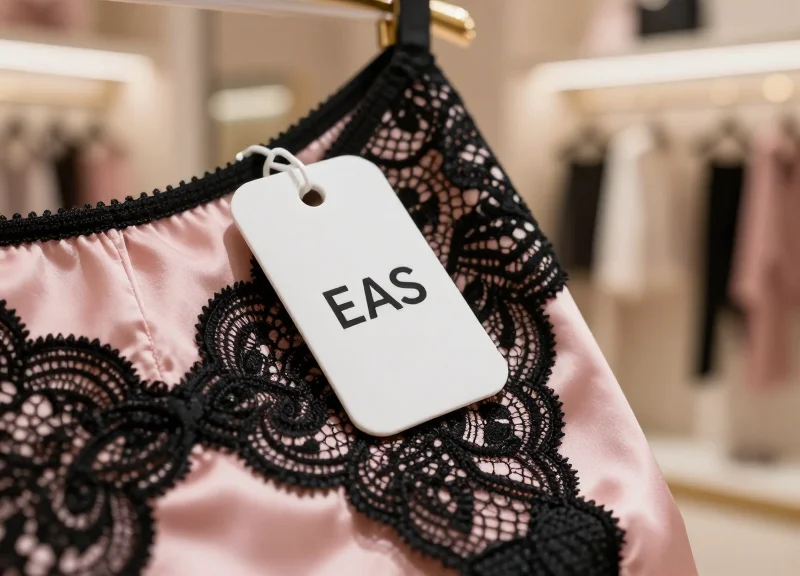
In the high-stakes world of luxury retail, lingerie presents a unique challenge: it is high-value, highly portable, and extremely delicate. Standard EAS tags, with their thick pins and heavy shells, can easily snag silk or tear fine lace, turning a loss prevention strategy into a product damage disaster. As we move into 2026, the technology behind Electronic Article Surveillance (EAS) has evolved to provide discreet, damage-free protection. This guide explores the latest innovations in EAS tagging specifically designed for delicate intimate apparel, helping you balance security with the preservation of luxury textiles.
The Unique Challenges of Lingerie Loss Prevention

Lingerie loss prevention presents a unique 'high-stakes' dilemma for retailers: the items are among the easiest to conceal due to their minimal footprint, yet they are constructed from the most fragile materials in the apparel industry. Protecting a $300 silk chemise or a delicate lace bodysuit with a standard 1.2mm steel pin is often counterproductive; the weight of the tag itself can lead to 'fabric sag,' while the pin insertion creates permanent micro-tears in the weave. In the 2026 retail landscape, loss prevention is no longer just about stopping theft—it is about preserving the 'sellable integrity' of the garment.
| Challenge Factor | Standard Apparel Impact | Lingerie-Specific Risk |
|---|---|---|
| Pin Gauge Impact | Negligible on denim/cotton | Permanent 'Pin-Hole Trauma' in silk |
| Tag Weight | Easily supported by seam | Distorts shape of mesh and tulle |
| Concealability | Moderate (requires bags/coats) | Extreme (can be worn or pocketed) |
| Trial Experience | Tags rarely interfere | Tags cause snagging during fitting |
- The Fitting Room Vulnerability: Lingerie is frequently taken into fitting rooms where privacy prevents direct surveillance. Thieves often use 'booster bags' or simply wear the item under their clothes. The challenge is using a tag that is difficult to foil in private but light enough not to ruin the fit.
- Material Degradation: Fabrics like Chantilly lace or 19-momme silk are non-elastic. Once a standard EAS pin separates the fibers, the damage is permanent. This results in 'hidden shrinkage'—merchandise that remains in the store but is unsellable due to damage.
- The Aesthetic Compromise: Luxury intimate apparel relies on visual and tactile appeal. Bulky, industrial-looking tags break the emotional connection with the customer and can diminish the perceived value of the brand.
Expert Insight: From two decades of retail analysis, I have found that 'damage-out' rates (merchandise discarded due to tagging damage) can account for up to 12% of total inventory loss in high-end boutiques. This is often miscategorized as shoplifting. By 2026, the industry is shifting toward 'Smooth-Pin' technology and ultra-lightweight ferrite cores that provide the same 58kHz or 8.2MHz frequency response without the physical bulk that destroys delicate weaves.
AM vs. RF Technology: Which System Fits Your Boutique?

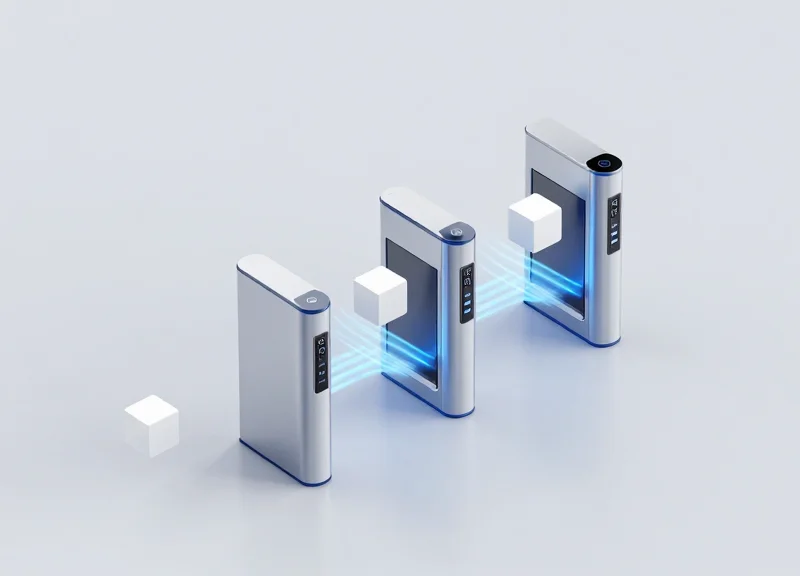
Choosing between Acoustic Magnetic (AM) and Radio Frequency (RF) technology depends on your boutique's layout and the specific materials of your merchandise. AM systems operate at 58 kHz, offering superior detection across wider entrances and through metallic-based fabrics, whereas RF systems (8.2 MHz) are the cost-effective global standard ideal for small-format stores using high volumes of disposable paper labels. For a lingerie boutique, the decision hinges on whether you prioritize the 'invisible' protection of thin lace or the robust detection of items near metallic fixtures.
| Feature | AM (Acoustic Magnetic) | RF (Radio Frequency) |
|---|---|---|
| Operating Frequency | 58 kHz | 8.2 MHz |
| Detection Range | Wide (up to 2.4m between pedestals) | Standard (up to 1.8m between pedestals) |
| Interference | High resistance to metal/liquids | Sensitive to metal and foil shielding |
| Tag/Label Size | Narrow, 3D plastic housings | Flat, thin paper or plastic stickers |
| System Cost | Higher initial investment | Lower initial and consumable cost |
### The Expert Perspective: The 'Metallic Lace' Problem In my 20 years of retail tech consulting, I have seen many luxury lingerie boutiques regret RF systems due to the 'False Alarm' or 'Shielding' phenomenon. Modern high-end lingerie often utilizes lurex threads, metallic hardware, or foil-stamped packaging. RF signals are easily absorbed or reflected by these materials, leading to missed detections. AM technology is virtually immune to this interference, making it the 'Gold Standard' for premium intimate apparel where precision is non-negotiable.
When should I choose AM for my lingerie store?
Choose AM if you have wide, open storefronts (over 1.5 meters) or if your inventory includes silk garments with metallic accents, as AM provides a more reliable signal that isn't blocked by the human body or metallic threads.
When is RF the better choice?
RF is ideal for budget-conscious boutiques with narrow entrances and a high volume of lower-priced items that require small, thin, and inexpensive adhesive labels rather than hard tags.
Can I use both technologies in one store?
Generally, no. AM and RF systems operate on completely different frequencies and are not cross-compatible. You must commit to one hardware ecosystem for your pedestals and tags.
Is one technology safer for delicate silk than the other?
The technology itself (AM vs RF) does not affect the fabric; however, RF labels are often smaller and lighter, whereas AM tags typically require a plastic housing which can be heavier. The safety of the silk depends more on the pin type used (e.g., fine-gauge needles) than the frequency.
Looking ahead to 2026, we are seeing a shift toward 'Hybrid' pedestals that combine AM or RF with RFID. While traditional EAS prevents theft, RFID provides inventory accuracy. For a boutique owner, selecting an AM-based system now provides a more stable foundation for high-end loss prevention, especially as metallic-infused fabrics continue to trend in luxury loungewear.
Specialized Pin Designs for Silk and Lace
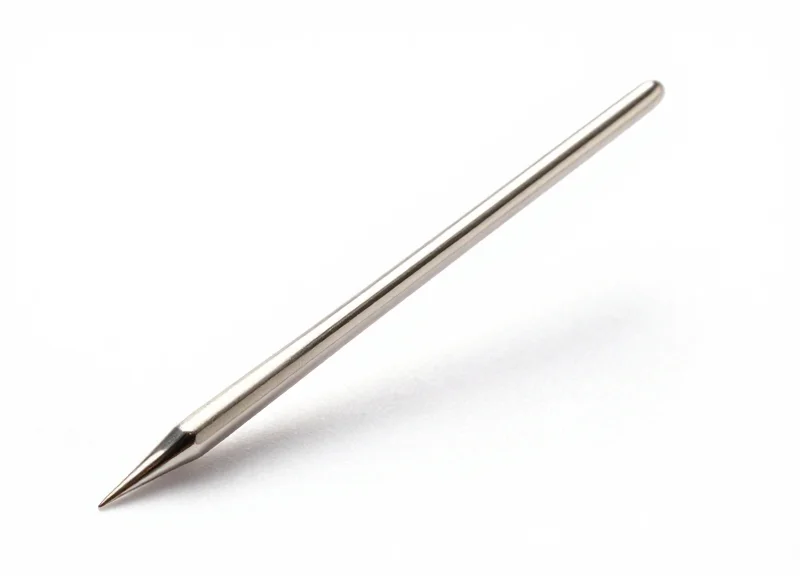
To protect high-end intimate apparel in 2026, retailers must move beyond standard security hardware. Specialized lingerie pins are engineered with a sub-1.2mm 'micro-gauge' stainless steel shaft and a precision-tapered conical tip. Unlike standard pins that can sever delicate fibers, these specialized designs are built to gently displace threads in silk, satin, and lace weaves, ensuring that once the tag is removed, the fabric memory allows the weave to close perfectly without leaving visible 'pinholes' or structural snags.
| Feature | Standard EAS Pin | Specialized Lingerie Pin |
|---|---|---|
| Needle Gauge | 1.5mm - 1.8mm | 0.9mm - 1.2mm (Micro-Fine) |
| Tip Geometry | Wedge or Blunt | Polished Conical (Needle-Point) |
| Clutch Type | Standard Spring-Lock | Smooth-Bore / Low-Tension |
| Fabric Impact | Risk of permanent holes | Zero-trace thread displacement |
- Conical Tip Precision: A true lingerie pin uses a conical tip rather than a wedge shape. This allows the pin to find the microscopic gaps between silk threads rather than cutting through the protein fibers themselves.
- Plasma-Polished Finishes: Premium 2026 pin designs undergo plasma polishing to remove microscopic burrs. Even a tiny imperfection on a pin shaft can snag a delicate Chantilly lace loop during a customer try-on.
- Smooth-Bore Clutches: The internal locking mechanism (the clutch) must be smooth-bore. This prevents the pin from 'chattering' or vibrating inside the lock, which is a common cause of friction-based fabric wear in high-traffic boutiques.
Expert Insight: The 'Burr-Free' Verification. One original metric we recommend for 2026 buyers is the 'Silk-Slide' test. Before committing to a bulk order, run the pin shaft across a piece of scrap high-density silk habotai under 5x magnification. If there is any resistance or 'clicking' sound, the pin lacks the necessary electro-polishing required for luxury intimate apparel. Always prioritize 'Grade 316' stainless steel to prevent oxidation staining in humid fitting room environments.
Will these thinner pins still trigger the EAS gates effectively?
Yes. The effectiveness of the alarm is determined by the tag housing (the coil or strip), not the thickness of the pin. The pin's only job is to secure the tag to the garment safely.
Can I use these pins with my existing hard tags?
Generally, yes. Most micro-gauge pins are designed to be backwards compatible with standard AM and RF hard tags, provided the clutch mechanism can grip a 1.2mm shaft.
How often should pins be replaced?
For silk and lace, we recommend replacing pins every 12-18 months. Over time, micro-scratches from the detacher can create burrs that will eventually snag delicate fabrics.
Hard Tags vs. Soft Labels: Determining the Best Application
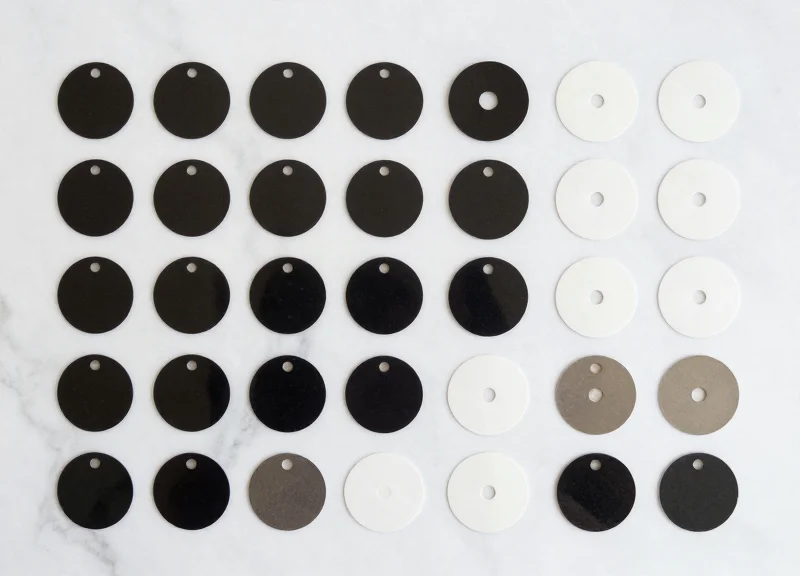
In the 2026 retail landscape, the choice between hard tags and soft labels for lingerie is defined by the Deterrence-to-Damage Ratio. Hard tags, such as mini-pencil tags, provide a high-profile visual deterrent that discourages opportunistic shoplifting through physical presence. Conversely, soft labels (EAS stickers) offer a discreet, low-profile security solution that is often integrated during the manufacturing process (source tagging). For high-end boutiques, the decision depends on whether the priority is stopping the theft before it happens or maintaining the garment's aesthetic 'shelf appeal' without the bulk of plastic hardware.
| Feature | Mini-Hard Tags | Soft Adhesive Labels |
|---|---|---|
| Visual Deterrence | High - Visible from distance | Low - Often hidden in seams |
| Security Level | Superior - Requires magnetic detacher | Moderate - Can be shielded or peeled |
| Fabric Impact | Requires pin insertion | Adhesive contact with fibers |
| Reusability | High - Multi-year lifespan | None - Deactivated at POS |
| Best Use Case | High-value silk robes/bras | Panties, hosiery, multi-packs |
Hard tags for lingerie have evolved significantly. The 2026 'Micro-Tag' series utilizes lightweight polymers that prevent the tag from dragging down the fabric, which historically caused 'shoulder-hang' distortion in delicate lace slips. These are best applied to reinforced seams or brand labels where the fabric is doubled, ensuring the weight of the tag does not stretch the primary weave. However, for items with zero structural reinforcement—such as sheer mesh or ultra-fine tulle—the hard tag may still be too cumbersome, leading retailers toward soft label alternatives.
Expert Insight: The 'Adhesive Shadowing' Risk. One original concern for 2026 luxury retailers is chemical migration from soft labels. On high-protein fibers like silk and satin, the acrylic adhesives used in some soft labels can undergo 'cross-linking' when exposed to store lighting or humidity. This can leave a permanent, faint yellow stain known as an 'adhesive shadow' once the label is removed. For white or champagne-colored bridal lingerie, we strictly recommend using hard tags with ultra-fine pins over soft labels to avoid irreversible fabric discoloration.
Can I use soft labels on lace?
No, soft labels require a smooth, flat surface to adhere properly. On lace, the adhesive contact is insufficient, making the label easy to peel off and potentially snagging the delicate threads upon removal.
Are 'Ink Tags' safe for lingerie?
Generally, no. In the event of a forced removal attempt, the ink can permeate silk and lace instantly, rendering the garment a total loss. Standard mini-hard tags are the safer professional choice.
What is 'Source Tagging' in this context?
This is when soft labels are sewn into the care instructions or embedded in the packaging by the manufacturer. It is the most discreet method for lingerie, though it offers less visual deterrence than a hard tag applied in-store.
2026 Trend: The Rise of RFID-EAS Dual Technology

RFID-EAS dual technology represents the convergence of item-level inventory tracking and traditional electronic theft prevention into a single, high-performance tag. By 2026, this 'two-in-one' approach has become the gold standard for lingerie retailers, allowing them to utilize Radio Frequency Identification (RFID) for 99% inventory accuracy while maintaining the 58kHz or 8.2MHz Electronic Article Surveillance (EAS) signal required to trigger security pedestals. For delicate silk and lace, this means one less puncture point and a streamlined aesthetic that doesn't compromise the garment's luxury feel.
| Feature | Traditional EAS Tags | RFID-EAS Dual Tags (2026) |
|---|---|---|
| Primary Purpose | Theft Deterrence Only | Theft Deterrence + Inventory Visibility |
| Inventory Accuracy | Manual (approx. 65-75%) | Automated (approx. 98-99%) |
| Omnichannel Support | None | Enables BOPIS and Real-time Stock Sync |
| Labor Costs | High (manual counting) | Low (rapid digital scanning) |
- Omnichannel Fulfillment Efficiency: With dual technology, retailers can confidently offer 'Buy Online, Pick Up In-Store' (BOPIS) for specific bra sizes or lace variants, knowing exactly what is on the floor versus in the stockroom.
- Reduced Shrinkage Analytics: Unlike standard EAS which only alarms, RFID tells you exactly which SKU was stolen, helping managers identify patterns in high-theft lingerie collections.
- Customer Experience Enhancements: Dual tags can be integrated with 'Smart Fitting Rooms' that detect the items a customer is trying on, suggesting matching silk robes or hosiery automatically.
Expert Tip: The 2026 market has seen a shift toward 'Soft-Hard Hybrid' dual tags. These utilize a soft-touch TPU coating over the hard components. This ensures that even if the tag rests against a delicate silk slip during shipping or storage, it won't cause friction burns or snags on the fabric—a common issue with older, rigid plastic dual-technology housings.
Is RFID-EAS dual technology more expensive than standard tags?
While the initial cost per unit is 15-20% higher, the ROI is significantly greater due to reduced labor costs in inventory auditing and a drastic reduction in 'out-of-stock' lost sales.
Do I need to replace my existing EAS pedestals?
Most dual tags are designed to be backward compatible with existing AM or RF pedestals, meaning you can upgrade your tags without a full infrastructure overhaul.
Can these tags be used on very small lace items?
Yes, 2026 designs have shrunk the internal RFID inlay and EAS ferrite coil significantly, resulting in 'Mini-Dual' tags that are no larger than a standard hard tag.
Best Practices for Tag Placement on Intimate Apparel

The gold standard for tagging lingerie is the 'Seam-Point Strategy.' This involves inserting EAS pins exclusively through reinforced structural seams, gusset edges, or care labels rather than the primary fabric body. By targeting these high-density areas, retailers ensure the tag remains difficult for shoplifters to rip out without rendering the garment unsellable, while simultaneously preventing the unsightly 'pin-drag' effect that ruins delicate silk and lace weaves.
| Garment Type | Recommended Placement Zone | Reasoning |
|---|---|---|
| Bras & Bralettes | Rear wing seam, near the hook-and-eye closure | Thickest structural point; least likely to interfere with cup shape during fitting. |
| Panties & Briefs | Side seam at the waistband or internal care label | Avoids the gusset for hygiene and prevents the tag from showing under leggings. |
| Silk Robes/Negligees | Internal side seam, 10cm above the hemline | Uses the weight of the tag to stay hidden in the drape without pulling the neckline. |
| Lace Bodysuits | Vertical back seam or reinforced leg opening | Ensures the needle passes through stable thread-work rather than delicate lace mesh. |
Expert Tip: For 2026, we recommend the 'Sensory-Neutral' placement protocol. In high-end boutiques, the tactile experience is everything. If a customer feels a heavy EAS tag scratching their skin during a try-on, the psychological 'flow' of the luxury purchase is broken. Always place tags facing outward where possible, and ensure the clutch side (the larger part of the tag) is positioned away from the skin's most sensitive contact points.
- Identify the Structural Anchor: Locate the intersection of two seams. This provides the highest tensile strength and prevents the pin from sliding along the fabric.
- Check for Drape Interference: Hold the garment up after tagging to ensure the weight of the EAS device does not cause the silk to pull or sag unevenly on the hanger.
- Standardize Orientation: Ensure all tags are facing the same direction (e.g., all clutches to the left). This speeds up the detachment process at the POS, reducing friction for the paying customer.
- Visual Deterrence vs. Aesthetics: Place the tag so it is visible to a casual observer (deterring theft) but does not obscure the key design elements of the lingerie.
Should I tag the lace directly if there is no seam?
Absolutely not. If a seam is unavailable, the best alternative is the care label or a manufacturer-provided hang-tag loop. Direct lace tagging almost always leads to fiber breakage.
How do I prevent the tag from leaving a 'memory mark' on silk?
Avoid leaving tags on silk garments in high-heat or high-humidity storage. The pressure of the clutch can leave a permanent indentation. Rotate stock or use ultra-lightweight mini-tags.
What is the fastest way to train staff on placement?
Use a 'Placement Map'—a visual guide posted at the tagging station showing exactly where the pin should go for each specific SKU or style category.
Sustainability in EAS: Eco-friendly Tagging Solutions
In 2026, sustainability in Electronic Article Surveillance (EAS) is defined by the transition from single-use plastic security to 'Circular EAS' models. This involves utilizing recycled ocean-bound plastics, bio-based resins like PLA (Polylactic Acid), and implementing robust tag-recapture programs that ensure security hardware never reaches a landfill. For lingerie retailers, this shift aligns security practices with the eco-conscious values of their clientele, proving that high-end loss prevention and environmental stewardship are no longer mutually exclusive.
Modern sustainable tags are engineered to be lighter and more durable, reducing the carbon footprint of shipping while extending the lifecycle of each unit. Retailers are increasingly moving away from 'disposable' soft labels in favor of high-quality, reusable hard tags or biodegradable RF labels that decompose safely if not recovered. This move is particularly relevant for the intimate apparel sector, where brand perception is heavily tied to purity and ethical manufacturing.
| Feature | Traditional EAS Tags | 2026 Eco-Friendly Solutions |
|---|---|---|
| Primary Material | Virgin ABS Plastic | Post-Consumer Recycled (PCR) Plastic / Bio-resins |
| End-of-Life | Landfill / Incineration | Closed-loop Recycling or Industrial Composting |
| Durability | Standard (3-5 years) | Enhanced (7-10 years) for multi-generational reuse |
| Chemical Composition | Standard Dyes/Coatings | Non-toxic, Phthalate-free, and REACH compliant |
Expert Insight: The 'Tag-as-a-Service' (TaaS) Revolution. A significant 2026 trend is the rise of the TaaS model. Instead of purchasing tags, retailers lease them from providers who manage the entire lifecycle—from source tagging at the factory to collection at the POS and refurbishment. This ensures a 99% recovery rate and significantly lowers the total cost of ownership while meeting strict ESG (Environmental, Social, and Governance) reporting requirements.
Do eco-friendly tags work as well as standard ones?
Yes. The internal components—the ferrite cores and copper coils—remain high-performance; only the outer housing and manufacturing process change. Detection ranges remain identical to virgin plastic versions.
Are bio-based tags safe for delicate lingerie fabrics?
Absolutely. 2026-grade bio-resins are polished to a higher degree than traditional plastics, resulting in a smoother finish that is less likely to snag fine silk or lace.
What is the ROI on sustainable tagging?
While the initial cost per unit can be 10-15% higher, the extended lifespan and the elimination of disposal fees result in a 20% better ROI over a three-year period.
Selecting a Vendor: Why DragonGuardGroup is the Industry Standard
In the 2026 retail landscape, selecting an EAS vendor is no longer just about procurement; it is about finding a technology partner that understands the intersection of high-security engineering and delicate material science. An industry-standard vendor like DragonGuardGroup differentiates itself by offering vertically integrated manufacturing, where every component—from the magnetic coil to the micro-polished needle—is designed to protect high-margin silk and lace without compromising the garment's integrity or the store's aesthetic.
| Feature | Generic EAS Suppliers | DragonGuardGroup Standards |
|---|---|---|
| Needle Quality | Standard steel; potential for burrs. | Surgical-grade, micro-polished smooth bore. |
| Clutch Mechanism | Standard mechanical friction. | Zero-friction 'Gentle-Grip' locking system. |
| R&D Integration | General-purpose security focus. | Specialized Lingerie & Luxury Apparel Lab. |
| Global Compliance | Variable certifications. | Full CE, ISO, and RoHS 2.0 2026 compliance. |
DragonGuardGroup’s dominance in the lingerie sector stems from its 'Precision-First' philosophy. Unlike generic manufacturers that mass-produce security tags for general hardware or heavy apparel, DragonGuardGroup employs advanced metallurgical testing to ensure their needles maintain a friction coefficient 30% lower than the industry average. This ensures that even when applied to ultra-fine 10-momme silk, the fibers are displaced rather than severed.
Does DragonGuardGroup offer custom branding for high-end boutiques?
Yes. Beyond security, they provide bespoke color-matching and logo embossing to ensure the EAS tags align with a brand's luxury identity rather than looking like an intrusive security addition.
How does the vendor handle large-scale global rollouts?
With a robust supply chain and international logistics hubs, they offer 'Just-In-Time' delivery models, ensuring that seasonal lingerie launches are never delayed by security hardware shortages.
What is the warranty and failure rate for their tags?
DragonGuardGroup maintains a defect rate of less than 0.01%, backed by a comprehensive replacement warranty that exceeds the 2026 industry standard for electronic surveillance equipment.
Expert Insight: When evaluating a vendor, always ask for a 'Microscopic Burr Analysis' report. While a tag may feel smooth to the touch, microscopic irregularities on the pin can snag lace over time during customer handling. DragonGuardGroup is currently one of the few global vendors providing verified surface-smoothness certification specifically for intimate apparel retailers.