As we approach 2026, the Third-Party Logistics (3PL) industry is hitting a critical inflection point where traditional tracking methods no longer suffice. For decades, barcodes were the backbone of inventory management, yet their inherent limitations—manual line-of-sight requirements and high error rates—are creating bottlenecks in today's hyperscale global supply chains. The shift toward 'Next-Gen 3PL' is defined by a move toward RFID technology, which enables total cross-organizational asset visibility. This article examines the strategic transition from passive scanning to real-time, automated data capture, and how it empowers 3PL providers to synchronize operations with manufacturers and retailers like never before.
The Evolution of 3PL: Moving Beyond Manual Tracking
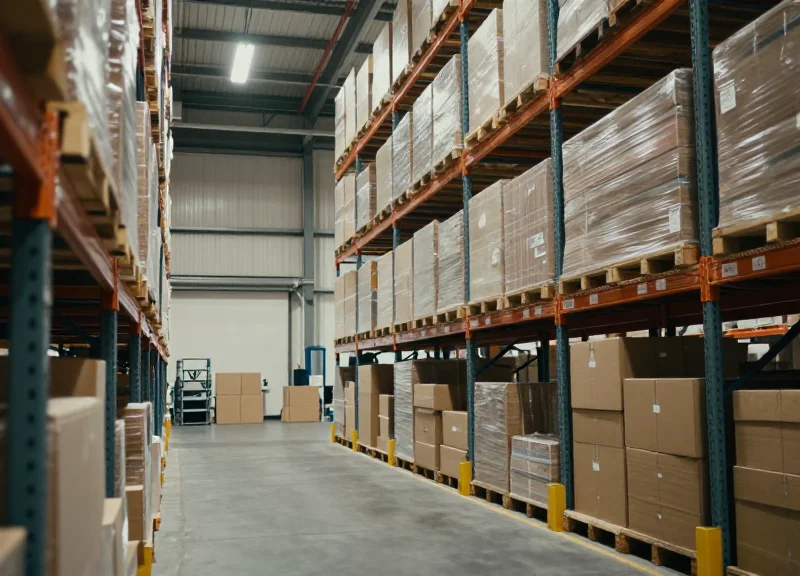
The evolution of 3PL (Third-Party Logistics) is the strategic shift from reactive, human-dependent data entry to proactive, automated data orchestration. In the 2026 landscape, moving beyond manual tracking means replacing periodic checkpoints with a continuous stream of real-time telemetry. While manual systems and basic barcodes once sufficed for local storage, the modern requirement for cross-organizational asset visibility (COAV) demands a 'Zero-Touch' approach where data is captured without human intervention, ensuring the integrity of the global supply chain.
| Era | Primary Method | Key Limitation | Visibility Level |
|---|---|---|---|
| 1.0: Traditional | Paper & Logbooks | High Human Error | Delayed/Historic |
| 2.0: Digitized | Barcodes & Handhelds | Line-of-Sight Required | Point-in-Time |
| 3.0: Next-Gen (2026) | RFID & IoT Sensors | High Initial Infrastructure | Real-Time & Predictive |
For decades, the barcode was the gold standard, but its limitations have become the primary bottleneck in scaling 3PL operations. Barcodes require 'active' scanning—a worker must physically locate and scan a tag. This creates 'data latency,' where the system is only as current as the last manual scan. As we approach 2026, the sheer volume of SKUs and the speed of e-commerce demand a transition to 'passive' data collection, where assets identify themselves as they move through the facility.
- The Manual Bottleneck: Dependency on labor for data entry leads to 10-15% inventory inaccuracy and significant delays during peak seasons.
- The Barcode Plateau: While digital, barcodes still require one-by-one handling, making 'total visibility' across multiple shipping partners nearly impossible to synchronize.
- Autonomous Data Streams: The 2026 mandate focuses on automated tracking that feeds directly into ERP systems, providing stakeholders with instant updates without manual pings.
Expert Insight: In my two decades observing Silicon Valley logistics shifts, the most successful 3PLs are no longer selling 'space' or 'transport'; they are selling 'Data Velocity.' By 2026, a 3PL that relies on manual barcode triggers will be viewed as a 'black hole' in the supply chain. The industry is moving toward Zero-Touch Orchestration, where the physical movement of a pallet automatically updates the financial and operational ledgers of five different organizations simultaneously.
Why is manual tracking failing in 2026?
The complexity of omnichannel fulfillment and the expectation for 15-minute status updates make the speed of human scanning obsolete.
What is the 'Visibility Gap'?
The 'Visibility Gap' is the time elapsed between an item arriving at a dock and its record appearing in the management system—a gap RFID technology reduces to near-zero.
The Strategic Limitations of Barcodes in Modern Supply Chains
The strategic limitations of barcodes in modern supply chains stem from their inherent 'passive-manual' nature, which requires physical line-of-sight and individual human intervention for every data capture event. As 3PL providers move toward 2026, these constraints manifest as 'Digital Latency'—a delay between physical movement and system visibility that prevents real-time decision-making. Unlike next-gen alternatives, barcodes cannot be updated dynamically, are easily damaged by environmental factors, and fail to provide the bulk-scanning capabilities necessary for autonomous warehouse operations.
| Barcode Constraint | Operational Impact | Strategic Risk |
|---|---|---|
| Line-of-Sight Requirement | Manual orientation of every package | Bottlenecks in high-velocity cross-docking |
| Single-Tag Reading | Labor-intensive scanning of individual items | Inability to scale with automated sorting |
| Static Data Storage | Information remains fixed once printed | Zero support for dynamic lifecycle tracking |
| Physical Vulnerability | Scanning fails if tag is torn or dirty | Data gaps leading to inventory distortion |
In my two decades of experience in logistics technology, I have observed that the true cost of barcodes isn't just the labor; it's the 'Strategic Debt' they accumulate. When your data collection relies on a human pulling a trigger, your entire tech stack is capped by human speed. For a 2026 3PL, this means your expensive AI forecasting models are essentially running on stale data, leading to 'phantom inventory' and missed SLAs.
Why is 'Human-in-the-Loop' scanning becoming a liability?
As labor costs rise and warehouse throughput increases, the 3-5 seconds required for a manual barcode scan becomes an exponential cost. In a facility processing 50,000 units a day, that represents over 40 hours of pure scanning time, not including physical handling.
How do barcodes hinder cross-organizational visibility?
Barcodes often use proprietary or localized formats that require re-labeling when passing between partners. This lack of a 'universal digital twin' prevents seamless handoffs and creates blind spots in the global supply chain.
Can barcodes support the Internet of Things (IoT)?
No. Barcodes are a 'pull' technology, requiring an external action to provide data. Modern supply chains require 'push' technology where assets broadcast their status, making barcodes incompatible with autonomous IoT frameworks.
Expert Insight: The 'Hidden Tax' of 1% Error Rates. Even a 'highly accurate' 99% barcode scan rate creates a massive deficit in a high-volume environment. In a 1,000,000-unit facility, a 1% error rate results in 10,000 misplaced items. Unlike RFID, which can re-verify 1,000 items in seconds, a barcode-based system requires a manual search for every single one of those 10,000 discrepancies, effectively paralyzing the 'total visibility' promise.
Defining Total Cross-Organizational Asset Visibility

Total Cross-Organizational Asset Visibility represents the transition from 'data silos' to a 'shared digital ecosystem.' In the 2026 logistics landscape, it is defined as the real-time, frictionless synchronization of asset data across manufacturers, 3PLs, carriers, and retailers, ensuring every stakeholder views the exact same 'single version of truth' (SVOT) simultaneously. Unlike traditional tracking, which relies on reactive updates and manual hand-offs, this model uses automated RFID streams to create an immutable digital ledger of an asset's journey, eliminating the information asymmetry that historically leads to supply chain friction and inventory bloating.
| Feature | Legacy Visibility (Barcode-Based) | Next-Gen Total Visibility (RFID-Enabled) |
|---|---|---|
| Data Source | Manual point-to-point scans | Continuous, automated sensor streams |
| Update Frequency | Delayed (Batch processing) | Real-time (Active/Passive sync) |
| Trust Model | Blind trust in partner reports | Shared digital ledger (Verify, then trust) |
| Granularity | Pallet or shipment level | Individual item-level intelligence |
| Conflict Resolution | Reactive phone calls/emails | Proactive automated alerts |
To achieve this, 3PLs are adopting a 'common language' of data. An expert tip for 2026 is focusing on Semantic Interoperability. It is no longer enough to just share a JSON feed; the data must be formatted so that a manufacturer’s ERP and a retailer’s WMS interpret the 'status' of an asset identically without human intervention. This shift turns the supply chain from a series of disjointed handshakes into a living, breathing organism where the 3PL acts as the central nervous system.
How does this prevent 'Phantom Inventory'?
By providing real-time visibility into every node of the supply chain, partners can identify discrepancies between digital records and physical stock instantly, rather than waiting for manual cycle counts.
Who 'owns' the data in a cross-organizational model?
The data is typically hosted in a federated cloud environment where the asset owner retains primary rights, but operational partners are granted 'read-access' to relevant telemetry to optimize their specific leg of the journey.
Does this require all partners to use the same software?
No. Modern visibility platforms use API-first architectures to ingest RFID data from various hardware and push it into any ERP or WMS, allowing for a heterogeneous software environment.
Technical Comparison: Why RFID is the 2026 Standard
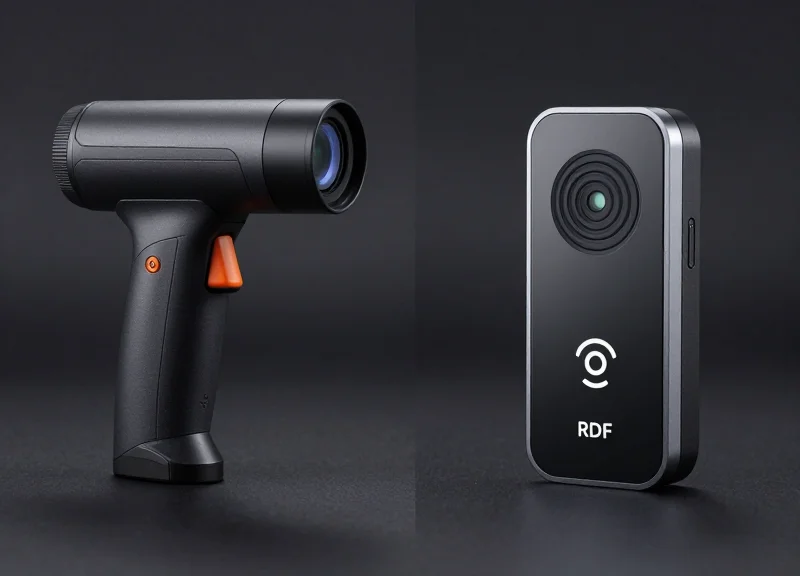
In the 2026 logistics landscape, RFID (Radio Frequency Identification) has surpassed barcodes as the industry standard because it enables 'Zero-Touch' data capture, allowing 3PL providers to identify thousands of assets simultaneously without direct line-of-sight. Unlike barcodes, which are static identifiers requiring manual labor and physical alignment, RFID serves as a dynamic data carrier that integrates directly into autonomous workflows, providing the high-velocity data required for modern AI-driven supply chains.
| Feature | Traditional Barcode (1D/2D) | Next-Gen RFID (UHF/Rain) |
|---|---|---|
| Scanning Method | Manual Line-of-Sight (One by One) | Autonomous Radio Wave (Bulk Scan) |
| Read Rate | Approx. 2-5 seconds per item | Up to 1,000 items per second |
| Data Capacity | Static (Read-only, limited bits) | Rewritable (Up to 2KB+ memory) |
| Environmental Durability | Poor (Easily obscured/damaged) | High (Resistant to dirt, moisture, heat) |
| Operational Range | Inches to a few feet | Up to 30+ feet (Passive) |
The fundamental technical differentiator is the elimination of 'Data Decay.' In traditional 3PL operations, the moment a barcode is printed, the data becomes a snapshot of the past. If a pallet's status changes during transit, the physical label remains the same. RFID enables 'Living Assets'—the tags can be updated at various nodes in the supply chain to reflect real-time status changes, such as customs clearance or quality check approvals, without ever opening the box. This creates a persistent digital twin that maintains its integrity across the entire organizational ecosystem.
Can RFID tags survive harsh industrial environments better than labels?
Yes. While barcodes rely on visual clarity and can be rendered useless by grease, scratches, or moisture, RFID tags are embedded in durable substrates. They can be read through dust, paint, and even some metals using specialized shielding, ensuring 99.9% read accuracy in conditions where barcodes would fail.
What is 'Non-Line-of-Sight' (NLOS) and why does it matter for 3PLs?
NLOS means the reader does not need to 'see' the tag. For a 3PL, this allows for instant inventory counts of entire truckloads or high-density racking without moving a single pallet. This reduces labor costs by up to 80% compared to manual barcode scanning.
Is the transition to RFID cost-prohibitive in 2026?
With the 2026 economy of scale, the cost of passive UHF tags has plummeted to cents per unit. When weighed against the labor savings and the elimination of 'ghost inventory' (lost items), the ROI typically manifests within the first 12 to 18 months of deployment.
From an engineering perspective, the shift is about 'Latency Reduction.' In the Silicon Valley model of logistics, data latency is the enemy of profit. Barcodes introduce human-induced latency at every touchpoint. RFID removes the human from the data loop, shifting the role of the 3PL staff from 'data collectors' to 'data orchestrators,' which is the hallmark of a true 2026-standard operation.
Bridging the Gap Between Manufacturers and Retailers
In the traditional supply chain, manufacturers and retailers often operate in data silos, leading to 'the visibility gap'—a period where goods are in transit and neither party knows their exact status. By 2026, Next-Gen 3PLs will act as the master data conduit, using RFID to provide a continuous, high-fidelity stream of asset data. Unlike barcodes that only tell you where an item was scanned, RFID provides a real-time heartbeat of the inventory, ensuring that manufacturers can predict replenishment needs while retailers can optimize shelf-stocking and consumer fulfillment with 99% accuracy.
| Stakeholder Priority | Manufacturer Perspective (Upstream) | Retailer Perspective (Downstream) |
|---|---|---|
| Inventory Velocity | Needs to know production output vs. actual demand. | Needs to know exact arrival times to manage labor. |
| Data Granularity | Focus on batch quality and SKU performance. | Focus on individual item location and 'Last Mile' readiness. |
| Cost Management | Reducing overproduction and dead stock. | Avoiding out-of-stock scenarios and lost sales. |
The 3PL's role has evolved from a simple logistics provider to a strategic 'Visibility-as-a-Service' (VaaS) partner. By deploying RFID infrastructure at every touchpoint—from the manufacturing warehouse dock to the retail distribution center—the 3PL creates an automated audit trail that requires zero manual intervention. This eliminates the 'he-said, she-said' disputes regarding shipment shortages or damages that currently plague the industry.
- Automated ASN Generation: As goods move through the 3PL's RFID portals, Advanced Shipping Notices (ASNs) are automatically generated and sent to retailers, confirming contents without opening a single box.
- Real-Time Chain of Custody: Every handoff is digitally timestamped, providing manufacturers with proof of delivery and retailers with an exact window for inventory availability.
- Predictive Replenishment: Shared RFID data allows 3PLs to trigger 'auto-restock' signals to manufacturers the moment retail inventory levels dip below a predefined threshold.
Expert Tip: By 2026, the most successful 3PLs will implement 'Event-Triggered Micro-Billing.' Instead of flat-rate storage fees, RFID allows 3PLs to charge manufacturers and retailers based on the precise duration an item occupies space or the specific logistics 'events' it undergoes. This level of transparency builds unprecedented trust between the two ends of the supply chain.
How does RFID help with product recalls?
Because RFID tags contain unique serialized data, a 3PL can identify and isolate specific tainted units across multiple retail locations in seconds, rather than pulling entire batches based on vague barcode date-codes.
Will this infrastructure work with legacy retail systems?
Yes. Modern 3PLs use middleware that translates RFID signals into standard API calls that integrate seamlessly with older ERP and POS systems used by manufacturers and retailers.
Does this reduce the cost of returns?
Significantly. RFID allows for 'Invisible Returns' where the 3PL automatically identifies returned items at the dock, instantly updating the manufacturer's inventory and the retailer's credit ledger.
The Impact of RFID on Operational Scalability
In the 2026 logistics landscape, operational scalability is defined by the ability of a 3PL to handle exponential increases in shipment volume without a proportional increase in headcount or overhead. RFID facilitates this by automating the data-capture layer of the supply chain. By removing the manual 'one-by-one' scan requirement of barcodes, RFID allows for bulk processing and real-time inventory validation. This transition effectively eliminates the primary throughput bottleneck in modern warehouses, ensuring that as your client's business grows, your operational costs remain relatively flat rather than scaling linearly with volume.
| Scalability Metric | Barcode-Based (Linear Scale) | RFID-Enabled (Exponential Scale) |
|---|---|---|
| Inbound Receiving | Manual scanning of every item/carton. | Bulk gate scanning of entire pallets instantly. |
| Labor Dependency | High: More volume requires more staff. | Low: Fixed infrastructure handles higher loads. |
| Error Rate at Peak | Increases due to human fatigue. | Remains near zero via automated validation. |
| Cycle Counting | Weeks of manual labor and shutdowns. | Continuous, autonomous inventory updates. |
Unique Insight: The 'Logistics Elasticity' Principle. Most 3PLs view growth as a challenge of hiring and training. However, 2026 market leaders are adopting a 'Logistics Elasticity' model. This involves shifting from labor-variable costs to fixed-infrastructure costs. Once an RFID portal is installed, the marginal cost of processing the 10,000th unit is effectively zero. This allows 3PLs to offer more competitive pricing during peak seasons (like Q4) while maintaining significantly higher margins than competitors stuck in barcode-manual workflows.
How does RFID handle sudden surges in e-commerce volume?
Unlike manual scanning which slows down as volume increases, RFID portals process hundreds of tags per second. This prevents dock congestion and allows 3PLs to absorb 300-400 percent spikes in volume without additional temporary labor.
Does RFID automation require a complete warehouse redesign?
No. Most scalable RFID solutions are modular. By installing RFID readers at existing choke points like dock doors, conveyor belts, and pick stations, 3PLs can transition to automated scaling without major structural changes.
What is the impact of RFID on personnel retention during scaling?
RFID reduces 'labor fatigue' by eliminating the repetitive, ergonomic strain of manual scanning. By automating the most tedious tasks, 3PLs can focus their human capital on higher-value activities like exception management and strategic account growth.
ROI Analysis: The Financial Case for RFID Migration

The Return on Investment (ROI) for RFID in 3PL operations is calculated by weighing the initial expenditure on tags, readers, and software integration against the dramatic reduction in operational friction. By 2026, the industry standard for RFID payback is expected to fall under 14 months for high-volume facilities, driven primarily by a 90% reduction in manual cycle counting time and a 25% decrease in inventory shrinkage across the supply chain. Unlike barcodes, which represent a recurring labor expense, RFID acts as a capital investment that scales with volume without a linear increase in headcount.
| Financial Metric | Traditional Barcode (Manual) | Next-Gen RFID (Automated) |
|---|---|---|
| Labor Cost (Receiving/Shipping) | High (Manual Scan per Item) | Low (Bulk Gate Reading) |
| Inventory Accuracy | 92% - 95% | 99.5% - 99.9% |
| Shrinkage & Loss Rate | 1.5% - 3.0% | < 0.5% |
| Data Entry Speed | 15-20 Items/Minute | 700-1,000 Items/Second |
| Administrative Reconciliations | High (Error-Prone) | Near Zero |
The Expert Insight: The 'Shared Infrastructure Multiplier' - In 2026, the most successful 3PLs are not absorbing the full cost of RFID. Instead, they leverage a 'Shared ROI' model. Because RFID data benefits the manufacturer (production visibility) and the retailer (out-of-stock prevention), 3PLs are successfully negotiating 'Tagging Credits' or shared subscription fees. This turns the 3PL from a cost center into a value-added data provider, effectively subsidizing the hardware transition through downstream value creation.
- Audit Current Labor Leakage: Quantify the hours spent on manual cycle counts, mis-shipment resolutions, and 'searching' for lost pallets. This usually accounts for 20-30% of total 3PL labor costs.
- Calculate Shrinkage Recovery: Identify the direct capital loss from misplaced or stolen inventory. RFID provides a digital breadcrumb trail that reduces 'unaccounted for' loss by up to 80%.
- Model Scalability Gains: Project the cost of handling a 20% increase in volume. Under a barcode system, this requires 20% more staff; with RFID, it requires zero additional labor at the scan point.
- Determine Total Cost of Ownership (TCO): Balance the cost of passive tags (averaging $0.05-$0.15 in 2026) against the per-unit savings in throughput speed.
Is the high cost of tags a dealbreaker?
No. With the 2026 commoditization of silicon, tag costs have hit a price point where the labor savings of a single 'touchless' scan often pays for the tag itself.
Can RFID integrate with existing WMS?
Most modern Warehouse Management Systems now offer native RFID modules, reducing the 'integration tax' that previously plagued the industry.
What is the average time to positive cash flow?
For a mid-sized 3PL facility, the break-even point occurs when the reduction in error-related chargebacks and labor hours exceeds the monthly equipment lease, typically in month 10-14.
Overcoming Implementation Hurdles in 3PL Environments
Overcoming implementation hurdles in 3PL environments requires a three-pronged strategy: seamless integration between RFID middleware and legacy Warehouse Management Systems (WMS), meticulous mapping of the physical radio frequency (RF) environment to eliminate dead zones, and a robust change management program to transition staff from manual barcode scanning to automated data validation. Unlike the 'line-of-sight' simplicity of barcodes, RFID success hinges on managing the physics of radio waves and the flow of high-volume data packets through existing digital infrastructure.
| Implementation Hurdle | Technical/Operational Solution | 2026 Strategic Impact |
|---|---|---|
| Signal Interference | Conduct RF site surveys and install shielded reader zones. | Ensures 99.9% read accuracy near metal or liquids. |
| WMS Incompatibility | Deploy API-driven middleware to filter 'noisy' RFID data. | Prevents system lag by only sending actionable events. |
| Hardware Capex | Adopt a 'Lease-to-Own' or 'Tag-as-a-Service' model. | Lowers entry barriers for mid-sized 3PL providers. |
| Workforce Friction | Gamify transition training and focus on 'Exception Handling'. | Reduces labor turnover and increases operational speed. |
Expert Insight: The 'Shadow Mapping' Requirement. A common pitfall for 3PLs is assuming that reader placement mirrors barcode station placement. In reality, modern 3PLs must perform 'Shadow Mapping'—an RF-specific site audit that identifies how metal racking, high-moisture products, and even ambient Wi-Fi signals create dead zones. By creating a digital twin of the warehouse’s electromagnetic environment, providers can strategically place readers to ensure total visibility without over-investing in unnecessary hardware.
- Phase 1: Middleware Selection: Choose an RFID middleware that can aggregate thousands of tag reads per second and translate them into simple EDI or API triggers for your existing WMS.
- Phase 2: Pilot in High-Value Zones: Begin implementation at inbound receiving or high-velocity cross-docking points rather than the entire facility to prove ROI quickly.
- Phase 3: Hybrid Infrastructure: Maintain barcode capabilities during the transition period using dual-purpose scanners to ensure zero downtime for legacy clients.
How do we handle RFID data 'noise'?
Middleware filters allow you to set logic parameters so that a tag sitting in a rack near a reader isn't recorded as a 'move' event multiple times.
Is employee training difficult?
Actually, RFID simplifies training because it removes the manual 'find and zap' task, allowing workers to focus on quality control and exceptions.
What about client-side tag compliance?
The most successful 3PLs in 2026 offer 'Value-Added Tagging' services for clients who haven't yet implemented RFID at the manufacturing level.
Future-Proofing Your Logistics Strategy with DragonGuardGroup
Future-proofing a logistics strategy involves more than just buying new hardware; it requires a 'unified signal strategy' that bridges the gap between legacy loss prevention and modern data intelligence. DragonGuardGroup enables 3PL providers to achieve this by deploying hybrid systems that merge Electronic Article Surveillance (EAS) with UHF RFID technology. This dual-layered approach ensures that as global mandates for RFID item-level tagging become the standard by 2026, 3PLs can offer their clients both maximum security and 99.9% inventory accuracy without needing to overhaul their entire infrastructure twice.
- Interoperable Hardware Ecosystem: DragonGuardGroup provides readers and tags that support multiple frequencies (AM, RF, and RFID), allowing 3PLs to service diverse clients who may be at different stages of their digital transformation.
- Industrial-Grade Tag Durability: Our RFID inlays are designed to withstand the rigors of high-velocity 3PL environments, including extreme temperatures and mechanical stress during automated sorting.
- Seamless WMS Integration: Our middle-ware solutions translate raw RFID pings into actionable data packets that sync instantly with existing Warehouse Management Systems, eliminating data silos.
| Feature | Legacy 3PL Setup | DragonGuardGroup Enabled |
|---|---|---|
| Data Capture | Manual Barcode Scanning | Automated Bulk RFID Reading |
| Security | Reactive Alarm Systems | Proactive Item-Level Tracking |
| Scalability | Labor-Dependent | Technology-Driven |
| Error Rate | 1-3% due to human error | Less than 0.01% |
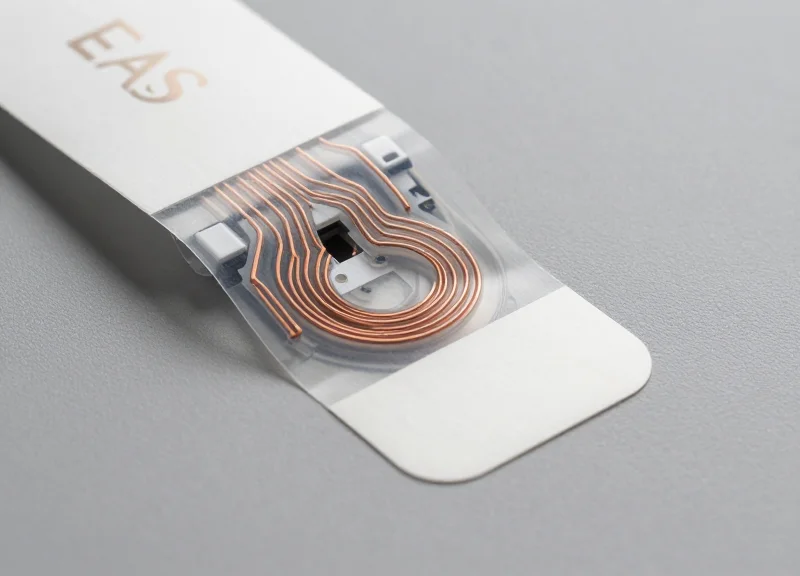
Expert Insight: The Hybrid Advantage. A common pitfall for 3PLs is viewing RFID as a replacement for security. DragonGuardGroup’s unique perspective is the 'Hybrid Security-Data Loop.' By embedding RFID chips within traditional EAS hard tags, we allow 3PLs to provide 'Secured Visibility.' This means an item is not just tracked as a data point in a database, but its physical exit from a facility is verified against an active manifest in real-time. This eliminates 'phantom inventory'—stock that the system says is present but has actually been lost to shrink.
How does DragonGuardGroup handle global RFID standards?
Our hardware is fully compliant with GS1 EPCglobal Gen2v2 standards, ensuring that tags applied in your 3PL facility are readable by retailers and partners anywhere in the world.
Can we upgrade our existing EAS pedestals to RFID?
Yes, DragonGuardGroup specializes in retrofit kits that allow you to add RFID sensing capabilities to your existing security gates, significantly reducing capital expenditure.
What is the typical deployment timeline?
While it varies by facility size, our modular approach allows for 'pilot-to-production' transitions in as little as 8 to 12 weeks, ensuring you are ready for the 2026 requirements.