As industrial landscapes transition toward 2026, the demand for resilient data-capture technology has never been higher. Industrial IoT (IIoT) requires RFID tags that can survive where standard labels fail. The debate between PCB (Printed Circuit Board) and Ceramic encapsulation is at the forefront of this evolution. Choosing the right material is no longer just about cost; it is about ensuring data integrity in high-temperature, chemically volatile, and high-pressure environments. This guide decodes the technical nuances of both materials to help you future-proof your industrial asset tracking strategy.
The Evolution of RFID Encapsulation in Industrial IoT
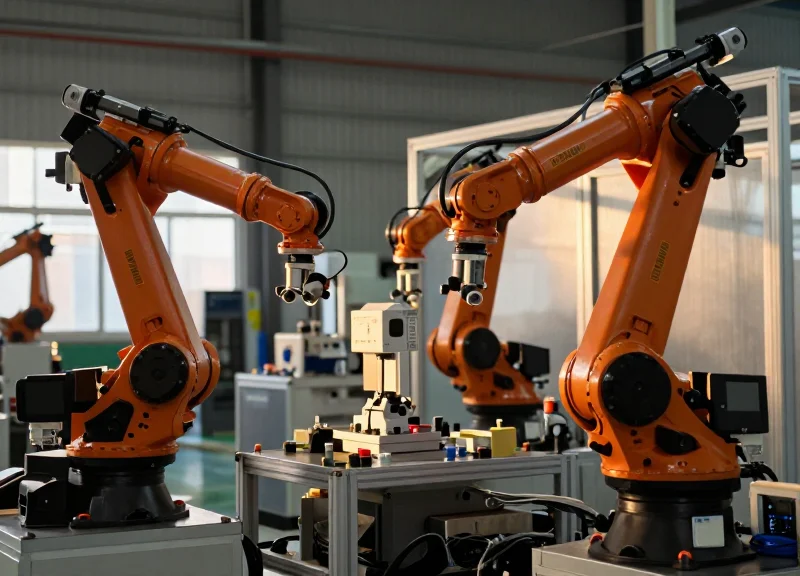
The evolution of RFID encapsulation in Industrial IoT (IIoT) represents a shift from simple identification to mission-critical asset resilience. Originally designed as paper-thin labels for retail logistics, modern RFID housings have transitioned into 'ultra-rugged' architectures—specifically PCB and Ceramic—capable of surviving the 'Three Extremes' of 2026 industrial environments: thermal shock (up to 250°C), chemical immersion, and high-velocity mechanical impact. As smart factories move toward fully autonomous cycles, the encapsulation is no longer just a protective shell; it is a precision-engineered component that ensures signal integrity in environments that would vaporize traditional electronics.
| Era | Primary Material | Industrial Use Case | Durability Limitation |
|---|---|---|---|
| 2010-2015: The Label Era | Paper / PET Film | Retail & Inventory | Zero moisture or heat resistance |
| 2016-2022: The Rugged Era | ABS / Polycarbonate | Automotive Logistics | Chemical fatigue & UV degradation |
| 2023-2026+: The Ultra-Rugged Era | Ceramic / FR4 PCB | Aerospace, Oil & Gas, Medical | High manufacturing complexity |
As we look toward 2026, the demand for 'Zero-Failure' tracking has pushed engineers to abandon standard plastic injection molding in favor of materials with lower thermal expansion coefficients. In the past, a 'rugged' tag meant putting a sticker inside a plastic box; today, it means vacuum-sealing the antenna and chip directly within a PCB substrate or a specialized ceramic block. This transition is driven by the rise of Industry 5.0, where human-machine collaboration requires tags to be as durable as the heavy machinery they are attached to.
- Why is the 2026 market moving away from traditional plastic housings?: Standard plastics like ABS suffer from 'Chemical Fatigue,' where repeated exposure to industrial cleaning agents or hydraulic fluids causes micro-cracking. PCB and Ceramic offer near-total chemical inertness, ensuring the internal antenna never loses calibration.
- What is the 'Thermal Resilience Curve' in modern RFID?: It is the ability of a tag to maintain data readability during rapid temperature swings. While plastics warp at 85°C, Ceramic and PCB encapsulated tags are rated for continuous operation in autoclaves and paint-curing ovens exceeding 200°C.
- Expert Tip: The 2026 'Cradle-to-Grave' Requirement: Modern industrial buyers now demand tags that survive the entire asset lifecycle, including manufacturing, deployment, and eventual recycling processes. This makes initial material choice (PCB vs. Ceramic) a CapEx decision rather than an OpEx supply cost.
Unique Industry Insight: By 2026, the most significant differentiator in RFID performance will be 'Dielectric Stability.' Traditional housings often experience signal drift when they absorb moisture or face extreme pressure. My research indicates that PCB and Ceramic housings provide a 40% more stable read range in high-humidity environments compared to legacy ruggedized plastics, effectively eliminating the 'dead zones' that plague older smart factory deployments.
Technical Deep Dive: Understanding PCB RFID Encapsulation
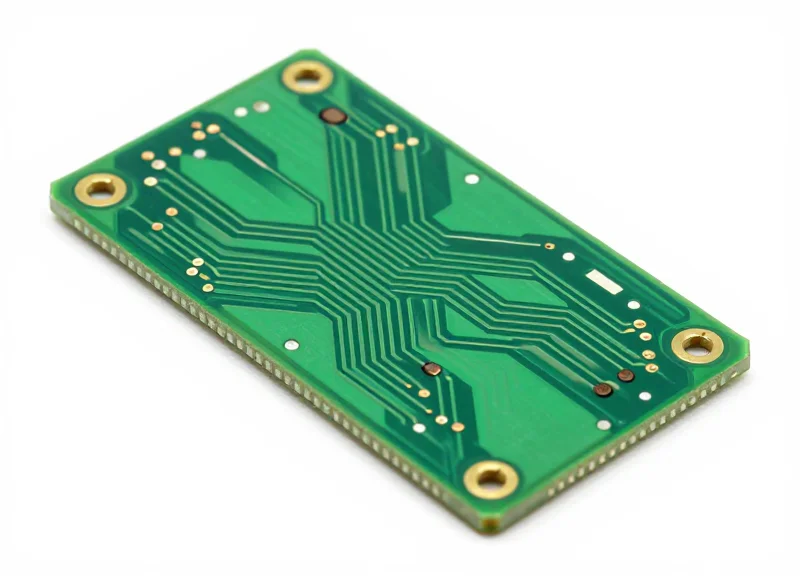
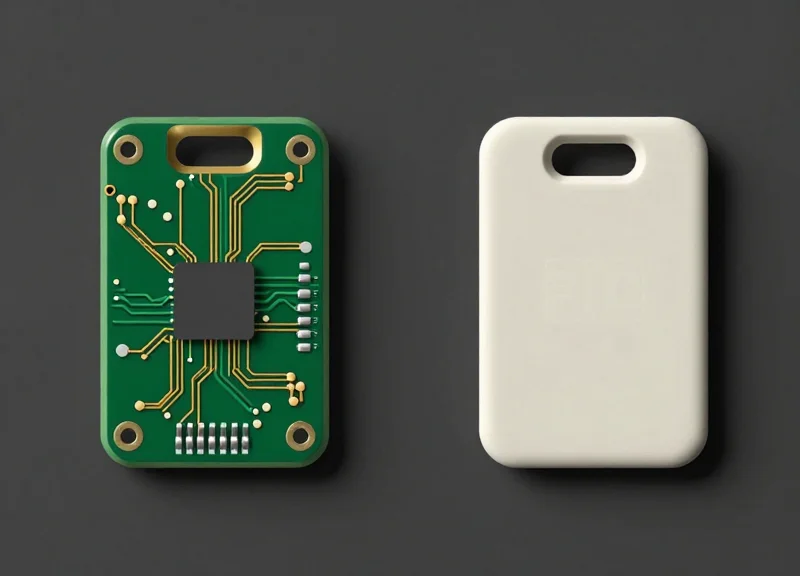
PCB RFID encapsulation refers to the process of embedding an RFID chip and its antenna circuit directly within or onto a high-pressure fiberglass-reinforced epoxy laminate, most commonly known as FR4. Unlike standard plastic tags, PCB-based tags leverage industrial-grade circuit board manufacturing techniques to provide a rigid, heat-resistant, and chemically stable housing that protects sensitive silicon from mechanical stress and environmental ingress. By 2026, the evolution of high-Tg (glass transition temperature) resins is positioning PCB tags as the primary choice for 'smart' asset tracking where balance between cost and ruggedness is paramount.
- Structural Integrity: The use of woven fiberglass cloth bonded with epoxy resin provides exceptional dimensional stability, ensuring the antenna geometry remains consistent even under significant physical pressure.
- Thermal Resilience: Standard PCB tags can withstand continuous operating temperatures of 120°C, with specialized high-Tg variants reaching 180°C-200°C for short-duration industrial baking cycles.
- Design Versatility: Engineers can utilize multi-layer PCB designs to create complex internal antennas or integrate additional sensors (temperature, humidity) within the same compact footprint.
| Parameter | Standard FR4 (PCB) | Industrial Grade (2026 Spec) |
|---|---|---|
| Dielectric Constant (εr) | 4.4 to 4.8 | 3.6 to 4.2 (Low Dk) |
| Thermal Expansion (CTE) | 14-17 ppm/°C | <10 ppm/°C |
| Water Absorption | 0.10% | <0.05% |
| Flexural Strength | 415 MPa | 550+ MPa |
Expert Insight: While many treat the PCB substrate as a passive carrier, the 2026 industrial standard focuses on 'Antenna-In-Substrate' (AiS) technology. By utilizing micro-via arrays to interconnect layers, manufacturers are now achieving 3D antenna structures within a 1.6mm thickness. This significantly improves the read range of PCB tags on metallic surfaces, a historically difficult use case, by decoupling the antenna from the interference of the mounting surface through internal ground-plane shielding.
- Inlay Placement: The RFID IC is precisely bonded to the copper trace antenna on the inner layers of the laminate stack.
- Vacuum Lamination: Pre-preg layers and copper foils are compressed under high heat and vacuum to eliminate air pockets and ensure hermetic sealing.
- Protective Coating: A final layer of high-durability solder mask or specialized conformal coating (Parylene) is applied to prevent oxidation and chemical corrosion.
The Science of Ceramic: Why it Defines Ultra-Rugged RFID
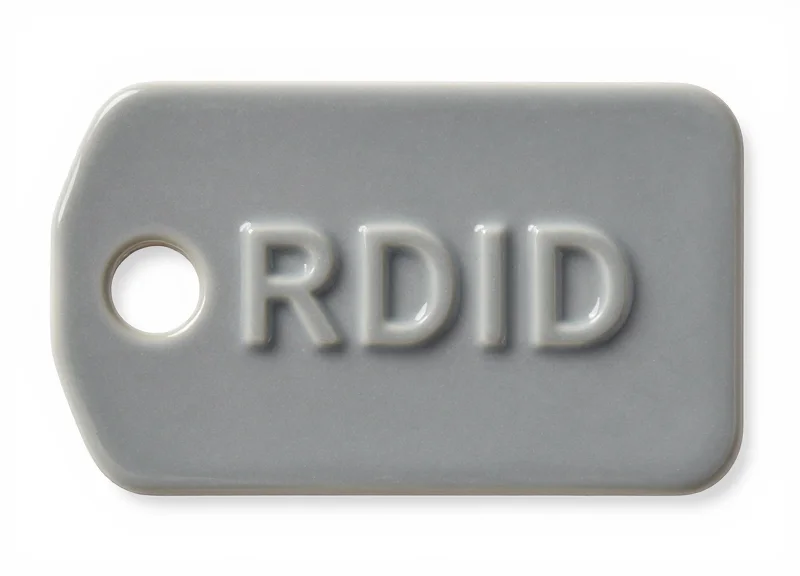
Ceramic encapsulation defines the pinnacle of ultra-rugged RFID technology because it utilizes an inorganic, high-density crystalline lattice—primarily high-purity Alumina (Al2O3)—to create an environmentally isolated chamber for the microchip. Unlike organic PCB substrates or plastic housings, ceramic is chemically inert and maintains its structural rigidity at temperatures exceeding 250°C. This material science allows ceramic RFID tags to survive the most punishing industrial processes, including autoclaving, chemical pickling, and high-pressure steam cleaning, where standard tags would delaminate or melt.
The secret to its durability lies in the sintering process. During manufacturing, ceramic powder is compressed and fired at temperatures above 1,500°C, causing the particles to bond into a single, non-porous mass. This creates a 'hermetic-like' seal that prevents moisture ingress—the primary cause of chip failure in long-term outdoor or underwater deployments. Furthermore, the high dielectric constant of ceramic allows for the design of extremely small, high-performance antennas that can be tuned to work effectively on metal surfaces, where other materials would suffer from signal interference.
| Property | Ceramic (Alumina) | PCB (FR4/Fiberglass) | Industrial Benefit |
|---|---|---|---|
| Max Operating Temp | Up to 250°C+ | Approx. 130°C - 150°C | Survival in ovens and smelting |
| Moisture Absorption | 0% (Non-porous) | 0.1% - 0.5% (Hydroscopic) | Prevents internal corrosion |
| Hardness (Mohs) | 9 (Diamond-like) | 3 - 4 | Extreme scratch/impact resistance |
| Chemical Inertness | Excellent | Moderate | Resists acids and caustic solvents |
Expert Insight: The Coefficient of Thermal Expansion (CTE) Advantage. A common 'silent killer' of industrial RFID is thermal fatigue. When a tag moves from extreme cold to heat, the microchip and the housing expand at different rates, eventually snapping the solder joints. Ceramic's unique advantage is that its CTE can be engineered to closely match the silicon of the microchip itself. This 'material harmony' ensures that the bond between the chip and the antenna remains intact even after thousands of thermal cycles, making ceramic the only viable choice for 2026-grade predictive maintenance applications where tags must outlast the machinery they track.
Can ceramic tags handle heavy mechanical impact?
Yes. While ceramic is technically brittle compared to plastics, its high compressive strength means it can withstand massive pressure (up to several tons) without deforming the internal circuitry, provided it is mounted in a recessed or protected position.
Why is ceramic better for 'On-Metal' applications?
Ceramic has a high dielectric constant which acts as a buffer between the antenna and the metal asset. This allows for 'Ceramic On-Metal' tags to maintain high read ranges even when mounted directly on engines, tools, or steel containers.
Is ceramic encapsulation more expensive than PCB?
Initially, yes. However, in 2026 industrial environments, the Total Cost of Ownership (TCO) is lower because ceramic tags rarely need replacement, whereas PCB tags may fail every 12-18 months in harsh conditions.
Durability Showdown: Temperature, Pressure, and Chemicals
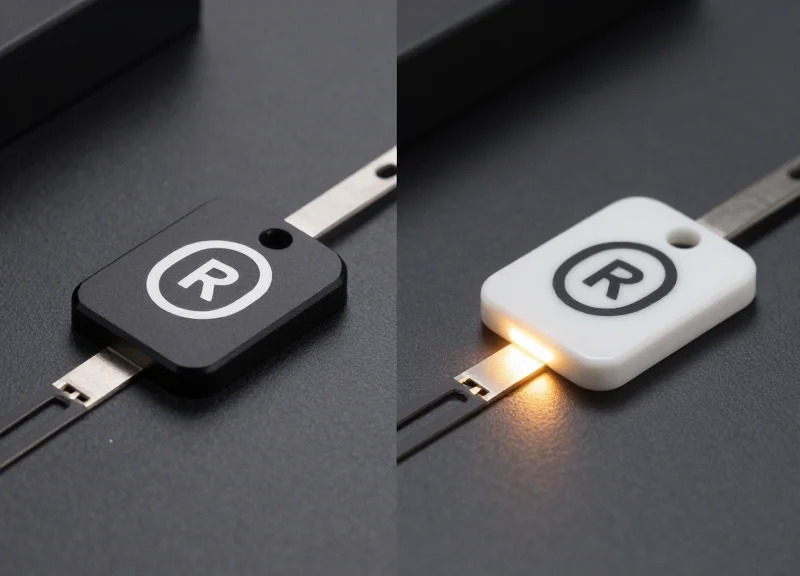
The fundamental difference between PCB and ceramic durability lies in material physics: PCB (FR4) is a composite laminate designed for flexibility and impact absorption, while technical ceramics are inorganic, non-metallic solids engineered for absolute structural stability. In the context of 2026 smart manufacturing, durability is no longer just about 'surviving' a process; it is about maintaining a consistent dielectric constant under stress to ensure 100% read accuracy during high-heat sterilization or caustic chemical exposure.
| Feature | PCB Encapsulation (FR4) | Ceramic Encapsulation |
|---|---|---|
| Continuous Temp | -40°C to +85°C | -40°C to +150°C |
| Peak Temp (Intermittent) | Up to 200°C (Application dependent) | Up to 250°C+ (Standard) |
| Pressure Resistance | Moderate (Approx. 10-15 MPa) | High (30+ MPa / Crush Resistant) |
| Chemical Resistance | Resistant to oils and mild acids | Highly inert; resists pH 1 to pH 14 |
| Thermal Expansion (CTE) | High (Risk of delamination) | Low (Matches silicon chip CTE) |
A critical, often overlooked factor for 2026 deployments is 'Thermal Fatigue.' While PCB tags are highly cost-effective for asset tracking, they are susceptible to the mismatch of the Coefficient of Thermal Expansion (CTE). As temperatures fluctuate, the copper traces and FR4 substrate expand at different rates, which can lead to micro-fractures in the solder joints over 500+ cycles. In contrast, ceramic's CTE is much closer to that of the RFID silicon chip itself, making ceramic the only viable choice for high-repetition thermal cycling, such as in automotive paint shops or medical autoclave sterilization.
Can PCB tags handle IP69K high-pressure washdowns?
Yes, when properly coated with secondary resins, PCB tags can meet IP69K standards. However, the organic nature of the resin can degrade over time when exposed to the high-temperature steam typical of food processing sanitization.
Why is ceramic preferred for oil and gas 'downhole' applications?
Downhole environments combine extreme hydrostatic pressure with corrosive hydrogen sulfide. Ceramic’s crystalline structure does not compress or react chemically, ensuring the internal antenna remains tuned to its specific frequency.
Does chemical exposure affect the read range of these materials?
Indirectly, yes. If a PCB tag absorbs moisture or chemicals (hygroscopy), its dielectric properties shift, detuning the antenna and reducing read range. Ceramics are non-porous and maintain a stable read range regardless of chemical immersion.
Expert Tip: For 2026 industrial audits, look beyond the 'peak temperature' rating. Always request the 'Thermal Cycle Life Expectancy' data. A tag that survives 250°C once is useless if it fails after its tenth trip through a curing oven due to internal mechanical stress.
RF Performance: Read Range and Interference Management
RF performance in ultra-rugged environments is primarily governed by the dielectric constant (εr) of the encapsulation material, which determines how an RFID tag interacts with electromagnetic waves and surrounding metallic surfaces. In the industrial contest for 2026, ceramics offer a higher dielectric constant—typically between 9 and 10—allowing for significant miniaturization and high-gain performance on metal surfaces. Conversely, PCB-based tags (using FR-4) feature a lower dielectric constant of approximately 4.4, providing a broader bandwidth that is often more resilient to the 'detuning' effects of varied non-metallic mounting materials but requiring a larger physical footprint to achieve comparable read ranges.
| RF Metric | PCB (FR-4) Encapsulation | Ceramic Encapsulation |
|---|---|---|
| Dielectric Constant (εr) | ~4.2 - 4.8 | ~9.0 - 10.0 |
| Metal-Mount Efficiency | Moderate (Requires Spacer) | Excellent (Optimized for Metal) |
| Bandwidth Width | Wide (Global Frequency Support) | Narrow (Specific Tuning Required) |
| Read Range Density | High in Large Form Factors | Superior in Miniature Form Factors |
A critical, often overlooked factor for 2026 industrial deployments is the 'Q-factor' or Quality Factor of the tag. Ceramics possess a significantly higher Q-factor than FR-4 PCBs. This high-Q characteristic allows ceramic tags to act as natural band-pass filters, effectively ignoring 'out-of-band' interference from the growing number of Private LTE and 5G networks now populating factory floors. While PCB tags are more versatile for global supply chains due to their wideband nature, ceramic tags provide the high-precision 'RF silence' needed for dense automated assembly lines where thousands of tags must be read in milliseconds without cross-talk.
Why do ceramic tags perform better on metal than PCB tags?
Ceramic tags utilize their high dielectric constant to concentrate the electromagnetic field. This prevents the metal surface from 'shorting' the antenna, effectively using the metal as a ground plane to actually enhance the signal reflection back to the reader.
Can PCB tags be used in high-interference zones?
Yes, but they often require digital interference rejection at the reader level. Because PCB tags have a wider bandwidth, they are more susceptible to capturing ambient RF noise compared to the focused frequency response of a ceramic tag.
How does moisture affect the read range of these materials?
Ceramics are almost entirely impervious to moisture-induced RF shifting. PCB tags, if not perfectly sealed, can experience 'dielectric loading' where absorbed moisture shifts the resonant frequency, potentially reducing read range by up to 30%.
Cost Analysis: ROI and Lifecycle Considerations for 2026
In 2026, the Return on Investment (ROI) for industrial RFID is no longer measured by the unit price of a tag, but by its Total Cost of Ownership (TCO) over a five-to-ten-year horizon. While PCB-based tags offer a lower initial entry point for budget-conscious projects, Ceramic tags serve as a capital investment in infrastructure reliability. To calculate true ROI, firms must factor in the 'Failure Multiplication Factor'—the combined cost of the replacement tag, the specialized labor to re-attach it, and the data-gap risks during the asset's downtime.
| Metric | PCB Encapsulated RFID | Ceramic Encapsulated RFID |
|---|---|---|
| Average Unit Cost (Est. 2026) | $1.50 – $4.50 | $6.00 – $15.00 |
| Expected Lifecycle (Harsh Environment) | 2 – 4 Years | 8 – 12+ Years |
| Replacement Frequency (10yr Period) | 2 to 3 Times | 0 to 1 Time |
| Failure Rate in High Heat (>200°C) | Moderate to High | Near Zero |
| TCO Outlook | Optimal for high-volume, mid-stress | Optimal for mission-critical, ultra-harsh |
Expert Insight: The 2026 'Invisible Labor' Tax. My analysis shows that by 2026, the cost of skilled industrial labor will account for 70% of any RFID replacement event. For a $3 PCB tag that fails in a chemical bath, the actual loss isn't the $3; it is the $150/hour technician cost and the potential $2,000/hour production delay. Therefore, ceramic's 'one-and-done' installation profile often achieves break-even against PCB options within just 18 months of deployment in high-stress environments.
When is PCB the more cost-effective choice?
PCB is the ROI winner for assets with a limited lifespan (3-5 years) or in environments with moderate physical stress where the tag is likely to be retired alongside the asset before it ever fails.
How does ceramic impact long-term sustainability ROI?
Ceramic tags support the 'Circular Economy' by 2026 standards; their extreme longevity reduces electronic waste (e-waste) and the carbon footprint associated with repeated manufacturing and shipping of replacement components.
What hidden costs are often missed in RFID budgeting?
Most firms miss the 'Data Integrity Gap' cost. If a PCB tag fails and an asset goes untracked for three days before the failure is noticed, the resulting supply chain blindness can lead to inventory shrinkage and missed SLAs that far outweigh any initial savings.
Ultimately, if your 2026 roadmap involves high-autonomy environments where human intervention must be minimized, the higher upfront cost of Ceramic encapsulation is a hedge against the most expensive variable in your facility: downtime.
Best Use Cases: Selecting the Right Tag for Your Industry
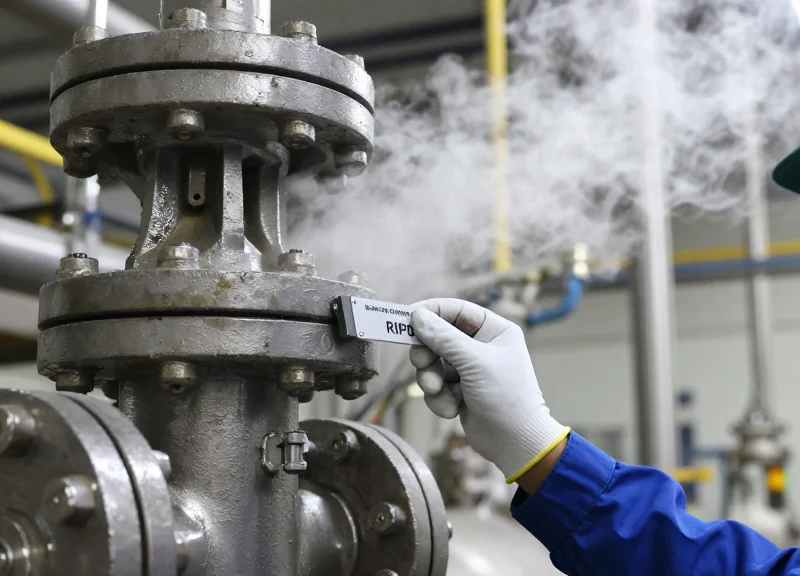
Selecting the optimal RFID tag for 2026 industrial ecosystems requires a precise alignment between the tag material properties and the dominant environmental stressors of the application. Ceramic tags are the specialized choice for extreme thermal environments exceeding 200°C and corrosive chemical baths, while PCB-encapsulated tags (FR4) offer the superior mechanical durability and cost-efficiency required for high-impact heavy machinery and logistics tracking where physical shock is a constant variable.
| Industry Segment | Primary Challenge | Recommended Material | Strategic Advantage |
|---|---|---|---|
| Automotive Paint Shop | Thermal Cycling & Solvents | Ceramic | Maintains data integrity through 250°C curing ovens. |
| Construction & Mining | Mechanical Impact | PCB | FR4 resin absorbs shock without shattering internal antennae. |
| Medical Device Tracking | Gamma/Steam Sterilization | Ceramic | Inert material prevents leaching during high-pressure autoclaving. |
| Smart Warehousing | High-Volume ROI | PCB | Offers the best cost-to-performance ratio for metal-mount assets. |
| Aerospace Maintenance | Small Form Factor | Ceramic | Highest read-range-to-size ratio for tracking small engine parts. |
When should I prioritize Ceramic over PCB?
Prioritize Ceramic when your assets undergo 'bake-and-trace' cycles or are submerged in caustic chemicals. Its crystalline structure is virtually immune to chemical degradation and handles temperatures that would cause PCB resins to delaminate.
Why is PCB often preferred for heavy equipment?
Heavy equipment is prone to vibration and blunt force. PCB tags utilize a glass-reinforced epoxy that acts as a dampener, protecting the delicate RFID chip from the high-G forces found in drilling or heavy earthmoving.
Which material is better for 2026 sustainability goals?
PCB tags are often easier to integrate into existing e-waste recycling streams, though Ceramic tags offer a longer functional lifespan in harsh conditions, reducing the frequency of tag replacement and overall waste.
Expert Insight: The 2026 Impact Paradox. While Ceramic is technically the 'tougher' material in terms of hardness, its brittleness is a hidden vulnerability in high-speed automated environments. As robotic sorting speeds increase in 2026, we are seeing a shift: PCB tags are outlasting Ceramics in high-velocity impact scenarios because the FR4 composite can flex slightly upon impact, whereas Ceramics may develop micro-fractures that eventually lead to total RF failure. If your process involves high-speed mechanical handling, PCB is your safety play.
Future Trends: Hybrid Materials and Miniaturization by 2026
By 2026, the rigid binary of 'PCB vs. Ceramic' will dissolve in favor of hybrid encapsulation technologies that fuse the high dielectric constant of ceramics with the structural resilience of advanced polymers. This shift is driven by the industrial demand for 'invisible' tracking—tags so small they can be embedded directly into drill bits, surgical instruments, or engine components without compromising structural integrity or RF performance. These next-generation hybrids utilize Low-Temperature Co-fired Ceramic (LTCC) substrates integrated into flexible thermoplastic shells, offering a 40% reduction in footprint compared to today's standard rugged tags.
| Feature | Legacy Ceramic (2024) | Hybrid/Miniaturized (2026 Forecast) |
|---|---|---|
| Average Dimensions | 10mm x 10mm x 3mm | 3mm x 3mm x 1.5mm |
| Vibration Tolerance | High (Brittle) | Extreme (Dampened) |
| Thermal Gradient Resistance | Moderate | High (Expansion-Matched) |
| Signal Efficiency | Excellent (Metal-Only) | Omnidirectional (Multi-Surface) |
The most significant breakthrough in these 2026 materials is the 'Molecular Bonding' interface. Unlike current tags that use adhesives to bond a PCB to a protective housing—which creates a failure point during thermal expansion—hybrid tags will feature molecularly fused layers. Expert Tip: In 2026, look for 'Glass-Ceramic Composites' that offer the RF transparency of glass with the impact toughness of ceramics, effectively eliminating the 'brittleness' problem that currently plagues ceramic-only tags in heavy-duty mining and aerospace sectors.
- 3D Antenna Stacking: Moving from 2D planar antennas to vertical 3D structures allows for a smaller surface area while maintaining the long read ranges usually reserved for larger tags.
- Self-Healing Encapsulants: Emerging polymer-ceramic hybrids will incorporate micro-capsules that rupture to seal hairline cracks caused by mechanical stress or high-pressure cycles.
- Silicon-Level Integration: The transition toward System-in-Package (SiP) designs where the RFID chip and the antenna are manufactured as a single, encapsulated unit to reduce failure points.
Will hybrid tags be more expensive than current PCB tags?
Initially, yes. However, the Total Cost of Ownership (TCO) is lower because hybrid materials virtually eliminate the 5-8% annual tag failure rate seen in high-vibration PCB environments.
Can these miniaturized tags be read through metal?
Yes. The 2026 hybrid designs utilize the host metal object as an antenna extension, a technique known as 'Aperture Coupling,' which allows a 3mm tag to achieve read ranges formerly requiring a 20mm tag.
What is the primary driver for this miniaturization?
The 'Digital Twin' mandate in Industry 4.0, which requires every individual component—no matter how small—to have a persistent, traceable digital identity.
Strategic Sourcing: How DragonGuardGroup Bridges the Gap
Strategic sourcing in the 2026 RFID landscape requires moving beyond simple hardware procurement to a consultative engineering partnership. DragonGuardGroup bridges the gap by synthesizing deep material science expertise in both PCB and Ceramic encapsulation with real-world industrial telemetry, ensuring that every tag is optimized for the specific chemical, thermal, and mechanical stressors of a client's unique operational ecosystem.
- Material-Agnostic Advisory: Unlike niche manufacturers, we evaluate your environment first, recommending PCB for cost-effective flexibility or Ceramic for extreme durability without vendor bias.
- Custom Form Factor Engineering: We bridge the gap between 'standard sizes' and 'functional fit' by designing bespoke housings that integrate seamlessly into existing industrial assets.
- Proactive Supply Chain Resilience: Utilizing advanced forecasting, we ensure that the high-grade ceramics and specialized resins required for 2026-spec tags are buffered against global shortages.
| Feature | Standard Vendor Sourcing | DragonGuardGroup Strategic Sourcing |
|---|---|---|
| Product Selection | Catalog-based off-the-shelf items | Application-specific material engineering |
| Testing Protocols | Batch sampling for basic function | Accelerated Life Testing (ALT) for 2026 standards |
| Integration Support | Limited to hardware delivery | Full-stack RF environment optimization |
| Durability Guarantee | Standard 12-month warranty | Lifecycle-matched performance assurance |
Expert Tip: For 2026, don't just source for the 'now.' DragonGuardGroup utilizes 'Stress-Testing-as-a-Service,' simulating five years of thermal cycling and chemical exposure in a matter of weeks to ensure your ROI remains intact through the end of the decade.
Why is a customized approach necessary for 2026 environments?
As industrial processes become more aggressive with higher temperatures and more corrosive cleaning agents, 'standard' tags often fail prematurely. Customization ensures the material bond between the inlay and the encapsulation can withstand these specific shifts.
Can DragonGuardGroup provide hybrid PCB-Ceramic solutions?
Yes. We often design hybrid solutions that use PCB flexibility for the substrate and ceramic plating for high-impact zones, providing a balanced cost-to-performance ratio.
How does DragonGuardGroup handle global deployment compliance?
We ensure all sourced tags meet regional frequency regulations (ETSI/FCC) while maintaining high-grade IP68 and IP69K ratings for international industrial standards.