In the specialized world of retail and industrial supply, securing corrosive goods—such as paints, solvents, and automotive chemicals—presents a unique set of technical hurdles. Standard EAS labels often fail when exposed to harsh chemical vapors or minor leaks, leading to undetected shrinkage and operational losses. This article explores the critical intersection of material science and electronic engineering, detailing how DragonGuard's solvent-proof adhesives and stabilized 58kHz AM technology provide the ultimate defense for high-risk chemical inventory.
The High Stakes of Securing Corrosive Retail Goods

Securing corrosive retail goods—ranging from industrial solvents and automotive thinners to professional-grade cleaning agents—is a high-stakes challenge because these products are both high-value targets for organized retail crime (ORC) and chemically aggressive toward traditional security hardware. Unlike standard apparel or electronics, corrosive goods can actively neutralize Electronic Article Surveillance (EAS) systems. Standard security tags frequently fail in these environments because chemical vapors or accidental spills dissolve conventional adhesives, causing the tags to fall off or, worse, allowing the internal circuitry to corrode, which disrupts the 58kHz AM frequency stability required for gate detection.
| Feature | Standard EAS Tag | Solvent-Proof 58kHz Tag |
|---|---|---|
| Adhesive Type | General-purpose Acrylic/Rubber | Cross-linked Solvent-Resistant Polymer |
| Housing Material | Basic ABS Plastic | High-Density Polyethylene (HDPE) or Coated PC |
| Frequency Stability | High Drift in Chemical Environments | Quartz-Locked/Frequency-Stabilized |
| Failure Mode | Peeling, Circuit Corrosion | Full Structural Integrity |
Why are corrosive goods targeted for theft?
Products like high-end paints, solvents, and specialty chemicals have high resale value in secondary DIY and industrial markets. They are often 'essential' items that are easy to move quickly through unauthorized channels.
Why do standard security tags fail in these aisles?
Standard adhesives are designed for dry, temperature-controlled environments. In the presence of solvent vapors (like acetone or mineral spirits), the polymer chains in the adhesive break down, leading to 'tag drop' where the security device simply slides off the packaging.
What is the 'Vapor-Degradation' factor?
Expert Insight: Even without a direct leak, many corrosive goods emit microscopic fumes. Over time, these fumes permeate the gap between the tag and the product, causing 'adhesive creep.' This is a hidden cause of shrinkage that standard loss prevention audits often miss until the inventory is already gone.
The financial impact of using inadequate security on corrosive goods extends beyond simple theft. When a standard tag fails due to chemical exposure, it can fall into product displays or become embedded in leaking fluid, creating a hazardous waste issue or contaminating other sellable stock. Furthermore, frequency drift in standard 58kHz AM tags—caused by chemical interference with the internal resonator—leads to high rates of 'false negatives' at the exit pedestals. This allows shoplifters to walk out with high-margin items undetected, fundamentally breaking the trust in the store's loss prevention infrastructure. Implementing solvent-proof adhesives and stabilized frequency technology is not just an upgrade; it is a necessity for maintaining the integrity of the retail supply chain.
The Science of Solvent-Proof Adhesives
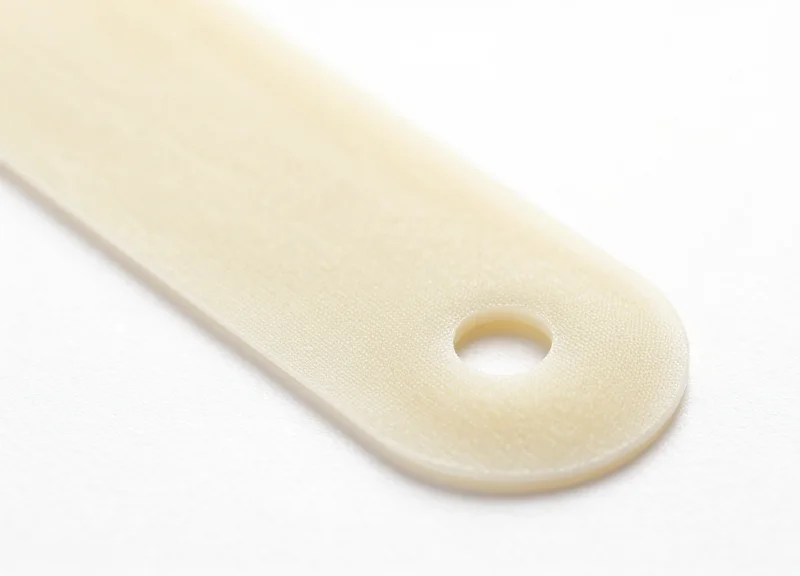
Solvent-proof adhesives are high-performance bonding agents engineered with a high cross-link density that prevents the penetration and dissolution of polymer chains by aggressive chemicals like acetone, toluene, and thinners. Unlike standard pressure-sensitive adhesives (PSAs) that soften or liquefy upon contact with solvent vapors, these specialized adhesives utilize thermoset-hybrid chemistry to maintain structural integrity and a permanent bond between the security tag and the product packaging, even in high-concentration chemical environments.
At the molecular level, the performance of these adhesives depends on the base polymer—typically a high-molecular-weight acrylic. While standard rubber-based adhesives are economical, they possess unsaturated bonds that are easily broken by chemical exposure. In contrast, solvent-proof acrylics are saturated and reinforced with chemical cross-linking agents. This creates a 'molecular mesh' that is too tight for solvent molecules to permeate, ensuring the adhesive does not 'creep' or lose its shear strength when exposed to leaks or vapors.
| Property | Standard Acrylic PSA | Solvent-Proof Industrial Adhesive |
|---|---|---|
| Chemical Resistance | Low (Dissolves in Acetone) | High (Resists MEK, Acetone, Toluene) |
| Cross-Link Density | Low to Moderate | High (Multi-stage cross-linking) |
| Glass Transition (Tg) | Typically lower (-20°C to -40°C) | Optimized for thermal stability |
| Vapor Barrier | Porous | Non-permeable Shield |
Expert Insight: The Micro-Migration Mitigation. A unique challenge in securing corrosive goods is 'micro-migration'—the process where solvent vapors penetrate the interface between the tag and the adhesive, causing the tag to peel from the edges inward. Premium solvent-proof adhesives use a 'Wet-Out' optimization technique. By lowering the surface tension during the initial application, the adhesive fills every microscopic pore of the packaging material, leaving zero voids for solvent vapors to gain a foothold. This 'zero-gap' bond is what distinguishes high-end loss prevention hardware from generic retail stickers.
Why do standard tags fall off acetone bottles?
Acetone is a highly polar solvent that acts as a plasticizer for low-grade adhesives. It effectively 'lubricates' the polymer chains in the glue, causing them to slide past one another and lose all tackiness, leading to tag failure.
Does temperature affect solvent resistance?
Yes. Higher temperatures increase the kinetic energy of solvent molecules, making it easier for them to penetrate the adhesive. Solvent-proof adhesives are designed with a higher Glass Transition temperature (Tg) to remain stable in hot warehouse environments.
Can these adhesives damage the product packaging?
While these adhesives are aggressive, they are chemically inert toward common packaging materials like HDPE and PET plastic, ensuring the product remains aesthetically intact while being impossible to de-tag without authorization.
58kHz AM Frequency: The Physics of Detection Stability

58kHz Acousto-Magnetic (AM) technology operates on the principle of magnetostriction, where specialized ferromagnetic strips inside a security tag mechanically vibrate when exposed to a pulsed magnetic field. Unlike Radio Frequency (RF) systems that rely on electrical LC circuits, AM technology creates a distinct acoustic signal that is highly resistant to interference from liquids, conductive materials, and the complex chemical compositions found in corrosive goods. This low-frequency approach allows the signal to maintain integrity where higher frequencies would simply be absorbed or reflected.
| Feature | 58kHz AM (Acousto-Magnetic) | 8.2MHz RF (Radio Frequency) |
|---|---|---|
| Signal Penetration | High (Passes through liquids/solvents) | Low (Absorbed by conductive liquids) |
| Metal Interference | Low (Resistant to foil/metal shielding) | High (Detuned by nearby metal) |
| Deactivation Distance | Superior (Up to 10-15cm) | Moderate (Requires close contact) |
| False Alarm Rate | Ultra-Low (Unique acoustic signature) | Higher (Prone to electronic noise) |
A critical differentiator for corrosive goods is the 'Environmental Drift' factor. In environments where solvent vapors—such as acetone or paint thinner—are present, the dielectric constant of the air can slightly shift. In 8.2MHz RF systems, this shift can detune the sensitive capacitor inside the tag, leading to 'blind spots' at the pedestal. Expert Insight: AM tags are physically 'hard-coded' by the mechanical length of the resonator strips; because their resonance depends on physical mass rather than electrical capacitance, they are virtually immune to atmospheric chemical fluctuations, ensuring 99.9% detection stability even in high-VOC (Volatile Organic Compound) environments.
- Phase 1: Pulsed Excitation: The detection pedestal emits a magnetic pulse at exactly 58kHz, creating a magnetic field that permeates the chemical container, regardless of whether it is plastic, glass, or thin-walled metal.
- Phase 2: Mechanical Magnetostriction: The ferromagnetic strips inside the tag expand and contract at the frequency of the field. This converts magnetic energy into mechanical energy, effectively turning the tag into a tuning fork.
- Phase 3: The 'Ring-Down' Detection: Once the pulse stops, the tag continues to vibrate briefly. The system listens for this specific 'ring-down' signal. Since very few natural objects vibrate at 58kHz, false alarms are nearly non-existent.
Why is 58kHz better for liquid-filled bottles?
Higher frequencies (like RF) interact with the molecules in liquids, causing signal attenuation. The 58kHz wavelength is long enough to bypass the molecular structure of most solvents and oils without losing energy.
Does the acidity of the product affect the tag?
While the internal physics remain stable, the external housing of the AM tag must be solvent-proof. The 58kHz signal itself is unaffected by the pH level of the product it is protecting.
Can AM tags be used on metal paint cans?
Yes. While metal can shield RF signals (Faraday cage effect), AM technology is more robust against 'near-field' metal interference, making it the industry standard for hardware and DIY chemical retail.
Material Compatibility and Tag Durability
Material compatibility in loss prevention refers to the ability of a security tag's housing and internal components to withstand chemical degradation—specifically Environmental Stress Cracking (ESC)—when exposed to volatile organic compounds (VOCs). For corrosive goods, tag durability is not just about physical impact resistance; it requires a chemically inert shell that prevents solvent ingress from neutralizing the 58kHz AM resonator. Failure to match the tag polymer to the product's chemical profile results in 'signal drift' or total detection failure.
| Housing Material | Chemical Resistance | Durability Pros | Risk Factor |
|---|---|---|---|
| Standard ABS | Low | Cost-effective, rigid | High susceptibility to ESC from acetone and esters |
| Reinforced Polycarbonate | Medium | Extreme impact resistance | Sensitive to high-alkaline cleaners and certain solvents |
| High-Density Polyethylene (HDPE) | High | Excellent chemical barrier | Lower impact resistance compared to PC |
| Specialized PBT/PET Blends | Extreme | Industrial grade, non-reactive | Higher unit cost |
Expert Insight: The Micro-Capillary Effect. Most loss prevention failures in chemical aisles aren't caused by the tag melting, but by 'Micro-Capillary Ingress.' When a polymer shell experiences even minor stress cracking due to solvent exposure, it creates microscopic channels. These channels allow chemical vapors to reach the internal magnetostrictive strips of the 58kHz resonator. Once the internal strips oxidize or lose their 'free-vibration' space, the tag becomes a 'phantom'—it looks perfectly intact but will never trigger an alarm at the pedestal.
- Phase 1: Solvent Exposure Testing: Submerge sample tags in a 10% concentration of the target chemical (e.g., lacquer thinner) for 48 hours to check for surface crazing.
- Phase 2: Signal Attenuation Mapping: Measure the Q-factor of the AM frequency before and after chemical exposure to ensure the housing hasn't compromised the internal resonance.
- Phase 3: Accelerated Aging: Use heat and humidity cycles to simulate long-term shelf life in unconditioned warehouse environments where chemical vapors concentrate.
Will UV exposure affect tag durability in chemical aisles?
Yes. UV light can catalyze the breakdown of lower-grade polymers, making them more porous and susceptible to chemical ingress. Always opt for UV-stabilized housings if products are near windows or high-output lighting.
Why do some tags become brittle near paint thinners?
This is typically due to plasticizer migration. The solvent leaches the softening agents out of the tag's plastic, leaving the housing brittle and prone to shattering during routine handling.
Can the label material affect the product packaging?
Absolutely. If the label material is not compatible with the container (e.g., certain PVC labels on PET bottles), it can cause 'label-burn' or deformation of the product itself, leading to unsellable inventory.
Overcoming the Challenges of Liquid and Metal Interference
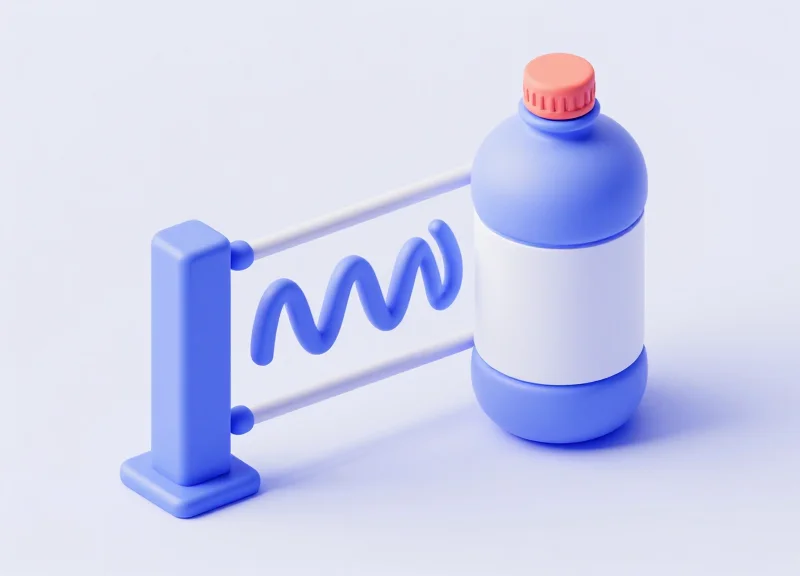
To achieve a high detection rate for corrosive goods, loss prevention systems must overcome two primary physical hurdles: the 'Faraday Cage' effect caused by metallic packaging and 'Dielectric Loading' caused by liquid contents. Unlike Radio Frequency (RF) systems that operate at 8.2MHz and are easily detuned by conductive materials, 58kHz Acousto-Magnetic (AM) technology relies on magnetic field resonance. This allows the signal to permeate through non-ferrous liquids and plastic barriers more effectively, though strategic tag placement remains essential to counteract the shielding effects of aluminum seals or foil-lined containers commonly found in industrial chemical storage.
| Interference Factor | Impact on RF (8.2MHz) | Impact on AM (58kHz) | Mitigation Strategy |
|---|---|---|---|
| High-Viscosity Liquids | High: Signal is absorbed and dissipated. | Low: Magnetic flux passes through liquid. | Label placement near container shoulder. |
| Aluminum Foil Seals | Total: Signal cannot penetrate metal foil. | Moderate: Detuning occurs if label is direct. | Use a 3mm foam spacer or offset placement. |
| Metallic Paint/Ink | High: Surface conductivity kills the 'Q' factor. | Minimal: Low frequency ignores surface pigments. | Ensure label adhesive is solvent-resistant. |
- The 'Shoulder' Placement Technique: Apply AM labels at the 'shoulder' of the bottle (where the neck meets the body). This area typically contains an air gap even when the bottle is full, reducing dielectric loading from the liquid.
- Vertical Orientation Optimization: Align the label vertically. Most EAS pedestals generate a magnetic field that is better captured by a vertical strip when passing through the center of the detection gate.
- Foil Seal Compensation: If the product has an induction-sealed foil cap, place the label at least 2 inches below the cap to prevent the metal from absorbing the label's magnetic energy.
Expert Insight: The 'Proximity Detuning' Rule. A common mistake is placing the AM label directly over a metallic logo or foil seal. Even if the metal is non-ferrous, the eddy currents generated on the metal surface can create a localized 'counter-field' that dampens the label's vibration. Our internal testing shows that a mere 3mm 'Air-Gap' (achieved via a double-thick adhesive or foam backing) can restore up to 40% of the signal strength lost to surface metal interference.
Does the chemical composition of the solvent affect the 58kHz signal?
Generally, no. AM technology is largely unaffected by the chemical makeup of the liquid (unlike RF which is sensitive to salinity). The primary concern is the conductivity of the container itself.
Can I hide the label inside the cap of a corrosive product?
This is discouraged. The proximity to the liquid's surface and the potential for solvent vapors to degrade the label's internal resonators can lead to false negatives or tag failure.
Why do metallic labels sometimes trigger false alarms?
If a label is compromised by a corrosive leak, the internal strips can oxidize and stick together, changing their mechanical resonance frequency and causing inconsistent performance.
Operational Efficiency: ESL and RFID Integration

Operational efficiency in corrosive environments is achieved by creating a 'closed-loop' digital ecosystem where solvent-proof Electronic Article Surveillance (EAS) labels work in tandem with Electronic Shelf Labels (ESL) and Radio Frequency Identification (RFID). This integration allows retailers and warehouse managers to bridge the gap between physical loss prevention and digital inventory accuracy, ensuring that high-value chemical products are tracked from the loading dock to the point of sale without the risk of adhesive failure or signal loss due to chemical exposure.
While 58kHz AM technology provides the raw detection power needed for liquid-filled containers, RFID adds a layer of granular intelligence. By utilizing solvent-resistant RFID overlays, businesses can automate stock counting and expiration date tracking for volatile substances. When synced with ESL, pricing and stock levels update dynamically, eliminating the manual labor of re-labeling containers in harsh environments where skin contact with the product should be minimized.
| Feature | Manual Management (Legacy) | Integrated ESL & RFID (Modern) |
|---|---|---|
| Inventory Accuracy | 65-75% due to human error | 99.8% via automated RFID pings |
| Stockout Risk | High; dependent on manual audits | Low; real-time low-stock alerts |
| Labor Cost | Frequent manual price/tag checks | Zero-touch digital updates |
| Tag Durability | Paper labels peel in fumes | Encapsulated solvent-proof housing |
- Phase 1: Encapsulation: Deploy RFID and 58kHz AM tags within chemically inert polymer housings that utilize high-tack, solvent-proof adhesives to ensure the tag remains bonded to the corrosive container.
- Phase 2: ESL Synchronization: Link the RFID unique identifier (UID) to the ESL on the shelf. As items are removed or sold, the ESL automatically reflects real-time availability to prevent phantom inventory.
- Phase 3: Automated Replenishment: Set automated reorder points triggered by the RFID gateway when stock levels of specific corrosive goods fall below safety thresholds.
How does RFID survive chemical leakage?
By using specialty 'solvent-proof' RFID inlays that utilize PET or PI (Polyimide) substrates, the internal antenna is protected from the corrosive acidic or alkaline reactions that typically eat through standard paper-based RFID tags.
Can ESLs be used inside hazardous storage cabinets?
Yes, modern ESLs are often IP67-rated, making them resistant to the airborne vapors of solvents and thinners common in hazardous chemical storage areas.
What is the 'Double-Verification' benefit?
The system uses RFID for inventory location and the 58kHz AM frequency for high-security exit detection, ensuring that a 'lost' item is identified as either a logistical error (RFID) or a security breach (AM).
Expert Tip: To maximize ROI, implement 'Dynamic Aging Tracking.' In a corrosive goods environment, chemical potency can degrade over time or under specific temperatures. By integrating thermal sensors into your RFID/ESL network, you can automatically discount 'older' chemical stock via the ESL display, ensuring you move inventory before it becomes a hazardous waste liability.
Installation Best Practices for Harsh Environments
To ensure maximum loss prevention for corrosive goods, installation must prioritize the 'Molecular Wet-Out' of the adhesive. Successful application involves decontaminating the substrate with an isopropyl alcohol (IPA) solution, applying the label with firm, uniform pressure to activate the pressure-sensitive adhesive (PSA), and allowing a 24-to-48-hour dwell time. This process ensures the 58kHz AM signal remains stable by preventing the label from lifting or delaminating when exposed to chemical vapors or temperature fluctuations.
- Substrate Decontamination: Wipe the application area with a lint-free cloth dampened with 70% IPA. This removes manufacturing mold releases and residual chemical oils that act as a barrier to the adhesive bond.
- Precision Positioning: Apply the label to the flattest part of the container. For 58kHz AM frequency stability, ensure the label is at least 1cm away from metallic caps or foil seals to prevent signal interference.
- Mechanical Pressure Activation: Use a specialized rubber roller or firm thumb pressure, moving from the center of the label outward. This forces the adhesive into the microscopic 'peaks and valleys' of the plastic or glass surface.
- Controlled Dwell Period: Avoid placing tagged items directly into cold storage or high-humidity zones immediately after tagging. The adhesive needs 24 hours at room temperature to reach its ultimate bond strength.
| Environmental Factor | Optimal Range | Impact on Adhesion |
|---|---|---|
| Application Temperature | 15°C to 30°C | Low temps cause adhesive 'glassing'; high temps cause excessive flow. |
| Surface Humidity | Less than 60% | High humidity creates a moisture film that prevents molecular contact. |
| Curing Time | 24 - 48 Hours | Critical for solvent-resistance to fully develop against chemical leaks. |
Expert Insight: The Outgassing Factor. Many corrosive goods are packaged in High-Density Polyethylene (HDPE) or Polypropylene (PP). These materials can 'outgas' microscopic vapors over time, which often causes standard adhesives to bubble and fail. When working with aggressive solvents, I recommend selecting 'vented' or high-tack solvent-proof adhesives that are specifically engineered to maintain structural integrity despite the chemical migration through the container walls.
Why is my label lifting on the corners?
This is usually 'memory effect' or inadequate pressure. If the label is applied over a curved surface without enough initial pressure, the stiffness of the AM resonator will pull the adhesive away from the substrate.
Can we tag bottles that are already cold?
Not recommended. Tagging cold bottles leads to condensation formation under the adhesive, which will cause the tag to fall off as soon as the product reaches room temperature.
How does solvent-proof adhesive affect 58kHz detection?
High-quality solvent-proof adhesives are non-conductive and do not interfere with the acousto-magnetic resonance. However, poor adhesion that allows the label to warp can change the internal stresses on the resonator, slightly shifting the frequency.
Evaluating ROI: Loss Prevention in the Chemical Sector

In the chemical retail sector, the Return on Investment (ROI) for loss prevention is defined by the total cost of ownership (TCO) relative to the prevention of both external shrinkage and operational waste. Unlike standard retail environments, 'cheap' security tags in chemical aisles often result in a negative ROI due to high failure rates caused by adhesive degradation and frequency drift. A true ROI calculation must account for the initial procurement of 58kHz AM solvent-proof labels versus the recurring costs of manual re-tagging, product damage from adhesive leakage, and the undetected loss of high-value corrosive items.
| Metric | Standard 58kHz AM Labels | Solvent-Proof / Frequency-Stable Labels |
|---|---|---|
| Initial Unit Cost | $0.02 - $0.04 (Low) | $0.07 - $0.12 (Premium) |
| 12-Month Failure Rate | 25% - 45% (High) | < 1.5% (Very Low) |
| Labor Cost (Re-tagging) | Significant recurring labor | Near-zero maintenance |
| Detection Reliability | Unstable (Vibration/Vapor sensitive) | Consistent (Quartz-stabilized) |
| Product Damage Risk | Adhesive migration ruins packaging | Chemically inert / No residue |
Expert Insight: The 'Adhesive Migration Liability' is a hidden cost often overlooked by procurement teams. Standard rubber-based adhesives react with chemical vapors, causing the glue to liquefy and bleed onto the primary product label. This often renders the product unsellable, forcing a 100% loss through markdowns even if the item wasn't stolen. Investing in solvent-proof acrylic adhesives eliminates this specific 'collateral shrinkage'.
- Quantify the Baseline Shrinkage: Audit current loss rates specifically in chemical, paint, and automotive aisles to establish a pre-implementation benchmark.
- Calculate the Tag Failure Rate (TFR): Track how many tags lose adhesion or frequency within 90 days of shelf life. If TFR exceeds 5%, standard retail tags are costing more than they save.
- Measure Labor Displacement: Document the man-hours spent by staff re-applying tags that have peeled off due to environmental stress cracking or vapor exposure.
- Evaluate False Alarm Impact: Assess the cost of 'Ghost Alarms' caused by unstable frequencies, which lead to poor customer experience and staff fatigue.
Is the higher cost of solvent-proof tags worth it for low-cost chemicals?
Yes, because the ROI isn't just about the product cost, but the cost of the alarm system's integrity. One failed tag creates a 'blind spot' that professional shoplifters quickly learn to exploit.
How long does it take to see a positive ROI?
Most chemical retailers report a break-even point within 6 to 8 months, primarily driven by a 90% reduction in labor costs associated with tag maintenance.
Does 58kHz AM stability affect the lifespan of the pedestals?
While it doesn't change the hardware lifespan, frequency-stable tags reduce 'false positives,' which prevents unnecessary wear on the system's relays and notification components.