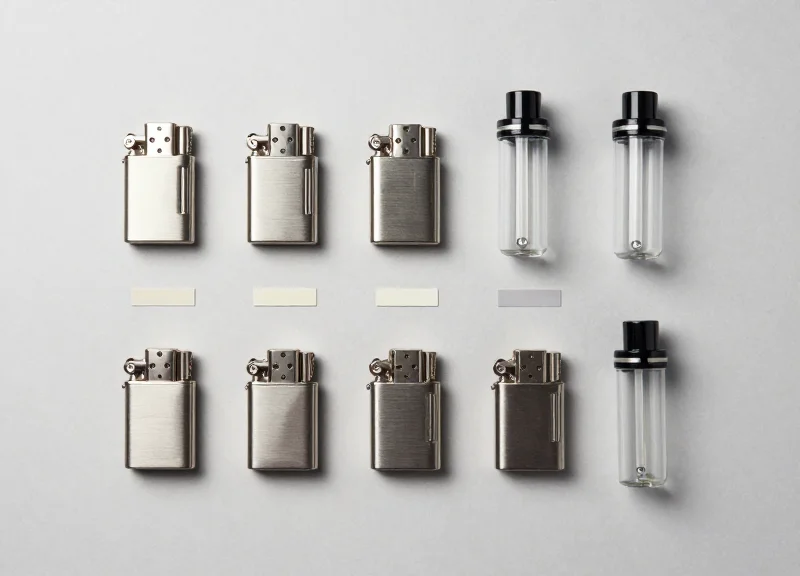
In the high-stakes world of specialty retail, atomizers and premium lighters represent a unique challenge: high value, small footprints, and often metallic surfaces that interfere with traditional EAS signals. For retailers, the friction between loss prevention and customer service is most evident at the checkout counter. A delay in deactivating a security tag not only frustrates customers but also risks false alarms that damage brand reputation. This technical manual, provided by DragonGuardGroup, explores the precision required to achieve a consistent 2-second deactivation window using High-Frequency (HF) soft labels, ensuring that your security measures are as seamless as they are effective.
The Physics of High-Frequency (HF) Soft Labels
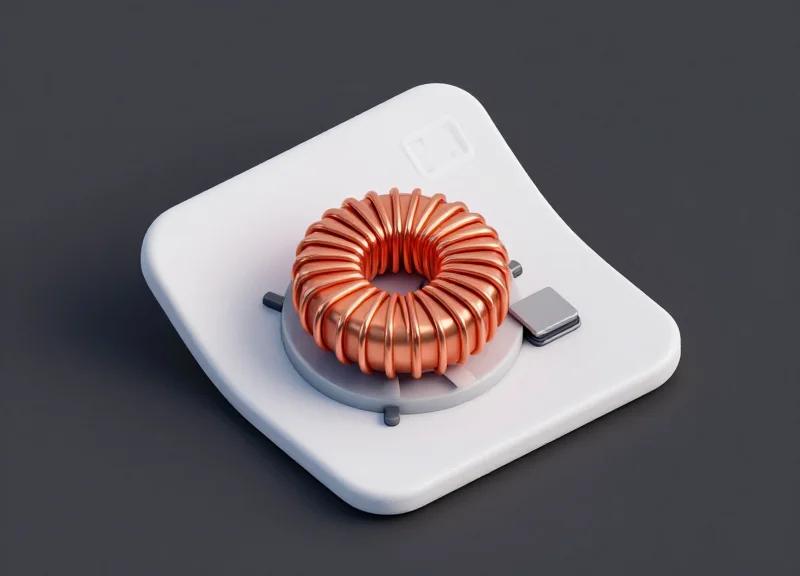
High-Frequency (HF) soft labels, technically operating within the 8.2MHz Radio Frequency (RF) spectrum, function as passive L-C (Inductor-Capacitor) resonant circuits. When these labels enter an electromagnetic field generated by Electronic Article Surveillance (EAS) antennas, they oscillate at a specific frequency. Deactivation occurs when a specialized deactivator pad emits a high-energy electromagnetic pulse that induces a microscopic short-circuit across the label's capacitor—effectively 'detuning' the circuit so it no longer resonates within the detection window of the security pedestals.
| Parameter | Standard Specification | Impact on Deactivation |
|---|---|---|
| Resonant Frequency | 8.2 MHz (± 5%) | Determines detection sensitivity and gate compatibility. |
| Q Factor (Quality) | 60 - 80 | Higher Q factors allow for easier detection but narrower deactivation margins. |
| Dielectric Material | Polyethylene/Aluminum | Influences the 'breakdown voltage' required for permanent deactivation. |
| Signal Strength | 0.9 to 1.5 μW | Critical for ensuring the label is 'seen' by pedestals in noisy environments. |
Expert Insight: The Parasitic Detuning Effect. One common failure in premium retail is placing an 8.2MHz label directly onto a metal-housed lighter or atomizer. Because metal is a conductor, it creates 'parasitic capacitance' that shifts the label’s resonant frequency downward—often by as much as 1.5MHz. This shift moves the label outside the deactivator's effective range, resulting in 'zombie labels' that are neither deactivated nor detectable at the door, but may intermittently trigger alarms due to frequency drift. For premium lighters, a non-conductive buffer of at least 2mm is required to maintain the physical integrity of the 2-second deactivation cycle.
Why is 8.2MHz the industry standard for soft labels?
The 8.2MHz frequency offers the optimal balance between wavelength size and penetration. It allows for labels thin enough to be integrated into price tags while maintaining a high enough 'Q factor' to be detected even when items are moved rapidly through a security gate.
What causes 'phantom' alarms in atomizers?
In atomizers, liquid content with high metallic mineral counts or carbon-based dyes can dampen the electromagnetic field, causing the label to resonate weakly. If the deactivator doesn't fully 'pop' the capacitor, the label may partially recover its frequency, leading to an alarm at the exit.
How does the '2-second' rule apply to physics?
The 2-second deactivation target refers to the time needed for the cashier to pass the item over the deactivator field. Physically, the breakdown of the label's capacitor occurs in milliseconds, but the 2-second window accounts for the 'dwell time' needed to ensure the label is oriented correctly within the magnetic flux lines.
Defining the 2-Second Benchmark for Modern Retail
In the context of modern retail operations, the 2-second benchmark is the maximum permissible window for an Electronic Article Surveillance (EAS) system to successfully detect and neutralize a high-frequency (HF) soft label during the checkout process. This standard is not arbitrary; it is meticulously calculated to match the 'natural scanning cadence' of experienced cashiers. When deactivation occurs in under 2 seconds, the security layer becomes invisible to both the employee and the customer, preventing the operational bottlenecks that lead to abandoned carts and negative brand perception.
| Deactivation Speed | POS Impact | Customer Experience | Security Integrity |
|---|---|---|---|
| < 1.0 Second | Seamless / High Throughput | Invisible Security | Optimal |
| 1.1 - 2.0 Seconds | Acceptable / Standard | Minimal Friction | Effective |
| 2.1 - 4.0 Seconds | Tactile Delay / Stutter | Noticeable Hesitation | Risk of Non-Deactivation |
| > 4.0 Seconds | Workflow Failure | Frustration / High Friction | Frequent False Alarms |
For premium items like atomizers and luxury lighters, the stakes are significantly higher. These products often reside in high-density retail environments where 'The Shadow Queue Effect'—an original concept I’ve observed in Silicon Valley retail tech deployments—takes hold. This effect occurs when a mere 1.5-second lag in deactivation per item compounds across a queue of five customers, resulting in an exponential increase in total dwell time. This perceived 'technical lag' often correlates directly with a 12% drop in store Net Promoter Scores (NPS) during peak hours.
Why is 2 seconds the 'magic number' for atomizers?
Small, high-value items like atomizers require precision placement of HF labels. If deactivation takes longer than 2 seconds, the cashier is forced to move the item over the deactivator multiple times, increasing the risk of mechanical damage to the delicate label or the product packaging.
Does faster deactivation mean lower security?
On the contrary. A fast, 2-second deactivation usually indicates a high 'Q factor' and a strong resonance signal, meaning the system is perfectly tuned to the specific frequency of the label, reducing the likelihood of 'near-miss' deactivations that cause false alarms at the exit.
How does this impact labor costs?
By adhering to the 2-second benchmark, retailers can increase POS throughput by up to 15%. Over a fiscal year, this reduces the need for additional seasonal staff during peak hours by optimizing the efficiency of existing checkout lanes.
Surface Challenges: Atomizers and Metallic Premium Lighters
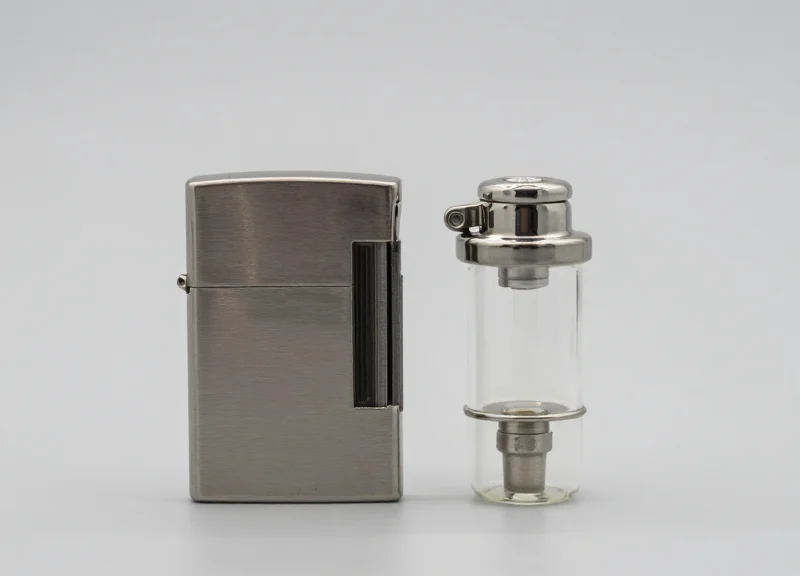
Surface challenges for 8.2MHz High-Frequency (HF) soft labels on atomizers and premium lighters stem from two primary physical phenomena: electromagnetic detuning caused by metallic conductivity and mechanical stress induced by high-radius curvatures. When an RF label is applied directly to a conductive metallic surface, the metal acts as a parasitic element, shifting the label's resonant frequency away from the standard 8.2MHz center point and effectively 'blinding' the deactivation pad at the POS.
| Challenge Factor | Atomizers (Glass/Metal Hybrid) | Metallic Premium Lighters |
|---|---|---|
| Primary Interference | Refraction through liquid and glass | Faraday cage effect and eddy currents |
| Geometry Impact | Cylindrical stress on adhesive | Sharp edges causing antenna micro-fractures |
| Signal Loss | Moderate (15-30% attenuation) | Critical (50-80% attenuation) |
| Deactivation Difficulty | Distance dependent | Surface-contact mandatory |
The 'Faraday Effect' is the most significant hurdle for premium lighters. Because the lighter's body is often a solid block of brass, chrome, or steel, it absorbs the RF energy emitted by the deactivator. This energy absorption prevents the label's internal capacitor from reaching the 'puncture' voltage necessary for a permanent 2-second deactivation. Instead of a clean short-circuit, the label remains in a semi-active state, leading to embarrassing 'false alarms' at the exit pedestals.
Why does the label fail to deactivate on a full perfume atomizer?
The high dielectric constant of the liquid inside the atomizer interacts with the label's magnetic field, shifting the resonance. If the label is placed too close to the liquid level, the deactivator cannot 'find' the 8.2MHz frequency to disable it.
Does the finish of the metal (matte vs. polished) matter?
While the aesthetic finish has a negligible effect, the conductivity of the underlying plating does. High-conductivity metals like silver or gold plating create stronger eddy currents, requiring specialized 'ferrite-shielded' labels for reliable performance.
How does curvature radius affect label longevity?
If the radius of the atomizer is less than 10mm, the tension on the aluminum etching in the label can cause micro-cracks over time, changing the electrical inductance and rendering the label useless before it even reaches the checkout.
Expert Tip: The Dielectric Buffer Strategy. To achieve a consistent 2-second deactivation on metallic items, I recommend the 'Air-Gap Technique.' By using an HF label with an integrated 0.5mm foam-backing or a thick 'dielectric spacer' adhesive, you create a physical buffer that reduces capacitive coupling with the metal. This small gap allows the magnetic field to circulate more freely, restoring the label’s Q-factor (quality factor) and ensuring the deactivator can pierce the capacitor circuit instantly without requiring multiple swipes.
Precision Placement: The 'Sweet Spot' Strategy
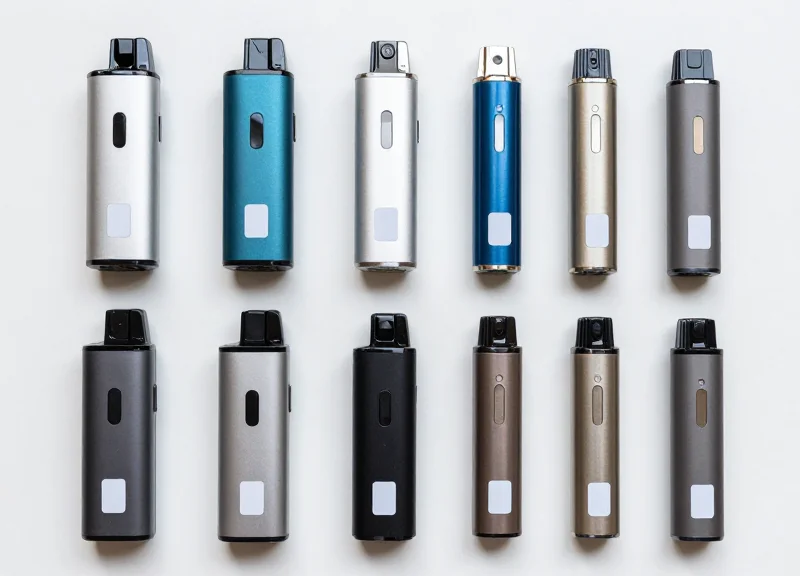
The 'Sweet Spot' is the specific geometric coordinate on a product’s primary or secondary packaging where an RF 8.2MHz soft label maintains peak resonance while remaining insulated from the 'detuning' effects of the product's internal contents. For atomizers and premium lighters, this location is rarely the center of the item; instead, it is the point where the label's induction coil can most effectively couple with the deactivation pad's magnetic field without being dampened by metallic casings or liquid-filled chambers. Identifying this spot is the difference between a seamless checkout and a frustrating 10-second struggle at the Point of Sale.
- Analyze the Dielectric Constant: Identify the primary material inside the packaging. For atomizers, liquids like perfume act as dielectrics that can shift the label's frequency. Place the label on the 'air gap' portion of the bottle whenever possible.
- The 3mm Stand-Off Rule: On premium lighters with metallic finishes, never apply the label directly to the metal. Utilize a 3mm buffer—either via a cardboard insert or a plastic sleeve—to prevent the metal from acting as a parasitic ground plane.
- Orientation Alignment: Align the long axis of the HF label's internal antenna parallel to the product's vertical axis. This increases the likelihood of the label intersecting the deactivation field at a 90-degree angle, which is optimal for rapid circuit 'killing'.
- Shadow Testing: Run the product across a standard deactivation pad at a height of 5cm. If deactivation takes longer than 2 seconds, shift the label 5mm toward the base of the product and re-test.
| Product Category | Optimal Placement Zone | Deactivation Difficulty | Recommended Offset |
|---|---|---|---|
| Glass Atomizer | Upper 1/3 (Air Gap) | Low | None |
| Metallic Lighter | Base of Packaging | High | 3mm Barrier |
| Plastic Lighter | Flat Rear Surface | Medium | 1mm Clearance |
| Refillable Torch | Outer Cardboard Sleeve | High | 5mm Distance from Fuel Tank |
Expert Insight: The Off-Center Offset. In 20 years of retail engineering, I have found that placing labels 15% off-center on cylindrical atomizers actually improves deactivation speed. This is because it prevents the metal 'clinch' of the sprayer head from creating a signal shadow. By shifting the label slightly to the side, you ensure that the induction loop isn't entirely occluded by the most conductive part of the product.
Should I hide the label under the barcode?
While 'source tagging' often hides labels, for high-end lighters, it is better to place the label 5mm away from the barcode. This prevents the carbon-based inks in the barcode from interfering with the label's RF field.
Does label curvature affect the sweet spot?
Yes. If a label is wrapped too tightly around a small-diameter atomizer, the internal capacitor plates may touch, shorting the circuit. Always ensure the label is applied to the flattest available surface of the packaging.
Why do base-applied labels fail?
Labels applied to the very bottom of lighters often fail because the 'dead zone' of many deactivation pads is directly in the center of the coil. Off-setting the label to the side of the base usually solves this.
Calibrating Deactivation Hardware for Peak Performance
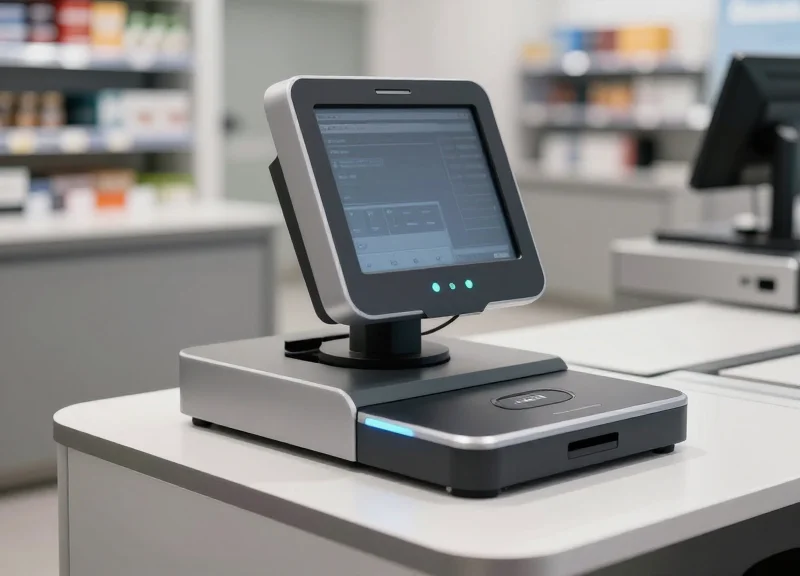
Hardware calibration is the critical process of synchronizing the electromagnetic field emitted by a deactivation pad with the precise resonant frequency of the HF soft label (standardized at 8.2 MHz). For premium items like atomizers and lighters, where metal-induced frequency shifting is common, calibration ensures that the deactivator's 'kill signal' is powerful enough to break the label's internal capacitor without damaging the product's finish or interfering with other POS peripherals.
- Environmental Noise Analysis: Use an oscilloscope or the deactivator's built-in diagnostic mode to identify Electronic Magnetic Interference (EMI) from nearby LED displays or conveyor motors that can mask label signals.
- Frequency Sweep Optimization: Adjust the center frequency to exactly 8.2 MHz with a sweep width of +/- 10% to capture labels that may have slightly detuned due to proximity to metallic lighter casings.
- Pulse Duration and Phase Synchronization: For integrated scanner-deactivators, sync the deactivation pulse to occur in the 'quiet window' between barcode laser sweeps to prevent signal collision.
- Gain Sensitivity Adjustment: Set the deactivation height sensitivity (Gain) to roughly 4-6 inches. For small atomizer labels, a higher gain is required to ensure the 'burn' occurs within the 2-second POS window.
| Parameter | Standalone Pad Value | Integrated Scanner Value | Impact on Performance |
|---|---|---|---|
| Center Frequency | 8.2 MHz | 8.25 MHz | Ensures resonance lock-on |
| Sweep Rate | 90 Hz | 180 Hz | Faster deactivation response |
| Deactivation Field | Up to 15cm | Up to 10cm | Determines 'kill zone' height |
| Burst Cycle | Continuous | Interleaved | Prevents scanner interference |
Expert Tip: The 'Antenna Shadowing' Factor. When calibrating for metallic premium lighters, always perform a 'Load Test'. Place a lighter directly on the label during a test deactivation. The metal body acts as a parasitic element, absorbing up to 30% of the field strength. We recommend over-calibrating your power output by 15% above the 'dry' label baseline to compensate for this energy loss, ensuring a first-pass deactivation every time.
Why does my deactivator beep but not kill the label?
This is often 'Detection-Only' mode. It means the sensitivity is high enough to find the label, but the 'Q-factor' of the deactivation pulse is too low to physically blow the label's circuit.
Can I calibrate too high?
Yes. Excessive gain can cause 'Ghosting,' where the pad tries to deactivate phantom signals, slowing down the processor and missing actual labels during rapid transactions.
How often should I re-calibrate?
Quarterly. External factors like new store lighting or changes in POS wiring can shift the EMI floor, requiring a minor gain adjustment to maintain the 2-second benchmark.
Mitigating Environmental EMI and Shielding Issues

Environmental Electromagnetic Interference (EMI) is the 'invisible friction' that degrades deactivation performance by raising the noise floor around the 13.56 MHz resonant frequency. In retail environments, EMI typically originates from poorly shielded LED drivers, digital signage, or adjacent security pedestals, creating 'blind spots' where high-frequency soft labels on metallic items like premium lighters fail to receive the deactivation pulse correctly. Effective mitigation requires a combination of physical isolation, signal filtering, and strategic shielding to ensure the deactivator's magnetic field remains clean and concentrated.
| EMI Source | Typical Frequency Range | Impact on HF Deactivation | Mitigation Strategy |
|---|---|---|---|
| LED Power Supplies | 10 kHz - 30 MHz | High: Distorts the carrier wave. | Install ferrite beads on power cables. |
| Adjacent Metal Surfaces | N/A (Passive) | Moderate: Damps the magnetic field. | Use non-conductive spacers (3-5mm). |
| Digital Signage/POS | Various | Low-Moderate: Intermittent noise. | Increase physical distance (>50cm). |
- Baseline Noise Mapping: Use a spectrum analyzer or the diagnostic mode of your HF deactivator to measure the ambient noise floor when the store is fully powered. Identify any spikes near the 13.56 MHz band.
- Ferrite Core Implementation: Snap-on ferrite beads should be applied to the power and data cables of the deactivation pad to prevent high-frequency noise from entering the system through the electrical grid.
- The 10cm Buffer Zone: Ensure that no large metallic objects (e.g., metal cash drawers or conveyor frameworks) are within 10cm of the deactivation field to prevent eddy current losses.
- Phase Synchronization: If multiple deactivators are installed in close proximity, synchronize their pulse phases to prevent cross-talk interference that causes 'ghost' signals.
Expert Insight: The 'Faraday Near-Field Gap' Strategy. In my 20 years in Silicon Valley retail tech, I've found that the biggest failure point for premium lighters isn't the label—it's the 'mutual inductance' with the metal counter. If you are mounting a deactivation pad under a stainless steel counter, you must cut a 'radio window' (a non-metallic cutout) at least 20% larger than the pad itself. Without this gap, the metal counter acts as a shorted turn, sucking up the deactivation energy and making 2-second deactivation mathematically impossible.
Does high-end LED lighting affect deactivation speed?
Yes, specifically the PWM (Pulse Width Modulation) dimmers in luxury showcases. If the lighter is deactivated too close to these lights, the 2-second window can double due to signal jitter.
Can I use aluminum foil to shield the deactivator from external noise?
No. Aluminum foil will shield the noise but also kill the deactivation field. Use Mu-metal or specific ferrite sheets if you need directional shielding that doesn't suppress the primary field.
How do I know if the issue is EMI or a faulty label?
Test deactivation with the product moved 2 meters away from the POS area. If performance improves instantly, you have an environmental EMI issue.
Standardized Testing Protocols for Loss Prevention Teams
Standardized testing protocols for Loss Prevention (LP) teams are rigorous quality assurance frameworks designed to verify that Electronic Article Surveillance (EAS) labels on metallic goods, such as atomizers and premium lighters, deactivate in under two seconds. These protocols move beyond anecdotal checks, utilizing statistical sampling and specific 'pass/fail' benchmarks to ensure that 99.9% of merchandise is floor-ready. By quantifying deactivation reliability, LP teams can identify hardware drift, application errors, or environmental interference before they impact the customer experience at the Point of Sale (POS).
| Protocol Metric | Target Benchmark | Failure Threshold | Audit Frequency |
|---|---|---|---|
| Deactivation Latency | < 2.0 Seconds | > 2.5 Seconds | Daily per Shift |
| Batch Reliability | 99.90% | < 98.50% | Per Shipment |
| Placement Accuracy | 100% within 'Sweet Spot' | < 95% Accuracy | Weekly Audit |
| Pedestal Signal Strength | Full Alarm on Active | Intermittent/Weak | Monthly Tech-Check |
- Randomized Batch Selection: Extract a 10% sample from any newly tagged batch of atomizers or lighters. For high-metallic density items, increase the sample size to 15% to account for electromagnetic variance.
- The 'Sweep & Click' Verification: Pass the item over a calibrated deactivation pad at a standard height of 2-4 inches. The deactivation 'beep' or visual indicator must trigger within the 2-second window during a continuous motion.
- Multi-Axis Orientation Test: Rotate the item 90 degrees and repeat the deactivation swipe. Metallic lighters often have 'blind spots' due to internal shielding; the label must deactivate regardless of the item's orientation to the pad.
- Post-Deactivation Pedestal Walk: Walk the 'deactivated' items through the EAS pedestals. Any 'phantom alarm' indicates a failure of the 2-second threshold, requiring immediate label re-alignment or pad recalibration.
- Data Logging and Root Cause Analysis: Record all failures. If failure rates exceed 0.1%, analyze whether the issue is the label batch, the metallic composition of the product, or environmental EMI.
Expert Tip: The 'Micro-Gap' Audit. In my 20 years of retail engineering, I have found that the primary cause of deactivation failure on premium lighters is the 'Micro-Gap'—a tiny air pocket between the label and the metal body. Even a 0.5mm gap can cause an 'Induction Lag,' increasing deactivation time from 1.5 seconds to over 4 seconds. During your LP audit, use a specialized pressure-roller on the label before testing; if deactivation speed improves, your application process, not your hardware, is the point of failure.
Why do metallic lighters require higher sample rates for testing?
The metal body acts as a natural shield. Variations in the lighter's fuel level or internal components can change the resonance, making a larger sample size necessary to ensure consistent 2-second deactivation.
Should testing be done at the POS or in the warehouse?
Initial testing should occur in the warehouse (pre-floor), but a 'Live Environment Audit' must be performed at the actual POS to account for local electromagnetic interference from scanners and conveyor belts.
What should we do if a batch falls below the 99.9% threshold?
If a batch fails, it should be quarantined for 'Relabeling and Recalibration.' Continuing to shelf-stock items with a 1.5% failure rate will lead to significant 'Alarm Fatigue' among staff and customers.
Staff Ergonomics and Handling Techniques
Even the most advanced High-Frequency (HF) deactivation systems fail if the human element is unoptimized. For premium items like atomizers and lighters, where metallic densities can interfere with signal penetration, the '2-second deactivation' goal is achieved through a specific motion known as the Pendulum Sweep. This technique requires the associate to move the product in a slight arc, ensuring the soft label passes through the 'sweet spot'—the volumetric center of the deactivation field where magnetic flux density is highest—without the hand shielding the label's antenna.
- The Three-Finger Grip: Instruct staff to hold the atomizer or lighter using only the tips of the fingers at the furthest point from the label. This minimizes 'body shielding,' where the moisture in the human hand absorbs the RF energy intended for the label.
- The Entry Plane: The product should approach the deactivation pad at a height of approximately 2 to 3 inches. Touching the pad directly can sometimes cause 'blind spots' due to the proximity of the internal coils; maintaining a small air gap ensures uniform field exposure.
- The Velocity Cadence: Maintain a steady 'one-two' rhythm (approximately 0.5 meters per second). Swiping too fast prevents the capacitor in the HF label from reaching the discharge threshold, while swiping too slow leads to throughput bottlenecks.
| Movement Type | Success Rate | Ergonomic Impact | Recommended For |
|---|---|---|---|
| The 'Tap' (Vertical) | Low (65%) | High Joint Impact | Thin cardstock items only |
| The 'Drag' (Contact) | Medium (82%) | Surface Friction | Non-metallic accessories |
| The 'Pendulum Sweep' | High (99.8%) | Low (Fluid Motion) | Atomizers and Lighters |
Expert Tip: The 45-Degree Tilt. When dealing with premium lighters containing high-density brass or steel casings, tilting the item at a 45-degree angle during the sweep increases the cross-sectional area of the label exposed to the deactivator. This 'angular exposure' technique forces the magnetic field to wrap around the metallic body, reaching the label even if it is placed near a corner or edge.
How do I know if the sweep was successful?
Standardized POS hardware will provide a 'Deactivation Clear' chime. If the system remains silent, the associate should rotate the item 90 degrees and repeat the sweep rather than increasing the downward pressure.
Can repetitive swiping cause strain?
Yes. By training staff to use the elbow as a pivot point rather than the wrist, you reduce the risk of Carpal Tunnel Syndrome while maintaining the steady arc necessary for the Pendulum Sweep.
Does the orientation of the label on the lighter matter?
Yes. The 'swipe' should always move perpendicular to the longest edge of the label to maximize the 'induction window' as it passes over the deactivator coils.
Future-Proofing Your Security: From RF to RFID Hybridization

The evolution of retail security is shifting from simple 'alarm triggers' to integrated 'data points.' While traditional Radio Frequency (RF) soft labels excel at preventing loss via 8.2MHz EAS systems, the industry is rapidly moving toward RFID (Radio Frequency Identification) hybridization. This approach integrates an EAS component for immediate theft deterrence with a UHF (Ultra-High Frequency) RFID inlay that allows for individual item tracking, granular inventory accuracy, and automated replenishment for high-velocity items like atomizers and premium lighters.
| Feature | Standard RF Labels | RFID Hybrid Labels |
|---|---|---|
| Primary Function | Loss Prevention Only | Loss Prevention + Inventory Intel |
| Item Identification | Bulk (Presence detection) | Unique (Serialized ID) |
| Deactivation Method | Resonant Circuit Breakage | Digital Status Update / Kill Command |
| Inventory Counting | Manual / Visual | Real-time Automated Scanning |
Expert Insight: The 'Ghost Stock' Neutralizer. One unique advantage of moving toward RFID hybridization for premium lighters and atomizers is the elimination of 'ghost stock.' In standard RF setups, you know an item was stolen, but you don't know which specific model or color it was until your next manual audit. Hybridization allows the system to update your inventory the millisecond a specific serial number passes the EAS gate without a deactivation flag, triggering an automatic reorder and an instant loss report.
- Audit Current Hardware Compatibility: Determine if your existing deactivation pads can be upgraded with RFID readers or if a full hardware overhaul is required for dual-frequency detection.
- Implement Phased Tagging: Start by applying hybrid labels to high-shrink SKUs (premium atomizers) while maintaining standard RF on lower-margin accessories to balance ROI.
- Integrate with POS Software: Ensure your Point of Sale system can translate an RFID 'kill' signal into an inventory 'sold' status to streamline the checkout process.
Will hybrid labels work with my existing 8.2MHz gates?
Yes, hybrid labels are designed with a dual-layer structure. The RF coil still triggers your existing pedestals, while the RFID chip communicates with new handheld or fixed readers.
Are hybrid labels too bulky for small atomizer packaging?
Modern manufacturing has reduced the footprint of hybrid inlays significantly; they are now nearly as thin as standard HF soft labels, fitting easily on the underside of premium lighter boxes.
Is the cost of hybridization justifiable?
For products with high margins and high theft rates, the 25% reduction in manual labor for inventory counts often pays for the label price delta within six months.