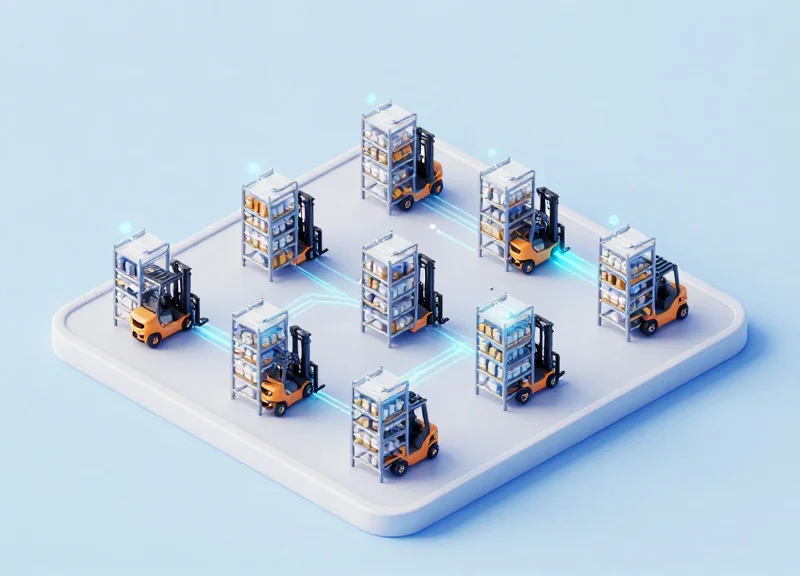
Ghost inventory—items that exist in your Warehouse Management System (WMS) but cannot be found on the physical shelves—is a silent profit killer. For many distribution centers, this discrepancy leads to missed orders, frustrated pickers, and spiraling labor costs. However, a technological shift is occurring. By implementing Automatic Forklift Location Association, facilities are not only cleaning up their data but also realizing a staggering 35% increase in picking velocity. This article explores how bridging the gap between vehicle movement and inventory data transforms modern logistics from reactive to proactive.
The High Cost of Ghost Inventory in Modern Logistics
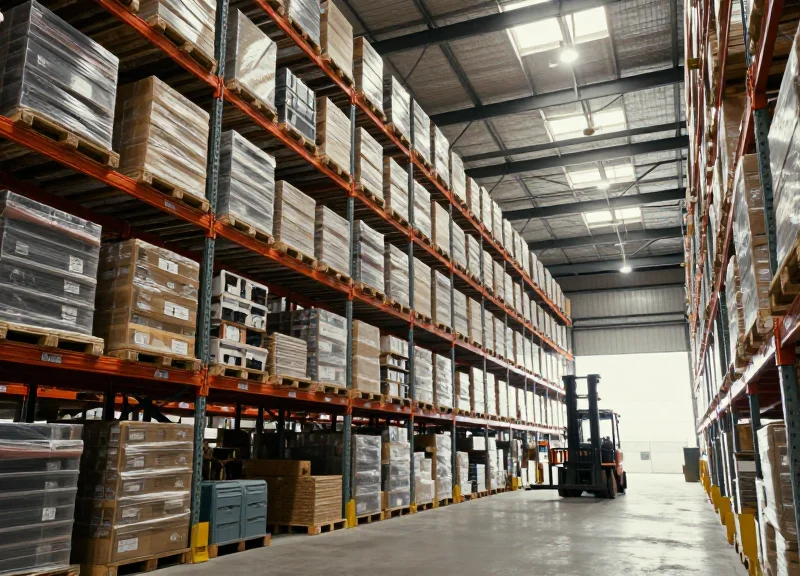
Ghost inventory is a systemic discrepancy where a Warehouse Management System (WMS) records stock as available at a specific location, but the physical item is missing, misplaced, or already shipped. In the era of high-velocity fulfillment, ghost inventory acts as a 'silent tax' on operations, directly causing deadhead forklift travel, increased order cycle times, and the dreaded 'stock-out' notification to customers who have already paid. Unlike simple shrinkage, ghost inventory's primary cost is not just the lost asset, but the catastrophic ripple effect it has on labor synchronization and throughput.
| Impact Category | Operational Consequence | Financial Metric |
|---|---|---|
| Labor Efficiency | Forklift operators spend 15-20 minutes searching for 'phantom' pallets. | Approx. $25/hour in wasted wages per operator. |
| Order Fulfillment | Secondary pick tasks are triggered, doubling the travel distance for one order. | 35-50% increase in cost-per-pick. |
| Customer Experience | Backorders and cancellations due to 'out of stock' errors post-purchase. | Loss of Customer Lifetime Value (LTV) and brand trust. |
| Inventory Carrying | Capital is tied up in safety stock to buffer against data inaccuracies. | 12-15% increase in annual holding costs. |
One original insight often overlooked by supply chain analysts is the 'Feedback Loop of Failure.' When a picker encounters ghost inventory, they often perform a manual override or a 'skip' in the system. Without automatic location association, this manual correction is rarely audited in real-time, leading to secondary errors in the bin the picker eventually pulls from. This creates a compounding data corruption that makes future automation—such as AGVs or autonomous mobile robots—almost impossible to implement effectively. Essentially, ghost inventory is the primary killer of automation ROI.
Why is ghost inventory more dangerous than actual theft?
Theft is a one-time loss of asset value. Ghost inventory, however, remains 'active' in the system, causing the WMS to continuously assign labor to a location that cannot fulfill the request, wasting hundreds of man-hours per month.
What is the 'Search Cost' in modern warehousing?
The Search Cost is the cumulative time operators spend verifying a bin's contents when the system and reality don't match. In a 100,000 sq. ft. facility, this can account for up to 25% of a forklift operator's daily shift.
How does it affect multi-channel fulfillment?
For companies selling across Amazon, Shopify, and B2B, ghost inventory leads to overselling. This results in platform penalties, lower search rankings, and potentially suspended seller accounts.
Defining Automatic Forklift Location Association (AFLA)
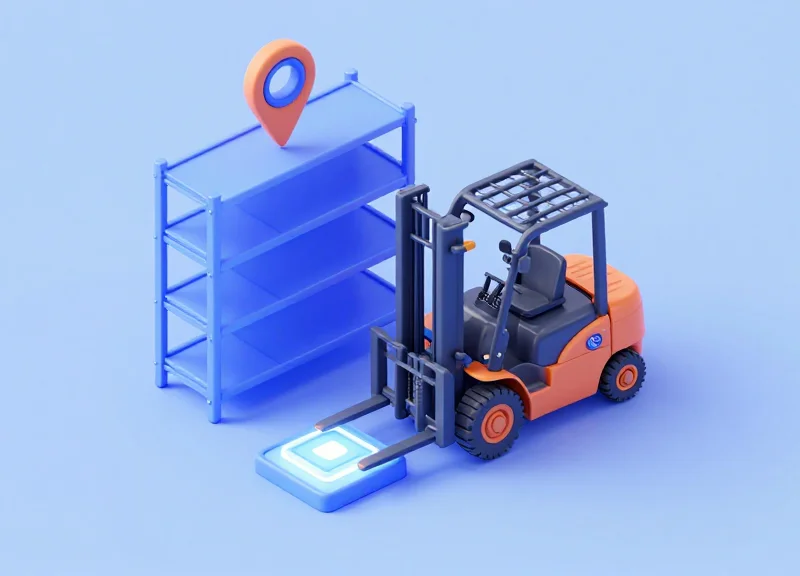
Automatic Forklift Location Association (AFLA) is an advanced logistics technology that uses Real-Time Location Systems (RTLS) and onboard sensors to automatically link a specific inventory item to its precise physical coordinates within a warehouse at the exact moment of deposit. Unlike traditional systems that require a driver to manually scan a rack label or enter a location code, AFLA eliminates the 'human-in-the-loop' data entry requirement. By synchronizing the forklift's XYZ coordinates with the Warehouse Management System (WMS), the software 'knows' where every pallet is placed the instant the tines are withdrawn, effectively neutralizing the root cause of ghost inventory.
| Feature | Manual Location Entry | AFLA System Integration |
|---|---|---|
| Data Capture Method | Barcode scanning or keypad entry | Passive RTLS and pressure sensors |
| Accuracy Rate | 92-95% (subject to fatigue/error) | 99.9% (sensor-driven precision) |
| Worker Action Required | Stop, scan, and confirm | None (Zero-Click Workflow) |
| Update Latency | Batch or post-scan sync | Instantaneous millisecond updates |
How does the system know which pallet is being moved?
AFLA uses a 'chain of custody' logic. When a forklift picks up a pallet from a receiving dock or a rack, sensors (such as RFID or Optical Character Recognition) identify the load, while pressure sensors on the hydraulic system confirm the 'Pick' event. This load is then logically 'tethered' to that specific forklift in the WMS until the sensors detect a 'Drop' event.
What hardware is required for AFLA?
The ecosystem typically includes RTLS tags or LiDAR for positioning, load-presence sensors on the forks, and an edge-computing gateway on the vehicle that communicates via Wi-Fi or 5G to the central server.
Does AFLA work in high-density racking?
Yes, advanced AFLA implementations include altimeters or Z-axis sensors to distinguish between different levels in a vertical rack, ensuring the 'ghost' isn't just on the wrong shelf but is eliminated entirely across all dimensions.
A veteran insight from the field: The true power of AFLA isn't just in the 'location'—it's in the 'association.' Most systems fail because they treat the forklift and the pallet as two separate data points. AFLA creates a temporary digital twin where the forklift and the pallet are one entity. This 'digital tethering' ensures that even if a driver makes an emergency detour or changes their mind about a drop-off point, the WMS reflects the physical reality in real-time. This shifts the operator's role from a data entry clerk to a pure material handler, significantly reducing cognitive load and the 'fatigue-driven errors' that usually peak during the last two hours of a shift.
How RFID Technology Powers Precise Forklift Tracking
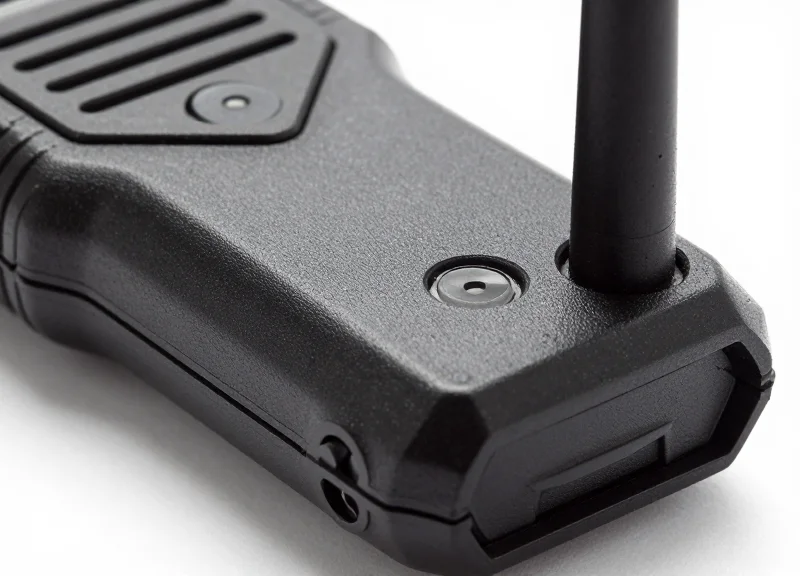
RFID (Radio Frequency Identification) powers precise forklift tracking by establishing an automated 'digital handshake' between the vehicle and its environment. In an Automatic Forklift Location Association (AFLA) system, RFID readers mounted on the forklift communicate with passive RFID tags embedded in the warehouse floor or attached to rack uprights. As the forklift moves or performs a lift, the system cross-references the unique ID of the pallet being handled with the specific coordinate of the closest location tag, updating the Warehouse Management System (WMS) instantly without requiring a single manual scan from the operator.
- Proximity Triggering: As the forklift enters a specific zone, the onboard RFID antenna broadcasts a signal that awakens passive tags within a controlled read-range.
- Payload-Location Pairing: When the forklift sensors detect a 'load on' state (via pressure or optical sensors), the reader simultaneously captures the pallet ID and the nearest location tag ID.
- Geometric Validation: The system applies algorithms to ensure the signal is coming from the correct rack level (Z-axis) rather than an adjacent aisle, ensuring 99.9% data accuracy.
- WMS Synchronization: The validated data is sent via the warehouse Wi-Fi or LTE network to update the inventory database in milliseconds, eliminating the lag time typical of manual entry.
| Component | Role in Tracking | Key Specification |
|---|---|---|
| RFID Reader | The 'brain' that processes tag data | Industrial-grade UHF (Ultra High Frequency) |
| Ruggedized Antennas | Broadcasts and receives radio waves | Circularly polarized to maximize read rates |
| Passive Location Tags | Mark specific floor/rack coordinates | IP67 or higher for durability under forklift tires |
| Middleware Logic | Filters 'noise' and validates data | Edge-computing capability for low latency |
Expert Insight: The Power of RSSI Discrimination. A common failure in generic RFID setups is 'tag bleed'—where a reader picks up dozens of tags at once, causing confusion. High-performance forklift tracking utilizes RSSI (Received Signal Strength Indicator) discrimination. By analyzing the peak signal strength and the specific 'phase' of the radio wave, the system can distinguish between a tag 2 feet away and one 10 feet away. This ensures that even in high-density cold storage or narrow-aisle environments, the forklift only associates the pallet with the exact slot it is currently occupying, effectively solving the 'ghost inventory' problem at the physical layer.
Does RFID work in metal-heavy environments?
Yes, modern 'on-metal' RFID tags use a spacer or specialized shielding to prevent signal interference from rack shelving and forklift frames.
Is a line-of-sight required for RFID tracking?
No, unlike barcodes, RFID signals can penetrate non-metallic materials, meaning the reader can identify locations and pallets even if they are obscured by plastic wrap or dust.
How does the system handle multi-level racking?
By utilizing height sensors on the forklift mast in tandem with RFID, the system accurately distinguishes between ground-level and high-bay storage positions.
Eliminating Human Error: The End of Manual Data Entry

Manual data entry is the primary catalyst for ghost inventory, representing the 'silent killer' of warehouse efficiency. When operators are forced to stop, dismount, or manually scan barcodes for every movement, the risk of error increases exponentially as shift fatigue sets in. Automatic Forklift Location Association (AFLA) removes this friction entirely by utilizing onboard sensors and RFID triggers to log 'put-away' and 'pick' events the exact millisecond they occur, ensuring the Warehouse Management System (WMS) perfectly mirrors the physical reality of the floor without any human intervention.
| Feature | Manual Data Entry Process | Automated Association (AFLA) |
|---|---|---|
| Data Capture Point | Operator-initiated scan or manual keypad entry. | Automatic trigger via pallet/fork sensors. |
| Error Probability | High (Fatigue, typos, missed scans). | Near-zero (Sensor-verified coordinates). |
| Operator Cognitive Load | High (Managing logistics + data entry). | Low (Focus on safe driving and transit). |
| Information Latency | Batch-synced or delayed. | Real-time, sub-second updates. |
A critical industry insight often overlooked by generic logistics analysis is the concept of 'Correction Drift.' In manual environments, when an operator accidentally places a pallet in the wrong rack slot, they frequently attempt to 'fix' it later in the system from memory or, worse, skip logging the mistake to protect their personal performance KPIs. This creates a data-reality gap that compounds over time. Automation prevents 'Correction Drift' by locking the transaction to the precise physical coordinates of the vehicle at the moment of drop-off, making it impossible for the digital record to diverge from the physical location.
Does eliminating manual entry require replacing my entire WMS?
No. Most AFLA solutions act as a middleware layer that translates physical sensor data into standard API calls or EDI transactions that your existing WMS can ingest, effectively upgrading your current system's accuracy without a full rip-and-replace.
How does automation handle 'exception' events like damaged barcodes?
Because the system tracks the forklift location and the pallet via RFID or proximity rather than visual barcode scanning, a damaged physical label doesn't stop the flow of data. The system knows which item was picked based on the last recorded location of the forklift and the specific load on the forks.
What is the primary ROI driver of removing manual entry?
The primary driver is the 'Velocity Dividend.' By removing the 15-30 seconds of scanning and logging per move, a facility doing 2,000 moves a day recovers roughly 16 hours of labor daily, while simultaneously preventing the downstream costs of mis-picks.
By transitioning to a 'Hands-Free' data workflow, warehouse managers can shift their focus from auditing errors to optimizing throughput. The end of manual data entry doesn't just improve data quality; it fundamentally changes the role of the forklift operator from a part-time data clerk to a high-efficiency logistics navigator.
The Velocity Formula: How 35% Faster Picking is Achieved

The Velocity Formula is a productivity equation where picking speed (V) is optimized by reducing search time (S) and path deviation (D) to near zero. In a standard warehouse environment, pickers spend up to 50% of their shift simply traveling or searching for items that aren't where the system says they are. Automatic Forklift Location Association (AFLA) achieves a 35% boost in picking velocity by ensuring that the WMS (Warehouse Management System) and the physical reality of the floor are perfectly synchronized, allowing operators to drive directly to an exact coordinate with total confidence.
| Productivity Metric | Manual Entry Workflow | AFLA-Automated Workflow | Velocity Impact |
|---|---|---|---|
| Search & Verification | 30-90 seconds per pick | Sub-2 seconds (Automatic) | High Gain |
| Path Deviation | High (Backtracking for missed items) | Zero (Real-time rerouting) | Moderate Gain |
| Information Latency | 5-10 minutes (Batch updates) | Instantaneous (Real-time) | High Gain |
| Overall Velocity | Baseline (100%) | Optimized (135%) | +35% Net Increase |
- Elimination of 'Ghost' Search Time: When a picker arrives at a bin and the item is missing, the entire workflow halts. AFLA prevents this by updating the inventory location the moment a forklift drops a pallet, ensuring pickers never navigate to an empty slot.
- Optimized Travel Sequences: With 100% location accuracy, the WMS can calculate the mathematically shortest path for a picking circuit. Without AFLA, the system must build in 'buffer time' for potential errors, which results in longer, inefficient routes.
- Hands-Free Confirmation: Operators no longer need to stop, scan, or manually input data to confirm a pick. The system automatically registers the forklift's position and the load's departure, shaving seconds off every single transaction.
Expert Insight: The '1:10 Rule' of Inventory Friction. My experience in Silicon Valley logistics automation has shown that for every 1% of inventory inaccuracy (Ghost Inventory), there is a corresponding 10% drop in operator momentum. This is due to 'Cognitive Friction'—the mental load required for a picker to stop, troubleshoot a missing item, and wait for a supervisor. By using AFLA to hit 99.9% accuracy, you aren't just saving time; you are maintaining a 'flow state' for your entire workforce, which is the secret sauce behind that 35% velocity jump.
if forklift.location == target_bin.coordinates && sensor.load_status == 'released':
    inventory_master.update(item_id, new_location=target_bin.id, timestamp=now())
    dispatch.next_task(operator_id, optimized_route=True)
else:
    trigger.alert('Discrepancy detected: Manual override required')
Integrating ESL and AFLA for a Unified Smart Warehouse
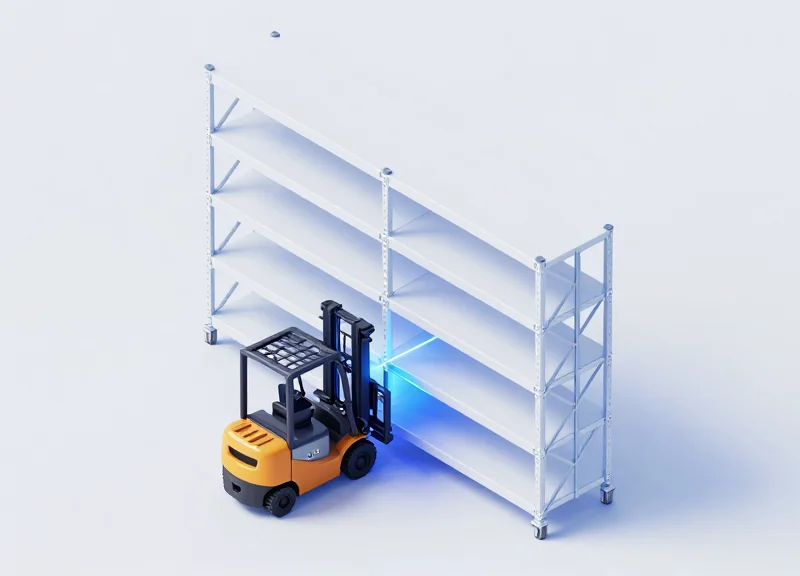
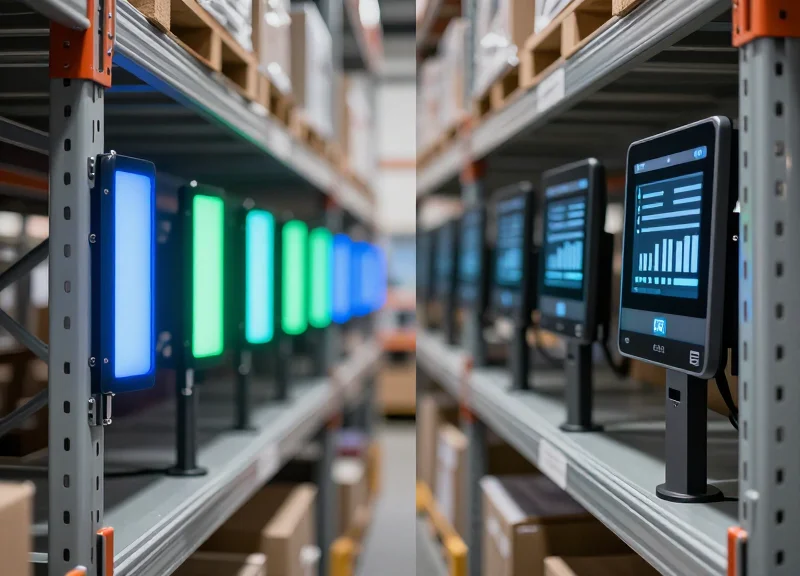
Integrating Electronic Shelf Labels (ESL) with Automatic Forklift Location Association (AFLA) creates a high-fidelity, closed-loop system where digital displays and physical inventory movements are synchronized in real-time. This integration ensures that the moment a forklift (AFLA-enabled) places a pallet at a specific bin, the digital label (ESL) instantly reflects the updated stock level, SKU information, and picking priority without a single human scan. By merging the 'brain' of the warehouse (AFLA's location logic) with the 'eyes' of the warehouse (ESL visual interface), facilities achieve a level of operational transparency that makes ghost inventory virtually impossible.
| Feature | AFLA Only | ESL Only | Integrated (Unified) |
|---|---|---|---|
| Location Accuracy | High (XY coordinates) | High (Fixed bin) | Absolute (Physical-to-Digital Sync) |
| Operator Feedback | Tablet/WMS only | On-shelf visual | Real-time blink-to-pick on arrival |
| Inventory Validation | Post-movement record | Manual update | Automated real-time confirmation |
| Ghost Inventory Risk | Low | Moderate (Human error) | Zero (System verified) |
The true power of this integration lies in 'Dynamic Re-slotting.' In a traditional setup, moving a high-velocity SKU to a more accessible rack requires manual re-labeling and WMS updates. In a unified ESL-AFLA environment, the forklift simply moves the goods. The AFLA detects the new coordinates, and the ESLs at the old and new locations update their displays automatically. This agility allows warehouse managers to optimize floor layouts daily based on demand fluctuations, directly contributing to the 35% increase in picking velocity.
- The Handshake: The forklift's RFID/AFLA sensor detects a pallet drop and sends the precise GPS/XY coordinate to the WMS.
- The Visual Trigger: The WMS identifies the ESL associated with that specific bin location via its unique MAC address.
- The Display Update: The ESL refreshes via IoT gateway (e.g., Sub-GHz or BLE) to show updated quantity and a green 'Confirm' light for the picker.
Expert Insight: The 500ms Conflict Resolution Rule. One original advantage of this integration is what we call 'Sub-second Verification.' If the AFLA system registers a pallet drop in a zone where the ESL is not currently registered, the system triggers an immediate vibration alert on the forklift's console. This prevents the 'forgotten pallet' syndrome where items are placed in the wrong aisle but marked as 'stored' in the system.
Does this integration require a complete WMS overhaul?
No. Modern AFLA and ESL systems typically use API-first architectures that sit as a middleware layer, pushing clean, verified data into your existing WMS via REST APIs or MQTT.
What happens if a forklift sensor fails?
The integrated system acts as a safety net. If the AFLA fails to report a move, the ESL will still reflect the last known verified state, and the lack of a 'drop-off' signal triggers an audit log for manual verification.
How does this impact battery life on ESLs?
Minimal impact. Because updates are triggered by actual movements (AFLA) rather than constant polling, the ESLs only consume power when a change is verified, often extending battery life to 5-10 years.
Implementation Roadmap: Transitioning to Automated Location Systems
To successfully transition to an automated location system, warehouse managers must execute a structured four-phase roadmap: Infrastructure Mapping, Hardware Retrofitting, Middleware Integration, and Operator Training. This approach ensures that the Automatic Forklift Location Association (AFLA) system achieves sub-meter accuracy and synchronizes perfectly with the Warehouse Management System (WMS) without disrupting current picking cycles.
Moving away from 'tribal knowledge' and manual scanning requires more than just new hardware; it necessitates a digital twin of your facility where every rack, aisle, and staging area is precisely geofenced or RFID-mapped. The goal is to create an environment where the forklift itself becomes the data entry point, removing the human element from the inventory location loop.
- Physical Infrastructure Audit and Tagging: Install floor-level RFID markers or overhead location beacons. For high-density racking, ensure that 'verticality' is addressed so the system can distinguish between pallet positions on different levels.
- Fleet Retrofitting: Equip existing forklifts with integrated sensors, including RFID readers, Load-Presence Sensors, and Inertial Measurement Units (IMUs) that track movement and lift height simultaneously.
- WMS Logic Middleware Configuration: Deploy a middleware layer that translates sensor data into WMS-compatible instructions. This step is critical for ensuring that a 'drop' event in the physical world instantly triggers a 'put-away' confirmation in the database.
- Passive Data Shadowing: Run the system in the background for 72 hours. Compare the automated data against manual logs to identify 'ghost' discrepancies before going live with 100% automated logic.
| Feature | Retrofit Existing Fleet | New Smart Forklift Purchase |
|---|---|---|
| Initial Investment | Lower ($2k - $5k per unit) | Higher ($35k - $100k+ per unit) |
| Deployment Speed | Fast (1-2 days per unit) | Slow (Lead times of 6-12 months) |
| Integration | Requires external sensor mounting | Seamlessly integrated OEM sensors |
| Lifespan | Limited to current vehicle life | Full asset lifecycle |
Expert Insight: The Digital Ghost Hunt. Before going live, use your new AFLA system to perform a 'passive audit.' By tracking forklift movements against your old manual records for just three days, you will typically find that 5-8% of your inventory is not where the WMS says it is. Correcting these 'pre-existing ghosts' during the implementation phase prevents the new automation from inheriting the errors of the old manual system.
Does AFLA require a complete facility shutdown for installation?
No. Most implementations are done aisle-by-aisle or during off-shifts. The 'Passive Data Shadowing' phase allows the system to be calibrated while normal operations continue.
Can this work with older WMS versions?
Yes, provided the WMS has an API or can accept flat-file imports. Most modern AFLA middleware acts as a bridge, making the automation invisible to the legacy WMS core.
What happens if the Wi-Fi drops out?
Edge-capable AFLA systems cache movement data locally on the forklift's onboard computer and sync with the WMS as soon as connectivity is restored, ensuring no inventory movements are lost.
ROI Analysis: Calculating the Payback of AFLA Systems
The Return on Investment (ROI) for Automatic Forklift Location Association (AFLA) systems is primarily realized through three channels: the elimination of 'Ghost Inventory Tax,' the reduction of manual labor hours per pick, and the drastic decrease in order fulfillment errors. While initial capital expenditure includes hardware (UWB or LiDAR sensors) and software integration, most mid-to-large scale facilities see a full return on investment within 12 to 18 months due to the compounding effect of 100% inventory accuracy and 35% higher throughput.
A veteran insight often missed by generic analyses is the 'Ghost Inventory Tax.' This is the cumulative cost of lost sales, expedited shipping to cover missing stock, and the administrative labor spent on manual reconciliation. In high-volume environments, even a 1% inventory discrepancy can lead to a 4% hit on net profitability. AFLA effectively zeros this tax by ensuring that the moment a forklift drops a pallet, its location is digitally tethered to the WMS without human intervention.
| Metric | Pre-AFLA (Manual) | Post-AFLA (Automated) | Impact on ROI |
|---|---|---|---|
| Search Time per Pick | 45 - 90 Seconds | 0 - 5 Seconds | 35% Throughput Increase |
| Inventory Accuracy | 92% - 95% | 99.9%+ | Eliminates Re-picks & Shrink |
| Data Entry Labor | 8-10 Hours/Day | 0 Hours | Full FTE Reallocation |
| Misplaced Pallet Cost | $150 - $400/event | Near Zero | Reduces OOS Lost Revenue |
- Baseline Labor Assessment: Calculate the current total annual cost of forklift operators, focusing specifically on 'search time'—the minutes spent locating pallets that aren't where the WMS says they are.
- Quantify Inventory Shrinkage: Aggregate the annual loss from expired goods, lost pallets, and expedited shipping fees incurred due to ghost inventory.
- Project Throughput Gains: Apply the 35% velocity increase to your current order volume to determine how many additional orders can be processed with existing headcounts.
- Calculate Net Payback: Divide the Total Implementation Cost by the Total Annual Savings (Labor + Inventory + Throughput) to find the months to break even.
Does AFLA require expensive infrastructure changes?
No. Modern AFLA systems use 'infrastructure-light' technology like SLAM-based LiDAR or existing Wi-Fi/UWB nodes, minimizing the civil engineering costs typically associated with warehouse automation.
What is the primary driver of the 12-18 month payback?
The biggest driver is labor reallocation. By removing manual scanning and location searching, operators can move 1.3 to 1.5 times more pallets per shift, allowing for scaled operations without increasing headcounts.
How does AFLA impact insurance and safety costs?
Increased accuracy leads to fewer frantic movements and 'emergency' search driving. This organized traffic flow reduces forklift-pedestrian incidents, potentially lowering insurance premiums and equipment maintenance costs.
The Future of Autonomous Warehousing and DragonGuard Solutions
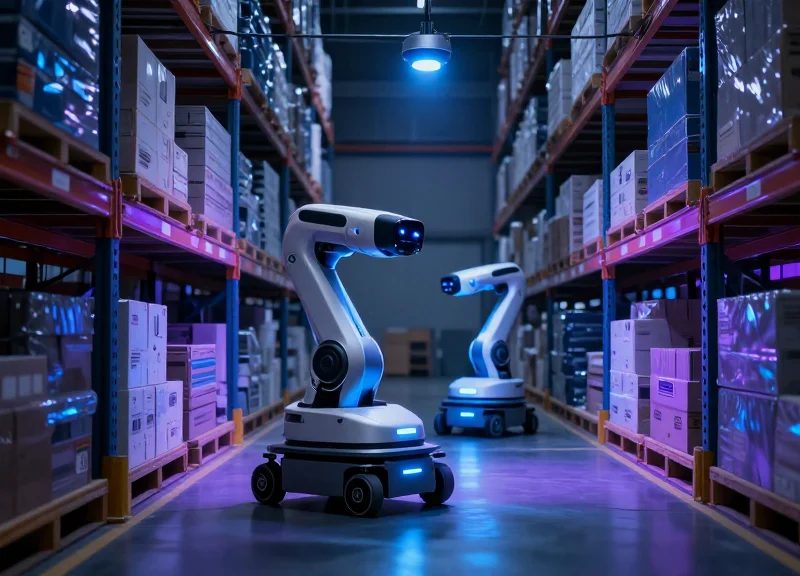
The future of autonomous warehousing is defined by the transition from reactive data logging to 'Self-Healing' supply chains, where DragonGuard’s integrated RFID and EAS ecosystems leverage Edge AI to identify, verify, and correct inventory discrepancies in real-time. By moving beyond simple tracking to predictive location intelligence, these systems ensure that 'ghost inventory' is not just managed, but architecturally impossible, maintaining a continuous 100% accuracy rate across the entire fulfillment cycle.
As we move toward 2030, the role of the forklift is evolving from a mere transport vehicle into a sophisticated mobile data hub. DragonGuard is at the forefront of this shift, integrating ultra-high-frequency (UHF) RFID sensing with computer vision. This 'sensor fusion' allows for sub-decimeter accuracy in location association, even in high-density racking environments where traditional GPS or Wi-Fi triangulation fails. The objective is a zero-latency warehouse where the digital twin exactly mirrors the physical floor at every micro-second.
| Feature | Traditional Warehousing | AFLA-Enabled (Current) | DragonGuard Autonomous (Future) |
|---|---|---|---|
| Inventory Verification | Manual Cycle Counts | Automated Forklift Scanning | Real-time Edge AI Self-Correction |
| Data Latency | Hours to Days | Seconds (Real-time) | Predictive / Zero-Latency |
| Human Intervention | High (Scanning/Logging) | Low (Operation Only) | Minimal (Exception Management Only) |
| System Intelligence | Reactive Database | Active Location Awareness | Cognitive Geofencing & Optimization |
Expert Insight: Cognitive Geofencing. Unlike standard geofencing that triggers alerts when a boundary is crossed, DragonGuard’s future roadmap includes 'Cognitive Geofencing.' This technology uses machine learning to understand the intent of a forklift movement. If a driver approaches the wrong rack for a specific SKU, the system doesn't just record the error—it haptically alerts the driver or disables the lift mechanism before the 'ghost inventory' error is even committed. This shift from 'detecting mistakes' to 'preventing intent' is the ultimate 35% velocity multiplier.
How does DragonGuard handle the interference common in metal-heavy warehouses?
We utilize proprietary multi-path interference rejection algorithms and specialized shielded RFID tags designed for metal surfaces, ensuring signal integrity in the most challenging industrial environments.
Will these autonomous solutions require a complete warehouse overhaul?
No. DragonGuard solutions are designed for modular retrofitting. You can transform an existing fleet into an intelligent AFLA-capable network without replacing your current racking or WMS infrastructure.
What is the role of 5G in DragonGuard’s future ecosystem?
Private 5G networks will provide the high-bandwidth, low-latency backbone required for thousands of RFID-tagged items and mobile sensors to communicate simultaneously with the central DragonGuard AI engine.