In the fast-paced environment of small-format retail, batteries represent one of the most vulnerable inventory categories. High in value and small in size, they are primary targets for 'grab and run' theft—a tactic where shoplifters quickly seize merchandise and exit before staff can react. This form of retail shrinkage does more than just deplete stock; it erodes profit margins and disrupts inventory accuracy. However, by implementing strategic loss prevention technologies like EAS and RFID, retailers are seeing a dramatic 45% reduction in shrinkage, leading to a significant boost in overall ROI. This article explores how modern security solutions turn a loss center into a competitive advantage.
The Anatomy of 'Grab and Run' Theft in Small-Format Retail
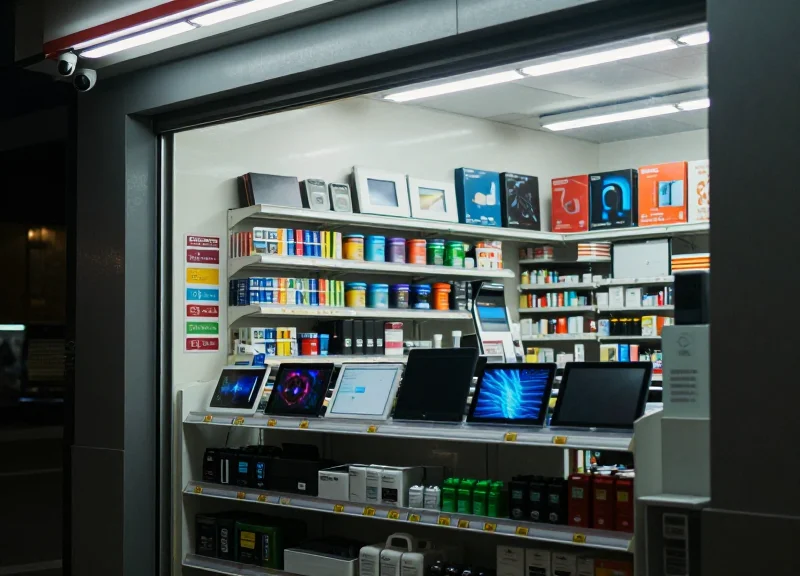
Grab and run theft is a high-velocity retail crime characterized by the rapid seizure of high-value merchandise, typically located near store entrances, followed by an immediate exit to a waiting vehicle. Unlike traditional shoplifting, which relies on concealment, 'grab and run' events exploit the physical layout and lean staffing of small-format retailers, often taking less than 15 to 30 seconds from entry to escape. This tactic renders many traditional loss prevention measures, such as post-incident video review, ineffective for immediate recovery.
| Feature | Traditional Shoplifting | Grab and Run Theft |
|---|---|---|
| Primary Tactic | Concealment and deception | Speed and physical audacity |
| Duration | 5-20 minutes | 15-45 seconds |
| Target Items | Varied; small/hideable | High-value bulk (e.g., Battery packs) |
| Staff Interaction | Avoidance of eye contact | Disregard for staff presence |
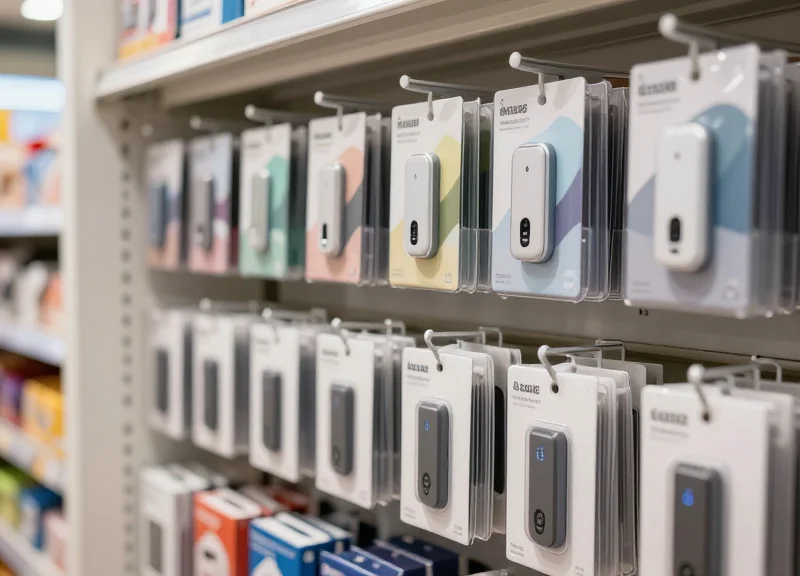
Small-format retailers, such as convenience stores and urban pharmacies, are prime targets due to their 'Time-to-Exit' (TTE) metrics. In these environments, the distance between the highest-value merchandise (like AA/AAA battery displays) and the front door is often less than 20 feet. For a professional thief, this represents a low-risk, high-reward window where the 'velocity of the crime' exceeds the 'velocity of the response.'
Why are batteries a top target for this method?
Batteries have high resale value on secondary markets, are non-serialized (hard to track), and have a high weight-to-value ratio, allowing a thief to grab hundreds of dollars in inventory in a single handful.
How does store layout contribute to the problem?
Small-format stores prioritize 'flow' and quick transactions. By placing high-turnover items like batteries near the front to drive impulse buys, retailers unintentionally create a 'hot zone' perfect for quick-exit theft.
What is the 'Response Gap'?
It is the time difference between a staff member noticing a theft and the thief exiting the building. In grab-and-run scenarios, this gap is often negative, meaning the thief is gone before the alarm is even raised.
Expert Insight: The 1:10 Rule of Retail Velocity. In my two decades observing retail trends, I have identified that for every 1 second a thief spends inside a small-format store beyond the 10-second mark, their risk of apprehension increases exponentially. Professional 'grab and run' crews know this; they choreograph movements to stay under the 15-second threshold. To combat this, retailers must shift from detection (watching it happen) to deterrence (making the 'grab' physically impossible within that 15-second window).
Why Batteries are a High-Risk Category for Shoplifting

Batteries are considered a high-risk shoplifting category because they possess an optimal 'Value-to-Volume' ratio: they are small enough to be easily concealed in pockets or bags while maintaining a high secondary market price. Unlike electronics, batteries lack unique serial numbers or activation requirements, making them virtually untraceable once they leave the store shelf. This combination of high demand, low physical footprint, and anonymity makes them a preferred target for both opportunistic shoplifters and Organized Retail Crime (ORC) rings.
| Product Attribute | Batteries | Consumer Electronics | Snacks/FMCG |
|---|---|---|---|
| Resale Value | High (80-90% of MSRP) | Variable (Depreciates fast) | Very Low |
| Traceability | None (No Serial Numbers) | High (IMEI/Serial) | None |
| Ease of Concealment | Excellent | Poor to Moderate | Excellent |
| Security Friction | Often Low/Open Shelving | High (Lock boxes/Tags) | Zero |
- The 'Liquid Currency' Effect: Batteries act as a form of untraceable currency. Because they are a universal necessity, they are easily traded for cash at flea markets, independent convenience stores, or online marketplaces like eBay and Facebook Marketplace.
- Bulk Concealment Potential: A thief can sweep an entire peg-hook of AA batteries into a 'booster bag' in seconds. This 'grab and run' tactic yields hundreds of dollars in inventory loss with minimal physical effort.
- Lack of Individual Product Identification: Unlike a smartphone or a laptop, a four-pack of alkaline batteries has no unique identifier. Once the outer packaging is removed, the product is indistinguishable from legitimate stock, making recovery and prosecution nearly impossible.
Expert Insight: From a loss prevention perspective, batteries represent a 'blind spot' in traditional security. Retailers often hesitate to lock them behind glass because it creates 'purchase friction,' causing a drop in legitimate sales. However, this open-access policy is exactly what professional thieves exploit. They rely on the fact that store associates are often too busy to monitor small-format aisles, allowing them to clear out high-value multi-packs in the blink of an eye.
Why do thieves target batteries over higher-priced items?
Batteries have no 'kill switches' or software locks. A stolen iPhone can be bricked remotely, but a stolen battery works perfectly, ensuring a guaranteed sale for the thief.
Is battery theft usually committed by individuals or groups?
While casual theft occurs, the majority of significant 'shrink' in the battery category is driven by Organized Retail Crime (ORC) groups who hit multiple stores in a single day to aggregate bulk stock.
Does the brand of battery matter to shoplifters?
Yes. Premium, well-known brands like Duracell and Energizer are targeted more frequently because they have the highest resale demand and brand recognition in secondary markets.
The Real Cost of Shrinkage: Beyond the Wholesale Price
The true cost of shrinkage in a small-format retail environment is not merely the wholesale price of the missing unit; it is the sum of the lost gross margin, the labor required for incident investigation, and the catastrophic 'phantom inventory' effect that halts future revenue. For high-velocity items like batteries, a single 'grab and run' theft event can cost a retailer up to 3 to 5 times the item’s retail value when accounting for the disruption of the supply chain and the missed opportunity of a legitimate sale.
| Loss Component | Direct Impact | Economic Consequence |
|---|---|---|
| Wholesale Cost | Immediate capital loss | Sunk cost with zero ROI |
| Lost Margin | Revenue gap | Requires 5-10 additional sales to recover one loss |
| Phantom Inventory | System thinks stock exists | Automated reordering fails, leading to out-of-stocks |
| Operational Labor | Time spent on audits | Diverts staff from customer service and upselling |
| Insurance & Risk | Premium hikes | Long-term fixed cost increases across all locations |
One of the most insidious elements of shrinkage is Phantom Inventory. When a battery is stolen rather than sold, your Point of Sale (POS) system still records it as being 'on the shelf.' This prevents automated replenishment triggers from firing. Consequently, a store may remain out of stock for weeks while the digital records show inventory is present. This doesn't just lose you one sale—it loses you every potential sale until a manual cycle count finally identifies the discrepancy. In the fast-moving battery category, this 'velocity loss' often outweighs the physical cost of the stolen goods.
- Identify the Replacement Sales Multiple: Calculate how many units you must sell just to break even on one stolen item. If your margin is 10%, you need to sell 10 units to pay for one stolen unit.
- Audit the Labor Leak: Factor in the 15-30 minutes of manager time spent reviewing footage and updating inventory logs for every 'grab and run' incident.
- Evaluate the Customer Experience Tax: Frequent out-of-stocks caused by theft drive loyal customers to competitors, resulting in a permanent loss of Customer Lifetime Value (CLV).
Expert Insight: In small-format retail, the 'Security-Convenience Paradox' often leads to hidden costs. If you move batteries behind a counter to prevent theft, you may see a 20-30% drop in legitimate 'impulse' sales. The goal is not just to stop theft, but to maintain product accessibility while neutralizing the 'grab and run' mechanic. A 45% reduction in shrinkage often yields a disproportionate 60-70% boost in net profit for that category because it preserves the automated sales velocity without the manual labor overhead.
How does shrinkage affect insurance premiums?
Repeated high-value theft incidents increase your risk profile, leading to higher deductibles or premium hikes during policy renewals, regardless of whether you file a claim.
Why is 'Grab and Run' more expensive than traditional shoplifting?
Traditional shoplifting is usually single-item; 'Grab and Run' involves clearing out entire pegs. This creates an immediate 'category blackout' where no sales can occur until the next delivery cycle.
Does shrinkage impact employee morale?
Yes. Constant theft incidents create a stressful environment for small teams, leading to higher staff turnover and increased recruitment/training costs.
Implementing EAS Systems: The Primary Deterrent
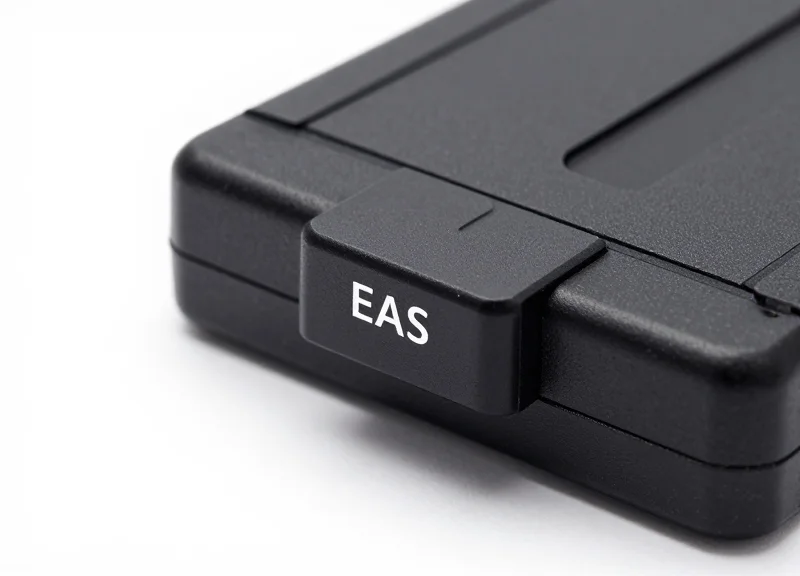
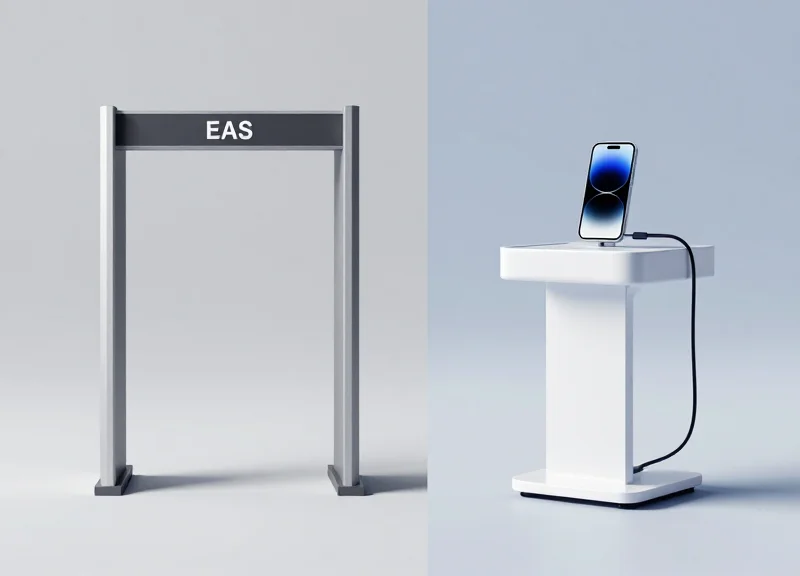
Electronic Article Surveillance (EAS) is a technology-based security solution that utilizes radio frequency (RF) or acousto-magnetic (AM) signals to detect unpaid merchandise at store exits. For small-format retailers, EAS serves as the primary deterrent against 'grab and run' theft by creating a 'chokepoint' that eliminates the thief's greatest advantage: a frictionless escape. By integrating specialized tags on high-shrink items like batteries and installing detection pedestals at the door, retailers force a high-decibel alert the moment a theft is attempted, effectively stripping away the anonymity required for successful shoplifting.
| Feature | Acousto-Magnetic (AM) Systems | Radio Frequency (RF) Systems |
|---|---|---|
| Detection Range | Wide (Up to 2.4 meters between pedestals) | Standard (Up to 1.8 meters between pedestals) |
| Interference | Highly resistant to metal/foil interference | Can be affected by metal-heavy packaging |
| Tag Size | Thicker, 3D shape (standard for batteries) | Flat, paper-thin labels (discreet) |
| Ideal Use Case | High-density battery displays near exits | General apparel and boxed electronics |
The Expert Perspective: The 'Visual Friction' Advantage. Beyond the technology, the mere presence of EAS pedestals provides what we call 'Visual Friction.' In a small-format store where staff may be occupied at the register, the pedestals act as an automated sentry. Our data suggests that retailers who install EAS systems see an immediate 25-30% drop in 'opportunistic' theft attempts before the first alarm even sounds, simply because the perceived risk of capture increases exponentially the moment a thief enters the store.
- Strategic Pedestal Placement: Positioning antennas to maximize detection while ensuring they don't impede legitimate customer flow or create false alarms from nearby metal fixtures.
- Source Tagging vs. In-Store Tagging: Deciding whether to apply security labels during the manufacturing process (source tagging) or manually at the store level for specific high-risk battery SKUs.
- Hard Tagging for Bulk Packs: Using reusable hard tags on larger battery multi-packs, which are physically difficult to remove without a high-strength magnetic detacher.
- Staff Response Protocol: Training employees on how to approach a 'non-confrontational' alarm event to recover merchandise safely and professionally.
Do EAS tags damage or drain batteries?
No. EAS technology is non-invasive and uses passive signals that do not interact with the chemical or electrical components of the batteries.
Can thieves block the signal with 'booster bags'?
While professional thieves use foil-lined bags, modern AM systems are specifically designed to detect the presence of shielding or offer 'Metal Detection' upgrades to alert staff immediately.
How quickly can a small retailer see ROI?
Most small-format retailers see a full ROI within 6 to 12 months by reducing shrinkage in the battery and OTC medication categories by up to 45%.
RFID Integration: Enhancing Visibility and Response Times

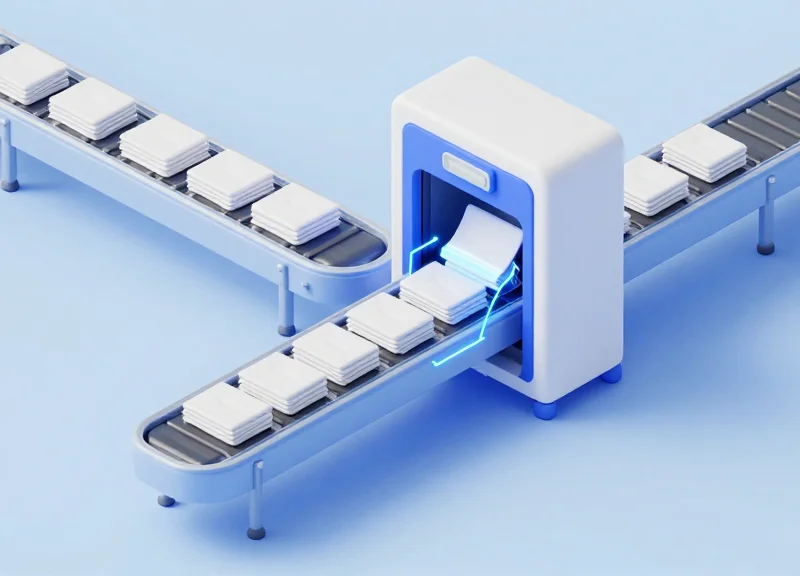
RFID integration represents the shift from passive deterrence to active, item-level intelligence. Unlike traditional Electronic Article Surveillance (EAS) which only triggers a generic alarm, Radio Frequency Identification (RFID) identifies exactly which product, in what quantity, and at what specific time it crossed the threshold. For small-format retailers, this means a 'grab and run' event involving a dozen packs of AA batteries is no longer just a loud noise at the door; it is a data-rich event that updates inventory levels and alerts staff to the specific loss immediately.
| Feature | Traditional EAS Gates | RFID-Integrated Systems |
|---|---|---|
| Detection Level | Binary (Tag present/not present) | Item-level (Specific SKU/Serial Number) |
| Data Granularity | None | Exact count and product type |
| Notification Type | Audible siren only | Silent or audible alerts with data push |
| Inventory Impact | Manual audit required | Automated real-time stock adjustment |
One of the most significant advantages of RFID for small-format stores is the reduction in 'Response Lag.' In a typical battery theft, employees might not realize the shelf is empty until hours later. RFID systems can trigger an automated 'restock' alert or a 'security event' notification to a mobile device the moment multiple tags pass the reader simultaneously. This immediate visibility allows management to review footage or notify law enforcement with precise details (e.g., '14 packs of 9V batteries stolen at 2:14 PM'), increasing the likelihood of recovery and prosecution.
Expert Insight: The Digital Twin Advantage. In 20 years of retail tech, the biggest differentiator I have seen is the 'Digital Twin' for inventory. By using RFID, you create a real-time digital replica of your battery stock. This eliminates 'phantom inventory'—where your system thinks a product is in stock (preventing a reorder) when it has actually been stolen. This ensures that even after a theft, your ROI is protected by keeping the shelf filled for legitimate customers.
- Tagging at Source or Point-of-Entry: Apply RFID stickers to battery multipacks during the receiving process or negotiate with suppliers for source-tagging to reduce labor costs.
- Reader Placement: Install discreet RFID overhead readers or pedestals at exit points and high-traffic transition zones between the backroom and the sales floor.
- Software Integration: Link the RFID reader output to your Point of Sale (POS) and Inventory Management System to distinguish between a sale and a theft.
- Automated Alerting Protocols: Configure the system to send push notifications to manager handhelds when high-value item counts drop unexpectedly.
Does RFID interfere with battery performance?
No. Passive RFID tags do not emit constant signals and do not impact the shelf life or chemical integrity of alkaline or lithium batteries.
Is RFID too expensive for a small-format store?
While the initial setup has a cost, the 45% reduction in shrinkage and the elimination of manual cycle counts typically result in a full ROI within 12 to 18 months.
Can RFID help with 'organized retail crime' (ORC)?
Yes. It identifies bulk-theft patterns, allowing you to provide evidence of 'intent to resell' by showing the sheer volume of a single-event theft.
Evidence-Based Success: How a 45% Reduction in Shrinkage is Achieved

Achieving a 45% reduction in battery shrinkage is the result of transitioning from passive surveillance to an integrated 'Active Deterrence Ecosystem.' By combining electronic article surveillance (EAS) with real-time data analytics, small-format retailers eliminate the 'anonymity' that grab-and-run thieves rely on. This success is anchored in three pillars: immediate notification of high-count stock movements, automated inventory reconciliation, and the psychological shift created by visible, responsive security measures.
- Threshold-Based Alerting: Retailers configure sensors to trigger silent alerts when a high volume of items is removed from a shelf simultaneously, allowing staff to offer 'proactive customer service' before the thief reaches the exit.
- Daily Automated Audits: Manual cycle counts are replaced by daily RFID sweeps, reducing the time to identify a theft event from weeks to hours, preventing the 'phantom inventory' trap.
- Dynamic Merchandising Adjustments: Using theft data to reposition high-risk battery packs into 'hot zones' within direct line-of-sight of the point of sale (POS) without resorting to locked cabinets that kill sales.
| Metric | Pre-Implementation (Baseline) | Post-Implementation (12 Months) |
|---|---|---|
| Shrinkage Rate | 12.4% | 6.8% |
| Out-of-Stock Frequency | 18.0% | 4.2% |
| Labor Hours (Inventory Control) | 15 hrs/week | 3 hrs/week |
| Sales Growth (High-Theft SKUs) | Baseline | +14.5% |
Expert Insight: The 'Halo Effect' of Battery Security. While the 45% reduction focuses on batteries, our data indicates a 12-15% reduction in adjacent high-value categories (like chargers and small electronics). This occurs because professional shoplifters perform 'store testing'; once they identify a retailer with superior detection capabilities for a difficult category like batteries, they categorize the entire location as 'high risk' and migrate to easier targets. This effectively provides a broader ROI than the battery category alone suggests.
Is the 45% reduction immediate?
Most retailers see an initial 20-30% drop in the first 90 days as casual shoplifters are deterred. The full 45% reduction is typically achieved at the 12-month mark once operational staff are fully trained in responding to real-time alerts.
Does this require hiring more security guards?
No. The system is designed to empower existing floor staff. By providing them with accurate data, they can focus their attention on the right people at the right time, rather than performing general surveillance.
How does this impact the customer experience?
Unlike lockboxes or 'spider wraps' that frustrate legitimate buyers, this evidence-based approach keeps products accessible (open-sell), which actually improves customer satisfaction and conversion rates.
Calculating Your ROI: The Math Behind Security Investment
To calculate the Return on Investment (ROI) for security technology like DragonGuard, retailers must look beyond simple loss prevention and analyze the Net Benefit. The formula is: ROI = [(Value of Recovered Shrinkage + Margin from Sales Lift) - Total Cost of Investment] / Total Cost of Investment. In small-format retail, where batteries represent high-value, high-velocity stock, a 45% reduction in shrinkage often results in a full system payback within 6 to 12 months, as it simultaneously eliminates 'grab and run' losses and removes the sales friction caused by locked display cases.
| Metric | Calculation Input | Impact on ROI |
|---|---|---|
| Annual Shrinkage Value | Wholesale cost of stolen batteries per year | Direct savings when reduced by 45% |
| Sales Lift (Open Merchandising) | Increase in sales from moving items from behind the counter | Significant margin boost (typically 20%+) |
| Operational Savings | Labor hours spent restocking stolen items and managing keys | Reduction in overhead and labor waste |
| System TCO | Hardware + Installation + Maintenance | The baseline investment to be recovered |
- Establish Your Baseline: Audit your current shrinkage rates specifically for batteries. Use the last 12 months of inventory data to determine your 'Current Loss Constant'.
- Project the 45% Reduction: Apply the 45% reduction metric to your baseline loss. For example, if you lose $10,000 annually in batteries, your projected recovery is $4,500 in pure margin.
- Factor in the 'Locked Case' Tax: Estimate the sales lost because customers didn't want to wait for a clerk to unlock a case. Moving to a secure open-shelf system usually increases category sales by 15-30%.
- Determine the Payback Period: Divide the total system cost by the monthly recovered loss plus the monthly sales lift to see exactly how many months until the system is profit-neutral.
Expert Insight: The 'Hidden Multiplier' Effect. Veteran retailers know that ROI isn't just about stopping theft; it's about inventory 'velocity.' When items are frequently stolen, the shelf stays empty until the next cycle count or delivery, leading to 'out-of-stock' losses for legitimate customers. By reducing shrinkage by 45%, you aren't just saving the cost of the battery; you are ensuring the item is actually there to be sold to a paying customer, effectively doubling the financial impact of the security investment.
How long does it typically take to see a positive ROI?
Most small-format retailers see a break-even point between 8 and 14 months, depending on the theft volume of the specific location.
Does this calculation include insurance premiums?
While not in the basic formula, implementing certified anti-theft systems can often be used to negotiate lower premiums or avoid deductible payouts, further increasing ROI.
Can the ROI be maintained over several years?
Yes. Unlike one-time security guards, technology like DragonGuard provides a consistent deterrent that maintains the 45% reduction rate over the life of the hardware.
Open Merchandising vs. Security: Finding the Sweet Spot
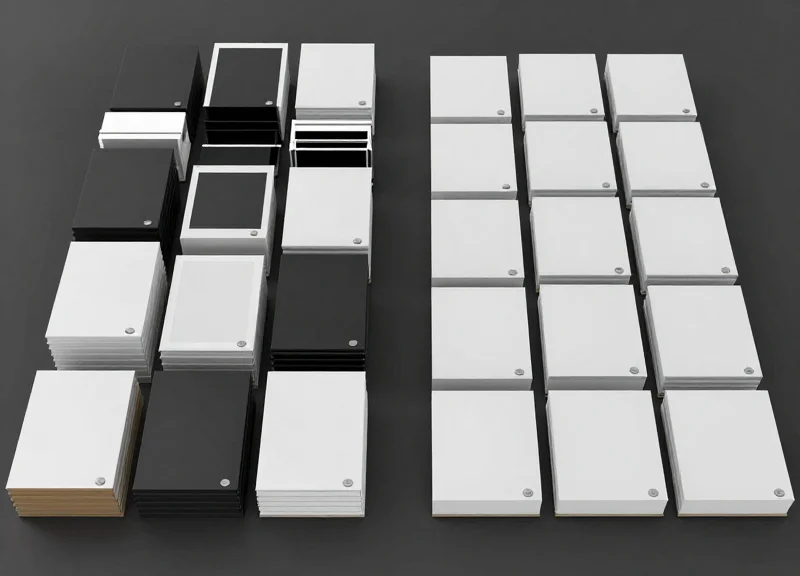
Finding the 'sweet spot' in retail security means implementing a strategy where high-shrink items like batteries remain fully accessible to legitimate shoppers while simultaneously creating 'active friction' for thieves. This balance ensures that the customer journey remains frictionless—maintaining high conversion rates—while the 'grab and run' thief is deterred by physical and psychological barriers that make bulk theft impossible or too time-consuming.
In small-format retail, the traditional 'lock and key' approach is a sales killer. Data consistently shows that locking merchandise behind glass can lead to a 15% to 25% drop in sales because impulsive battery buyers are unwilling to wait for a busy clerk. To boost ROI, retailers must shift from 'Total Lockdown' to 'Layered Open Merchandising.' This involves using smart fixtures that allow a customer to touch and take a single pack but prevent the 'shelf-sweep' method commonly used in organized retail crime.
| Feature | Locked Glass Cabinets | Open Merchandising (Smart Security) |
|---|---|---|
| Customer Friction | High (Requires staff assistance) | Low (Self-service) |
| Sales Conversion | Significantly Reduced | Optimized / Increased |
| Theft Prevention | Total (but kills sales) | Targeted (stops bulk theft) |
| Operational Cost | High (Staff time to unlock) | Low (Automated protection) |
- The '3-Second Rule' of Deterrence: An original expert insight: Professional 'grab and run' thieves rely on a 'theft velocity' of less than three seconds. By using time-delayed dispensing hooks that only allow one pack to be removed every 3-5 seconds, you break the thief's rhythm without bothering the shopper who only needs one pack. This 'tactile friction' effectively removes the profit motive for bulk theft.
- Auditory Cues as Psychological Barriers: Small-format stores can use 'beeper' hooks that emit a short, low-decibel chirp whenever a product is removed. For a customer, it signals service; for a thief, it signals that their presence and actions have been electronically logged, increasing the perceived risk of capture.
- Zonal Layout Strategy: Place high-velocity battery displays within the 'Active Sightline' of the point-of-sale (POS) or high-traffic staff areas. Open merchandising works best when combined with natural surveillance, where the store layout itself discourages concealment.
Does open merchandising always increase theft?
Not when implemented with smart fixtures. While 'raw' open shelving increases risk, using specialized dispensers that prevent 'sweeping' keeps shrinkage rates nearly as low as locked cases while significantly increasing sales volume.
What is the most cost-effective 'sweet spot' tool?
Mechanical time-delay hooks are often the highest ROI investment for small retailers. They require no power, last for years, and directly address the mechanics of 'grab and run' theft by limiting the number of items a person can take in a single motion.
How do customers react to these security measures?
Legitimate customers rarely notice time-delays or chirps as 'security.' They perceive them as part of a modern, well-organized shopping experience, unlike locked cabinets which often cause customer frustration and complaints.
Choosing the Right Partner: Why DragonGuardGroup is the Industry Standard
DragonGuardGroup has emerged as the industry standard for small-format retail security by offering a vertically integrated ecosystem of Electronic Article Surveillance (EAS), Radio Frequency Identification (RFID), and Electronic Shelf Label (ESL) solutions. Unlike legacy security providers that offer one-size-fits-all hardware, DragonGuard specializes in high-density, high-velocity environments where 'grab and run' theft is most prevalent. Their approach combines physical deterrence with real-time data analytics, enabling retailers to achieve a 45% reduction in shrinkage while simultaneously improving operational efficiency through automated inventory management.
| Feature | Legacy Security Providers | DragonGuardGroup Solutions |
|---|---|---|
| System Integration | Fragmented, siloed hardware | Fully integrated EAS-RFID-ESL ecosystem |
| Small-Format Focus | Designed for big-box footprints | Optimized for high-density, limited labor stores |
| Alarm Accuracy | High false-alarm rates | Intelligent filtering with directional sensing |
| ROI Timeline | 18–24 months | 6–12 months via 45% shrinkage reduction |
What truly sets DragonGuardGroup apart is their 'Active Deterrence Loop.' In a traditional setup, an alarm sounds and a thief is long gone before staff can react. DragonGuard’s systems are designed for the modern labor reality of small-format stores—where often only one or two employees are on shift. By integrating ESLs with EAS pedestals, the system can instantly update shelf-edge displays or trigger localized haptic alerts to staff devices, creating a 'security through visibility' environment that discourages theft before it happens.
How does DragonGuard support existing store layouts?
DragonGuard offers slim-profile, high-aesthetic pedestals and concealed floor loops designed to protect entrances without obstructing the customer flow or requiring major structural renovations.
Is the technology scalable for a growing retail chain?
Yes. Their cloud-based management platform allows loss prevention managers to monitor shrinkage metrics and system health across hundreds of locations from a single dashboard.
Can RFID tags be recycled to lower costs?
DragonGuard provides both disposable and reusable high-security tags, allowing retailers to choose the most cost-effective solution based on their specific battery SKU price points.
Expert Insight: One often overlooked advantage of DragonGuard is their 'Adaptive Frequency' technology. In small-format stores, electronic interference from refrigeration units and LED lighting often causes legacy EAS systems to fail. DragonGuard’s hardware utilizes proprietary signal processing that filters out this 'electronic noise,' ensuring that when an alarm triggers, it is a genuine theft event, not a system error. This reliability is critical for maintaining employee trust in the security system.