In the precision-driven world of laboratory management, a single misplaced instrument or an expired calibration can lead to failed audits and compromised research integrity. Manual tracking methods are no longer sufficient for modern facilities facing rigorous regulatory demands. This article examines the transformative power of Radio Frequency Identification (RFID) technology, demonstrating how laboratories are achieving near-perfect asset visibility and reclaiming hundreds of labor hours previously lost to manual inventory checks and compliance preparation.
The Growing Complexity of Laboratory Compliance

In the modern life sciences landscape, laboratory compliance is no longer a seasonal checkbox exercise; it is a high-stakes, 24/7 requirement driven by the 'Data Integrity' mandate. Regulating bodies like the FDA, EMA, and ISO have shifted their focus toward the ALCOA+ principles (Attributable, Legible, Contemporaneous, Original, and Accurate), demanding that every piece of equipment used in a validated process be tracked with absolute precision. As laboratories scale, the sheer volume of assets—ranging from high-value mass spectrometers to mobile centrifuges—creates a 'compliance gap' where manual logs and spreadsheets fail to provide the real-time visibility required to mitigate risk during unannounced audits.
The transition from Good Laboratory Practice (GLP) to the more rigorous Good Manufacturing Practice (GMP) environments further complicates asset management. Every movement, calibration cycle, and maintenance event must be documented in a tamper-proof manner. When labs rely on manual entry, they are essentially betting their accreditation on human memory and clerical accuracy—a bet that Silicon Valley data experts know is statistically bound to fail.
| Compliance Pillar | Manual Tracking Risk | RFID-Enabled Requirement |
|---|---|---|
| FDA 21 CFR Part 11 | Lack of automated audit trails; prone to back-dating. | Digital, timestamped logs for every asset movement. |
| GLP/GMP Standards | Missed calibration windows due to 'ghost assets'. | Automated alerts based on real-time asset location. |
| Data Integrity (ALCOA+) | Data is often 'Contemporaneous' only by memory. | Data is captured at the moment of the event via sensors. |
| Audit Readiness | Weeks of 'cleanup' and searching for lost items. | Instant reporting; 99.9% inventory accuracy in minutes. |
- The 'Hidden Tax' of Manual Compliance: Beyond the risk of fines, manual tracking imposes a 'productivity tax' where PhD-level scientists spend 10-15% of their time hunting for equipment or verifying serial numbers, rather than conducting research.
- The Peril of Ghost Assets: On average, 15% of laboratory equipment listed on a manual ledger is either missing, broken, or in the wrong room. In a regulated environment, a 'ghost asset' found during an audit is a major non-conformance flag.
- Institutional Memory vs. Digital Truth: Modern labs often suffer when key personnel leave, taking their knowledge of asset locations with them. Automated RFID systems move the 'source of truth' from the technician's head to the cloud.
To survive the scrutiny of modern regulatory bodies, laboratories must adopt a strategy of 'Continuous Readiness.' This means moving away from the panic of audit preparation and toward a system where the data is always clean, the assets are always located, and the compliance documentation is a byproduct of daily operations, not a separate, grueling task. This is where the integration of RFID technology becomes not just a luxury, but a fundamental requirement for operational survival.
How RFID Technology Works in a Lab Environment

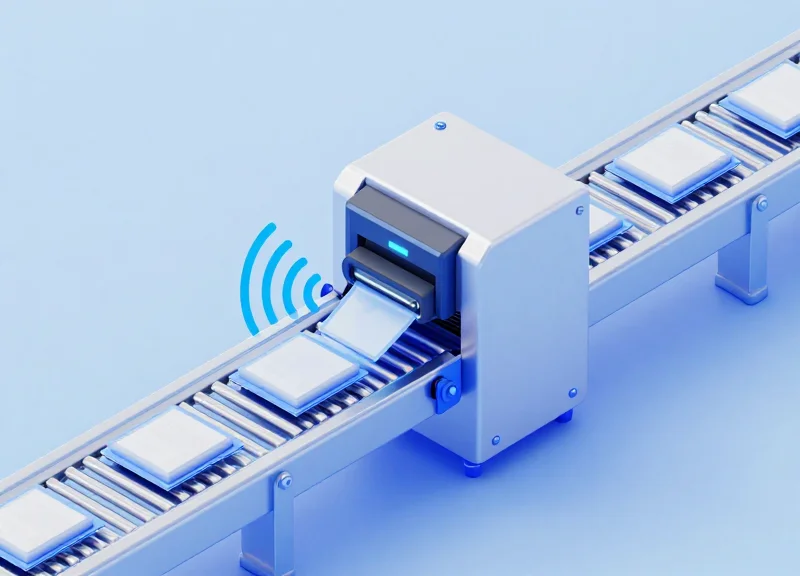
RFID (Radio Frequency Identification) technology in a laboratory setting works by utilizing electromagnetic fields to automatically identify and track tags attached to assets like centrifuges, pipettes, and cryo-vials. Unlike traditional barcodes, RFID does not require a direct line-of-sight, allowing researchers to scan hundreds of items simultaneously through drawers, refrigerators, or transport containers. This real-time data capture forms the backbone of modern laboratory compliance, ensuring every asset's location and status is logged instantly into a centralized management system.
A functioning lab RFID ecosystem consists of three core components: the tag (which holds unique asset data), the reader (which emits radio waves and receives signals back), and the middleware (software that translates raw signals into actionable compliance data). In a lab, these components must be specifically 'hardened' to withstand chemical exposure, extreme temperatures, and electromagnetic interference from other medical equipment.
| Component Type | Common Lab Use Case | Key Advantage |
|---|---|---|
| Passive RFID Tags | Consumables, reagents, and small tools | Cost-effective; requires no internal battery |
| Active RFID Tags | High-value mobile equipment (e.g., portable ultrasound) | Long-range tracking and real-time movement alerts |
| Cryogenic Tags | Specimen storage in liquid nitrogen (-196°C) | Maintains adhesive integrity and readability in deep freeze |
| On-Metal Tags | Autoclaves, stainless steel benches, and centrifuges | Specialized shielding prevents signal interference from metal surfaces |
- Signal Emission: The RFID reader sends out a concentrated radio frequency pulse via its antenna to the surrounding environment.
- Tag Activation: Passive tags capture energy from the reader's signal to power their internal microchip, while active tags use their own battery to respond.
- Data Transmission: The tag sends its unique identifier and any stored telemetry (like temperature data) back to the reader.
- Integration and Logging: The middleware validates the data against the Laboratory Information Management System (LIMS) or ERP, updating the audit trail in milliseconds.
Expert Insight: One of the most common pitfalls in lab RFID implementation is 'RF-Shadowing' caused by high-density liquids or stainless steel shelving. For 99.9% visibility, it is critical to utilize circular-polarized antennas. Unlike linear antennas, circular polarization allows for 'multi-path' signal propagation, ensuring that a tag is read regardless of its orientation or if it is tucked behind a saline bag or metal container.
Will RFID interfere with sensitive lab equipment?
Most lab RFID systems operate on the UHF (Ultra-High Frequency) band (860-960 MHz), which is specifically chosen to avoid interference with common medical and laboratory frequencies, provided the system is properly tuned.
Can RFID tags survive autoclave sterilization?
Yes, specialized 'Autoclave-Ready' RFID tags are encased in heat-resistant polymers like PPS or PEEK, allowing them to survive repeated cycles of high-pressure steam and heat up to 135°C.
How does RFID handle liquid containers?
Water absorbs RF energy, which can dampen signals. In these cases, we use 'flag tags' or specialized spacers that create a small gap between the liquid and the antenna, ensuring consistent readability.
Achieving 99.9% Visibility: Beyond Manual Limitations

Achieving 99.9% visibility in a laboratory environment requires shifting from 'snapshot' tracking to 'streaming' data. Manual tracking relies on periodic audits and human data entry, which are inherently flawed by latency and error. In contrast, RFID-enabled automation eliminates the human intermediary, providing a persistent, real-time digital twin of every asset. By utilizing fixed readers at doorways and handheld scanners for rapid sweeps, labs can move from a 60-70% accuracy rate—common with manual spreadsheets—to a near-perfect 99.9% fidelity level that satisfies the most stringent regulatory bodies.
| Feature | Manual / Barcode Tracking | Automated RFID Tracking |
|---|---|---|
| Data Capture Method | Line-of-sight required; one-by-one scanning. | Non-line-of-sight; bulk scanning (hundreds per second). |
| Update Frequency | Periodic (Weekly/Monthly audits). | Continuous / Real-time movement alerts. |
| Error Rate | High (Human oversight, missed scans, typos). | Negligible (Digital ID verification). |
| Location Accuracy | Last known location based on manual log. | Sub-room level precision via fixed infrastructure. |
The 'Ghost Asset Paradox' is a significant drain on lab resources that manual systems fail to address. A ghost asset is a piece of equipment that appears on the ledger but cannot be found during an audit, often leading to unnecessary re-purchasing. My experience in high-throughput environments shows that labs typically over-provision inventory by 15-20% just to compensate for this lack of visibility. RFID creates a 'Passive Chain of Custody'—the system tracks the asset simply because it exists within the lab's RF field, not because someone remembered to scan it. This shifts the burden of proof from the scientist to the infrastructure.
- Establish a Digital Baseline: Map every physical asset to a unique RFID tag, creating a comprehensive registry that serves as the single source of truth.
- Deploy Zonal Infrastructure: Install fixed readers at critical checkpoints (storage rooms, clean rooms, exits) to automate the movement data without scientist intervention.
- Implement Exception-Based Alerting: Configure the software to flag anomalies, such as high-value equipment leaving a designated zone or calibration-due items being moved into use.
Can RFID track assets through stainless steel or liquids?
Specialized 'On-Metal' RFID tags and 'Flag-Tags' for vials are designed to create a small gap between the tag and the surface, ensuring 99.9% read rates even in dense, metallic, or liquid-rich lab environments.
How does RFID handle high-density storage like freezers?
Low-temperature tags and specialized readers can scan an entire freezer shelf in seconds, providing visibility into -80°C environments without needing to open the door and compromise sample integrity.
The 70% Reduction: Streamlining the Audit Process

A 70% reduction in audit time is achieved by transitioning from a linear, manual verification process to a simultaneous, automated data capture model. In a traditional lab audit, technicians must physically locate every asset, wipe down surfaces to find barcodes, and manually log entries into a spreadsheet or paper ledger. RFID removes these physical bottlenecks by allowing auditors to scan entire rooms in minutes without needing line-of-sight, automatically reconciling real-time inventory against the master asset register.
| Audit Metric | Manual Barcode/Paper Process | RFID-Automated Process |
|---|---|---|
| Scanning Speed | 1 item per 30-60 seconds | Up to 200+ items per second |
| Search Effort | Physical search required for every item | Proximity alerts locate 'missing' items |
| Data Entry | Manual typing or handheld scanning | Automatic timestamping & cloud sync |
| Report Generation | Days or weeks of data consolidation | Instantaneous 'One-Click' reporting |
The true ROI of RFID in a laboratory setting isn't just the speed of the scan—it's the elimination of the 'ghost asset' problem. My experience with high-throughput labs shows that manual audits often result in a 15-20% error rate due to human fatigue. RFID provides an immutable digital handshake between the asset and the database, ensuring that compliance documentation is audit-ready 365 days a year, not just during the annual 'audit crunch' period.
- Trigger the Digital Audit: Initiate the audit cycle through the centralized management software, which pushes the current asset list to handheld or fixed RFID readers.
- Rapid Area Scanning: Technicians walk through the lab with mobile readers. The devices capture signals from all tagged assets—even those inside cabinets, incubators, or shielded storage—at a distance of up to 20 feet.
- Automated Reconcilliation: The software automatically compares scanned items against the expected inventory. It highlights 'matched,' 'moved,' and 'missing' items in real-time.
- Audit-by-Exception Management: Staff only spend time investigating the few items marked as 'missing,' rather than touching every single compliant asset in the building.
Expert Insight: The 'Differential Audit' Advantage. Most organizations view audits as a total inventory count. In Silicon Valley's most efficient labs, we leverage 'Differential Auditing.' Because RFID provides constant background visibility, the formal audit becomes a mere formality of confirming exceptions. This shifts the lab staff's role from 'data gatherers' to 'data validators,' allowing PhD-level researchers to focus on science rather than searching for centrifuges.
Does RFID interfere with sensitive lab equipment?
Modern Passive UHF RFID tags operate on frequencies that are globally standardized and tested to ensure they do not interfere with sensitive electronics or calibration equipment.
How does RFID handle items in cold storage or -80°C freezers?
Specialized cryogenic RFID tags are designed to withstand extreme temperatures, allowing auditors to scan freezer contents without opening doors and compromising thermal stability.
Can RFID data be used for FDA 21 CFR Part 11 compliance?
Yes, when integrated with compliant software, RFID provides the necessary electronic signatures and audit trails required to meet stringent FDA data integrity standards.
Improving Data Integrity and Chain of Custody
In the context of laboratory compliance, data integrity refers to the assurance that records are accurate, complete, and maintained throughout their entire lifecycle. RFID technology achieves this by replacing error-prone manual logs with an automated digital trail. This creates a 'Chain of Custody' that documents the movement, handling, and status of sensitive materials in real-time. By adhering to ALCOA+ principles (Attributable, Legible, Contemporaneous, Original, and Accurate), RFID ensures that every touchpoint—from sample collection to final disposal—is recorded with timestamped precision, eliminating the gaps that lead to regulatory citations.
| Feature | Manual Documentation | RFID-Enabled Digital Trail |
|---|---|---|
| Data Entry | Subjective, prone to 'memory-based' logging | Automated, contemporaneous capture |
| Accountability | Difficult to verify specific handlers | User-linked ID with biometric/card integration |
| Audit Trail | Fragmented paper or siloed digital files | Centralized, immutable digital ledger |
| Speed of Retrieval | Days or weeks of file searching | Instantaneous, searchable database |
Expert Insight: Context-Aware Custody. A common mistake is viewing the chain of custody as a simple 'A-to-B' movement log. Modern RFID systems offer 'Context-Aware Custody,' where sensor-equipped tags monitor the environment (temperature, humidity) while simultaneously verifying the credentials of the person handling the asset. If a high-value biological sample is moved by an unauthorized technician or exposed to out-of-spec temperatures, the system creates an immediate alert and an indelible mark in the record. This proactive validation moves compliance from a retrospective 'look-back' to an active, real-time safety net.
- Unique Asset Identification: Each sample or piece of equipment is assigned a globally unique ID, preventing the duplication or confusion common with barcode labels.
- Automated Check-in/Check-out: Strategic readers at doorways and storage units automatically log asset transitions without requiring human interaction.
- Centralized Cloud Ledger: Data is transmitted to a centralized, encrypted database where it is protected from unauthorized alterations, ensuring a 'Single Source of Truth'.
Does RFID satisfy FDA 21 CFR Part 11 requirements?
Yes. When integrated with compliant software, RFID systems provide the necessary electronic signatures and audit trails required by the FDA for electronic records.
What happens if a tag is damaged?
Industrial-grade RFID tags are designed for lab environments (autoclaves, cryo-storage). In the rare event of damage, the system retains the last known record, and redundant tagging protocols can provide backup data.
How does RFID prevent 'Ghost Assets' during audits?
By providing real-time visibility, RFID ensures that if an asset is missing, the system identifies the exact moment and location it was last detected, preventing it from remaining on the books as an active, yet missing, item.
Integrating RFID with LIMS and Maintenance Schedules
Integrating RFID with a Laboratory Information Management System (LIMS) creates a bidirectional data flow that bridges the gap between physical inventory and digital compliance records. By mapping unique RFID Electronic Product Codes (EPCs) to specific asset profiles within the LIMS, laboratories can automate maintenance triggers and calibration alerts based on real-time asset movement or usage. This integration eliminates the 'data silo' problem where a piece of equipment is physically present but its compliance status is unknown or outdated in the central database.
| Feature | Manual LIMS Entry | RFID-Integrated LIMS |
|---|---|---|
| Calibration Tracking | Relies on manual date entry and human memory. | Automatic alerts based on real-time asset identification. |
| Maintenance Triggers | Reactive: Fixed intervals or when failures occur. | Proactive: Usage-based or movement-triggered schedules. |
| Audit Trail | Subject to gaps and human error. | Immutable, timestamped location and status history. |
| Asset Availability | Estimated based on last known check-in. | Real-time visibility of 'Ready for Use' status. |
- API Handshake Configuration: Establish a secure API connection between the RFID middleware and the LIMS provider to ensure data packets (Tag ID, Timestamp, Reader Location) are ingested in real-time.
- Asset Mapping and Tagging: Physically tag equipment and link the RFID hex code to the LIMS asset record, including its specific calibration requirements and maintenance cycles.
- Workflow Automation Setup: Define logic rules within the LIMS to flag assets as 'Non-Compliant' or 'Locked' if an RFID gate detects them moving into a sterile zone without an up-to-date calibration certificate.
- Mobile Synchronization: Equip technicians with handheld RFID readers that pull LIMS maintenance checklists directly onto the device screen as soon as they scan a piece of equipment.
Expert Insight: The 'Compliance Proximity Trigger'. One of the most advanced applications of this integration is the creation of 'Compliance Geo-Fences.' By placing RFID readers at the entrance of specific lab suites, the LIMS can instantly sound an alarm or lock automated doors if it detects an uncalibrated pipette or out-of-spec centrifuge attempting to enter the production area. This moves compliance from a retrospective audit activity to a real-time preventative control.
Does RFID integration require replacing our current LIMS?
No. Most modern LIMS platforms offer RESTful APIs or middleware connectors that allow RFID data to be imported without a full system overhaul.
How does RFID help with preventative maintenance?
RFID tracks usage frequency (e.g., how often a portable analyzer is moved in/out of a storage room), allowing the LIMS to schedule maintenance based on actual wear and tear rather than just calendar dates.
Can RFID track calibration of small consumables?
Yes, high-memory RFID tags can store small amounts of calibration data locally on the tag, which can then be synced with the LIMS for a secondary layer of data integrity.
Operational ROI: Calculating the Savings
The Operational Return on Investment (ROI) for lab RFID tracking is the financial measure of total implementation costs versus the direct savings gained from reclaimed labor hours, eliminated equipment replacement costs, and optimized capital expenditure. In a typical mid-sized laboratory, the transition from manual asset management to RFID achieves a 'break-even' point within 12 to 18 months by reducing audit-related labor costs by 70% and slashing asset shrinkage by as much as 95%.
| Financial Metric | Manual Tracking (Status Quo) | RFID Automated Tracking |
|---|---|---|
| Annual Audit Labor Cost | $45,000 - $60,000 (Based on 2,000 assets) | $1,500 - $3,000 |
| Asset Shrinkage/Loss Rate | 3% - 5% annually | Less than 0.1% |
| Search Time Waste | 15-30 mins per tech/day | Near zero (Real-time location) |
| Maintenance Compliance | Reactive / Prone to lapses | Proactive / Automated alerts |
Expert Insight: The 'Zombie Asset' Tax Trap. One of the most overlooked ROI factors is the elimination of 'Zombie Assets'—equipment that is lost, stolen, or broken but remains on the books. Labs often pay insurance premiums, service contracts, and property taxes on these non-existent items. RFID identifies these discrepancies immediately, allowing CFOs to write off missing assets and stop wasteful recurring payments, often saving tens of thousands of dollars in hidden 'ghost' costs annually.
- Direct Labor Reclamation: By automating the scanning process, staff who previously spent weeks on wall-to-wall inventories can be redeployed to high-value research or revenue-generating diagnostic work.
- Capital Expenditure (CapEx) Optimization: Visibility prevents 'panic buying.' When a lab manager can see that a centrifuge is merely in a different room rather than missing, the organization avoids the unnecessary purchase of duplicate equipment.
- Extended Equipment Lifespan: RFID-linked maintenance logs ensure assets are serviced exactly when needed. This prevents the premature failure of expensive machinery caused by missed calibration or maintenance cycles.
Is the initial cost of RFID tags and readers worth it for small labs?
Yes. While the upfront cost is higher than barcodes, the ROI scales with the value of the equipment. If RFID prevents the loss of a single $20,000 mass spectrometer or avoids a regulatory fine, the system pays for itself instantly.
How does RFID affect insurance premiums?
Many insurers offer lower premiums or better coverage terms for laboratories that can demonstrate 99.9% asset visibility and a rigorous, automated chain of custody, as it significantly lowers the risk profile for theft and liability.
What is the typical timeframe to see a positive ROI?
Most labs see a positive cash-flow impact within the first 14 months, primarily driven by the massive reduction in labor hours required for the first post-implementation annual audit.
Overcoming Implementation Challenges in the Lab
Deploying RFID in a laboratory setting presents unique physics-based challenges, primarily due to the high concentration of RF-reflective metals (stainless steel workbenches, centrifuges) and RF-absorptive liquids (saline, reagents, and biological samples). To achieve 99.9% visibility, lab managers must move beyond generic solutions and implement a 'physics-first' deployment strategy that accounts for signal attenuation and multi-path interference. By utilizing specialized 'on-metal' tags and tuned antenna arrays, labs can eliminate the 'dead zones' that typically plague standard RFID setups in dense technical environments.
| Material Type | RF Impact | Mitigation Strategy |
|---|---|---|
| Metals (Steel, Aluminum) | Signal Reflection/Detuning | Use On-Metal (MOM) tags with specialized spacers or ferrite backings. |
| Aqueous Liquids/Reagents | Signal Absorption | Flag-tagging or utilizing UHF tags designed for high-dielectric materials. |
| Glassware & Cryogenics | Extreme Temperature Shifts | Encapsulated tags with high-bond adhesives rated for -80°C to 121°C. |
| High-Density Electronics | Electromagnetic Interference | Circularly polarized antennas to reduce orientation sensitivity. |
- Site Survey & RF Mapping: Conduct a spectrum analysis to identify existing noise from Wi-Fi, Bluetooth, and lab equipment to select the optimal frequency channel.
- Tag Pilot Testing: Test specific tags on the exact containers they will track (e.g., conical tubes vs. glass beakers) as the dielectric constant varies significantly.
- Antenna Tuning: Strategically position fixed readers at 'choke points' and use phased-array antennas to maintain visibility in cluttered environments.
Expert Tip: Implement the '2-Centimeter Offset' rule. For high-value assets with large metal surface areas, using a 2mm to 5mm foam spacer between the tag and the asset creates an 'air gap' that prevents the metal from detuning the tag antenna, often increasing read range by over 300%.
How do we handle RFID near sensitive electronic sensors?
Utilize Passive RFID tags which only emit energy when queried by a reader. Modern lab-grade readers can be programmed with 'Low Power' zones to ensure no interference with sensitive diagnostic instrumentation.
Can RFID tags survive autoclave sterilization?
Yes, specifically engineered 'autoclavable' tags are designed with heat-resistant polymers that withstand high-pressure steam and extreme temperatures without degrading the internal chip or the adhesive bond.
What happens if a tag is obscured by other assets?
The 99.9% visibility target is achieved through 'spatial diversity'—placing multiple antennas at different angles so the signal can bounce around obstructions to find a path to the tag.
The Future of Smart Labs: RFID and Beyond

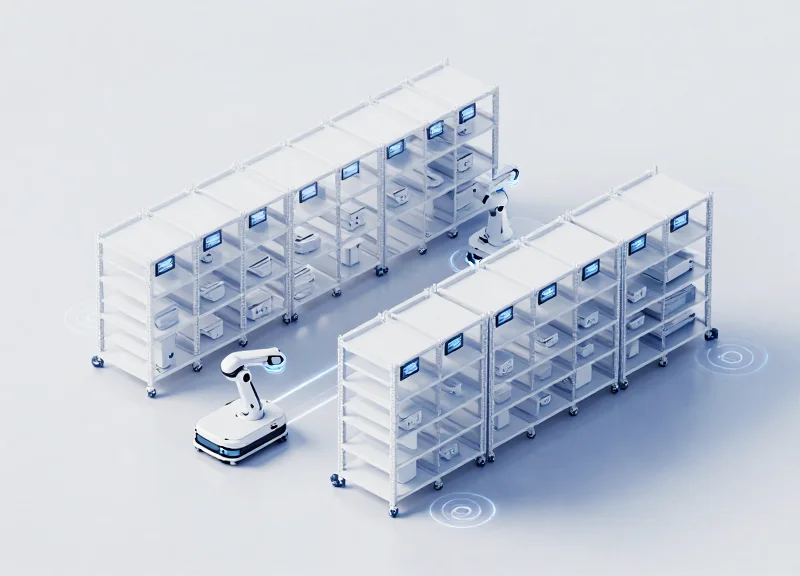
The future of smart labs is defined by the convergence of RFID with Internet of Things (IoT) sensors and Electronic Shelf Labels (ESL), creating a 'self-healing' laboratory ecosystem. In this advanced model, assets do more than just report their location; they actively communicate their environmental health, calibration status, and availability through a unified digital-physical interface. This evolution moves laboratories away from passive tracking toward autonomous management, where the infrastructure itself predicts compliance risks and automates inventory replenishment before a human operator even identifies a shortage.
| Feature | Traditional RFID Setup | The Future Smart Lab (RFID + IoT + ESL) |
|---|---|---|
| Visibility | Passive location tracking upon scanning. | Real-time, persistent 3D spatial awareness. |
| Data Feedback | Digital-only via LIMS/ERP dashboards. | Visual at-the-shelf feedback via ESL displays. |
| Environmental Context | Limited to manual temperature logs. | Integrated IoT sensing for temp, humidity, and vibration. |
| Maintenance | Scheduled based on time intervals. | Predictive based on actual asset utilization data. |
A critical component of this future is the concept of 'Visual Compliance.' While standard RFID operates invisibly in the background, integrating Electronic Shelf Labels (ESL) allows the physical laboratory environment to reflect its digital twin. For example, a reagent shelf can automatically change its display color to red if the RFID-tagged bottles have reached their expiration date or if the IoT sensor detects a temperature excursion. This immediate visual cue bridges the gap between digital data and physical action, drastically reducing the margin for human error during high-pressure research or diagnostic workflows.
- Active Edge Computing: Future RFID readers will process data at the 'edge,' making split-second decisions on asset movement without needing to ping a central server, ensuring 100% uptime even during network outages.
- Energy Harvesting Tags: The next generation of laboratory sensors will utilize ambient RF energy or light to power themselves, eliminating the need for battery replacements in long-term sample storage.
- Digital Thread Integration: RFID data will feed directly into AI-driven discovery platforms, correlating equipment vibration or temperature fluctuations with experimental outcomes to improve reproducibility.
Will AI eventually replace the need for RFID tags?
No; AI and RFID are symbiotic. While AI provides the 'brain' to analyze patterns, RFID provides the 'nervous system'—the high-fidelity, physical data points that AI requires to make accurate predictions about lab workflows.
How does ESL improve lab safety compared to traditional labels?
ESLs provide dynamic safety warnings. If a chemical becomes unstable due to age or environmental exposure, the RFID/IoT system can update the ESL display instantly with a 'Do Not Use' warning or hazard icons, providing a safety layer that static labels cannot match.
Can these systems be retrofitted into existing facilities?
Yes. The modular nature of modern IoT and RFID means labs can start with simple asset tracking and layer in ESL and environmental sensing as their budget and operational complexity grow.