In the high-precision world of automotive manufacturing, engine assembly stands as one of the most demanding environments for data capture. As we move into 2026, the push for Industry 4.0 integration and 100% matching accuracy has made standard RFID solutions obsolete. Metal surfaces naturally reflect RF energy, creating 'dead zones' that can lead to costly assembly errors or tracking failures. This guide explores the critical evolution of metal-mount RFID technology, providing procurement managers and engineers with the technical insights needed to select tags that withstand extreme temperatures, chemical exposure, and electromagnetic interference while ensuring total data integrity.
The Evolution of Engine Assembly Tracking: Why 2026 Demands Higher Accuracy

In 2026, engine assembly tracking has evolved from passive data collection into a mandatory state of 'Digital Twin Synchronicity.' This means every physical component must be perfectly reflected in a digital ledger in real-time. With the automotive industry facing unprecedented complexity due to the coexistence of high-efficiency internal combustion engines (ICE), hydrogen-cell units, and hybrid powertrains on the same assembly lines, the margin for error has vanished. Modern factories now demand 100% matching accuracy because even a 0.1% failure rate in RFID read reliability can result in millions of dollars in recall risks, line stoppages, and compromised safety data.
| Feature | 2016 Standard (Legacy) | 2026 Requirement (Modern) |
|---|---|---|
| Tracking Method | Barcodes & Passive UHF | High-Memory Metal-Mount RFID |
| Accuracy Target | 95% - 98% | 99.99% - 100% |
| Data Capacity | Simple ID Number | Full Lifecycle & Torque History |
| Environment | Clean/Standard | High-Heat, Chemical & Metal-Dense |
The move toward 'Industry 5.0' has placed the human-machine collaboration at the center of the shop floor. For workers to successfully navigate the complexity of 2026 engine variants, the infrastructure must provide automated, zero-touch verification. If a metal-mount tag fails to read because of interference from the engine block itself, the entire automated guided vehicle (AGV) system stalls, creating a bottleneck that ripples through the global supply chain.
Why is 100% accuracy more critical in 2026 than in previous years?
The rise of software-defined vehicles requires that hardware components be perfectly matched to their digital certificates. Any mismatch during assembly can lead to software failures that are impossible to diagnose post-production.
How does the 'Metal-Mount' factor complicate this evolution?
Engines are essentially giant signal-reflectors. Traditional RFID tags fail when applied to metal; 2026-grade tags use specialized spacers and anti-metal layers to turn the engine block itself into a signal-enhancing antenna component.
What is the impact of zero-error tolerance on ROI?
By eliminating manual scanning and 'no-reads,' manufacturers see a 30% increase in throughput and a near-total elimination of rework costs associated with part-matching errors.
Expert Insight: The 'Ghost-Read' Vulnerability. A unique challenge we are seeing in 2026 is not just the 'no-read,' but the 'ghost-read'—where a tag from a neighboring assembly line is accidentally captured. Achieving 100% matching accuracy now requires 'RSSI-Filtering' (Received Signal Strength Indicator), ensuring the system only acknowledges the tag physically closest to the antenna, effectively creating a digital 'geofence' around each individual engine block.
Understanding the Physics: The Challenge of RFID on Metal Surfaces
The fundamental challenge of using RFID on metal engine surfaces stems from electromagnetic interference: metallic objects reflect Radio Frequency (RF) energy and generate parasitic eddy currents that oppose the tag's magnetic field, leading to a phenomenon called 'detuning.' In a standard RFID tag, placing it directly against a metal engine block causes the antenna’s impedance to shift so drastically that the tag becomes invisible to the reader. To achieve 100% matching accuracy in 2026 smart factories, engineers must utilize specialized metal-mount tags that incorporate a dielectric spacer or a Planar Inverted-F Antenna (PIFA) design to isolate the signal from the conductive surface.
| Physics Factor | Standard RFID Tag | Metal-Mount RFID Tag (2026 Spec) |
|---|---|---|
| RF Reflection | Waves bounce back, causing destructive interference. | Controlled reflection used to actually gain signal strength. |
| Eddy Currents | Cancel out the tag’s internal magnetic field. | Mitigated by high-performance dielectric spacers. |
| Antenna Impedance | Shifts (detunes) to a non-functional state. | Pre-tuned specifically for high-dielectric substrates. |
| Read Range | Reduced to zero or near-zero. | Consistent 3-10 meters even on curved cast iron. |
Expert Insight: The 'Curvature Detuning' Variable. A common mistake in engine assembly planning is testing tags on flat metal sheets. In 2026, as engine blocks become more compact and feature complex geometric castings, the curvature of the mounting surface acts as a secondary parabolic reflector. This can shift the resonance frequency by as much as 15-20 MHz. Always specify 'low-profile flexible' metal-mount tags for cylindrical surfaces to ensure the internal antenna maintains its calibrated distance from the metal skin.
What is the 'Dielectric Gap'?
It is a physical spacer made of non-conductive material (like ceramic or specialized foam) that creates a 'buffer zone' between the metal surface and the RFID chip, preventing the metal from absorbing the tag's energy.
Why can't we just use stronger readers?
Increasing reader power creates 'RF noise' and multipath interference in a factory setting, which leads to ghost reads. The solution must be at the tag level through proper physics-based impedance matching.
Does the type of metal matter?
Yes. Aluminum engine components have different conductivity and 'Skin Effect' depths compared to cast iron or high-nickel alloys, requiring tags tuned for specific metallurgical properties.
- Surface Preparation: Ensure the metal surface is free of oils or metallic dust that can create a secondary conductive layer over the tag.
- Orientation Alignment: Align the tag antenna polarization with the reader's circular or linear path to overcome the signal compression caused by the metal background.
- Attachment Method: Use high-bond acrylic adhesives that do not degrade under the thermal expansion cycles of the engine block during testing.
Key Specifications: Durability and High-Temperature Resistance
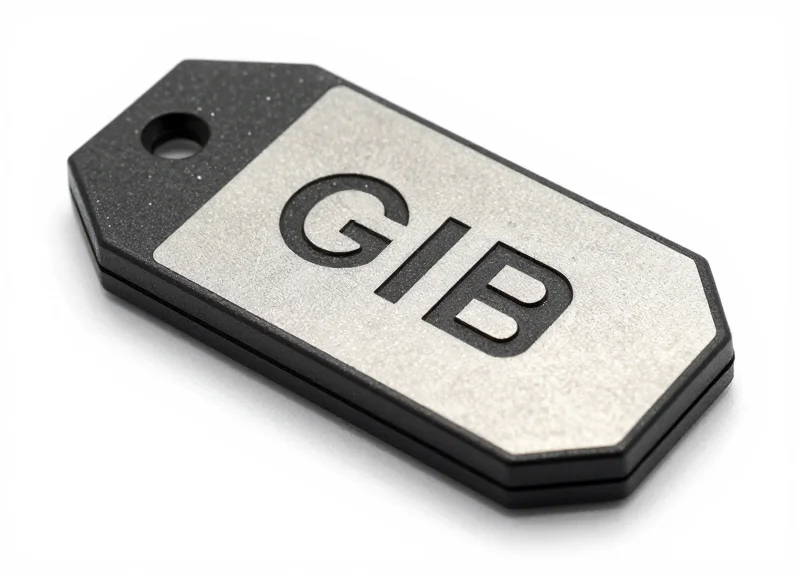
In the context of 2026 engine assembly, durability is defined as the ability of an RFID tag to maintain 100% read accuracy while enduring extreme thermal cycles (often exceeding 200°C), high-pressure chemical washes, and the mechanical vibrations of a robotic floor. For automotive manufacturers, durability isn't just about survival; it is about ensuring the tag's internal antenna remains perfectly tuned to the chip despite the expansion and contraction of the metallic engine block it is mounted to.
Engine production involves a 'gauntlet' of environmental stressors. Tags are typically exposed to cutting fluids during machining, followed by intense heat during curing or leak testing, and finally, high-pressure spray during the final cleaning. Failure at any of these stages breaks the digital thread, leading to expensive manual reconciliations or assembly errors. Therefore, specifications must go beyond basic IP ratings to include specific chemical compatibility and thermal memory stability.
| Material Type | Max Operating Temp | Peak Excursion (Short Term) | Chemical Resistance | Best Use Case |
|---|---|---|---|---|
| Ceramic Tags | 150°C | 225°C | High (Acids/Oils) | Small footprints on engine blocks |
| FR4 (PCB) Tags | 110°C | 180°C | Medium | Transmission and drivetrain parts |
| Thermoset/PPS | 200°C+ | 250°C+ | Extreme | Paint shop and high-heat curing lines |
Expert Insight: In 2026, the industry has shifted toward 'Thermal Hysteresis Calibration.' As an engine block heats up, the metal expands, which can physically stress the bond between the tag and the surface, causing a frequency shift (detuning). Top-tier tags now utilize a floating internal antenna design that allows the outer shell to expand without pulling on the microchip, ensuring the tag remains readable at the exact moment it exits a high-heat furnace.
What is the minimum IP rating required for engine assembly RFID?
You should look for IP69K. While IP68 protects against immersion, the 'K' indicates protection against high-pressure, high-temperature steam jets often used in automotive cleaning stages.
Does heat affect the data retention of the RFID chip?
Yes. Standard chips may lose data or suffer shortened lifespans above 125°C. High-temperature tags use specialized non-volatile memory (NVM) designed to retain data integrity for up to 10 years even after repeated thermal cycling.
How do I ensure the adhesive doesn't fail in the heat?
Mechanical fastening (screws or rivets) is the gold standard for engines. However, if using adhesives, specify structural-grade epoxies or acrylics that are rated for the same temperature peaks as the tag itself.
Achieving 100% Matching Accuracy: Data Integrity Protocols
In the context of 2026 engine assembly, 100% matching accuracy is the elimination of the 'orphan data' phenomenon, where a physical engine block and its digital twin become desynchronized. Achieving this requires more than just a high-quality metal-mount tag; it demands a robust Data Integrity Protocol (DIP) that governs the bidirectional communication between the RFID reader, the Programmable Logic Controller (PLC), and the Manufacturing Execution System (MES). By implementing a 'Write-Verify-Lock' sequence, manufacturers ensure that every piston, gasket, and sensor installed matches the specific SKU requirements of the engine block currently on the pedestal.
- Antenna Field Optimization: Calibrate the RF field to ensure the reader only captures the tag directly in front of the station, preventing 'cross-talk' from engines on adjacent conveyors.
- Cyclic Data Validation: The PLC initiates a read command and compares the Tag ID against the expected Serial Number in the local buffer before any mechanical assembly action is permitted.
- Write-Verify-Lock (WVL) Cycle: After a component is installed, the system writes the component's unique ID to the engine's tag, immediately reads it back to verify correctness, and then locks that memory block to prevent accidental overwriting.
- Edge-to-Cloud Synchronization: The transaction is timestamped and pushed to the MES. If the local PLC and the MES do not return a matching 'Success' flag within 50 milliseconds, the line is automatically paused for manual inspection.
| Feature | Standard RFID Setup | 2026 Integrity-First Protocol |
|---|---|---|
| Data Verification | Post-process batch check | Real-time PLC handshake |
| Error Handling | Manual audit after failure | Automated 'Stop-and-Fix' logic |
| Memory Usage | Read-only UID | Read/Write user memory + Locking |
| Latency | 200ms - 500ms | Sub-50ms (Edge optimized) |
The 'Silicon Valley' edge in 2026 is the implementation of 'Zero-Trust Data Architecture' at the sensor level. Instead of assuming a read is correct, modern systems treat every RF signal as a candidate until it passes a three-way parity check between the tag's hash, the reader's signal strength (RSSI) filtering, and the PLC's logic state. This prevents 'phantom reads'—a common issue in metallic environments where reflected signals can trick older systems into thinking a part has arrived when it hasn't.
How do we handle tag read failures without stopping the entire line?
Implement a 'Virtual Tag' buffer. If a physical tag is unreadable, the system uses the engine's carrier ID as a temporary proxy while flagging the unit for a tag replacement at the next available buffer station.
Which communication protocol is best for 100% accuracy?
OPC UA (Open Platform Communications Unified Architecture) is the 2026 standard. It provides the necessary security and data modeling to ensure that the data sent from the RFID reader is exactly what the MES receives, with built-in error recovery.
Can multi-path interference from metal affect data integrity?
Yes. However, using circular polarized antennas and RSSI (Received Signal Strength Indicator) thresholds allows the protocol to ignore weak, reflected signals and only accept high-confidence, direct-line-of-sight data.
Material Matters: Ceramic vs. PCB vs. Rugged Encapsulated Tags
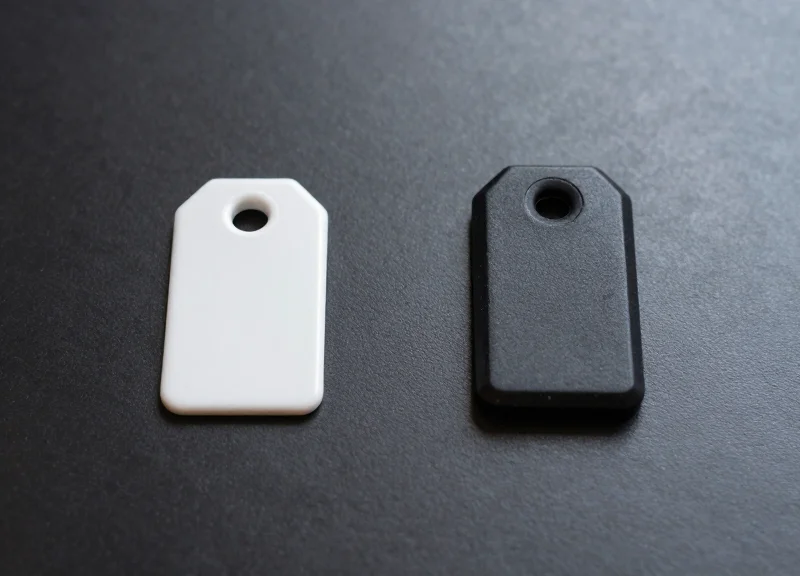
In the high-stakes environment of engine assembly, the material construction of a metal-mount RFID tag is not merely a protective shell; it is a critical component of the tag's RF tuning and long-term reliability. As we move into 2026, the industry has standardized three primary substrates—Ceramic, PCB, and Rugged Encapsulated—each offering distinct advantages depending on whether the tag must survive robotic welding, high-pressure washdowns, or the thermal cycling of an engine test bench.
| Material Type | Primary Benefit | Temperature Peak | Best Use Case | Form Factor |
|---|---|---|---|---|
| Ceramic | High Dielectric Precision | up to 250°C | Small-part tracking (Valves/Pistons) | Ultra-Compact |
| PCB (FR4) | Cost-to-Performance Ratio | up to 180°C | Main Engine Block Identification | Slim / Low Profile |
| Rugged Encapsulated | Mechanical Impact Resistance | up to 230°C | Heavy-duty Assembly / Painting | Bulky / Bolted |
Expert Insight: The CTE Mismatch Factor. A common mistake in tag selection is ignoring the Coefficient of Thermal Expansion (CTE). In 2026, leading-edge manufacturers are prioritizing tags where the housing's expansion rate matches the cast iron or aluminum of the engine block. A mismatch often leads to 'adhesive shearing' or micro-cracks in the internal antenna bridge during the cooling phase after a heat-test, causing intermittent read failures that sabotage 100% matching goals.
- Ceramic Tags: The Precision Specialist: Ceramic tags utilize a high-dielectric substrate that allows for a much smaller antenna design without sacrificing read range. These are ideal for embedding directly into recessed metal pockets. Their extreme heat resistance makes them the gold standard for parts undergoing heat treatment, though they can be brittle if subjected to direct hammer-strikes.
- PCB (FR4) Tags: The Versatile Workhorse: Constructed from flame-retardant epoxy glass-reinforced material, PCB tags are the most cost-effective solution for tracking engine blocks through standard assembly. They offer excellent 'read-on-metal' consistency and can be manufactured with extremely slim profiles, making them easy to mount in tight clearance areas.
- Rugged Encapsulated Tags: The Fortress: Usually encased in high-grade polymers like PEEK or PPS, these tags are designed to withstand chemical baths, high-pressure steam, and physical abrasion. In 2026, these tags often feature integrated 'buffer zones' to protect the internal chip from the sonic vibrations of high-torque automated fastening tools.
Which material is best for high-vibration environments?
Rugged Encapsulated tags are superior here, as the internal potting material acts as a shock absorber for the RFID chip's delicate solder points.
Can Ceramic tags be used on curved surfaces?
Generally no; Ceramic is rigid. For curved engine components, a smaller PCB tag or a specialized flexible metal-mount tag is recommended to ensure a secure surface bond.
Does the material affect the read range significantly?
Yes. Ceramic has a higher dielectric constant, often providing better range in a smaller footprint compared to PCB, provided the tag is properly tuned to the metallic substrate.
The Role of UHF and Read Range Optimization

In 2026, UHF (Ultra-High Frequency) RFID, specifically the RAIN RFID standard, remains the industry benchmark for engine assembly due to its ability to read multiple tags simultaneously at high speeds. While Low Frequency (LF) and High Frequency (HF) struggle with distance and data rates, UHF (860-960 MHz) provides the necessary 'reach' to identify engine blocks as they move through automated stations. However, in an environment saturated with metal, optimization is not about achieving the longest possible range, but rather about defining a precise, predictable read zone that eliminates 'stray reads' from adjacent assembly lines.
| Feature | LF (125-134 kHz) | HF (13.56 MHz) | UHF (860-960 MHz) |
|---|---|---|---|
| Read Range | Contact to <10cm | Up to 1 meter | Up to 12+ meters |
| Data Transfer | Very Slow | Moderate | High Speed |
| Metal Tolerance | Excellent (Natural) | Fair (Requires Spacers) | Complex (Requires Specialized Tags) |
| Multi-Tag Reading | No | Limited | Highly Capable (>200 tags/sec) |
Optimizing UHF for engine blocks requires addressing 'multipath interference.' Because metal surfaces reflect RF energy, the signal can bounce off an engine block and hit a tag several meters away, leading to false positives. To counter this, engineers must shift from 'max power' settings to 'constrained power' settings combined with circular polarization to ensure the tag is captured regardless of its orientation on the robotic mount.
- RF Mapping and Site Survey: Use a spectrum analyzer to identify ambient noise from other industrial equipment and establish a baseline RF floor.
- Antenna Polarization Selection: Utilize Circularly Polarized antennas for engine blocks on rotating skids to maintain a consistent link regardless of the tag's angle.
- Power Attenuation Tuning: Incrementally reduce reader transmit power to the lowest level that still yields 100% accuracy, effectively shrinking the 'read bubble' to the specific workstation.
- Shielding and Tunneling: Implement RF-absorbing materials or metallic shielding (Faraday cages) around high-density read points to isolate signals between parallel assembly lines.
Expert Tip: The 'Near-Field Zone' Paradox. In 2026, high-accuracy assembly lines are increasingly moving toward 'Near-Field UHF.' By using specialized antennas that ignore the far-field (long-distance) components of the radio wave, you can achieve the high data rates of UHF with the surgical precision of HF. This effectively eliminates the risk of reading a tag on a forklift passing ten feet behind the assembly station.
Why is my reader picking up tags from the neighboring line?
This is likely due to 'RF leakage' or high power settings. Use directional patch antennas and lower the RSSI (Received Signal Strength Indicator) threshold in your middleware to filter out weaker, distant signals.
How does moisture or oil in the assembly bay affect UHF range?
Unlike metal, which reflects signals, liquids absorb UHF energy. In engine assembly, ensure tags are mounted on surfaces where cutting fluids or oils do not pool, as this can 'detune' the antenna and reduce read rates.
Can I use software to improve read accuracy?
Yes. Modern 2026 RFID controllers use 'Time-of-Flight' (ToF) algorithms to calculate the distance of the tag, allowing the system to logically ignore any tag that is outside a 2-meter radius.
Integrating RFID with ESL and Global Tracking Systems

In a modern 2026 engine assembly environment, the integration of metal-mount RFID with Electronic Shelf Labels (ESL) represents the final frontier of the 'Smart Factory.' While RFID tags track the individual engine (the 'object'), ESL systems manage the storage bins and workstations (the 'environment'). By linking these two via a centralized IoT middleware, manufacturers achieve a unified ecosystem where the physical presence of a specific engine serial number automatically updates shelf inventory levels and triggers replenishment signals across the global supply chain, eliminating the lag between production consumption and ERP updates.
| Feature | Metal-Mount RFID (The Object) | ESL (The Environment) | Integrated Value |
|---|---|---|---|
| Primary Function | Tracks engine work-in-progress (WIP) | Displays real-time bin/part info | Full context tracking |
| Data Update | Active/Passive read on-line | Dynamic via Wi-Fi/Sub-GHz | Automated stock deduction |
| Visibility | Individual serial number history | SKU and quantity status | Predictive maintenance & logistics |
| Interaction | Automated gate/portal reads | Visual cues for human operators | Error-proofed picking (Poka-Yoke) |
The synergy between these technologies allows for a 'Follow-the-Part' logic. As an engine moves from the block-prep stage to final assembly, its metal-mount tag communicates with the nearest ESL-equipped rack. The rack confirms the presence of the correct sub-assembly components and can even use 'Flash-on-Read' functionality—where the ESL LED blinks only when the specific engine requiring those parts is within the workstation radius.
- Establish the Unified API Layer: Connect the RFID reader middleware and the ESL management software to a single MQTT broker or REST API to ensure data parity.
- Deploy Edge Gateways: Install multi-protocol gateways that can handle UHF RFID frequencies and ESL communication protocols (often proprietary 2.4GHz or Sub-GHz) simultaneously.
- Map Logical Relationships: Assign RFID tag IDs to specific engine builds and pair them with the BOM (Bill of Materials) data displayed on relevant ESL units.
- Bridge to Global Cloud: Push aggregated local data to global supply chain platforms (like SAP IBP or Oracle SCM) for end-to-end logistics visibility.
Expert Insight for 2026: Beyond simple inventory, the 'Digital Twin' of an engine now includes environmental telemetry. High-end metal-mount tags with integrated sensors can pass temperature or vibration data to the ESL display, allowing floor managers to see the 'health' of a specific engine block directly on the shelf label without opening a laptop.
Can ESLs survive the electromagnetic interference (EMI) of an engine plant?
Yes, industrial-grade ESLs are shielded against the EMI generated by heavy machinery and RFID portals, ensuring the e-ink display remains legible and responsive.
How does this integration improve global tracking?
When a tagged engine is scanned at a shipping dock, the system automatically marks the 'inventory' as 'transit' in the global ERP, while the local ESL updates the dock's capacity status in real-time.
Is it possible to use the RFID tag to trigger an ESL update directly?
While they use different frequencies, an Edge Controller can bridge them, allowing a tag read to trigger an 'Out of Stock' alert on an ESL in less than 200 milliseconds.
Cost-Benefit Analysis: The ROI of Premium Metal-Mount Solutions
In the context of 2026 engine assembly, the Return on Investment (ROI) for RFID technology is no longer measured by the unit price of the tag, but by the Total Cost of Ownership (TCO) and the elimination of the 'Cost of Non-Conformance.' While a premium metal-mount tag may cost 20-30% more than a budget alternative, it serves as an insurance policy against assembly line stoppages. When a $50,000 engine block loses its digital identity due to a tag failure, the resulting manual reconciliation and line downtime can cost an automotive plant upwards of $10,000 per hour, making the 'savings' from cheap tags a significant financial liability.
| Metric | Budget Metal Tags | Premium Engineered Tags |
|---|---|---|
| Initial Unit Cost | $0.80 - $1.50 | $2.50 - $5.00 |
| Read Accuracy (Metallic Env.) | 92% - 96% | 99.99% - 100% |
| Typical Lifespan | 12 - 18 Months | 5 - 10 Years |
| Failure Rate (Thermal Cycles) | High (Delamination risk) | Near Zero (Rugged encapsulation) |
| Operational Impact | Frequent manual overrides | Seamless automated flow |
To accurately calculate ROI, manufacturers must look at three primary buckets of savings: labor reduction, asset utilization, and data fidelity. Premium tags utilize high-dielectric ceramics or specialized PCB substrates that maintain frequency stability even when subjected to the extreme vibrations and thermal fluctuations of an engine testing cell. This stability ensures that the 'Digital Twin' of the engine is never interrupted.
- Reduction in Manual Rework: Eliminating the need for workers to manually scan barcodes or re-associate serial numbers when a tag fails to read. Saving just 5 minutes of labor per shift across 100 stations yields thousands in annual savings.
- Optimized Buffer Management: High-accuracy tracking allows for 'Just-in-Sequence' (JIS) manufacturing with smaller buffers, freeing up expensive floor space and reducing tied-up capital in work-in-progress (WIP) inventory.
- Warranty and Liability Protection: Accurate birth history data for every engine ensures that if a recall occurs, the manufacturer can identify the specific affected units rather than performing a broad, expensive 'blanket' recall.
Expert Insight: The 'Data Integrity Tax'. In 2026, as AI-driven predictive maintenance becomes standard, the cost of bad data has skyrocketed. If your RFID system has a 2% failure rate, your AI models are trained on incomplete data, leading to skewed efficiency reports. Investing in premium tags is essentially an investment in the integrity of your entire Industry 4.0 analytical stack.
How long does it typically take to see a return on premium tags?
Most high-volume engine assembly plants see a full ROI within 6 to 9 months, primarily driven by the reduction in 're-tagging' labor and the elimination of line-down incidents caused by misreads.
Can premium tags be reused to improve ROI?
Yes. Many premium rugged tags are designed for thousands of cycles. By using a 'bolt-on' attachment rather than permanent adhesive, tags can be stripped from finished engines and recirculated through the assembly start, effectively dropping the per-use cost to pennies.
What is the hidden cost of 'near-miss' reads?
A near-miss is when a tag requires multiple passes or slower line speeds to read. Over a year, slowing a high-speed line by even 1% to accommodate poor tag performance results in a massive loss of total production volume.
2026 Buyer’s Checklist: Essential Questions for Your RFID Vendor
To ensure 100% matching accuracy in engine assembly, a vendor must provide more than just hardware; they must offer a validated ecosystem where tags, readers, and software harmonize. In 2026, the standard for a top-tier RFID vendor is defined by their ability to guarantee signal stability against specialized metal alloys and their commitment to long-term data integrity in high-interference industrial environments. Vetting a supplier requires a deep dive into their testing protocols, custom tuning capabilities, and post-deployment support structures.
| Vetting Category | Minimum 2026 Standard | Red Flag Warning |
|---|---|---|
| Material Compatibility | Verification on specific alloys (High-Nickel, Aluminum). | Generic 'Works on Metal' claims without data. |
| Thermal Lifecycle | Tested for 1,000+ hours at peak engine operating temps. | Short-term heat resistance ratings only. |
| Data Retention | 10-year chip memory retention in EMI-heavy zones. | No guarantee against electromagnetic interference. |
| Support & SLAs | On-site signal optimization and 24h response. | Hardware-only sales with third-party support. |
Do you provide customized tuning for specific metal substrate profiles?
Standard metal-mount tags often fail because they are tuned for a 'generic' flat steel surface. Your vendor should offer to tune the internal antenna structure to match the dielectric properties and geometry of your specific engine block alloy to ensure maximum read range.
How do your tags handle 'Dynamic Signal Drift' during the assembly process?
As an engine moves through the line, its environment changes from open space to enclosed robotic cells. Ask if the vendor has tested their tags' RSSI (Received Signal Strength Indicator) stability under these fluctuating conditions to prevent read drops.
Can you provide a Batch Consistency Report for the last 500,000 units?
In engine assembly, a 0.1% failure rate is too high. A reputable 2026 vendor must provide documentation showing that every tag in a shipment meets identical frequency response benchmarks, ensuring no 'weak' tags disrupt the line.
What is the specific IP rating for chemical resistance against assembly lubricants?
IP68/69K is the baseline for water/dust, but engine assembly involves cutting fluids, degreasers, and hydraulic oils. Ensure the vendor has tested the tag housing specifically against the chemicals used in your plant.
How does your hardware integrate with existing MES and ERP middleware?
Modern tags should be 'plug-and-play' with standard protocols (like MQTT or OPC UA). If the vendor requires proprietary software to translate tag data, it creates a vendor lock-in risk and complicates future scaling.
Expert Insight: In my 20 years of Silicon Valley industrial deployments, I have found that 'The Shadow Test' is the ultimate differentiator. Ask your vendor if they have conducted testing where the tag is 'shadowed' or partially obscured by another metal component. In an engine assembly, components are often packed tightly. A vendor that has analyzed read performance in non-line-of-sight (NLOS) conditions is far more likely to deliver 100% matching accuracy than one who only tests in a laboratory vacuum.