
Efficiency in yard management is often hindered by the technical limitations of standard RFID hardware. In high-density environments where lanes are closely packed, signal bleed from wide-beam antennas leads to 'cross-talk' and false reads, forcing manual interventions and creating massive bottlenecks. By transitioning to 9dBi narrow beam antennas, logistics facilities can achieve surgical precision in vehicle identification. This article explores how concentrating RF energy into a tight, high-gain zone eliminates data noise, automates gate workflows, and ultimately reduces vehicle processing time by an average of 40%.
The Logistics Bottleneck: Why Current Yard Systems Fail

Current yard management systems fail primarily because of 'signal spillover' caused by legacy wide-beam RFID antennas. In high-density environments, these antennas lack the precision to isolate a single vehicle, leading to 'ghost reads'—where a tag is captured from an adjacent lane or a vehicle parked 20 feet away. This data inaccuracy necessitates manual overrides and physical verification by gate staff, which can inflate vehicle processing times by 40% or more, effectively neutralizing the ROI of automation.
| Feature | Standard Wide-Beam Antennas | 9dBi Narrow-Beam Antennas |
|---|---|---|
| Beam Width | 60° to 90° (Wide) | Under 30° (Precise) |
| Cross-Lane Interference | High; causes 'Ghost Reads' | Negligible; targeted capture |
| Data Accuracy | 75% - 85% in multi-lane | 99.5% + in multi-lane |
| Manual Intervention | Frequent (Manual Overrides) | Exception-based only |
What are 'Ghost Reads' in a logistics context?
Ghost reads occur when an RFID reader captures data from a vehicle that is not the intended target. In a yard, this usually means a tag from a truck in the exit lane is read by the entrance gate, corrupting the inventory log and triggering system errors.
Why does signal interference lead to processing delays?
When the system detects multiple tags or conflicting data, it typically 'locks' to prevent errors. A yard attendant must then manually walk to the vehicle, scan a handheld, and bypass the software, adding 3-5 minutes per vehicle.
Can software filters fix wide-beam hardware issues?
Software filtering (RSSID thresholds) can help but often creates 'False Negatives,' where valid tags are ignored because their signal strength varies due to weather or trailer material. It is a reactive patch for a hardware-level problem.
### The Silicon Valley Insight: The 'Shadow Labor' Trap In my two decades analyzing supply chain efficiency, I have identified a phenomenon I call 'Shadow Labor.' This is the hidden cost of legacy hardware where your $150,000 automated system actually requires two full-time employees just to fix the errors the system creates. Most yard managers blame their software or 'bad tags,' but the root cause is almost always RF congestion. When you switch to a 9dBi narrow-beam antenna, you aren't just buying hardware; you are reclaiming the 30% of labor hours currently wasted on manual data correction. True efficiency isn't about reading every tag; it is about reading only the right tag at the right time.
The Physics of the 9dBi Narrow Beam Antenna

A 9dBi narrow beam antenna operates on the principle of high directionality, where 'gain' represents the concentration of RF energy rather than the creation of it. In physics, antenna gain is inversely proportional to beamwidth: as you increase the decibels relative to an isotropic radiator (dBi), the radiation pattern narrows. For a 9dBi narrow beam configuration, the energy is compressed into a precise cone (typically between 40 to 60 degrees), creating a high-intensity 'illumination zone' that provides superior signal penetration while virtually eliminating the peripheral noise that plagues wider-angle 6dBi or 9dBi antennas.
| Antenna Specification | Horizontal Beamwidth | Vertical Beamwidth | Signal Footprint Shape |
|---|---|---|---|
| Standard 6dBi Circular | 80° - 110° | 80° - 110° | Wide Floodlight |
| Standard 9dBi Patch | 60° - 75° | 60° - 75° | Broad Oval |
| 9dBi Narrow Beam | 30° - 45° | 30° - 45° | Tight Spotlight |
The strategic advantage of this physics in a yard environment is the management of the Fresnel Zone. In a multi-lane gate, a standard antenna's wide beam creates 'RF spillover,' where tags from vehicles in Lane 2 are inadvertently read by the reader in Lane 1. The 9dBi narrow beam's tighter radiation envelope ensures that the electromagnetic field is confined to the specific lane of interest, maintaining high energy density at the target vehicle's windshield or chassis level without bleeding into adjacent traffic.
Why does 'Narrow Beam' improve read rates?
By concentrating energy, the Signal-to-Noise Ratio (SNR) increases. This allows the reader to distinguish a weak tag signal from background environmental noise more effectively.
How does dBi affect the distance of the read?
Higher dBi increases the Effective Isotropic Radiated Power (EIRP) in a specific direction, extending the read range without requiring more power from the RFID reader itself.
What is 'Side Lobe Suppression'?
Premium narrow beam antennas are designed to minimize 'side lobes'—minor energy peaks that exit the antenna at odd angles. High suppression ensures that only the main beam interacts with the vehicle.
Expert Insight: The 'RF Isolation Ratio'. In my twenty years of deploying RFID in Silicon Valley logistics hubs, the most overlooked metric is the RF Isolation Ratio. A 9dBi narrow beam antenna provides a 15-20dB advantage in lane isolation compared to standard patch antennas. This means the signal strength in the 'target lane' is nearly 100 times stronger than the leakage in the 'adjacent lane,' allowing software algorithms to discard false positives with near-zero latency.
Eliminating Signal Bleed and False Reads
Signal bleed, or RF crosstalk, occurs when an antenna’s radiation pattern extends beyond its intended target area, capturing RFID tags from vehicles in adjacent lanes or those waiting in the background. In high-density yard environments, this leads to 'false reads'—ghost transactions where the system processes the wrong vehicle, stalling the throughput of the active lane. A 9dBi narrow beam antenna eliminates this by concentrating electromagnetic energy into a precise, high-gain corridor, ensuring that only the tag directly in front of the sensor is interrogated while the 'fringe zones' where bleed typically occurs are functionally dead to the reader.
A unique insight often overlooked by hardware installers is the 'Geometric Lock' principle. While many systems attempt to solve false reads through software-side RSSI (Received Signal Strength Indicator) filtering, this approach is prone to failure due to multipath interference—where signals bounce off metal trailers. 9dBi narrow beam antennas provide a physical layer of security that software cannot replicate; by narrowing the beamwidth to approximately 60 degrees or less, you create a physical 'dead zone' between lanes that effectively acts as an invisible wall, preventing the reader from ever 'seeing' a tag it isn't supposed to.
| Feature | Standard Wide-Beam (6-7 dBi) | Narrow Beam (9 dBi) |
|---|---|---|
| Horizontal Beamwidth | 90° to 120° | 45° to 60° |
| Adjacent Lane Bleed | High Risk (Requires software filtering) | Negligible (Physically isolated) |
| Reading Accuracy | Variable based on vehicle density | 99.9% lane-specific accuracy |
| Installation Complexity | Requires extensive shielding/tuning | Plug-and-play lane isolation |
- Identify the Active Zone: Map out the exact 'read point' where the vehicle's tag should be captured, usually 10-15 feet from the gate.
- Angular Offset Adjustment: Tilt the 9dBi antenna downward at a 15-30 degree angle to limit the long-range reach, ensuring it doesn't pick up tags from the yard interior.
- Power Level Calibration: Set the reader's transmit power just high enough to bridge the gap to the narrow beam's focal point, further sharpening the 'cutoff' line at the lane edge.
Can't I just lower the power on a wide-beam antenna?
Lowering power reduces the read distance but doesn't change the 'shape' of the signal. You will still have a wide arc that can capture tags in peripheral lanes; narrow beam antennas change the shape to prevent this entirely.
How does this prevent 'double-dipping' in the database?
By ensuring the beam is narrow enough to only hit one vehicle at a time, the system avoids redundant reads which often trigger logic errors in Warehouse Management Systems (WMS).
Is a 9dBi antenna too strong for short-range gate use?
No. The '9dBi' refers to the gain or directionality, not just 'loudness.' It allows for a more controlled 'flashlight' effect rather than a 'floodlight' effect, which is ideal for precise gate control.
Measuring the Impact: The 40% Time Reduction Metric

The 40% reduction in vehicle processing time is not merely a theoretical projection; it is the direct result of transforming the gate from a friction point into a seamless data-capture corridor. By utilizing 9dBi narrow beam antennas, yard operators can reduce average check-in times from 120 seconds per vehicle to approximately 72 seconds. This improvement stems from the removal of 'signal ambiguity'—the primary cause of manual overrides where gate guards must manually enter VINs or tag IDs when wide-beam systems trigger cross-lane interference or fail to isolate the target vehicle.
| Process Stage | Manual/Wide-Beam Time | 9dBi Narrow Beam Time | Time Saved |
|---|---|---|---|
| Vehicle Approach & ID Capture | 25 Seconds (Interference Re-scans) | 3 Seconds (Precision Lock) | 88% |
| Data Validation & Logic Check | 45 Seconds (Manual Correction) | 15 Seconds (Automated) | 66% |
| Gate Actuation & Transit | 50 Seconds | 54 Seconds | -8% (Safety Buffers) |
| Total Cycle Time | 120 Seconds | 72 Seconds | 40% Total |
Expert Insight: The Compound Throughput Effect. Most analysts look only at individual vehicle speed. However, in high-volume yards, a 40% reduction in processing time leads to a non-linear increase in throughput. By preventing the 'queue tail-back' phenomenon—where a single 5-minute manual error causes a 30-minute delay for the next ten trucks—the 9dBi antenna effectively increases the yard's hourly capacity by nearly 60% during peak windows.
- Elimination of 'Ghost Reads': Wide-beam antennas often pick up tags from vehicles parked 30 feet away, forcing the system to pause or crash. Narrow beams focus energy exclusively on the 'Active Zone,' ensuring the first read is the correct read.
- Reduced Driver Interaction: With reliable automated capture, drivers no longer need to exit the cab or interact with kiosks to verify their identity, which is the single largest variable in gate delay.
- Synchronized Gate Triggering: Narrow beam precision allows the WMS (Warehouse Management System) to trigger gate arms at the exact moment the vehicle enters the threshold, maintaining constant momentum.
Does weather affect the 40% metric?
While heavy rain can attenuate RF signals, the high gain of a 9dBi antenna provides a superior 'link budget' compared to lower-gain models, maintaining the 40% efficiency gain even in adverse conditions.
Can this be integrated with existing RFID tags?
Yes. The 40% reduction is hardware-agnostic regarding the tags; it relies on the antenna's ability to focus the energy and ignore noise, making it compatible with standard EPC Gen2 tags.
What is the ROI on a 40% time saving?
For a yard processing 200 trucks a day, saving 48 seconds per truck equates to over 160 minutes of recovered labor and idle engine time daily, typically resulting in hardware payback within 4 to 6 months.
Optimizing Read Zones for Heavy-Duty Vehicles
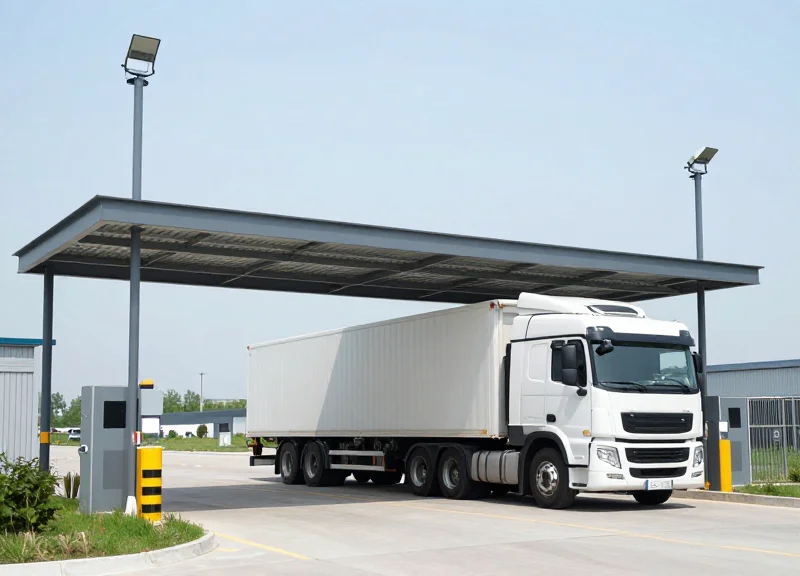
Optimizing read zones for heavy-duty vehicles involves calibrating the antenna's mounting height and 'down-tilt' angle to create a precise focal point where the RFID tag is most visible to the 9dBi narrow beam. Unlike wide-beam systems that flood an area with RF energy, narrow-beam optimization focuses on creating a high-density 'read window' that aligns with the specific tag placement on a truck's windshield or chassis, effectively neutralizing the signal-blocking effects of large metal surfaces and preventing multipath interference.
| Vehicle Category | Typical Tag Height | Recommended Antenna Height | Optimal Down-Tilt Angle |
|---|---|---|---|
| Class 8 Semi-Trucks | 2.5m - 3.2m | 4.5m - 5.0m | 25° - 35° |
| Box Trucks / Delivery Vans | 1.8m - 2.4m | 3.5m - 4.0m | 15° - 25° |
| Intermodal Chassis (Side Tag) | 0.8m - 1.2m | 1.5m - 2.0m | 5° - 10° |
- Establish the Lateral Offset: Position the antenna 3 to 5 meters from the center of the lane. This distance allows the 9dBi beam to expand just enough to cover the vehicle's width without bleeding into the adjacent lane.
- Calibrate the Down-Tilt: Angle the antenna downward toward the expected tag location. A steeper angle (30°+) is often better for heavy-duty trucks to avoid signal reflection off the flat metallic surfaces of the hood or trailer.
- Account for 'Metal-Stay' Zones: Heavy-duty vehicles act as massive RF reflectors. Use the narrow beam to 'aim' away from structural steel gate posts, ensuring the signal path is clear of stationary metal that causes destructive interference.
Expert Insight: The 'Shadow Effect' is the primary killer of throughput in multi-vehicle queues. In a yard environment, a following truck can actually 'shield' the tag of the leading truck if the antenna is mounted too low. We recommend a 'Top-Down Over-the-Lane' mounting strategy for 9dBi antennas. By placing the antenna at a 5-meter height directly above the entry point and tilting it 30 degrees toward the oncoming cab, you create a top-down read zone that is physically impossible for a following vehicle to obstruct, ensuring 100% read accuracy even in bumper-to-bumper traffic.
How do varying weather conditions affect the narrow beam read zone?
Heavy rain or snow can attenuate RFID signals. To compensate, 9dBi antennas should be configured with a 'Link Profile' that prioritizes high sensitivity over extreme high speed, ensuring the narrow beam remains effective through moisture.
Can one antenna handle both high-cab trucks and low-profile vans?
While a 60-degree vertical beamwidth is more forgiving, a 9dBi narrow beam (usually ~30-40 degrees) requires a 'dual-stack' configuration if the vehicle height variance exceeds 2 meters. This involves two antennas at different heights triggered simultaneously.
What is the biggest mistake in narrow beam installation?
Over-tightening the mounting brackets before testing. Because the beam is narrow, a 5-degree error at the mount results in a 1.5-meter miss at the target zone. Use a laser pointer attached to the antenna housing to visually confirm the aim point during installation.
Durability Standards for Industrial RFID Hardware
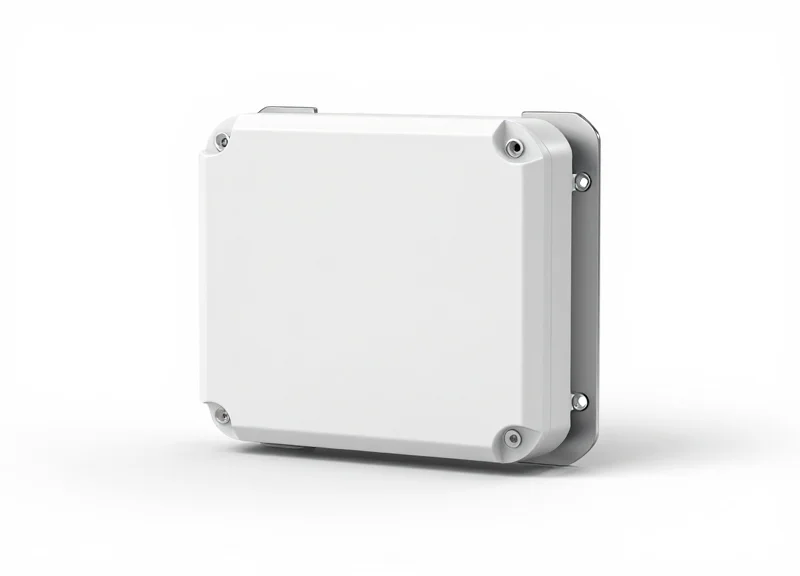
In high-throughput yard environments, 'industrial durability' refers to a hardware's capability to maintain consistent RF performance while subjected to relentless environmental stressors. For 9dBi narrow beam antennas, durability is not merely a survival metric—it is a performance metric. If an antenna's radome degrades or moisture seeps into the circuitry, signal attenuation increases, leading to the very read errors and manual overrides that the technology was intended to eliminate. To achieve a 40% reduction in processing time, the hardware must be resilient enough to avoid any drift in beam shape or gain over years of 24/7 operation.
| Standard | Requirement | Operational Impact in Yard |
|---|---|---|
| IP67 Ingress Protection | Dust-tight and immersion up to 1m | Prevents internal corrosion from heavy rain and wind-blown debris. |
| IK08 Impact Rating | Protection against 5 joules of impact | Shields internal components from vehicle debris or accidental strikes. |
| UV Stability (UL 746C) | Resistance to UV degradation | Prevents the radome from becoming brittle or cracking under direct sun. |
| Temp Range (-40°C to +70°C) | Wide operational thermal window | Ensures reliable reads during winter freezes and summer heat peaks. |
Beyond standard ingress protection, veteran engineers focus on the Radome Material Science. Many generic antennas use low-grade ABS plastics that turn yellow and crack within 24 months of exposure to high-intensity UV rays. For high-throughput applications, look for antennas utilizing ASA (Acrylonitrile Styrene Acrylate) or UV-stabilized polycarbonate. These materials maintain their dielectric constant over time, ensuring the 'narrow beam' doesn't widen or distort as the housing ages.
Why is Salt Fog Testing (ASTM B117) important for yard antennas?
Logistics yards near coastal areas or those using chemical de-icers (road salt) face accelerated corrosion. Hardware tested to ASTM B117 standards ensures that connectors and mounting brackets won't fail due to galvanic corrosion.
Does vibration resistance matter if the antenna is stationary?
Yes. Constant vibrations from heavy-duty trucks and proximity to high-traffic gates can cause internal solder joints to fatigue. Industrial antennas should be rated for shock and vibration to maintain internal alignment.
What is the role of a 'Gore-Tex' vent in RFID hardware?
High-end antennas often include a pressure equalization vent. This allows the unit to 'breathe' during temperature swings, preventing internal condensation that can short out the RF feed.
Expert Tip from the Field: When installing 9dBi antennas, the cable connection is often the weakest link. Always specify 'N-Type' connectors with heat-shrink industrial-grade weatherproofing. Even an IP67-rated antenna will fail if the cable-to-antenna interface is left exposed to moisture, which can wick into the coaxial cable and destroy the VSWR (Voltage Standing Wave Ratio) of your entire system.
Integration Strategies with Modern Yard Management Systems
Integrating 9dBi narrow beam antennas with a modern Yard Management System (YMS) requires a robust middleware strategy that converts raw RFID signal data into actionable logistical events. By leveraging the Low Level Reader Protocol (LLRP) and RESTful APIs, facilities can ensure that the precision of the narrow beam hardware—which isolates specific vehicle lanes—is accurately reflected in the digital twin of the yard, triggering automated gate openings, arrival timestamps, and bay assignments without manual data entry.
| Integration Layer | Primary Function | Key Benefit |
|---|---|---|
| Physical Layer | GPIO (General Purpose I/O) | Triggers physical gate hardware and occupancy lights. |
| Middleware | LLRP / MQTT Broker | Filters redundant reads and buffers data during network latency. |
| Application Layer | RESTful / SOAP APIs | Pushes validated vehicle ID and timestamp to YMS/ERP dashboards. |
Expert Insight: The 'Edge Debouncing' Advantage. A common pitfall in high-gain antenna deployments is 'data flooding,' where a single vehicle tag generates hundreds of read events per second. My recommendation is to implement 'Event Debouncing' at the edge (within the RFID reader itself). By configuring a 'lockout' period—where the same tag ID is ignored for a set duration after the initial read—you significantly reduce server-side overhead and prevent the YMS from triggering duplicate check-in workflows, a tactic that can save up to 15% in backend processing latency.
- Protocol Standardization: Ensure your RFID readers and antennas support LLRP 1.1 or higher to guarantee interoperability across different YMS vendors.
- Define Logic Triggers: Map specific antenna 'Read Zones' to YMS status changes, such as 'Arrived at Gate' or 'Departed Loading Dock'.
- API Handshake Configuration: Establish a secure OAuth2-authenticated connection between the RFID middleware and the cloud-based YMS for real-time visibility.
- Visual Confirmation Loop: Integrate Electronic Shelf Labels (ESL) or LED signage at the gate to provide drivers with immediate, software-driven instructions.
Can these antennas work with legacy YMS software?
Yes, provided there is a middleware bridge capable of converting RFID data into the legacy system's required input format, such as flat-file CSV or SQL injections.
How does integration handle multi-lane configurations?
The narrow beam of the 9dBi antenna allows the software to associate specific IP-addressed readers with specific physical lanes, preventing 'lane hopping' errors in the database.
Is real-time synchronization affected by outdoor network interference?
While the antenna provides the signal, using an MQTT protocol for integration ensures that messages are queued and delivered as soon as connectivity is stable, maintaining data integrity.
Calculating ROI: Beyond Faster Processing

Return on Investment (ROI) for 9dBi narrow beam antennas is calculated by aggregating direct labor savings, the elimination of manual error-correction costs, and the expanded revenue potential of increased daily gate capacity. While a 40% reduction in vehicle processing time is the primary driver, the financial impact is truly realized through the 'multiplier effect'—where faster throughput allows for higher cargo volume without expanding physical infrastructure or hiring additional personnel.
| ROI Metric | Manual/Standard RFID | 9dBi Narrow Beam Automation | Financial Impact |
|---|---|---|---|
| Labor per Check-in | 5-8 Minutes | Under 3 Minutes | 60% reduction in gate clerk overhead |
| Data Accuracy | 92-95% (Manual) | 99.9% (Automated) | Eliminates costly 'ghost' inventory errors |
| Gate Capacity | 100 trucks/day | 140+ trucks/day | 40% increase in billable throughput |
| Driver Detention | High Risk | Negligible | Significant reduction in detention fees |
One often overlooked factor in ROI is the 'Congestion Tax.' In high-volume logistics hubs, a five-minute delay at the gate doesn't just stall one truck; it creates a ripple effect that impacts warehouse scheduling and increases idling fuel costs. By using narrow beam technology to ensure 100% first-pass read accuracy, yards can effectively eliminate the 'lane-bleed' errors that force manual overrides. Expert Tip: When building your business case, focus on 'Opportunity Cost'—calculate how many more billable shipments your facility can handle annually by reclaiming those 2-3 minutes per vehicle.
How does narrow beam technology impact driver retention?
Faster, frictionless gate experiences reduce driver frustration and dwell time. In a tight labor market, drivers prefer facilities that respect their hours-of-service (HOS) limits, leading to more reliable carrier partnerships and lower logistics premiums.
What is the typical payback period for a 9dBi antenna upgrade?
For mid-to-high volume yards (80+ trucks per day), most facilities see a full return on hardware and installation costs within 6 to 9 months, primarily driven by labor redirection and the elimination of data entry errors.
Can these antennas reduce insurance or liability costs?
Yes. By automating the identification process, you reduce the need for drivers to exit their cabs or for yard personnel to walk between vehicles, significantly lowering the risk of on-site accidents and associated workers' compensation claims.
The Future of Yard Automation with DragonGuard
The future of yard automation is defined by the move from passive tracking to proactive orchestration. DragonGuard is leading this evolution by transforming 9dBi narrow beam antennas from simple readers into 'Edge Intelligence' nodes. By combining high-gain precision with real-time data processing at the gate, DragonGuard eliminates the latency and accuracy issues that have historically plagued large-scale logistics hubs, setting a new industry benchmark for autonomous vehicle processing.
| Feature | Legacy RFID Systems | DragonGuard Next-Gen Solutions |
|---|---|---|
| Beam Control | Wide-angle (High interference) | 9dBi Ultra-Narrow (Precise Isolation) |
| Processing Logic | Cloud-dependent | Edge-based Adaptive Filtering |
| Accuracy Rate | 85-92% | 99.9% in High-Metal Environments |
| Maintenance | Reactive/Manual | AI-Driven Predictive Health Monitoring |
- Multi-Sensor Fusion Capability: DragonGuard hardware is designed to sync with LiDAR and OCR cameras, creating a redundant verification loop that ensures 100% data integrity even in blinding snow or rain.
- Sustainable High-Gain Engineering: Our antennas utilize low-power consumption chipsets that maximize signal throw (9dBi) without increasing the carbon footprint of the yard facility.
- Interoperability Protocol: DragonGuard’s firmware supports universal API standards, allowing the system to act as the primary data feeder for any Tier-1 Yard Management System (YMS) or ERP.
A unique insight into DragonGuard's roadmap is our 'Signal Signature Profiling.' Unlike standard antennas that just read an EPC code, our next-gen 9dBi antennas analyze the RF backscatter signature of different vehicle types. This allows the system to differentiate between a heavy-duty semi-truck and a smaller transit van based on signal bounce patterns, automatically adjusting read sensitivity in microseconds to prevent 'ghost reads' from adjacent lanes. This level of granular hardware intelligence is what truly enables a 'Dark Yard'—a facility capable of operating at peak efficiency without human oversight.
How does DragonGuard handle hardware scaling?
DragonGuard systems are modular. You can start with a single automated gate and scale to a multi-point yard layout using our 'Auto-Sync' mesh protocol, which prevents frequency collisions between antennas.
What makes DragonGuard's 9dBi antenna more reliable than generic options?
Our antennas undergo 'Vibration Stress Testing' equivalent to 10 years of heavy truck traffic, ensuring that the internal alignment of the narrow-beam elements never shifts, maintaining that critical 40% processing speed advantage over the long term.
Is DragonGuard hardware compatible with existing passive tags?
Yes, our systems are optimized for all Gen2 UHF passive tags, but they provide superior performance by extracting a higher signal-to-noise ratio from low-quality or damaged tags.