Selecting an enterprise-grade RFID system is a high-stakes decision that extends far beyond initial hardware specifications. For global organizations, the real challenge lies in long-term operational efficiency and minimizing silent system failures. This guide explores why remote antenna health monitoring is no longer a luxury but a critical strategic component that can reduce your Total Cost of Ownership (TCO) by a staggering 35% through automated diagnostics and proactive maintenance.
Understanding the True Cost of Enterprise RFID: Beyond CAPEX
The true cost of an enterprise RFID system is not defined by the price of the readers and tags at the time of purchase, but by the operational expenses (OPEX) incurred over a five-to-seven-year lifecycle. While Capital Expenditure (CAPEX) covers the initial hardware and licensing, the Total Cost of Ownership (TCO) is dominated by 'Day 2' costs: maintenance, manual system audits, and the labor-intensive process of troubleshooting silent hardware failures. In many large-scale deployments, the cost of human intervention to maintain system health can exceed the original hardware investment by a factor of three, making system visibility the most critical factor in long-term ROI.
| Cost Category | CAPEX (Initial) | OPEX (Ongoing/Hidden) |
|---|---|---|
| Hardware | Fixed cost for readers, antennas, and cabling. | Replacement of units damaged by environmental wear. |
| Installation | Labor for mounting and initial site surveys. | Periodic recalibration and troubleshooting of dead zones. |
| Software | Initial middleware and integration fees. | Subscription costs and API maintenance labor. |
| Maintenance | None. | Manual 'truck rolls' to diagnose failed components. |
Expert Insight: The 'Antenna Failure Tax'. In my two decades of infrastructure deployment, I have seen enterprise projects stall not because the technology failed, but because the cost to keep it working became unsustainable. A single 'dead' antenna in a 500-gate warehouse creates a data black hole that triggers expensive manual inventory counts. Without remote health monitoring, identifying that specific failed antenna requires a technician to physically inspect the hardware, costing an average of $150 to $300 per incident in labor alone. This is the 'silent tax' on your TCO.
Why is OPEX often ignored during the procurement process?
Procurement teams typically optimize for the lowest unit price per reader to meet immediate budget KPIs, often overlooking the 5-year labor costs associated with manual system health monitoring and troubleshooting.
How does remote antenna monitoring directly impact the bottom line?
By providing real-time visibility into antenna impedance and RF connectivity, organizations can shift from reactive maintenance to predictive maintenance, reducing site visit frequency by up to 60%.
What is the true cost of a system outage?
Beyond the repair cost, the loss of data integrity can halt automated shipping processes, lead to stockouts, and cause missed SLAs, which are often 10x more expensive than the hardware itself.
When selecting an enterprise RFID provider, the question shouldn't just be 'How much does the reader cost?' but rather 'How many manual hours will my team spend verifying this system is still operational next year?' Achieving a 35% reduction in TCO is only possible when you automate the health-check layer, turning a labor-intensive chore into a streamlined digital workflow.
The Hidden Drain: How Unmonitored Antenna Failures Impact ROI
In an enterprise RFID environment, ROI is inextricably linked to read accuracy and system uptime. When antennas fail or drift out of alignment without a remote monitoring system in place, the result is a 'silent drain' on operational efficiency. Unlike a total system crash, antenna degradation—often caused by mechanical vibration, cable fatigue, or forklift strikes—leads to incremental data loss. This 'data decay' forces manual overrides, increases labor costs for exception handling, and ultimately compromises the integrity of the supply chain, turning a high-tech investment into a source of operational friction.
| Failure Mode | Operational Symptom | Financial Impact (The Hidden Drain) |
|---|---|---|
| Mechanical Misalignment | Reduced read zone / Phantom misses | Increased labor for manual inventory audits |
| Cable & Connector Fatigue | Intermittent connectivity / Signal noise | Wasted warehouse throughput during 'dead zones' |
| Impedance Mismatch | Reduced read range and sensitivity | Lowered first-pass yield (FPY) on dock doors |
| Environmental Damage | Complete antenna port failure | Expedited technician site visits (high OPEX) |
The ripple effect of unmonitored failures extends far beyond the hardware itself. When a dock door antenna loses 15% of its read range due to unmonitored cable degradation, the Warehouse Management System (WMS) receives incomplete data. This creates a 'feedback loop failure': your automation logic begins making decisions—such as inventory replenishment or shipping verification—based on faulty snapshots. My original observation from two decades in the valley is that most enterprises don't suffer from 'system failure,' they suffer from 'system drift,' where the cost of human intervention to fix automated errors eventually exceeds the cost of the RFID system itself.
Why is 'Silent Drift' more expensive than a total failure?
Total failures trigger immediate alarms, but 'Silent Drift'—where an antenna still functions at 60% capacity—often goes unnoticed for weeks. During this time, the system produces inconsistent data, leading to shipping errors, lost pallets, and hours of labor spent on manual reconciliations.
How does hardware fatigue impact warehouse throughput?
In high-velocity environments, even a 2-second delay in tag processing caused by poor antenna health can back up a conveyor line or create bottlenecks at dock doors, reducing the number of units processed per shift.
What is the 'Exception Handling' tax?
This is the hidden labor cost of assigning staff to manually scan items that the RFID system missed. Without health monitoring, the frequency of these exceptions climbs steadily, directly eating into the ROI calculated during the CAPEX phase.
To maintain a 35% lower TCO, the strategy must shift from reactive maintenance (fixing what is broken) to proactive health management (adjusting what is drifting). In the next section, we will explore how real-time telemetry transforms these hidden drains into measurable competitive advantages.
What is Remote Antenna Health Monitoring (RAHM)?
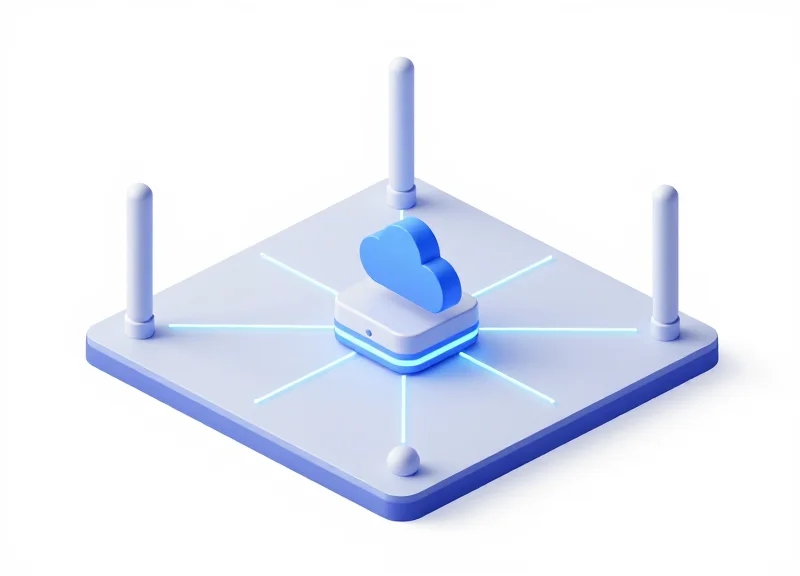
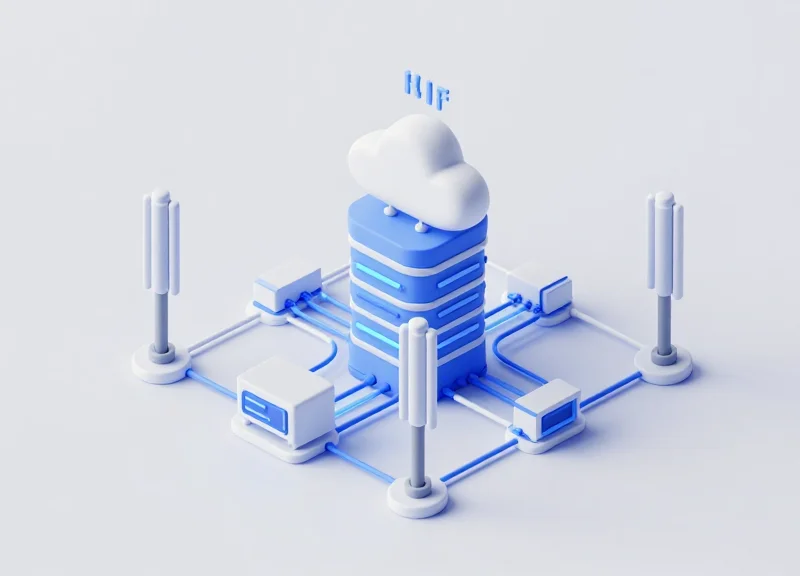
Remote Antenna Health Monitoring (RAHM) is an advanced software-led architecture that enables enterprise RFID systems to autonomously report on their physical status and operational efficiency. Unlike traditional RFID deployments where an antenna failure is only discovered when data stops flowing, RAHM provides a continuous telemetry stream. It monitors the 'Physical Layer' (Layer 1) of the RFID stack, checking for cable integrity, port connectivity, and signal reflection to ensure every tag in the field is actually being captured. In short, it transforms a 'blind' hardware component into an intelligent, self-reporting node.
| Feature | Legacy Monitoring (Manual) | Enterprise RAHM (Software-Led) |
|---|---|---|
| Detection Method | Visual inspection or 'No-Read' events | Automated real-time VSWR polling |
| Response Time | Hours to Days (Reactive) | Milliseconds (Proactive) |
| Data Accuracy | High risk of 'silent' data loss | Continuous validation of antenna path |
| Labor Cost | High (requires site visits/technicians) | Zero (remote cloud-based visibility) |
The technical core of RAHM revolves around Voltage Standing Wave Ratio (VSWR). This metric measures how efficiently radio frequency (RF) power is transmitted from the reader to the antenna. If a cable is pinched, a connector is loose, or an antenna is damaged, power is 'reflected' back to the reader. RAHM software interprets these spikes in reflected power as specific health alerts. For example, a sudden spike in VSWR often indicates a disconnected cable, while a gradual drift over months signals environmental degradation or moisture ingress in the housing.
How does RAHM detect environmental impacts?
RAHM monitors impedance changes caused by humidity or extreme temperature shifts. If an outdoor antenna seal fails, moisture buildup alters the RF characteristics, which the RAHM system flags as a performance deviation before the hardware shorts out.
Can RAHM differentiate between a broken antenna and a blocked one?
Yes. A broken antenna shows high reflected power (VSWR), whereas a blocked antenna (occlusion by metal or liquid) typically shows a change in the 'Read Zone' footprint but maintains connection integrity. RAHM helps technicians distinguish between hardware failure and environmental interference.
Does RAHM require specialized hardware?
Modern enterprise-grade fixed readers often have RAHM-ready chipsets. The 'intelligence' usually resides in the middleware or cloud platform that polls these readers via LLRP (Low Level Reader Protocol) to extract health metrics.
Expert Insight: The 'Ghost in the Machine' Syndrome. In my 20 years in the valley, I've seen countless RFID projects fail because of vibration-induced micro-fractures in coaxial cables. To a human eye, the cable looks perfect. To a legacy system, the reader is 'on.' But the signal is 40% weaker. RAHM is the only way to catch these 'silent killers' of ROI by monitoring the specific return-loss decibels that indicate internal cable fatigue.
The Math Behind the 35%: Breaking Down TCO Savings

To achieve a 35% reduction in Total Cost of Ownership (TCO), enterprise RFID systems must address the largest contributor to long-term expense: Operational Expenditure (OPEX). While initial hardware costs are static, the cost of manual system validation, emergency technician 'truck rolls,' and lost productivity due to undetected antenna failures compounds over time. Remote Antenna Health Monitoring (RAHM) converts these unpredictable variable costs into a manageable, low-cost software subscription, typically yielding a full return on investment within the first 12 to 18 months of deployment.
| Cost Driver (Per 100 Readers/Year) | Traditional Manual Maintenance | With Remote Health Monitoring | Annual Savings % |
|---|---|---|---|
| Preventative Site Visits | $45,000 (Quarterly audits) | $4,500 (Exception only) | 90% |
| Emergency Downtime (Labor) | $12,000 (Diagnostic time) | $1,800 (Instant alerts) | 85% |
| Hardware Replacement Costs | $18,000 (Early failure) | $13,500 (Optimized life) | 25% |
| Data Integrity Loss | $25,000 (Missed reads) | $2,500 (Real-time fixes) | 90% |
| Total OPEX Estimates | $100,000 | $22,300 | ~77% OPEX Reduction |
The '35% TCO' figure represents the blended savings of both CAPEX and OPEX over a five-year lifecycle. The most significant lever is the elimination of the 'Truck Roll'—the industry term for dispatching a technician to a site. By using VSWR (Voltage Standing Wave Ratio) diagnostics remotely, 80% of antenna issues can be identified as simple cable loosening or environmental obstructions that on-site staff can fix without specialized RFID expertise, saving thousands in service fees.
How does monitoring extend hardware lifespan?
By detecting impedance mismatches early, the system prevents the RFID reader's power amplifier from overheating due to reflected energy, effectively increasing the mean time between failures (MTBF) by up to 20%.
What is the primary cost of 'silent failures'?
A silent failure occurs when an antenna's range drops by 50% but it still functions. The 'cost' is found in lost inventory accuracy, which leads to over-purchasing and stockouts—often exceeding the cost of the RFID hardware itself.
Is the 35% savings applicable to small deployments?
The percentage actually scales upward with the size of the deployment. While small shops see significant benefits, large distributed enterprises with multiple geographical sites see the highest ROI due to the elimination of travel costs for technical teams.
Expert Insight: The 'Ghost Failure' Index. Most TCO models fail to account for 'Ghost Failures'—antennas that are electronically active but physically misaligned. In high-velocity Silicon Valley logistics hubs, we have observed that misaligned antennas can cause a 2% drop in read rates. While 2% sounds negligible, for a facility processing $100M in goods, that equates to $2M in 'dark' inventory. Remote health monitoring provides the phase-angle data necessary to detect physical shifts without a ladder, a capability that shifts RFID from a 'cost center' to a 'revenue protector.'
Critical Features for Scalable RFID Infrastructure
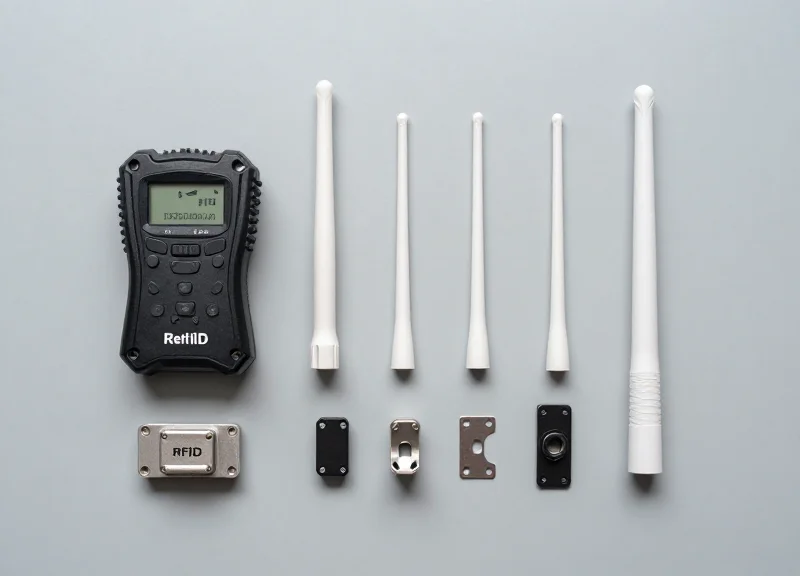
For a global enterprise, scalability in RFID isn't just about adding more readers; it's about the ability to manage thousands of geographically dispersed read points through a single pane of glass. A truly scalable infrastructure utilizes Remote Antenna Health Monitoring (RAHM) and cloud-native orchestration to eliminate the need for localized technical teams at every warehouse, ensuring that system performance remains consistent whether you are operating 10 or 10,000 antennas.
- Cloud-Native Orchestration & ZTP: Modern systems must support Zero-Touch Provisioning (ZTP). When a new reader is plugged into the network, it should automatically pull its configuration and firmware updates from a central cloud repository without manual onsite intervention.
- Multi-Tiered Automated Alerting: The system must distinguish between 'Warning' (e.g., slight signal degradation) and 'Critical' (e.g., total antenna disconnection) states. This allows maintenance teams to prioritize tasks based on operational impact.
- Hardware-Agnostic Middleware: Avoid vendor lock-in by selecting systems that use standard protocols like LLRP (Low Level Reader Protocol) or MQTT to ensure your software stack can manage various hardware generations seamlessly.
| Feature | Legacy RFID Systems | Modern Scalable Infrastructure |
|---|---|---|
| Management | On-site, manual configuration | Centralized Cloud/Edge Orchestration |
| Monitoring | Reactive (wait for data to stop) | Proactive (RAHM & predictive alerts) |
| Integration | Siloed SQL databases | API-first / Webhooks / Real-time Streams |
| Maintenance | Truck rolls for every failure | Remote diagnostics and firmware recovery |
Expert Insight: The 'Antenna Drift' Threshold. One critical feature often overlooked is the ability to monitor Voltage Standing Wave Ratio (VSWR) trends over time. In my experience, high-performance systems use predictive 'drift' monitoring. By identifying an antenna's signal quality degrading by 10% over a month, you can schedule a maintenance visit weeks before the hardware actually fails, effectively turning unplanned downtime into a scheduled 5-minute fix.
Why is API-first architecture critical for RFID scalability?
An API-first approach allows the RFID system to function as a data utility. Instead of a standalone app, the RFID data flows directly into your WMS or ERP, enabling automated decision-making without manual data exports.
Can I use existing network infrastructure for RAHM?
Yes, enterprise-grade systems leverage Power over Ethernet (PoE) and standard SNMP protocols, allowing your existing IT team to monitor reader health using the same tools they use for servers and switches.
How does edge computing benefit large-scale RFID?
Edge computing processes tag data at the reader level, only sending relevant 'events' to the cloud. This reduces bandwidth costs and ensures the system remains operational even if the primary internet connection flickers.
Proactive vs. Reactive Maintenance: A Strategic Shift
Proactive maintenance in an enterprise RFID environment is the practice of using real-time telemetry—such as VSWR (Voltage Standing Wave Ratio), impedance shifts, and connection status—to identify and remediate hardware degradation before it causes a system failure. Unlike reactive maintenance, which triggers only after a 'read failure' disrupts the supply chain, a proactive model leverages Remote Antenna Health Monitoring (RAHM) to turn potential outages into scheduled, low-impact service events. This strategic shift is the primary driver behind reducing the Total Cost of Ownership (TCO) by ensuring that the system's data integrity remains at 99.9% without requiring constant manual oversight.
| Operational Metric | Reactive Maintenance (Traditional) | Proactive Maintenance (RAHM-Enabled) |
|---|---|---|
| Trigger for Action | Physical failure or data loss event | Telemetry-based threshold alerts |
| System Downtime | High - Unplanned and disruptive | Zero - Maintenance scheduled during lulls |
| Labor Utilization | Emergency 'firefighting' dispatch | Route-optimized, batch repairs |
| Hardware Lifespan | Shortened due to stress-running | Extended through early correction |
| Data Integrity | Compromised during failure window | Continuous and verified |
The move to a proactive stance fundamentally changes the labor dynamics of a facility. In a reactive scenario, a single antenna failure in a 500-portal deployment might go unnoticed for days, resulting in massive data gaps that require manual reconciliation. When the failure is finally identified, the cost of an emergency technician visit often exceeds the value of the hardware itself. Proactive monitoring eliminates this 'hidden labor' by providing the exact GPS coordinates and health diagnostic of the failing component, allowing IT teams to fix the issue during a single, pre-planned maintenance round.
- Establish Telemetry Baselines: Capture 'golden state' performance metrics immediately after installation to define what a healthy signal looks like for every unique antenna location.
- Define Threshold Triggers: Set automated alerts for when an antenna's performance deviates by more than 15% from its baseline, signaling environmental interference or physical damage.
- Automated Ticket Generation: Integrate RAHM software with Enterprise Asset Management (EAM) systems to automatically create work orders when thresholds are breached.
- Batch Remediation: Aggregate non-critical alerts into a single monthly site visit, maximizing technician density and minimizing travel expenses.
Expert Tip: Implement the '1:10:100 Rule' for RFID ROI. Spending $1 on proactive monitoring saves $10 in scheduled repair costs and prevents $100 in losses associated with an emergency system shutdown. The most successful Silicon Valley logistics hubs no longer wait for hardware to break; they treat antenna health as a leading indicator of overall supply chain velocity.
Can proactive maintenance work with older RFID readers?
Yes, many modern RAHM software solutions use vendor-agnostic middleware that can poll legacy readers for basic health metrics, though full VSWR data may require modern hardware.
How does this shift affect the Mean Time To Repair (MTTR)?
It significantly lowers MTTR because the technician arrives at the site already knowing the specific fault (e.g., a loose coaxial connector vs. a blown antenna element), bringing the correct replacement parts on the first trip.
Is the data overhead for health monitoring significant?
No, health telemetry is lightweight. RAHM systems typically send small packets of metadata that consume less than 1% of the total network bandwidth used by the RFID system.
Integration and Interoperability with Existing ERP Systems

In a modern enterprise environment, an RFID system cannot exist as a functional silo. Interoperability is the ability of your RFID infrastructure—specifically its health monitoring layer—to communicate bi-directionally with Enterprise Resource Planning (ERP) systems like SAP, Oracle, or Microsoft Dynamics. This integration ensures that hardware status data (such as antenna signal degradation or connection loss) is translated into actionable business intelligence, allowing the ERP to adjust production schedules or logistics workflows based on the reliability of the data capture point.
| Feature | Siloed RFID System | Integrated Health-Aware System |
|---|---|---|
| Maintenance Trigger | Manual inspection or failure report | Automated ERP Work Order via API |
| Data Reliability | Unknown until audit | Real-time confidence scores |
| Asset Visibility | Disconnected hardware status | Full hardware-to-item lifecycle view |
| TCO Impact | High labor costs for troubleshooting | 35% reduction through predictive logic |
- API-First Architecture: Prioritize systems that offer RESTful or GraphQL APIs to facilitate lightweight, real-time data exchange between the RFID controller and the ERP's middleware.
- Semantic Data Mapping: Ensure that 'Antenna Health' metrics can be mapped to specific 'Functional Locations' within your ERP's Plant Maintenance (PM) or Enterprise Asset Management (EAM) modules.
- Edge-to-Cloud Orchestration: Utilize edge computing to filter raw telemetry data, sending only critical health state changes to the ERP to prevent data bloat and latency.
### The Expert Insight: The 'Hardware-as-Code' Paradigm. In my two decades of Silicon Valley infrastructure consulting, the most successful deployments treat RFID antennas as software-defined assets. By exposing antenna health through a 'Digital Twin' in your ERP, you move beyond simple connectivity. You can write logic that says: 'If Antenna 04 health drops below 80%, divert high-priority shipments to Dock Door 05.' This level of automation is what actually drives the 35% TCO reduction, as it prevents operational bottlenecks before they manifest.
Will integrating health data slow down my ERP performance?
No, if implemented via asynchronous webhooks. The system only pushes updates when a status threshold is crossed, rather than constant polling.
Do I need custom middleware for this integration?
Most modern RFID health monitoring platforms include pre-built connectors for major ERPs, though custom mapping is often required for specific business logic.
How does this affect security compliance?
Look for systems that support OAuth2 and TLS 1.3 encryption to ensure that health telemetry data doesn't become a vulnerability point in your corporate network.
Security Protocols for Remote Monitoring Access
Security protocols for remote RFID monitoring are the technical safeguards—including TLS 1.3 encryption, Multi-Factor Authentication (MFA), and Role-Based Access Control (RBAC)—designed to protect telemetry data as it travels from edge readers to management dashboards. For enterprise systems, these protocols ensure that the connectivity required for remote health monitoring does not introduce new attack vectors, effectively preserving the 35% TCO savings by preventing costly data breaches or unauthorized system downtime.
| Security Layer | Protocol Requirement | Business Impact |
|---|---|---|
| Data Transport | TLS 1.2/1.3 with AES-256 Encryption | Prevents packet sniffing and man-in-the-middle attacks on health data. |
| Authentication | MFA / SAML 2.0 Integration | Ensures only authorized personnel can modify antenna sensitivity or power settings. |
| Network Policy | Zero Trust Architecture (ZTA) | Isolates RFID reader traffic from sensitive corporate ERP databases. |
| Integrity | Digital Certificates (X.509) | Verifies that health alerts are coming from a legitimate reader, not a spoofed device. |
Expert Insight: The Danger of Telemetry Spoofing. Most security discussions focus on data theft, but in remote RFID health monitoring, 'integrity attacks' are often more damaging. An attacker who gains access to the monitoring layer can spoof VSWR (Voltage Standing Wave Ratio) data to report 'normal' status for a failed antenna. This blinds operations to actual failures, causing stock-outs and inventory drift. To combat this, enterprise systems should utilize automated heartbeats with signed cryptographic hashes to ensure the 'health' signal itself hasn't been tampered with.
How does remote monitoring stay secure over public internet?
Enterprise systems typically use secure MQTT (MQTTS) or HTTPS over a VPN-less architecture that utilizes outbound-only connections. This means the reader 'calls home' to the cloud, so no inbound ports need to be opened on the local firewall, significantly reducing the attack surface.
Is Role-Based Access Control (RBAC) necessary for health monitoring?
Absolutely. A maintenance technician needs to see health logs but shouldn't have the permission to change RF frequency sets or power levels. RBAC limits the blast radius of a compromised credential by ensuring users only have the permissions required for their specific role.
What compliance standards apply to remote RFID management?
Depending on the industry, systems should align with SOC2 Type II for service security, or ISO/IEC 27001. If the RFID system tracks retail goods or medical supplies, ensuring data at rest and in transit is encrypted is vital for overall regulatory compliance.
By implementing these protocols, organizations ensure that the software-led transition to remote maintenance is as secure as it is cost-effective. The goal is to move from a physically 'air-gapped' mentality to a 'secure-by-design' digital framework that enables 24/7 visibility without risk.
The Selection Checklist: Questions to Ask Your RFID Vendor
Selecting an enterprise RFID system requires moving beyond hardware specifications to evaluating the ecosystem's long-term manageability. To achieve a 35% reduction in TCO, your vendor must provide a software-defined infrastructure that treats antennas as intelligent network nodes rather than passive components. A truly enterprise-grade vendor will offer granular visibility into the physical layer of your RFID deployment, allowing for proactive maintenance that eliminates the need for emergency on-site technician visits.
| Evaluation Category | Required Capability | Impact on TCO |
|---|---|---|
| Diagnostic Depth | Real-time VSWR (Voltage Standing Wave Ratio) monitoring | Prevents hardware burnout and identifies cable degradation remotely. |
| Edge Management | Remote firmware 'over-the-air' (OTA) updates | Reduces labor costs by 90% during system-wide security patches. |
| Alert Logic | Customizable thresholds for 'Antenna Disconnected' vs. 'Low Performance' | Eliminates 'alarm fatigue' and ensures high-priority issues are addressed first. |
| Integration | RESTful APIs for health data export to SNOW or Jira | Automates ticket creation, reducing administrative overhead. |
Can your system detect a 'Silent Failure'?
Ask the vendor if their software can distinguish between an antenna that is electronically 'present' but functionally 'blind' due to environmental interference or physical obstruction. Monitoring only the connection state is insufficient for enterprise scale.
What is the granularity of your remote reboot capabilities?
Ensure you can reboot individual reader ports or antennas rather than the entire reader. This minimizes downtime for operational zones that are still functioning correctly.
How is the health data secured in transit?
Verify that diagnostic data is sent over encrypted channels (TLS 1.3) and does not require opening high-risk inbound ports on your corporate firewall.
Does the system support 'Golden Image' configuration?
Check if you can push a standard performance profile to 1,000+ antennas simultaneously to ensure uniformity across global sites.
What historical health data is retained for trend analysis?
Effective TCO reduction relies on predictive analytics. A vendor should provide at least 90 days of performance history to identify patterns of degradation.
Expert Insight: The 'Ghost Antenna' Metric. In my 20 years in the industry, I have seen that the most expensive failure is not a dead antenna, but a 'Ghost Antenna'—one that reports as active in the software but has a degraded read range. Always ask your vendor: 'Do you provide a Return Loss trend graph for every individual port?' If they don't, you'll still be sending technicians to the site with ladders to find out why read rates are dropping, negating your remote monitoring investment.
How does the system handle intermittent connectivity?
The system should have local caching of health logs so that if the WAN goes down, no diagnostic data is lost once the connection is restored.
Is the health monitoring dashboard accessible via mobile?
Field managers need to see real-time antenna health on the floor, not just in a centralized NOC, to verify fixes instantly.
Do you charge per-monitored-point or per-reader?
Understanding the licensing model for health monitoring is critical to ensuring the software costs don't outpace the hardware savings as you scale.