As we approach 2026, the retail landscape for high-value, small-form-factor products like premium vapes and specialized tech gadgets is facing unprecedented security challenges. Organized retail crime and sophisticated shoplifting techniques are forcing boutique owners to look beyond traditional methods. Choosing between Electronic Article Surveillance (EAS) and Radio Frequency Identification (RFID) is no longer just about stopping a buzzer at the door; it is about data, inventory accuracy, and creating a seamless customer experience. This guide explores how these technologies are evolving to protect the next generation of high-tech retail environments.
The Evolution of Small Tech Retail Vulnerabilities in 2026

In 2026, the security landscape for small-form-factor tech—ranging from premium vape hardware to boutique electronics—has fundamentally shifted from opportunistic shoplifting to 'Flash Shrinkage' and organized retail crime (ORC). As technology miniaturizes, the 'theft-to-value' ratio has reached a tipping point where a single pocketed item can represent a loss of over $500, with an immediate resale path through decentralized digital marketplaces. This evolution requires a transition from reactive deterrents to proactive, data-integrated defense systems that can distinguish between a browsing customer and a professional 'booster' in real-time.
| Vulnerability Factor | Traditional Retail Era | 2026 Boutique Landscape |
|---|---|---|
| Theft Methodology | Low-skill concealment | Coordinated tech-jamming and ORC tactics |
| Resale Velocity | Local pawn shops/street sales | Instant liquidity via global P2P apps and crypto-payouts |
| Target Profile | Large high-ticket items | Micro-tech: Vapes, wearables, and modular components |
| Security Focus | Point of Exit (Alarming) | Point of Sale to Point of Resale (Traceability) |
Why are Vapes and High-Tech Boutiques specific targets in 2026?
These items offer the highest liquidity-to-size ratio. Premium vape devices and boutique tech are 'currency-grade' assets—small enough to conceal in bulk, high in demand, and virtually untraceable without serialized RFID tracking.
What is 'Flash Shrinkage'?
It refers to a 2026 trend where professional groups use signal-jamming devices to disrupt older EAS frequencies (58kHz or 8.2MHz), clearing high-value shelves in seconds before the staff can react.
How does regulatory scarcity impact vulnerability?
In the vape sector, shifting regulations often create 'gray market' demand. In 2026, restricted but legal boutique hardware becomes a high-value target for thieves looking to supply underserved or high-tax jurisdictions.
A critical insight for 2026 is the emergence of 'Digital Fingerprinting' for stolen goods. Unlike the previous decade where an item was 'gone' once it cleared the door, modern vulnerabilities are being countered by the fact that tech-savvy thieves now target the firmware as much as the hardware. If a device isn't cryptographically unlocked at the point of sale via an RFID-handshake, its resale value on the 2026 market drops by 90%—a deterrent that traditional EAS simply cannot provide.
EAS: The Proven Foundation of Boutique Security
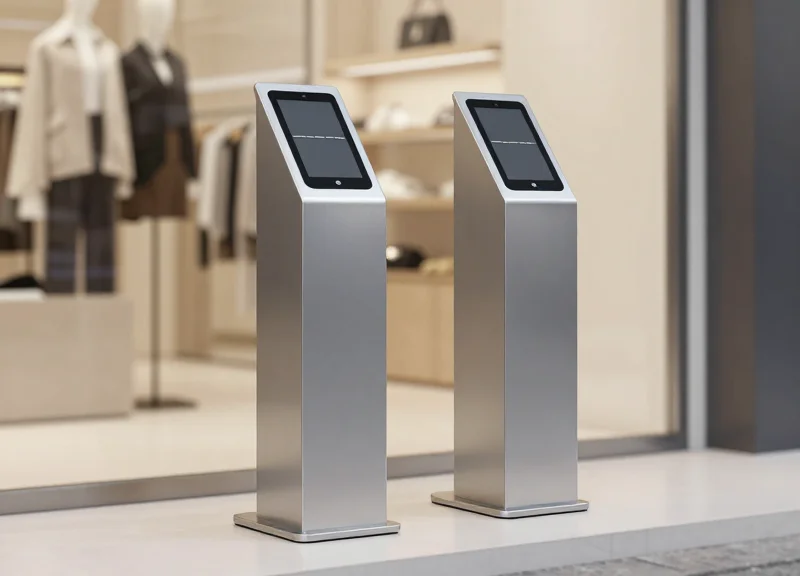
Electronic Article Surveillance (EAS) is a technological security framework that utilizes pedestals at exits to create a detection zone for active security tags or labels attached to merchandise. In the context of 2026 boutique retail, EAS serves as the 'visible guardian,' providing an immediate psychological deterrent to shoplifters while maintaining a lower total cost of ownership (TCO) compared to complex inventory-tracking systems. It is the industry standard for preventing 'grab-and-go' theft of high-value, small-form-factor items like vape kits, premium e-liquids, and high-tech accessories.
| Feature | Acousto-Magnetic (AM) EAS | Radio Frequency (RF) EAS |
|---|---|---|
| Detection Range | Wide (up to 2.4m) | Standard (up to 1.8m) |
| Tag Size | Small, 3D strips | Flat, paper-thin stickers |
| Metal Interference | Highly resistant | Susceptible to shielding |
| Best Use Case | Small tech/vape with metal foil | Apparel and boxed tech items |
- Visual Deterrence: Modern EAS pedestals are designed with sleek aesthetics to fit boutique interiors, yet their presence alone reduces impulsive theft by up to 60%.
- Cost-Effectiveness: With labels costing mere cents, EAS allows high-volume boutiques to secure every item on the shelf without the overhead of individual item serialized tracking.
- Ease of Operation: Requires minimal staff training; the system either alarms or it doesn't, allowing employees to focus on sales rather than data management.
Expert Insight: In 2026, the most effective EAS deployments are moving toward 'Edge-Integrated Deterrence.' By connecting EAS pedestals to localized AI camera feeds, boutiques can now trigger a 'pre-alarm'—a subtle lighting change in the store—when a known security tag enters a high-risk zone. This bridges the gap between traditional alarms and predictive security without the heavy infrastructure of full RFID.
Can EAS tags damage sensitive electronics?
No. Standard AM and RF frequencies are non-ionizing and do not interfere with the internal circuitry of vape mods, smartphones, or smartwatches.
What is the primary limitation of EAS for boutiques?
EAS is a 'dumb' technology; it tells you that something is being stolen, but it cannot tell you specifically which item or its current inventory count.
Is EAS still relevant with the rise of RFID?
Absolutely. For boutiques with high foot traffic and small items, the immediate alarm capability of EAS provides a faster response time for floor staff than most RFID systems.
RFID: Moving Beyond Loss Prevention to Business Intelligence

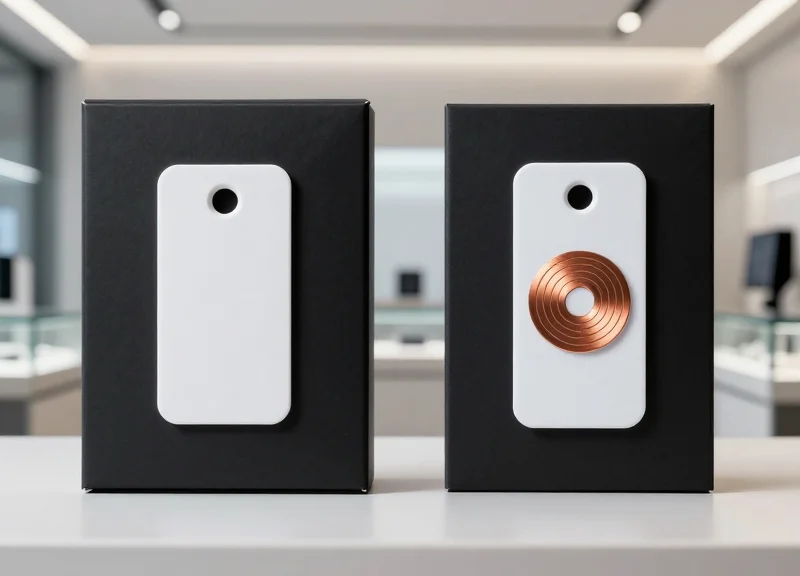
In the 2026 retail landscape, Radio Frequency Identification (RFID) represents the shift from passive security to active intelligence. Unlike traditional EAS, which merely alerts staff to a potential theft, RFID assigns a unique digital identity to every individual SKU. For a high-tech boutique or a premium vape shop, this means the system doesn't just know that an item left the store—it knows exactly which item it was, its serial number, and its precise history. This granular data turns your security infrastructure into a powerful source of Business Intelligence (BI), enabling retailers to optimize stock levels and identify specific shrink patterns in real-time.
| Feature | Loss Prevention Impact | Business Intelligence Value |
|---|---|---|
| Item-Level Serialisation | Identifies stolen stock for police reports. | Tracks individual product lifecycle and shelf life. |
| Real-Time Cycle Counting | Detects 'internal shrink' (employee theft) instantly. | Eliminates out-of-stocks and manual inventory labor. |
| Smart Exit Monitoring | Pinpoints which specific products are being targeted. | Analyzes peak 'theft hours' to optimize staff scheduling. |
| Omnichannel Integration | Prevents fraudulent returns of unpurchased items. | Synchronizes online and physical store stock levels. |
For specialized boutiques, the 'Return on Insight' often outweighs the 'Return on Security.' By leveraging RFID, a vape shop owner can identify which high-margin mods are handled most frequently but converted least often. By tracking movement data—how many times a device is taken from a display but not brought to the register—RFID provides a 'heat map' of customer interest that traditional security sensors simply cannot capture.
Can RFID completely replace EAS for small tech shops?
While RFID provides superior data, many boutiques in 2026 use a hybrid approach. RFID is used for inventory and high-value item tracking, while EAS remains a cost-effective deterrent for low-margin accessories.
How does RFID improve the customer experience?
It enables 'frictionless' environments. Staff spend less time counting inventory and more time with customers, and the data ensures that the item a customer sees online is actually available on the shelf.
Is RFID data difficult to integrate with existing POS systems?
Modern 2026 cloud-based POS systems are designed for native RFID integration, often requiring only a software bridge to sync real-time stock levels with sales data.
The Silicon Valley 'Expert Tip': In 2026, the most successful boutiques are implementing what I call 'The Digital Twin of the Shelf.' By using fixed RFID overhead readers, you create a real-time digital mirror of your physical inventory. When a high-value GPU or premium e-liquid bottle is moved from its 'home zone' to a 'high-risk zone' (like a fitting room or near the exit) without being scanned at the POS, the system can trigger a silent alert to staff mobile devices. This isn't just security; it's proactive operational awareness that prevents loss before it occurs while feeding your AI-driven replenishment models.
Comparative Analysis: EAS vs. RFID for Small-Format Electronics
In the 2026 retail landscape, the choice between EAS and RFID for small-format electronics hinges on the balance between deterrent visibility and data granularity. EAS (Electronic Article Surveillance) serves as a robust, cost-efficient barrier against shoplifting, whereas RFID (Radio Frequency Identification) acts as a sophisticated business intelligence tool that happens to provide security. For boutiques selling high-density, small-packaged items like vapes or wearables, the decision is no longer about which technology is 'better,' but which infrastructure matches the store's operational scale and inventory turnover rate.
| Feature | EAS (Acousto-Magnetic) | RFID (UHF Gen2) |
|---|---|---|
| Detection Range | Wide (Up to 2.4m between pedestals) | Variable (High-precision zones up to 6m) |
| Tag Size Suitability | Small labels available, but bulky | Ultra-thin, can be embedded in labels |
| 2026 Avg. Tag Cost | $0.02 - $0.05 per unit | $0.08 - $0.15 per unit |
| Primary Value | Direct Theft Deterrence | Inventory Accuracy + Security |
| Signal Interference | Low (Works through foil/liquid) | Moderate (Affected by metal/liquids) |
A critical differentiator for 2026 is the 'Signal Transparency' required for high-tech boutique products. Modern vape hardware and premium earbuds often utilize metallic shielding or internal batteries that can interfere with traditional RF-based EAS. While Acousto-Magnetic (AM) EAS remains the most reliable for penetrating these materials, RFID has closed the gap with 'on-metal' tag variants. However, these specialized RFID tags carry a price premium that can impact the margins of lower-cost accessories, making a hybrid approach often the most fiscally responsible path.
Does EAS provide enough protection for high-value vape boutiques?
Yes, EAS is highly effective as a visual deterrent. In a boutique setting where foot traffic is high and staff are focused on sales, the audible alarm of an EAS system provides immediate notification of a breach without the complexity of managing a digital database.
Can RFID tags be discreetly integrated into small electronic packaging?
Absolutely. By 2026, many manufacturers are 'source tagging' products by embedding RFID inlays directly into the cardboard packaging or product labels, making the security feature invisible to the consumer but fully trackable by the retailer.
Which system offers a better ROI for small-format retailers?
For stores with under 500 SKUs, EAS typically offers a faster ROI due to lower CAPEX. However, for boutiques looking to implement 'Just-in-Time' inventory or automated checkout, the operational savings of RFID usually outweigh the higher initial investment within 18 months.
Expert Insight: The 2026 'Silent Threshold' Trend. One original shift we are seeing in Silicon Valley retail design is the move toward 'Invisible Security.' High-end boutiques are increasingly opting for overhead RFID sensors or floor-integrated EAS loops. This removes the 'prison-gate' aesthetic of traditional pedestals, allowing the tech products—not the security hardware—to be the focal point of the customer journey. If your boutique brand relies on a premium, open-concept feel, investing in concealed RFID overheads is the definitive move for 2026.
Protecting Vape Shops: Specific Needs for E-Liquids and Devices
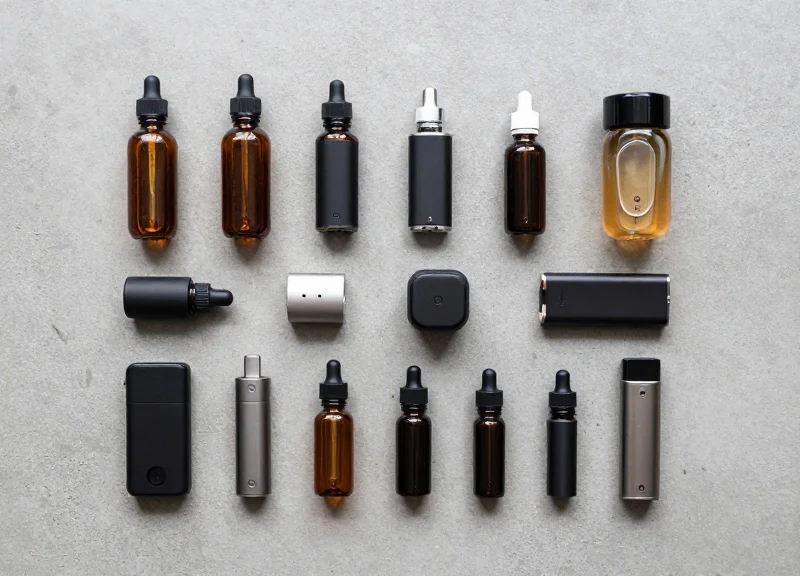
Protecting vape inventory in 2026 requires a specialized approach because e-liquids and metallic hardware act as 'signal dampeners' for standard security frequencies. While traditional retail items use generic stickers, vape products—specifically high-density VG/PG liquids and lithium-ion battery mods—interfere with the electromagnetic fields of EAS and RFID systems. To maintain a loss-prevention rate of 95% or higher, boutiques must deploy Acousto-Magnetic (AM) systems for liquid-heavy stock or specialized 'on-metal' RFID tags for advanced device tracking.
| Product Type | Interference Level | Recommended Security Tech | Tagging Strategy |
|---|---|---|---|
| E-Liquids (30ml - 120ml) | High (Liquid Attenuation) | 58kHz AM EAS | Concealed bottom-box labels |
| Disposables / Pods | Moderate (Foil Packaging) | RF or AM EAS | Small-format adhesive labels |
| High-End Mods / Kits | Extreme (Metal/Batteries) | On-Metal RFID | Flag-tags or spacer-backed labels |
| Coils & Small Parts | Low | RFID Item-Level | Standard inlay or hang-tag |
The 'Dielectric Constant' of e-liquids is the primary hurdle for 2026 security deployments. High-viscosity vegetable glycerin (VG) absorbs radio frequency (RF) energy, which can lead to 'dead zones' at the exit pedestals. To counter this, boutique owners are shifting toward Acousto-Magnetic (AM) technology for liquids, as AM operates at a lower frequency (58kHz) that penetrates liquid containers more effectively than the 8.2MHz used in standard RF systems. For high-tech boutiques tracking hardware serial numbers, 2026-era RFID tags now utilize 'spacer' technology—a 1mm foam gap between the chip and the metallic surface—to prevent the metal from detuning the antenna.
Can I use standard RFID stickers on e-liquid bottles?
No. Standard UHF RFID tags are often 'detuned' when placed directly against liquids. For 2026, we recommend 'flag-tags' where the antenna extends away from the bottle, or specialized liquid-rated inlays.
How do lithium-ion batteries affect EAS gates?
Large batteries create a Faraday cage effect. If a mod is tucked inside a pocket, the metal housing can shield the security tag. Dual-pedestal AM systems are required to provide the signal punch necessary to penetrate these enclosures.
Is heat from shop displays an issue for security tags?
Yes. Modern LED-lit vape displays can reach temperatures that degrade the adhesive on cheap security labels. High-tech boutiques should use 'thermal-stable' adhesives to ensure tags don't peel off and trigger false alarms.
Expert Tip: For 2026, avoid placing security tags directly over the nicotine warning labels or flavor profiles. Modern shoplifters look for 'visual disruptions' in branding to identify where a tag is hidden. Instead, utilize 'source tagging' where the EAS or RFID element is embedded inside the product packaging during the manufacturing stage. This not only preserves the aesthetic of high-end vape boutiques but also makes it nearly impossible for a thief to neutralize the tag without destroying the product's resale value.
The Hybrid Model: Combining EAS Reliability with RFID Data

The hybrid model represents the pinnacle of 2026 retail security, integrating Electronic Article Surveillance (EAS) hardware with Radio Frequency Identification (RFID) software. By utilizing dual-technology tags and overhead sensors, boutiques can maintain a high-visibility deterrent (EAS) while simultaneously capturing item-level data (RFID). This synergy ensures that if an item leaves the store, the system doesn't just trigger a siren—it identifies exactly which product, color, and SKU passed the threshold, instantly updating inventory records and loss prevention analytics.
| Feature | EAS Standalone | RFID Standalone | Hybrid Ecosystem |
|---|---|---|---|
| Primary Function | Theft Deterrence | Inventory Visibility | Total Asset Protection |
| Data Granularity | None (Binary Alarm) | High (Item-Level) | High (Item + Gate Event) |
| Alarm Response | General Alert | Potential Lag | Real-Time SKU Identification |
| 2026 ROI Projection | Moderate | High (Ops Only) | Maximum (Security + Ops) |
For high-tech boutiques and vape shops, the transition to hybrid isn't merely about stopping shoplifters; it's about operational continuity. When a high-value item like a flagship vaporizer or a premium smart home hub is stolen, the hybrid system provides the 'What' and the 'When' in a single data packet. This allows managers to automate reordering processes immediately, ensuring that a theft event doesn't lead to a prolonged 'out-of-stock' scenario for legitimate customers.
Does hybrid technology require two separate tags?
No. In 2026, many manufacturers offer 'dual-tech' tags that house both an EAS element (AM or RF) and an RFID chip in a single, compact housing suitable for small tech packaging.
Is the investment justifiable for small boutiques?
Yes. While the upfront cost is higher, the reduction in labor hours for manual cycle counts and the decrease in 'shrinkage-related stockouts' typically result in a 14-18 month ROI.
Can I upgrade my existing EAS pedestals to Hybrid?
Many modern pedestals are 'RFID-ready.' You can often add RFID reader modules to existing EAS frames without replacing the entire physical infrastructure.
Expert Insight for 2026: The 'Digital Kill-Switch' Integration. An emerging strategy for tech retailers involves linking hybrid security gates with cloud-based device management. When the RFID component of a hybrid tag passes through the gate without a 'sold' status, it can trigger a signal to the manufacturer to blacklist the device's IMEI or serial number. This effectively bricks the stolen tech, rendering it worthless for resale and drastically reducing the incentive for organized retail crime (ORC) targeting your boutique.
Integration with ESL and Modern POS Ecosystems
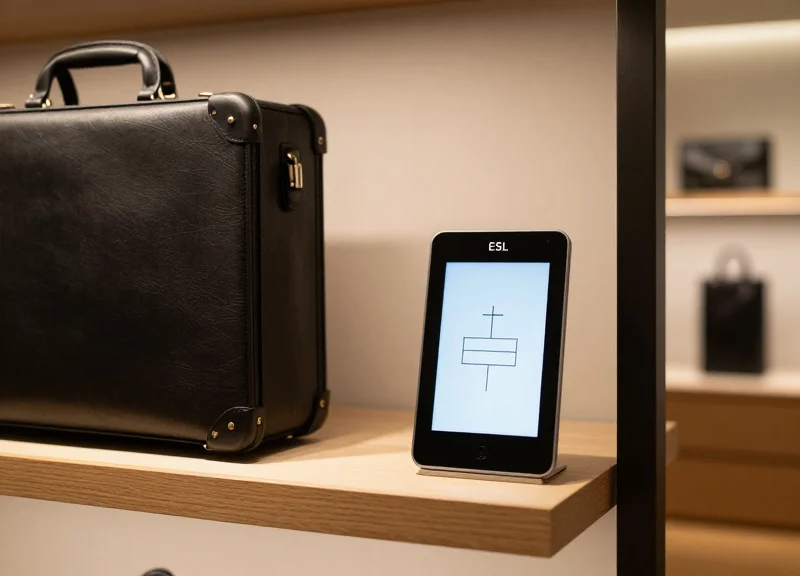
Integrating EAS and RFID security with Electronic Shelf Labels (ESL) and modern Point-of-Sale (POS) systems creates a 'Smart Retail Loop' where security status, pricing accuracy, and inventory levels are synchronized in real-time across a single cloud-based dashboard. By 2026, this technical convergence allows high-tech boutiques to automate dynamic price adjustments based on stock movement and instantly deactivate security protocols upon a successful POS transaction, virtually eliminating manual human error and significantly reducing labor overhead.
| Feature | Siloed Systems (Legacy) | Integrated Ecosystem (2026 Standards) |
|---|---|---|
| Price Updates | Manual paper labeling | Instant synchronization via ESL |
| Security Deactivation | Manual detaching/degaussing | Automated cloud-trigger at POS |
| Inventory Visibility | Estimated based on last count | Real-time 'item-level' shelf accuracy |
| Theft Response | Reactive (alarm only) | Proactive (ESL visual alerts + notifications) |
The true power of this integration lies in the 'Single Source of Truth' for every item in the boutique. When a vape device or a high-end gadget is tagged with a hybrid RFID/EAS label, it is assigned a unique digital identity that links directly to the POS SKU and the ESL on the shelf. This means if a customer picks up a product, the ESL can trigger promotional content; if they buy it, the POS tells the RFID gate to ignore that specific tag; and if the item is stolen, the system automatically adjusts the digital inventory count without requiring a manual audit.
How does ESL integration improve security in vape shops?
ESLs can be programmed to flash or change color if an RFID-tagged item is moved without being scanned at the POS, providing a visual deterrent that alerts staff before a customer even reaches the exit.
Can these systems work with legacy POS software?
Most 2026-ready RFID and ESL solutions utilize open APIs, but for full synergy, a modern cloud-based POS is recommended to handle the real-time data throughput required for live inventory syncing.
Does this integration require a constant internet connection?
While cloud-syncing is essential for data analytics, local edge-computing hubs ensure that the basic security and pricing functions remain operational even if the external internet connection drops.
The 2026 'Silent Salesman' Strategy: A unique expert insight for 2026 is the use of ESLs as localized security beacons. In high-tech boutiques, an ESL can be configured to display a 'Verified Authentic' digital badge only when the integrated RFID system confirms the item's presence and security status. This not only builds customer trust but also signals to potential shoplifters that every single item on the shelf is digitally tethered and tracked, creating a psychological barrier to theft that traditional EAS systems cannot provide.
Calculating the ROI: Long-term Savings and Efficiency Gains
To accurately calculate the Return on Investment (ROI) for security systems in vape and high-tech boutiques for 2026, owners must move beyond simple 'theft prevention' and look at Total Cost of Ownership (TCO). The formula for ROI in this sector is: (Prevented Shrinkage + Labor Savings + Increased Sales Velocity) - (Initial CapEx + Annual OpEx) / Total Investment. For most small-format tech retailers, an integrated RFID system typically reaches a break-even point within 14 to 18 months, whereas a standard EAS system may break even in under 10 months but offers lower long-term efficiency gains.
| Financial Metric | Standard EAS (Acousto-Magnetic) | Advanced RFID (UHF/Rain) |
|---|---|---|
| Initial Hardware Cost | Low ($1,500 - $3,000) | High ($5,000 - $12,000) |
| Cost Per Tag/Label | $0.02 - $0.05 | $0.08 - $0.15 |
| Inventory Labor Savings | Negligible | 75% - 90% reduction |
| Projected Shrink Reduction | 15% - 20% | 25% - 40% |
| Break-Even Timeline | 8 - 12 Months | 14 - 22 Months |
Expert Insight: In the 2026 landscape, the 'Invisible ROI' of RFID lies in solving 'Phantom Inventory' issues—situations where your POS system thinks a high-margin vape mod or earbuds are in stock (because they were stolen), causing you to lose sales because the item wasn't reordered. For a boutique shop, eliminating phantom inventory can boost top-line revenue by 3% to 5%, which often outweighs the cost of the security tags themselves.
How does automated inventory affect the labor budget?
Manual inventory counts in a tech boutique typically take 4-8 hours per week. RFID reduces this to 15 minutes, allowing staff to focus on high-touch sales and product demonstrations, effectively reallocating roughly $5,000-$8,000 in annual labor costs per location.
Can these systems lower insurance premiums for small tech shops?
Yes, many commercial insurers offer 'Security Implementation Credits' for shops that can prove 99% inventory accuracy and active perimeter defense, potentially lowering premiums by 5% to 10% annually.
What is the secondary value of RFID data?
Beyond security, the data allows for 'Just-in-Time' replenishment. In the volatile vape market, avoiding overstock on flavor profiles that are trending downward saves thousands in potential clearance losses.
- Audit Current Shrink: Identify the exact dollar value lost to external theft vs. internal administrative errors over the last 12 months.
- Calculate Labor Displacement: Determine how many hours staff spend on manual tagging and stock-taking that could be automated.
- Factor in Tagging Costs: Compare the cost of source-tagging (pre-applied by manufacturers) versus in-store tagging labor.
- Project Sales Lift: Estimate revenue gains from improved stock availability and reduced 'Out-of-Stock' occurrences.
Scaling Your Defense: From Single Boutique to National Chain
To scale retail defense from a single high-tech boutique to a national chain, businesses must shift from a 'hardware-first' mentality to a 'platform-first' strategy. In the 2026 landscape, this means deploying EAS and RFID systems that support remote management, centralized data aggregation, and standardized loss prevention protocols. Successful scaling relies on a 'Security-as-a-Service' model, where every gate and sensor across a hundred stores feeds into a single dashboard, allowing management to identify shrink trends and deploy firmware updates across the entire fleet without sending a technician to every site.
- Establish a Cloud-Based Security Schema: Select hardware that supports MQTT or similar protocols to stream real-time alarm data to a central cloud repository for cross-location analysis.
- Implement Source Tagging Programs: As you grow, move tagging upstream to manufacturers or regional distribution centers to ensure 100% compliance and reduce in-store labor costs.
- Standardize 'Gold Image' Hardware Configurations: Create a standardized security blueprint (e.g., specific RFID gate placements and frequency settings) to ensure predictable performance and easier maintenance across new openings.
- Integrate Security with Regional Logistics: Use RFID not just for the storefront, but to verify shipments between the warehouse and boutiques, closing the 'blind spot' in the supply chain.
| Feature | Boutique Level (1-3 Stores) | Enterprise Level (20+ Stores) |
|---|---|---|
| Management | On-site manual adjustments | Centralized Cloud Command Center |
| Data Utilization | Local alarm history | Predictive AI analytics & heatmaps |
| Tagging Strategy | Floor staff manual tagging | Automated source tagging at DC |
| Maintenance | Reactive technician calls | Proactive remote diagnostics |
Expert Insight: In 2026, the competitive edge for growing vape and tech chains lies in 'Edge-First' security processing. By utilizing edge computing within your RFID gates, the system can distinguish between 'inventory movement' and 'potential theft' locally, only sending critical alerts to the cloud. This reduces bandwidth costs for your national network while ensuring your security system doesn't lag during high-traffic product launches.
Is it possible to mix EAS and RFID while scaling?
Yes, many chains use a hybrid approach, utilizing EAS for high-risk perimeter defense and RFID for item-level inventory accuracy. Modern controllers allow both to be managed through a single API.
How does scaling affect the cost per unit of security?
Scaling generally reduces the cost per unit of tags due to bulk purchasing power, but increases the need for robust software licenses to manage the network.
What is the biggest risk when scaling security?
Inconsistency. Without standardized hardware and training, one poorly configured store can become a target for organized retail crime, skewing your national shrink data.