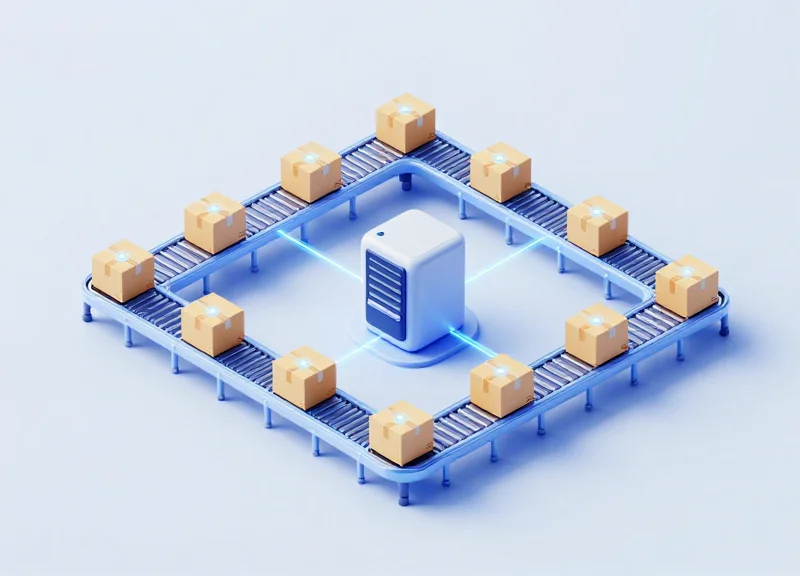
The logistics industry is standing at a critical crossroads. For decades, traditional data loggers were the gold standard for monitoring sensitive cargo, but as we move toward 2026, the rise of autonomous vehicles, AI-driven warehouses, and hyper-connected supply chains has exposed their fatal flaws. Legacy loggers are too bulky, require manual intervention, and create data silos that hinder real-time decision-making. Enter Integrated Sensor Tags—a fusion of RFID, IoT, and ultra-thin sensor technology. These compact, automated devices are no longer just an alternative; they are the fundamental infrastructure for the next generation of global trade. This article explores why the shift to integrated sensing is inevitable and how it will redefine the standard for smart autonomous logistics.
The Obsolescence of Traditional Data Loggers

Traditional data loggers are becoming obsolete in 2026 because they represent a 'static' solution in a dynamic, autonomous world. These devices typically rely on manual intervention—such as USB plugging or local Bluetooth syncing—to offload environmental data. In an era of smart autonomous logistics, where AI-driven routing and automated warehouses require instantaneous feedback, the 24-to-48-hour data latency inherent in traditional loggers creates a fatal visibility gap that prevents proactive risk mitigation.
| Feature | Traditional Data Loggers | Integrated Sensor Tags (2026) |
|---|---|---|
| Data Retrieval | Manual (USB/Manual Sync) | Autonomous (Global Cellular/Mesh) |
| Form Factor | Bulky Plastic Enclosures | Ultra-Thin Flexible Labels |
| Reporting Frequency | Post-Mortem (After Delivery) | Live Streaming / Event-Driven |
| Infrastructure | Requires Handheld Scanners | Zero-Touch Cloud Integration |
The shift toward obsolescence is driven primarily by the 'Human-in-the-Loop' tax. Traditional hardware requires warehouse staff to physically find, retrieve, and sync devices. In high-velocity autonomous environments, this manual requirement is a bottleneck that scales poorly. When a shipment of temperature-sensitive pharmaceuticals deviates from its range, a traditional logger merely records the failure for a post-mortem insurance claim. In contrast, modern logistics demands a system that triggers an automated rerouting or cooling command the moment the threshold is breached.
Why is physical bulk a problem for modern logistics?
Traditional loggers often weigh 50g-100g and take up significant cubic volume. In the world of autonomous drones and micro-fulfillment centers, every millimeter of payload matters. Integrated sensor tags, often no thicker than a shipping label, eliminate this 'dead weight' entirely.
What is the 'Data Sync Gap'?
It is the period between an environmental event (like a drop or heat spike) and the moment a human operator actually sees the data. Traditional loggers have a gap of hours or days; 2026 standards require this to be sub-second.
Are traditional loggers still cost-effective?
While the unit price may seem lower, the Total Cost of Ownership (TCO) is higher due to reverse logistics (shipping the logger back), manual labor costs for data extraction, and the lost value of spoiled goods that couldn't be saved in real-time.
Expert Insight: The Operational Latency Tax. Having spent two decades in Silicon Valley's supply chain sector, I've observed that the most expensive data is the data you receive too late to act upon. We call this the 'Operational Latency Tax.' In 2026, if your data logger requires a human to touch it to provide an answer, it isn't a tool—it's a liability. True smart logistics requires 'Ghost Visibility,' where the data flows as seamlessly as the physical goods, without a single human interaction required to bridge the two.
Defining Integrated Sensor Tags: The 2026 Architecture

Integrated sensor tags are thin-film, flexible electronic devices that consolidate sensing, data processing, and long-range communication into a single, unified substrate. Unlike traditional data loggers which rely on bulky plastic housings and discrete components, the 2026 architecture employs a 'System-on-Tag' (SoT) approach. This design utilizes printed electronics and ultra-thin silicon to create a form factor similar to a standard shipping label, allowing for item-level intelligence to be embedded directly into primary packaging without increasing shipping volume or weight.
| Feature | Legacy Data Logger (2020-2023) | Integrated Sensor Tag (2026 Standard) |
|---|---|---|
| Power Source | Rigid Lithium/Coin Cell | Flexible Printed Zinc-Polymer / Energy Harvesting |
| Thickness | 15mm - 35mm | 0.5mm - 1.2mm |
| Processing | Basic Microcontroller | Neural-Ready Sensor-on-Chip (SoC) |
| Sustainability | Electronic Waste / Hard to Recycle | Biodegradable Substrates / Metal-Free Batteries |
The core of this architecture is the convergence of three critical technologies: Flexible Printed Batteries (FPB), Sensor-on-Chip (SoC) integration, and Multi-Protocol Connectivity. FPBs allow the tag to bend around curved surfaces while providing sufficient peak current for 5G-RedCap or LoRaWAN transmissions. The SoC architecture integrates environmental sensors (temperature, humidity, shock) directly into the processor die, reducing power leakage and increasing data fidelity. This allows for 'Edge-of-the-Edge' processing, where the tag itself determines if a temperature excursion is statistically significant before ever waking up the radio to transmit.
How do these tags maintain connectivity in 'dark' zones?
2026 tags utilize multi-protocol failovers. If a 5G-RedCap signal is unavailable, the tag switches to Ambient Backscatter or BLE mesh to hop data through nearby tags until a gateway is found.
Are printed batteries safe for air transport?
Yes. The 2026 standard leverages Zinc-Manganese or solid-state chemistries that are non-flammable and exempt from IATA lithium-ion restrictions, simplifying global logistics compliance.
What is the expected lifespan of an integrated tag?
While designed for single-use or limited-trip cycles, the low-leakage architecture allows for a shelf-life of 24 months and an active tracking life of 60 to 90 days depending on the reporting frequency.
Expert Insight: The 'Ghost Data' Prevention Strategy. A unique advantage of the 2026 architecture is the implementation of hardware-level timestamping synced via GNSS or cellular pings. Traditional loggers often suffer from 'drift' when disconnected from a network for weeks. Integrated tags use high-precision MEMS oscillators that maintain microsecond accuracy even in deep sleep, ensuring that when data is finally uploaded, the temporal digital twin of the cargo is perfectly aligned with the physical reality of the journey.
Real-Time Visibility in Autonomous Environments
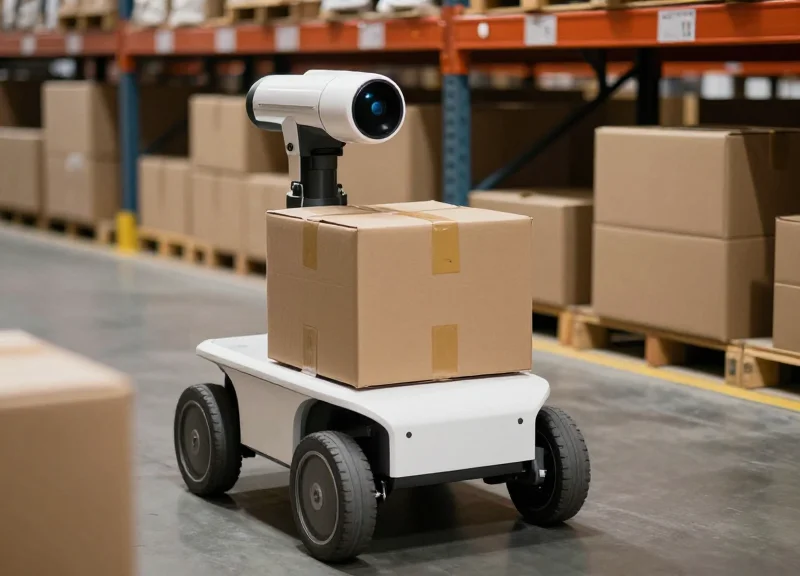
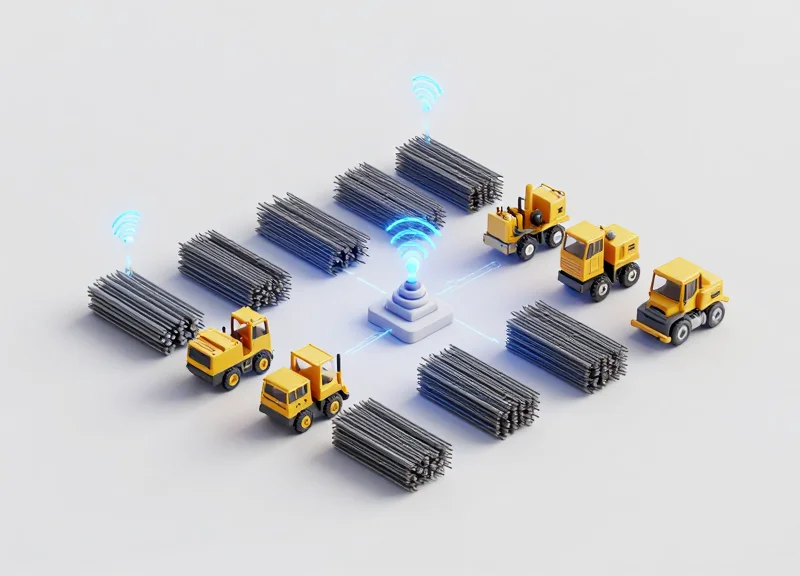
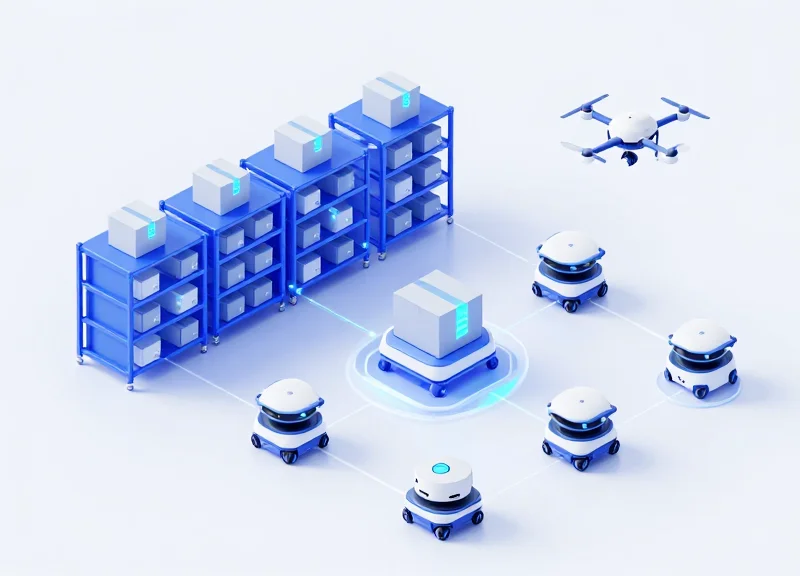
Real-time visibility in autonomous environments is the seamless integration of environmental telemetry—such as temperature, vibration, and humidity—directly into the navigation and logic systems of Autonomous Mobile Robots (AMRs) and self-driving trucks. Unlike traditional data logging, which requires human retrieval of information, 2026-standard sensor tags act as distributed intelligence nodes. They provide the 'sensory nervous system' for unmanned vehicles, allowing them to adjust environmental controls or alter routes instantly based on real-time cargo health data without any human interference.
The shift toward fully autonomous logistics relies on the elimination of the 'data gap'—the period where cargo status is unknown between checkpoints. By using protocols like BLE 5.4, Thread, or Wi-Fi HaLow, integrated tags maintain a constant handshake with the vehicle's onboard computer. When a sensor detects a deviation, such as a pallet tilting beyond a safe threshold, the AMR can immediately halt or recalibrate its acceleration to prevent damage, effectively turning data into physical action.
| Feature | Legacy Manual Visibility | 2026 Autonomous Visibility |
|---|---|---|
| Communication Loop | Human-to-Machine (H2M) | Machine-to-Machine (M2M) |
| Latency Budget | Hours or Days | Sub-100 Milliseconds |
| Data Handling | Manual Scanning/Upload | Continuous Mesh Streaming |
| Decision Trigger | Management Report | Onboard Edge Compute |
The Expert Insight: The 'Sensor-as-a-Peripheral' (SaaP) Model. In 2026, we are moving away from sensors being 'black boxes' on boxes. Instead, the industry is adopting the SaaP model, where the sensor tag is temporary hardware mapped into the robot's local operating system. This allows an autonomous truck to treat every pallet in its trailer as a literal extension of its own sensor array, drastically reducing the 'latency budget' required to react to environmental shocks or temperature excursions.
{
  "device_id": "TAG-2026-X89",
  "telemetry": {
    "temp_c": -18.4,
    "vibration_g": 0.1,
    "tilt_deg": 2.5
  },
  "action_trigger": {
    "threshold_exceeded": false,
    "command_to_AMR": "MAINTAIN_VELOCITY"
  }
}
How do sensors communicate with AMRs in high-density warehouses?
They utilize short-range, low-power mesh networking protocols like Thread or Zigbee, allowing the sensor tag to hop data through neighboring tags to reach the AMR’s receiver even in radio-opaque environments.
Can autonomous vehicles adjust cargo conditions without a cloud connection?
Yes. Integrated tags facilitate 'Edge-to-Edge' communication, where the vehicle processes sensor data locally and adjusts its climate control or suspension systems without needing to ping a central server.
What happens if a sensor tag loses signal during transit?
Modern tags use 'Store-and-Forward' logic, where data is cached locally and burst-transmitted the millisecond the handshake with the vehicle's gateway is re-established, ensuring no data gaps.
The Convergence of EAS, RFID, and ESL Technologies
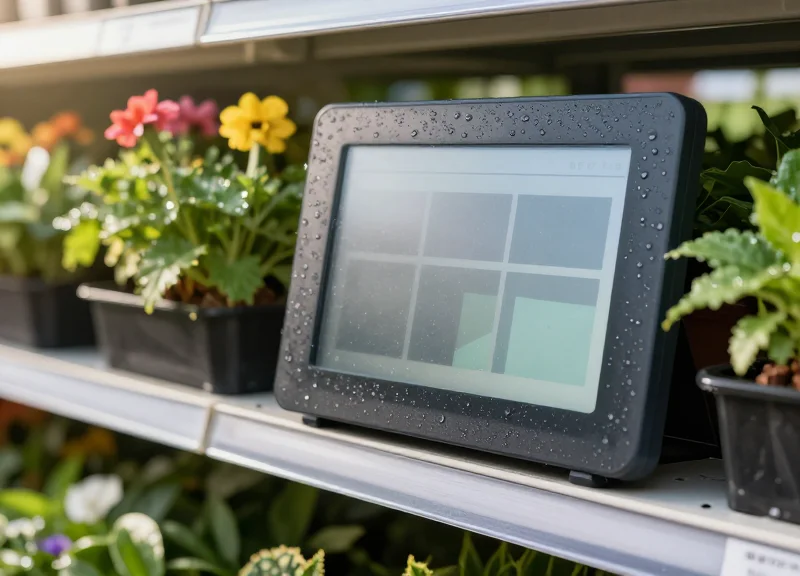
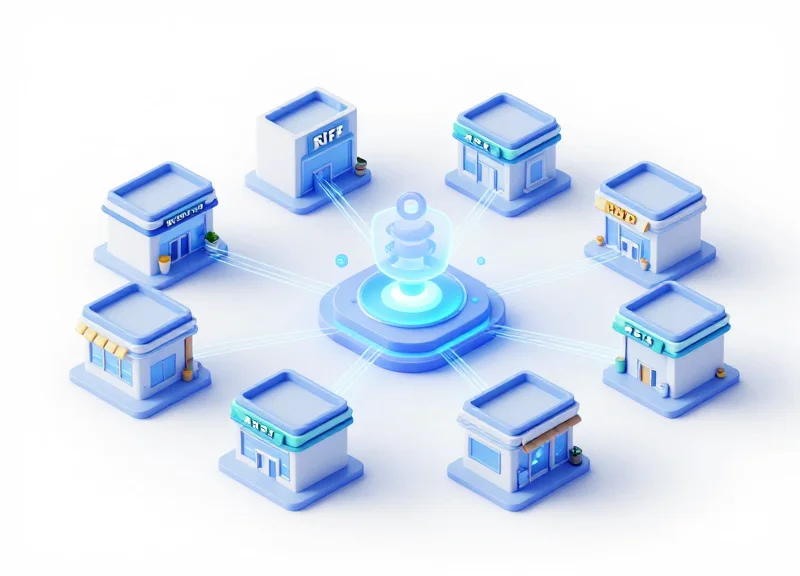
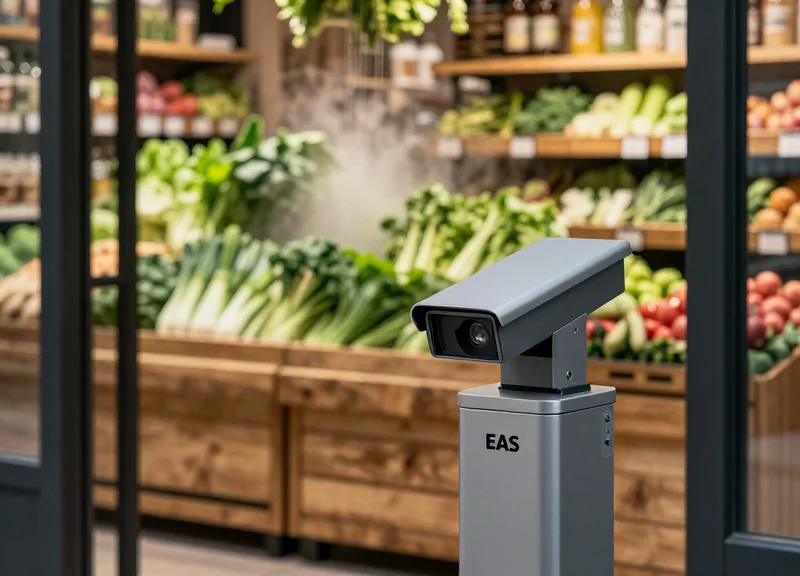
The convergence of EAS, RFID, and ESL technologies represents the structural collapse of three formerly distinct hardware silos into a unified, multi-functional communication layer. Historically, Electronic Article Surveillance (EAS) focused on loss prevention, Radio Frequency Identification (RFID) on inventory visibility, and Electronic Shelf Labels (ESL) on dynamic pricing. In the 2026 logistics framework, these capabilities are integrated into a single 'Smart Substrate'—a flexible, sensor-equipped tag that simultaneously prevents theft, tracks geolocation, and displays real-time environmental or pricing data, providing a 360-degree view of the product lifecycle without redundant hardware.
| Technology | Legacy Primary Function | Converged 2026 Role | Logistics Value |
|---|---|---|---|
| EAS | Loss Prevention/Theft Alarms | Automated Chain-of-Custody | Prevents unauthorized diversion in autonomous zones. |
| RFID | SKU-level Inventory Tracking | Real-time Data Backhaul | Enables high-speed bulk scanning for AMRs and drones. |
| ESL | Dynamic Retail Pricing | Active Status Display | Visual 'Condition' alerts for warehouse robots (e.g., Temperature Warning). |
DragonGuard has pioneered this convergence by leveraging decades of expertise in EAS security and high-durability labeling to solve the 'interference problem.' Traditionally, stacking these technologies caused signal collisions and battery drain. By moving toward a unified silicon architecture, we have eliminated hardware redundancy. This allows a single tag to serve as a security beacon in the warehouse, an identity marker during transit, and an environmental monitor for sensitive cargo like pharmaceuticals or perishables.
How does convergence reduce infrastructure costs?
By utilizing a multi-protocol chip (supporting UHF RFID and BLE), enterprises can replace three separate reader systems with a single gateway architecture, reducing hardware overhead by up to 40%.
Does EAS still matter in autonomous logistics?
Yes. In the context of 2026, EAS evolves from 'anti-shoplifting' to 'integrity monitoring,' ensuring that goods are not tampered with or removed from authorized autonomous shipping lanes.
Can these integrated tags handle environmental sensing?
Absolutely. The convergence includes a 'Sensor-on-Chip' design where temperature, humidity, and shock sensors share the communication bus of the RFID and ESL components.
Expert Insight: By 2026, the concept of a 'dumb' label will be extinct. The real breakthrough isn't just putting three chips in one package; it is 'Protocol-Agnostic Substrates.' This means the tag intelligently switches its energy usage—using passive RFID energy for inventory counts and active battery power only when a sensor threshold (like a temperature spike) is breached. This 'Power-Steering' technology is what makes long-term autonomous logistics economically viable.
Cost-Efficiency at Scale: From Reusable to Smart-Disposable

The transition to integrated sensor tags represents a fundamental shift from a high-CAPEX hardware model to a low-OPEX 'smart-disposable' paradigm. While traditional data loggers require significant upfront investment and costly reverse logistics to recover and reuse devices, 2026-standard sensor tags leverage printed electronics and mass-production efficiencies to drive unit costs down to a level where they can be treated as part of the packaging. This 'smart-disposable' model eliminates the hidden labor costs of device retrieval, manual data offloading, and battery recharging, providing a superior Total Cost of Ownership (TCO) for high-volume autonomous supply chains.
| Cost Metric | Traditional Data Loggers | Integrated Smart Tags (2026) |
|---|---|---|
| Unit Purchase Price | $25.00 - $150.00 | $1.50 - $8.00 |
| Reverse Logistics | Required ($5-$15 per unit) | Zero (Disposable/Recyclable) |
| Data Retrieval Labor | Manual (5-10 mins/unit) | Automated (0 mins) |
| Calibration Costs | Annual Recertification Needed | Factory-Calibrated (Single Use) |
| Scalability | Limited by Hardware Inventory | Infinite (Print-on-Demand) |
Expert Insight: The Reverse Logistics Tax. Silicon Valley logistics veterans often overlook the 'hidden tax' of reusable hardware. Our internal data suggests that the administrative overhead of tracking, retrieving, and re-commissioning a traditional logger often exceeds its original purchase price within just three shipping cycles. By moving to a smart-disposable model, enterprises essentially convert a complex asset management problem into a simple consumable line item, freeing up human capital for higher-value tasks.
- Identify High-Loss Lanes: Analyze routes where logger recovery rates are below 85%, making them the primary candidates for smart-disposable tags.
- Automate Data Ingestion: Integrate tag APIs directly into your Warehouse Management System (WMS) to remove manual data entry costs.
- Optimize Battery Chemistry: Select thin-film or zinc-manganese batteries that meet the specific duration of the trip to minimize materials cost.
- Transition to Recyclable Substrates: Utilize paper-based or PET-recyclable antennas to align cost-efficiency with corporate ESG mandates.
Are 'disposable' tags environmentally sustainable?
Modern 2026-spec tags utilize biodegradable substrates and heavy-metal-free batteries, making their environmental footprint smaller than the carbon cost of shipping a heavy reusable logger back to its origin.
Can smart-disposable tags handle long-haul shipments?
Yes. Current thin-film battery technology supports continuous monitoring for up to 90 days, which covers over 98% of global sea and land freight routes.
What is the primary driver of cost reduction?
The convergence of EAS and RFID manufacturing processes allows for high-speed 'roll-to-roll' printing of sensor circuits, dramatically reducing the labor involved in assembly.
Data Integrity and Blockchain Integration
In the era of autonomous logistics, data integrity is the foundational requirement for trust between machines. Integrated sensor tags solve the 'Garbage In, Garbage Out' problem by creating a decentralized, immutable record of environmental conditions—such as temperature, shock, and humidity—that is cryptographically signed at the hardware level. Unlike traditional data loggers that store information in vulnerable internal CSV files, these 2026-standard tags anchor their readings directly to a blockchain or distributed ledger. This provides a 'single source of truth' that is impossible to retroactively alter, ensuring that every stakeholder in a global supply chain can verify the journey of high-value goods without manual auditing.
| Feature | Traditional Data Loggers | Blockchain-Integrated Sensor Tags |
|---|---|---|
| Data Storage | Local memory, easily manipulated | Decentralized ledger, immutable |
| Verification | Manual download and inspection | Automated cryptographic validation |
| Compliance | Reactive reporting | Proactive, smart-contract driven |
| Trust Model | Requires trust in the carrier | Zero-Touch Trust (Trust in hardware) |
The breakthrough of 2026 is the 'Hardware-to-Ledger' (H2L) connectivity. By embedding unique cryptographic keys within the sensor’s secure element, the tag functions as an 'Autonomous Oracle.' This means the data is validated by the hardware itself before it ever reaches a database. For pharmaceutical companies moving biologics, this setup allows for 'Smart Compliance': if a temperature excursion occurs, the blockchain-integrated tag triggers a smart contract that automatically flags the batch as compromised, pauses payment, and notifies the manufacturer in real-time. This eliminates the 'liability gap' common in traditional logistics where disputes over data accuracy can last months.
How do integrated tags prevent physical tampering?
Modern tags use capacitive touch and light-sensitive circuits that detect if a package has been opened or if the tag has been peeled off, immediately logging a 'tamper event' on the blockchain.
Does blockchain integration increase energy consumption?
No. Modern tags use 'Off-Chain' processing where only a cryptographic hash of the data is sent to the ledger, preserving battery life while maintaining 100% security.
Can these tags work with existing ERP systems?
Yes, through middleware APIs, blockchain-anchored data is synchronized with SAP, Oracle, and other ERPs to provide a verified history of the shipment.
Expert Tip: To achieve 'Zero-Touch Trust,' look for sensor tags that utilize a PUF (Physically Unclonable Function) at the chip level. This provides a unique digital fingerprint for every single tag, making it impossible for a bad actor to spoof a sensor tag and inject fraudulent data into your supply chain ledger.
Sustainability and the Green Supply Chain

In 2026, sustainability is no longer a corporate social responsibility (CSR) checkbox; it is a core operational requirement driven by global ESG (Environmental, Social, and Governance) mandates. Integrated sensor tags represent a paradigm shift in green logistics by replacing resource-intensive hardware with 'dematerialized' alternatives. By utilizing ultra-thin printed electronics and flexible batteries, these tags minimize electronic waste (e-waste) and eliminate the carbon-heavy necessity of reverse logistics required for traditional reusable data loggers.
| Sustainability Metric | Traditional Data Loggers | Integrated Sensor Tags |
|---|---|---|
| Material Composition | Thick ABS plastic, PCBs, heavy metals | Thin-film polymers, printed circuits |
| Carbon Footprint (Logistics) | High: Requires return shipping/recharging | Near Zero: Disposed or recycled at destination |
| E-Waste Volume | Significant (large form factor) | Minimal (stamp-sized, ultra-thin) |
| Circular Economy Role | Closed-loop only (high friction) | Open-loop (integrates with packaging) |
The 'Hidden Carbon Cost' of traditional data loggers is often overlooked. To make a heavy-duty logger cost-effective, it must be reused dozens of times, which involves shipping the device back to the origin point after every delivery. This reverse logistics cycle often generates more CO2 than the initial monitoring saved. Integrated sensor tags solve this 'Reverse Logistics Carbon Trap' by being light enough to be integrated directly into recyclable packaging or handled through specialized thin-film recovery programs, significantly lowering the Scope 3 emissions for global shippers.
How do sensor tags simplify ESG reporting?
Sensor tags provide granular, automated data on transit conditions. By proving that products (like perishables or vaccines) stayed within temperature limits, companies can avoid waste-related emissions, which are a major component of ESG transparency requirements.
Are these tags recyclable?
Many 2026-standard tags use organic printed electronics or biodegradable substrates. Even for non-biodegradable versions, their total mass is so small compared to traditional electronics that they are significantly easier to process in modern electronic recycling streams.
Can they help reduce overall packaging waste?
Yes. Because sensor tags provide real-time data on the physical stresses a package undergoes, engineers can use this data to optimize and reduce excessive over-packaging, further lowering the environmental impact of the shipment.
Expert Insight: The most significant sustainability advantage of 2026-standard sensor tags is 'Digital Product Passport' (DPP) readiness. By embedding a unique, sensor-enabled identity into the product's packaging, manufacturers can track the entire lifecycle of a product—from raw material to end-of-life recycling—ensuring true circularity that traditional, detached data loggers simply cannot facilitate.
Future-Proofing Your Logistics Strategy
Future-proofing your logistics strategy involves transitioning from manual, hardware-heavy data loggers to integrated, cloud-native sensor tags that enable autonomous supply chain visibility by 2026. To remain competitive, organizations must pivot from 'post-mortem' data analysis—where information is retrieved after a shipment arrives—to 'Zero-Touch Telemetry,' where thin-film sensors automatically stream environmental and location data into AI-driven Warehouse Management Systems (WMS) without human intervention.
- Audit and Map Data Silos: Identify where manual data retrieval currently creates bottlenecks. Most legacy loggers require physical docking or manual Bluetooth syncing; map these points to determine where integrated RFID/Sensor tags can automate data capture.
- Implement API-First Middleware: Ensure your current TMS or WMS can ingest real-time telemetry. Future-proofing requires a software layer that can interpret standardized sensor protocols (like GS1) to trigger automated alerts for temperature or shock excursions.
- Execute a Hybrid-Parallel Pilot: Do not rip-and-replace immediately. Run integrated sensor tags alongside legacy loggers on high-value routes to validate the cost savings in labor and the reduction in product loss before scaling across the entire fleet.
- Shift to ‘Smart-Disposable’ Financial Models: Move from CAPEX-heavy reusable loggers to OPEX-friendly integrated tags. This allows for scaling monitoring to 100% of shipments rather than just a sample, which is critical for the granular data needs of 2026 autonomous logistics.
| Feature | Legacy Logger Strategy | 2026 Integrated Tag Standard |
|---|---|---|
| Data Collection | Manual / Post-Arrival | Autonomous / Real-Time |
| Infrastructure | Proprietary Readers/Docks | Standard RFID/IoT Gateways |
| System Integration | Siloed PDF/Excel Reports | API-Driven Data Streams |
| Scalability | Low (High Unit Cost) | High (Low Unit Cost) |
The Silicon Valley 'Expert Tip' for 2026: Beware of 'Sensor Lock-in.' The most resilient logistics strategies are building 'Sensor-Agnostic Data Lakes.' Instead of buying into a closed hardware ecosystem, prioritize integrated tags that support open standards. This ensures that as sensor technology evolves from simple temperature monitoring to chemical or gas sensing, your underlying data architecture doesn't require a total overhaul to stay functional.
Can I use my existing RFID infrastructure for these new sensor tags?
Generally, yes. Most integrated sensor tags are designed to be back-compatible with standard UHF Gen2 RFID readers, though a firmware update may be required to parse the additional sensor memory banks.
What is the primary ROI driver during the transition?
The biggest saving is 'Labor Arbitrage.' By eliminating the need for staff to find, stop, and download data from a logger, companies typically see a 30-40% reduction in operational overhead per shipment.
How do integrated tags handle data security compared to old loggers?
Integrated tags utilize modern encryption and can be paired with blockchain ledgers to create an immutable 'chain of custody' that legacy offline loggers cannot replicate.