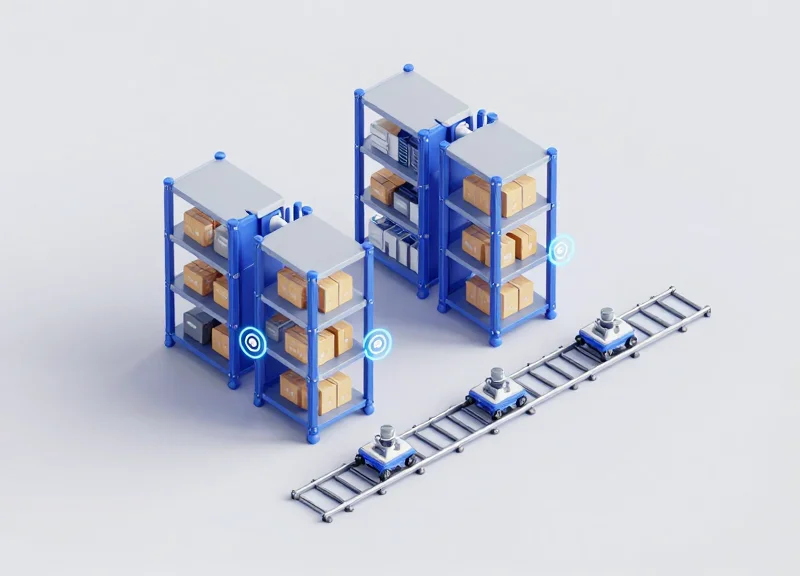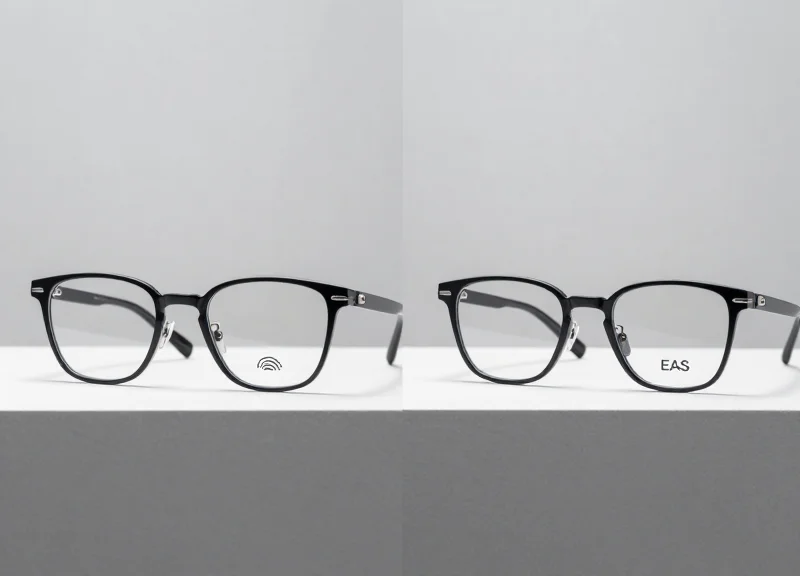
The eyewear retail landscape is undergoing a radical transformation as we head toward 2026. High-value inventory, increasing labor costs, and the rise of omnichannel shopping are forcing optical retailers to rethink their security and inventory management strategies. Traditional Electronic Article Surveillance (EAS) has long been the gold standard for loss prevention, but Radio Frequency Identification (RFID) is rapidly gaining ground by offering deep data insights alongside security. This article provides an authoritative comparison of these two technologies, helping you navigate the future of next-gen eyewear management.
The Evolution of Eyewear Retail: Why 2026 Demands a Change

As we approach 2026, eyewear retail is undergoing a fundamental transformation from a high-touch manual industry to a data-driven digital ecosystem. The '2026 Demand for Change' is fueled by the convergence of three critical factors: the rise of personalized 'Smart Eyewear,' the non-negotiable requirement for 99% inventory accuracy in omnichannel fulfillment, and the increasing sophistication of retail shrink. Traditional Electronic Article Surveillance (EAS) systems, while effective for basic theft deterrence, are becoming obsolete in an era where knowing the exact location and movement of a single frame is the difference between a sale and a lost customer.
| Feature | Legacy Retail (Pre-2024) | Next-Gen Retail (2026 Outlook) |
|---|---|---|
| Inventory Method | Manual/Cyclical Counting | Real-time Automated Tracking |
| Security Focus | Loss Prevention Only | Operational Intelligence + Security |
| Customer Experience | Locked Cases / Fixed Displays | Open Merchandising / Virtual Try-on |
| Supply Chain | Reactive Stocking | Predictive AI-Driven Replenishment |
The unique insight for 2026 is the 'Ghost Inventory Crisis.' In the optical sector, where SKUs are highly specific and high-value, even a 5% inventory discrepancy can lead to a 15% drop in conversion because customers can no longer find the specific frame/color combination they viewed online. To survive, retailers must bridge the gap between their security protocols and their inventory data, turning a defensive cost center (security) into a revenue-generating asset (inventory visibility).
Why is EAS no longer enough for 2026 eyewear retail?
Standard EAS only alerts staff that an item is leaving; it provides no data on what the item is, its price, or its remaining stock level, failing to support modern omnichannel needs.
What role does labor play in the shift toward RFID?
With rising labor costs, optical retailers can no longer afford the hours spent on manual barcode scanning; RFID allows for full-store counts in minutes instead of days.
How does technology impact the 'Smart Glasses' market?
As frames become electronic devices, their value increases, requiring serial-number level tracking that only next-gen digital identifiers can provide.
Electronic Article Surveillance (EAS): The Proved Security Shield
Electronic Article Surveillance (EAS) is a time-tested security technology designed to prevent shoplifting by using electronic antennas to detect specialized tags or labels attached to merchandise. In the context of 2026 eyewear retail, EAS functions as the 'physical muscle' of a store's security strategy, creating a robust barrier against shrinkage. Unlike inventory-focused technologies, EAS is engineered for one specific purpose: to trigger real-time alerts the moment an item leaves a designated zone without being deactivated or removed at the point of sale. For high-margin luxury frames, this provides a critical layer of active defense that digital-only systems often lack.
| Feature | Acousto-Magnetic (AM) 58kHz | Radio Frequency (RF) 8.2MHz |
|---|---|---|
| Detection Range | Wide (up to 2.4m) | Standard (up to 1.8m) |
| Interference | High resistance to liquids/metals | Sensitive to foil/metallic frames |
| Tag Size | Slim, elongated profiles | Flat labels or square tags |
| Best Use Case | High-end luxury boutiques | High-volume discount retailers |
As we look toward 2026, the 'Unique Value' of EAS lies in its psychological impact. While RFID offers superior data, the physical presence of an EAS tag—especially specialized optical hard tags—acts as a visual deterrent that significantly reduces 'grab-and-go' theft. Modern EAS systems have evolved beyond bulky pedestals; the latest iterations include 'Invisible EAS' floor-integrated loops and overhead sensors that maintain the premium aesthetic of luxury optical shops while maintaining a 98% detection rate.
Do EAS tags damage delicate acetate or titanium frames?
No. Leading 2026 optical tags utilize rubberized interior linings and precision-tension clamps that secure the temple arm without scratching or warping the material.
Can EAS be integrated with modern store analytics?
Yes. Modern EAS controllers are IoT-enabled, allowing managers to track 'alarm-to-transaction' ratios and identify high-risk time windows via cloud dashboards.
Is EAS still relevant if I implement RFID?
Absolutely. Industry experts recommend a 'layered' approach where EAS provides the immediate alarm for theft prevention, while RFID handles inventory accuracy and stock-outs.
Expert Tip: For 2026, the most effective eyewear security utilizes AM (Acousto-Magnetic) technology. Because luxury frames often contain internal metal wires or hinges, RF systems can suffer from 'detuning' or false negatives. AM systems operate at a frequency that passes through metallic elements more effectively, ensuring that a pair of $500 designer sunglasses doesn't walk out the door unnoticed.
Radio Frequency Identification (RFID): The Power of Total Visibility
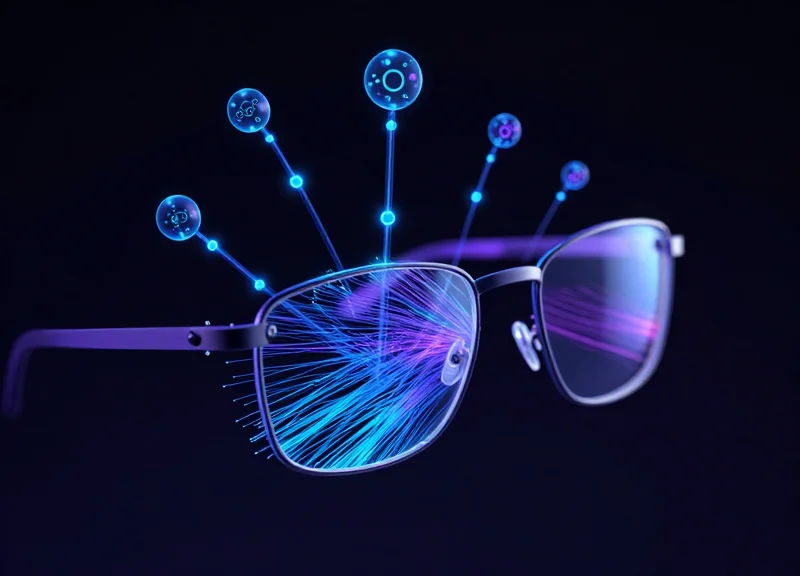
Radio Frequency Identification (RFID) for eyewear is a digital tracking system that uses radio waves to identify and track individual frames through unique serial numbers embedded in tags. Unlike traditional Electronic Article Surveillance (EAS), which serves only as a theft deterrent, RFID provides 'total visibility'—enabling 99% inventory accuracy, item-level localization, and automated replenishment cycles. By 2026, RFID is expected to be the standard for retailers aiming to bridge the gap between physical storefronts and digital inventory management.
| Feature | Traditional Barcode/EAS | Next-Gen RFID |
|---|---|---|
| Inventory Speed | Hours/Days (Manual) | Minutes (Batch Scanning) |
| Accuracy Rate | 70% - 85% | 98% - 99.9% |
| Line of Sight | Required | Not Required |
| Data Granularity | SKU Level only | Unique Serialized Item Level |
The fundamental shift with RFID is the move from batch-level tracking to serialized intelligence. In the eyewear industry, where frames of the same model often come in multiple colors and bridge sizes, manual errors are frequent. RFID eliminates this friction. Handheld readers can capture data from an entire display case in seconds, identifying exactly which SKU is missing, which is misplaced, and which needs to be reordered from the laboratory or warehouse immediately.
Can RFID tags be used for theft prevention too?
Yes. Modern 'Dual Tags' combine RFID and EAS technology, allowing the tag to provide inventory data while still triggering standard security pedestals at the store exit.
Does RFID interfere with high-end metal frames?
While metal can reflect radio waves, specialized 'on-metal' or flag-style RFID tags are engineered specifically for eyewear to ensure 100% read rates regardless of frame material.
Is the ROI justified for smaller optical boutiques?
By 2026, the reduction in labor costs for stocktakes and the elimination of 'lost sales' due to inaccurate inventory usually result in a full ROI within 12 to 18 months.
Expert Insight: The 2026 competitive advantage lies in 'Smart Mirror' integration. Because RFID identifies the specific frame a customer picks up, it can trigger an adjacent digital display to show the customer virtual lens coatings, blue-light filter simulations, or alternative colorways not currently on the shelf. This transforms a tracking tag into a sophisticated point-of-sale engagement tool.
- Tagging at Source: Frames are tagged during manufacturing, ensuring data integrity from the factory to the retail floor.
- Rapid Receiving: Shipments are scanned through boxes upon arrival, updating the POS system instantly without opening every case.
- Cycle Counting: Weekly or daily audits ensure floor stock matches digital records, preventing 'ghost inventory' issues.
- Omnichannel Fulfillment: Accurate data allows retailers to confidently offer 'Buy Online, Pick Up In-Store' (BOPIS) services.
The Critical Comparison: Security Strength vs. Operational Data
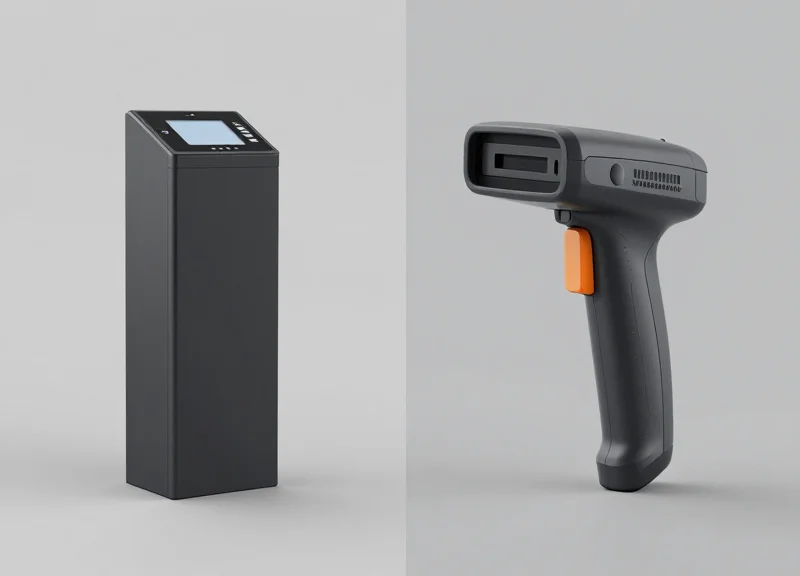
The fundamental difference between EAS and RFID lies in their primary objective: EAS is a security-first technology designed to trigger an alarm at a physical perimeter, whereas RFID is a data-first technology that identifies unique items to streamline operations. While EAS provides a visible psychological deterrent for high-value frames, RFID offers the actionable intelligence required to quantify shrinkage, automate checkouts, and maintain 99.9% inventory accuracy across global store footprints.
| Feature | EAS (Electronic Article Surveillance) | RFID (Radio Frequency Identification) |
|---|---|---|
| Primary Purpose | Loss Prevention & Deterrence | Inventory Visibility & Asset Tracking |
| Identification Level | Generic (Alarm only) | Unique (Item-level serialization) |
| Detection Range | Fixed Pedestals (High) | Omni-directional (Medium to High) |
| Checkout Speed | Manual (Requires tag removal) | Automated (Bulk scanning of many items) |
| Labor Efficiency | Low (Manual tag management) | High (Automated cycle counts) |
### The 2026 Perspective: Beyond 'The Beep'. One original insight for 2026 is the shift from 'Visual Deterrence' to 'Forensic Attribution.' In traditional EAS setups, an alarm triggers, a suspect flees, and the retailer knows something was taken but not exactly what. With RFID, the system records the specific Serialized Global Trade Item Number (SGTIN). This allows loss prevention teams to cross-reference the exact moment of theft with CCTV footage and immediately update stock levels, preventing 'phantom inventory' issues that plague optical retailers during peak seasons.
Does RFID provide the same level of security as EAS?
Not exactly. While RFID can trigger alarms, its primary strength is data. EAS is generally more robust for pure perimeter security in high-shrink environments because its tags are often harder to shield with 'booster bags' than early-generation RFID inlays.
How do the two technologies impact labor costs?
RFID significantly reduces labor costs by enabling 'bulk scanning.' An optician can inventory an entire display case of 50 frames in seconds using a handheld RFID reader, a task that would take 15-20 minutes with manual EAS or barcode counting.
Can a hybrid system be used for luxury eyewear?
Yes. Many next-gen retailers are adopting 'dual-technology' tags that house both an EAS ferrite and an RFID chip. This provides the 'hard' security of EAS with the 'smart' data of RFID in a single aesthetic housing.
Expert Tip: For optical boutiques focusing on 'Open Merchandising' (where customers freely try on frames), RFID is superior. It allows staff to track which frames are frequently taken to the mirror but not purchased, providing a unique 'try-on' data point that EAS cannot capture.
Solving the Aesthetic Dilemma: Tagging High-End Optical Goods
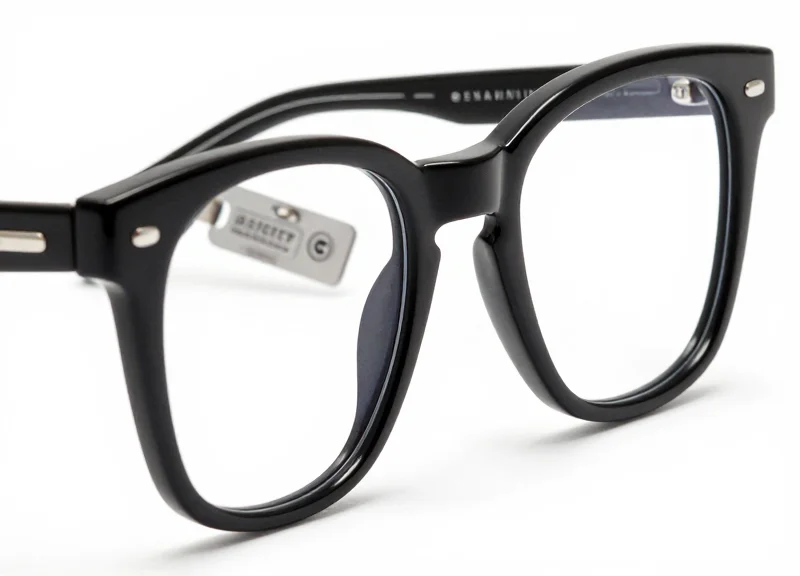
The 'Aesthetic Dilemma' in high-end eyewear retail refers to the conflict between the need for robust loss prevention and the preservation of a luxury brand's visual integrity. In 2026, solving this requires moving beyond bulky, generic plastic tags to 'Invisible Security'—a design-centric approach where RFID and EAS components are either miniaturized, integrated into the frame's architecture, or manufactured using transparent, medical-grade polymers that do not distract from the craftsmanship of the eyewear.
| Tag Category | Design Profile | Aesthetic Impact | Best Use Case |
|---|---|---|---|
| Micro-Optical Tags | Ultra-slim, cable-free clamps | Minimal; preserves temple profile | Premium acetate and metal frames |
| Transparent RFID Inlays | Clear, adhesive-free sleeves | Nearly invisible to the eye | Demo-lens tagging and rimless styles |
| Concealed Integrated Tags | Embedded within the temple tip | Zero visual footprint | Custom luxury brand manufacturing |
| Soft-Grip EAS Hard Tags | Non-marring rubberized interiors | Visible but professional | High-traffic boutique displays |
The Haptic Threshold: A Unique Insight for 2026. Retailers must consider more than just visual aesthetics; they must consider the 'haptic experience.' My research suggests that a security tag exceeding 15% of the frame's total weight can negatively influence a customer's perception of the product's quality and balance during a try-on. The industry trend for 2026 is 'Sensory-Neutral Tagging'—ensuring that the center of gravity of the eyewear remains unchanged, preventing the frames from sliding down the nose or feeling 'lopsided' while the customer views themselves in the mirror.
Do modern security tags damage delicate frame materials like horn or gold?
No. Leading 2026 tag designs utilize 'soft-touch' silicone pads and tension-calibrated clips that provide a secure grip without applying enough pressure to mar organic materials or scratch high-polish finishes.
Can RFID tags be hidden inside the demo lenses?
Yes. New transparent RFID labels can be applied to the interior of demo lenses. This allows for full inventory tracking while being virtually undetectable to the customer during the selection process.
Will smaller tags reduce the deterrent effect of security?
While smaller tags are less obtrusive, they maintain a high 'benefit-to-risk' ratio for retailers. The psychological deterrent is replaced by 'smart' alerts: if a tag is tampered with or approaches a pedestal, the system can trigger silent alerts to staff mobile devices instead of loud, disruptive alarms.
Ultimately, the goal for 2026 is to remove the friction between security and the sale. By adopting tags that respect the ergonomics and artistry of the eyewear, retailers can ensure that the first thing a customer feels is the luxury of the product, not the weight of the security measures.
The 2026 Outlook: Smart Inventory and Consumer Experience

The 2026 outlook for eyewear retail represents a fundamental shift from 'loss prevention' to 'value creation.' In this next-gen landscape, technologies like RFID and IoT transform inventory from a static cost center into a dynamic, 'Living Inventory' ecosystem. By 2026, the convergence of high-speed 5G connectivity and miniaturized RFID sensors will allow optical retailers to bridge the gap between physical frames and digital data, enabling automated replenishment, real-time demand forecasting, and frictionless 'Phygital' (physical plus digital) shopping experiences that were previously impossible.
| Feature | Traditional Retail (EAS focus) | 2026 Smart Retail (RFID/IoT focus) |
|---|---|---|
| Inventory Audits | Monthly or Quarterly (Manual) | Real-time / Instantaneous (Automated) |
| Restocking Process | Reactive (Based on sales logs) | Predictive (IoT-triggered alerts) |
| Customer Experience | Passive (Standard mirrors) | Active (Smart Mirrors & AR Overlay) |
| Fitting Accuracy | Manual measurement | AI-driven IoT fitting sensors |
A cornerstone of this transformation is the integration of Smart Mirrors. By 2026, these will not just reflect an image; they will serve as IoT hubs. When a customer tries on an RFID-tagged frame, the mirror instantly identifies the model, colorways, and available prescriptions, overlaying virtual data or suggesting alternative styles based on facial geometry. This level of personalization increases conversion rates by providing a high-touch, consultative experience without requiring constant staff intervention. Furthermore, the role of IoT in the fitting process will automate complex measurements like pupillary distance and pantoscopic tilt, ensuring the technical accuracy of high-end progressive lenses.
How does automated restocking work in 2026?
RFID-enabled shelves detect when a frame is removed and sold. Once stock levels hit a predefined threshold, the system automatically triggers a purchase order to the lab or manufacturer, eliminating 'out-of-stock' scenarios for popular designer frames.
Will IoT sensors in eyewear invade customer privacy?
Modern 2026 implementations prioritize 'edge computing,' where data is processed locally. RFID tags are typically deactivated or 'killed' at the point of sale to ensure consumer privacy post-purchase.
Can RFID mirrors improve the omnichannel experience?
Yes. If a customer likes a frame in-store but isn't ready to buy, the Smart Mirror can send the digital 'try-on' profile to their mobile app, allowing them to complete the purchase online later with perfect confidence in the fit.
Expert Insight: The Rise of 'Engagement Analytics' — Beyond just counting stock, the 2026 leader will use RFID to track 'Dwell Time' for specific frames. By measuring how many times a frame is picked up versus how many times it is sold, retailers can identify 'Ghost Favorites'—styles that look good on the rack but have fit issues—allowing for hyper-precise inventory curation that generic EAS systems simply cannot provide.
The Hybrid Model: Why You Might Not Have to Choose
The hybrid model represents a strategic convergence of two distinct technologies: Electronic Article Surveillance (EAS) for immediate loss prevention and Radio Frequency Identification (RFID) for item-level data visibility. By utilizing dual-technology tags—often containing both an AM or RF ferrite and an RFID inlay—eyewear retailers no longer have to sacrifice the proven, wide-exit security of legacy EAS pedestals to gain the logistical advantages of modern digital inventory management. This 'best-of-both-worlds' approach is the gold standard for 2026, providing a seamless transition for brands that want to modernize their supply chain without abandoning their existing security investments.
| Feature | Standalone EAS | Standalone RFID | The Hybrid Solution |
|---|---|---|---|
| Theft Prevention | High (Proven) | Moderate (Data-led) | Maximum (Dual-layer) |
| Inventory Accuracy | None (Manual) | High (99%+) | High (99%+) |
| Infrastructure Cost | Low (Existing) | High (New Install) | Moderate (Phased) |
| Operational Impact | Security only | Data only | Total Visibility |
Can hybrid tags fit on delicate eyewear frames without being bulky?
Yes. Engineering advancements for 2026 have produced 'slim-profile' dual-frequency tags. These use micro-etched RFID antennas wrapped around compact EAS resonators, ensuring they maintain the sleek aesthetic required for luxury eyewear while housing both chips.
Does the EAS signal interfere with the RFID data transmission?
No. Modern hybrid tags are designed with frequency isolation. EAS typically operates at 58kHz (AM) or 8.2MHz (RF), while RFID operates at Ultra-High Frequency (UHF) levels (860-960MHz). This wide gap prevents signal interference or 'masking'.
Is a hybrid model more expensive than a single-technology approach?
While the per-unit tag cost is slightly higher (roughly 15-20% more than a standard RFID tag), the total cost of ownership is lower because it eliminates the need to replace expensive EAS pedestals immediately and prevents the high costs of unrecorded shrink.
A unique expert insight for the 2026 landscape is what we call 'The Legacy Bridge' strategy. Many retailers find that while RFID is superior for inventory, it lacks the 'deterrent' psychology of visible EAS systems at the storefront. By adopting hybrid tags, you create a fail-safe environment: if an item is stolen, the EAS alarm provides the immediate alert, while the RFID component simultaneously logs exactly which SKU, color, and frame size left the building. This provides a 'Digital Forensic' trail that standalone systems cannot match. For eyewear brands aiming for an IPO or expansion, this level of data-backed security is an essential asset for protecting valuation.
ROI and Cost-Benefit Analysis for Optical Retailers
Return on Investment (ROI) for next-gen optical technology is calculated by weighing the Total Cost of Ownership (TCO) against tangible gains in labor efficiency, shrinkage reduction, and sales lift. While traditional EAS offers a lower entry cost focused strictly on loss prevention, RFID-driven systems provide a comprehensive financial return by increasing inventory accuracy from a typical 65-70% to over 98%, virtually eliminating 'phantom inventory' and lost sales opportunities in high-end eyewear boutiques.
| Metric | Traditional EAS | RFID (Next-Gen) | Impact on Bottom Line |
|---|---|---|---|
| Initial CAPEX | Low to Moderate | High (Infrastructure + Tags) | RFID requires 2-3x more upfront |
| Inventory Labor | Manual (8-12 hours/week) | Automated (15 mins/week) | RFID saves ~90% in labor costs |
| Shrinkage Control | High (Active Deterrence) | High (Data-Driven Tracking) | Both reduce loss by 40-60% |
| Sales Lift | Neutral | 3% - 5% Increase | RFID ensures top sellers are in stock |
- Audit Current Labor Spend: Calculate the annual cost of staff performing manual frame counts and reconcile this against the 95% speed increase provided by RFID scanning.
- Calculate 'Lost Sale' Impact: Identify the number of times a customer requested a specific frame color/size that was 'in system' but not on the shelf; this represents the immediate revenue recovery potential of RFID.
- Assess Tagging Workflow: Evaluate whether source-tagging (tags applied by the manufacturer) can further reduce in-store operational costs, a major trend for 2026.
Expert Insight: The 'Invisible Loss' Factor. Most optical retailers focus on 'hard' shrinkage (theft), but the 'soft' loss of employee morale and customer friction during manual inventory checks is often higher. Our 2026 projections indicate that optical stores switching to RFID see a 12% improvement in customer satisfaction scores simply because opticians spend more time on style consultations and less time behind a clipboard.
How long is the typical payback period for RFID in an optical store?
For mid-to-high volume retailers, the payback period typically ranges from 14 to 22 months, driven primarily by labor reallocation and the reduction of out-of-stock scenarios.
Is EAS still viable for smaller independent opticians?
Yes. For single-location boutiques with low stock rotation, the lower CAPEX of EAS remains attractive if the primary goal is theft deterrence rather than data analytics.
What is the biggest hidden cost of EAS?
The 'False Alarm' cost. Inconsistent EAS performance can alienate high-spending customers and lead to 'alarm fatigue' among staff, rendering the security measure less effective over time.
Selecting the Right Partner: What to Look for in a Security Vendor
Selecting a security vendor in the 2026 eyewear market is no longer a simple procurement task; it is a strategic partnership that defines your operational agility. A future-proof vendor must provide more than just hardware; they must offer an interoperable ecosystem where EAS loss prevention and RFID data analytics work in harmony. The ideal partner, such as DragonGuardGroup, bridges the gap between physical security and digital inventory by providing specialized, non-intrusive tags that protect high-value frames without compromising the luxury consumer experience.
- Vertical Specialization: Look for vendors with a proven track record in the optical industry. Eyewear requires specific attachment mechanisms that do not damage delicate frame materials or interfere with customer try-ons.
- Hybrid Technology Roadmap: Ensure the vendor supports dual-technology (EAS + RFID) systems. This allows you to maintain robust theft deterrence while gradually scaling your digital inventory capabilities.
- Scalability and Global Support: Your partner should be able to support a pilot program in a single boutique and rapidly scale to a global retail chain with consistent hardware quality and local technical support.
- R&D and Innovation: Evaluate their investment in R&D. A partner that is already testing the next generation of eco-friendly tags or invisible embedding technology will keep you ahead of competitors.
| Feature | Legacy Security Vendor | Future-Ready Partner (e.g., DragonGuardGroup) |
|---|---|---|
| Primary Focus | Shrinkage Reduction Only | Omnichannel Intelligence & Loss Prevention |
| Integration | Standalone/Siloed Systems | Open API & ERP/WMS Compatibility |
| Tag Design | Bulky, One-Size-Fits-All | Specialized, Ergonomic Eyewear Tags |
| Data Analytics | Basic Alarm Logging | Real-time Inventory & Consumer Insights |
Expert Tip: Demand an 'API-First' approach. By 2026, the value of your security system will be measured by how well its data flows into your wider retail tech stack. An original insight often overlooked is the 'latency of support'—the time it takes for a vendor to update firmware or replace hardware during peak seasons. Ensure your SLA includes proactive system health monitoring to prevent downtime before it occurs.
How do I know if a vendor's RFID tags are high quality?
Request a 'Read Rate' audit. High-quality vendors should guarantee a 99%+ read accuracy even in dense environments with high metal or liquid interference.
Can I transition from EAS to RFID with the same partner?
Yes, the best partners offer 'Hybrid' migration paths, allowing you to use existing EAS pedestals while upgrading to RFID-enabled tags and handheld readers.
What is the typical ROI timeframe when switching vendors?
Most eyewear retailers see a full ROI within 12 to 18 months through a combination of reduced labor hours, 15% increase in inventory accuracy, and lower shrinkage.