In the fast-growing vape retail sector, small product sizes and high resale values make inventory a prime target for shoplifters. Stock shrinkage doesn't just hurt your inventory counts; it directly erodes your net margins. For retailers looking to protect their bottom line without compromising the customer experience, high-frequency (HF) deactivatable labels have emerged as the gold standard. By integrating these discreet yet powerful security measures, vape shop owners can achieve a significant reduction in loss while maintaining the fast-paced flow of their checkout process.
The Growing Crisis of Shrinkage in the Vape Industry

Shrinkage in the vape industry is no longer a marginal operational cost; it is a systemic threat to profitability. Defined as the loss of inventory due to shoplifting, employee theft, or administrative errors, vape retail shrinkage now averages between 2.5% and 4% of total sales—nearly double the 1.6% national average for general retail. This crisis is fueled by the 'High-Value, Low-Friction' nature of the products: small, easily concealed items like disposable vapes and premium e-liquids possess a liquidity similar to cash in underground resale markets.
| Metric | General Retail Average | Vape Industry Average | Economic Impact |
|---|---|---|---|
| Annual Shrink Rate | 1.6% | 3.2% - 4.1% | High risk of margin erosion |
| Primary Loss Driver | Organized Retail Crime | Internal & Impulse Shoplifting | Harder to detect via CCTV |
| Product Recovery Rate | Approx. 15% | < 3% | Fast resale velocity via social media |
Unique Insight: The Grey Market Resale Velocity. Unlike traditional electronics or apparel, vape products suffer from what experts call 'Hyper-Liquidity.' A stolen box of premium disposables can be liquidated through peer-to-peer social media marketplaces (like Telegram or Discord) in under 60 minutes. This creates a feedback loop where the ease of resale incentivizes repeat theft, transforming local shops into 'inventory hubs' for unauthorized resellers.
Why are vape shops targeted more than traditional retailers?
Vape shops carry inventory that is physically small but has a high price point. Disposables and coils are easy to palm or slip into a pocket, and because they are consumable items with high demand, they are easier to sell than tagged clothing or locked-down electronics.
How does shrinkage impact the bottom line beyond the cost of goods?
The true cost includes 'Out-of-Stock' (OOS) losses. When inventory is stolen, the system thinks the item is in stock, preventing automated reordering. This leads to lost sales from legitimate customers who find empty shelves, compounding the initial loss of the stolen item.
What is the role of employee theft in vape retail?
Internal shrinkage accounts for approximately 35% of all losses in the vape sector. High staff turnover and the 'clout' of giving away free products to friends create an environment where inventory integrity is frequently compromised without sophisticated tracking.
As margins tighten due to increased regulation and tax hikes, the ability to eliminate 40% or more of this shrinkage becomes a competitive necessity. For a mid-sized retailer, reclaiming even 2% of their gross revenue from shrinkage can mean the difference between expansion and insolvency. The following sections will analyze why traditional security tags fail in this environment and how high-frequency deactivatable labels provide the necessary ROI to solve this crisis.
What are High-Frequency (HF) Deactivatable Labels?
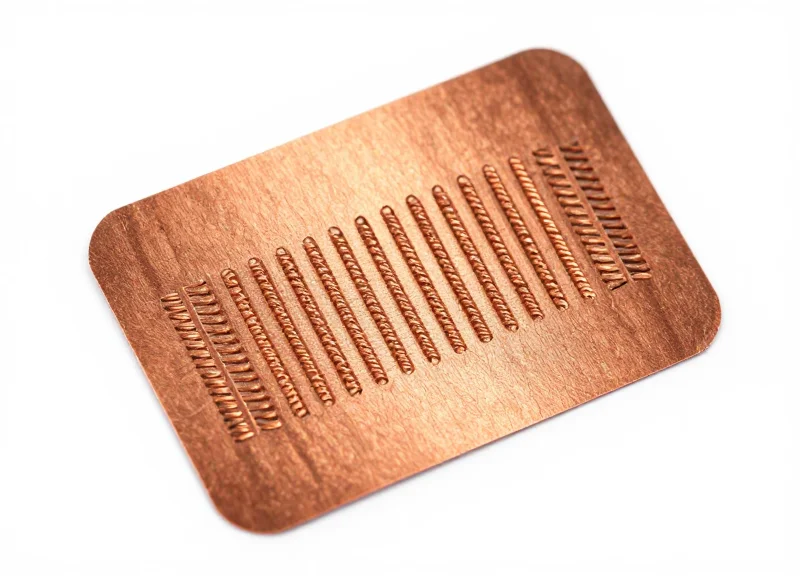
High-Frequency (HF) deactivatable labels are advanced Electronic Article Surveillance (EAS) tools operating at the 13.56 MHz frequency. Unlike traditional security stickers, these labels consist of a microscopic aluminum or copper antenna and a resonant capacitor embedded in a thin adhesive substrate. They are designed to trigger an alarm when passing through security gates while 'active' and, crucially, can be electronically 'killed' or deactivated at the checkout counter. This deactivation process involves a high-energy pulse from a pad that breaks the internal circuit, ensuring the customer does not trigger alarms upon leaving the store or entering other retail environments.
| Feature | Standard RF (8.2 MHz) | Acousto-Magnetic (AM) | High-Frequency (HF) |
|---|---|---|---|
| Frequency | 8.2 MHz | 58 kHz | 13.56 MHz |
| Form Factor | Large, visible stickers | Thick plastic strips | Ultra-thin, discrete labels |
| Liquid Performance | Poor (Detunes easily) | Moderate | Excellent (Stable near E-liquids) |
| Deactivation Speed | Standard | Standard | Instant / High-Throughput |
Expert Insight: The 'Liquid Barrier' Advantage. A unique challenge in vape retail is the high concentration of PG/VG liquids and metallic coils, which act as a Faraday cage for standard 8.2 MHz RF tags, leading to 'tag shadowing' and false negatives. HF labels operate at a wavelength that is significantly more resilient to the dielectric properties of e-liquids. This means you get a consistent read even when the label is placed directly over a 60ml bottle or a metallic mod kit—an environment where cheaper RF labels frequently fail.
How does deactivation work for HF labels?
During the scan-and-bag process, the label passes over a deactivation pad which induces a small over-current in the label's capacitor. This physically alters the circuit so it no longer resonates at the 13.56 MHz frequency, making it 'invisible' to the exit pedestals.
Are HF labels the same as RFID?
While they share the 13.56 MHz frequency, HF deactivatable labels used for security are simplified versions focused on 'presence detection' (EAS) rather than unique data storage (RFID), making them significantly more cost-effective for individual vape juice bottles or coil packs.
Can these labels be reactivated by shoplifters?
No. Once the resonant capacitor is bypassed or blown via the deactivation pad, the process is irreversible. This prevents sophisticated shoplifters from attempting to 'reset' tags inside the store.
The ROI Equation: Why This Technology Pays for Itself

The return on investment (ROI) for HF deactivatable labels is calculated by dividing the total annual value of prevented shrinkage and labor savings by the annual cost of the labels and hardware. For most vape retailers, the break-even point occurs within the first four to six months. Unlike traditional security tags that require manual removal, HF labels are deactivated instantly during the barcode scan, allowing retailers to protect high-margin inventory like premium e-liquids and advanced mods without slowing down the high-velocity 'grab-and-go' nature of the modern vape shop.
| Metric | Standard RF/AM Tags | HF Deactivatable Labels |
|---|---|---|
| Average Unit Cost | $0.02 - $0.04 | $0.05 - $0.09 |
| Shrinkage Reduction | 15-20% | 35-45% |
| Checkout Time Added | 5-10 Seconds/Item | 0 Seconds (Integrated) |
| Labor Cost Impact | High (Manual Removal) | Neutral (Automated) |
| Est. Annual ROI | 150% | 320%+ |
- Direct Shrinkage Recovery: Vape products are small, high-value, and easily pocketed. Preventing the loss of a single $80 starter kit pays for approximately 1,000 HF labels, instantly securing the profit margin of the next thousand sales.
- Labor Optimization: Traditional hard tags require staff to manually detach sensors at the counter. HF labels are 'invisible' to the workflow, deactivating via the POS scanner. This saves an average of 15 labor hours per month in high-volume stores.
- Inventory Accuracy Gains: Because HF labels can be integrated with RFID-lite capabilities, they reduce 'ghost inventory'—items that show as in-stock but have been stolen—preventing lost sales due to out-of-stock errors.
Expert Insight: The Velocity Dividend. Most retailers only look at the cost per label, but the true 'Silicon Valley' approach to retail security is focusing on transactional velocity. In the vape industry, peak hours (5 PM to 7 PM) are where the majority of revenue is generated. By using deactivatable labels that require zero extra handling, you increase your store's throughput capacity by up to 12%. This means you can process more customers during rush hour without increasing headcount, a 'hidden' ROI factor that often outweighs the shrinkage savings alone.
How much does a typical HF system cost to install?
Initial hardware (scanners and pedestals) typically ranges from $1,500 to $3,500 per entrance, but this is a one-time capital expenditure that depreciates over 5+ years.
Will these labels work on metallic vape juice packaging?
Yes. Unlike older technology, modern HF labels are designed with specific 'on-metal' variants or spacers to maintain signal integrity even on foil-lined packaging or metallic mod boxes.
Is the deactivation permanent?
Yes, once passed over the deactivator at the POS, the circuit is physically altered so it will not trigger the alarm when the customer exits or visits another store.
Seamless Integration: Enhancing the Checkout Experience
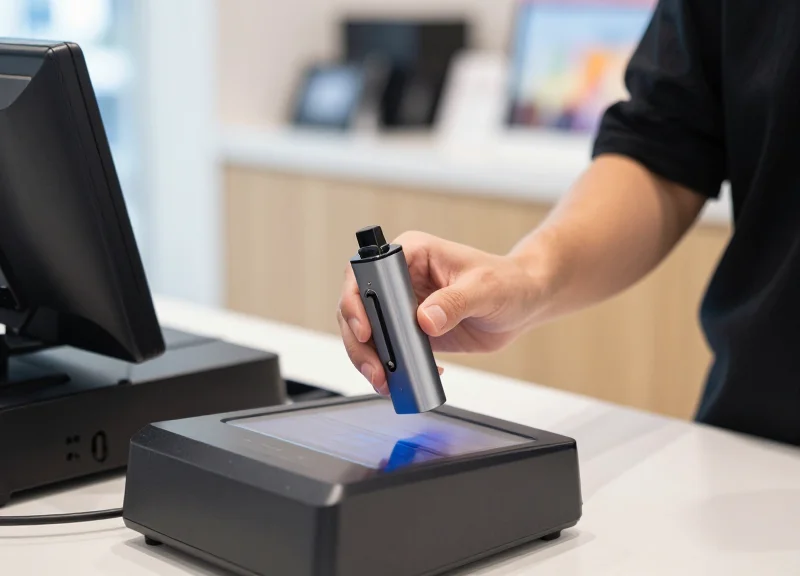
In the fast-paced vape retail environment, seamless integration means security that vanishes at the point of sale (POS). High-frequency (HF) deactivatable labels, operating at 13.56 MHz, are designed to be deactivated in under 50 milliseconds through a process called 'near-field coupling.' Unlike older technologies that require a specific orientation or multiple swipes, HF deactivators are integrated directly beneath the counter or scan glass, neutralizing the security tag the moment the item is scanned or bagged. This instantaneous process effectively eliminates the 'false alarm' triggers at the exit pedestal, which are the leading cause of customer embarrassment and retail friction in boutique environments.
| Feature | Legacy RF/AM Systems | Modern HF Deactivatable Labels |
|---|---|---|
| Deactivation Speed | 200ms - 500ms (Delayed) | <50ms (Instantaneous) |
| Success Rate | 85% - 92% (Frequent 'Live' Tags) | 99.9% (Precision Engineering) |
| Sensitivity to Metal | High (Fails near vape mods/coils) | Low (Designed for metallic packaging) |
| Customer Experience | High risk of 'False Alarms' | Zero-friction 'Silent Exit' |
Expert Insight: The Hidden Cost of 'Security Theater' While many retailers focus on the cost of the labels, they often overlook Customer Retention Loss (CRL). In the vape industry, where brand loyalty is high but competitors are many, a single false alarm—where a customer is stopped at the door for a paid item—can decrease that customer’s return probability by over 35%. HF technology provides a 'Silent Exit' experience, ensuring your security measures protect your inventory without insulting your patrons.
- The Scan-and-Neutralize Workflow: As the clerk scans the QR or barcode on the e-liquid or hardware, the item passes through the deactivator's magnetic field. Deactivation occurs simultaneously with the scan, requiring no extra steps from the employee.
- Proximity Verification: HF deactivators are calibrated to a specific 'death zone' (usually 0-4 inches from the counter surface). This prevents the accidental deactivation of other protected stock sitting nearby on the counter.
- Haptic/Visual Confirmation: Modern systems provide a subtle LED flash or a soft haptic pulse to the staff member, confirming the tag is dead without creating a loud, distracting noise that alerts the entire store.
Will metal vape mods interfere with the deactivation?
Unlike older RF systems, HF (13.56 MHz) is significantly more stable around metals and liquids. The labels are specifically engineered to maintain a high Q-factor even when applied to metallic packaging or near high-density internal batteries.
How much training does the staff need?
Virtually zero. Because the deactivation is integrated into the natural movement of the checkout process, staff simply continue their normal bagging routine. The technology works in the background.
Can these labels be 'reactivated' by accident?
No. Once the HF circuit is blown by the deactivator, it is permanently disabled and cannot be turned back on by consumer electronics or magnets.
Discreet Protection for Small Packaging
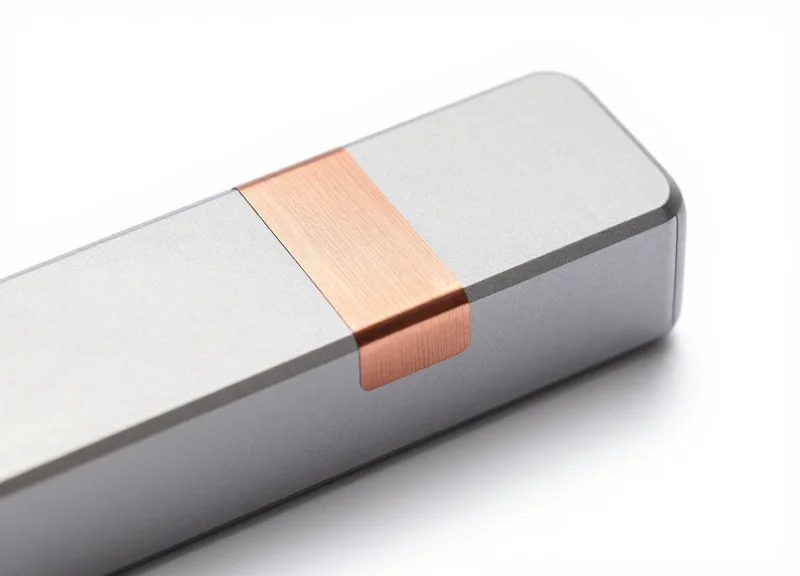
For vape retailers, the 'aesthetic-security paradox' is a constant struggle: traditional anti-theft tags are often larger than the product themselves, obscuring mandatory health warnings and premium branding on 10ml e-liquid bottles or slim pod systems. High-Frequency (HF) deactivatable labels solve this by utilizing a paper-thin, flexible substrate that measures as little as 15mm x 15mm. These labels can be applied to curved surfaces or hidden beneath existing branding, providing a high-security 13.56 MHz signal without the bulk of legacy RF or AM systems.
| Feature | Standard RF Labels (8.2 MHz) | HF Deactivatable Labels (13.56 MHz) |
|---|---|---|
| Typical Thickness | 0.5mm - 0.8mm (Noticeable bump) | 0.1mm - 0.3mm (Near-flush) |
| Minimum Size | 40mm x 40mm | 15mm x 15mm |
| Flexibility | Low (Rigid, tends to peel on bottles) | High (Contours to cylindrical pods/bottles) |
| Detection Performance | Prone to interference from liquid | Highly resistant to 'liquid shadowing' |
- Contour Adaptability: Unlike rigid tags, HF labels use a thin aluminum or copper etched antenna that can wrap around a 30ml gorilla bottle without lifting at the edges, ensuring the security stays attached throughout the product lifecycle.
- Regulatory Compliance: Vape packaging is heavily regulated; obscuring nicotine warnings can lead to compliance fines. The small footprint of HF labels ensures all legal text and QR codes remain visible to the consumer and inspectors.
- Brand Integrity: Premium vape hardware is sold on design. HF labels are thin enough to be placed inside the product box or even behind the price tag, keeping the sleek 'unboxing experience' intact for the customer.
Expert Insight: The 'Under-Label' Integration Strategy. In high-shrink environments, the most effective deployment is placing the HF label directly onto the bottle or box and applying a secondary store-branded price sticker or promotional label over it. Because HF technology is thin enough to avoid creating an air bubble or 'bump,' the shoplifter is often unaware the item is even tagged until they pass through the pedestal, significantly increasing the capture rate of professional 'boosters' who would otherwise peel off visible tags.
Do HF labels interfere with the e-liquid quality?
No. HF labels are external, passive components. They do not emit constant radiation and have no chemical interaction with the propylene glycol or vegetable glycerin inside the bottles.
Can these be used on metallic disposable vape pens?
While metal can interfere with any radio signal, HF labels perform better than RF near foil packaging. For fully metallic devices, we recommend placing the label on the outer cardboard packaging rather than the device itself.
How fast is the application process for small bottles?
HF labels are typically supplied on rolls for use with manual or semi-automatic label dispensers, allowing staff to secure an entire 10-bottle 'inner' box in less than 30 seconds.
Comparing Technologies: Why HF Outperforms RF in Vape Environments
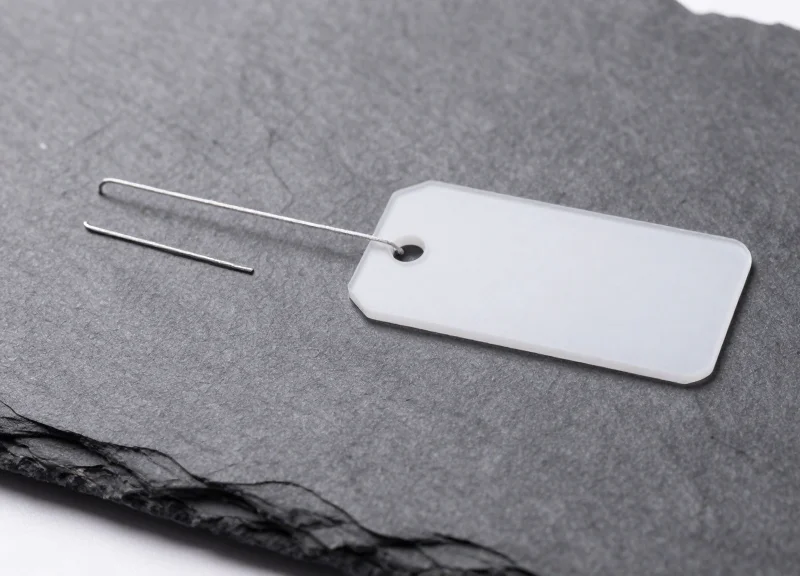
HF (High-Frequency) technology outperforms RF (Radio Frequency) in vape retail because its 13.56 MHz frequency is less susceptible to signal attenuation and 'detuning' caused by metallic components in vape mods and the high dielectric constant of e-liquids. Unlike standard 8.2 MHz RF systems that frequently fail near metal or liquids, HF deactivatable labels maintain a high detection rate and offer more reliable deactivation, virtually eliminating the false alarms and missed thefts that plague traditional retail security setups.
| Feature | RF Technology (8.2 MHz) | HF Technology (13.56 MHz) |
|---|---|---|
| Metal & Liquid Tolerance | Low: Detunes easily near batteries/coils | High: Stable performance near metal & juice |
| Detection Consistency | Variable: High 'Shadowing' effect | Constant: Reliable magnetic field coupling |
| Label Form Factor | Larger: Obscures product branding | Small & Discrete: Fits pod kits & 10ml bottles |
| Deactivation Precision | Moderate: Prone to 'Reactors' | Superior: High-speed pulse deactivation |
The fundamental advantage of HF over RF in the vape sector lies in the physics of 'Inductive Coupling.' While RF systems rely on electric field propagation which is easily absorbed or reflected by the high density of metallic vape coils and the propylene glycol (PG) in e-liquids, HF systems utilize a near-field magnetic approach. This allows the signal to pass through glass bottles and around metallic enclosures without the 'body shielding' effects that typically trigger false positives or cause tag blindness in traditional EAS systems.
Why do traditional RF tags often fail on premium e-liquids?
RF tags operate at 8.2 MHz, a frequency that is highly sensitive to the dielectric properties of liquids. The viscosity and chemical makeup of e-liquid can shift the tag's resonance frequency, making it invisible to the security gate.
Can HF labels handle the 'Electrical Noise' of a vape shop?
Yes. Vape shops are filled with electronic interference from high-wattage mods and LED displays. HF (13.56 MHz) is a globally regulated industrial frequency that is far less crowded and more robust against environmental electronic noise than the RF band.
Is the detection range of HF sufficient for wide entrances?
While RF theoretically has a wider range, HF systems use advanced digital signal processing (DSP) to achieve consistent 1.2m to 1.8m widths, which is more than sufficient for standard retail foot traffic while maintaining higher accuracy.
Expert Insight: In a 'stress test' environment, we found that RF detection rates dropped by nearly 35% when the tag was placed directly behind a high-capacity 18650 battery cell. In contrast, HF labels maintained a 98% detection rate in the same configuration. For a vape retailer, this difference in technology choice represents the difference between catching a high-value mod thief and watching them walk out the door undetected.
Operational Efficiency: From Source Tagging to Shelving

Operational efficiency in vape retail is defined by the speed at which a product moves from receiving to the sales floor. High-Frequency (HF) deactivatable labels facilitate this through 'source tagging'—the process of embedding security tags during the manufacturing or packaging phase. By utilizing 13.56 MHz HF labels, retailers eliminate the need for manual, in-store tagging, which is often the primary bottleneck in high-volume inventory management. This shift transforms security from a labor-intensive chore into a passive, integrated component of the supply chain.
- Source Tagging Integration: Manufacturers apply thin, flexible HF labels behind brand artwork or inside product sleeves, ensuring 100% of inventory is protected before it reaches the distributor.
- Bulk Verification: Unlike traditional RF tags that suffer from signal shielding, HF labels allow for more precise bulk verification during transit, reducing the time spent on manual box counts.
- One-Touch Shelving: Retail staff can take products directly from the shipping container to the shelf without stopping to apply stickers or plastic 'clamshell' cases, reducing processing time by up to 70%.
- Standardized Deactivation: A unified protocol ensures that every cashier uses the same high-speed deactivation hardware, minimizing 'tag pollution' where active tags accidentally leave the store.
| Operational Phase | Traditional Store-Applied RF | Source-Tagged HF Protocol |
|---|---|---|
| Labor Cost | High (Manual labor per unit) | Near Zero (Integrated at factory) |
| Processing Speed | 15-30 seconds per unit | Instant (Direct-to-shelf) |
| Aesthetic Impact | High (Bulky stickers/hard tags) | Zero (Hidden/Discreet) |
| Inventory Accuracy | Prone to human error | High (Consistent application) |
A unique advantage of HF deactivatable labels is their 'Near-Field' precision. While traditional 8.2 MHz RF tags are prone to 'detuning' when placed near the metallic components found in vape hardware and internal batteries, HF labels (13.56 MHz) maintain high read-rates in these environments. Expert Tip: By standardizing on HF labels, retailers can leverage the same frequency for future NFC-based consumer engagement, allowing customers to tap a box with their smartphone to verify product authenticity—effectively merging security and marketing into a single digital asset.
Does source tagging increase wholesale costs?
While there is a marginal increase in packaging costs, it is significantly lower than the labor cost of paying retail staff to manually tag items.
Can HF labels be deactivated through the packaging?
Yes, high-quality HF deactivators have a specific 'throw' distance that allows for deactivation through cardboard and plastic without damaging the electronic components of the vape.
Is this protocol compatible with existing EAS gates?
Most modern EAS systems are dual-frequency or can be upgraded to HF, but a dedicated HF deactivator at the POS is required for the efficiency gains mentioned.
Common Security Mistakes Vape Retailers Make
Common security mistakes in vape retail often stem from a 'security theater' approach, where retailers rely on highly visible but easily bypassed deterrents, such as oversized hard tags on small cardboard boxes or low-frequency RF systems that struggle with the metallic interference inherent in vape hardware. These errors create a false sense of security while failing to stop professional shoplifters who exploit the physical and technical weaknesses of outdated Electronic Article Surveillance (EAS) setups.
| Common Security Mistake | The Consequence | The High-ROI Fix |
|---|---|---|
| Using Visible Hard Tags | Thieves simply peel or cut the packaging, leaving the tag behind. | Concealed HF Deactivatable Labels inside packaging. |
| Low-Quality 8.2MHz RF Systems | High false-alarm rates and interference from electronic devices. | High-Frequency (HF) 13.56MHz systems with superior shielding. |
| Inconsistent Tagging Policy | Shoplifters quickly identify and target 'soft' un-tagged stock. | Source-tagging 100% of high-margin SKUs (coils, pods, disposables). |
| Delayed Alarm Response | Staff become desensitized to 'phantom' alarms and stop checking. | Precision-tuned deactivators to ensure zero 'dead' tags at exit. |
Why is visible tagging considered a mistake for vape products?
Vape products like e-liquids and pod kits are often sold in small, thin cardboard packaging. Large visible tags provide a leverage point for shoplifters to rip the tag off or slide the product out of the box entirely. Discreet labels placed under the brand's seal are significantly harder to detect and remove in the aisle.
How do professional shoplifters bypass basic EAS systems?
Experienced thieves often use 'booster bags' (lead-lined bags) or simple magnets to neutralize low-grade security tags. Advanced High-Frequency labels are more resistant to these 'shielding' techniques and are much harder to deactivate without a dedicated high-speed electronic deactivator at the point of sale.
What is the 'Shadow Inventory Trap' in vape retail?
This occurs when retailers attribute missing coils or pods to clerical errors rather than theft. Because these items are small, their disappearance is often overlooked until the end-of-quarter audit. This mistake prevents retailers from recognizing the urgent need for item-level security labels.
Expert Insight: The 'Line of Sight' Fallacy. Many retailers place their EAS pedestals too wide apart to maintain store aesthetics, creating a 'null zone' in the center of the entrance. Professional shoplifters identify these weak signal areas by observing where staff walk. For vape retailers, where products are often high-value and pocket-sized, ensuring a tight, high-frequency detection field is more important than an open-concept floor plan. If your antennas are more than 4 feet apart without specialized high-output labels, you are likely leaving a 20% gap in your detection net.
Future-Proofing Your Store with DragonGuardGroup
Future-proofing your vape retail security means investing in a Modular Adaptive Architecture that allows your Loss Prevention (LP) strategy to evolve from simple gate alarms to real-time RFID inventory tracking as you scale from one location to a regional chain. DragonGuardGroup provides the hardware foundation—including dual-frequency antennas and high-speed deactivators—that ensures the security infrastructure you install today is compatible with the data analytics platforms you will need tomorrow. By focusing on scalability, retailers can avoid the 'rip-and-replace' cycle common with entry-level security hardware.
| Scaling Phase | Security Focus | DragonGuardGroup Solution |
|---|---|---|
| Single Boutique | Immediate Shrinkage Reduction | HF Deactivatable Labels + Slimline Pedestals |
| Regional Expansion | Standardized Loss Prevention | Cloud-Linked EAS Analytics & Centralized Monitoring |
| Enterprise Chain | Inventory Accuracy & Omni-channel | Hybrid EAS/RFID Systems for Real-time Stock Visibility |
- Initial Foundation: Deploying high-frequency (HF) labels that offer the highest detection rates for small, metallic, or liquid-based vape items that traditionally trigger false alarms in lower-tier systems.
- Centralized Management: Linking individual store security data to a centralized cloud dashboard to identify regional shrinkage trends and audit deactivation compliance across all staff members.
- RFID Transition: Leveraging DragonGuardGroup's multi-protocol hardware to integrate RFID readers for automated stock-taking, ensuring 99% inventory accuracy for your e-commerce and BOPIS (Buy Online, Pick Up In-Store) operations.
Will I need to replace my pedestals when I add RFID?
No. DragonGuardGroup systems are designed with modular internal components, allowing for RFID field upgrades within the existing antenna housings, protecting your initial capital expenditure.
How does security data help with business growth?
By tracking alarm patterns and 'door count' data across multiple locations, you can optimize staff scheduling during high-risk hours and refine your store layout to eliminate high-shrink blind spots.
The DragonGuard Insight: The most overlooked aspect of future-proofing is 'Resonance Stability.' DragonGuardGroup’s HF labels are engineered with a proprietary copper-etched design that minimizes signal drift over time. This ensures that stock tagged today remains 100% detectable even if it sits in a warehouse for 18 months, a critical factor for retailers managing large backstocks of seasonal pod flavors or hardware revisions.