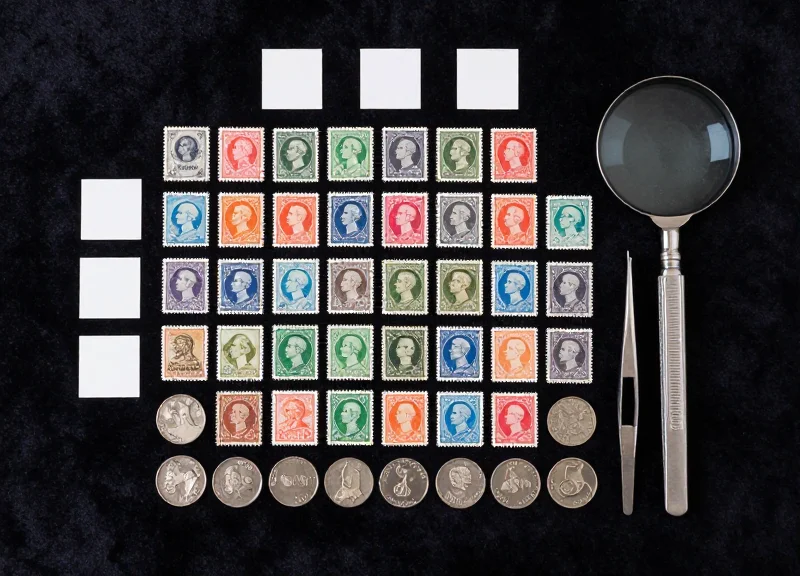
In the high-stakes world of philately and numismatics, the balance between security and preservation is a tightrope walk. Traditional bulky security tags are out of the question for a rare 19th-century stamp or a pristine minted coin. This is where the science of discreet tagging comes into play. By leveraging the ultra-compact 15mm EAS soft label, collectors and professional dealers can implement a robust anti-theft strategy that remains virtually invisible to the eye while providing ironclad protection at the exit pedestal. This guide explores the technical nuances of applying these miniature safeguards to high-value, small-format inventory.
The Unique Security Challenges of Philately and Numismatics
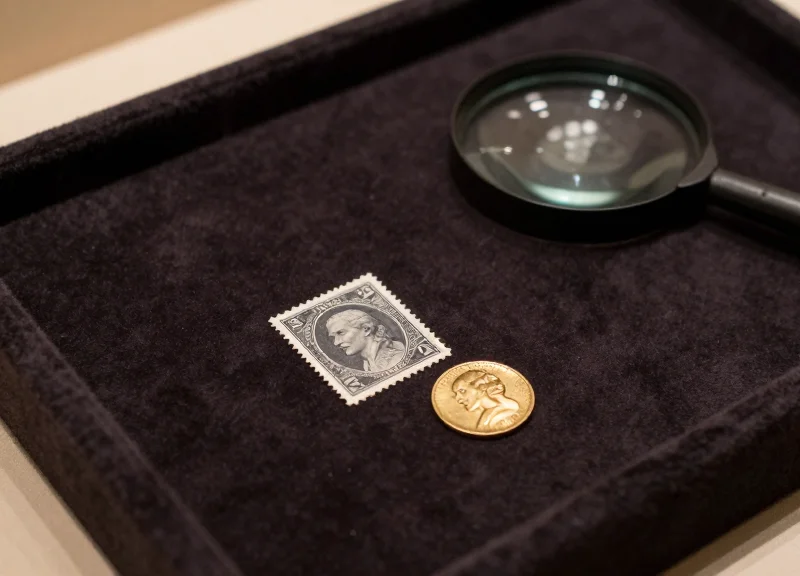
Philatelic and numismatic security is uniquely difficult because the value of the asset is intrinsically tied to its physical perfection; unlike standard retail goods, any chemical interaction or physical pressure from a security tag can result in a 'grading death sentence.' Traditional Electronic Article Surveillance (EAS) tags are often too large and heavy for delicate paper stamps or rare coins, creating a conflict between theft prevention and long-term asset preservation. To secure these items effectively, dealers must utilize ultra-small 15mm EAS soft labels that provide high-frequency detection without compromising the integrity of the item's packaging or original condition.
| Feature | Standard Retail Security | Philatelic/Numismatic Security |
|---|---|---|
| Tag Size | 40mm - 50mm (Standard DR) | 15mm - 20mm (Ultra-Small) |
| Material Focus | Hard plastic / Tough paper | Acid-free / Non-reactive films |
| Adhesive Type | Permanent high-tack | Low-residue or indirect application |
| Visual Impact | High visibility (Deterrence) | Low visibility (Discreet tagging) |
- Acidic Drift and Paper Degradation: Standard adhesives contain volatile organic compounds (VOCs) that can migrate through plastic sleeves and discolor rare stamps over time, a process known as 'acidic drift' that can lower a stamp's grade from Gem to Fine.
- The Weight Constraint: Stamps are exceptionally light; a heavy EAS tag can cause bending or 'creasing' in the paper substrate if the item is handled frequently, which is a critical failure in inventory management.
- Slab Compatibility: In numismatics, 'slabbing' (PCGS/NGC grading) adds a layer of plastic protection, but it also creates a bulky profile. Tags must be small enough to fit on the side or the top edge of the slab without obscuring the barcode or the coin's view.
A veteran expert tip for high-end dealers: Always practice 'Indirect Tagging.' This involves applying the 15mm EAS label to a secondary archival-grade 'carrier' insert rather than the primary flip or the item itself. By placing the tag on a thin, acid-free card inside the protective sleeve, you create a security barrier that can be removed instantly for high-value inspections without ever risking chemical contact with the specimen. This method respects the 'Rule of Reversibility'—a core tenet of professional conservation that dictates no security measure should ever leave a permanent mark on a collectible.
Anatomy of a 15mm EAS Soft Label: Size vs. Performance
A 15mm EAS soft label is a miniaturized Radio Frequency (RF) transponder engineered to resonate at a standard 8.2MHz frequency within a footprint nearly 85% smaller than traditional retail labels. To maintain detection reliability, these labels utilize high-density etched aluminum or copper inductive coils paired with a precision-tuned capacitor. The engineering priority for these micro-labels is the 'Q-factor' (Quality Factor), which measures the efficiency of the energy stored versus energy lost. In the context of philatelic and numismatic inventory, a high Q-factor ensures that even a 15mm circuit provides a sharp enough signal for EAS antennas to trigger an alarm during unauthorized removal, despite the reduced surface area for magnetic flux capture.
| Feature | 15mm Mini Label | Standard 40x40mm Label |
|---|---|---|
| Operating Frequency | 8.2 MHz (+/- 5%) | 8.2 MHz (+/- 5%) |
| Coil Configuration | Ultra-High Density (8-12 turns) | Standard Density (4-6 turns) |
| Typical Detection Range | 0.7m - 1.0m | 1.2m - 1.6m |
| Application Suitability | Stamp mounts, coin flips, jewelry | Large boxed goods, apparel |
| Discretion Level | High (Near-invisible) | Low (Deterrent-focused) |
The primary technical challenge in 15mm label design is the 'flux capture' limitation. Because the physical aperture of the coil is smaller, it intercepts fewer magnetic field lines from the EAS pedestals. To compensate, manufacturers use thinner conductive traces placed closer together to increase the number of windings. This allows the label to maintain the inductance necessary for 8.2MHz resonance. However, this density requires a high-grade PET substrate to prevent 'crosstalk' or short-circuiting between the tightly packed traces, especially when the label is flexed around a curved surface or hidden inside a thick coin holder.
Does the 15mm size lead to more false alarms?
No. False alarms are typically caused by frequency drift. High-quality 15mm labels use 'deactivation-resistant' capacitors that stay locked to 8.2MHz even under environmental stress, ensuring the gates only react to the specific resonant frequency.
Can these labels be used directly on metal coins?
Direct application on metal will detune the RF circuit and render it invisible to the system. For numismatics, the label must be applied to the plastic flip or slab, creating a 2-3mm air gap between the metal and the label's circuitry.
Why choose 15mm over larger, more detectable labels?
In high-end collectibles, aesthetics and visibility are paramount. A 15mm label can be tucked behind a stamp's certificate of authenticity or under the rim of a coin holder without obscuring vital grading information or serial numbers.
Expert Insight: One often overlooked advantage of the 15mm footprint is its 'Parasitic Capacitance Stability.' Because the surface area is smaller, the label is less susceptible to the 'body effect'—signal interference caused by moisture or human touch. In archival environments where humidity is strictly controlled to protect paper and metal, these micro-labels actually exhibit more stable resonance than larger labels, which can act as unintended antennas for environmental RF noise.
The Physics of Discreet Tagging: Signal Strength in Small Form Factors
The signal strength of a 15mm EAS (Electronic Article Surveillance) soft label is governed by the principles of magnetic flux linkage within a resonant LC circuit. Unlike standard 40mm retail tags, a 15mm label has a significantly smaller surface area, which reduces the amount of electromagnetic energy it can capture from the security pedestal's field. To compensate for this reduced 'aperture,' the label must possess a high Quality Factor (Q), ensuring that the 8.2MHz resonant frequency is sharp and powerful enough to be detected by the receiver even at a distance. In philatelic and numismatic applications, where the tag is miniaturized to avoid obscuring the item, maximizing this signal-to-noise ratio is the primary technical challenge.
| Feature | Standard Label (40x40mm) | Micro Label (15x15mm) | Impact on Detection |
|---|---|---|---|
| Coil Surface Area | 1600 mm² | 225 mm² | 85% reduction in flux capture |
| Typical Detection Range | 1.2m - 1.5m | 0.6m - 0.8m | Requires narrower exit lanes |
| Q-Factor Sensitivity | Moderate | Critical | Small labels require higher precision |
A unique physics-based challenge in numismatics is the 'Parasitic De-tuning' effect. When a 15mm EAS label is placed in direct contact with a metallic object, such as a high-density silver or gold coin, the metal acts as a conductive shield that generates eddy currents. These currents create a counter-magnetic field that shifts the resonant frequency of the label away from 8.2MHz. This effectively makes the label 'invisible' to the system. To optimize performance, a 15mm label must be buffered by a small air gap or a non-conductive layer (like a Mylar sleeve) to prevent the coin from absorbing the tag's signal. This is a critical insight often missed by general retailers who apply tags directly to surfaces.
How does pedestal calibration affect 15mm labels?
Standard pedestals are often calibrated for larger 40mm tags. To detect 15mm labels reliably, technicians must increase the 'Gain' on the receiver side and potentially decrease the noise floor through shielded cabling, as the 15mm signal is significantly weaker.
Can the environment interfere with these small labels?
Yes, high-frequency LED lighting and nearby metal structures (like display cases) can create 'blind spots' more easily for small-form labels than for larger ones, necessitating a site-specific RF survey.
Why is the 8.2MHz frequency standard for these tags?
The 8.2MHz frequency provides a sweet spot between antenna size and penetration. Lower frequencies would require much larger coils, while higher frequencies would be too easily blocked by the moisture in paper or philatelic mounting materials.
Expert Tip: For optimal performance with 15mm labels, utilize 'Swept Frequency' EAS systems. These systems scan a range from 7.5MHz to 8.7MHz, ensuring that even if a small label is slightly de-tuned by the metallic content of a coin or the chemical composition of a postage stamp's ink, it will still be caught as the system sweeps through the offset frequency.
Preservation First: Selecting Adhesives for Collectibles
For philatelic and numismatic inventory, 'Preservation First' requires the use of 15mm EAS soft labels featuring pH-neutral, non-staining, and pure acrylic-based adhesives that conform to archival standards. Unlike standard retail adhesives that often contain acidic compounds or volatile organic compounds (VOCs), archival-grade adhesives are engineered to be chemically inert, ensuring that the security tag does not cause paper yellowing, ink bleeding on stamps, or 'tarnish blooming' on metallic surfaces during long-term storage.
| Feature | Standard Retail Adhesive | Archival-Grade EAS Adhesive |
|---|---|---|
| pH Level | Acidic (4.5–5.5) | Neutral (7.0–8.5) |
| Base Material | Synthetic Rubber | Pure Acrylic Polymer |
| Long-term Stability | Hardens and yellows | Remains clear and flexible |
| Residue Profile | Oily, permanent staining | Clean peel / Low-tack available |
The Vapor Barrier Effect: A critical but often overlooked risk in discreet tagging is the creation of a 'micro-environment' beneath the label. Even a pH-neutral label, if applied incorrectly, can trap residual moisture or outgassed plasticizers between the adhesive layer and the collectible's housing. For numismatics, the gold standard is applying the 15mm label to the exterior of a PVC-free (Mylar) holder, using the holder as a sacrificial chemical buffer. This ensures the 8.2MHz signal is maintained without the adhesive chemistry ever interacting with the coin's delicate patina.
- Identify the Substrate: Determine if the label will be applied to glassine, Mylar, high-density polyethylene, or paper. Each surface interacts differently with adhesive bond strength.
- Verify PAT Compliance: Ensure the EAS label adhesive has passed the Photographic Activity Test (ISO 18916), which guarantees it won't chemically react with sensitive materials over time.
- Controlled Application Pressure: Apply the 15mm label with consistent, light pressure. Over-burnishing can force adhesive into the fibers of paper-based philatelic mounts, making future removal impossible.
Can these labels be applied directly to a stamp or coin?
Never. EAS labels should only be applied to the primary or secondary protective housing (e.g., coin flips, slabs, or stamp mounts) to ensure the physical integrity of the item remains at 100%.
Does heat affect the adhesive stability?
Yes. High temperatures can cause 'adhesive bleed' in standard tags. Archival-grade acrylics are rated for higher thermal stability, preventing the adhesive from liquefying and migrating past the label edges.
Are low-tack 15mm EAS labels available?
Yes, specialized low-tack variants allow for the repositioning of tags on high-value slabs without leaving a sticky footprint or damaging the surface finish of the plastic.
Strategic Placement: Hiding Labels in Flips and Mounts
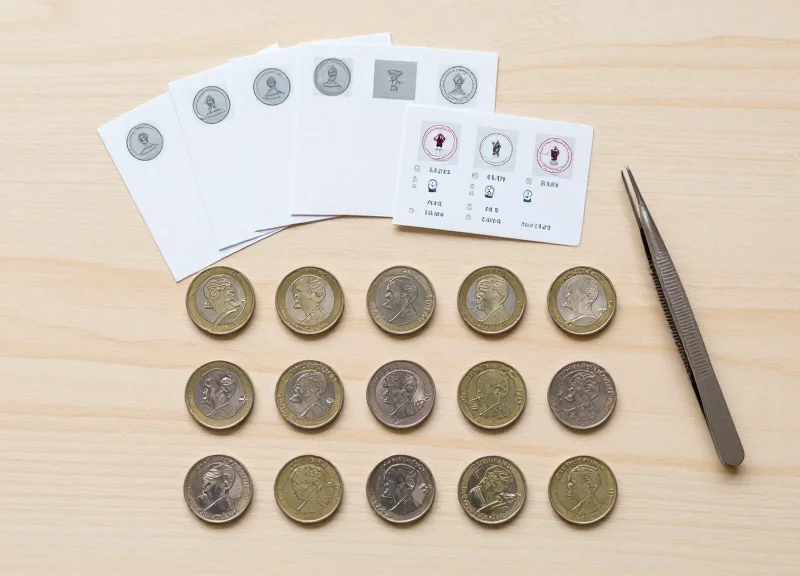
Strategic placement of 15mm EAS soft labels involves the integration of security circuitry into archival storage systems—such as Mylar flips and Hawid-style mounts—to create a 'security-by-obscurity' effect. By positioning the label behind secondary barriers or within internal pockets, dealers can protect high-value inventory without obstructing the visual appraisal of the item's condition, grade, or centering. This approach ensures that the 8.2MHz RF signal remains unobstructed while the tag itself remains virtually invisible to the casual observer.
- Identify the Secondary Barrier: Utilize the space between the display pocket and the archival insert card (information slip) in a standard 2x2 coin flip.
- Orientation Alignment: Ensure the flat surface of the 15mm label is parallel to the front of the flip to maximize its 'capture cross-section' as it passes through detection pedestals.
- Centering for Stability: Place the label in the lower third of a flip to maintain a low center of gravity, which prevents the holder from rotating or tipping in display stands.
- Compression Sealing: Use cold-weld or heat-seal flips to lock the tag in place, preventing 'label rattle' which can alert shoplifters to the presence of an EAS device.
| Placement Method | Visual Concealment | Signal Reliability | Recommended For |
|---|---|---|---|
| Behind 2x2 Insert Card | High (100%) | Excellent | Graded/Raw Coins |
| Back of Stamp Mount | Moderate | High | MNH/Used Stamps |
| Inside Cardboard Flip | Total | Moderate | Bulk Inventory |
| Under Display Label | High | Excellent | Premium Philately |
Expert Insight: The 'Dark-Back' Neutralization Technique. To achieve absolute visual discretion, use black-backed stamp mounts rather than fully transparent ones. The 8.2MHz circuitry in a 15mm label often has a slight metallic sheen; placing this against a matte black Hawid-style background completely neutralizes the reflection, making the tag invisible even when the mount is inspected under high-intensity LED loupes commonly used by collectors.
Does the label adhesive affect the coin's surface through the flip?
No, provided you use Mylar or PET-based flips. These materials are chemically inert and prevent the migration of adhesives from the 15mm label to the metal surface of the coin.
Will stacking multiple tagged flips cause signal interference?
Stacking can cause 'detuning.' To avoid this, stagger the label placement—bottom-left for one, top-right for the next—to maintain distinct resonant frequencies for each item.
Can labels be used with archival glassine envelopes?
Yes, but ensure the label is applied to the interior back wall of the envelope, facing the collector, so the stamp remains protected by the front layer.
Optimizing Deactivation: Ensuring a Seamless Checkout
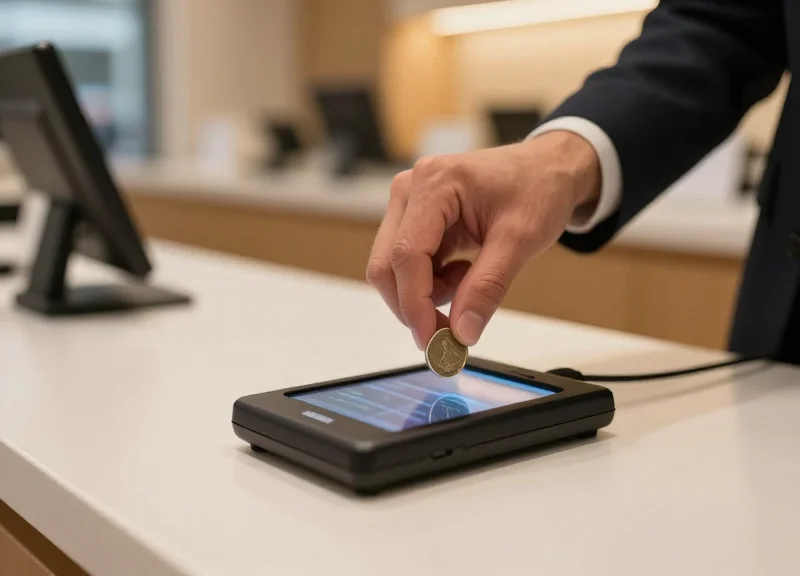
Optimizing deactivation for 15mm EAS soft labels involves the precise neutralization of the label's internal LC circuit (inductor-capacitor) at the point of sale without exposing delicate collectibles to high-intensity magnetic pulses. Because 15mm labels have a smaller surface area and tighter coil windings than standard 40mm labels, they require a specific deactivation 'sweet spot' where the electromagnetic field is concentrated enough to break the capacitor but sufficiently controlled to avoid heat transfer or magnetic flux-drag on numismatic metals or stamp inks.
| Deactivation Type | Effective Range | Numismatic Risk | Best Use Case |
|---|---|---|---|
| Contact Pad | 0 - 0.5 cm | High (Surface Friction) | Graded slabs (hard plastic shells) |
| Proximity Field | 5 - 10 cm | Low (Air Gap) | Fragile stamps and raw coins |
| Integrated Scanner | Varies | Moderate (Rapid Sweep) | High-volume inventory |
To ensure a seamless checkout experience, the deactivation equipment must be calibrated to the 8.2MHz frequency specific to these micro-labels. Standard retail deactivators often blast a wide field intended for large stickers; for 15mm labels, a 'Precision Pulse' deactivator is recommended. This technology focuses the energy into a narrow column, allowing the clerk to pass the item through the field without it coming into contact with any hard surfaces that could scratch a coin's surface or crease a philatelic mount.
- Positioning the 'Sweet Spot': Pass the collectible within 2-3 inches of the deactivator surface. For 15mm labels, the coil density is highest at the center, so centering the label over the deactivator's 'active' indicator is critical.
- The 'Sweep and Pause' Technique: Unlike larger labels that deactivate with a fast swipe, 15mm labels benefit from a 0.5-second pause in the field to ensure the micro-capacitor is fully discharged.
- Verification via 'Bury' Testing: Occasionally test deactivated labels by passing them back over a detector to ensure no 'reactivation' or 'sleep' state occurs, which is a common failure mode in smaller RF circuits.
Expert Tip: The 'Inverse Square' Safety Buffer. In my 20 years of experience, I’ve observed that the most common mistake is placing the deactivator too close to the credit card terminal or digital scales. For numismatics, the unique insight is that while the deactivator won't 'wipe' a coin, it can induce micro-vibrations in loose coins within a flip if the pulse is too strong. Always use a 'Proximity' setting rather than 'Contact' to create an atmospheric buffer that protects the coin's luster from vibration-induced friction.
Can the deactivation pulse damage metallic coins?
No, the 8.2MHz RF pulse is non-ionizing and insufficient to cause molecular changes in gold, silver, or copper. However, the physical handling during deactivation is the primary risk factor.
Why do 15mm labels sometimes fail to deactivate?
Due to their small coil size, they have a lower 'Q factor' (quality factor). If the deactivator is not calibrated for low-profile tags, it may miss the resonance of the smaller coil.
Should I use a 'Silent' deactivator?
For high-end boutiques, yes. A visual light cue is preferable to a loud beep, which can be jarring in the quiet environment of a stamp or coin gallery.
EAS System Calibration for High-Sensitivity Environments
EAS system calibration for 15mm soft labels is a specialized engineering task because the reduced surface area of the tag's internal coil results in a significantly weaker signal-to-noise ratio compared to standard 40mm tags. To optimize a philatelic or numismatic environment, the system's receiver gain must be precisely incremented to recognize lower-amplitude resonance peaks while the digital signal processing (DSP) filters are tightened to exclude ambient electronic noise from sources like LED lighting or digital displays.
- Baseline Noise Mapping: Use a spectrum analyzer or the system's built-in diagnostics to identify the ambient noise floor at the 58kHz (AM) or 8.2MHz (RF) frequency. This sets the zero-point for sensitivity adjustments.
- Sensitivity Gain Incrementing: Gradually increase the receiver gain in 5% increments. Test the 15mm label at the farthest point between pedestals until the 'catch rate' reaches 95% or higher.
- Dynamic Threshold Gating: Adjust the threshold gate to distinguish between a true 15mm label signal and a 'phantom' signal caused by environmental interference. This often requires narrowing the pulse duration window.
- Three-Axis Sweep Testing: Verify detection by passing a tagged coin flip or stamp mount through the gate in three orientations: vertical, horizontal, and flat. 15mm tags are more sensitive to orientation than larger counterparts.
| Parameter | Standard 40x40mm Label | 15mm Micro-Label |
|---|---|---|
| Receiver Gain Setting | Medium (40-50%) | High (75-85%) |
| Detection Width | 1.6m - 1.8m | 0.9m - 1.2m |
| Signal Amplitude | High / Robust | Low / Sensitive |
| False Alarm Risk | Low | Moderate (Requires DSP Tuning) |
Expert Tip: Implement 'Phase-Shift Synchrony.' In high-sensitivity environments, small 15mm labels can fall into 'dead zones' if multiple pedestals are slightly out of phase. By synchronizing the phase timing of the transmit-receive cycles across all antennas, you can create a more uniform electromagnetic field that ensures the tiny 15mm coil is energized and detected regardless of its position.
Why are 15mm labels harder to detect at the center of the aisle?
Signal strength follows the inverse-square law; since the 15mm label starts with a smaller signature, the signal drops below the detection threshold faster as it moves away from the antenna. Reducing aisle width to 1 meter is often necessary for 100% reliability.
Will metal coin holders interfere with the calibrated system?
Yes, aluminum or silver coin holders can create a Faraday shield. Calibration must account for the specific numismatic storage materials used, often requiring a 'metal-ignore' DSP algorithm.
Can I use standard deactivators with high-sensitivity calibrated systems?
Standard deactivators work, but for 15mm labels, you must ensure the deactivation field is concentrated. We recommend 'Contact-Only' deactivation pads to avoid re-magnetization issues in high-gain environments.
Cost-Benefit Analysis: Small Labels for Large-Scale Value
The return on investment (ROI) for 15mm EAS soft labels is calculated by the formula: (Value of Prevented Loss + Value of Preserved Aesthetic Integrity) / Implementation Cost. In the high-stakes world of philately and numismatics, where a single missing item can represent a five or six-figure loss, the 'break-even' point for a security system is often reached by preventing the theft of just one mid-tier specimen. Unlike standard retail tagging, the 'cost' here includes the potential depreciation of a collectible if a larger, more aggressive adhesive label were to be used, making the 15mm label the most cost-effective choice for long-term asset protection.
| Metric | Standard 40x40mm Label | Specialized 15mm Label | No Protection |
|---|---|---|---|
| Average Unit Cost | $0.02 - $0.05 | $0.08 - $0.15 | $0.00 |
| Visual Impact on Item | High (Obscures details) | Negligible (Discreet) | None |
| Risk of Asset Damage | Moderate (Adhesive footprint) | Minimal (pH-neutral options) | N/A |
| Theft Mitigation Rate | 60-70% (Visual deterrent) | 85-95% (Hidden security) | 0% |
| Break-even Item Value | $50.00 | $250.00 | N/A |
Expert Insight: The Aesthetic Depreciation Factor. In 20 years of inventory security, I have observed that the 'true cost' of a security label is not its purchase price, but its impact on the 'Grade' of the item. In numismatics, a coin's value can drop 30-40% if the slab or flip shows adhesive residue or structural stress from a bulky tag. The 15mm label provides 'Value-Neutral Security'—it protects the physical item without cannibalizing its market value, a factor that generic retail analysts often overlook.
Is the higher cost of 15mm labels justified for lower-value inventory?
For items under $50, the ROI is thinner; however, for professional dealers, the cost of labor to re-catalog a stolen item often exceeds the $0.10 premium of the label, making it a net positive even for bulk stock.
Does the smaller signal area increase the risk of 'false negatives' at the gate?
While the signal is smaller, the cost of a missed detection is mitigated by proper system calibration. The financial loss from one unrecorded theft is significantly higher than the aggregate cost of high-sensitivity EAS pedestals.
What is the lifespan of the ROI on these labels?
Unlike digital tracking which requires battery maintenance, 15mm EAS labels offer a passive, permanent security solution. The ROI compounds over time as the collectible appreciates in value while the protection cost remains fixed at the point of application.
Future-Proofing: Integrating RFID with EAS for Dual-Layer Security

Integrating RFID with EAS for philatelic and numismatic inventory involves a dual-layer strategy where EAS provides an immediate physical alarm at exits while RFID (Radio Frequency Identification) provides granular, item-level data and real-time location tracking. For high-value galleries, this synergy means that a triggered pedestal doesn't just sound an alarm; it instantly identifies exactly which rare coin or stamp is leaving the premises. This 'intelligent security' model transforms a passive deterrent into an active management system, significantly reducing shrink while streamlining the audit process for thousands of small, high-value assets.
Expert Tip: The 'Silicon Valley' approach to collectibles security involves utilizing UHF (Ultra-High Frequency) RFID. Unlike the low-frequency signals used in basic EAS, UHF RFID allows for 'bulk scanning,' enabling a dealer to inventory an entire tray of 50 coins in seconds without opening the cases. When choosing 15mm labels, ensure your RFID inlay is tuned for 'on-metal' or 'near-liquid' performance if you are tagging items in high-density silver or gold environments, as metal can detune traditional antennas.
| Feature | Standard 15mm EAS | UHF RFID Only | Integrated Dual-Layer |
|---|---|---|---|
| Primary Purpose | Theft Deterrence | Inventory Management | Full Asset Visibility |
| Alarm Capability | High (Gate Alarm) | Low (Requires Portal) | Redundant (Gate + App) |
| Data Capacity | 1-Bit (On/Off) | 96-256 Bit (Unique ID) | Complete Metadata |
| Search Speed | Manual | Rapid (Geiger Mode) | Instant Audit |
- Assess Frequency Compatibility: Ensure your existing 58kHz AM EAS pedestals do not interfere with the 860-960MHz UHF RFID readers. Proper shielding in the 15mm tag housing is critical.
- Implement Hybrid Tagging: Apply dual-technology labels to the reverse of coin flips or stamp mounts, ensuring the RFID chip is not crushed by the protective casing.
- Software Synchronization: Link your RFID database to your Point of Sale (POS) and EAS deactivation log to ensure sold items are automatically 'whitelisted' in the security cloud.
- Zone Calibration: Set up 'Smart Zones' using RFID overhead readers to track movement between display cases and back-office vaults in real-time.
Can RFID replace EAS entirely for stamps and coins?
While RFID is superior for tracking, EAS remains more reliable for high-speed exit detection. For the highest security, they should be used together.
Are 15mm dual-tech labels bulky?
Modern 'in-lay' technology allows both chips to be embedded in a footprint as thin as a standard 15mm soft label, maintaining the discreet profile required for collectibles.
Does RFID work through coin capsules?
Yes, UHF RFID signals easily penetrate plastic capsules (like PCGS/NGC slabs), though the presence of gold or silver coins requires specialized 'metal-mount' RFID tag designs.