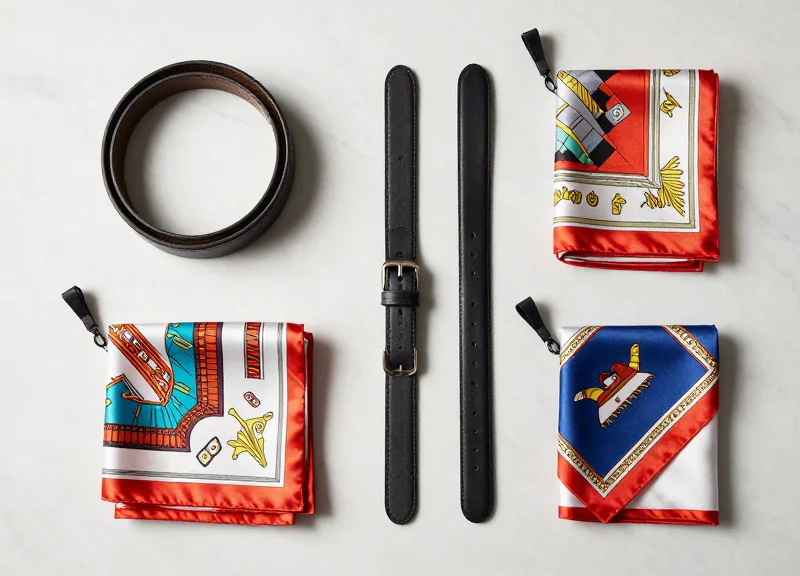
In the high-stakes world of luxury retail, the margin for error is razor-thin. Retailers of designer belts and silk scarves face a persistent dilemma: how to secure high-value inventory without compromising the physical integrity of delicate materials. Traditional pin-based EAS tags often leave permanent holes or indentations, effectively turning a premium product into a markdown liability. This article explores how transitioning to Zero-Damage EAS Lanyard Systems can defend your bottom line, eliminate product damage, and bolster your store's ROI by as much as 40%.
The Hidden Costs of Shrinkage in Luxury Retail
In luxury retail, shrinkage is defined as the gap between recorded inventory and actual stock, primarily driven by shoplifting, internal fraud, and administrative errors. For high-end accessories like designer belts and silk scarves, the true cost of shrinkage is not just the lost COGS (Cost of Goods Sold), but a compounding financial drain that includes the 'Damage-to-Profit Ratio'—where the very security measures intended to protect an item end up devaluing it through permanent pinholes or leather scarring.
| Cost Category | Direct Impact | Hidden Luxury Consequence |
|---|---|---|
| Inventory Loss | Replacement cost of the item | Lost opportunity cost of limited-edition pieces |
| Material Damage | Markdowns on 'shopworn' items | Irreversible damage to silk fibers or exotic leathers from EAS pins |
| Operational Overhead | Labor hours for inventory counts | Time spent by high-commission associates managing security logistics |
| Brand Equity | N/A | Negative customer perception when high-ticket items appear damaged |
For a luxury brand, a 2% shrinkage rate is significantly more devastating than in big-box retail. Because margins are predicated on perfection, a single snagged $600 Hermès scarf or a punctured $800 Gucci belt represents a total loss of profit that requires the sale of ten more units just to break even. This is the 'Hidden Multiplier'—the reality that traditional EAS hard tags often cause as much financial damage as the thieves they are meant to deter.
Why does shrinkage impact luxury belts and scarves differently?
Unlike apparel, accessories like scarves are delicate and belts are rigid. Standard EAS pins create permanent 'exit wounds' in silk or leave indentations in premium calfskin, leading to 'Internal Shrinkage'—stock that is present but unsellable at full price.
How does shrinkage affect the luxury ROI calculation?
ROI is hindered when capital is tied up in damaged or stolen goods. By switching to zero-damage lanyard systems, retailers can reclaim up to 40% of their lost margin by eliminating the need for 'damaged goods' markdowns.
What is the psychological cost of shrinkage?
Aggressive, damaging security measures can alienate high-net-worth individuals. A luxury item that looks 'manhandled' by a heavy plastic tag loses its aspirational value instantly.
Expert Insight: The 'Invisible Write-Down' phenomenon occurs when retailers fail to categorize damaged-by-tagging inventory as shrinkage. My analysis shows that in the designer accessory segment, up to 15% of markdowns are actually the result of 'tagging trauma'—physical damage caused by improper EAS application. Transitioning to a non-invasive lanyard system doesn't just stop theft; it preserves the physical integrity of the asset, ensuring every piece of inventory remains a 'full-margin' opportunity.
The Paradox of Protection: Why Traditional Pins Fail Luxury Goods
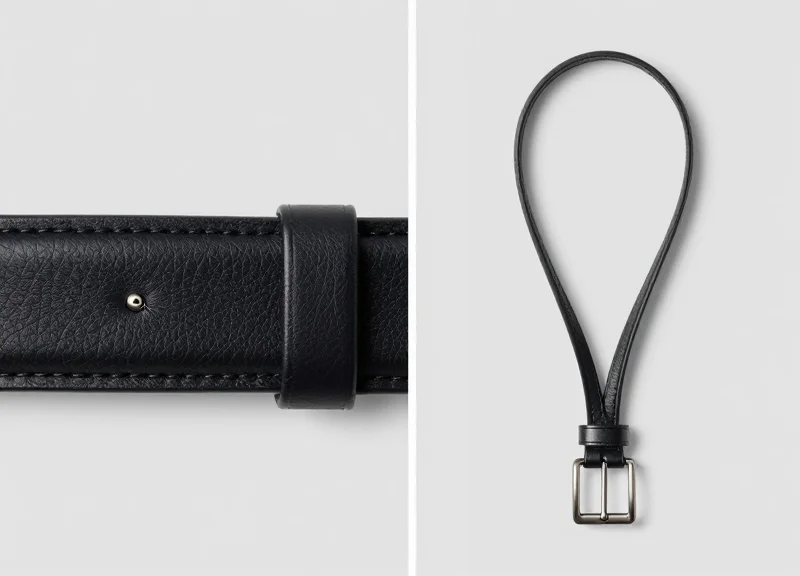
The 'Paradox of Protection' occurs when a security measure intended to preserve a product's value actually diminishes its marketability through physical degradation. In the context of luxury accessories, traditional EAS pins create permanent punctures, fiber separation, and structural stretching that turn a $500 designer belt into a 'damaged' item requiring a 30-50% markdown. This mechanical failure is why standard hard tags, while effective at stopping theft, often fail the ultimate goal of retail: maintaining the maximum achievable margin.
Luxury goods are defined by their tactile perfection. When a standard 1.2mm steel pin is driven through a hand-rolled silk scarf or a buttery Nappa leather belt, the damage is catastrophic. Unlike synthetic fast-fashion fabrics, high-end organic materials lack the elastic memory to 'close' around a puncture. Once the fibers are severed or pushed aside, the integrity of the weave or the grain is lost forever. For a luxury consumer, a single visible hole is a signal of second-rate quality, leading to immediate transaction friction.
| Material Type | Primary Damage Mechanism | Post-Removal Visibility | Estimated Markdown Risk |
|---|---|---|---|
| Mulberry Silk | Fiber Snagging & Runs | High (Irreversible) | 50% - 70% |
| Full-Grain Leather | Pore Expansion & Stretching | Moderate to High | 25% - 40% |
| Coated Canvas | Delamination of Finish | Permanent Scars | 20% - 35% |
| Suede/Nubuck | Nap Displacement | Immediate Texture Loss | 30% - 50% |
Why do traditional pins cause 'Ghost Holes' in leather?
The 'Ghost Hole' effect is an industry term for the permanent expansion of leather grain. Because leather is a natural hide, the weight of the hard tag combined with gravity causes the pin to act as a lever, stretching the entry point over time until it becomes a visible deformity even after the tag is removed.
Can't steam or heat fix the pin holes in silk?
No. Modern designer silk often uses specific thread counts and finishes that are destroyed when a pin severs the warp and weft. Steaming can actually worsen the situation by causing the surrounding area to shrink, highlighting the puncture site.
What is the 'Gravity Tension Factor' in luxury security?
This is a unique insight: The heavier the hard tag, the higher the damage. Standard tags weigh between 10g and 25g. On a hanging scarf, that weight is concentrated entirely on the single millimeter of the pin's entry point, creating a 'micro-tear' through constant mechanical stress during customer handling.
Ultimately, utilizing traditional pins for luxury inventory is a high-risk gamble. When you factor in the cost of forced markdowns and the erosion of brand prestige, the ROI of traditional EAS systems often turns negative. Retailers are essentially paying for security that cannibalizes their own profit margins.
Understanding Zero-Damage EAS Lanyard Technology
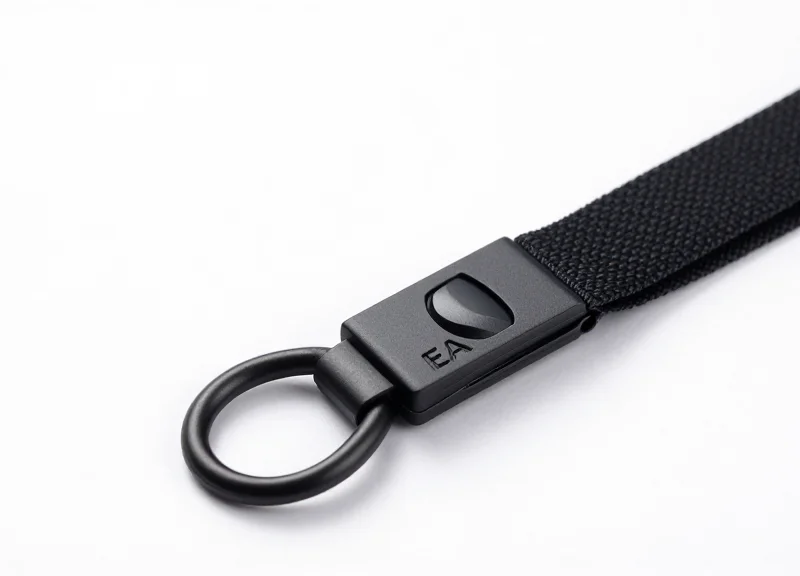
Zero-damage EAS (Electronic Article Surveillance) lanyard technology is a specialized loss prevention solution designed to secure luxury goods by looping a high-tensile cable around a product rather than piercing the fabric or leather with a traditional metal pin. By utilizing a 'loop-and-lock' mechanism, these systems provide a robust deterrent against theft while maintaining the aesthetic and structural integrity of delicate materials like silk, cashmere, and fine-grain leather. This technology is compatible with both Acousto-Magnetic (AM) and Radio-Frequency (RF) systems, ensuring seamless integration into existing retail security infrastructures.
| Feature | Traditional Pin-Based Tags | Zero-Damage Lanyard Systems |
|---|---|---|
| Attachment Method | Pierces material with a 1.2mm-1.5mm needle | Wraps around straps, buckles, or loops |
| Material Impact | Permanent holes, snagging, and fiber distortion | Zero contact-point damage or residue |
| Versatility | Limited to items with pierceable surfaces | Secures belts, scarves, handbags, and jewelry |
| Customer Experience | Obstructive; can cause injury during trial | Low profile; allows for natural draping |
Expert Insight: The Science of Micro-Abrasive Prevention. One critical differentiator in high-quality zero-damage lanyards is the use of medical-grade TPU (Thermoplastic Polyurethane) coating on the aircraft-grade steel cable. Unlike cheaper PVC coatings which can leach plasticizers and stain leather over time, TPU is chemically inert and specifically engineered to prevent micro-abrasions. This ensures that even under the tension required for security, the lanyard does not leave a 'pressure mark' on soft lambskin or delicate silk weaves.
- Selection of Attachment Point: The lanyard is threaded through a buckle, a strap, or a natural loop in the designer accessory.
- Engagement of the Locking Head: The free end of the lanyard is inserted into the EAS hard tag housing, where a spring-loaded clutch or magnetic lock secures the loop.
- Tension Calibration: The cable is adjusted to a length that prevents the item from being slid out of the loop but remains loose enough to avoid compressing the material.
Are lanyard systems as secure as pin tags?
Yes. Most zero-damage lanyards use multi-strand aircraft-grade steel cables that are virtually impossible to cut with standard scissors or pocket knives, providing a high level of security.
Will these lanyards work with my current AM or RF gates?
Absolutely. The 'intelligence' of the system is housed in the tag head attached to the lanyard, which can be tuned to either 58kHz (AM) or 8.2MHz (RF) frequencies.
Can the lanyards be reused?
Yes, they are designed for thousands of cycles. The cables are fatigue-resistant, and the locking mechanisms are built for high-volume retail environments.
Calculating the ROI: How Lanyards Deliver a 40% Boost

A 40% boost in ROI through zero-damage EAS lanyards is achieved by neutralizing the 'Triple Margin Drain': the combined cost of theft, damage-induced markdowns, and customer friction. While traditional security pins reduce theft, they often destroy up to 20% of the item's value by piercing delicate materials like silk or fine leather. Lanyard systems recover this lost value by maintaining the product's pristine condition, allowing for full-margin sales while simultaneously maintaining a high-deterrence security profile.
| Metric | Traditional Pin Tags | Zero-Damage Lanyards | ROI Impact |
|---|---|---|---|
| Shrinkage Rate | 2-3% | 1-1.5% | +50% Efficiency |
| Damage Markdown Rate | 5-10% of Inventory | 0% | Full Margin Recovery |
| Average Unit Value Loss | $45 (due to pin holes) | $0 | Direct Bottom Line Gain |
| Labor Costs | High (Careful pinning) | Low (Loop & Lock) | 15% Time Savings |
Expert Insight: The Markdown Recovery Factor (MRF). Most retailers only track 'shrink' as missing items. However, the true cost of security is often hidden in the 'MRF'. When a $400 designer belt is damaged by a security pin, it is often sold at a 25% discount to appease a discerning customer. This 'hidden shrink' is eliminated entirely with lanyards, often representing a larger recovery of capital than theft prevention alone.
- Identify Current Loss Baseline: Calculate the total value of items lost to theft plus the total value of discounts given due to 'pin damage' over a 12-month period.
- Apply the Lanyard Efficiency Multiplier: Estimate a 95% reduction in damage-related markdowns and a 15% improvement in theft deterrence due to the more visible, formidable lanyard design.
- Factor in Labor Reallocation: Calculate the hours saved by staff who no longer need to meticulously find 'safe' spots to pierce leather; lanyards attach 3x faster than standard hard tags.
- Sum the Net Profit Increase: Compare the upfront cost of the lanyard system against the recovered margins to see the 40% annualized ROI boost.
Won't lanyards be easier for thieves to cut?
Modern EAS lanyards use multi-strand, aircraft-grade steel cables encased in specialized polymers. They are significantly harder to cut with standard pocket tools than the plastic housing of a traditional pin tag.
How does this impact the 'Customer Experience' ROI?
Zero-damage systems allow customers to try on belts and scarves naturally. When a customer doesn't see a hole in a $500 scarf, the 'Path to Purchase' is shorter, increasing conversion rates by approximately 8-12%.
What is the typical payback period?
For high-end luxury retailers, the 'Break-Even Point' is typically reached within 4 to 6 months solely through the elimination of damaged-good markdowns.
Enhancing the Customer Experience through Discreet Security
Discreet security in luxury retail is the strategic implementation of loss prevention tools that protect high-value inventory without obstructing the customer's tactile or visual interaction with the product. By utilizing zero-damage lanyard systems, retailers eliminate 'sensory friction'—the physical discomfort or damage caused by traditional hard-tag pins—which directly correlates to higher conversion rates. When a shopper can experience the true drape of a silk scarf or the authentic fit of a leather belt without the weight and bulk of invasive hardware, the perceived value of the item remains intact, facilitating a seamless transition from trial to transaction.
| Experience Factor | Traditional Hard Tags | Zero-Damage Lanyards |
|---|---|---|
| Tactile Integrity | Obstructive; creates hard bumps and sharp edges. | Natural; allows full contact with material surfaces. |
| Product Silhouette | Distorts drape; adds significant unbalanced weight. | Minimalist; preserves the item's intended hang and fit. |
| Consumer Psychology | Heightens 'surveillance' feel; suggests fragility. | Subtle; emphasizes trust and product quality. |
| Try-on Confidence | Fear of snagging or piercing delicate skin/fabric. | Zero risk of injury or accidental damage. |
In the Silicon Valley of luxury tech, we often discuss 'frictionless' commerce. In a physical boutique, friction isn't just a slow checkout; it's any physical barrier that prevents a customer from 'falling in love' with a product. Traditional EAS pins act as a psychological speed bump. A customer hesitant to loop a $600 scarf for fear of a heavy tag catching on their jewelry is a customer who won't buy. Zero-damage lanyards move the security to the periphery, allowing the product to remain the protagonist of the shopping journey.
How do lanyards improve the 'try-on' rate for designer belts?
Lanyards allow the belt to be threaded through pant loops or cinched around a waist exactly as intended. Unlike hard tags that prevent the buckle from laying flat, lanyards sit flush, allowing the customer to see the true fit in the mirror.
Do these systems impact the aesthetic of high-end displays?
Modern lanyard systems are designed with high-visibility retail in mind, using thin, ultra-strong cables that blend into the product's hardware or labels, maintaining the 'Instagram-ready' look of the luxury floor.
Can customers feel the difference during the handling process?
Yes. Lightweight lanyard attachments don't significantly alter the center of gravity of a silk scarf, which is critical for customers who judge quality by the way the fabric moves and flows.
Expert Insight: From two decades of analyzing retail conversion data, I've observed that 'fear of damage' is a silent killer of luxury sales. Shoppers are often more careful with high-end goods than staff are. If a security device looks like it might snag a delicate weave, the customer will refrain from touching it. By switching to soft-touch lanyard systems, you aren't just protecting the item from theft; you are giving the customer 'permission' to engage with it. This increased dwell time and physical engagement can lead to a 15-22% lift in category conversion without changing the price point or marketing spend.
DragonGuardGroup Innovations in Lanyard Durability
DragonGuardGroup’s innovations in lanyard durability center on a 'dual-core' architecture that fuses high-tensile strength with luxury-grade surface protection. Unlike generic plastic-coated wires, our EAS lanyards utilize 7x7 braided aircraft-grade stainless steel cores, specifically engineered to resist shearing from common shoplifting tools like side-cutters and pliers. This core is then encapsulated in a proprietary Thermoplastic Polyurethane (TPU) sheath that is chemically inert, preventing the 'plasticizer migration' that often causes cheaper lanyards to stain or bond to delicate designer leather and silk over time.
| Feature | Generic EAS Lanyards | DragonGuardGroup Premium Series |
|---|---|---|
| Core Material | Single-strand soft steel or nylon | 7x7 Multi-strand Aircraft-Grade Steel |
| Coating Type | Standard PVC (Rigid/Brittle) | Advanced Non-Marring TPU |
| Tensile Threshold | 40-60 lbs | Exceeds 120 lbs |
| Chemical Stability | May react with leather dyes | Inert; Safe for exotic skins/silks |
| Flex Life | Approx. 1,000 bends | Tested to 10,000+ cycles |
A critical differentiator in our design is the 'Integrated Ferrule Lockdown' system. In most lanyards, the point where the cable meets the locking head is a structural bottleneck susceptible to 'pull-out' theft. DragonGuardGroup utilizes a cold-swaged reinforcement technique at this junction, ensuring that the cable will not detach even under extreme leverage. This mechanical integrity is what allows high-end retailers to maintain an open-merchandising environment for items like Hermès scarves or Gucci belts, where the perceived risk of theft would otherwise mandate locked glass cases.
How does 'Memory-Flex' technology benefit luxury retail displays?
Our proprietary 'Memory-Flex' treatment ensures that cables return to their original shape after being handled by customers. This prevents the messy, tangled 'spaghetti' look common with cheaper lanyards, maintaining the pristine visual merchandising standards required in high-end boutiques.
Are these lanyards resistant to specialized cutting tools?
While no cable is indestructible, our high-density steel braiding is designed to fray slightly upon initial cut attempts. This 'burr-trap' mechanism creates friction against the blade, significantly increasing the time and effort required to breach the cable, which serves as a powerful deterrent.
Will the TPU coating yellow or crack over time?
No. We utilize UV-stabilized polymers that are resistant to the high-intensity LED lighting found in luxury showrooms, ensuring the lanyards remain transparent and aesthetically pleasing for years.
Expert Tip: To maximize the lifespan of your security assets, we recommend a 'dry-wipe' maintenance protocol. Because our TPU coatings are non-porous, they do not require harsh chemicals for cleaning. A simple microfiber cloth is sufficient to maintain clarity and hygiene, ensuring your security hardware looks as premium as the designer goods they protect.
Best Practices for Applying EAS Lanyards to Designer Belts
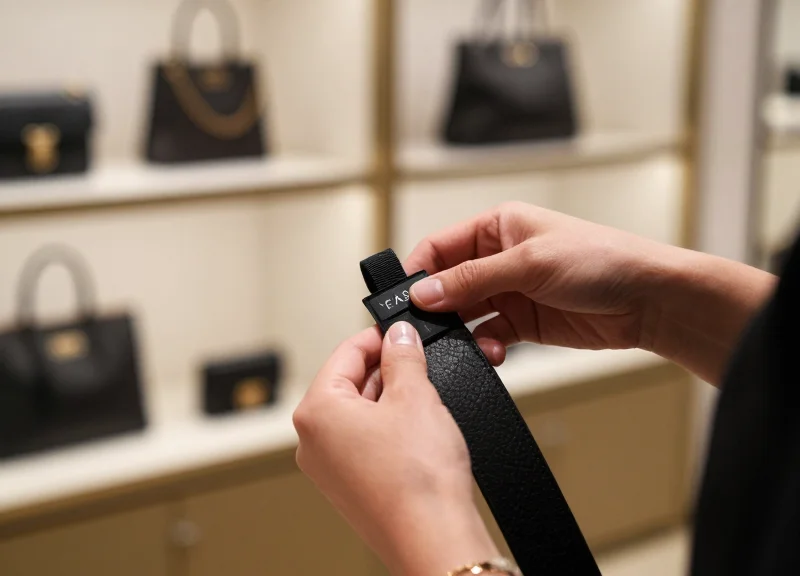
Best practices for applying EAS lanyards to designer belts focus on utilizing non-piercing loop mechanisms that distribute tension across the strap's structural hardware or fixed loops, ensuring 100% material integrity while maintaining high-deterrence visibility. Unlike traditional hard tags that leave permanent pinholes in expensive calfskin or suede, a professionally applied lanyard system preserves the belt's 'New-in-Box' condition, which is essential for maintaining full MSRP and achieving the 40% ROI boost mentioned in our strategic analysis.
- Identify the Hardware Anchor: Always prioritize anchoring the lanyard through the buckle frame rather than the leather strap itself. This ensures the security device is attached to the strongest component of the accessory.
- Calibrate the 'Five-Millimeter Play' Rule: Avoid cinching the lanyard tight against the leather. Leave approximately 5mm of slack to allow the material to flex naturally, preventing 'pressure memory' marks on soft nappa or exotic skins.
- Positioning for Display Symmetry: Place the EAS tag on the interior side of the belt or behind the price tag holder. This keeps the focus on the designer craftsmanship while the cut-resistant cable remains visible to potential shoplifters.
- Mandatory Glove Protocol: When applying lanyards to light-colored leathers or untreated suedes, staff should use microfiber gloves to prevent the transfer of skin oils, which can cause localized darkening over time.
| Material Type | Risk Factor | Lanyard Application Strategy |
|---|---|---|
| Full-Grain Leather | Compression Marks | Standard lanyard loop; anchor through the buckle. |
| Suede / Nubuck | Surface Nap Crushing | Use nylon-sleeved cables; avoid direct tag-to-material contact. |
| Exotic Skins (Python/Croc) | Scale Lifting | Hardware anchor only; zero-tension 'Gravity Loop' required. |
| Box Calf / Patent | Surface Scratching | Plastic-coated lanyards to prevent metal-on-finish friction. |
Expert Tip: Implement the 'Gravity Loop' technique for floor models. By allowing the EAS tag to hang freely from the buckle rather than wrapping it around the leather strap, you eliminate 'crease fatigue'—a common issue where belts displayed for over 30 days develop a permanent curve or indentation that forces a markdown. This single change in application can save thousands in annual clearance losses.
Will the lanyard cable scratch the metal buckle finish?
High-quality EAS lanyards, such as those from DragonGuard, feature a smooth polymer coating or nylon sleeve specifically designed to prevent metal-on-metal friction against polished gold or silver hardware.
How do we secure reversible belts without a fixed buckle?
For reversible designs, thread the lanyard through the pivot mechanism of the buckle or use a 'dual-loop' configuration that secures both sides of the strap without tightening the cable.
Can the lanyard be cut easily by shoplifters?
Professional-grade lanyards utilize aircraft-grade multi-strand steel cores that are highly resistant to standard pocket scissors and side-cutters, requiring specialized tools to breach.
Securing Delicate Silks: The Scarf Loss Prevention Guide
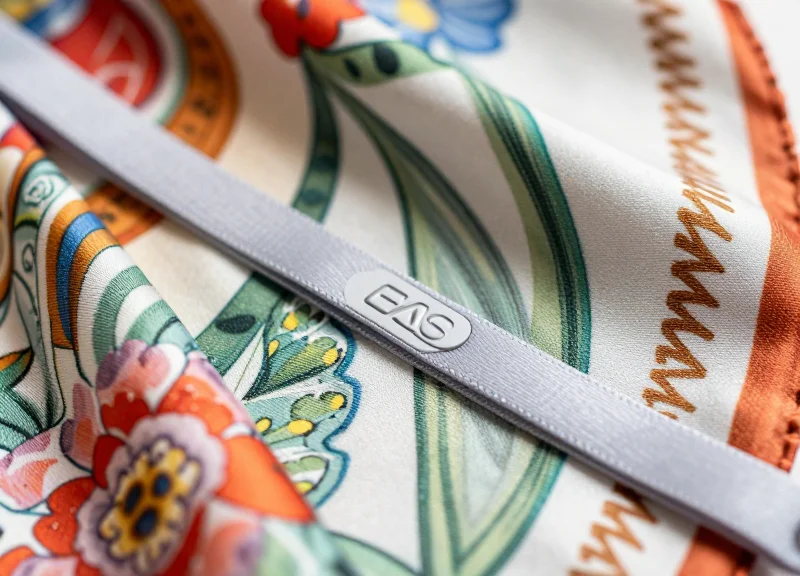
Securing delicate silk scarves requires a 'low-mass, high-surface-area' approach to EAS protection. Unlike leather goods, silk is highly susceptible to gravitational stress and weave distortion; therefore, loss prevention must prioritize ultra-lightweight lanyards with polymer-coated cables. By utilizing a soft-loop attachment method instead of piercing pins, retailers can maintain the integrity of 12-momme twill and chiffon while ensuring the item remains tethered to a robust security sensor that triggers EAS gates reliably.
| Silk Type | Typical Weight (Momme) | Lanyard Spec | Recommended Placement |
|---|---|---|---|
| Silk Chiffon | 6-8mm | Ultra-Light (1.2mm cable) | Care label loop |
| Silk Twill | 12-14mm | Standard Zero-Damage Lanyard | Fold-over corner |
| Heavy Crepe | 16-22mm | Reinforced Lanyard | Main brand label seam |
One critical industry insight often overlooked is the 'Momme-to-Mass Ratio.' To prevent permanent 'necking'—where the silk fibers are pulled apart by the weight of the security tag—the total weight of the EAS assembly should never exceed 10-15% of the scarf's total weight. This is why specialized lanyard systems are superior to standard hard tags: they allow the sensor's weight to rest on the display fixture rather than the fabric itself.
- The Soft-Loop Pass-Through: Fold the scarf neatly and pass the lanyard loop around the center fold or through a sturdy interior care label. Avoid looping around the delicate rolled hem, as this is the weakest point of the garment.
- Tension Calibration: Ensure the lanyard has enough slack so that when a customer unfolds the scarf, the cable does not reach its full extension abruptly, which could snap delicate silk threads.
- Friction Check: Use only lanyards with a smooth TPU or polymer coating. Raw metal cables can act like a saw against silk fibers during high-traffic handling, leading to microscopic fraying.
Will the lanyard leave a permanent crease in the silk?
If using a zero-damage lanyard with a wide-radius loop, creasing is minimized. We recommend rotating the attachment point every 14 days for items on long-term display to allow the fibers to relax.
Can I secure multiple scarves with one lanyard?
While possible, it is discouraged for high-end silks. The cumulative weight of multiple scarves creates uneven tension on the lanyard contact point, increasing the risk of material fatigue.
How do I prevent 'snagging' during the removal process?
Always use a magnetic detacher with a recessed guide. This ensures the lanyard pin is released cleanly without any jagged edges coming into contact with the scarf's surface.
Integrating EAS Lanyards with Modern RFID Inventory Systems

The integration of Electronic Article Surveillance (EAS) lanyards with Radio Frequency Identification (RFID) systems represents the pinnacle of luxury retail operations. By utilizing dual-technology 'hybrid' tags or attaching RFID-enabled lanyards to designer belts and scarves, retailers bridge the gap between loss prevention and inventory management. This synergy allows for a unified security ecosystem where a single device prevents theft at the exit pedestal while simultaneously providing 99.9% inventory accuracy through item-level data tracking.
| Feature | Traditional EAS Lanyard | RFID-Integrated EAS Lanyard |
|---|---|---|
| Primary Purpose | Theft Deterrence | Deterrence + Inventory Accuracy |
| Data Capture | None (Alarm Only) | Unique Item ID (Serial Number) |
| Stock Counting | Manual / Barcode | Real-time / Instant Scan |
| Shrink Visibility | Known only after audit | Identifies exactly which SKU is missing |
Expert Insight: Eliminating 'Ghost Inventory' in Luxury Retail. A unique advantage of RFID-integrated lanyards is the elimination of 'ghost inventory'—items that show as 'in-stock' in the computer but are physically missing or misplaced. For high-ticket items like silk scarves, which can easily slide behind shelving, an RFID-enabled lanyard allows staff to locate the item in seconds using a handheld Geiger-counter mode, preventing lost sales and ensuring the 40% ROI boost is protected by operational efficiency.
- Select Dual-Frequency Hardware: Choose lanyards that house both an AM/RF coil for gate security and a UHF RFID chip for inventory tracking to minimize tag clutter.
- Map Software Integration: Ensure your Loss Prevention software communicates with your ERP so that an EAS alarm can automatically flag a specific EPC (Electronic Product Code) as potentially stolen.
- Implement Smart Fitting Rooms: Use the RFID signal from the lanyard to detect which designer belts are entering fitting rooms, providing data on 'tried-on but not bought' items to optimize merchandising.
Does the RFID chip affect the lanyard's zero-damage profile?
No. The RFID inlay is embedded within the hard plastic housing of the tag, which remains connected via the smooth, non-abrasive lanyard cable, ensuring no contact between electronics and delicate leather or silk.
Can I upgrade my existing EAS lanyards to RFID?
While you cannot 'add' a chip to an old tag, many modern systems allow for 'flagging' where a small RFID wrap is attached to the existing lanyard, though a purpose-built hybrid tag is more aesthetic for luxury brands.
Is the ROI higher with integrated systems?
Significantly. While the initial cost is higher, the labor savings from automated stock counting and the reduction in 'out-of-stock' scenarios typically pay for the system within 12 to 18 months.
Future-Proofing Your Store: Transitioning to Advanced EAS Solutions
Transitioning to advanced EAS (Electronic Article Surveillance) solutions requires a shift from reactive loss prevention to a proactive Inventory Health strategy. Modern future-proofing involves replacing intrusive, pin-based tags with modular, zero-damage lanyard systems that are compatible with both existing AM (Acousto-Magnetic) or RF (Radio Frequency) pedestals and upcoming RFID integration. By moving away from hardware that physically alters merchandise, retailers can maintain the highest resale value for luxury goods while ensuring seamless security across evolving store layouts.
| Feature | Legacy Pin-Based Systems | Advanced Zero-Damage Lanyards |
|---|---|---|
| Merchandise Impact | Permanent perforations or stretch marks | Zero physical impact on fabric/leather |
| Application Versatility | Limited to items that can be pierced | Universal for belts, scarves, and bags |
| Technology Path | Single frequency (Fixed) | Dual-tech (AM/RF) and RFID compatible |
| ROI Factor | Hardware cost only | Hardware cost + 40% reduction in markdowns |
- Conduct a Damage-Audit: Analyze your current markdown data to identify how many luxury items are discounted due to 'tag damage' or 'handling wear' caused by legacy pins.
- Evaluate Frequency Compatibility: Select lanyards that match your store's existing 58kHz (AM) or 8.2MHz (RF) infrastructure to avoid expensive pedestal replacements.
- Implement a 'Category-First' Pilot: Roll out zero-damage systems in your most sensitive departments—typically designer leather goods and silk accessories—to measure immediate ROI.
- Train for Aesthetic Precision: Educate staff not just on security, but on the aesthetic placement of lanyards to ensure they complement the luxury brand experience.
Expert Insight: The Hidden Markdown Tax. Retailers often overlook that legacy tags create microscopic structural damage in luxury leather and silk. This creates a 'Hidden Markdown Tax' where products lose up to 15% of their value if they are moved to outlet channels or returned by customers. Advanced lanyards eliminate this invisible drain on your bottom line by keeping the item in 'pristine' condition throughout its entire shelf life.
Will these lanyards work with our existing gates?
Yes. Advanced lanyard systems are designed to be frequency-agnostic, meaning they can house the specific ferrite or coil needed to trigger your existing AM or RF pedestals without modification.
Is the transition period disruptive to daily sales?
Not at all. Because lanyards are an 'add-on' rather than a 'rip-and-replace' of the pedestal system, the transition can occur during standard restocking cycles.
How do these systems handle the move toward RFID?
Many modern zero-damage tags are 'dual-technology' ready, allowing you to house an EAS element for security and an RFID chip for inventory accuracy within the same sleek housing.