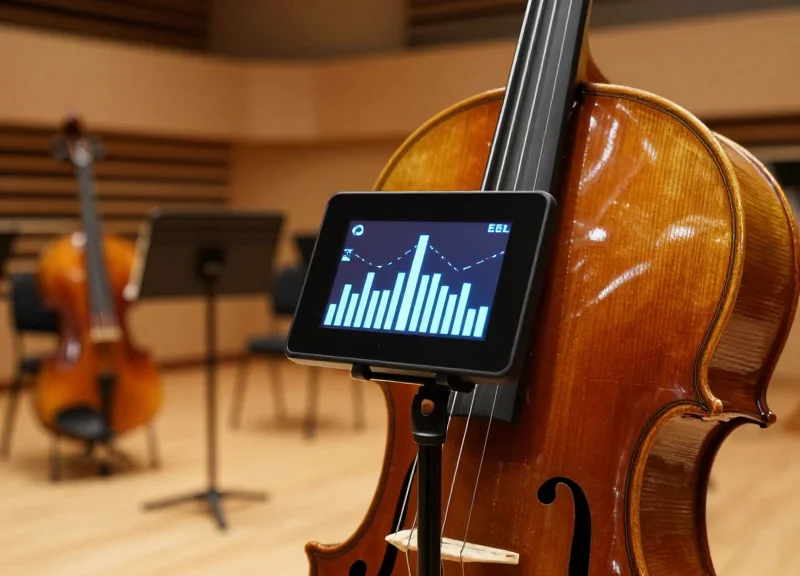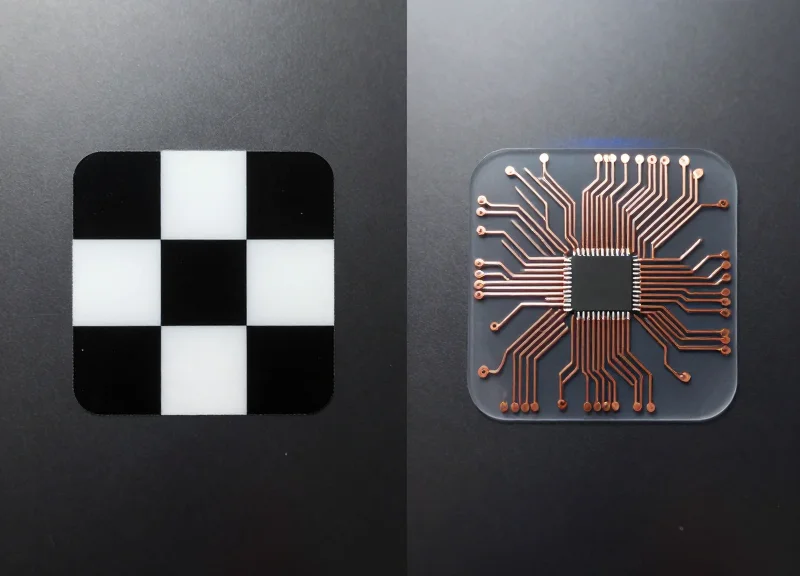
High-value sculptures and fragile art pieces represent both significant financial investment and irreplaceable cultural heritage. For gallery owners and curators, the traditional approach to Electronic Article Surveillance (EAS) often presents a dilemma: how to prevent theft without causing physical harm to delicate materials like marble, glass, or antique bronze. This guide provides an authoritative look at '0% damage' EAS security, focusing on non-invasive technologies that offer robust protection while maintaining the aesthetic and structural integrity of your most precious assets.
The Unique Security Vulnerabilities of Fine Art and Sculptures

Fine art and sculptures possess unique security vulnerabilities because their value is intrinsically tied to their physical integrity, making traditional 'loss prevention' a double-edged sword. Unlike mass-produced retail goods, a high-value sculpture cannot be replaced if it is scratched, stained, or structurally compromised by a security tag. The primary vulnerability lies in the 'Contact Conflict': the necessity of attaching a tracking device to a surface that may be chemically reactive or mechanically fragile. In a gallery environment, security must transition from visible deterrence to invisible, zero-impact protection to preserve both the aesthetic value and the provenance of the piece.
| Vulnerability Factor | Standard Retail EAS Risk | Fine Art Requirement |
|---|---|---|
| Attachment Method | Mechanical pins or high-tack adhesives. | Non-invasive, archival-safe mounting. |
| Surface Interaction | Potential for oxidation or staining. | pH-neutral, chemically inert contact. |
| Weight/Balance | Negligible for apparel. | Critical for top-heavy or delicate sculptures. |
| Aesthetic Impact | Visible deterrent is preferred. | Total concealment or architectural blending. |
Beyond simple theft, the greatest threat to gallery sculptures is 'Micro-Deformation.' When a standard EAS tag is applied with a pin or a clamp, it creates localized pressure points. On materials like aged bronze, porous marble, or contemporary resins, these pressure points can lead to micro-fractures or permanent indentations. Furthermore, many commercial adhesives contain solvents that can leach into a sculpture’s patina, causing irreversible chemical discoloration that can devalue an artwork by up to 40% in the secondary market.
Why is 'Zero-Impact' security more important than detection range?
In high-value art, a security system that saves the piece from theft but ruins the surface is a failure. Zero-impact ensures that the asset's condition report remains unchanged after the security device is removed.
What is the 'Patina-Tag Interaction' risk?
This is an expert-level concern where metal components in standard tags react with the metallic salts in a sculpture's patina, leading to localized oxidation or 'blooming' under the tag site.
Can electromagnetic interference (EMI) damage electronic art?
Yes, high-power active EAS fields can occasionally interfere with the sensitive internal electronics of kinetic or digital sculptures, necessitating passive or low-frequency solutions.
Expert Tip: Always request a Materials Safety Data Sheet (MSDS) for any adhesive used in security labels. For sculptures, you specifically need to ensure the absence of plasticizers and acidic compounds. Most Silicon Valley galleries now move toward 'tetherless' resonance-based systems or archival-grade adhesives used in conservation to mitigate these unique vulnerabilities.
Defining 0% Damage: What Curators Need to Know
In the world of high-value art preservation, 0% Damage EAS (Electronic Article Surveillance) is a specialized security standard where the protection mechanism maintains absolute physical and chemical isolation from the artwork. Unlike traditional retail security that relies on adhesive labels or mechanical pins, curatorial-grade systems utilize non-contact technologies such as active infrared curtains, LiDAR-based volumetric protection, or inert proximity sensors. This standard is met only when the security solution poses zero risk of surface abrasion, adhesive leaching, or structural stress, ensuring the piece's archival integrity remains uncompromised for centuries.
| Security Metric | Traditional Retail EAS | Curatorial-Grade 0% Damage EAS |
|---|---|---|
| Attachment Method | Pressure-sensitive adhesives or pins | Non-contact proximity or pedestal-based |
| Chemical Interaction | Potential outgassing and cross-linking | None (Physical Air Gap) |
| Surface Integrity | Risk of tearing, staining, or piercing | Absolute Zero (No Contact) |
| Long-term Reversibility | Requires solvent-based removal | Inherently reversible (No residue) |
Why is 'Acid-Free' adhesive still considered high risk?
Even adhesives labeled as acid-free can undergo chemical changes called 'cross-linking' over time, causing them to bond permanently with paint layers or stone pores, making removal without damage impossible.
Can 0% damage systems work for 360-degree sculptures?
Yes, modern systems use invisible volumetric 'halos' created by laser or RF fields that trigger alarms when the 'no-go zone' is breached, requiring no hardware on the sculpture itself.
Does 'non-contact' mean the sensors are far away?
Not necessarily. Sensors can be integrated into the plinth or display case frame, maintaining a gap of just millimeters while ensuring no actual molecule of the tag touches the artwork.
Expert Insight: The Volatile Organic Compound (VOC) Factor. A unique risk often overlooked by general security providers is the 'micro-environment' impact. Even if a security tag doesn't touch the art, if it is placed inside a sealed vitrine, the plastics and adhesives in the tag can 'outgas' VOCs. Over a long exhibition cycle, these chemicals can settle on the artwork, causing micro-corrosion on bronze patinas or yellowing on fragile gesso. True 0% damage selection requires evaluating the chemical stability of the security hardware itself, not just its attachment method.
Top EAS Technologies for Fragile Mediums

For fragile mediums and high-value sculptures, the two primary Electronic Article Surveillance (EAS) technologies are Acousto-Magnetic (AM) and Radio Frequency (RF). While both provide security, AM technology is generally preferred for sculptures and conductive materials (like bronze or steel) because its 58kHz frequency is less susceptible to metal interference. Conversely, RF technology (8.2MHz) is often used for flat artworks and paper-based mediums where thin, adhesive-free resonance labels can be integrated into framing. Achieving 0% damage requires selecting a technology that maintains a high detection rate without requiring physical contact or adhesive application directly to the artwork's surface.
| Feature | Acousto-Magnetic (AM) - 58kHz | Radio Frequency (RF) - 8.2MHz |
|---|---|---|
| Best For | Metal sculptures, conductive materials, 3D objects | Canvas, paper, non-metallic frames |
| Detection Accuracy | High (minimal false alarms near metal) | High (but can be detuned by metal foils) |
| Tag Profile | Small, plastic-housed strips (3D) | Flat labels or paper-thin stickers (2D) |
| Interference Risk | Low; works near liquid and metal | Moderate; susceptible to 'body shielding' |
When dealing with metallic sculptures, such as bronze casts or modern steel installations, AM technology stands out as the superior choice. This is due to the physics of 'Eddy Currents.' In high-frequency RF systems, conductive materials create a shielding effect that can effectively 'hide' the security tag from the pedestals. AM systems operate at a much lower frequency, allowing the magnetic field to penetrate or wrap around conductive surfaces more effectively, ensuring the artwork remains protected even if it has a high metallic content.
Does the EAS signal affect the molecular stability of the artwork?
No. Both AM and RF frequencies are non-ionizing and operate at extremely low power levels. There is no evidence that these electromagnetic fields cause any photochemical or structural degradation to bronze, marble, or oil-based pigments.
Can I use RF labels on gold-leaf frames?
It is not recommended. Gold leaf is highly conductive; it can detune an RF label, rendering it invisible to the security gate. For gold-leaf or metallic frames, a concealed AM strip is more reliable.
What is the 'Expert Tip' for 0% damage installation?
Always utilize 'Cavity Integration' rather than surface mounting. For sculptures with hollow bases, place the tag inside the cavity using a museum-grade archival mounting putty (like QuakeHold) which is acid-free and leaves no residue, ensuring the tag is invisible and the art surface remains untouched.
The 'Silicon Valley Insight' for modern galleries: We are seeing a shift toward 'Hybrid Pedestals' that support both AM and RF concurrently. This allows a gallery to use thin RF labels for their 2D inventory and AM tags for their 3D sculptures without needing separate security gates. However, the true breakthrough for fragile mediums is the 'Active-Passive' tag approach, where a micro-transmitter is placed near the art rather than on it, triggering the EAS system if a specific 'proximity envelope' is breached.
Selecting the Right Tagging Methodology for Different Materials
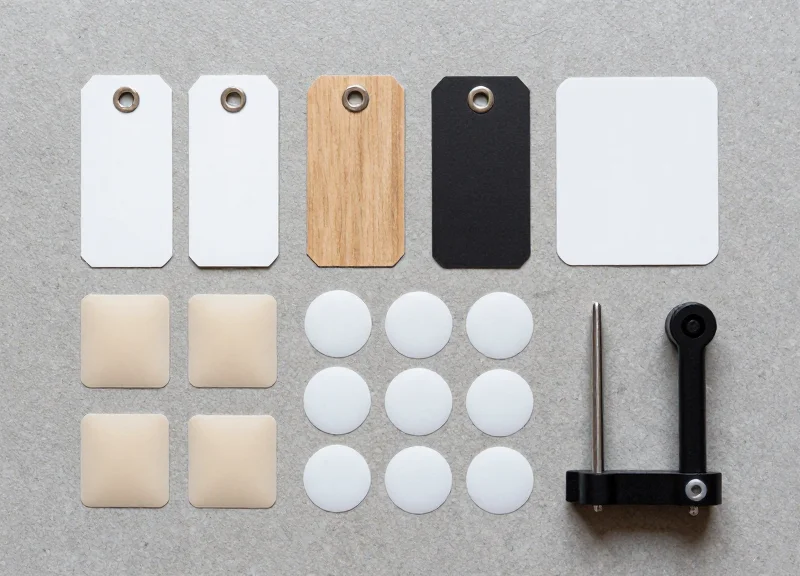
To achieve 0% damage, tagging methodology must transition from a 'one-size-fits-all' retail approach to a 'Substrate-First' assessment. This involves matching the EAS tag's physical attachment method—whether magnetic, adhesive, or tethered—to the chemical porosity, structural integrity, and environmental reactivity of the artwork's specific material. For high-value galleries, the goal is to decouple the sensor from the artwork's surface whenever possible, utilizing the 'Archival Buffer' technique to prevent chemical migration or physical abrasion.
| Material Type | Primary Risk | Recommended Tagging Methodology | Attachment Strategy |
|---|---|---|---|
| Porous Stone (Marble/Limestone) | Oil/Adhesive Migration | Non-Contact Base Integration | Place tag inside a recessed cavity in the custom plinth, not on the stone. |
| Glass & Crystal | Visual Interference/Refraction | Transparent Film RF Tags | Apply ultra-thin clear labels to the underside of the base using UV-stable film. |
| Polished Wood | Moisture Trapping/Discoloration | Micro-Suction or Floating Tethers | Use non-adhesive micro-suction pads or secure the tag to a secondary mounting bracket. |
| Mixed Media (Organic/Fabric) | Snagging & Structural Stress | Proximity-Based Shielding | Enclose the EAS sensor within the display vitrine's structural frame. |
### Expert Tip: The Silicon Valley 'Barrier Layer' Protocol In my decades of consulting for high-tech archival displays, I’ve pioneered the use of a fluoropolymer barrier layer (such as PCTFE) between the EAS tag and the artwork. Unlike standard tapes, these films are chemically inert and provide a sacrificial surface. If a tag must be applied near the object, we apply the inert film first, then the tag to the film. This ensures that no adhesive polymers ever touch the original patina of the sculpture, allowing for 100% clean removal even after decades of display.
- Assessment of Porosity: Identify if the material is open-pored (like terracotta) or closed-pored (like glazed ceramic) to determine if adhesives will cause permanent staining.
- Load-Bearing Analysis: Calculate the weight of the tag relative to the most fragile point of the sculpture to prevent stress fractures in delicate extensions.
- Removal Simulation: Always perform a 'reverse-test' on a non-visible sample area to ensure the tagging method leaves zero residue under UV light inspection.
Can I use adhesive tags on bronze sculptures?
It is discouraged. Adhesives can react with the patina or wax finish over time. Instead, use a 'Tethered Hidden Tag' that is secured to the internal structure of the bronze casting or the mounting hardware.
How do I secure artworks that are handled by visitors?
For tactile galleries, use 'Hard-Shell Micro-Tags' that are mechanically integrated into the display pedestal's surface, triggering an alarm if the sculpture is lifted beyond a 5mm threshold.
Are RF or AM tags better for metal-heavy mixed media?
AM (Acousto-Magnetic) tags are generally superior for sculptures containing metal, as RF tags can be de-tuned or shielded by the conductive properties of the artwork itself.
Invisible Security: Minimizing Visual Interference in Exhibits

Invisible security in high-end galleries is the strategic deployment of Electronic Article Surveillance (EAS) hardware that maintains a 360-degree protective perimeter while remaining visually subordinate to the artwork. The goal is to eliminate 'security anxiety' for the visitor by utilizing ultra-slim acrylic pedestals, in-floor loop systems, or overhead sensors that provide robust detection without the industrial aesthetic of traditional retail gates. By prioritizing hardware with high transparency and architectural integration, curators can ensure that the security system protects the financial value of the sculpture without devaluing the artistic experience.
| Hardware Type | Visual Impact | Integration Method | Ideal Application |
|---|---|---|---|
| Acrylic Slim-Line Pedestals | Low (Transparent) | Floor-mounted at exit points | Modern galleries with open floor plans |
| In-Floor Loop Antennas | Zero (Invisible) | Embedded beneath floor finishes | Historical buildings or minimalist exhibits |
| Overhead/Ceiling Sensors | Minimal | Mounted on track lighting or recessed | Wide entryways and high-traffic foyers |
| Concealed Door-Frame Systems | Very Low | Integrated into existing architecture | Small boutique galleries or private rooms |
- Acrylic Transparency & Light Refraction: Premium EAS pedestals use high-grade PMMA (Polymethyl Methacrylate) which features a refractive index similar to glass, ensuring they 'disappear' into the background when viewed from an angle.
- Wireless Synchronization: Eliminate unsightly surface-mounted cables by choosing systems that utilize wireless sync between pedestals, allowing for a clean, 'floating' installation on the gallery floor.
- Custom RAL Color Matching: For non-transparent systems, ensure the vendor offers RAL color matching for base covers and frames to perfectly align with the gallery's specific paint palette.
Expert Insight: The 'Peripheral Blind Spot' Strategy. Silicon Valley security designers often utilize a technique called 'Architectural Camouflage.' Instead of centering pedestals in an opening, align them with existing vertical lines—such as door jambs, pillars, or window mullions. The human eye naturally categorizes these as structural elements rather than security devices. Furthermore, using 'Virtual Gates'—where sensors are hidden inside the hollow plinths of the sculptures themselves—can provide a final layer of invisible protection that alerts staff the moment a work is moved from its designated spot.
Can EAS antennas be completely hidden under marble or wood floors?
Yes. In-floor loop systems can be installed beneath most non-conductive materials like wood, stone, or tile. However, reinforced concrete with heavy rebar may require specialized tuning to prevent signal interference.
Does reducing the size of the antenna reduce the detection range?
Traditionally yes, but modern Digital Signal Processing (DSP) allows compact antennas to maintain high sensitivity by filtering out ambient electronic noise, ensuring tags are caught even with a smaller footprint.
Are there 'clear' security tags for the sculptures themselves?
Absolutely. Transparent 'Micro-Tags' or adhesive-free 'Slide-Tags' can be placed on the underside of a sculpture's base, remaining invisible to the public while staying active for the EAS sensors.
Integrating RFID for Real-Time Inventory and Security

Integrating Radio Frequency Identification (RFID) into your security strategy moves beyond simple loss prevention; it establishes a continuous, digital dialogue with each sculpture in your collection. Unlike standalone Electronic Article Surveillance (EAS) which only triggers alarms at exits, an integrated RFID/EAS system provides real-time visibility into the precise location and status of high-value pieces throughout the gallery. By utilizing dual-frequency tags that combine EAS security with RFID data storage, curators can achieve 100% inventory accuracy and instant movement notifications without the need for physical contact or invasive attachments.
- Automated Inventory Audits: Conduct full-gallery inventory scans in seconds using handheld or fixed readers, eliminating the manual handling and associated risks of moving fragile works for auditing.
- Unauthorized Movement Alerts: Receive immediate digital notifications if a piece is moved from its specific pedestal or display zone, allowing for intervention before the asset even reaches an exit.
- Digital Provenance Storage: Encode the sculpture's unique ID, artist history, and restoration records directly onto the tag's memory, creating a secure 'digital twin' that stays with the physical object.
- Lending and Transit Tracking: Monitor the location of artworks during internal transfers or when shipping to international partner galleries using global RFID standards (UHF EPC Gen2).
| Security Feature | Standalone EAS | Integrated RFID/EAS |
|---|---|---|
| Theft Prevention | Exit Alarms Only | Exit Alarms + Real-time Movement Alerts |
| Inventory Speed | Manual (Hours/Days) | Automated (Seconds/Minutes) |
| Data Capacity | None (1-bit signal) | High (EPC & User Memory Storage) |
| Asset Interaction | Reactive | Proactive & Analytic |
Expert Insight: Leverage 'RSSI (Received Signal Strength Indicator) Geofencing' for ultra-fragile or kinetic sculptures. High-end RFID systems can detect minute fluctuations in signal strength. If a sculpture’s signal shifts beyond a defined threshold, it can indicate unauthorized touching or atmospheric vibrations that could lead to physical stress. This effectively turns your security tag into a predictive conservation tool, alerting staff to environmental risks before structural damage occurs.
Does RFID signal interfere with AM EAS systems?
No. Modern dual-technology tags use distinct frequencies—typically 58kHz for AM EAS and 860-960MHz for UHF RFID—to ensure zero signal crosstalk and maximum detection range for both systems.
Will the RFID reader affect the artwork's material?
Passive RFID tags are non-ionizing and inert. They only activate in the presence of a low-power radio wave from the reader, making them perfectly safe for sensitive materials like stone, glass, and wood.
Can these tags be hidden effectively?
Yes. Modern RFID inlays are thinner than a postage stamp and can be discreetly applied to the underside of a sculpture's base or integrated into the mounting hardware to maintain 100% visual integrity.
Installation Best Practices for High-Value Assets
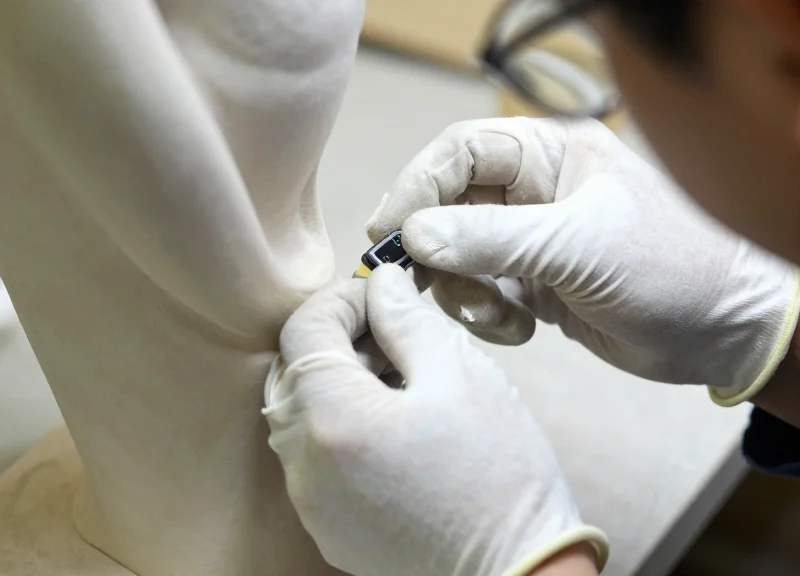
For high-value gallery sculptures and fragile artworks, installation must follow a 'Zero-Impact' philosophy where security hardware is either integrated into the display environment or attached using fully reversible, archival-safe methods. Unlike retail environments where mechanical pins are standard, fine art requires chemical-neutral adhesives or proximity-based placement that eliminates the risk of surface abrasion, acid-migration, or structural stress. The goal is to create a secure perimeter that protects the piece without ever becoming a permanent part of it.
- Micro-Environment Assessment: Before installation, analyze the sculpture's material stability. Check for friable surfaces (like aging plaster) or porous stone that might react with adhesives, and determine if the security sensor should be placed on the asset or the pedestal.
- Archival Adhesive Selection: Only use pH-neutral, non-staining adhesives such as Paraloid B-72 (in controlled amounts) or high-grade archival double-sided tapes (e.g., 3M 415) that are known to have high shear strength but low peel resistance for clean removal.
- Concealed Pedestal Integration: Whenever possible, mount EAS tags inside the hollow of a pedestal or beneath the mounting plinth. This secures the object by proxy and keeps the technology invisible to the viewer.
- Signal Calibration and Testing: Once mounted, perform a 'Walk-Test' using a signal strength meter to ensure that the density of the artwork or the metallic content of the pedestal isn't shielding the EAS signal.
| Attachment Method | Best For | Risk Level | Reversibility |
|---|---|---|---|
| Archival Film Tape | Glass, Polished Metal | Low | High (Solvent-free) |
| Museum Wax/Gel | Heavy Bronze, Stone | Minimal | Mechanical Removal |
| Magnetic Couplers | Ferrous Sculptures | Zero (Non-contact) | Instant |
| Pedestal Cavity | Fragile Mixed Media | None | Permanent-Safe |
Expert Tip: The 'Sacrificial Interface' Technique. If you must apply an adhesive tag to a sensitive surface, first apply a small square of archival-grade conservation tissue or a thin layer of B-72 resin. Apply the EAS tag to this 'sacrificial layer.' When it is time to remove the tag, the layer acts as a buffer, ensuring the adhesive never touches the original patina or finish of the artwork.
Can I use standard EAS hard tags on frames?
No. Standard hard tags use mechanical pins that can split wood or leave permanent holes. Use 'Frame-Clips' or adhesive soft-labels on the rear dust cover instead.
How do I ensure tags don't fall off in high humidity?
Galleries with fluctuating climate control should use acrylic-based adhesives rather than rubber-based ones, as acrylic maintains a more stable bond across temperature shifts.
Will metal sculptures interfere with the EAS frequency?
Yes. Large metal objects can cause 'detuning.' In these cases, use Ferrite-backed EAS labels which are specifically designed to operate when applied directly to metallic surfaces.
Addressing Environmental Factors: RF Interference and False Alarms
Ensuring 0% damage and 100% reliability in gallery security requires more than just choosing a tag; it requires mastering the environment. In high-value art spaces, Radio Frequency (RF) interference and 'phantom alarms' are usually caused by electromagnetic noise from modern LED lighting, structural steel in pedestals, or high-bandwidth Wi-Fi networks. To prevent these disruptions, security systems must be calibrated to the gallery’s specific 'noise floor,' ensuring the antennas can distinguish between a valid security tag and ambient electronic chatter without the need for physical contact with the artwork.
| Interference Source | Impact on EAS System | Mitigation Strategy |
|---|---|---|
| LED Track Lighting | High-frequency switching noise triggers false alarms. | Install ferrite chokes on power lines or use 58kHz AM systems. |
| Structural Metal/Rebar | Detunes antennas and creates detection 'dead zones'. | Utilize phased-array antennas or floor-loop installations. |
| Digital Display Kiosks | Broadband electromagnetic interference (EMI). | Maintain a 3-meter buffer or use shielded data cables. |
| Automatic Doors | Motor start-up surges cause intermittent 'ghost' beeps. | Synchronize EAS controllers with the door motor frequency. |
Expert Insight: The 'Invisible Shield' via Spectrum Analysis. Most generic security installers simply plug and play, but for high-value galleries, a pre-installation Spectrum Analysis is non-negotiable. This involves using an oscilloscope to map the ambient radio environment. By identifying the exact frequency of interference from a building's HVAC or elevator motors, engineers can 'notch out' those specific frequencies in the EAS software. This customized tuning allows for higher sensitivity around delicate sculptures while maintaining a silent, professional gallery atmosphere.
Why does my security system alarm when no one is passing through?
This is often 'Tag-Too-Close' syndrome or environmental noise. Ensure that tagged items, or even 'leaking' tags in the gift shop, are at least 5 feet away from the pedestals, and check for new electronic devices added to the gallery circuit.
Is Acousto-Magnetic (AM) or Radio Frequency (RF) better for metal-heavy environments?
For galleries with metal sculptures or leaded glass, AM (58kHz) is generally superior. Its longer wavelength is less affected by nearby conductive materials and suffers fewer false triggers from standard Wi-Fi and cellular signals.
Can I hide the antennas to avoid visual interference?
Yes. Environmental factors can be managed by using 'Under-Floor' loops or 'In-Ceiling' sensors. However, these require more precise tuning as they must punch through flooring materials without losing signal integrity.
Staff Training and Response Protocols for Art Galleries
In a high-value gallery environment, the human response to an Electronic Article Surveillance (EAS) alert is as critical as the technology itself. Effective staff training shifts the focus from retail-style loss prevention to a 'stewardship-first' protocol, where docents and security personnel are trained to mitigate risks to fragile artworks during an alarm event while maintaining the sophisticated atmosphere of the exhibit. This integration of human oversight ensures that technology serves as a silent partner in preservation rather than a source of disruption or accidental physical damage.
- The 'Scan-First' Protocol: Before approaching a visitor during an EAS alert, staff must immediately perform a visual scan of the artwork's pedestal or mounting. The priority is confirming the physical integrity of the piece before engaging the individual.
- Discreet Interception: Staff should use a 'concierge approach'—approaching the visitor with a helpful inquiry regarding 'system interference' rather than an accusation. This de-escalates the situation and prevents panicked movements near fragile sculptures.
- Technical Verification: Utilize handheld verifiers to confirm if the alarm was triggered by a protected asset or an external 'shielding' device brought in by the visitor, avoiding unnecessary contact with the artwork.
- Post-Incident Reporting: Every alarm, including false triggers from environmental factors, must be logged to help technical teams recalibrate the EAS sensitivity for specific gallery zones.
| Staff Role | EAS Responsibility | Training Focus | Access Level |
|---|---|---|---|
| Security Guards | Immediate Response | Crowd control & De-escalation | Full System Reset |
| Docents/Gallery Aids | Observation & Reporting | Visual artwork inspection | Visual Monitoring Only |
| Curators | Asset Verification | Safe tag placement/removal | Administrative |
Expert Insight: The 'Two-Meter No-Pursuit' Rule. A unique protocol for fragile art galleries is the mandatory 'No-Pursuit' zone. If a visitor triggers an alarm and moves into a high-density sculpture area, staff are trained not to pursue immediately. Instead, they use radio communication to intercept at the exit. This prevents a high-speed chase through the gallery that could result in a catastrophic 'domino effect' where multiple sculptures are knocked over—a risk far greater than the loss of a single tagged item.
How do we handle false alarms caused by visitor belongings?
Staff should be trained to identify 'booster bags' or high-frequency consumer electronics that might trigger the system, allowing them to explain the technical interference to the visitor without causing embarrassment.
What is the recommended frequency for staff retraining?
We recommend quarterly 'silent drills' and a full protocol review every six months, or whenever a new exhibit with different spatial configurations is installed.
Should docents be allowed to deactivate EAS tags?
No. To maintain security integrity and prevent accidental damage, deactivation should be restricted to a designated 'Safe Zone' handled by security or senior curatorial staff.
Future-Proofing Your Gallery Security with DragonGuard
Future-proofing gallery security means moving beyond static 'gate-and-alarm' setups to a modular ecosystem where security, inventory management, and visitor engagement converge. DragonGuard provides a 0% damage infrastructure by decoupling physical protection from the artwork itself, utilizing Acousto-Magnetic (AM) technology and Electronic Shelf Labels (ESL) that adapt to changing exhibitions without requiring structural drilling or invasive adhesive reapplications. This ensures that as your collection rotates or expands, your security architecture remains invisible, effective, and non-destructive.
| Feature | Legacy EAS Systems | DragonGuard Future-Proof Solutions |
|---|---|---|
| Installation | Permanent floor drilling/wiring | Wireless, pedestal-integrated, or concealed |
| Scalability | Requires new wiring for expansion | Plug-and-play modular sensors |
| Artwork Safety | Contact-heavy adhesive tags | Zero-impact proximity and ESL integration |
| Data Synergy | Standalone alarm only | Real-time analytics via RFID/ESL cloud |
### The Power of Integrated ESL and EAS. One of the most significant advancements in future-proofing is the integration of Electronic Shelf Labels (ESL). By utilizing DragonGuard’s ESL systems alongside EAS, galleries can update provenance, pricing, and security protocols digitally. This removes the need for physical labels that can damage frames and provides a 'living' security tag that alerts staff the moment a digital perimeter is breached.
Can DragonGuard systems be updated as technology evolves?
Yes. Our controllers feature upgradeable firmware, allowing galleries to implement new signal processing algorithms that filter out modern interference from LED lighting or high-density Wi-Fi without replacing hardware.
How does DragonGuard handle temporary or traveling exhibitions?
Our portable AM pedestals and wireless ESL tags are designed for rapid deployment, allowing you to secure a temporary loan piece in minutes without modifying the gallery's permanent structure.
Is the system compatible with third-party CCTV?
DragonGuard EAS controllers include relay outputs and API support to trigger immediate CCTV focus and recording when a specific sensor zone is activated.
### Expert Tip: The 'Invisible Perimeter' Strategy. While competitors focus on stronger adhesives to prevent tag removal, the future-proof expert focuses on 'Dynamic Risk-Adjusted Guarding' (DRAG). By using DragonGuard’s ultra-low frequency sensors concealed within the flooring or pedestals, you create a 3D security zone. My original insight for high-end curators: Instead of securing the art to the wall, secure the air around the art. This shift allows the artwork to 'breathe' and maintain its archival integrity while ensuring that any movement within the protected volume triggers a discreet alert to staff headsets long before a physical breach occurs.