

In the high-stakes environment of bonded warehouses, precision is not just an operational goal—it is a legal mandate. Traditional inventory methods often leave gaps between security measures and data reporting, leading to costly discrepancies during customs audits. By integrating RFID-EAS hybrid tracking systems, businesses can bridge the divide between loss prevention and asset visibility. This guide provides a technical deep-dive into how DragonGuardGroup’s advanced technology streamlines compliance, ensuring every item is tracked from arrival to clearance with surgical accuracy.
The Compliance Challenge: Why Manual Audits Fall Short

Traditional bonded warehouse management relies on periodic manual cycle counts and paper-based reconciliation to satisfy customs requirements. However, this 'snapshot' approach creates a dangerous compliance lag—a discrepancy between physical stock and digital records that can persist for weeks. In a regulated environment where every missing item represents unpaid duties and potential smuggling liabilities, manual audits are no longer just inefficient; they are a high-stakes financial risk that leaves organizations vulnerable to severe penalties, license revocation, and supply chain bottlenecks.
| Audit Factor | Manual Process Performance | Automated (RFID-EAS) Performance |
|---|---|---|
| Data Accuracy | 85-92% (Human error prone) | 99.5%+ (Real-time sensing) |
| Audit Velocity | Days or Weeks | Minutes to Hours |
| Data Latency | High (Batch updates) | Zero (Instantaneous sync) |
| Customs Readiness | Reactive / Defensive | Proactive / Continuous |
- The 'Invisible Shrinkage' Problem: Manual audits often fail to distinguish between administrative errors and actual theft or loss, making it impossible to provide the 'Chain of Custody' evidence required during a customs investigation.
- Operational Paralysis during Audits: Full manual wall-to-wall counts often require halting warehouse operations, leading to missed shipping windows and increased lead times for duty-deferred goods.
- High Labor Overhead: The cost of dedicated compliance staff performing repetitive scanning and data entry significantly erodes the tax-saving benefits of using a bonded facility.
- Lack of Granular Visibility: Manual systems typically track pallets rather than individual items, failing to meet the requirements for high-value SKUs where customs demands item-level serialization.
Expert Insight: The 'Compliance Delta' is the most overlooked risk in manual auditing. This represents the period of time between an asset entering the warehouse and its official logging into the WMS. In high-volume facilities, this delta can span 24-48 hours. If a customs official performs a spot check during this window, the facility is technically in violation of bond conditions despite the goods being physically present. Only a hybrid tracking system that bridges the gap between EAS (Electronic Article Surveillance) security and RFID data can eliminate this delta by logging the asset the microsecond it crosses the threshold.
Understanding the RFID-EAS Hybrid Advantage
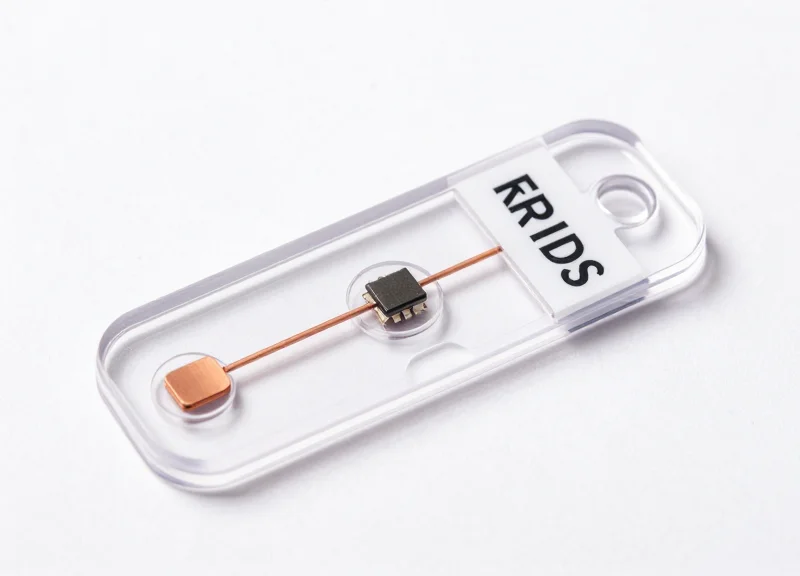
The RFID-EAS hybrid advantage is the strategic convergence of Electronic Article Surveillance (EAS) for immediate physical security and Radio Frequency Identification (RFID) for granular, item-level data visibility. In a bonded warehouse environment, this integration provides a single-tag solution that simultaneously prevents unauthorized inventory movement and automates the digital ledger required for customs audits. While EAS acts as the 'alarm,' RFID acts as the 'accountant,' ensuring that every triggered security event is mapped to a specific SKU, batch number, and import declaration.
| Feature | Traditional EAS | Standard RFID | RFID-EAS Hybrid |
|---|---|---|---|
| Primary Purpose | Theft/Loss Prevention | Inventory Visibility | Integrated Compliance & Security |
| Data Granularity | None (Bit-only) | High (Unique Serial) | High + Physical Validation |
| Audit Utility | Low (Manual count needed) | High (Automated sync) | Exceptional (Real-time reconciliation) |
| Gate Performance | Broad detection range | Can suffer from shielding | Redundant sensing for 99.9% accuracy |
### The Technical Synergy: Why 1+1=3 For customs compliance, the 'Hybrid Advantage' isn't just about doing two things at once; it's about the metadata generated at the point of transit. When a hybrid tag passes through a portal, the EAS component verifies the physical clearance while the RFID component instantly updates the bonded status in the Warehouse Management System (WMS). This eliminates the 'ghost inventory' problem where items are physically present but digitally missing—or worse, items that have exited the bonded zone without the duties being paid.
- Automated 'Duty-Point' Verification: The system automatically flags if an item has moved from a bonded area to a non-bonded area without an associated customs release form, utilizing the EAS gate as a hard physical checkpoint.
- Reduced Audit Cycle Times: By maintaining an 'audit-ready' state, facilities can reduce the time spent on manual inventory spot-checks by up to 80%, as the hybrid system provides a continuous, validated trail.
- Shrinkage-to-Duty Correlation: In the event of theft, the system doesn't just alarm; it identifies exactly which serial-numbered item was lost, allowing for immediate and accurate reporting to customs authorities to avoid penalty overages.
Expert Insight: The 'Compliance Anchor' Principle. In my two decades optimizing supply chains, I've seen that the biggest risk in bonded warehouses is the 'sync-lag'—the delay between physical movement and digital record-keeping. The hybrid tag serves as a 'Compliance Anchor.' It locks the physical item to its digital twin at the most critical point: the threshold of the warehouse. By utilizing the 8.2MHz or 58kHz EAS frequency alongside the 860-960MHz UHF RFID band, you create a fail-safe that ensures no data packet is lost even in environments with high metallic interference.
System Architecture: Mapping the Integrated Workflow

The system architecture for integrated RFID-EAS hybrid tracking is a three-tier framework consisting of the Physical Layer (sensors and tags), the Middleware Layer (data filtering and aggregation), and the Application Layer (WMS and Customs reporting). Unlike standalone systems, this integrated workflow ensures that every security event triggered by the EAS component is immediately enriched with item-level identity data from the RFID component, creating an immutable 'Digital Chain of Custody' essential for bonded warehouse audits.
| Architecture Layer | Primary Component | Functional Role in Compliance |
|---|---|---|
| Physical Layer | Hybrid RFID-EAS Hard Tags / Gate Antennas | Captures EPC data and triggers security alarms simultaneously at egress points. |
| Edge Layer | Fixed Readers & GPIO Controllers | Processes raw signal data and manages hardware triggers (lights/sirens). |
| Middleware Layer | LLRP-compliant Data Processor | Filters redundant reads and formats data into JSON/XML payloads for ERP integration. |
| Application Layer | Customs Audit Dashboard / WMS | Reconciles physical movement against bonded inventory records for automated reporting. |
To achieve seamless integration, the architecture must support the Low Level Reader Protocol (LLRP) to ensure hardware-agnostic communication. When a bonded item passes through the gate, the EAS component monitors for unauthorized frequency disturbances, while the RFID component interrogates the tag's memory. This dual-action capture prevents 'ghost inventory'—items that appear to be in stock but have physically left the premises.
- Signal Acquisition: The hybrid antenna detects the presence of an active tag within the 860-960 MHz (RFID) and 58 kHz (EAS) spectrums.
- Edge Filtering: The reader utilizes algorithms to filter out 'stray reads' from nearby warehouse shelves, focusing only on high-RSSI (Received Signal Strength Indicator) tags moving through the portal.
- Logic Validation: The middleware checks the tag's status in the WMS. If the item is not marked as 'Cleared for Export' or 'Duty Paid,' the GPIO controller triggers a visual alarm and logs a compliance violation.
- Audit Synchronization: The validated transaction is pushed to the Customs Audit trail, timestamped and linked to the specific customs entry number.
Expert Tip: The 'Silent Audit' Protocol. A common mistake is configuring systems to only log alarms. For high-stakes customs compliance, we recommend a 'Positive Confirmation' architecture. In this setup, the system logs every tag passing the gate, regardless of alarm status. This allows auditors to verify that 100% of physical movement matches the digital ledger, rather than just investigating exceptions.
{
  "event_id": "ALM-99283",
  "timestamp": "2023-10-27T14:20:01Z",
  "location": "Gate_04_North",
  "epc_detected": "3034257BF400B7800004CB2F",
  "eas_status": "ALARM_TRIGGERED",
  "customs_status": "UNAUTHORIZED_REMOVAL",
  "action_taken": "GATE_LOCK_ENGAGED"
}
Step 1: Hardware Selection and Strategic Deployment
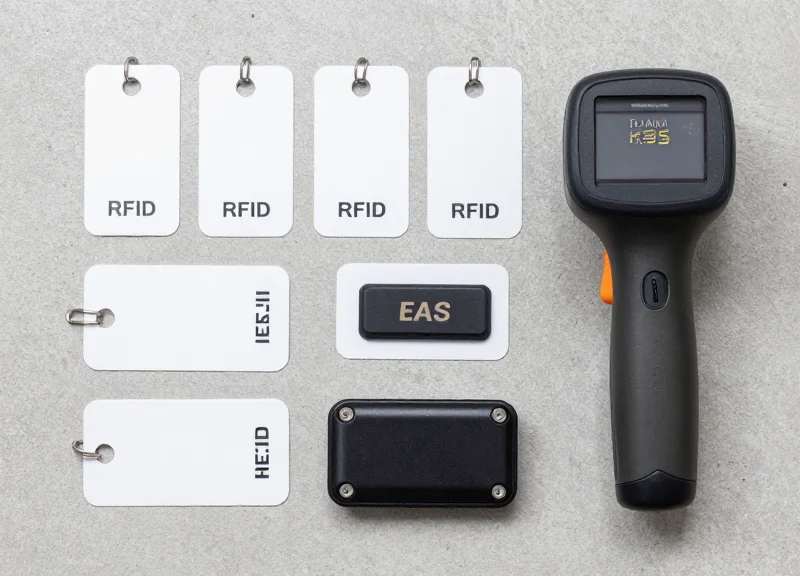
Hardware selection for bonded warehouse compliance requires a dual-track approach: high-performance UHF RFID for item-level data granularity and Electronic Article Surveillance (EAS) for real-time security alerts. Strategic deployment involves configuring high-sensitivity readers and antennas at transition points (docks, zones, and exits) to create a 'closed-loop' audit trail that eliminates manual entry errors and satisfies customs reporting requirements for 100% inventory accuracy.
| Hardware Component | Key Specification | Compliance Function |
|---|---|---|
| Hybrid Tags | EPC Gen2 + AM (58kHz) / RF (8.2MHz) | Unified tracking and security for high-value bonded goods. |
| Fixed Portals | Four-port high-gain antennas | Automated capture of inbound/outbound 'Proof of Entry'. |
| Rugged Handhelds | IP65 Rated with >900 tags/sec read rate | Rapid spot-checks and reconciliation during official audits. |
| GPIO Controllers | Low-latency relay triggers | Activates alarms or visual alerts when unauthorized movement occurs. |
- Select Tags Based on Substrate and Density: Choose 'On-Metal' RFID-EAS hybrid tags for electronics or metallic containers to prevent detuning. For high-density apparel, prioritize tags with high-sensitivity chips to ensure signals penetrate deep into stacked pallets.
- Conduct a Multipath Site Survey: Map out signal 'dead zones' caused by warehouse racking. Use a spectrum analyzer to detect interference from existing Wi-Fi or industrial machinery that could disrupt the 860-960 MHz RFID range.
- Optimize Antenna Polarization: Deploy circular-polarized antennas at dock doors to read tags in any orientation. Use linear-polarized antennas for specific aisles where tags are consistently oriented to maximize read range.
- Implement Phased Logic Portals: Configure readers to distinguish between tags 'moving through' a door versus tags 'resting near' a door. This prevents false positives and ensures the audit trail reflects actual movement.
Expert Insight: The RSSI Threshold Strategy. To achieve 100% read accuracy in dense environments, do not rely on a simple 'tag present' logic. Configure your middleware to filter by Received Signal Strength Indicator (RSSI). By setting a minimum RSSI threshold, you can programmatically ignore 'ghost reads' from adjacent zones, ensuring that your customs audit data only records items that physically crossed the sensor threshold.
How do we handle interference from metal shelving?
Utilize shielded antennas that direct the RF energy toward the target zone and use spacers to keep tags at least 5mm away from metallic surfaces.
Can RFID-EAS tags be reused?
Hard tags are designed for long-term reuse across multiple audit cycles, whereas adhesive labels are typically one-time-use for disposable packaging.
What is the maximum read range for a bonded exit?
Typically 3 to 6 meters depending on the antenna gain and tag sensitivity, which is more than sufficient for standard warehouse bay doors.
Step 2: Software Integration with Customs ERP Systems

Integrating RFID-EAS hybrid tracking with Customs ERP systems is the process of synchronizing physical inventory movements with regulatory record-keeping via a middleware layer. This integration ensures that every 'gate event'—such as an item entering or leaving a bonded zone—is automatically validated against customs declarations (e.g., Form 7501 or 3461 in the US) without human intervention. By establishing a robust API-led connection, warehouses can achieve a 'continuous audit' state, where discrepancies between physical stock and digital filings are flagged in milliseconds rather than weeks.
| Integration Method | Primary Use Case | Data Latency | Complexity |
|---|---|---|---|
| RESTful APIs | Real-time status updates and cloud-to-cloud sync | Sub-second | Moderate |
| EDI (Electronic Data Interchange) | Batch filing of official customs entry documents | 15 - 60 minutes | High |
| Webhook Listeners | Triggering alerts for unauthorized EAS gate alarms | Instantaneous | Low |
Expert Tip: Implement Data Throttling at the Edge. One common mistake in RFID-EAS deployments is flooding the ERP with 'raw reads.' A single tag might be read 50 times in one second at a gate. Your middleware must include a deduplication and state-management engine that only pushes 'Transition Events' (e.g., Status: Bonded -> Status: Released) to the ERP, preserving system performance and storage.
- Data Schema Alignment: Map the Electronic Product Code (EPC) from the RFID tag to the Harmonized System (HS) codes and Internal Transaction Numbers (ITN) stored in your ERP.
- Secure Authentication Setup: Configure OAuth 2.0 or mutual TLS (mTLS) for the middleware to communicate with customs-connected systems, ensuring data integrity and non-repudiation.
- Event-Driven Logic Configuration: Define business rules that trigger when a tag is scanned at an EAS pedestal, automatically updating the 'Duty-Paid' status if the item has cleared customs.
- Exception Handling & Logs: Build an 'Audit Buffer' where failed sync attempts are stored with high-resolution timestamps for manual review during a customs audit.
{
  "event_id": "EVT-9982X",
  "timestamp": "2023-10-27T14:30:00Z",
  "epc_id": "303425789C000C100000348D",
  "location_id": "GATE_04_SOUTH",
  "action": "DISCHARGE",
  "customs_status": "DUTY_PAID",
  "declaration_ref": "USC-77482910"
}
How do we handle network outages?
Utilize a Store-and-Forward architecture where the RFID reader or local middleware caches data locally and pushes it to the ERP once connectivity is restored.
Can RFID-EAS data be used as legal proof for Customs?
Yes, provided the system maintains a 'Chain of Custody' log that is immutable and timestamped, satisfying the data integrity requirements of programs like CTPAT.
What is the biggest bottleneck in integration?
Legacy ERP systems that lack modern API endpoints. In these cases, a 'Digital Wrapper' or RPA (Robotic Process Automation) tool may be required to bridge the gap.
Automating the Reconciliation Process
Automating the reconciliation process in a bonded warehouse transforms compliance from a reactive audit event into a proactive, continuous data-matching workflow. By leveraging RFID-EAS hybrid data, the system programmatically compares real-time physical inventory counts against the Customs Declaration (CD) and Warehouse Management System (WMS) records to detect 'shrinkage' or 'overages' instantly. This 'T+0' reconciliation approach ensures that the official ledger always reflects the physical reality of the floor, preventing the costly administrative penalties associated with inaccurate declaration filings.
- Daily Data Ingestion: The system pulls the latest Customs Declaration (CD) records and current WMS balances via API at scheduled intervals (e.g., every 60 minutes).
- Physical Delta Calculation: RFID-EAS overhead readers and portal sensors stream physical tag IDs to the reconciliation engine, which compares the 'last seen' location and status against the expected systemic status (In-Bond, Cleared, or In-Transit).
- Exception Flagging: If a physical tag is detected without a corresponding clearance record, or if a declared item is missing from the physical scan, the system triggers a 'Soft Discrepancy' alert for immediate internal investigation.
- Automated Correction or Escalation: Minor data entry errors can be corrected via automated workflows, while significant physical gaps are escalated to the compliance officer before the daily report is finalized for Customs.
| Feature | Manual Reconciliation | Automated RFID-EAS Hybrid |
|---|---|---|
| Audit Frequency | Monthly or Quarterly | Real-time / Daily |
| Accuracy Rate | 85% - 92% (Human error) | 99.5% - 99.9% (Digital precision) |
| Discrepancy Visibility | Post-facto (After audit) | Pre-emptive (Before audit) |
| Operational Downtime | High (Warehouse freeze) | Zero (Continuous tracking) |
Expert Tip: The 'Shadow Inventory' Fail-Safe. A unique advantage of the hybrid system is the EAS layer acting as a 'physical heartbeat.' While RFID provides the data for the reconciliation ledger, the EAS component provides a secondary physical verification. If an RFID signal is shielded (e.g., by foil-lined packaging), the EAS gate still triggers an alarm if the item moves toward an unauthorized exit. This prevents 'Ghost Inventory'—items that exist in the database and have passed a digital check but are physically missing due to sophisticated theft.
{
  "reconciliation_report": {
    "timestamp": "2023-10-27T23:59:59Z",
    "warehouse_id": "BW-091",
    "summary": {
      "declared_count": 5420,
      "physical_count": 5418,
      "discrepancy": -2
    },
    "flags": [
      {
        "sku": "LX-772",
        "tag_id": "E28011912000...",
        "issue": "Missing physical presence",
        "status": "In-Bond",
        "priority": "High"
      }
    ]
  }
}
Does automated reconciliation satisfy legal audit requirements?
Yes, most modern customs jurisdictions accept digital reconciliation reports provided they include a verifiable audit trail showing when and how the physical data was captured.
What happens if the RFID reader fails during a scan?
The system utilizes 'Gap Detection' logic. If a reader goes offline, the reconciliation engine flags the specific zone as 'Unverified' and prompts a manual spot check or uses data from adjacent sensors to interpolate the inventory.
Can this system handle high-density metal environments?
By using specialized On-Metal RFID tags and tuned EAS antennas, the hybrid system maintains high read accuracy even in challenging warehouse settings.
Data Integrity and Security Protocols

Data integrity and security protocols in hybrid RFID-EAS systems ensure that every digital record—from the moment a tag enters a bonded zone to its final export clearance—is immutable, authentic, and protected against unauthorized modification. For customs compliance, this means maintaining a non-repudiable audit trail that satisfies Authorized Economic Operator (AEO) requirements and international standards like ISO/IEC 20248 by using cryptographic hashing and secure data transmission tunnels.
- End-to-End Encryption (E2EE): All data transmitted between the RFID readers (Edge) and the central ERP system must be encrypted using TLS 1.3. This prevents man-in-the-middle (MITM) attacks where bad actors could intercept tag IDs to spoof inventory levels.
- Cryptographic Tag Authentication: Utilize tags that support the Gen2v2 standard, which allows for cryptographic authentication. This ensures that the RFID tag being read is a genuine asset and not a cloned tag intended to hide cargo theft or substitution.
- Immutable Hashing for Audit Logs: Every transaction log (e.g., 'Item X moved to Zone B') should be hashed using SHA-256. By chaining these hashes, any retrospective attempt to alter the audit trail for customs will immediately break the hash chain, alerting auditors to tampering.
| Protocol Layer | Security Standard | Compliance Function |
|---|---|---|
| Data at Rest | AES-256 Encryption | Protects sensitive inventory manifests on servers. |
| Data in Transit | TLS 1.3 / WPA3 | Secures wireless reader-to-gateway communication. |
| Identity Mgmt | OIDC / OAuth 2.0 | Restricts system access to authorized customs officers and staff. |
| Tag Integrity | ISO/IEC 29167 | Standardizes crypto-suites for air interface security. |
Expert Insight: The 'Silent Audit' via Zero-Knowledge Proofs (ZKP). A major hurdle in customs integration is the conflict between regulatory transparency and corporate trade secrets. To differentiate your compliance strategy, consider implementing Zero-Knowledge Proofs. ZKP allows the warehouse system to prove to a customs portal that an item is 'Present and Tax-Paid' without revealing the specific SKU, supplier, or price point to third-party logistics handlers, ensuring maximum privacy while maintaining 100% compliance.
import hmac
import hashlib

# Example: Generating a secure integrity HMAC for a customs audit log entry
SECRET_KEY = b'customs-audit-secure-key'
log_entry = "ITEM_ID:99283|ZONE:B-4|ACTION:BOND_ENTRY|TS:2023-10-27T10:00Z"

def generate_audit_hmac(entry):
    return hmac.new(SECRET_KEY, entry.encode(), hashlib.sha256).hexdigest()

print(f"Log: {log_entry}")
print(f"Integrity Signature: {generate_audit_hmac(log_entry)}")
How does this system prevent data 'ghosting'?
Ghosting is prevented through the EAS-RFID hybrid handshake. If an RFID record is deleted from the database but the EAS physical gate triggers an alarm, the system identifies the 'ghost' movement and logs an immediate security exception.
Is cloud storage compliant for bonded warehouse data?
Yes, provided the cloud provider meets SOC2 Type II standards and data residency requirements specified by your local customs jurisdiction. Encryption keys should remain under the warehouse operator's control (BYOK).
Operational ROI: Beyond Compliance
Operational ROI in a bonded warehouse environment is defined as the measurable increase in capital efficiency and labor productivity achieved when transitioning from reactive manual audits to proactive, automated hybrid tracking. While compliance avoids penalties, a technical RFID-EAS integration generates positive cash flow by eliminating the 'buffer waste' typically required to compensate for inventory inaccuracies, often resulting in a full system payback within 12 to 18 months.
| Operational Metric | Legacy Barcode/Manual Process | RFID-EAS Hybrid System |
|---|---|---|
| Audit Labor Requirement | High (Weekly/Monthly cycle counts) | Minimal (Real-time automated counts) |
| Inventory Accuracy | 85% - 92% (prone to human error) | 99.5% - 99.9% (automated verification) |
| Shrinkage/Loss Prevention | Reactive (found during reconciliation) | Proactive (EAS alerts at egress) |
| Search Time for Discrepancies | Hours/Days per incident | Seconds (Sub-meter localization) |
Beyond simple labor savings, the most significant ROI driver is what I call the 'Liquidity Multiplier.' In a bonded warehouse, every item on the shelf represents deferred duty, but it also represents locked capital. When your tracking is 99.9% accurate, you can safely reduce your safety stock levels by 15-20%. This precision allows warehouse managers to move toward a 'Just-in-Time' (JIT) bonded entry model, effectively freeing up hundreds of thousands of dollars in working capital that would otherwise be sitting as 'insurance' against audit discrepancies.
How does hybrid tracking affect insurance premiums?
Many underwriters offer reduced premiums for bonded facilities that utilize active EAS and RFID tracking because the real-time visibility significantly lowers the 'unexplained loss' risk profile.
Can the EAS component be used for more than security?
Yes. The EAS gate events act as a secondary validation layer for Customs Exit Notes. If an item passes the gate without a corresponding 'Permission to Progress' (PTP) digital handshake, the system can trigger an immediate operational lockdown, preventing a compliance violation before it occurs.
What is the impact on warehouse throughput?
By removing the need for manual scanning at staging areas, hybrid systems increase pallet-to-shelf velocity. Goods move through the customs-controlled zone faster, improving the overall turnover ratio of the facility.
Expert Tip: To maximize your ROI, integrate your RFID data with your Warehouse Management System's (WMS) aging report. By automating the tracking of 'Duration in Bond,' you can trigger alerts for goods approaching the maximum statutory period allowed by local customs, preventing forced duty payments on items that could have been re-exported or moved.
Future-Proofing Your Warehouse with DragonGuardGroup
Future-proofing a bonded warehouse means implementing a hardware and software architecture that is modular, firmware-upgradable, and data-agnostic. DragonGuardGroup achieves this by converging physical security (EAS) and digital visibility (RFID) into a single, scalable ecosystem that adapts to shifting international trade laws without requiring costly infrastructure overhauls. By decoupling the sensing layer from the logic layer, DragonGuard ensures that as customs mandates evolve from simple reporting to real-time telemetry, your facility remains compliant through software updates rather than hardware replacement.
| Feature | Legacy Siloed Systems | DragonGuard Hybrid Ecosystem |
|---|---|---|
| Regulatory Adaptation | Manual hardware reconfiguration | OTA (Over-the-Air) firmware updates |
| Data Granularity | Gate-level only | Item-level lifecycle telemetry |
| IoT Integration | Non-existent or via third-party | Native MQTT/REST API support |
| Scalability | Limited by physical wiring | Modular mesh-network expansion |
- AI-Driven Predictive Compliance: DragonGuard systems utilize machine learning at the edge to identify patterns of 'Compliance Drift,' alerting managers to potential audit failures before a discrepancy is even logged by the ERP.
- Seamless 5G and IIoT Convergence: Our latest readers support high-density connectivity, allowing for thousands of simultaneous pings per second, essential for the high-velocity requirements of modern Smart Ports and bonded zones.
- Eco-System Interoperability: We maintain an open-architecture approach, ensuring our RFID-EAS hardware integrates with legacy WMS, modern Blockchain-based ledgers, and future robotic sorting systems.
Expert Insight: The 'Compliance-as-Code' Evolution. While most competitors view hardware as a static asset, DragonGuardGroup treats your tracking infrastructure as a dynamic compliance node. Our unique insight is the implementation of 'Compliance-as-Code' within the reader firmware itself. This allows bonded warehouses to instantly toggle between different regional customs protocols (e.g., transitioning from EU-specific AEO requirements to US-centric CTPAT standards) via a centralized cloud dashboard, ensuring your operations remain agile in a volatile geopolitical trade environment.
How does DragonGuard handle global variations in RFID frequency?
Our hardware is designed with wide-band frequency agility, meaning the same device can be tuned via software to comply with FCC, ETSI, or SRRC standards, facilitating global fleet management.
Is the system compatible with existing EAS security tags?
Yes, our hybrid readers are designed to sense legacy AM/RF EAS signals while simultaneously processing UHF RFID data, allowing for a phased migration to full hybrid technology.
What happens if local customs regulations change overnight?
DragonGuard's centralized management platform allows for rapid reporting schema updates. You can modify data export formats to match new customs API requirements within minutes across all nodes.