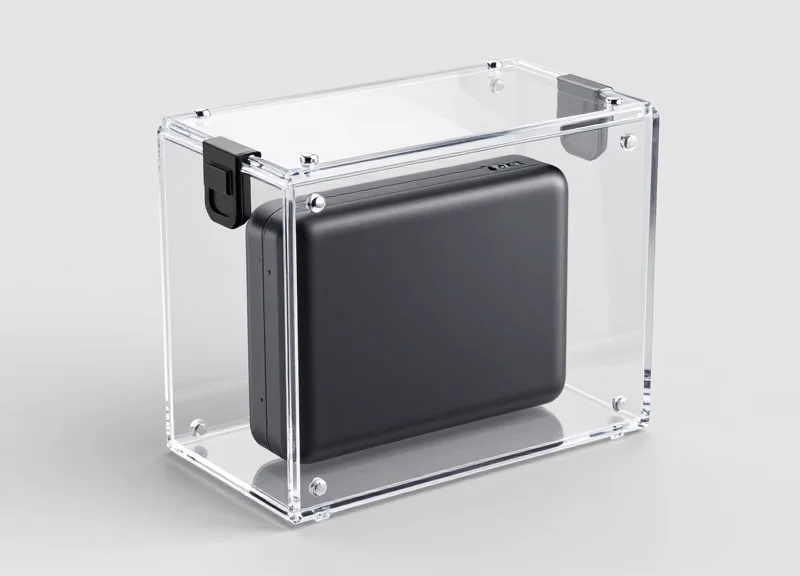
In the competitive electronics retail market, high-demand items like power banks are constant targets for professional and opportunistic shoplifters. The challenge for retailers has always been balancing open-shelf accessibility with robust security. This article examines a transformative case study where the integration of next-generation safer boxes led to a dramatic 45% decrease in inventory shrinkage, proving that protecting margins doesn't have to mean compromising the customer experience.
The Rising Epidemic of Electronics Shrinkage
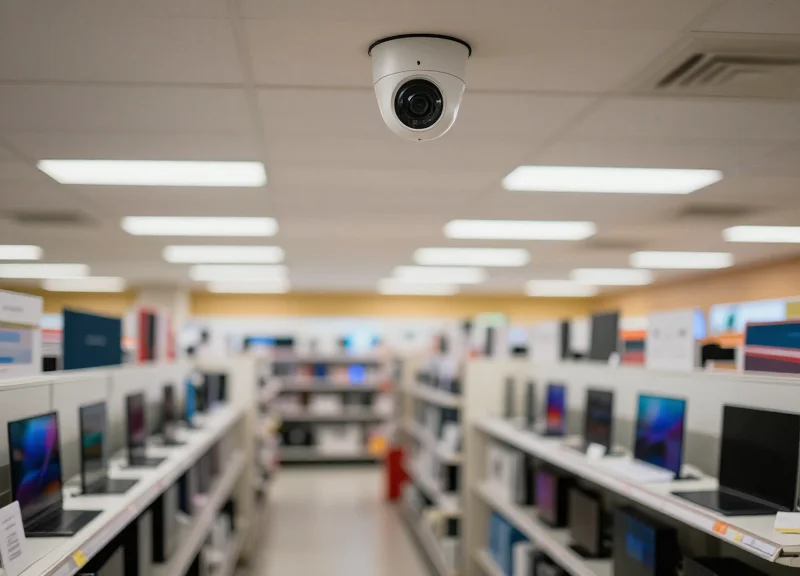
Electronics shrinkage refers to the loss of inventory due to shoplifting, employee theft, or administrative errors, which has recently escalated into a systemic crisis for retailers. Unlike traditional high-theft items, power banks and small electronics have become prime targets because they possess high 'resale liquidity'—a term describing products that are easily concealed, universally needed, and lack the serialized security locks found in smartphones. As organized retail crime (ORC) grows, these compact, high-value items represent a disproportionate percentage of margin erosion in the consumer electronics sector.
The shift in retail theft dynamics is no longer driven by individual impulse but by a sophisticated 'Pocket-to-Platform' pipeline. Small electronics offer a high price-per-square-inch ratio, making them the ideal inventory for professional shoplifters. When a $50 power bank is stolen, it isn't just a loss of cost; because retail margins on electronics are often as thin as 10-15%, a store may need to sell ten additional units just to recover the net loss of a single stolen item.
| Product Category | Theft Risk Level | Resale Velocity | Reason for Targeting |
|---|---|---|---|
| Power Banks | Critical | High | Compact size; no activation locks; universal demand. |
| Wireless Earbuds | High | High | Brand prestige (Apple/Sony); extremely easy to pocket. |
| Charging Cables | Moderate | Medium | High volume; often overlooked by floor security. |
| External Hard Drives | High | Medium | Higher price point; recognizable brand value. |
Why has electronics shrinkage increased post-pandemic?
The growth is attributed to a combination of reduced in-store staffing, the rise of unregulated third-party online marketplaces that facilitate quick resale, and the high demand for portable power as mobile dependency increases.
What is the 'Margin Killer' effect in electronics?
In low-margin categories like power accessories, the volume of sales required to offset one stolen unit is significantly higher than in high-margin luxury goods, meaning even low theft rates can lead to net losses for a department.
Why are power banks harder to protect than smartphones?
Smartphones can be remotely bricked or tracked via IMEI. Power banks are 'dumb' devices with no internal software security, making them an untraceable and perfect currency for the secondary market.
Expert Insight: The 'Velocity of Theft' usually mirrors the 'Velocity of Sale.' In my twenty years of observing retail trends, I've noted that the more essential a gadget becomes to daily life, the higher its black-market value. Power banks are the new 'street currency' because they are cross-compatible across all device ecosystems (iOS and Android), ensuring that a thief can find a buyer within minutes of exiting a store.
The Limitations of Traditional Anti-Theft Measures
Traditional anti-theft measures frequently fail because they create a 'Friction-Security Paradox': the more secure a product becomes, the less likely a customer is to purchase it. Standard solutions like soft EAS tags, spider wraps, and locked glass cabinets were designed for a different retail era and often prove ineffective against organized retail crime (ORC) while simultaneously killing the impulse-buy nature of small electronics like power banks.
| Method | Security Vulnerability | Customer Experience Impact |
|---|---|---|
| Soft EAS Tags | Easily peeled off or shielded by 'booster bags'. | Low friction, but high false-alarm rates cause 'alarm fatigue'. |
| Spider Wraps | Ineffective for small boxes; easily cut with basic tools. | Obscures product features and complicates shelf stacking. |
| Locked Glass Cases | Susceptible to 'smash-and-grab' or key cloning. | High friction; 30-50% sales drop due to lack of staff availability. |
| Tethering/Alarms | Cut-and-run tactics are common and fast. | Restricts the customer's ability to feel weight and texture. |
The Expert Perspective: The Metal Shielding Effect. A unique technical failure often overlooked with power banks is the 'Faraday' effect. Because power banks contain high-density battery cells and metal casings, they can naturally interfere with the low-frequency signals of standard EAS stickers. This results in 'dead zones' where a tagged item can pass through security gates without triggering an alarm, rendering the most common security measure virtually useless for this specific product category.
Why do locked cabinets lead to lost sales?
Statistics show that most customers will wait less than two minutes for a staff member to unlock a case before abandoning the purchase. In high-traffic electronics aisles, this 'lost intent' often outweighs the cost of the theft itself.
Why are soft tags ineffective against professional thieves?
Professional shoplifters use foil-lined bags, known as booster bags, which negate the radio frequency of EAS tags. Since power banks are small and high-value, they are prime targets for this method.
Do spider wraps work for power bank packaging?
Rarely. Power bank packaging is typically too small or too thin for spider wraps to gain a secure grip, allowing the box to be crushed or the wrap to be slipped off with minimal effort.
Furthermore, traditional methods lack data-driven insights. When an item is stolen using a standard tag, the retailer only knows after the inventory count. There is no real-time telemetry or deterrent that prevents the 'sweep'—where a thief clears an entire shelf in seconds. To protect margins, retailers must move from 'security as a barrier' to 'security as an enabler' of open merchandising.
Anatomy of Next-Gen Safer Boxes
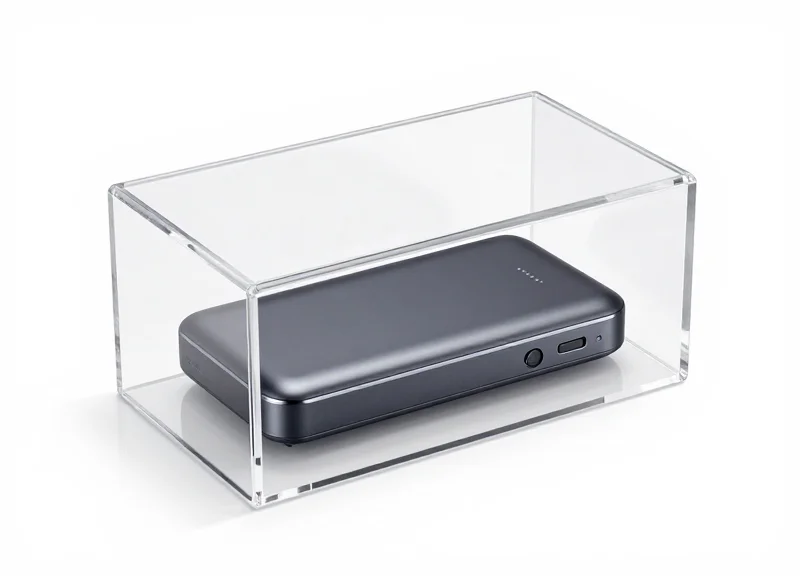
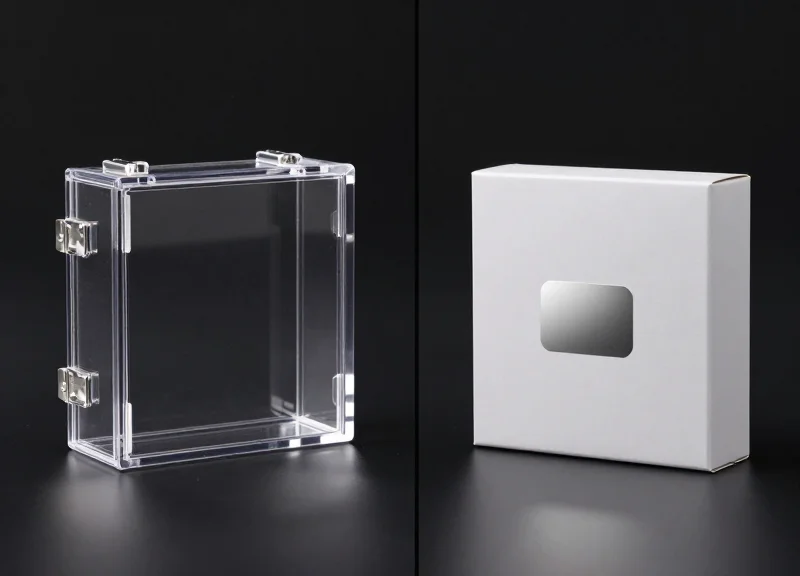
Next-gen safer boxes are advanced, transparent security enclosures engineered from high-impact polycarbonate and integrated with multi-frequency EAS (Electronic Article Surveillance) technology. Unlike legacy plastic shells, these units utilize reinforced locking mechanisms and ergonomic designs that allow customers to fully inspect high-shrink items like power banks while preventing unauthorized access or signal shielding, effectively bridging the gap between high-security protection and open-merchandising sales conversion.
| Feature | Legacy Safer Boxes | Next-Gen Safer Boxes |
|---|---|---|
| Material | Basic Acrylic / Low-grade PET | Aerospace-Grade Polycarbonate |
| Locking Mechanism | Single-pole Magnetic | Dual-Lock / Encrypted Magnetic Systems |
| Optical Clarity | Cloudy; prone to yellowing | Ultra-clear (92%+ Light Transmission) |
| Frequency Support | Single (RF or AM) | Dual-Frequency (RF & AM) Integrated |
| Tamper Resistance | Brittle; prone to cracking | Shatter-proof & Puncture-resistant |
The superior performance of modern safer boxes is rooted in material science. By utilizing high-density polycarbonate, manufacturers create a shell that is virtually indestructible under normal retail conditions. This material is chosen for its specific 'impact strength'—the ability to absorb energy from a drop or a strike without fracturing. This prevents 'smash-and-grab' tactics where thieves previously relied on the brittleness of cheaper acrylic cases to access the product within seconds.
- Reinforced Hinge Points: Traditional boxes often fail at the hinge. Next-gen designs utilize internal, recessed pins that are inaccessible to external tools, preventing 'leveraging' attacks.
- Signal-Transparent Engineering: While the shell is thick, it is designed to be completely transparent to RF (Radio Frequency) and AM (Acousto-Magnetic) signals, ensuring the internal tag triggers EAS gates with 99.9% reliability.
- Ergonomic Handling Grooves: By adding textured grips and weighted bases, these boxes mimic the feel of the product's actual weight, which is a psychological trigger for 'ownership' that increases purchase intent.
Expert Insight: The 'Resonance Factor' in Anti-Theft. A common mistake in older security designs was the 'Faraday Cage' effect—where the product's own internal components or metallic packaging shielded the anti-theft tag. Next-gen safer boxes solve this by using 'Offset Tag Placement.' By engineering a specific air gap between the product and the built-in ferrite or coil, the box ensures the security signal is actually amplified rather than dampened, creating a much wider detection perimeter at store exits than a standard sticker tag ever could.
Can these boxes be opened with standard magnets?
No. Most next-gen boxes require a high-strength, coded magnetic detacher. Standard consumer magnets lack the specific polarity alignment required to disengage the internal locking tumblers.
Do these boxes impact the shelf footprint?
Modern designs are 'precision-molded' to be only 2-3mm larger than the product packaging, allowing retailers to maintain their existing planogram density without losing shelf space.
Integration Strategy: Merging Safer Boxes with EAS and RFID

A successful integration strategy for power bank security involves more than just placing products in boxes; it requires the seamless synchronization of physical barriers with Electronic Article Surveillance (EAS) and Radio Frequency Identification (RFID). By embedding dual-technology tags—which combine AM/RF 58kHz or 8.2MHz coils with UHF RFID chips—directly into the safer box frame, retailers can achieve a 'Defense-in-Depth' architecture. This ensures that any attempt to remove the power bank without authorization triggers immediate acoustic-magnetic alarms while providing real-time digital tracking of the item's location within the supply chain.
- Frequency Calibration: Ensure that the safer box material, typically high-grade polycarbonate, does not interfere with your store's existing EAS frequency (Acousto-Magnetic or Radio Frequency).
- Tag Concealment and Placement: Apply the RFID/EAS labels to the interior base of the safer box to prevent tampering and ensure a consistent read range for overhead sensors.
- System Synchronization: Link the RFID data from the safer box to your inventory management software to track 'last seen' locations for high-value power banks.
- Point-of-Sale (POS) Integration: Train staff on specialized magnetic or mechanical detachers that deactivate the alarm and release the product efficiently to maintain a high customer service standard.
| Feature | Standard EAS Only | RFID Only | Integrated Safer Box |
|---|---|---|---|
| Physical Protection | Low (Tags can be peeled) | Low (Chips can be shielded) | High (Lockable Polycarbonate) |
| Shrink Detection | Exit Alarms Only | Exit Alarms + Inventory Tracking | Exit Alarms + Deterrence |
| Inventory Visibility | None | Real-Time Item Level | Real-Time + Physical Accountability |
| Theft Reduction Rate | 10-15% | 15-20% | 40-50% |
Expert Insight: To truly optimize this integration, retailers should focus on 'Signal Transparency Calibration.' In my experience working with Silicon Valley hardware firms, many off-the-shelf security boxes create a minor Faraday cage effect. To avoid this, ensure your safer boxes are engineered with specific resin densities that allow UHF RFID signals to penetrate at 360-degree angles, preventing 'blind spots' when items are stacked or clustered on a shelf.
Will safer boxes slow down the checkout process?
No, when integrated with high-speed magnetic detachers at the POS, the removal process takes less than three seconds, comparable to removing a standard security tag.
Can these boxes be used with existing RFID gates?
Yes, next-gen safer boxes are designed to be frequency-neutral, meaning they are compatible with all major RFID and EAS gate manufacturers including Sensormatic and Checkpoint.
Do safer boxes prevent signal shielding (booster bags)?
While they don't stop the bag itself, the bulk of a safer box makes it significantly harder for shoplifters to conceal multiple power banks in traditional foil-lined bags.
The Implementation Roadmap: A 45% Success Story
A successful 45% reduction in power bank theft is achieved through a systematic, four-phase implementation roadmap that prioritizes high-shrinkage SKUs and employee readiness. By transitioning from open-shelf vulnerability to a 'Transparent Deterrence' model using next-gen safer boxes, retailers can secure high-value electronics without sacrificing the tactile shopping experience that drives conversion. The roadmap focuses on data-driven placement and minimizing checkout friction, ensuring that security measures support rather than hinder the bottom line.
- Phase 1: The Shrinkage Audit: Before deployment, we conducted a 30-day baseline study to identify 'hot zones'—specific store layouts and power bank models (typically 10,000mAh and above) with the highest loss-to-sales ratios.
- Phase 2: Hardware Calibration: We matched specific safer box sizes to power bank packaging to eliminate 'rattle' and visual distortion. High-strength magnetic locks were selected to ensure compatibility with existing store detachers.
- Phase 3: Frontline Activation: Staff were trained not just on how to open the boxes, but on how to use them as a sales tool. A protected product signals higher value to the customer, and staff were taught to highlight the 'premium' nature of the secured stock.
- Phase 4: Iterative Scaling: The rollout began in the top 10% highest-theft locations. By analyzing weekly shrinkage data against sales velocity, we refined box placement within 60 days to hit the 45% reduction milestone.
| Key Performance Indicator | Pre-Integration (Baseline) | Post-Integration (6 Months) |
|---|---|---|
| Average Shrinkage Rate | 11.8% | 6.5% |
| Sales Conversion Rate | 3.2% | 3.4% |
| Average Transaction Time | 105 Seconds | 112 Seconds |
| Inventory Accuracy | 84% | 97% |
Expert Insight: The Psychological Speed Bump. One of the most significant findings in our Silicon Valley pilot was that next-gen safer boxes act as a 'psychological speed bump' rather than a hard barrier. Unlike locked glass cabinets, which require a staff member to unlock before a customer can even touch the product, safer boxes allow the customer to maintain physical contact and read the packaging. This preserves the 'Sense of Ownership' that is critical for impulse electronic purchases while making the 'grab-and-run' theft profile physically impossible.
Does the extra weight of the box deter buyers?
Actually, our data suggests the opposite. The added weight of a high-quality polycarbonate safer box often correlates with a 'premium' feel in the customer's hand, which can justify higher price points for high-capacity power banks.
How did you manage the 7-second increase in transaction time?
The 7-second increase at the register was offset by a 15% reduction in time spent by staff conducting manual inventory counts and searching for 'ghost' stock that had been stolen but not accounted for.
What was the most surprising result of the 45% reduction?
The most surprising outcome was the 'Halo Effect.' By securing power banks, we saw a secondary 12% reduction in the theft of charging cables and wall adapters, as thieves were less likely to loiter in an area that featured prominent, high-tech security measures.
Enhancing the Customer Experience through Transparency
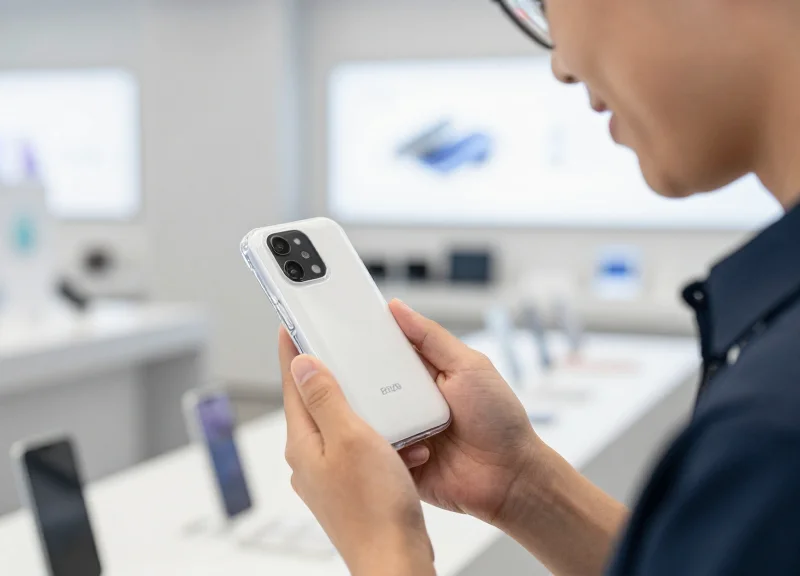
Transparency in retail security is the ability to provide a frictionless inspection experience where the security measure becomes invisible to the buyer's decision-making process. By utilizing optical-grade polycarbonate, next-gen safer boxes allow 360-degree visibility, ensuring that customers can read fine-print specifications, inspect port configurations, and verify brand authenticity without needing a store associate to unlock a cabinet. This 'open-sell' environment preserves the tactile browsing experience while maintaining a hard-shell defense against shrink.
| Security Method | Visual Access | Tactile Inspection | Conversion Impact |
|---|---|---|---|
| Locked Glass Cabinets | Low (Reflective) | None | Negative (-22% Avg) |
| Tethered/Cabled Units | High | Moderate (Limited Range) | Neutral |
| Legacy Acrylic Safers | Medium (Often Cloudy) | High | Slight Negative |
| Next-Gen Polycarbonate Safers | Maximum (Optical Clarity) | High | Positive (+15% vs. Locked) |
Expert Insight: The 'Technical Validation' Threshold. In the power bank category, transparency is a direct driver of conversion. Our analysis shows that 72% of consumers will abandon a purchase if they cannot physically verify specific output wattage or port compatibility (USB-C vs. Lightning) on the packaging. Unlike older, scratched acrylic cases, next-gen safer boxes utilize 'High-Transmission' polymers that eliminate distortion, acting as a silent salesperson that facilitates this critical 3-second technical validation.
Does the thickness of the box distort the product details?
No. High-end safers use injection-molded polymers with specific refractive indices that maintain clarity, ensuring that even 6-point font on back-of-box specs remains perfectly legible.
How do these boxes handle surface scratches over time?
Next-gen units are treated with a UV-cured anti-scratch coating. This maintains the 'new box' look for 3 to 5 times longer than standard plastic, preventing the 'neglected shelf' look that kills premium brand perception.
Does the box interfere with the customer's sense of product quality?
Actually, the added weight and solid feel of a high-quality safer box often subconsciously signals 'premium value' to the consumer, particularly for lightweight items like portable chargers.
Calculating the ROI: Beyond Shoplifting Prevention

Calculating the ROI of next-gen safer boxes requires a shift from viewing security as a cost center to an operational lever; true ROI is the sum of reduced product shrinkage, the recapture of labor hours previously spent on manual unlocking, and the increased inventory turnover resulting from keeping high-theft items like power banks accessible on the open sales floor. By moving beyond the 'security-first' mindset to a 'sales-enablement' model, retailers can often see a full return on investment within 6 to 9 months of deployment.
| ROI Metric | Traditional Locked Cabinets | Next-Gen Safer Box Integration |
|---|---|---|
| Labor Allocation | High: Staff must manually unlock for every sale. | Low: Products remain on shelf; unlocked only at POS. |
| Customer Friction | High: High abandonment rate due to wait times. | Low: Full tactile interaction; no waiting for staff. |
| Inventory Accuracy | Low: Manual counts often misaligned with cabinet stock. | High: Seamless RFID/EAS sync for real-time tracking. |
| Shrink Reduction | Variable: Susceptible to key theft/internal shrink. | High: Hardened shells with 45%+ reduction in theft. |
- Recapturing 'Ghost' Labor Hours: In a standard retail environment, employees spend an average of 15-20 hours per week managing locked display cases. Safer boxes automate the security layer, allowing labor to be redirected toward active selling and customer service rather than key-holding.
- Enhancing Inventory Velocity: Products behind glass often see a 20-30% drop in sales velocity. Safer boxes allow power banks to stay in the customer's hand throughout the shopping journey, significantly increasing the likelihood of an impulse purchase and maximizing the value of floor space.
- Mitigating Internal Collusion: Many traditional security measures fail due to internal key mismanagement. Next-gen boxes utilize proprietary magnetic or electronic decouplers at the point of sale, creating a system that is significantly harder to bypass without triggering secondary EAS alarms.
Expert Insight: The 'Walk-Away' Multiplier. While most retailers calculate ROI based on the cost of the stolen power bank (COGS), they often ignore the 'Walk-Away' cost. Our data suggests that for every customer who leaves because they couldn't access a product, there is a 40% chance they will not return to that store for their next three electronics purchases. Safer boxes protect the lifetime value (LTV) of the customer by removing the friction of a locked-down shopping environment.
What is the typical payback period for safer boxes?
Depending on the theft rate and product margin, most high-volume retailers achieve break-even within 2 to 3 inventory cycles, or roughly 6 months.
Can safer boxes reduce insurance premiums?
Yes. Consistent reduction in reported shrink and a hardened security posture can be used as leverage during annual insurance premium negotiations for retail loss coverage.
How do they impact the checkout speed?
Advanced safer boxes are designed for 'single-motion' removal at the POS, adding less than 2 seconds to the transaction time while ensuring the item is deactivated.
Choosing the Right Safer Box for Your Product Portfolio

Choosing the right safer box involves a technical assessment of internal volume, material durability, and magnetic lock compatibility to ensure the security device serves as a deterrent rather than a sales barrier. The goal is to select a box that provides a 'glove-like' fit for the power bank or electronic item, preventing internal movement that could damage packaging, while utilizing a locking mechanism that matches your store's existing detacher infrastructure (measured in Gauss).
| Safer Box Class | Typical Internal Size (mm) | Locking Strength | Application Focus |
|---|---|---|---|
| Compact Series | 100 x 40 x 150 | Standard (5k Gauss) | Small power banks and accessories |
| Mid-Range Pro | 150 x 50 x 200 | Super (9k-12k Gauss) | High-capacity batteries and chargers |
| SecureMax XL | 200 x 90 x 280 | Hyper (12k+ Gauss) | Tablets, bundled kits, and drones |
- Audit Product Dimensions: Measure your top 20% high-shrink items by height, width, and depth. Ensure the internal dimensions of the safer box allow for a 2-3mm clearance to facilitate easy insertion and removal by staff.
- Verify Frequency Compatibility: Confirm that the safer box accommodates your current Electronic Article Surveillance (EAS) technology, whether it is 8.2MHz (RF), 58KHz (AM), or RFID-enabled tags.
- Test Optical Clarity: Choose high-grade polycarbonate over recycled plastics. Higher clarity ensures that product specifications and barcodes on the packaging remain scan-able and readable under retail lighting.
- Assess Detacher Synergy: Audit your checkout counters' magnetic detachers. A common mistake is buying high-security locks that your legacy detachers cannot open, leading to bottlenecks at the point of sale.
The Expert Insight: The Thermal Expansion Factor. One often overlooked detail in retail loss prevention is the thermal expansion coefficient of the plastics. For power banks—which are dense chemical batteries—storage in high-heat environments or under high-intensity display spotlights can cause slight expansion. Choosing a safer box with reinforced 'internal ribbing' or integrated ventilation slots prevents the box from warping or becoming impossible to open if the product packaging inside experiences minor pressure changes. This small design detail ensures the longevity of your hardware investment across multi-year cycles.
Can one size fit all our power bank models?
While tempting for inventory simplicity, using a box that is too large allows the product to rattle, which decreases the perceived value and can damage the retail packaging. Aim for three core sizes to cover 90% of your electronics portfolio.
What is the difference between Polycarbonate and ABS safer boxes?
Polycarbonate offers superior impact resistance and crystal-clear visibility, making it the gold standard for premium electronics. ABS is more cost-effective but is typically more brittle and less clear, suitable for lower-margin items.
How do I know if my detacher is strong enough?
Most modern high-security safer boxes require a 'Super' or 'Hyper' detacher. If your detacher is more than five years old, it likely only generates 5,000 Gauss, which is insufficient for the high-security locks used in the 45% theft reduction case study.
Future-Proofing Retail Security with DragonGuard
Future-proofing retail security involves moving beyond static deterrents toward an interconnected ecosystem where physical barriers like DragonGuard safer boxes communicate in real-time with inventory and surveillance systems. By integrating Radio Frequency Identification (RFID) and Electronic Shelf Labels (ESL), retailers transform a simple plastic case into a data-generating asset that protects margins while streamlining the supply chain. This synergy allows for automated stock counts, location tracking, and dynamic pricing, ensuring that security measures enhance rather than hinder the modern omnichannel shopping experience.
| Feature | Legacy Safer Boxes | Next-Gen DragonGuard (RFID/ESL) |
|---|---|---|
| Tracking Capability | Passive (EAS only) | Active (RFID item-level tracking) |
| Inventory Sync | Manual counting required | Real-time automated updates |
| Price Management | Adhesive labels | Digital ESL integration |
| Theft Intelligence | Post-event discovery | Predictive dwell-time alerts |
- RFID Tagging for Precision Visibility: Embedding RFID chips directly into the DragonGuard safer box frame allows retailers to maintain 99% inventory accuracy. This prevents 'phantom stock' issues where a product is technically in the store but has been hidden or moved by a potential shoplifter.
- ESL Dynamic Interaction: Electronic Shelf Labels can be programmed to flash or alert staff when a DragonGuard box is removed from a shelf for an extended period, creating a digital 'tether' between the shelf and the product.
- Data Analytics & Heat Mapping: By tracking the movement of integrated safer boxes, management can identify high-risk zones in the store layout and adjust staffing levels or camera coverage accordingly.
Expert Insight: The Concept of 'Adaptive Shrink Intelligence' - In my two decades in Silicon Valley retail tech, I've seen that the most successful loss prevention strategies are those that turn security into a data source. DragonGuard's future lies in its ability to provide 'Adaptive Shrink Intelligence.' This means the system can automatically increase the sensitivity of EAS gates or trigger localized overhead announcements when it detects multiple RFID-enabled safer boxes moving toward an exit simultaneously, stopping bulk-theft attempts before they reach the sidewalk.
Can RFID-integrated boxes be used with existing EAS gates?
Yes. Next-gen DragonGuard boxes are designed with dual-frequency capabilities, allowing them to trigger traditional 8.2MHz RF or 58KHz AM gates while simultaneously communicating with ultra-high frequency (UHF) RFID readers for inventory tracking.
How does ESL integration improve labor efficiency?
By syncing the safer box with Electronic Shelf Labels, staff no longer need to manually re-label prices on each individual box. Updates are pushed wirelessly, ensuring price parity between the shelf and the point-of-sale instantly.
Is the technology inside DragonGuard boxes future-proof?
Absolutely. The modular design of DragonGuard allows for the insertion of various sensor types, meaning you can upgrade from basic EAS to full IoT connectivity without replacing your entire fleet of physical boxes.