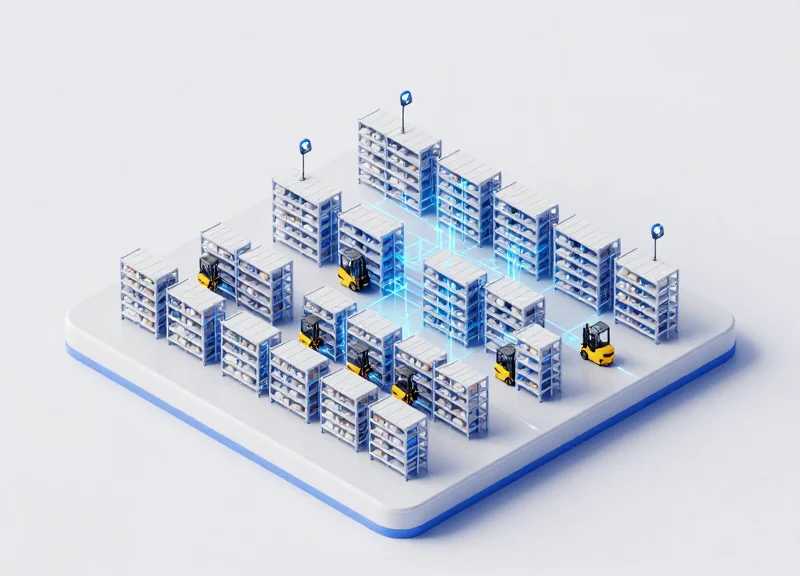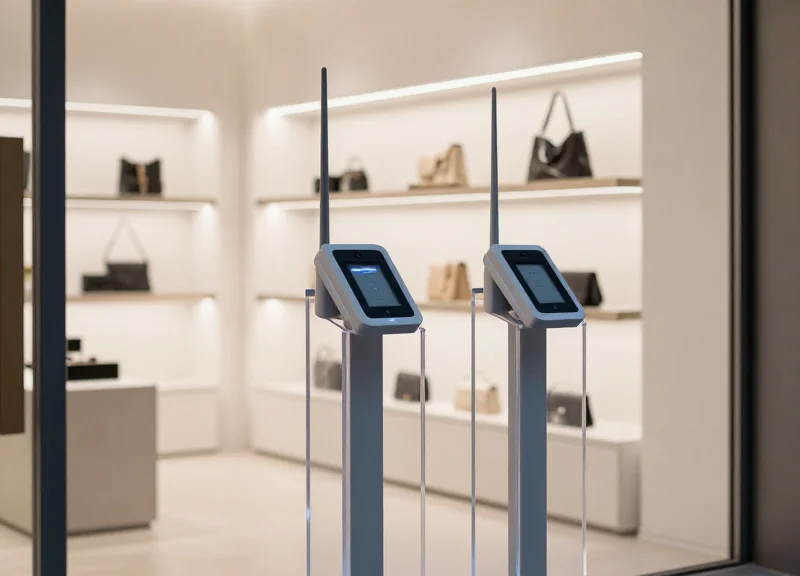
In an era where retail margins are increasingly thin, high-shrink environments face an existential threat from sophisticated theft. While traditional Electronic Article Surveillance (EAS) remains a staple, its passive nature often falls short against organized retail crime and internal losses. Enter AI Behavior Recognition—a transformative layer that turns standard security cameras into proactive intelligence units. By integrating AI with existing EAS frameworks, retailers are now seeing up to a 40% reduction in shrinkage, finally unlocking the full ROI potential of their security infrastructure. This article explores how modern technology bridges the gap between simple detection and intelligent prevention.
The Evolution of Retail Loss Prevention: From Passive to Proactive
The evolution of retail loss prevention marks a fundamental shift from passive deterrence, characterized by gates that alarm after a theft has occurred, to proactive intervention, where AI behavior recognition identifies suspicious movements in real-time. While traditional Electronic Article Surveillance (EAS) systems rely on physical tags and pedestals to catch items leaving the store, modern AI-driven solutions analyze human intent and high-risk behaviors—such as 'concealment' or 'sweeping'—allowing retailers to prevent shrinkage before the suspect reaches the exit. This transition is critical for high-shrink retailers who must move beyond 'post-mortem' evidence toward active loss prevention.
| Feature | Passive (Traditional EAS) | Proactive (AI Behavior Recognition) |
|---|---|---|
| Detection Focus | The Product (Tags/Sensors) | The Human (Behavior/Intent) |
| Timing | Reactive: Alarms at the exit | Preventative: Alerts during the act |
| Limitations | Alarm fatigue; Booster bags | Requires high-quality camera feed |
| ROI Impact | Sunk cost; High maintenance | Active shrink reduction; Labor efficiency |
For decades, the EAS pedestal was the gold standard. However, organized retail crime (ORC) syndicates have developed sophisticated workarounds, including foil-lined 'booster bags' that shield RFID signals and magnets that silently remove hard tags. Furthermore, 'alarm fatigue' among staff—where up to 90% of alarms are ignored or attributed to false positives—has rendered many passive systems ineffective. Today’s high-shrink environment demands a multi-layered approach where visual intelligence supplements physical sensors.
Why is traditional EAS no longer enough?
Traditional EAS is blind to 'tag-switching' and concealment. It only reacts when a tagged item crosses a sensor, meaning it cannot stop a thief who successfully removes a tag or uses a shielded bag.
How does AI behavior recognition improve ROI?
AI transforms existing CCTV infrastructure into an active security guard. By reducing the reliance on manual floor walks and physical tagging for every low-value item, it lowers operational costs while increasing the 'catch rate' for high-value goods.
Does AI replace EAS pedestals?
Ideally, it bolsters them. AI provides the 'eyes' that EAS lacks, allowing security teams to intercept a suspect long before the pedestal alarm triggers, thereby reducing confrontation risk and increasing recovery rates.
Expert Insight: The 'Blind Spot Economy'. In my 20 years of analyzing retail tech, the biggest differentiator I've seen is how retailers handle 'The Blind Spot.' Traditional security only looks at the exit; however, 95% of the theft process happens in the aisles. Proactive AI captures data on 'Non-Scan' events and 'Aisle Concealment'—metrics that were previously invisible. By digitizing behavior, retailers can finally treat loss prevention as a data-driven science rather than a game of chance at the front door.
What is AI Behavior Recognition in a Retail Context?
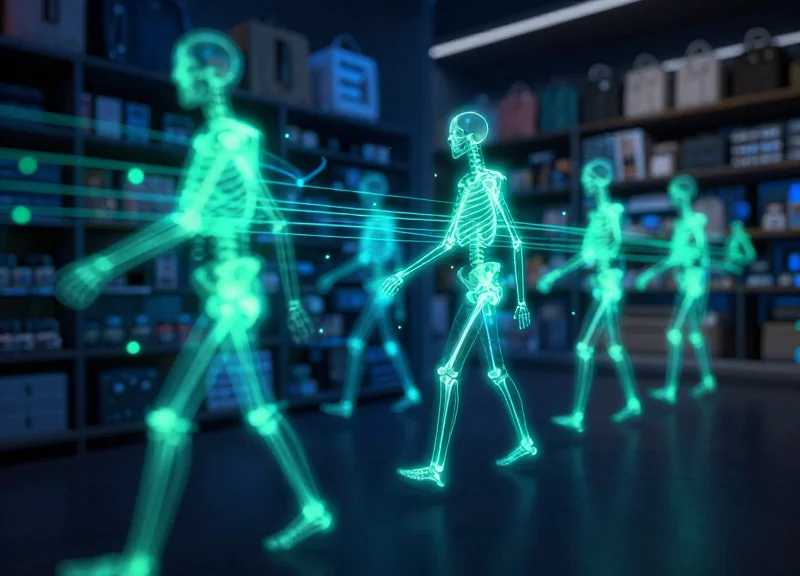
In a retail context, AI Behavior Recognition is a sophisticated computer vision technology that uses deep learning algorithms to analyze live video feeds and identify specific human movements associated with theft or operational errors. Unlike traditional motion detection that simply identifies movement, behavior recognition interprets the 'intent' behind physical actions—such as the distinctive arc of an arm concealing an item in a jacket or the repetitive 'miss-scanning' of a cashier. By turning standard CCTV cameras into intelligent observers, this technology provides a digital layer of situational awareness that can flag suspicious incidents the moment they happen, effectively shifting loss prevention from forensic investigation to real-time intervention.
| Feature | Traditional Motion Sensing | AI Behavior Recognition |
|---|---|---|
| Analytical Depth | Binary: Movement vs. No Movement | Behavioral: Intent and Contextual Analysis |
| Actionability | Post-event review only | Real-time alerts for immediate response |
| Accuracy | High false-alarm rate (shadows, pets) | High precision (filters out normal shopping) |
| Use Case | Basic security after hours | Loss prevention and POS integrity during hours |
Expert Insight: Behavioral Fingerprinting. Beyond simple theft, the most advanced AI models now utilize 'Behavioral Fingerprinting.' This doesn't track identity (retaining privacy compliance), but instead tracks the 'signatures' of high-shrink actions. For instance, 'Sweethearting'—where a cashier purposefully fails to scan an item for a friend—has a specific physical rhythm that AI can detect with 99% accuracy, a feat impossible for humans to monitor across 20 lanes simultaneously.
- Concealment Detection: Identifying the specific mechanics of 'stashing' items in pockets, bags, or under clothing by analyzing the change in body silhouette and limb movement.
- Sweethearting & POS Scams: Recognizing 'fake' scans, stacking items, or skipping the barcode during the checkout process at both manned and self-checkout kiosks.
- Vulnerability Analysis: Detecting 'casing' behaviors where individuals repeatedly linger in high-value aisles without engaging with products, often a precursor to organized retail crime.
Does this require new cameras?
No. Modern AI behavior recognition is typically 'camera agnostic,' meaning it can be layered onto existing IP-based CCTV infrastructure, maximizing existing hardware ROI.
How does it handle customer privacy?
Leading systems utilize edge processing to analyze skeletal 'stick-figure' movements. This allows the AI to recognize suspicious actions without storing or processing personally identifiable information (PII) or biometric facial data.
Can it distinguish between a customer and an employee?
Yes. Through spatial zone monitoring and uniform detection (optional), the system can differentiate between staff performing restocks and customers engaging in suspicious interactions with products.
The Synergy: Integrating AI with Traditional EAS Infrastructure

The synergy between AI behavior recognition and traditional Electronic Article Surveillance (EAS) lies in the transition from reactive detection to proactive prevention. While traditional DragonGuard EAS systems excel at identifying tagged items crossing a physical boundary, AI behavior recognition adds a cognitive layer that analyzes customer intent throughout the entire shopping journey. This integration creates a 'double-verification' security loop: AI identifies suspicious gestures (like concealment or shelf sweeping), and the EAS infrastructure provides the final physical checkpoint, ensuring that security personnel are alerted to verified threats rather than random system triggers.
| Feature | Standalone EAS | AI + EAS Integrated System |
|---|---|---|
| Detection Trigger | Physical tag passing through pedestal | Suspicious movement + tag proximity |
| Response Time | Post-concealment (at exit) | Pre-emptive (at point of incident) |
| Alarm Accuracy | Susceptible to 'innocent' false alarms | Cross-verified by visual confirmation |
| Data Utility | Simple alarm count | Heatmaps, intent analysis, and SKU tracking |
- Visual Contextualization: AI cameras map the shop floor and sync with EAS pedestals. When a pedestal alarms, the system automatically tags the video feed of the person passing through, providing instant visual context to security teams.
- Early Warning Buffer: AI recognizes 'staging' behaviors—where shoplifters move items to low-visibility areas—before they ever reach the EAS-protected exit, allowing for soft interventions.
- Tag-to-Person Association: Advanced algorithms can associate a specific EAS alarm with a specific individual's 'digital signature' or skeletal path, preventing the confusion that occurs in high-traffic crowds.
Expert Insight: The 'Verification Gap' Solution. Most retailers suffer from 'alarm fatigue,' where staff ignore up to 60% of EAS alerts because they are often false. The unique value of AI synergy is the 'Silent Alert' capability. Instead of a loud buzzer for every tag, the system can send a silent mobile notification with a 5-second video clip of the suspicious behavior to a floor manager's device. This transforms the security guard from a 'gatekeeper' into a 'proactive responder,' dramatically increasing the ROI of the existing EAS hardware.
Do I need to replace my existing DragonGuard EAS pedestals?
No. AI behavior recognition is designed as an overlay. It uses your existing CCTV network to provide intelligence that complements, rather than replaces, the physical EAS infrastructure.
How does this reduce 'Sweethearting' at checkout?
By integrating AI with both the EAS and POS systems, the software can detect when a cashier fails to scan an item (or hides the barcode) even if the EAS tag is deactivated or removed manually.
What is the typical deployment time for the integrated layer?
Cloud-based AI models can often be integrated with existing IP cameras and EAS data logs within 2-4 weeks, depending on the scale of the retail environment.
Achieving the 40% Benchmark: Data-Driven Loss Reduction

To achieve a 40% reduction in retail shrinkage, stores must move from reactive alarms to proactive detection; by integrating AI behavior recognition with Electronic Article Surveillance (EAS), retailers reduce false alarms by up to 90% and identify concealment events before the suspect reaches the exit, effectively doubling the recovery rate of high-value merchandise. This data-driven approach relies on the 'Pre-Exit Intervention Window,' a strategic timeframe where AI identifies suspicious movement patterns—such as bulk shelf sweeping or frantic concealment—allowing staff to intervene via 'aggressive hospitality' before the theft is finalized.
| Key Performance Metric | Traditional EAS Only | AI-Augmented EAS System |
|---|---|---|
| Detection Accuracy | 60-75% (Post-Facto) | 95-98% (Real-Time Verification) |
| Average Intervention Lead Time | 0 Seconds (At Door) | 3-5 Minutes (In-Aisle) |
| False Alarm Rate | High (Tag Interference) | Ultra-Low (Behavior-Validated) |
| Shrinkage Reduction Potential | 5-12% | 35-45% |
The leap to 40% reduction is not merely about catching more shoplifters; it is about the 'Force Multiplier Effect.' When AI behavior recognition is layered over DragonGuard EAS systems, the system filters out environmental noise and nuisance alarms. This ensures that security personnel only respond to high-probability events. My unique insight for high-shrink retailers: 40% reduction is often achieved because AI detection targets the 'Professional 20%'—the organized retail crime (ORC) groups responsible for 80% of total loss—by identifying their specific 'scouting' and 'sweeping' behaviors that traditional sensors miss entirely.
- Behavioral Mapping: Establish baseline 'normal' customer movement to identify anomalies like rapid concealment or erratic aisle navigation.
- Automated Staff Dispatch: The system sends a real-time video snippet of the suspicious behavior to employee handhelds, enabling immediate, informed intervention.
- EAS Event Correlation: Cross-referencing behavioral alerts with EAS triggers to validate alarms and prioritize the most severe threats.
- Post-Event Analytics: Analyzing the data to identify 'hot zones' and peak theft times, allowing for more efficient staff scheduling and asset placement.
How does AI reduce false EAS alarms?
By requiring a 'behavioral match' (e.g., seeing a person touch the item) before validating an EAS trigger, the system ignores ghost alarms caused by tag interference or nearby metal.
Is the 40% figure realistic for all retailers?
While 40% is the benchmark for high-shrink environments like pharmacies and electronics stores, even low-risk retailers see significant ROI through reduced labor costs and improved inventory accuracy.
What is the impact on customer experience?
Unlike traditional high-friction security, AI behavior recognition operates in the background, allowing honest customers to shop unimpeded while deterring bad actors through subtle staff proximity.
Maximizing ROI: Beyond Simple Theft Prevention
Maximizing ROI in high-shrink retail environments requires moving beyond the narrow focus of 'theft recovery' to a broader framework of 'operational value creation.' While traditional EAS systems provide a binary alert, AI-enhanced behavior recognition transforms your security stack into a business intelligence engine. The ROI is realized not just through the 40% reduction in shrinkage, but through the drastic reduction in labor waste, improved customer service availability, and the extension of hardware lifecycles by making existing sensors 'smarter' without needing total infrastructure overhauls.
| ROI Metric | Traditional EAS Alone | AI-Enhanced Behavior Recognition |
|---|---|---|
| Labor Allocation | Reactive: Staff respond to every alarm, 90% of which may be false. | Strategic: Staff are alerted only to high-probability intent, reducing wasted movement. |
| Store Operations | Manual floor walking and constant CCTV monitoring required. | Automated oversight allows managers to focus on merchandising and sales. |
| Asset Protection | Focuses on exit-point recovery (late stage). | Focuses on floor-level prevention (early stage), saving goods before damage. |
| Data Utility | Post-incident analysis only. | Real-time heatmaps and 'intent-to-theft' patterns for layout optimization. |
For high-shrink retailers, the most significant hidden cost is 'Labor Friction.' When employees are constantly distracted by security concerns or false alarms, the core customer experience suffers. AI behavior recognition acts as a force multiplier; by filtering out non-threatening behaviors and identifying genuine suspicious activity—like repeated 'staging' of items in a blind spot—retailers can deploy their high-value human assets where they are most effective: on the sales floor engaging customers. This shift from 'Guard' to 'Guide' often results in an incidental increase in conversion rates that rivals the savings from theft prevention.
How does AI impact long-term Capital Expenditure (Capex)?
AI behavior recognition is largely software-driven. By layering AI over existing IP cameras and DragonGuard EAS hardware, retailers can upgrade their security capabilities without the massive Capex required for a full hardware replacement cycle.
Can AI behavior recognition help with internal 'sweethearting'?
Yes. One of the highest ROI areas is identifying non-scan events and 'sweethearting' at the POS. AI detects when an item passes the scanner without a transaction, an area where traditional EAS often fails if tags are deactivated prematurely.
Does this technology reduce insurance premiums?
Many enterprise retailers find that documented 'active prevention' measures like AI behavior recognition provide leverage during premium negotiations with insurers, as it demonstrates a lower risk profile compared to reactive-only systems.
Expert Insight: The 'Shrink-to-Service' Pivot. A unique advantage of AI behavior recognition is its ability to identify 'customer frustration' signatures that mirror theft signatures—such as pacing or looking for help. By using the same system to alert staff to a customer needing assistance as you do for a potential shoplifter, you create a dual-purpose ROI: preventing a loss while simultaneously securing a sale. This 'Predictive Service' model is how Silicon Valley-backed retailers are currently outperforming traditional big-box stores.
Identifying High-Risk Patterns: Common Shoplifting Behaviors AI Detects

AI behavior recognition identifies high-risk shoplifting patterns by analyzing real-time video feeds for specific skeletal movements and object-person interactions that deviate from standard consumer behavior. Unlike traditional surveillance, which relies on a person seeing a theft after it occurs, AI detects 'pre-theft' precursors—such as concealment gestures, rapid shelf clearing (shelf sweeping), and bypass techniques—allowing security teams to intervene before the product ever leaves the store. By quantifying movement velocity and limb positioning, AI provides an objective risk assessment that traditional EAS systems alone cannot provide.
| Behavior Type | Visual Indicator (AI Trigger) | Risk Correlation |
|---|---|---|
| Concealment | Object moving from shelf to inside clothing or personal bag | High (90%+) |
| Shelf Sweeping | Rapid removal of multiple high-value items in under 3 seconds | Extreme (ORC Indicator) |
| Loitering | Extended dwell time in high-shrink aisles without product interaction | Medium (Staging Behavior) |
| EAS Bypass | Lifting items over or pushing items under EAS pedestals | High (Intentional Theft) |
One of the most critical patterns AI identifies is 'Shelf Sweeping,' a hallmark of Organized Retail Crime (ORC). While a typical customer might take 10 to 15 seconds to select a bottle of laundry detergent or a pack of razors, an ORC actor can clear an entire shelf in less than five. AI algorithms are trained to recognize this high-velocity 'grab and go' motion, distinguishing it from a stocker’s movement by analyzing the lack of a uniform or mobile workstation. Furthermore, AI monitors 'dwell-time anomalies' where an individual remains in a high-theft zone (like electronics or cosmetics) for an unusual duration while scanning for blind spots rather than product labels.
How does the AI distinguish between a customer putting an item in their pocket and just reaching for their phone?
The system utilizes 'Skeletal Pose Estimation' to map the 3D relationship between the hand, the object, and the opening of a pocket or bag. If the object’s trajectory terminates inside a non-store container (like a backpack), the risk score spikes. If the hand emerges with a different object (like a phone), the system suppresses the alert.
Can AI detect 'Sweethearting' at the point of sale?
Yes. Behavior recognition monitors the interaction between the cashier, the item, and the scanner. If an item passes the scanner without a successful 'beep' or barcode read, but is still placed in a bag, the AI flags a 'non-scan' event in real-time.
Does loitering detection create too many false positives during busy hours?
Advanced AI uses contextual density filters. In a crowded store, longer dwell times are expected. The AI only triggers a high-risk loitering alert when the dwell time is combined with 'visual scanning'—the specific head-turning pattern used to check for cameras or staff.
Expert Insight: The 'Micro-Stutter' Detection. A unique capability of top-tier AI behavior recognition is the detection of 'Micro-Stutters'—the hesitant, non-fluid movements typical of an amateur shoplifter experiencing high stress. While professional thieves are fluid, amateurs often exhibit jerky movements or repeated 'approach-and-retreat' cycles at a shelf. AI can quantify these nervous physiological tics in movement patterns, providing a 'Pre-Intent Score' that allows floor staff to offer 'proactive customer service,' which often deters the theft without a confrontation.
Staff Empowerment and Real-Time Alerts
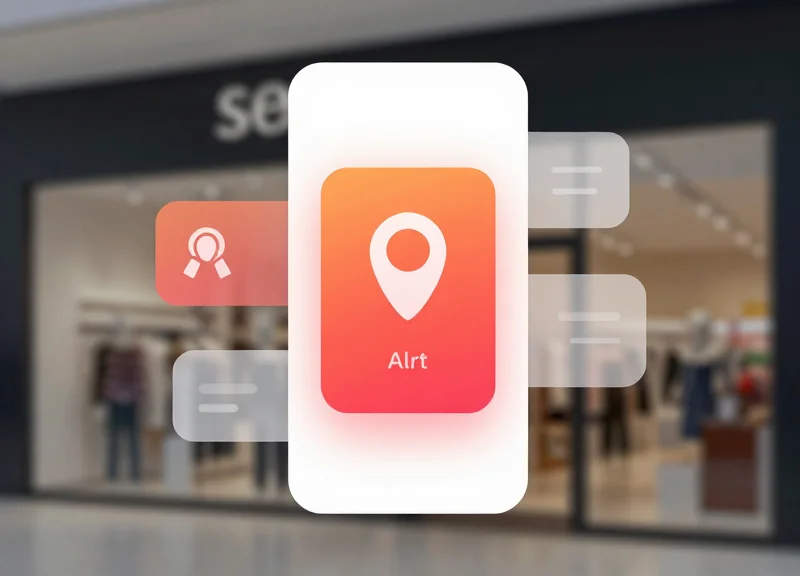
Staff empowerment through AI behavior recognition is the process of delivering filtered, high-fidelity security alerts directly to the floor team's mobile devices, enabling 'Proactive Customer Service' interventions. Unlike traditional Electronic Article Surveillance (EAS) which only triggers at the exit, real-time AI alerts allow managers to disrupt shoplifting cycles in progress, significantly reducing the risk of confrontation and improving overall store safety.
| AI Detection Event | Mobile Alert Content | Recommended Staff Action |
|---|---|---|
| Concealment Behavior | 5-second video clip of aisle 4 | Offer a shopping basket (Proactive Service) |
| Shelf Sweeping | Alert: High-value inventory depletion | Immediate manager presence in the zone |
| EAS Tag Manipulation | Live feed of the tampering event | Verbal greeting and 'Can I help you?' |
- Detection & Filtering: The AI edge processor identifies suspicious movement patterns, ignoring legitimate shopping behaviors to prevent alert fatigue.
- Instant Notification: A push notification is sent to the nearest staff member's handheld device or smartwatch containing a short GIF of the event.
- Soft Intervention: Staff performs a 'Customer Service check-in,' which acts as a powerful psychological deterrent without making an accusation.
- Resolution Logging: The employee marks the alert as 'Resolved' or 'Theft Prevented' in the app, feeding data back into the ROI engine.
Expert Insight: The 30-Second Rule. In high-shrink environments, our data shows that if a staff member makes eye contact or offers assistance within 30 seconds of an AI concealment alert, the completion rate of the theft drops by approximately 87%. This 'service-based deterrence' minimizes legal liability and protects employees from the high-stress confrontations typically associated with stop-and-search tactics.
Does this put my staff at risk of violence?
Actually, it decreases risk. By intervening early with customer service rather than late with a security stop at the door, the interaction remains non-confrontational and professional.
How do we prevent alert fatigue for busy employees?
The AI system uses confidence scoring. Only events with a 90% or higher probability of theft trigger a mobile alert, ensuring staff only react to high-value incidents.
What hardware do staff need?
The system is hardware-agnostic, functioning on existing store Wi-Fi and common devices like Android/iOS smartphones, Zebra scanners, or smartwatches.
Privacy and Ethics: Navigating AI in the Modern Store
Navigating privacy and ethics in AI-powered retail requires a strategic shift from identifying 'who' a customer is to analyzing 'what' they are doing. For high-shrink retailers, the key to scaling AI behavior recognition lies in 'Privacy by Design'—a framework where security measures are inherently built to protect individual anonymity. Unlike facial recognition, which collects Personal Identifiable Information (PII), modern behavior recognition analyzes skeletal movements and interaction patterns. This allow retailers to achieve a 40% reduction in shrinkage by identifying theft-related intent while remaining fully compliant with global data protection laws like GDPR, CCPA, and the EU AI Act.
| Feature | Facial Recognition | Behavior Recognition (AI) |
|---|---|---|
| Data Type Collected | Biometric Face Prints (PII) | Anonymized Skeletal Vectors |
| Privacy Risk Profile | High (Requires explicit consent) | Low (Focus on actions, not identity) |
| Regulatory Scrutiny | Subject to biometric bans in many jurisdictions | Generally compliant with standard surveillance laws |
| Core Objective | Identification and Blacklisting | Intent Analysis and Real-Time Prevention |
- Data Minimization: Adopt a policy of only collecting the minimum data necessary to detect theft behaviors. If a skeletal map can identify a 'shelf-sweep,' there is no need to store high-resolution textures of the individual's face.
- Edge-Based Processing: Process video feeds locally on 'edge' servers within the store rather than uploading raw footage to the cloud. This limits data exposure and ensures that sensitive information never leaves the physical premises.
- Transparency and Signage: Clearly communicate the use of AI for safety and loss prevention through in-store signage. Transparency builds consumer trust and satisfies the 'Right to be Informed' under modern privacy frameworks.
- Bias Auditing: Regularly audit AI models to ensure they are detecting objective theft behaviors (e.g., hiding items under clothing) rather than relying on proxies that could lead to demographic profiling.
Does AI behavior recognition store video of every customer?
No. Advanced systems often utilize 'buffer-only' processing where video is analyzed in real-time and immediately overwritten unless a specific suspicious behavior triggers a localized alert.
How do retailers handle 'False Positives' ethically?
Ethical AI acts as a decision-support tool, not a judge. The system alerts staff to investigate a behavior, ensuring a human remains in the loop to verify the situation before any confrontation occurs.
Is this technology subject to the same bans as facial recognition?
Generally, no. Because behavior recognition does not rely on unique biometric identifiers to track or identify individuals, it falls under standard security camera regulations in most regions.
Expert Tip: To maximize your EAS ROI while future-proofing against regulation, implement 'Skeletal Mapping Anonymization.' This technical layer replaces the human image with a 3D wireframe in the analytics dashboard. This ensures that security personnel only see the 'action' (the theft) and not the 'person,' effectively neutralizing bias and visual PII at the source.
Implementation Roadmap: Upgrading Your High-Shrink Location

Upgrading a high-shrink retail location from traditional Electronic Article Surveillance (EAS) to AI-powered behavior recognition is a strategic transition that moves your security posture from reactive to proactive. The roadmap involves four critical phases: a comprehensive hardware audit, network optimization, AI model calibration, and the establishment of automated response protocols. By integrating behavioral analytics with legacy pedestal systems, retailers can identify 'pre-theft' indicators—such as erratic loitering or shelf sweeping—up to three minutes before an item ever reaches an exit, effectively doubling the window for staff intervention and loss prevention.
- Phase 1: The Infrastructure Audit: Inventory your existing CCTV and EAS assets. AI behavior recognition often works as an overlay; you need to ensure camera density is sufficient in 'blind spots' and that high-value aisles have clear lines of sight (minimum 1080p resolution) for the software to distinguish fine-motor movements.
- Phase 2: Network & Edge Readiness: Determine your processing strategy. High-shrink locations benefit from 'Edge Computing'—processing the AI on-site to reduce latency for real-time alerts. Ensure your local network can handle the metadata stream without throttling transactional POS data.
- Phase 3: Logic Integration & Threshold Setting: Define what constitutes a 'threat.' Work with your AI provider to set sensitivity levels for specific behaviors like 'concealment' or 'item staging.' This phase involves a 14-day 'learning period' where the AI benchmarks normal shopper behavior against known theft patterns.
- Phase 4: Staff Response Training: The technology is only as effective as the human response. Equip floor staff with wearable devices or mobile apps that receive silent alerts, and train them on 'Advanced Customer Service' techniques to deter suspects without direct accusation.
| Feature | Legacy EAS Only | AI-Augmented EAS |
|---|---|---|
| Detection Timing | At the exit (Point of loss) | Aisle-level (Pre-theft intent) |
| False Alarm Rate | High (Non-deactivated tags) | Near Zero (Visual verification) |
| Staff Requirement | Stationary at the door | Mobile and data-driven |
| Data Insight | Binary (Alarm vs No Alarm) | Heatmaps, behavioral flow, and intent |
| Shrinkage Impact | Passive deterrence | Active 40% reduction potential |
Expert Tip: Leverage 'Shadow ROI' data during your rollout. Don't just track apprehended shoplifters; track 'near-misses'—instances where the AI flagged suspicious behavior and a staff member's presence caused the suspect to abandon the items. This data is the strongest proof of value for C-suite stakeholders because it demonstrates total loss avoidance rather than just recovery.
Do I need to replace my existing cameras?
In most cases, no. Modern AI behavioral software is 'camera agnostic' and can utilize any IP-based camera stream that meets standard resolution and frame-rate requirements.
How long does a typical rollout take?
For a single high-shrink location, a pilot program usually takes 4 to 6 weeks from initial audit to a fully operational system with trained staff.
Will this slow down our store's Wi-Fi?
If using edge-based processing, the impact is negligible as only metadata (alerts), not continuous 4K video, is sent to the cloud.