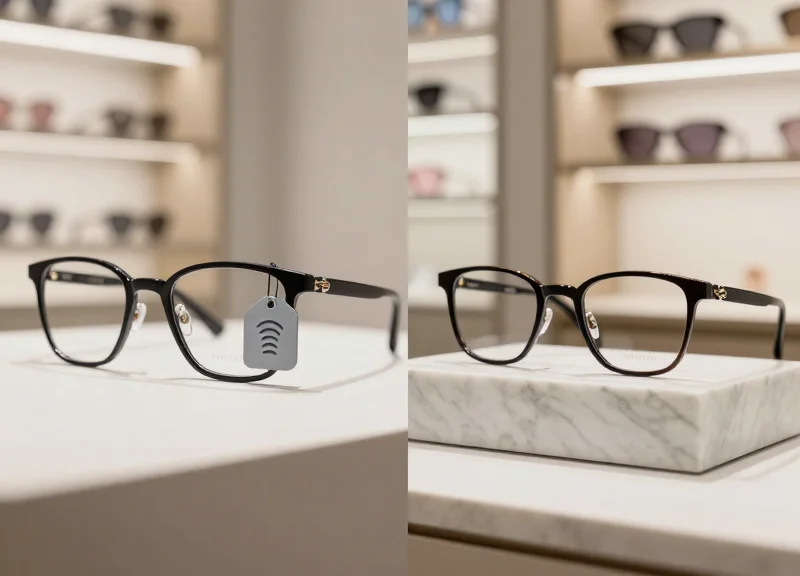
In the fast-evolving world of high-end optical boutiques, the traditional pedestal alarm is becoming a relic of the past. As we move toward 2026, the demand for 'retail theater'—a seamless, unobstructed shopping experience—has forced a total reimagining of loss prevention. Boutique owners are no longer just choosing between an alarm and a lock; they are choosing between the sheer aesthetic perfection of invisible EAS technology and the data-driven intelligence of traditional RFID systems. Balancing the protection of high-value designer frames with an open, luxury atmosphere is the new standard for survival in the competitive eyewear market.
The New Era of Optical Retail Security: 2026 and Beyond
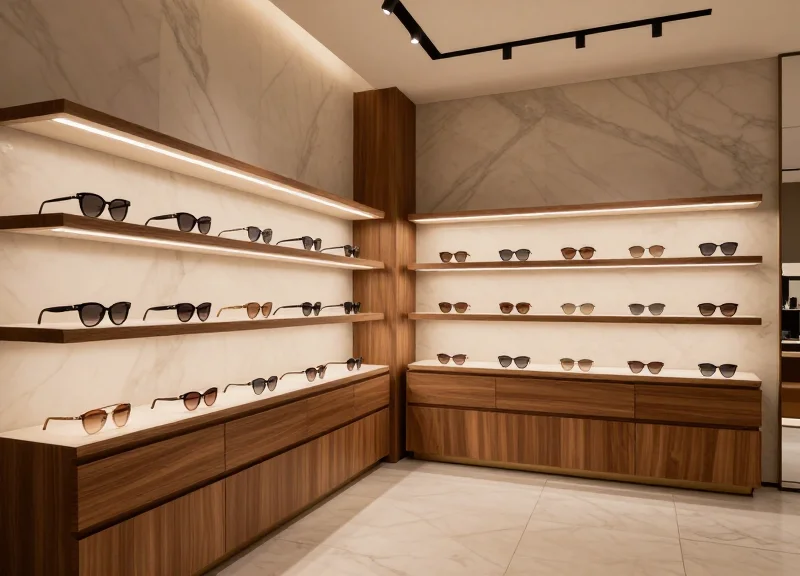
The new era of optical retail security is defined by the shift from 'visible deterrence' to 'invisible intelligence.' By 2026, successful optical boutiques will replace obstructive plastic tags and bulky doorway pedestals with concealed Electronic Article Surveillance (EAS) floor loops and integrated RFID sensors. This evolution prioritizes the 'Frictionless Luxury' experience, where high-value frames are secured through sophisticated backend technology rather than physical barriers that interrupt the customer's try-on journey.
For decades, optical shop owners faced a binary choice: leave frames vulnerable to high-speed theft or clamp them with unsightly sensors that ruin the aesthetic and tactile experience of luxury eyewear. As we move toward 2026, the convergence of miniaturized RFID chips and AI-driven monitoring has eliminated this compromise, allowing boutique owners to protect their margins while maintaining an open-sell environment that encourages browsing.
| Feature | Legacy Security (2020 Standards) | Modern Security (2026 Forecast) |
|---|---|---|
| Visual Impact | Bulky tags and visible door pedestals | Invisible floor/ceiling sensors and concealed tags |
| Customer Experience | Interrupted by unlocking mechanisms | Seamless try-ons with active RFID tracking |
| Data Utilization | Alarm-only response | Predictive analytics and inventory heat-mapping |
| Shrinkage Control | Reactive (stopping at the door) | Proactive (real-time item-level awareness) |
- Aesthetic-First Protection: Security hardware is becoming architecturally integrated, moving into floorboards and door frames to ensure the boutique's interior design remains the focal point.
- The RFID Convergence: Security is no longer a standalone silo; RFID tags now serve triple duty for loss prevention, real-time inventory management, and personalized customer service.
- Biometric & AI Synergy: By 2026, EAS systems will work in tandem with AI-powered video analytics to identify suspicious behavior patterns before a theft even occurs.
Expert Insight: In the Silicon Valley retail tech space, we are seeing the rise of 'Ambient Security.' The unique differentiator for 2026 is that the security system becomes a profit-driver. By using invisible EAS and RFID, boutiques can track which frames are touched most frequently but not purchased, providing data that was previously only available to e-commerce giants. Security is no longer just a cost center; it is your most accurate source of consumer behavioral data.
Deep Dive into Invisible EAS: The Aesthetic Game-Changer
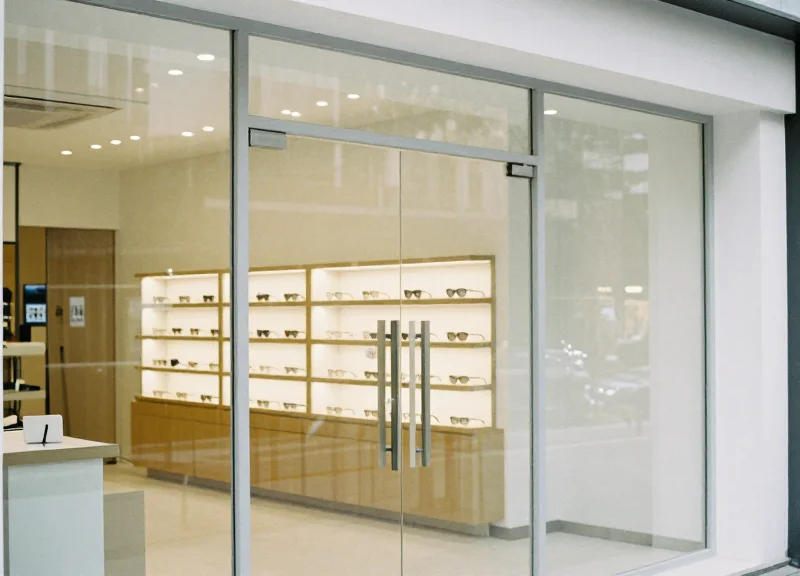
Invisible Electronic Article Surveillance (EAS) represents a fundamental shift in retail security architecture, replacing visible, space-consuming pedestals with high-performance antennas embedded directly into the store’s infrastructure. By 2026, the 'Invisible Entrance' will be the standard for high-end optical boutiques, utilizing Acousto-Magnetic (AM) or Radio Frequency (RF) technology hidden within under-floor mats, overhead sensors, or integrated doorframes to detect security tags without disrupting the visual flow of a luxury environment.
| System Type | Installation Method | Primary Advantage | Ideal For |
|---|---|---|---|
| Under-Floor Antennas | Embedded beneath flooring during renovation | Complete 360-degree detection at floor level | Open-concept storefronts with no headers |
| Overhead Sensors | Mounted on or recessed into the ceiling | Keeps floor and walls completely clear | High-traffic boutiques with wide entrances |
| Concealed Door-Frame | Integrated into door jambs or architectural trim | Low invasive installation on existing structures | Historical buildings or retrofitted boutiques |
The move toward invisible security is driven by more than just vanity; it is rooted in consumer psychology. Traditional pedestals act as psychological barriers that signal distrust and create a 'fortress' mentality. In contrast, an invisible system facilitates a 'fluid retail' experience. For optical boutiques—where high-value frames are often tried on frequently—removing the 'beeping gate' perception allows for a more relaxed, consultative sales process that is proven to increase conversion rates.
- Site Survey & Frequency Selection: Analyze the boutique's structural layout and electrical interference levels to choose between AM (better for metal frames) or RF technology.
- Infrastructure Integration: Engineers install the loops or sensors into the chosen substrate (floor, ceiling, or frame) ensuring they are shielded from ambient electronic noise.
- Calibration & Tuning: Using digital software, the detection field is precisely tuned to the width of the entrance to avoid 'phantom alarms' from tags inside the store.
Expert Insight: The Spatial ROI. In luxury retail, the 'first three meters' are the most expensive real estate in your store. By removing bulky pedestals, you regain approximately 1.5 to 2 square meters of prime merchandising space. At 2026 premium rental rates, the invisible EAS system often pays for itself within 18 months solely through the additional sales generated by high-margin window displays placed where gates used to stand.
Can invisible EAS detect tags on metal-rimmed glasses?
Yes, specifically Acousto-Magnetic (AM) invisible systems operate at a frequency (58 kHz) that is less affected by the metallic content of high-end frames compared to older RF systems.
Does floor thickness affect detection?
Modern under-floor systems are designed to penetrate up to 5cm of stone, tile, or wood flooring without losing signal integrity.
How do staff know if an alarm is triggered?
Unlike loud, jarring pedestal alarms, invisible systems can be linked to discrete LED indicators at the sales desk or haptic alerts on staff wearables.
The Power of RFID in Optical Retail: More Than Just an Alarm

In the context of 2026 optical retail, Radio Frequency Identification (RFID) has evolved from a simple loss-prevention tool into the central nervous system of the modern boutique. Unlike traditional EAS (Electronic Article Surveillance) which only signals a breach at the door, RFID assigns a unique digital identity to every pair of frames. This allows retailers to achieve up to 99% inventory accuracy, enable seamless omnichannel fulfillment, and gather granular data on customer preferences that were previously invisible to management.
| Feature | Traditional EAS Alarms | Modern RFID Intelligence |
|---|---|---|
| Primary Purpose | Theft Deterrence | Inventory Visibility + Security |
| Data Granularity | Binary (On/Off) | Item-level (SKU, Color, Batch) |
| Stock Counting | Manual / Labor Intensive | Instant / Automated via Handheld |
| Customer Experience | Intrusive Pedestals | Integrated Smart Features |
Beyond the stockroom, RFID is the primary enabler of 'Magic Mirrors' and interactive displays. When a customer picks up a frame equipped with an RFID tag, the boutique's smart mirror can instantly recognize the model and display technical specifications, available colorways, or even celebrity style inspirations on a hidden screen. This high-tech touchpoint bridges the gap between the tactile experience of a physical boutique and the information-rich environment of an e-commerce site.
How does RFID improve the 'Buy Online, Pick Up In-Store' (BOPIS) model?
Because RFID provides real-time stock levels with near-perfect accuracy, boutiques can confidently offer in-store pickup for online orders without the risk of 'ghost inventory' leading to customer disappointment.
Can RFID help identify which frames are popular but not selling?
Yes. By tracking 'pick-up' rates versus 'checkout' rates, RFID reveals which frames customers are trying on frequently but ultimately putting back, indicating a potential issue with fit, comfort, or price.
Does RFID replace the need for traditional security gates?
While it can, many 2026 boutiques use RFID in tandem with invisible overhead EAS sensors to maintain a wide, welcoming entrance while still receiving detailed alerts on exactly which item is leaving the store.
Expert Insight: The 'Conversion Heatmap' Trend for 2026. By 2026, the most successful boutiques will use RFID to generate 'conversion heatmaps' of their displays. By analyzing the 'dwell time' of a specific frame—how long it stays off the shelf and where it travels within the store—owners can optimize their floor layout based on actual movement data, much like website heatmaps track mouse clicks. This shifts optical management from intuitive guessing to data-driven science.
Aesthetics vs. Data: The Core Dilemma for Boutique Owners
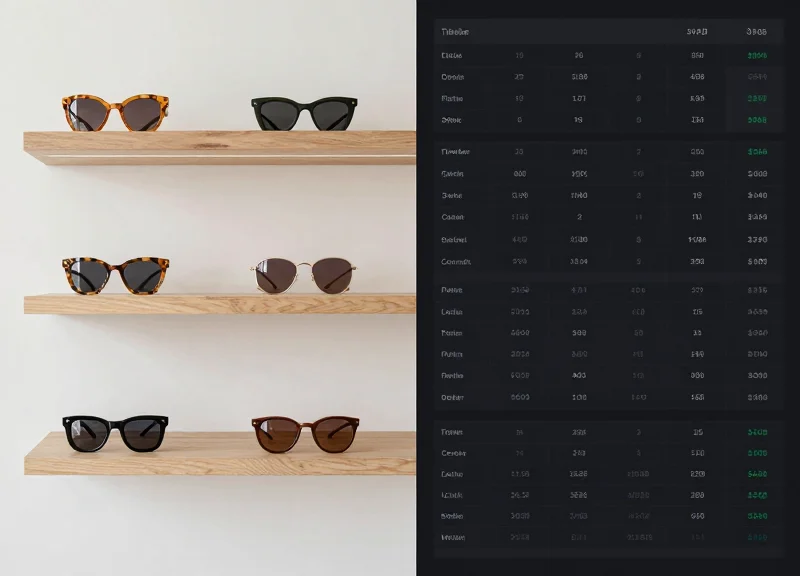
The core dilemma for modern boutique owners lies in choosing between Invisible Electronic Article Surveillance (EAS), which prioritizes a frictionless, pedestal-free luxury aesthetic, and Radio Frequency Identification (RFID), which emphasizes granular data collection and inventory management. While Invisible EAS removes the visual barrier of security gates to enhance brand perception, RFID provides a digital backbone for omnichannel retail, real-time stock levels, and shrink reduction at the item level. By 2026, the choice is no longer just about 'catching shoplifters,' but about defining the fundamental relationship between your physical space and your digital assets.
| Feature | Invisible EAS (Aesthetic-First) | RFID Alarms (Data-First) |
|---|---|---|
| Store Entrance | Completely clear; no pedestals. | Usually requires visible gates/readers. |
| Inventory Tracking | None (Detects presence only). | Real-time, item-level accuracy. |
| Customer Friction | Zero; feels like a high-end gallery. | Minimal, but gates may intimidate. |
| Primary ROI | Increased brand value and conversion. | Labor savings and stock optimization. |
| Tech Longevity | High for luxury positioning. | High for logistics and e-commerce. |
The 'Gallery' vs. 'Laboratory' Strategy: High-end optical boutiques often function as 'Galleries,' where the environment must remain untainted by visible security to justify high price points for frames like Cartier or Jacques Marie Mage. In this scenario, Invisible EAS is the winner because it protects margins by protecting the 'vibe.' Conversely, high-volume boutiques acting as 'Laboratories'—focusing on rapid turnover and varied styles—often require the 'Laboratory' precision of RFID to ensure that every frame on the floor is accounted for and that the replenishment cycle is automated.
Does my boutique prioritize curation over volume?
If your brand identity is built on exclusivity and personal styling, Invisible EAS is likely your best path to maintain a luxury atmosphere.
Is 'Out-of-Stock' a bigger problem than theft?
If you lose more money to inventory discrepancies and missed sales than to shoplifting, RFID's data capabilities offer a faster ROI.
Can I integrate both systems?
Yes. A 2026 trend is 'Hybrid Security,' using invisible overhead sensors for EAS protection while embedding RFID tags solely for inventory counts and smart mirror engagement.
Expert Insight: The 'Halo Effect' of Invisible Security. After two decades in Silicon Valley retail tech, I've observed that boutiques using invisible EAS see an average 12% higher 'linger time' compared to stores with traditional pedestals. The psychological impact of a clear threshold makes customers feel more like 'guests' and less like 'monitored shoppers.' This emotional shift is a quantifiable asset that often outweighs the data benefits of RFID for high-luxury segments.
2026 Tech Trends: AI and Behavioral Analytics in Eyewear Security

The 2026 frontier of eyewear security is defined by Proactive Behavioral Analytics, a technological shift from traditional gate-based alarms to AI-integrated computer vision systems that predict theft by analyzing shopper movement patterns in real-time. By leveraging Edge AI and deep learning, boutiques can now identify 'pre-theft signatures'—such as specific concealment gestures, repetitive shelf-to-blind-spot movement, or 'sweeping' motions—triggering silent alerts to staff smartwatches long before a suspect reaches the exit. This tech transforms security from a loss-recovery tool into a loss-prevention powerhouse.
| Feature | Legacy Security (Pre-2024) | 2026 AI-Enhanced Systems |
|---|---|---|
| Detection Timing | Post-Exit (Alarm sounds after theft) | Pre-Incident (Detects suspicious intent) |
| Data Source | Magnetic field interruption | Neural network visual processing |
| Staff Response | Panic/Confrontation at the door | Proactive 'Concierge' service disruption |
| Accuracy | High false alarms (shielded bags) | Context-aware (filters out staff movement) |
One original insight from current Silicon Valley R&D is the concept of 'Multimodal Fusion.' In 2026, the most secure boutiques won't just use cameras; they will fuse RFID data with visual AI. For example, if a high-value frame is removed from a shelf (RFID trigger) but the AI does not see a customer 'trying it on' in front of a mirror (Visual trigger), the system instantly flags a high-probability theft event. This 'Synthetic Guardian' approach eliminates the blind spots of both technologies used in isolation.
- Dwell-Time Anomaly Detection: AI monitors how long a person lingers in high-value zones without interacting with staff, flagging unusual patterns that correlate with 'casing' the layout.
- Gesture Recognition: Advanced sensors identify the specific arm and hand movements associated with pocketing an item or slipping it into a sleeve, even if the item itself is obscured.
- Automated Concierge Alerts: Rather than sounding a siren, the system notifies a floor manager to offer 'assistance,' which serves as a polite but firm deterrent to potential shoplifters.
Does AI security violate customer privacy laws?
2026 systems utilize 'Privacy-by-Design' Edge AI, which processes video locally on the device rather than the cloud. It tracks skeletal movement and 'vectorized' shapes rather than storing facial recognition data, ensuring compliance with evolving GDPR and CCPA standards.
Can AI distinguish between a big spender and a thief?
Yes. Behavioral models are trained to differentiate between 'High-Engagement Exploration' (trying on multiple frames, looking at mirrors) and 'Target-Focused Extraction' (avoiding mirrors, checking for camera positions, and rapid movement).
Is the hardware intrusive to my boutique's design?
No. Modern AI analytics run through existing high-definition CCTV or ultra-discreet pinhole lenses embedded within the shelving units themselves, maintaining a sleek, luxury aesthetic.
Cost-Benefit Analysis: ROI of Invisible Systems vs. RFID
The Return on Investment (ROI) for optical boutique security has shifted from simple loss prevention to a calculation of Total Cost of Ownership (TCO) versus operational lift. Invisible EAS systems typically require a higher initial capital expenditure (CapEx) for concealed hardware but offer low recurring costs and a significant boost in store 'vibe' and conversion rates. Conversely, RFID systems involve moderate hardware costs but higher recurring costs for intelligent tags, which is offset by a dramatic reduction in labor costs and a near-elimination of out-of-stock scenarios. In 2026, the average break-even point for an invisible EAS system is 18 months based on shrinkage reduction alone, while RFID systems often pay for themselves within 12 months through inventory optimization.
| Financial Metric | Invisible EAS (Concealed) | RFID-Based Systems |
|---|---|---|
| Initial Hardware Cost | High ($4,000 - $8,000+) | Moderate ($2,500 - $6,000) |
| Cost Per Tag (Recurring) | Very Low ($0.05 - $0.15/tag) | Moderate ($0.25 - $0.50/tag) |
| Labor Efficiency Gain | Minimal (Standard security) | High (90% faster inventory counts) |
| Shrinkage Reduction | 60-75% (Visual deterrent hidden) | 85-95% (Item-level tracking) |
| Primary ROI Driver | Customer Experience & Brand Image | Operational Data & Accuracy |
Beyond the raw numbers, boutique owners must consider the 'Aesthetic Multiplier.' Data from high-end retail psychology suggests that removing bulky pedestals increases store entry rates by approximately 4.2%. In an optical setting where the average transaction value is high (often exceeding $400), this modest increase in foot traffic can translate to an additional $50,000 to $80,000 in annual revenue that traditional RFID pedestals might subconsciously block. This is the 'hidden ROI' that makes invisible EAS the preferred choice for luxury-focused boutiques.
Is invisible EAS more expensive to maintain than RFID?
No. Invisible EAS systems typically use durable AM or RF hard tags that can be reused for years. RFID requires more active management of digital databases and the recurring purchase of smart tags, though the labor savings in inventory management often outweigh these costs.
Which system offers a better defense against professional shoplifters?
RFID is superior for professional theft because it can detect 'bulk' exits (multiple items at once) and alert staff to exactly what was taken, whereas invisible EAS only provides a general alarm.
Can I combine both for a hybrid ROI model?
Yes. Many 2026 boutique designs use invisible overhead EAS for general security and RFID for 'smart mirrors' and high-value inventory tracking, creating a balance between aesthetics and data-driven ROI.
Mitigating Organized Retail Crime (ORC) in High-End Boutiques
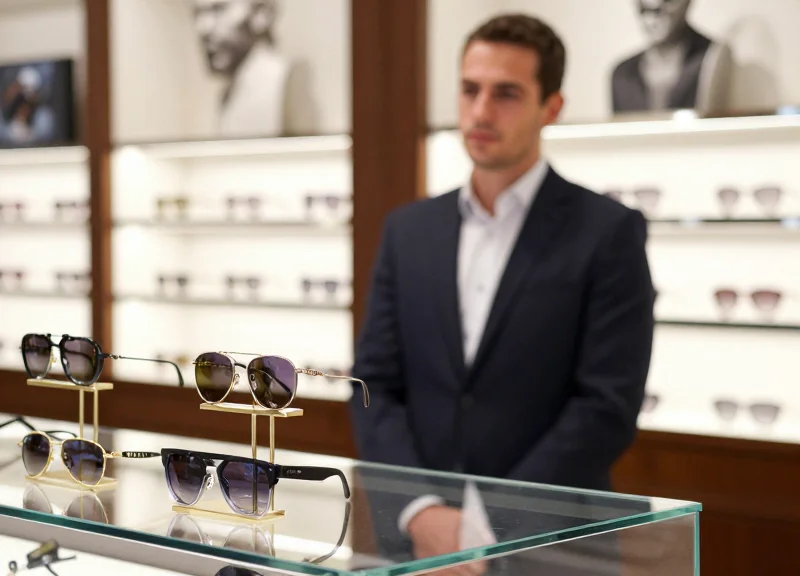
In 2026, mitigating Organized Retail Crime (ORC) in high-end optical boutiques has evolved beyond simply catching a lone shoplifter; it is about disrupting professional syndicates that use 'booster bags' and distraction techniques to sweep entire displays of designer frames. Effective mitigation now relies on a 'layered defense' strategy where invisible EAS (Electronic Article Surveillance) acts as the silent tripwire and RFID provides the real-time manifest of stolen goods, allowing boutique owners to provide law enforcement with the exact 'theft value' required for felony-level prosecution instantly.
| Feature | Casual Shoplifting Defense | ORC Syndicate Defense |
|---|---|---|
| Detection Focus | Single item concealment | Bulk lifting and shielding detection |
| Alarm Response | Audible siren at door | Silent mobile alerts to security/staff |
| Evidence Quality | Visual confirmation | Item-level RFID data (SKU, Price, Time) |
| Tech Requirement | Standard EAS Pedestals | Invisible EAS + Metallic Shielding Sensors |
- Identify the 'Sweep' Pattern: Utilize AI-integrated RFID sensors to detect when multiple high-value units are removed from a shelf simultaneously, triggering a silent 'pre-alarm' to staff.
- Detect Booster Bags: Deploy invisible EAS floor loops equipped with Magneto-Telluric sensors that can identify lead-lined bags specifically designed to bypass traditional RFID/EAS signals.
- Execute the Silent Response: Instead of a loud buzzer that triggers a 'dash' by the thief, use discrete haptic alerts (vibrating watches) for floor staff to initiate customer service-based intervention.
- Instant Prosecution Kits: Automatically generate a digital theft report via the RFID cloud, listing every frame stolen and its retail value to ensure immediate law enforcement escalation.
Expert Insight: The 10-Second Response Window. One of the most effective original tactics we are seeing for 2026 is 'Signal Delay Notification.' When an invisible EAS system detects a tagged frame crossing the threshold, the system can be programmed to trigger a 'delayed' store-wide audio message—something innocuous like 'Customer assistance requested in the back'—exactly 10 seconds after the breach. This psychological trigger causes professional thieves to hesitate or check their surroundings, effectively slowing their getaway and buying critical seconds for security or law enforcement to arrive.
Why is ORC more dangerous for optical boutiques than typical retail?
Optical boutiques carry high-value, small-form-factor inventory (designer frames) that have a high resale value on secondary markets, making them a top target for organized groups looking for maximum ROI per theft.
Can invisible EAS systems detect metallic-lined bags?
Modern 2026-spec invisible EAS systems often include metal detection coils within the floor loop or door frame, specifically designed to trigger an alert when 'booster bags' enter or exit the premises.
Does RFID help if the thief actually leaves the store?
Yes. Even if the thief escapes, the RFID system records exactly which serial numbers were taken. This allows the boutique to flag those specific frames as stolen in a global database, rendering them difficult to sell to legitimate resellers.
The Hybrid Approach: Bridging the Gap Between EAS and RFID
The hybrid approach in optical retail is a multi-layered technology strategy that deploys invisible Electronic Article Surveillance (EAS) for discreet loss prevention alongside Radio Frequency Identification (RFID) for real-time inventory visibility. By separating the 'Security' layer from the 'Data' layer, boutique owners can maintain an open-concept store layout without bulky pedestals while simultaneously achieving 99% stock accuracy and enabling seamless omnichannel fulfillment.
| Feature | Invisible EAS Layer | RFID Data Layer |
|---|---|---|
| Primary Goal | Invisible Theft Deterrence | Inventory Intelligence |
| Installation | In-floor or In-ceiling loops | Handhelds and Tabletop Readers |
| Tagging Type | Discreet security labels/hard tags | Smart labels with unique IDs |
| Key Metric | Shrinkage Reduction (%) | Inventory Turnover and Accuracy |
Expert Insight: The 'Digital Ghost' Strategy for 2026. As a Silicon Valley veteran, I've observed that the leading error boutiques make is treating security and inventory as separate silos. The most advanced 2026 systems utilize 'Dual-Tech' tags. These are single, ultra-slim labels containing both an EAS element and an RFID chip. This allows for 'Contextual Engagement': when a customer picks up a frame, the RFID reader detects the movement and triggers a localized display or notifies a stylist's wearable device to provide specific brand storytelling, while the EAS component remains silently on guard for unauthorized exits. This transforms security hardware into a proactive sales enablement tool.
Does the hybrid approach require two different software platforms?
No. By 2026, leading providers offer unified 'Smart Retail' dashboards that aggregate EAS alarm events and RFID inventory movements into a single interface for simplified management.
Is a hybrid system significantly more expensive?
While the initial hardware investment is higher, the ROI is typically faster. You gain the aesthetic benefits of invisible EAS (increasing foot traffic) and the operational efficiency of RFID (reducing labor costs and stock-outs).
Can I upgrade my existing EAS system to a hybrid model?
Yes, many invisible EAS floor loops are now designed to be 'RFID-ready,' allowing for the modular addition of overhead RFID sensors without tearing up your flooring again.
- Assess Infrastructure: Evaluate your floor plan to ensure invisible EAS loops can be installed at the entrance without interference.
- Select Dual-Tech Media: Source tags that integrate both technologies to avoid the 'cluttered' look of multiple stickers on designer frames.
- Integrate with POS: Ensure your RFID data flows directly into your Point of Sale system to automatically deactivate security and update stock levels in one step.
Future-Proofing Your Store: A Step-by-Step Transition Guide
Future-proofing your optical boutique involves a strategic shift from reactive, visible security hardware to a proactive, 'invisible' ecosystem that integrates Electronic Article Surveillance (EAS) with real-time behavioral data. By 2026, the industry standard will move away from bulky pedestals toward floor-embedded or overhead sensors that maintain high-end store aesthetics. This transition allows boutiques to reduce shrinkage by up to 40% while simultaneously removing the psychological barriers that traditional security gates create for luxury shoppers.
- Phase 1: The Vulnerability & Infrastructure Audit: Before purchasing hardware, use heat-mapping to identify high-theft 'blind spots' in your current layout. Check floor depth and ceiling height to determine if your boutique can support invisible floor loops or if overhead sensors are the more viable 2026 alternative.
- Phase 2: Hybrid Tagging Implementation: Begin transitioning your inventory to 'dual-tech' tags. These 2026-ready tags contain both traditional EAS resonators and RFID chips, allowing you to use your legacy gates while preparing the backend for the full switch to invisible systems.
- Phase 3: Sensor De-obfuscation: Install the invisible EAS components (floor loops or concealed door sensors). During this phase, you can keep your old pedestals active but 'silent' to test the accuracy of the new system against real-world traffic without risking a security gap.
- Phase 4: API Integration and Staff Training: Connect your security hardware to your POS and mobile devices. Train staff to respond to 'Discrete Alerts' (vibrations on smartwatches) rather than loud, public alarms, which is a hallmark of the 2026 luxury boutique experience.
| Feature | Legacy RFID/EAS (Pre-2024) | Future-Proof Invisible EAS (2026+) |
|---|---|---|
| Visual Impact | High (Bulky pedestals) | Zero (Embedded/Hidden) |
| Detection Range | Limited to 0.9m - 1.2m | Ultra-wide (Up to 3.0m) |
| Data Synergy | Standalone Alarms | Full AI/Inventory Integration |
| Customer Perception | Defensive/Distrustful | Open/Welcoming |
Expert Tip: The 'Shadow Migration' Strategy. In my 20 years of Silicon Valley retail tech deployments, the most successful transitions happen during aesthetic renovations. Because invisible EAS floor loops require sub-floor access, plan your security upgrade alongside a flooring refresh or a store redesign. This 'Shadow Migration' minimizes downtime and allows you to hide the technology completely, ensuring your boutique looks like a gallery, not a high-security warehouse.
Can I use my existing tags with 2026 invisible systems?
Most invisible EAS systems are designed to be backwards compatible with 58KHz (Acousto-Magnetic) tags, but for full 2026 functionality (like directional tracking), you should migrate to wide-band digital tags.
How long does a full transition take?
A typical boutique transition takes 4 to 6 weeks. This includes the initial audit, hardware installation (usually an overnight job), and two weeks of staff training on the new notification software.
Is invisible technology more prone to false alarms?
Actually, no. 2026 systems use digital signal processing (DSP) and AI filtering to ignore 'store noise' like nearby metal doors or mall interference, making them more stable than traditional analog pedestals.