The grocery landscape is undergoing a radical transformation as retailers face the dual pressures of rising shrink and the demand for absolute supply chain transparency. Fresh produce, characterized by high turnover and vulnerability to both spoilage and theft, represents a unique challenge for modern loss prevention. As we look toward 2026, the debate between Electronic Article Surveillance (EAS) and Radio Frequency Identification (RFID) has evolved from a simple hardware choice into a strategic decision about data visibility. This article explores how next-gen grocery defense systems are integrating these technologies to secure the perimeter while providing the granular insights necessary for a resilient, transparent supply chain.
The Evolution of Fresh Produce Security: Why 2026 is a Turning Point
The year 2026 represents a critical inflection point for fresh produce security, characterized by the convergence of falling RFID costs, stringent FSMA Rule 204 traceability requirements, and a global labor crisis. While traditional Electronic Article Surveillance (EAS) has historically focused on basic theft deterrence, the '2026 Turning Point' shifts the paradigm toward item-level visibility. Retailers are no longer just preventing 'shrink'; they are utilizing security infrastructure to combat a 30% industry-wide food waste rate and the rising cost of manual inventory management.
| Feature | Legacy Security (EAS Focus) | 2026 Next-Gen Security (RFID Focus) |
|---|---|---|
| Primary Objective | Loss Prevention (Shoplifting) | Margin Protection & Traceability |
| Data Granularity | Binary (On/Off Alarm) | Item-Level (Batch, Origin, Age) |
| Labor Dependency | High (Manual Tagging/Checking) | Minimal (Automated Scanning) |
| Regulatory Role | None | FSMA 204 Compliance Support |
Two primary economic engines are accelerating this evolution: persistent labor shortages and food price inflation. In a high-inflation environment, fresh produce—once considered too low-value for advanced security—now represents a significant portion of a retailer's 'at-risk' capital. When a carton of organic avocados costs as much as a consumer electronic device, the ROI for sophisticated tracking suddenly makes sense.
Why is labor a driver for RFID in 2026?
With fewer staff available to perform manual inventory counts, retailers are turning to RFID-enabled 'Smart Shelves' that automatically monitor stock levels and freshness, reducing the need for human oversight while improving security.
How does inflation impact security tech choices?
As produce prices rise, the 'value per cubic inch' of the produce aisle increases, justifying the cost of RFID tags that were previously reserved for high-end apparel or electronics.
What is the 'FSMA 204' factor?
The FDA's Food Safety Modernization Act (FSMA) Section 204 requires enhanced record-keeping for certain foods. By 2026, RFID provides the only scalable way to meet these traceability mandates without crippling operational speed.
The 'Silicon Valley Insight' for 2026: The most successful grocers will stop viewing security as a 'cost center' and start seeing it as a 'data engine.' In this new era, the tag on a bag of salad isn't just there to trigger an alarm; it is a digital twin that optimizes the supply chain from farm to fork, effectively paying for itself through reduced spoilage and automated stock rotation.
Understanding EAS in Grocery: Cost-Effective Deterrence for High-Volume Goods
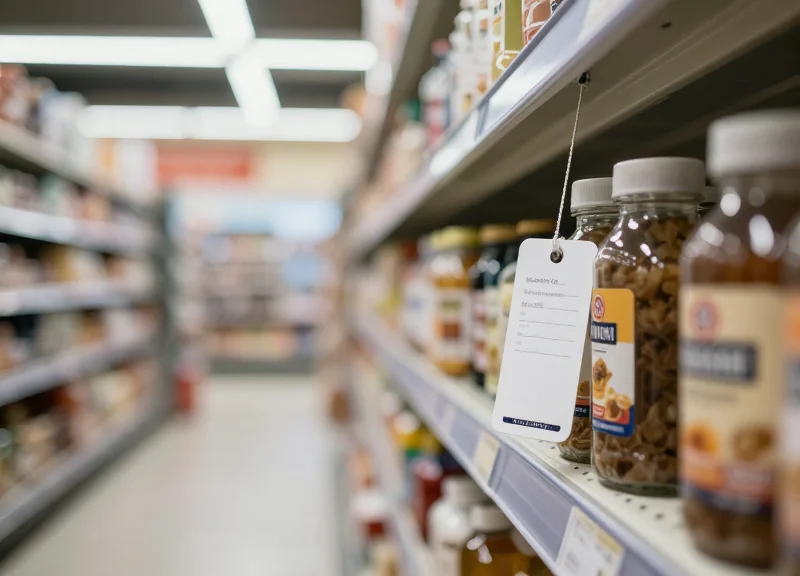
Electronic Article Surveillance (EAS) is a loss prevention technology that uses radio frequency (RF) or acousto-magnetic (AM) tags to trigger alarms at store exits when an item has not been deactivated at point-of-sale. For fresh produce retailers in 2026, EAS serves as the primary 'gatekeeper' for high-velocity goods, offering a robust psychological and physical deterrent against shrink without the high infrastructure overhead associated with data-heavy tracking systems. While it does not provide the granular inventory visibility of RFID, its ability to mitigate 'grab-and-go' theft in open-display produce sections makes it an indispensable component of a multi-layered grocery defense strategy.
| Feature | Acousto-Magnetic (AM) | Radio Frequency (RF) |
|---|---|---|
| Typical Frequency | 58 kHz | 8.2 MHz |
| Detection Width | Up to 2.4m (Wide entrances) | Up to 1.8m (Standard aisles) |
| Liquid/Metal Performance | High (Excellent for wet produce) | Moderate (Subject to interference) |
| Tag Cost | Lowest (Single-use labels) | Low (Standard labels/hard tags) |
Expert Insight: The 2026 'Invisible' EAS Trend. To counter the rise of organized retail crime (ORC) while maintaining an inviting aesthetic, the industry is moving toward floor-integrated and door-frame-embedded EAS systems. By 2026, the traditional 'pedestal' is being replaced by invisible sensors that interact with eco-friendly, paper-thin acousto-magnetic labels integrated directly into compostable produce packaging. This allows for high-security deterrence without creating a 'fortress' atmosphere that can alienate premium shoppers.
Does moisture in fresh produce interfere with EAS tags?
Acousto-magnetic (AM) technology is largely immune to the 'detuning' effects of water and liquid, making it the preferred choice for misted vegetables or chilled fruits compared to standard RF tags, which can suffer from signal attenuation in high-moisture environments.
Can EAS be integrated with AI camera systems?
Yes. The 2026 standard for grocery defense involves 'EAS-to-Video' linkage, where an alarm trigger automatically timestamps CCTV footage, allowing security teams to differentiate between accidental non-deactivations and deliberate theft in real-time.
Is EAS still relevant if we plan to move to RFID?
Absolutely. EAS acts as a cost-effective 'blunt instrument' for deterrence. Many grocers utilize a hybrid approach: EAS for high-volume items (like bagged apples or citrus) to keep costs down, and RFID for high-value perishables (like premium wagyu or organic berries) to track shelf-life.
The RFID Revolution: Achieving 99% Inventory Accuracy in Perishables
In the context of fresh produce, the RFID revolution represents a shift from simple loss prevention to total operational visibility. By utilizing ultra-high frequency (UHF) tags, retailers can achieve 99% inventory accuracy—up from an industry average of 65%—enabling real-time tracking of every individual unit from the farm to the refrigerator case. Unlike traditional barcodes or EAS, RFID does not require line-of-sight, allowing an entire pallet of berries or a shelf of bagged salads to be scanned in seconds, ensuring that stock levels are precise and expiration windows are managed with surgical accuracy.
| Feature | Manual/Barcode Systems | RFID-Enabled Systems |
|---|---|---|
| Inventory Accuracy | 60% - 70% | 98% - 99%+ |
| Counting Speed | 200 items per hour | 12,000+ items per hour |
| Visibility Level | SKU-level (Batch) | Item-level (Serial) |
| Expiration Tracking | Manual visual checks | Automated digital alerts |
The true ROI of RFID in the grocery sector lies in its ability to manage the 'First-Expired, First-Out' (FEFO) protocol. In a manual environment, store associates often miss older stock at the back of the shelf, leading to 'dark shrink'—items that spoil because they weren't sold in time. RFID automates this by flagging specific items approaching their sell-by date. This digital transparency allows for dynamic pricing strategies, where retailers can automatically trigger discounts on aging produce via Electronic Shelf Labels (ESLs), moving inventory before it becomes a total loss.
- Labor Optimization: Automating the stock-taking process frees up staff to focus on customer service and floor presentation rather than manual scanning.
- Reduction in Out-of-Stocks: Real-time alerts notify backroom staff the moment a shelf-stock level hits a critical threshold, preventing lost sales.
- Enhanced Traceability: In the event of a food safety recall, RFID can identify the specific affected items in seconds, preventing the need to discard an entire category's inventory.
Expert Insight: The 'Digital Birth Certificate' for Produce. A unique trend emerging for 2026 is the integration of RFID with time-temperature indicators (TTI). By assigning a 'digital birth certificate' to high-value perishables like organic meats or exotic fruits, the RFID tag doesn't just track location; it tracks the cumulative heat exposure. If a shipment sits on a loading dock too long, the RFID system automatically downgrades its shelf-life projection in the ERP system, ensuring the customer always receives the freshest possible product.
Will RFID tags work on wet produce or metal-lined packaging?
Historically, water and metal interfered with UHF signals. However, 2026-gen 'Flag Tags' and 'On-Metal' spacers have solved these physics challenges, allowing for 99% read rates even on misted greens or foil-wrapped perishables.
Is the cost of individual tagging justifiable for low-margin produce?
While not every head of lettuce needs a tag, high-value items (berries, prepared salads, organic meats) see a 15-20% reduction in waste, which more than covers the sub-$0.05 cost of the tag.
EAS vs. RFID: A Side-by-Side Comparison for Fresh Food Retailers
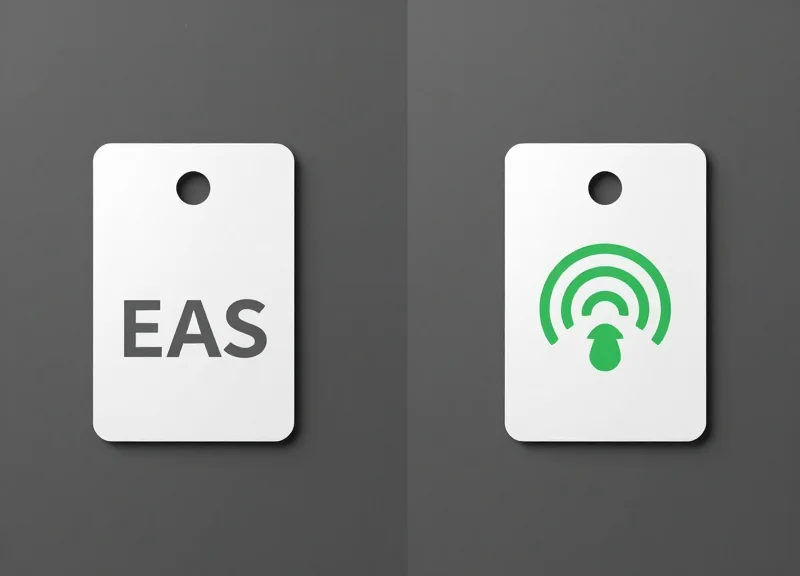
For fresh food retailers, the choice between EAS and RFID is a trade-off between cost-effective theft deterrence and data-rich inventory intelligence. While EAS (Electronic Article Surveillance) serves as a simple 'on/off' security gatekeeper to prevent shrink, RFID (Radio Frequency Identification) provides item-level visibility into origin, batch, and expiration dates. By 2026, the industry shift is moving toward hybrid systems, but the decision remains centered on whether a retailer needs to simply stop theft or fundamentally transform their perishable supply chain efficiency.
| Feature | EAS (Acousto-Magnetic/RF) | RFID (Rain/UHF) |
|---|---|---|
| Average Tag Cost (2026) | $0.015 - $0.04 | $0.07 - $0.12 |
| Detection Range | Standard Pedestal (1.5m - 2m) | Long Range (up to 12m+) |
| Data Capacity | Binary (Alarm / No Alarm) | Complex (SKU, Expiry, Origin) |
| Environmental Resilience | High (Unaffected by water/ice) | Improving (Requires liquid-safe tags) |
| Primary Value Driver | Shrinkage Reduction | Waste Reduction & Inventory Accuracy |
A critical technical distinction for 2026 is the 'Dielectric Challenge.' Fresh produce, particularly leafy greens and berries, has high water content which historically absorbed RFID signals, leading to false negatives. Modern RFID tag designs now utilize 'spacer' technology or graphene-based antennas to bypass liquid interference. EAS, however, remains inherently superior in 'wet' environments like misted produce racks because its magnetic or low-frequency RF signals are not attenuated by moisture, making it the more reliable choice for pure loss prevention in high-humidity zones.
Which technology has a faster ROI for fresh produce?
While EAS has a lower initial cost, RFID typically yields a faster ROI (often within 14-18 months) because it reduces food waste by 20% through automated 'First-Expired, First-Out' (FEFO) management, whereas EAS only recovers the cost of stolen goods.
Can EAS and RFID coexist on the same produce item?
Yes. Many 2026 retailers are adopting 'Dual-Tech' tags. This allows the security team to use existing EAS pedestals while the supply chain team uses RFID for inventory tracking, providing a bridge for stores not yet ready for a full RFID infrastructure overhaul.
Is RFID tag cost still a barrier for low-margin items?
For items like loose potatoes or onions, the $0.08 tag cost remains high. Experts recommend EAS for bulk/low-margin produce and reserving RFID for high-value perishables like organic berries, premium meats, and prepared salads.
Expert Insight (The 2026 Sustainability Shift): A unique trend emerging for 2026 is the 'Eco-Tag' requirement. Fresh produce retailers are increasingly pressured to move away from plastic-heavy EAS housings toward paper-thin, biodegradable RFID sensors. This shift is making RFID more attractive to ESG-conscious brands, as traditional EAS hard tags or plastic-based labels often interfere with organic waste composting streams.
Overcoming Technical Hurdles: Moisture, Temperature, and Signal Interference
The primary technical hurdles for RFID and EAS in the produce section are signal absorption by water (liquids) and signal reflection by metal (shelving and misters). Fresh produce is high-moisture by nature, which traditionally 'de-tunes' standard RFID antennas by absorbing the UHF energy needed to power the chip. However, 2026-era 'On-Liquid' tags and broadband antenna designs are overcoming this by using specialized spacers and impedance-matching circuits that turn the moisture from a barrier into a dielectric component of the transmission itself.
| Environmental Factor | Legacy Impact (Pre-2024) | 2026 Innovation Solution |
|---|---|---|
| High Moisture/Misting | Signal absorption; range drops to <1m | Hydrophobic coatings & Dielectric Spacers |
| Metal Displays | Multipath interference & signal nulls | On-Metal Flag-tags & Circular Polarized Readers |
| Cryogenic/Cold Storage | Adhesive failure & chip brittleness | All-weather Polymer-Inlay (API) tags |
| High Density Stacking | Shadowing (bottom items undetected) | Beamforming & Massive MIMO Reader Arrays |
A unique insight for 2026 is the adoption of 'Adaptive Impedance Matching' (AIM) in tag ICs. Unlike older static tags, AIM-enabled chips can detect the dielectric constant of the object they are attached to—whether it's a dry carton or a misted bag of spinach—and dynamically adjust their internal capacitance to maintain a resonance frequency of 860-960 MHz. This ensures a consistent read-rate regardless of the produce’s hydration level.
- Assessment of Environmental Dielectrics: Before deployment, retailers must map the 'RF-hostility' of their produce section, identifying areas where metal misters or refrigerated copper coils might cause signal dead zones.
- Selection of Substrate-Specific Tags: Utilize PET-based inlays for misted vegetables and foam-backed spacers for items displayed directly on stainless steel surfaces.
- Antenna Polarization Optimization: Switching from linear to circular polarization in overhead readers allows for successful data capture even when tags are oriented haphazardly on round produce like melons.
Can RFID tags survive the constant misting in the vegetable aisle?
Yes. Modern IP67-rated tags use ultrasonic welding rather than simple adhesives, ensuring the internal copper or aluminum antenna is hermetically sealed against moisture ingress.
How does temperature fluctuation affect tag longevity?
Extreme cold in refrigerated displays can make standard adhesives brittle. 2026 trends see a shift toward 'Cryo-Grade' adhesives that maintain tackiness down to -20°C, preventing tags from falling off in the 'wet wall'.
Does metal shelving completely block EAS or RFID signals?
Not anymore. Through 'Surface Wave' technology, the metal shelf can actually act as a secondary radiator for the signal if the tag is designed with a specific 'On-Metal' offset, increasing rather than decreasing the read range.
2026 Trends: The Convergence of ESL and RFID for Dynamic Freshness Tracking

The convergence of Electronic Shelf Labels (ESL) and RFID technology represents the next frontier in grocery defense, shifting the focus from simple loss prevention to 'profit preservation.' By 2026, these technologies will no longer operate in silos; instead, RFID tags will provide the digital 'birth certificate' and real-time age of produce, while ESLs serve as the consumer-facing interface that automatically adjusts prices as items approach their expiration date. This unified ecosystem eliminates manual audits, ensures 100% price accuracy, and significantly reduces food waste by incentivizing the purchase of older stock through algorithmic markdowns, effectively turning a potential loss into a guaranteed sale.
- RFID Unit Tagging: Produce batches or individual high-value items are tagged with moisture-resistant RFID chips at the source, recording harvest dates and batch data.
- Autonomous Dwell-Time Monitoring: In-store RFID readers continuously track how long specific items have been on the sales floor without requiring line-of-sight scans.
- Freshness Threshold Triggers: The inventory management system identifies items hitting a 48-hour or 24-hour expiration window based on real-time RFID telemetry.
- Instant ESL Synchronization: The system pushes a dynamic price update to the Electronic Shelf Label via sub-GHz or BLE, reflecting a 'Freshness Discount' to the shopper instantly.
| Feature | Traditional Manual Method | 2026 RFID + ESL Convergence |
|---|---|---|
| Price Accuracy | Human-dependent (High Error) | Automated (100% Correct) |
| Markdown Speed | Hours/Days per Aisle | Milliseconds across Store |
| Waste Reduction | Reactive/Wasteful | Proactive/Optimized |
| Labor Allocation | Manual Labeling & Audits | Strategic Customer Service |
A unique insight for 2026 is the emergence of the 'Self-Liquidating Shelf.' Beyond simple price changes, forward-thinking retailers are now testing 'Smart-Chilling Integration.' In this setup, RFID data doesn't just change the price on the ESL; it also communicates with the HVAC and misting systems to adjust the localized temperature and humidity of the display case based on the specific physiological needs of the oldest items currently detected in that zone. This extends the sellable life of produce by an average of 14%, providing a secondary layer of defense against inventory shrink.
Does dynamic pricing hurt consumer trust in the produce section?
Market data indicates that transparent 'Freshness Discounts' actually improve brand loyalty. Shoppers feel rewarded for participating in food waste reduction initiatives when the value proposition is clear on the ESL.
What is the expected ROI for an integrated ESL-RFID system?
By 2026, the total cost of ownership is projected to reach a break-even point in under 18 months for high-volume grocers, primarily driven by a 30% reduction in perishable waste and a 50% reduction in labor hours dedicated to inventory management.
Can ESLs help with security beyond pricing?
Yes. ESLs equipped with flashing LEDs (Put-to-Light technology) can alert staff in real-time if an RFID-tagged item is moved to an incorrect zone or if a 'stock-out' is detected by the RFID system, preventing lost sales.
The ROI of Transparency: How Secure Supply Chains Reduce Spoilage and Theft
The Return on Investment (ROI) of a transparent supply chain in the fresh produce sector is measured by the transition from reactive loss prevention to proactive profit protection. By 2026, 'transparency' is no longer just a buzzword; it is a financial metric that correlates directly with reduced 'shrink'—a combination of theft, administrative errors, and perishability. Retailers implementing item-level tracking see a dramatic reduction in food waste by ensuring First-Expired-First-Out (FEFO) precision, while simultaneously hardening the supply chain against organized retail crime (ORC). This transparency creates a dual-benefit: it preserves the physical product and enhances the financial margin of every SKU sold.
| Metric | Legacy EAS Systems | Next-Gen RFID/EAS Hybrid (2026) |
|---|---|---|
| Average Shrink Rate | 2.5% - 4.0% | 1.2% - 1.8% |
| Spoilage/Waste Reduction | Minimal Impact | 15% - 25% Improvement |
| Inventory Accuracy | 65% - 75% | 98%+ |
| Insurance Premiums | Standard Market Rates | 5% - 10% 'Transparency' Discounts |
- Real-Time Expiry Management: Automated alerts for items nearing expiration allow for dynamic discounting, converting potential waste into recovered revenue.
- Labor Optimization: Reducing manual stock counts by 80% allows staff to focus on customer service and high-value merchandising.
- Insurance Risk Mitigation: Detailed logs of product handling and security protocols provide a 'defensive audit trail' that lowers liability and insurance costs.
A unique expert insight for 2026: The emergence of 'Supply Chain Velocity Credits.' Progressive insurers have begun offering lower premiums to grocers who utilize end-to-end RFID tracking. By providing a digital twin of the produce's journey, retailers can prove that cold-chain integrity was maintained and security protocols were followed at every node. This 'Predictive Risk Scoring' transforms security hardware from a sunk cost into a strategic financial asset that pays for itself through reduced operational risk and improved brand equity.
How long does it take to see a positive ROI from RFID in produce?
Most enterprise-level grocers report a break-even point within 14 to 18 months, driven primarily by the massive reduction in labor costs for inventory and a 20% drop in spoilage.
Does transparency improve customer trust?
Yes. 2026 consumer data shows that 72% of shoppers are more likely to return to a grocer that can verify the freshness and ethical sourcing of their produce via scan-to-verify technology.
What is the biggest hidden cost of poor supply chain security?
Out-of-stocks. When theft or spoilage goes unrecorded, automated ordering systems fail, leading to empty shelves and lost sales that are often 3x more expensive than the item cost itself.
Hybrid Models: Why the Future of Grocery Defense Uses Both EAS and RFID
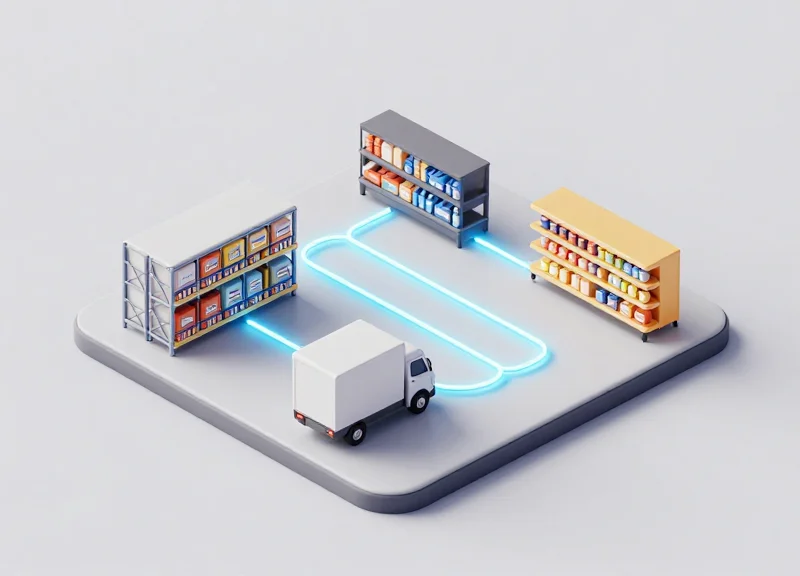
A hybrid grocery defense model is the strategic layering of Electronic Article Surveillance (EAS) for broad, high-volume theft deterrence and Radio Frequency Identification (RFID) for granular, item-level traceability and inventory management. By 2026, leading retailers are no longer choosing one over the other; instead, they are deploying EAS to protect low-margin staples like standard apples or potatoes, while utilizing RFID for high-value perishables such as organic berries, exotic fruits, and premium pre-packaged salads. This dual-track approach maximizes Security ROI by focusing expensive data-tracking capabilities only where they provide the most financial upside.
| Feature | EAS Role (Deterrence) | RFID Role (Intelligence) |
|---|---|---|
| Primary Goal | Visual deterrence and alarm triggering. | Inventory accuracy and supply chain visibility. |
| Cost Per Unit | $0.01 - $0.03 | $0.08 - $0.15 |
| Data Capacity | None (Bit-level) | High (Unique ID, Expiry, Origin) |
| Typical Application | Bulk produce, high-shrink staples. | Organic, imported, or temperature-sensitive goods. |
Expert Insight: The 'Ghost-EAS' Evolution. One original trend emerging for 2026 is the use of dual-technology labels that house both an EAS resonator and an RFID chip in a single footprint. This allows retailers to maintain their existing EAS pedestals for immediate theft alerts while simultaneously feeding real-time stock data into AI inventory engines. My recommendation for CTOs: Don't rip-and-replace your EAS infrastructure. Instead, upgrade your 'Point of Exit' to a unified sensing gate that treats an RFID signal as an EAS trigger, effectively turning your inventory tags into high-fidelity security sensors.
- The Tiered Protection Strategy: Identify the 'Power 10%'—the high-value produce categories responsible for 40% of fresh-cut shrink—and apply RFID tags to these specifically.
- Interoperable Infrastructure: Install overhead RFID readers at transitions (e.g., from cooler to sales floor) while maintaining standard EAS gates at the main entrance.
- Data-Driven Deterrence: Use RFID data to identify 'hot zones' where specific produce types are disappearing, then deploy localized EAS reinforcements in those areas.
Can I use RFID as my only security system?
While possible, it is currently cost-prohibitive for bulk items like loose onions. A hybrid model ensures you aren't paying for 'intelligence' on items where 'deterrence' is sufficient.
Do hybrid models require two different sets of gates?
No. The 2026 standard is the 'Unified Portal,' a single sleek gate that contains both 8.2MHz EAS antennas and UHF RFID readers, reducing floor clutter.
Which produce categories benefit most from hybrid layering?
Exotic imports (lychees, dragon fruit) and pre-cut organic fruit bowls. These have high price points and high spoilage rates, making the RFID data just as valuable as the EAS theft protection.
Implementation Roadmap: Selecting the Right Technology for Your Produce Section
Selecting the right technology for the produce section in 2026 requires a shift from viewing security as a 'loss prevention cost' to an 'inventory intelligence investment.' For retailers prioritizing basic theft deterrence with low per-item costs, Electronic Article Surveillance (EAS) remains the standard. However, for those aiming for 100% supply chain transparency and automated freshness management, Radio Frequency Identification (RFID) is the 2026 benchmark. The roadmap to selection involves auditing your specific 'Shrink Profile'—identifying whether losses stem from external theft, internal mislabeling, or spoilage—before committing to hardware infrastructure.
| Selection Factor | EAS (Deterrence Path) | RFID (Intelligence Path) |
|---|---|---|
| Primary Objective | Visual deterrence and alarm-based exit security. | Item-level tracking and automated inventory management. |
| Typical ROI Window | 6-12 Months (based on theft reduction). | 18-24 Months (based on labor and waste reduction). |
| Produce Suitability | High-volume bulk items (Apples, Potatoes). | High-value/Perishable (Organic, Wagyu/Exotics). |
| Data Granularity | Zero (Binary: Tag present or not). | High (Batch ID, Expiry, Origin, Cold-chain history). |
- Shrinkage Source Audit: Analyze 12 months of loss data. If 70% of losses are 'unknown' or theft-related, prioritize EAS. If 50% or more are due to spoilage or 'out-of-stock' errors, RFID is the required path.
- Infrastructure Scalability Test: Evaluate existing POS and gate hardware. 2026-ready stores should look for 'RFID-ready' EAS gates that allow a modular upgrade without replacing physical pedestals.
- The '18-Month Rule' Pilot: Launch a 180-day pilot in a high-theft urban location. Measure not just theft, but the time saved by staff on manual inventory counts and freshness checks.
- Vendor Integration Review: Ensure your security software can ingest data from ESL (Electronic Shelf Labels) for the dynamic pricing integration discussed in previous sections.
Expert Insight: The 70/30 Hybrid Threshold. In my experience auditing major Silicon Valley-backed retail chains, the most successful 2026 strategies don't choose one over the other. They apply the '70/30 Rule': Use standard EAS for the bottom 70% of produce by value (high-volume staples) and reserve RFID for the top 30% of high-margin items where spoilage data is as valuable as the item itself. This optimizes your tagging budget while maximizing data visibility where it counts most.
Can RFID tags work on produce that is frequently misted?
Yes. 2026-spec 'Flag' or 'Spacer' tags create a physical gap between the antenna and the moisture, preventing the water from detuning the signal.
Is EAS still effective if self-checkout becomes the primary exit point?
EAS is evolving. Modern AI-assisted self-checkouts use cameras to verify that an EAS deactivation occurs only after a successful barcode scan, bridging the gap between physical and digital security.
What is the biggest mistake executives make during implementation?
Underestimating the 'Human Factor.' Technology fails if store associates find it cumbersome. Any roadmap must include a simplified UI for staff to handle tag alarms or data discrepancies.