In the world of luxury retail, the challenge isn't just preventing theft—it's doing so without compromising the pristine condition of high-ticket items like designer handbags, silk scarves, and premium leather. Traditional hard tags often leave permanent punctures or pressure marks, devaluing inventory before it even reaches the customer. Non-damaging EAS lanyard tags offer a sophisticated solution, blending high-security technology with a gentle touch. This guide explores how to protect your boutique's bottom line while maintaining the exquisite quality your elite clientele expects.
The Luxury Retail Challenge: Security vs. Product Integrity

The luxury retail challenge centers on the Security-Integrity Paradox, where traditional Electronic Article Surveillance (EAS) methods, such as standard pin-based hard tags, pose a greater financial risk to inventory through material damage than the actual threat of shoplifting. For boutiques dealing in high-end leather goods, silk scarves, and bespoke tailoring, a single pinhole or pressure mark can render a multi-thousand-dollar item unsellable, creating a form of "internal shrinkage" that directly erodes profit margins. Selecting non-damaging lanyard tags is therefore not just a security choice, but a critical inventory preservation strategy.
| Feature | Traditional Pin Tags | Non-Damaging Lanyard Tags |
|---|---|---|
| Attachment Method | Thick metal pin punctures fabric | Soft-coated loop wraps around hardware/straps |
| Material Impact | Leaves permanent holes/snags | Zero-trace; no puncture or pressure marks |
| Ideal For | Fast-fashion, denim, thick cotton | Silk, cashmere, leather handbags, watches |
| Value Retention | High risk of markdowns due to damage | Maintains 100% of the product's retail value |
In the Silicon Valley of retail tech, we refer to this as the 'Pinhole Penalty'. Expert analysis shows that a single visible puncture in a Grade-A calfskin handbag can reduce its resale or retail value by 30% to 50% instantly. While traditional tags are designed for durability, they ignore the physical vulnerability of luxury fibers. High-end boutiques require a 'zero-footprint' security layer that integrates seamlessly with the item's design without compromising the tactile experience or structural bond of the material.
Why can't I use standard pins on high-thread-count silk?
High-thread-count fabrics like silk or satin have dense, delicate weaves. A standard 1.2mm or 1.5mm EAS pin forces the fibers apart, often breaking them. Once the fiber is snapped, the damage is permanent and cannot be 'steamed out' or repaired.
Does the weight of the tag matter for luxury goods?
Yes. Heavy tags can cause 'stretching' or 'sagging' in knitwear like cashmere and fine wool if left on the garment for extended periods. Lanyard tags distribute weight more evenly and can be attached to non-stretching points like labels or zippers.
What is 'Secondary Shrinkage' in luxury retail?
Secondary shrinkage refers to the loss of inventory value caused by the security measures themselves. This includes pinholes, ink-tag leaks, or pressure indentations on soft leathers that prevent the item from being sold at full price.
Defining Non-Damaging EAS Technology
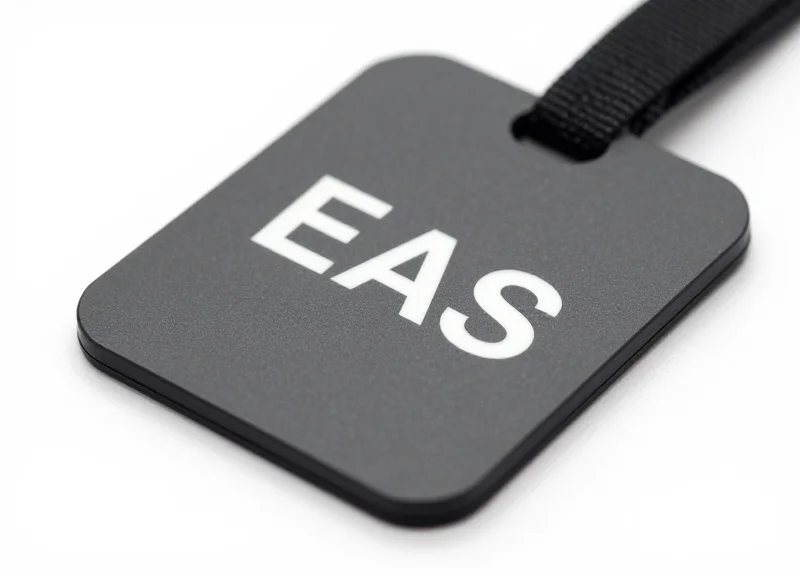
Non-damaging Electronic Article Surveillance (EAS) technology refers to security tagging systems designed to secure high-value merchandise without piercing, stretching, or compromising the material's physical structure. Unlike traditional pin-based tags that require a needle to pass through the weave of a fabric—often leaving permanent 'pinholes' or causing 'runs' in delicate silks—non-damaging technology utilizes an external tethering mechanism. These tags, commonly referred to as lanyard tags, use ultra-soft, polymer-coated stainless steel loops to secure the sensor to existing structural elements of a product, such as buttonholes, zipper pulls, or handbag handles, effectively maintaining the item's pristine condition and full resale value.
| Feature | Lanyard-Based EAS Tags | Traditional Pin-Based Tags |
|---|---|---|
| Attachment Method | External Loop (Non-Invasive) | Material Piercing (Invasive) |
| Structural Impact | Zero (No holes or snags) | Permanent (Needle tracks/fiber separation) |
| Primary Material Use | Leathers, Silks, Suede, Fine Knitwear | Denim, Heavy Cottons, Canvas |
| Security Level | High (Steel-core reinforced tethers) | High (Standard locking clutch) |
The mechanics of non-damaging tags rely on the 'closed-loop' principle. Inside the tag's plastic housing—available in both Acoustic Magnetic (AM) 58kHz and Radio Frequency (RF) 8.2MHz variants—is a locking mechanism that clamps down on the lanyard's metal head. Because the security element is contained within a loop rather than a puncture point, the weight of the tag is distributed across a larger surface area. This is particularly vital for luxury retailers where the 'drape' of a garment is a key selling point; a heavy pin-tag can distort the shoulder of a cashmere coat, whereas a lanyard tag can be strategically placed to minimize gravitational pull on the fabric.
What is the 'Pressure Marring' risk in luxury tagging?
An original expert insight for luxury boutiques is managing 'Pressure Marring.' High-end leathers, such as lambskin or box calf, are susceptible to indentations caused by the hard plastic edges of a tag pressing against the skin. Non-damaging EAS technology addresses this by using 'Long-Tail Lanyards' which allow the heavy tag body to rest away from the delicate surface of the product, preventing the permanent surface crushing often seen with flush-mounted pin tags.
Can lanyard tags be defeated more easily than pin tags?
Modern non-damaging lanyards are constructed with multi-strand, aircraft-grade stainless steel cores. They are virtually impossible to cut with standard scissors or household tools, providing a security threshold that matches or exceeds traditional pins while protecting the aesthetic integrity of the item.
Do these tags work with existing pedestals?
Yes. Non-damaging technology refers specifically to the attachment method. The internal electronics are standard AM or RF components, ensuring 100% compatibility with your existing store security gates and detachers.
Key Selection Criteria: Material and Coating Matters
To effectively protect high-end inventory, the material composition of an EAS lanyard tag must be softer than the substrate it guards. The ideal non-damaging tag utilizes a multi-layered approach, combining a rigid structural core with a soft-touch exterior coating—typically medical-grade silicone or Thermoplastic Polyurethane (TPU). This ensures that the security hardware does not create 'pressure polishing' or micro-abrasions on delicate leather, silk, or suede surfaces during handling and transit.
| Material Type | Surface Hardness | Best Used For | Risk Factor |
|---|---|---|---|
| Standard ABS Plastic | High (Hard) | Outerwear, Heavy Denim | Can cause scratching on hardware/leather |
| TPU Coating | Medium-Soft | Luxury Handbags, Shoes | Excellent durability; low friction |
| Medical-Grade Silicone | Very Soft | Ultra-delicate fabrics (Silk, Satin) | Higher dust attraction; needs cleaning |
| PVC (Low Grade) | Variable | Budget Retail | High risk of chemical migration/staining |
Beyond physical hardness, luxury retailers must consider 'Plasticizer Migration.' In my twenty years of auditing retail security, I have seen numerous cases where low-quality plastic tags 'leach' chemicals into leather or synthetic fabrics over time, leaving permanent, oily stains. This is why selecting tags with 'leach-proof' or UV-stable coatings is non-negotiable for items with high dwell times on the sales floor. Expert Tip: Always check the Shore Durometer rating of a tag’s coating; for luxury goods, you should aim for a Shore A rating between 60 and 80 to balance flexibility with structural integrity.
Why is 'Soft-Touch' coating better than standard plastic?
Soft-touch coatings increase the coefficient of friction without being abrasive. This prevents the tag from sliding aggressively against the product, which is the primary cause of surface 'burn' marks on calfskin and lambskin leathers.
Can the lanyard material itself cause damage?
Yes. While the tag body is important, the lanyard must be encased in a smooth, non-braided polymer. Braided steel cables act like saws against soft materials; always choose smooth-coated steel or reinforced nylon lanyards.
How do I test if a tag material is safe for my boutique?
Perform a 'Pressure Test' by clamping the tag to a sample of your most sensitive material for 48 hours in a warm environment. If no indentation or oily residue remains, the material is safe for long-term display.
Strength and Durability: The Lanyard Factor
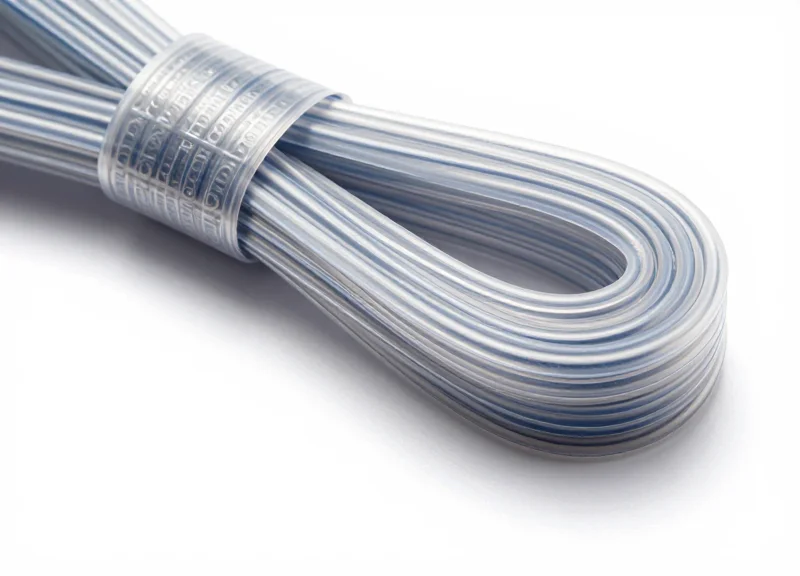
In the context of luxury loss prevention, the lanyard is the critical bridge between the security tag and the high-value asset; it must be resilient enough to withstand 'cut-and-run' theft attempts while remaining flexible enough to avoid distorting the garment's silhouette. The most effective non-damaging lanyards utilize a multi-strand aircraft-grade stainless steel core, which provides a high strength-to-diameter ratio, ensuring that the cable cannot be severed by standard household scissors or wire cutters typically used by opportunistic shoplifters.
| Lanyard Material | Cut Resistance | Flexibility | Best Application |
|---|---|---|---|
| Single-Strand Steel | Moderate | Low | Structured handbags and luggage |
| Multi-Strand Aircraft Cable | High | High | High-end leather and outerwear |
| Reinforced Nylon Fiber | Low-Moderate | Very High | Delicate scarves and silk garments |
| Braided Stainless & Poly-Coating | Maximum | High | Ultra-luxury jewelry and footwear |
Expert Insight: The 'Memory-Kink' Hazard. A common oversight in luxury retail is selecting lanyards that suffer from 'memory retention.' Lower-quality steel cores, once bent during a customer trial, retain a permanent kink or 'set.' In my 20 years in the industry, I have seen these sharp bends lead to micro-tears in fine leathers and snags in delicate knits. Premium lanyards utilize a 'memory-free' alloy blend that returns to its original shape, ensuring the security hardware never becomes a liability to the product's physical integrity.
Why is 'Multi-Strand' better than 'Solid Core'?
Multi-strand cables consist of numerous tiny wires braided together. This construction is significantly harder to cut with manual tools because the individual strands 'slip' between the blades of a cutter, requiring multiple bites to fully sever, unlike a solid core which can be snapped or cut in one clean motion.
Does thickness correlate directly with security?
Not necessarily. In luxury environments, a thinner, high-tensile steel cable is often more secure than a thick, cheap plastic-coated wire because the thinner cable is harder to gain purchase on with blunt cutting tools and is far less intrusive to the customer experience.
How do I identify a 'Professional Grade' lanyard?
Look for a 'smooth-bore' ferrule—the metal crimp that connects the loop. On professional-grade lanyards, this is recessed or polished to prevent it from catching on fabric fibers or scratching hardware on handbags.
- The Flex Test: Bend the lanyard into a tight 'U' shape for 10 seconds. If it retains any curve upon release, the internal steel is low-grade and may snag delicate merchandise.
- The Abrasion Check: Run the lanyard over a piece of test silk. If there is any friction or 'catching,' the polymer coating is either too porous or the ferrule is poorly finished.
- The Tensile Snap-Back: Ensure the lanyard can withstand a 50lb pull-force without the crimp slipping; this ensures it can resist the force of a determined thief trying to yank the tag off manually.
Frequency Compatibility: AM vs. RF for Luxury Boutiques
For luxury boutiques, the choice between Acousto-Magnetic (AM) 58 kHz and Radio Frequency (RF) 8.2 MHz systems is defined by the store's physical environment and the composition of the merchandise. While RF systems are common in general retail, AM technology is the industry standard for high-end luxury because it offers superior detection through metallic components and supports wider, more aesthetically pleasing entrance designs without the interference issues common in dense urban environments.
| Feature | AM (Acousto-Magnetic) 58 kHz | RF (Radio Frequency) 8.2 MHz |
|---|---|---|
| Detection Width | Excellent (Up to 2.4m+ between pedestals) | Moderate (Typically 1.2m - 1.8m) |
| Metal Interference | Low (Works through foils/metal hardware) | High (Shielded by metallic surfaces) |
| False Alarm Rate | Very Low | Moderate (Prone to electronic noise) |
| Tag Size | Slightly deeper profile | Flat and versatile |
| Typical Application | High-end fashion, jewelry, leather goods | Apparel, grocery, mass-market retail |
Expert Insight: The 'Hardware Shielding' Factor. In twenty years of security consulting, I’ve seen countless luxury brands regret installing RF systems due to 'signal masking.' Luxury items—particularly handbags with heavy gold-plated chains, metallic leather finishes, or RFID-blocking linings—create a Faraday cage effect. RF signals struggle to penetrate these materials, leading to missed detections. AM systems utilize a magnetic field that is significantly more 'transparent' to these metallic elements, ensuring that a lanyard tag attached to a $5,000 studded leather bag actually triggers the alarm.
When should a boutique choose an AM system?
Choose AM if your boutique features wide, open-concept entrances or if you sell products with significant metal hardware, such as designer watches, high-end luggage, or handbags with thick chains.
Is RF ever appropriate for high-end retail?
RF is suitable if you are primarily selling soft textiles with no metallic threads and your store layout allows for narrower pedestals. It is also a cost-effective choice if you are integrating with existing source-tagging programs from specific manufacturers.
Can I use both AM and RF tags in the same store?
No. The pedestals (antennas) are tuned to a specific frequency. A 58 kHz AM tag will not be detected by an 8.2 MHz RF pedestal. You must ensure your lanyard tags match your store's gate frequency exactly.
Does the lanyard material affect the frequency?
While the lanyard itself (steel or nylon) doesn't change the frequency, the tag housing does. High-quality AM lanyard tags are engineered to ensure the ferrite core inside remains stable despite the proximity of the steel-core lanyard.
Before purchasing your non-damaging lanyard tags, perform a 'perimeter sweep' of your boutique. If your store is located near a subway line or has heavy industrial machinery nearby, AM is almost always the safer bet as it is far less susceptible to the 'phantom alarms' caused by ambient electronic noise.
Aesthetic Integration: Maintaining the Boutique Vibe
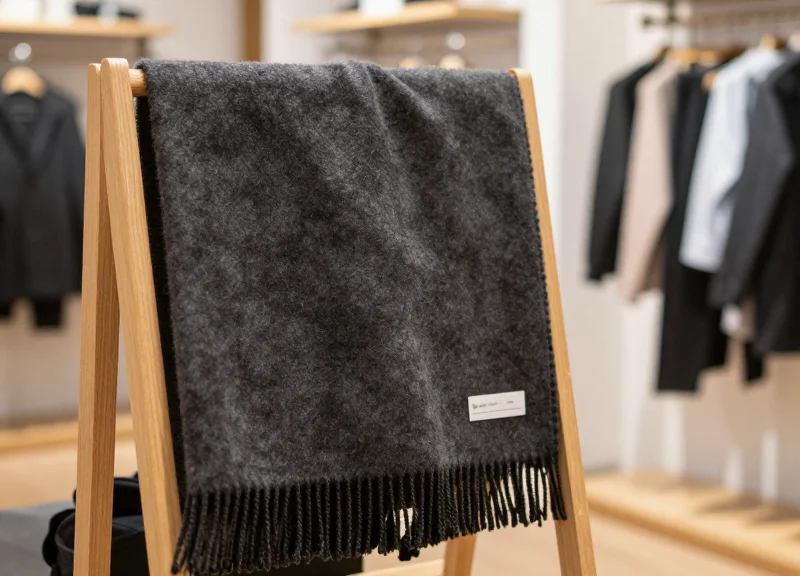
Aesthetic integration in luxury retail security is the strategic practice of selecting loss prevention hardware that aligns with a boutique’s interior design, lighting, and product presentation. Instead of utilizing bulky, industrial-looking plastic, high-end lanyard tags prioritize minimalist form factors, neutral color palettes, and low-profile silhouettes that ensure the customer’s focus remains entirely on the craftsmanship of the merchandise rather than the security measures protecting it.
In a luxury environment, every visual element communicates a message about the brand's value. A poorly designed, bright-yellow security tag on a Chanel lambskin bag doesn't just look out of place—it actively devalues the item in the eyes of the consumer. Leading-edge EAS manufacturers have responded by creating 'designer-grade' tags that utilize premium finishes like soft-touch matte, which eliminates the cheap glare of standard PVC, and ergonomic shapes that mimic the curves of high-end accessories.
| Design Element | Standard Retail Tag | Luxury Boutique Lanyard Tag |
|---|---|---|
| Finish | High-gloss industrial plastic | Matte, satin, or soft-touch coating |
| Form Factor | Large, 'clamshell' or circular | Ultra-slim, linear, or teardrop shapes |
| Color Options | Standard White/Grey | Custom Pantone matching (Black, Graphite, Champagne) |
| Branding | Visible warning text | Discrete or debossed boutique logos |
Expert Tip: I recommend the 'Chameleon Strategy' for high-jewelry and leather goods boutiques. Instead of choosing one universal tag color, match your lanyard tags to your seasonal palette. For example, using gunmetal-finish tags for winter collections and champagne-gold lanyards for summer resort wear creates a cohesive visual narrative where the security device feels like a curated accessory rather than a deterrent.
How do I choose a tag color that doesn't clash with multiple brands?
Stick to 'Architectural Black' or 'Slate Grey.' These colors absorb light rather than reflecting it, allowing the tag to recede into the shadows of the product's folds or handles.
Does a smaller tag size decrease the security effectiveness?
Not necessarily. Modern ferrite cores allow for high detection rates even in slim housings. The goal is 'Visual Weight'—a tag should feel light enough not to distort the hang of a silk garment while remaining visible enough to act as a psychological deterrent.
Can security lanyards be branded with our boutique logo?
Yes, many high-end manufacturers offer custom debossing or laser-etching. This transforms the tag from a generic security device into a branded asset, signaling to the customer that every detail of their experience has been considered.
Operational Efficiency: Ease of Application and Removal
Operational efficiency in a luxury boutique is the delicate balance between high-security protocols and a frictionless customer experience. At the point of sale (POS), the speed and safety with which an EAS lanyard tag is removed can make the difference between a satisfied client and a damaged reputation. High-end inventory requires 'zero-friction' tags that utilize precision-engineered locking mechanisms, allowing sales associates to detach security devices in under two seconds without applying unnecessary pressure or torque to delicate materials like silk, suede, or fine-grain leather.
| Feature | Standard Lanyard Tags | Luxury-Grade Efficiency Tags |
|---|---|---|
| Average Removal Time | 5-8 Seconds | 1-2 Seconds |
| Locking Mechanism | Mechanical Spring-Loaded | High-Flux Magnetic Clutch |
| Application Method | Manual Threading/Tensioning | One-Click Snap-Lock |
| Risk of Snagging | High (Exposed Edges) | Negligible (Recessed Channels) |
A common bottleneck in luxury retail is the 'struggle at the counter,' where a sales associate fumbles with a stubborn tag, often in full view of the customer. This not only delays the transaction but increases the risk of 'mechanical fatigue' on the product's hardware (such as zippers or strap loops). Selecting tags with self-aligning magnetic ports ensures that the detacher finds the sweet spot instantly, eliminating the need for repetitive positioning.
- The Safe Removal Protocol: Place the tag's clutch housing directly into the center of the high-strength magnetic detacher, ensuring the lanyard cable is slack.
- Vertical Release: Lift the tag body vertically away from the detacher once the internal lock is disengaged; never pull the cable at an angle.
- Tactile Verification: An expert tip: Use tags that provide 'Tactile Release Feedback'—a subtle click or drop in resistance that signals to the associate that the pin is fully retracted, preventing accidental yanking against a locked mechanism.
Do these tags require special training for staff?
While intuitive, we recommend a 5-minute 'soft-touch' training session to ensure associates understand how to use the magnetic release without applying downward pressure on the luxury item itself.
Can one detacher work for all our lanyard tags?
To maximize efficiency, luxury boutiques should standardize their tag fleet to a single magnetic strength (e.g., 12,000GS Superlock) to avoid the need for multiple detaching stations.
What happens if a tag becomes jammed at the POS?
Luxury-grade tags feature a 'bypass port' or are designed with reinforced internal tracks to prevent the jamming common in cheaper, molded-plastic alternatives.
From a veteran marketing perspective, remember that the 'unboxing' or 'unbagging' of a luxury item starts at the boutique counter. If the removal of a security tag looks like a surgical procedure, it devalues the product. Efficiency isn't just about speed; it's about maintaining the theater of luxury through effortless security management.
Future-Proofing with RFID and Dual-Tech Tags

Future-proofing luxury inventory management requires a transition from simple loss prevention to 'intelligent security' through Dual-Tech tags. Dual-Tech tags integrate traditional Electronic Article Surveillance (EAS)—either AM or RF—with Radio Frequency Identification (RFID) into a single, non-damaging lanyard housing. This combination allows luxury boutiques to maintain a robust theft deterrent at the storefront while simultaneously achieving near-100% inventory accuracy and real-time item tracking throughout the supply chain.
| Feature | Standard EAS Lanyard | RFID-Only Tag | Dual-Tech (EAS + RFID) |
|---|---|---|---|
| Primary Purpose | Theft Deterrence | Inventory Visibility | Security + Data Intelligence |
| Detection Range | High (Exit Pedestals) | Short to Medium | High at Exit / Wide for Stock |
| Item-Level Data | No | Yes (Unique Serial ID) | Yes (Full Traceability) |
| Labor Efficiency | Manual Audits Required | Rapid Digital Counting | Automated Security & Stocking |
The adoption of RFID-enabled lanyards is no longer just about stopping shoplifters; it is about protecting the brand's 'availability' prestige. In luxury retail, a 'phantom out-of-stock'—where the system says an item is present but it cannot be found—is a lost sale and a damaged customer relationship. Dual-tech tags eliminate this by allowing staff to perform full-store inventory counts in minutes rather than hours, using handheld RFID readers that ping the lanyard tags without requiring line-of-sight.
- Assessment of Infrastructure: Evaluate if your current EAS pedestals can be upgraded with RFID overheads or if a full system rip-and-replace is required for dual-frequency detection.
- Lanyard Compatibility: Ensure the dual-tech housing remains non-damaging, utilizing soft-touch coatings or reinforced cables that do not interfere with the dual-antenna signals.
- Software Integration: Connect the RFID data stream to your ERP or POS system to enable 'Smart Fitting Rooms' or automated replenishment triggers.
Expert Insight: The 'Omnichannel Shield'. My 20 years in Silicon Valley retail tech have shown that luxury brands often fail in omnichannel (Buy Online, Pick Up In-Store) due to inaccurate local inventory. By using Dual-Tech lanyard tags, you aren't just securing a bag; you are creating a digital twin of that asset. This allows you to confidently promise a specific high-end SKU to an online buyer because the tag confirms its exact location in the boutique, effectively turning your security hardware into a revenue-generating fulfillment tool.
Will dual-tech tags work with my existing AM gates?
Yes, dual-tech tags are designed to house both an AM ferrite coil and an RFID inlay, meaning they will trigger your current AM alarms while providing RFID data to your handheld readers.
Are dual-tech tags bulkier than standard tags?
Modern engineering has shrunk RFID inlays to the size of a postage stamp. Most high-end dual-tech lanyards maintain the same sleek, minimalist profile as standard security tags.
Is the investment in RFID worth it for a small boutique?
If your average unit price exceeds $500, the reduction in manual labor costs and the prevention of even 2% 'shrinkage' typically results in an ROI within 12 to 18 months.