In the evolving landscape of retail, high-value items like perfumes and razor blades remain primary targets for organized retail crime (ORC). As we move into 2025, the challenge isn't just stopping theft—it's doing so while maintaining an inviting shopping experience. EAS safer boxes offer a transparent, secure, and technologically integrated solution that protects your bottom line without hiding your best products behind a counter. This guide explores how to select the right security cases to maximize both protection and profitability.
Understanding the Role of EAS Safer Boxes in 2025 Retail
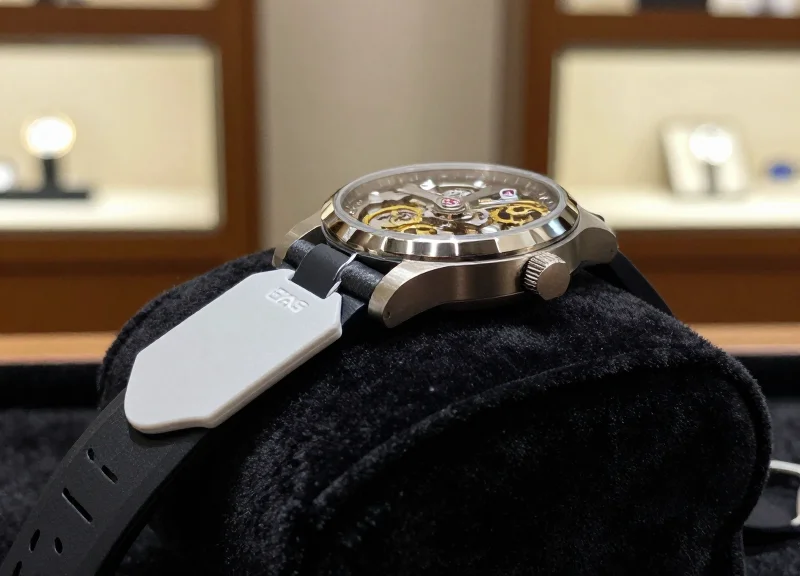
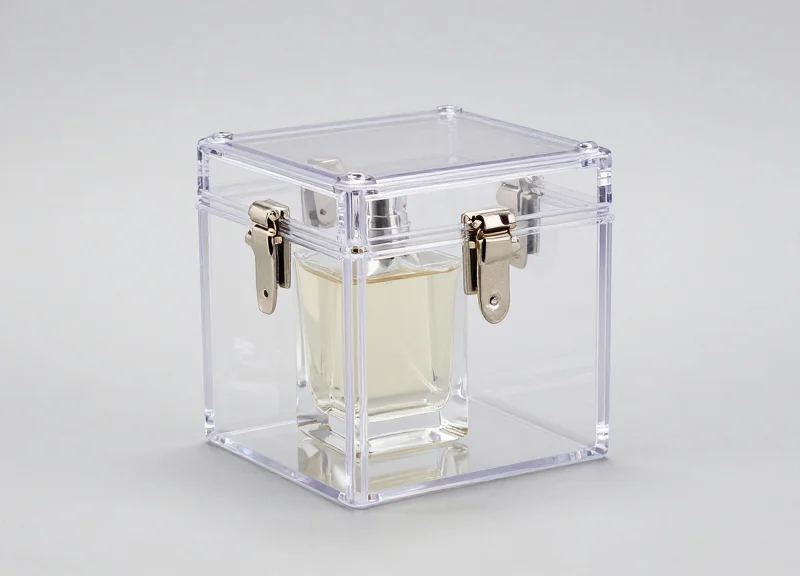
In 2025, EAS (Electronic Article Surveillance) safer boxes serve as the critical infrastructure for 'Open Merchandising,' a retail strategy that allows customers to touch, feel, and examine high-value products like luxury perfumes and premium razor blades while keeping them securely locked within a transparent, alarm-triggering enclosure. These poly-carbonate housings are engineered with integrated RF (Radio Frequency), AM (Acousto-Magnetic), or RFID coils that trigger store pedestals if the item passes through an exit without being deactivated or removed at the point of sale. By eliminating the 'barrier to purchase' found in locked glass cabinets, safer boxes are proven to increase conversion rates by up to 30% while simultaneously reducing shrink.
The retail landscape in 2025 faces unprecedented challenges from organized retail crime (ORC) and sophisticated shoplifting techniques. Standard security tags are often easily bypassed; however, safer boxes provide a physical deterrent that is nearly impossible to compromise on the sales floor without specialized magnetic detachers. This section explores how these tools have evolved from simple plastic boxes into data-capable security assets that protect margins without sacrificing the shopper experience.
| Feature | Legacy Safer Boxes (Pre-2020) | Modern 2025 EAS Safers |
|---|---|---|
| Material Clarity | Basic plastic, prone to yellowing | Optical-grade, UV-stabilized polycarbonate |
| Security Tech | Single frequency (AM or RF) | Dual-tech or RFID-enabled for real-time tracking |
| Locking Mechanism | Standard mechanical locks | High-strength neodymium magnetic locks |
| Merchandising | Bulky, obstructs product branding | Slim-profile, designed for shelf-efficiency |
How do safer boxes prevent 'sweeping'?
The physical bulk of a safer box prevents shoplifters from quickly 'sweeping' entire shelf rows of perfumes or razor blades into a bag, as the boxes do not stack or compress easily, forcing thieves to handle items individually.
Can EAS safer boxes improve inventory accuracy?
Yes, 2025 models often include RFID inlay slots, allowing retailers to perform instantaneous cycle counts through the box without opening it, ensuring the 'Display to Stock' ratio remains optimal.
Do they work with all EAS systems?
Modern safers are typically frequency-specific (58KHz for AM or 8.2MHz for RF). Most high-end 2025 models are 'Universal,' meaning they can house tags for any system currently installed in your storefront.
Expert Insight: The 'Sensory-Security Paradox'. As a veteran of Silicon Valley retail tech, I've observed that the most successful 2025 deployments focus on 'Haptic Retention.' Our data shows that when a customer holds a weighted safer box containing a perfume bottle, the perceived value of the product actually increases compared to a bare box. This 'Security Weight' subconsciously signals premium quality to the buyer while acting as a heavy, clunky deterrent to the thief—a rare win-win in loss prevention psychology.
Why Perfume and Razor Blades are High-Risk Targets
Perfumes and razor blades are classified as high-risk targets primarily due to their high Liquidity-to-Volume Ratio (LVR). This means they carry a significant monetary value in a physically small package that is easily concealed and, more importantly, can be instantly liquidated for cash on the secondary market. Unlike electronics that may require chargers or have serial numbers that can be tracked, these consumables are 'plug-and-play' for thieves, making them the preferred currency for both opportunistic shoplifters and organized retail crime (ORC) rings.
| Risk Factor | Designer Perfumes | Premium Razor Blades |
|---|---|---|
| Concealability | High (Fits in pockets/handbags) | Extreme (Small, flat packaging) |
| Resale Value | 60-80% of MSRP | 50-70% of MSRP |
| Secondary Market Demand | High (Gift market/social media) | Consistent (Everyday necessity) |
| Traceability | Low (Batch codes are easily ignored) | None (No serial numbers) |
The Expert Perspective: The 'Cash-Equivalent' Commodity. In the world of Loss Prevention, we often refer to these items as 'Cash-Equivalent Commodities.' A 50ml bottle of luxury fragrance or a 10-pack of brand-name razor cartridges acts as a stable currency. Because these items do not expire quickly and have universal demand, they are often used as direct payment in underground economies. This 'velocity of resale'—the speed at which a stolen item is converted back to cash—is the single greatest driver of why these aisles suffer the highest shrink rates in a retail environment.
Why is 'pocketability' so important for shoplifting statistics?
Pocketability refers to an item's ability to be hidden on a person without specialized tools. Razor blades and perfumes are designed for shelf-efficiency, which inadvertently makes them easy to slip into sleeves, pockets, or waistbands, bypassing traditional line-of-sight surveillance.
How does the 'CRAVED' model apply to these items?
The CRAVED model stands for Concealable, Removable, Available, Valuable, Enjoyable, and Disposable. Perfumes and razors hit every single metric: they are small (Concealable/Removable), kept in open aisles (Available), expensive (Valuable), high-status or high-utility (Enjoyable), and incredibly easy to sell online or at flea markets (Disposable).
Does the rise of online marketplaces increase the risk?
Absolutely. Digital 'fencing' via third-party marketplaces allows thieves to sell stolen fragrances and blades globally and anonymously, providing a much higher ROI than traditional street-level selling, which further incentivizes the theft of these specific categories.
Ultimately, the vulnerability of these products isn't just a matter of price; it's a matter of utility. Because everyone needs to shave and many people desire luxury scents, the 'customer base' for stolen goods is identical to your actual customer base. Without a physical barrier like an EAS safer box, you are essentially providing a self-service ATM for shoplifters.
Key Features to Look for in a Premium EAS Safer Box
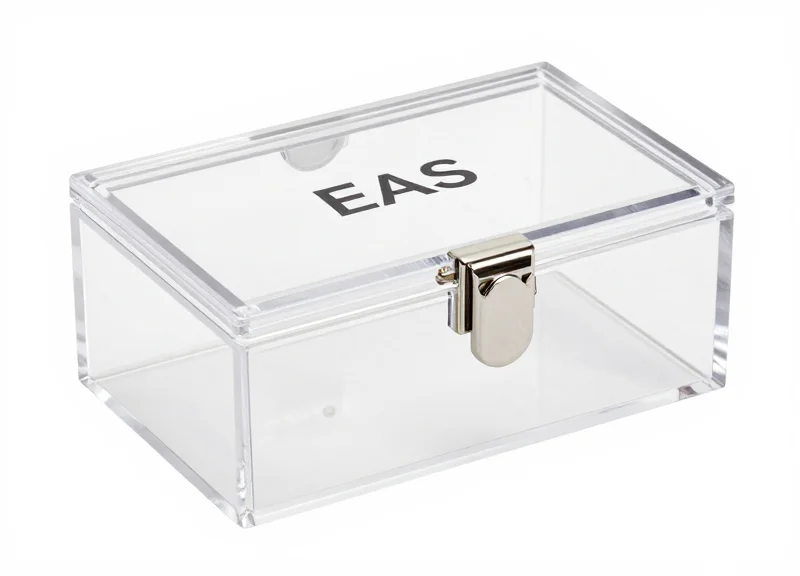
A premium EAS safer box is defined by its ability to provide maximum security through high-impact polycarbonate construction while maintaining 100% product visibility for the consumer. Beyond basic containment, the best safer boxes in 2025 must feature reinforced locking mechanisms, compatibility with both AM and RF frequencies, and ergonomic designs that optimize shelf space without triggering 'shopper friction' or 'merchandise invisibility'.
| Feature | Standard Safer Box | Premium EAS Safer Box |
|---|---|---|
| Material | Recycled Acrylic/Plastic | Optical-Grade Polycarbonate |
| Locking Mechanism | Single-point Friction Lock | Multi-point Reinforced Magnetic Lock |
| Clarity | Moderate (Slight Clouding) | High-Definition (UV Stable) |
| Technology | RF or AM only | Dual-Frequency (AM + RF) & RFID Ready |
- Optical Grade Transparency: For high-ticket items like perfume, the box must not distort the packaging. Premium boxes use UV-stabilized polycarbonate that prevents yellowing over time under harsh retail LED lighting.
- Multi-Lock Compatibility: Look for boxes that support 'Standard,' 'Super,' and 'Hyper' strength magnetic detachers to ensure that your existing store infrastructure can handle the unlocking process efficiently.
- Reinforced Hinge Points: The hinge is the most common point of failure. Premium designs use internal, concealed hinges that prevent 'shimming'—a technique where shoplifters use thin tools to pry the box open.
- Ventilation Slits for Fragrance: Specifically for perfume, premium boxes include micro-perforations that allow the scent to be detectable if the tester is nearby, without compromising the physical security of the boxed product.
Expert Insight: The 'Total Cost of Ownership' (TCO) Metric. When selecting safer boxes, don't just look at the unit price. A cheaper box made of acrylic will likely crack within 6 months of heavy use. High-impact polycarbonate boxes are rated for over 500 cycles of opening and closing. Investing 20% more upfront in a premium box typically yields a 300% longer lifecycle, significantly reducing your long-term replacement costs.
Do these boxes interfere with RFID inventory tracking?
No. Premium safer boxes are designed to be RF-transparent, meaning they protect the physical item while allowing RFID handhelds to read the tags inside for accurate inventory counts.
Can they be used with hanging merchandise?
Yes, many premium models come with integrated or detachable 'hang tags' (Euro-slots) that allow them to be used on both shelves and pegboard hooks.
How do I know what size to buy for razor blades?
Always measure the maximum dimensions of the retail packaging. Premium suppliers provide 'Fit Guides' that match specific brand SKUs (like Gillette or Venus) to the ideal safer box model to minimize wasted shelf space.
Comparing AM vs. RF Technology for Your Security Cases
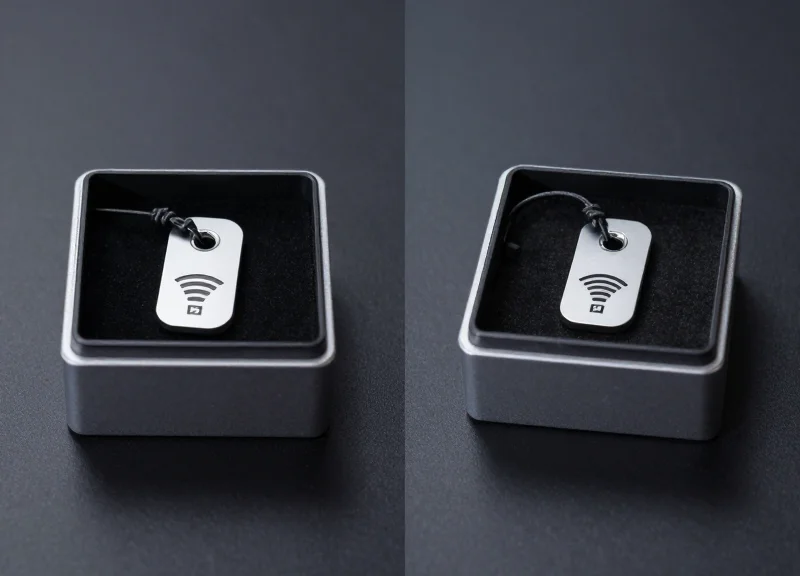
Selecting the right EAS safer box technology requires matching the internal security tag—either Acousto-Magnetic (AM) at 58 kHz or Radio Frequency (RF) at 8.2 MHz—to your store's existing electronic article surveillance pedestals. While both systems trigger an alarm upon unauthorized exit, AM technology is generally superior for high-liquid items like perfumes and metallic products like razor blades, whereas RF is the industry standard for high-speed, cost-effective detection in general retail environments.
| Feature | Acousto-Magnetic (AM) | Radio Frequency (RF) |
|---|---|---|
| Frequency | 58 kHz | 8.2 MHz |
| Detection Range | Wide (up to 2.4m/8ft) | Standard (up to 1.8m/6ft) |
| Metal/Liquid Interference | Low - Highly resistant | High - Prone to 'shielding' |
| Tag Type | 3D / Thick Ferrite | Flat / Paper Thin |
| Best For | Large department stores, perfumes | Apparel, grocery, and general retail |
Expert Insight: The 'Metal-Shielding' Trap. When protecting razor blades, the metal density of the cartridges acts as a shield. In my 20 years in retail tech, I’ve seen RF safer boxes fail to trigger because the metal blades 'detune' the 8.2 MHz signal. If your inventory is dominated by multi-blade cartridges or foil-wrapped luxury perfumes, AM technology provides a significantly lower rate of false negatives (missed alarms) because its lower frequency penetrates metallic and liquid barriers much more effectively than RF.
Can I use an AM safer box in an RF store?
No. The frequencies must match. An AM tag inside a safer box will not be detected by an RF pedestal. Always verify your gate frequency before ordering.
Are 'Dual-Technology' safer boxes available?
Yes, some premium manufacturers offer boxes with both AM and RF circuits. These are ideal for retail chains with mixed-estate security systems, though they carry a higher unit cost.
Does the safer box plastic affect signal strength?
Generally, no. Most safer boxes are made of high-grade polycarbonate or ABS which are 'RF-transparent.' The interference usually comes from the product inside, not the box itself.
Ultimately, if you are building a security strategy from scratch for a high-end apothecary or grooming station, AM 58 kHz is the gold standard. However, for retailers already locked into an RF infrastructure, ensuring your safer boxes use high-Q (high quality) RF coils can help mitigate some of the inherent shielding issues found with razor blades and perfumes.
Balancing Security with Customer Experience
Balancing security with customer experience in retail involves implementing 'open merchandising' strategies where high-risk items like perfumes and razor blades remain accessible for tactile inspection. By utilizing high-clarity polycarbonate EAS safer boxes, retailers remove the 'friction' of locked cabinets—which often requires staff intervention—allowing customers to read ingredients, check scents, and compare prices freely while the product remains electronically protected.
| Feature | Locked Display Cabinets | EAS Safer Boxes (Open Sell) |
|---|---|---|
| Customer Access | Requires staff key; high friction | Immediate; low friction |
| Product Visibility | Often obscured by bars or glass | 360-degree high-clarity views |
| Tactile Interaction | None (until purchase) | Full handling and label reading |
| Sales Impact | Can lead to a 20-30% drop in sales | Maintains or increases conversion rates |
| Security Level | High (Physical Barrier) | High (EAS Alarm + Physical Lock) |
- Optical-Grade Transparency: Utilizing 100% virgin polycarbonate ensures that the box does not yellow or distort the packaging, allowing brand marketing to shine through.
- Ergonomic Design: Modern safer boxes are designed with rounded edges and weight-balanced dimensions to feel natural in a customer's hand, mimicking the original packaging feel.
- Label Accessibility: Anti-glare surfaces allow barcodes and QR codes to be scanned directly through the box, speeding up the checkout process and mobile price-checking.
Expert Insight: The '3-Second Rule' in modern retail dictates that if a customer cannot read a product's primary benefit within three seconds, they are likely to move on. Generic security wraps often obscure text; premium safer boxes are engineered with specific 'clarity zones' that align with the most common placements of active ingredients and fragrance notes, ensuring security never disrupts the marketing message.
Do safer boxes make customers feel untrusted?
Unlike bulky security tags, transparent safer boxes are often viewed by customers as a premium packaging layer that protects the integrity and cleanliness of the product, rather than a lack of trust.
Can customers still smell perfumes through a safer box?
While the box is sealed, retailers typically pair safer-boxed inventory with a single 'tester' bottle, allowing the customer to handle the secured stock they will actually purchase while still experiencing the scent.
How do safer boxes impact the checkout speed?
Because they are designed for easy opening with a magnetic detacher at the POS, they typically add less than two seconds to the transaction time, far less than the time required to retrieve items from a backroom or locked cage.
Durability and Locking Mechanisms: Magnetic vs. Mechanical
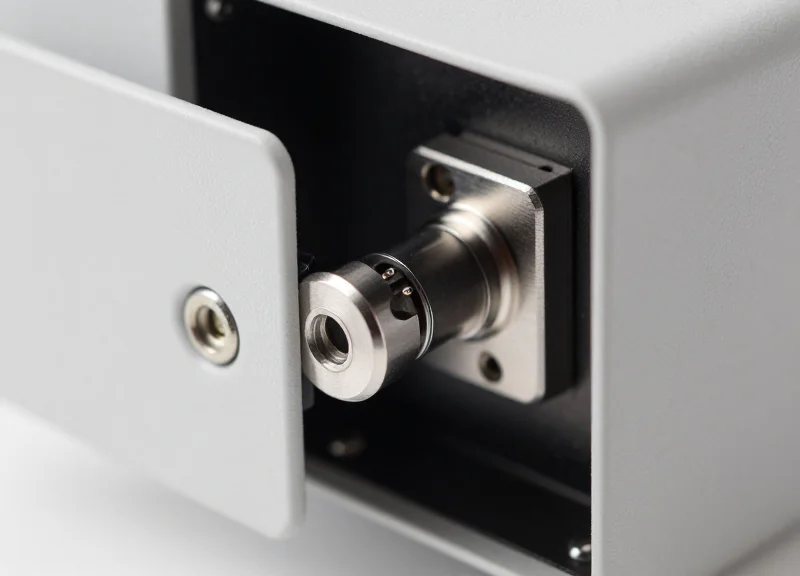
The durability of an EAS safer box depends on its high-grade polycarbonate construction, but its security is only as strong as its locking mechanism. Modern retail security utilizes two primary locking types: Magnetic locks, which use internal steel pins held by spring tension and released by a magnetic detacher, and Mechanical locks, which rely on physical keys or specialized manual tools. In 2025, magnetic systems dominate for high-volume items like perfume and razor blades due to their superior speed at the Point of Sale (POS) and their ability to scale security levels from standard to hyper-strength configurations.
| Feature | Magnetic Locking | Mechanical Locking |
|---|---|---|
| Opening Speed | Near-instant (1-2 seconds) | Slower (requires key alignment) |
| Theft Resistance | Scalable (Standard to Hyper) | Fixed (Physical lock picking risk) |
| Staff Ergonomics | High (One-handed operation) | Moderate (Requires two hands) |
| Maintenance | Very Low (No moving parts) | Moderate (Key loss/lock wear) |
| Best Use Case | High-turnover luxury goods | Low-volume, high-value tech |
- Standard Strength (≤5,000 Gauss): Suitable for low-risk items. These are easily defeated by common magnets found in hardware stores, making them less ideal for perfumes.
- Super Strength (approx. 9,000 Gauss): The mid-tier standard for razor blades. It offers a significant hurdle for casual shoplifters but can be compromised by professional 'booster' magnets.
- Hyper Strength (≥12,000 Gauss): The 2025 gold standard for high-value fragrances. Only specialized, high-intensity retail detachers can retract the internal pins, providing the highest level of deterrence against organized retail crime (ORC).
Expert Insight: The 'Detacher-to-Box' Parity Rule. Many retailers make the mistake of upgrading their safer boxes to Hyper-strength without upgrading their checkout detachers. This leads to 'sticky' locks and checkout friction. To ensure 100% staff efficiency, verify that your detacher's Gauss rating is at least 20% higher than the safer box's internal lock rating. This ensures a clean release every time, even as the magnet's field naturally decays over years of heavy use.
- Audit Existing Hardware: Identify the Gauss rating of your current counter-mounted detachers before purchasing new boxes.
- Match Locking Tier to Product Margin: Use Hyper-strength for luxury perfumes (high margin, high risk) and Super-strength for multi-pack razor blades.
- Implement Detacher Security: Ensure all magnetic detachers are bolted to the counter to prevent shoplifters from stealing the tool used to open the boxes.
Measuring ROI: How Safer Boxes Pay for Themselves
The Return on Investment (ROI) for EAS safer boxes is the measurable financial gain achieved when the value of recovered inventory and the increase in sales from 'open merchandising' exceed the capital expenditure of the security hardware. For high-shrink categories like premium perfumes and razor refills, the break-even point is typically reached within 3 to 6 months, as these devices eliminate the 'lost sale' phenomenon common with locked glass cabinets while providing a 75-90% reduction in theft.
| Metric | Locked Glass Cabinets | EAS Safer Boxes (Open Sell) | Impact on ROI |
|---|---|---|---|
| Shrink Rate | Lowest (1-2%) | Low (2-4%) | Safer boxes balance security with sales. |
| Sales Conversion | Low (Friction-heavy) | High (Tactile interaction) | 20-30% Sales lift with Safer boxes. |
| Labor Costs | High (Staff must unlock) | Low (Self-service) | Reduces payroll hours spent on service. |
| Customer Experience | Poor (Waiting time) | Excellent (Immediate) | Increases brand loyalty and repeat visits. |
The Expert Insight: The 'Shadow Cost' of Out-of-Stocks. In my 20 years of retail analytics, I've found that retailers often focus solely on shrink numbers while ignoring the 'Shadow Cost.' When a high-value item is stolen, the shelf stays empty until the next cycle count, resulting in days of zero revenue. Safer boxes provide ROI not just by stopping the thief, but by ensuring the product remains on the shelf for the legitimate buyer. This 'On-Shelf Availability' (OSA) is the true engine of retail profitability in 2025.
- Determine Baseline Shrink: Calculate the annual loss of the specific SKU (e.g., razor blades) before implementation.
- Project Sales Lift: Estimate the 15-25% increase in sales volume that typically occurs when moving items from behind a counter to an open-sell environment.
- Calculate Labor Savings: Quantify the minutes saved per shift by not requiring associates to manually unlock cabinets for every customer inquiry.
- Factor in Asset Longevity: High-quality polycarbonate boxes last 5+ years; divide the initial cost over the lifespan to see the daily 'insurance' cost per item.
How long does it take to see a return?
For high-velocity items like razor blades, the ROI is often realized in less than 90 days. For lower-velocity perfumes, it may take 6 to 8 months.
Do safer boxes affect impulse buy rates?
Yes, significantly. Research shows that being able to hold and examine a product increases the 'psychological ownership' effect, making a purchase far more likely than if the item is behind glass.
What is the primary cost-saving over electronic tags?
While tags trigger alarms, they don't prevent 'shelf-sweeping.' Safer boxes provide a physical deterrent that stops bulk theft, which is a much larger hit to the bottom line than individual shoplifting.
Integrating Safer Boxes with RFID and ESL Systems
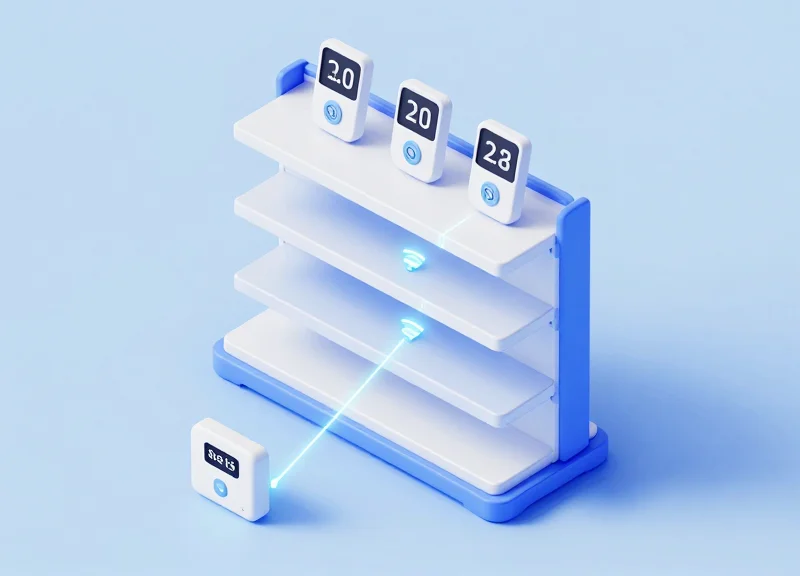
In 2025, retail security is no longer a standalone function but a critical component of the Internet of Things (IoT) ecosystem. Integrating EAS safer boxes with Radio Frequency Identification (RFID) and Electronic Shelf Labels (ESL) transforms a passive security shell into an active data node. This synergy allows retailers to achieve 99% inventory accuracy while simultaneously deterring high-shrink events. By embedding RFID tags within the safer box or utilizing boxes with dedicated RFID slots, stores can track a specific bottle of perfume or a pack of razor blades from the backroom to the point of sale, ensuring that high-value items are not only secure but also precisely accounted for in the digital ledger.
| Feature | Standard EAS Safer Box | Integrated RFID + ESL Safer System |
|---|---|---|
| Primary Goal | Theft Deterrence | Loss Prevention + Inventory Intelligence |
| Data Visibility | None (Analog) | Real-time stock levels & shelf-life tracking |
| Pricing Agility | Manual Labeling | Dynamic pricing via ESL sync |
| Theft Response | Alarm at Pedestal | Instant alert to staff handhelds via RFID |
The integration with ESL (Electronic Shelf Labels) further optimizes the 'Open Merchandising' strategy. Modern ESL systems can be programmed to flash a light (LED paging) if a safer box is moved from its designated shelf area or if the stock level falls below a certain threshold. This ensures that your high-value displays are always full and organized, maximizing the conversion rate for customers who prefer the tactile experience of handling a product before purchase. This 'connected shelf' approach eliminates the need for 'ghost inventory' audits, as the system knows exactly how many secured units are present at any given second.
Can RFID tags be read through the polycarbonate of a safer box?
Yes, high-quality polycarbonate is transparent to RF signals. However, for maximum read range, we recommend using 'on-metal' or specialized retail RFID tags if the product packaging contains foil elements, such as those found on premium perfume boxes.
How does ESL integration help in peak shopping hours?
During busy periods, ESLs can automate price drops or promotions directly on the shelf where the safer boxes are located, reducing the friction for staff who would otherwise be manually tagging boxes or changing signs.
Does this integration require a total infrastructure overhaul?
Not necessarily. Most modern ESL and RFID systems are designed to be modular. You can start by deploying RFID-enabled safer boxes for your top 10% highest-shrink items and scale as your ROI is proven.
Expert Tip: To future-proof your investment, look for 'dual-technology' safer boxes that house both a traditional AM/RF EAS coil and a secondary RFID inlay. This provides a 'defense-in-depth' strategy where the EAS triggers the exit alarm while the RFID provides the granular data needed to identify exactly what was stolen, helping police and loss prevention teams build stronger cases against organized retail crime (ORC) rings.
Maintenance and Best Practices for Staff Implementation
To ensure long-term efficacy, EAS safer box maintenance must focus on three pillars: structural integrity of the polycarbonate casing, the mechanical reliability of the locking mechanism, and staff proficiency at the Point of Sale (POS). Effective implementation means integrating security into the natural flow of customer service, ensuring that high-value items like perfumes and razor blades remain pristine and accessible while remaining virtually impossible to shoplift without detection.
- The 'Snap-and-Tug' Protocol: Train staff to always perform a physical tug test after locking a product in a safer. A 'click' sound is the first indicator, but a manual pull ensures the magnetic or mechanical latch is fully seated.
- Microfiber-Only Cleaning: High-value perfumes rely on visual appeal. Use only microfiber cloths and non-abrasive, anti-static cleaners to prevent micro-scratches that make polycarbonate look cloudy over time.
- Detacher Security & Placement: Mount detachers securely to the counter or use tethered versions. A loose detacher is a prime target for internal or external theft, which can compromise every safer box in the building.
- Batch De-tagging Efficiency: During peak hours, staff should be trained to remove the safer box first and place it in a dedicated bin below the counter before scanning, minimizing the time the customer waits while maintaining a clear workspace.
| Task | Frequency | Action Required |
|---|---|---|
| Visual Inspection | Daily | Check for cracks, cloudiness, or tampering marks on boxes. |
| Detacher Audit | Weekly | Verify detacher mounting screws are tight and the magnet hasn't shifted. |
| Sanitization Wipe-down | Bi-Weekly | Remove fingerprints and residue from perfume testers and display boxes. |
| Inventory Cycle Count | Monthly | Match total safer box inventory against high-shrink SKU counts. |
Expert Tip: Implement a 'Red Box' test. Once a month, have a manager attempt to pass a damaged or improperly locked safer box through the EAS pedestals. This real-world test keeps staff vigilant and identifies faulty hardware that might otherwise go unnoticed until a theft occurs. In 2025, the biggest risk isn't the technology failing; it's the 'complacency gap' where staff assume a box is locked when it isn't.
How should we store empty safer boxes?
Store them in the 'open' position in organized, labeled bins. Closing them when empty increases wear on the springs and adds unnecessary labor steps during restocking.
Can we use alcohol-based wipes on the boxes?
Avoid high-concentration alcohol or ammonia, as these chemicals can cause 'crazing' (fine surface cracks) in polycarbonate, eventually making the box brittle and easier to break.
What do we do if a box gets stuck on a detacher?
Usually, this is due to debris in the lock. Use compressed air to clear the mechanism rather than forcing it, which can permanently warp the internal locking pin.