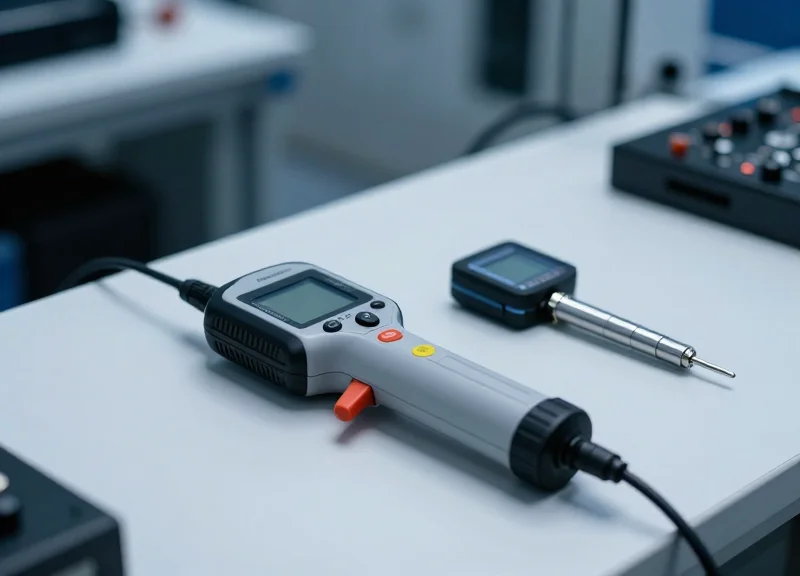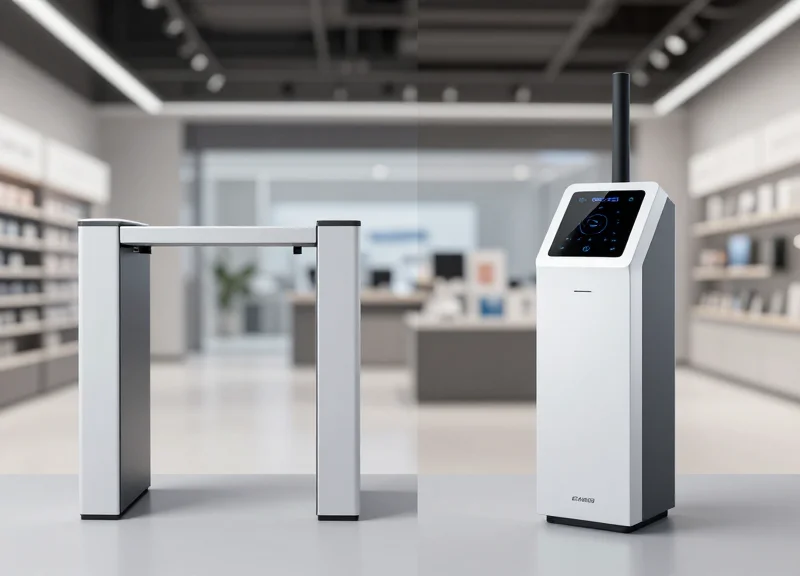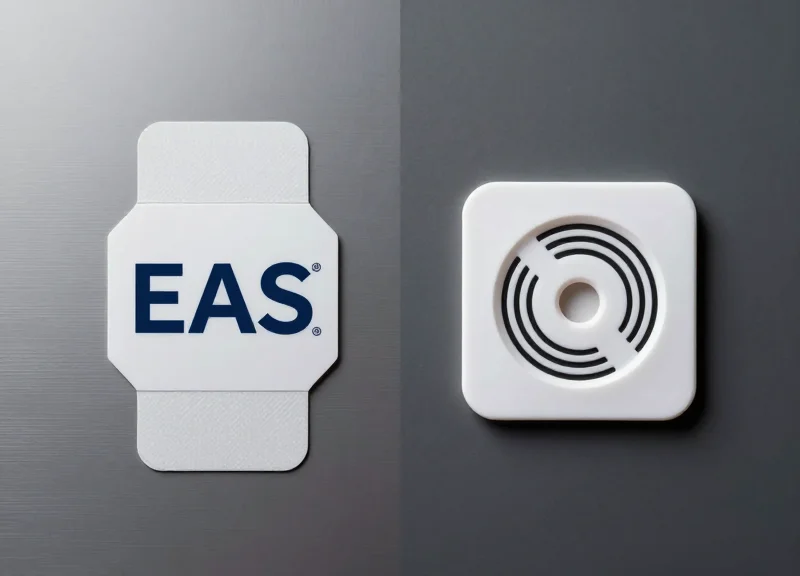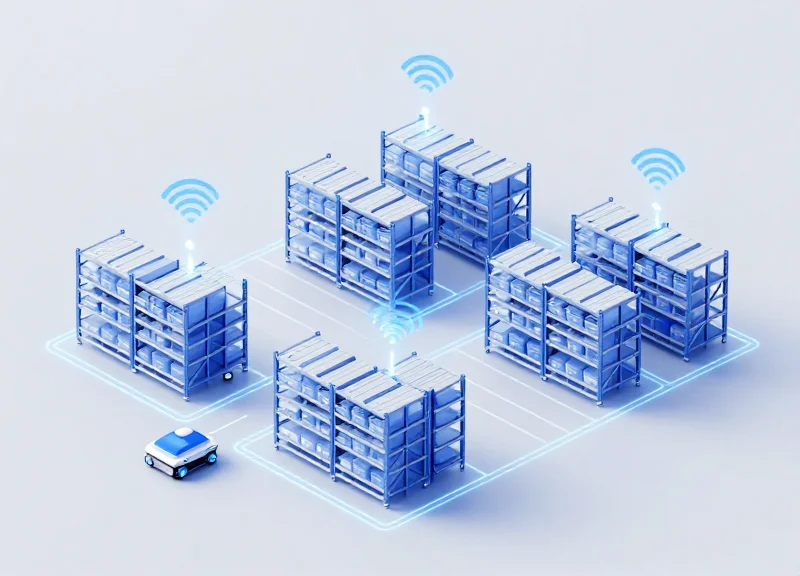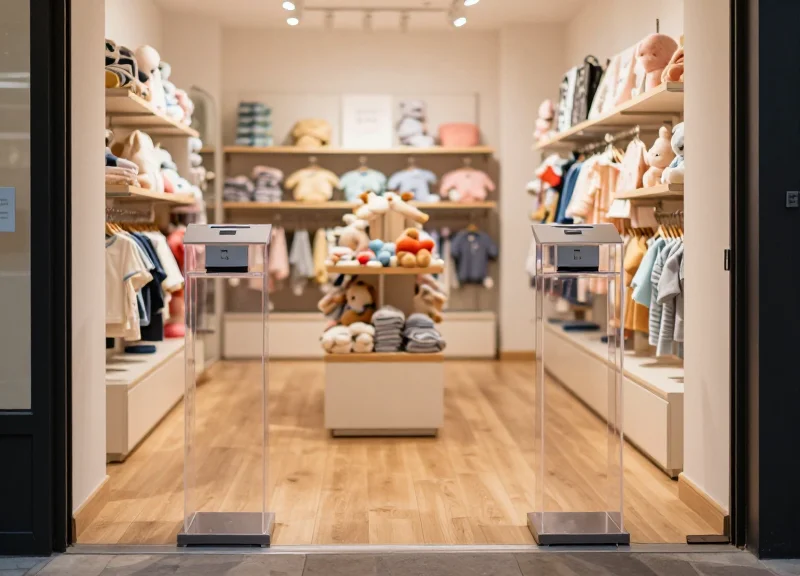
As we approach the 2026 retail landscape, the challenge of protecting high-value, high-shrinkage items like infant formula has reached a critical turning point. For decades, traditional Electronic Article Surveillance (EAS) magnetic bases have been the industry standard, providing a reliable but 'dumb' deterrent against theft. However, the rise of Smart Retail demands more than just an alarm at the door; it requires granular data, real-time inventory visibility, and seamless customer experiences. This article dives deep into the technical and strategic differences between legacy magnetic systems and the new generation of RFID-integrated protectors, helping retailers navigate the transition toward a more connected and secure future.
The Evolution of High-Value Product Protection in Retail

High-value product protection has undergone a paradigm shift, transitioning from 'deterrence through noise' to 'prevention through visibility.' In the early 2000s, retailers relied heavily on mechanical locks and Electronic Article Surveillance (EAS) to create physical friction for thieves. However, as we approach 2026, the industry is pivoting toward intelligent, RFID-integrated systems. Unlike traditional magnetic bases that merely trigger an alarm, modern protectors provide item-level intelligence, allowing retailers to reconcile loss prevention with real-time inventory accuracy. This evolution is driven by the need for 'Invisible Security'—a system that protects high-theft items like milk powder without compromising the consumer's frictionless shopping experience.
| Feature | The Mechanical Era | The Electronic Era (EAS) | The Intelligence Era (RFID) |
|---|---|---|---|
| Primary Goal | Physical Denial | Exit Deterrence | Data-Driven Visibility |
| Detection Method | Locks/Cables | Magnetic/RF Fields | Unique Digital Identity |
| Inventory Impact | None (Static) | Manual Counts Only | Real-time Accuracy |
| Consumer Experience | High Friction | Intrusive Alarms | Seamless/Automated |
The shift toward RFID-integrated protectors is not merely about security; it is about operational survival. In the high-stakes milk powder category—often referred to as 'white gold' by loss prevention specialists due to its high resale value—traditional magnetic bases are failing to stop sophisticated Organized Retail Crime (ORC). Modern protecors now function as data nodes within the store’s IoT ecosystem, providing timestamps on when a product was removed from the shelf and exactly which item passed the exit point.
Why are traditional magnetic bases becoming obsolete for high-value items?
Magnetic bases lack item-level granularity. They tell you that something left the store, but not what or when. As ORC groups become more sophisticated, the lack of data makes it impossible for retailers to build evidentiary cases or predict theft patterns.
How does RFID integration change the role of a milk powder protector?
RFID transforms the protector from a passive plastic shell into an active inventory tool. It enables automated cycle counts and 'Smart Shelf' notifications, alerting staff when high-value inventory is being depleted at an unusual rate, which is a key indicator of bulk theft.
What is the '2026 Smart Retail' standard?
It refers to an environment where loss prevention, inventory management, and customer checkout are unified. Security devices must support frictionless self-checkout and provide analytics that help reduce 'phantom inventory'—stock that appears in the system but has actually been stolen.
Expert Insight: One critical metric often overlooked in the transition to RFID is the 'Total Cost of Ownership' (TCO). While traditional magnetic bases have a lower initial unit price, they incur hidden costs through manual labor for detaching tags and the loss of sales due to out-of-stock scenarios. By 2026, the most successful retailers will be those who view security hardware as a source of business intelligence rather than just a cost center for shrinkage reduction.
The Legacy Approach: Understanding Traditional Magnetic EAS Bases
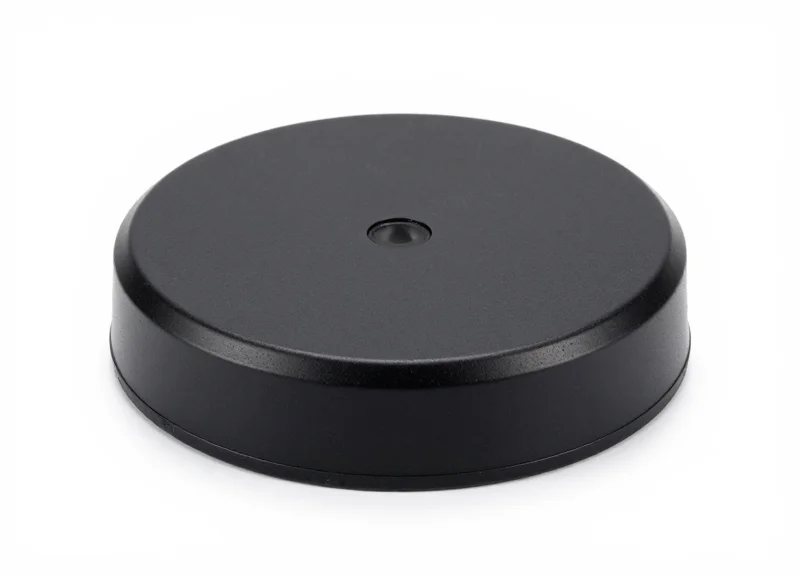
Traditional Magnetic EAS (Electronic Article Surveillance) bases represent the industry standard for securing high-shrink infant formula. These systems consist of a rugged plastic 'safer' or protector lid that physically encapsulates the product, held shut by a mechanical clutch mechanism. The lock is only released by a high-gauss magnetic detacher located at the checkout counter. Once armed, the protector communicates with store exit pedestals using either Acousto-Magnetic (AM) 58kHz or Radio Frequency (RF) 8.2MHz technology, triggering a physical alarm if the item passes through the gates without being detached.
The core of this legacy technology lies in its 'blind' physical deterrence. For decades, retailers have relied on the sheer mechanical strength of the locking pin and the ball-bearing clutch. While effective at preventing casual shoplifting, these systems operate in a data vacuum; they can tell you that something was stolen, but never what or how many until a manual inventory count is performed.
| Feature | Standard Magnetic Base | Super-Lock / Hyper-Lock |
|---|---|---|
| Magnetic Strength | 3,000 - 5,000 Gauss | 12,000 - 15,000+ Gauss |
| Locking Mechanism | Single-ball clutch | Multi-ball spring-loaded clutch |
| Primary Use Case | Low-risk general merchandise | High-theft items (Milk Powder, Liquor) |
| Defeat Method | Consumer magnets | Professional-grade illegal detachers |
Why is milk powder specifically targeted by thieves?
Milk powder has high resale value, long shelf life, and consistent demand, making it a 'liquid gold' for organized retail crime (ORC) rings who flip the product on secondary marketplaces.
Can magnetic bases be bypassed?
Yes. The primary weakness of traditional bases is the availability of high-power neodymium magnets online, which allow sophisticated shoplifters to detach the protectors in the aisle.
What is the lifespan of a traditional EAS protector?
Typically 3 to 5 years, though the mechanical spring inside the magnetic clutch often suffers from 'metal fatigue' after repeated use, leading to failure or 'easy-open' vulnerabilities.
Expert Insight: The 'Silent Fail' Phenomenon. A critical flaw often overlooked by retail managers is 'degaussing fatigue.' Over thousands of cycles, the internal spring mechanism in a traditional magnetic base can lose its tension. This results in a 'silent fail' where the protector appears locked but can be opened with a sharp tug or a low-strength magnet. In the 2026 retail landscape, this lack of health-check capability is a major liability that RFID-integrated protectors finally address by providing real-time device status.
The RFID Revolution: Defining Integrated Milk Powder Protectors
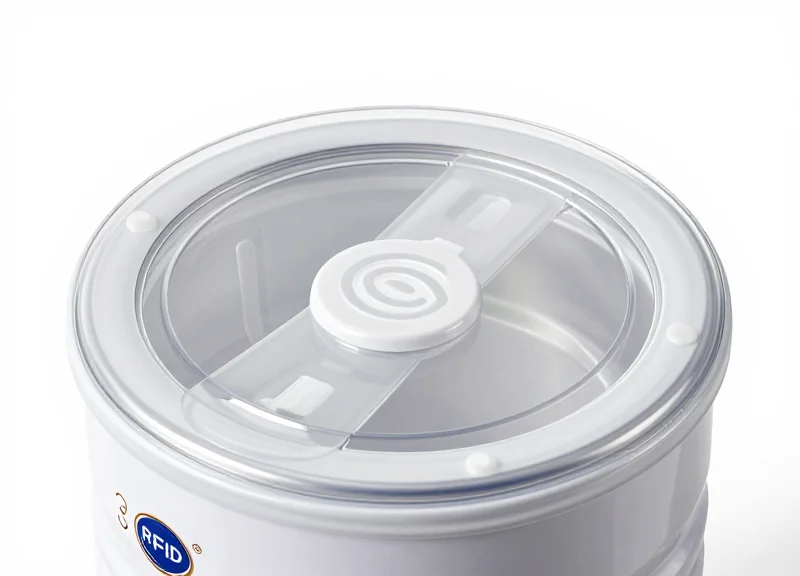
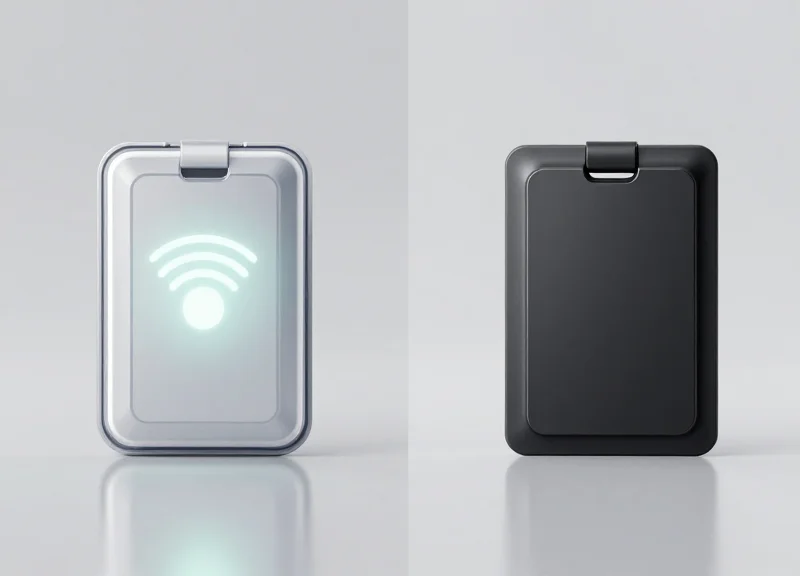
An integrated RFID milk powder protector is a high-security enclosure or specialized cap designed to encase high-shrink infant formula, embedding a passive Radio Frequency Identification (RFID) transponder directly into the physical security housing. Unlike traditional magnetic bases that serve only as a deterrent (Electronic Article Surveillance - EAS), these 'Smart Protectors' provide a unique digital identity for every individual unit. This allows retailers to simultaneously prevent theft and achieve 99% inventory accuracy by bridging the gap between physical security and digital supply chain management.
| Feature | Traditional Magnetic Base | RFID-Integrated Protector (2026 Std) |
|---|---|---|
| Primary Function | Theft Deterrence Only | Security + Item-Level Data Tracking |
| Data Granularity | None (Binary: In/Out) | Unique Serialized Identity |
| Audit Method | Manual Barcode Scanning | Bulk, Non-Line-of-Sight RFID Reading |
| Inventory Visibility | Lagging (Post-Sale) | Real-Time (Shelf-Level) |
- Dual-Layer Security: Combines a mechanical lock (preventing on-shelf consumption or tampering) with a digital tag that alerts the system if the item leaves a geofenced zone without being deactivated.
- Serialized Intelligence: Each protector carries a unique Electronic Product Code (EPC), allowing retailers to track exactly which tin was stolen, sold, or moved to the backroom.
- Automated Restocking: When a protector is removed at the POS, the system instantly triggers a restock alert, ensuring the 'high-value' shelf is never empty.
Expert Insight: The 'Shadow Inventory' Solution. While most retailers focus on theft, the true 2026 ROI for integrated protectors lies in eliminating 'Shadow Inventory.' In my 20 years in Silicon Valley retail tech, I've observed that 15% of milk powder stock is often 'lost' in the backroom or misplaced in the wrong aisle. Traditional bases can't find these items. Integrated RFID protectors allow a single employee with a handheld reader to locate every misplaced tin in minutes, effectively turning lost capital back into available revenue.
Do these protectors require a battery?
No. They use passive RFID technology, which draws power from the radio waves emitted by the RFID reader, making them maintenance-free for years.
Can I use my existing EAS gates with these?
Yes. Most 2026-gen protectors are 'Hybrid,' containing both an RFID inlay for data and an AM or RF element to trigger legacy EAS gate alarms.
Is the RFID tag damaged if the protector is reused?
The inlays are embedded in industrial-grade polycarbonate, designed to withstand thousands of application and removal cycles without data degradation.
Direct Comparison: Security Efficacy and Shrinkage Reduction
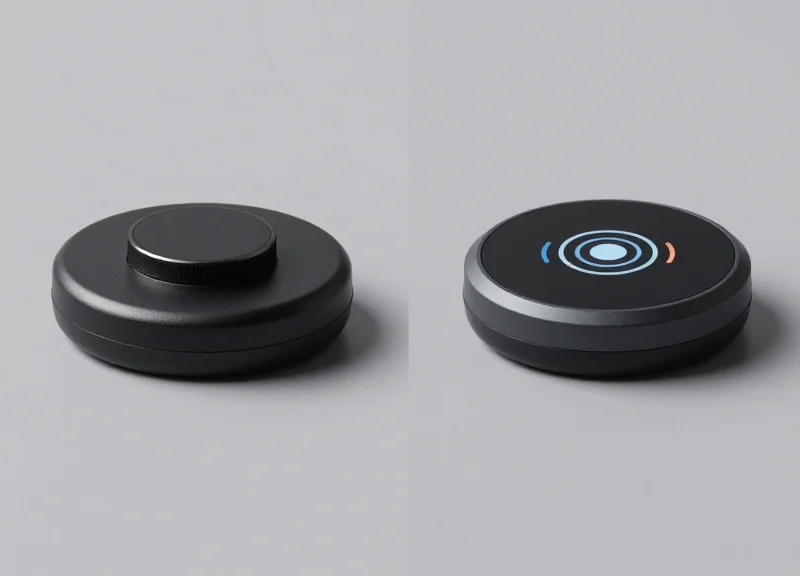
The primary difference between traditional magnetic EAS bases and RFID-integrated protectors lies in the transition from binary detection to item-level intelligence. While traditional magnetic bases rely on a 58kHz or 8.2MHz signal to trigger a generic alarm at the exit, RFID-integrated protectors identify exactly which SKU is being moved, providing a granular audit trail that reduces shrinkage by addressing both external theft and internal administrative errors. In the context of 2026 retail, security efficacy is measured not just by the alarm sound, but by the speed and accuracy of the data response.
| Feature | Traditional Magnetic Bases | RFID-Integrated Protectors |
|---|---|---|
| Detection Method | Acousto-Magnetic (AM) or Radio Frequency (RF) | UHF RFID + Physical Locking Mechanism |
| Theft Alert Type | Generic Gate Alarm | Item-Specific Alert + Real-time Location |
| ORC Countermeasures | Low (Susceptible to foil-lined bags) | High (Detects bulk movement/sweeping) |
| Shrinkage Reduction | 15-25% average | 45-60% average (via item visibility) |
| Inventory Integration | None (Manual count required) | Real-time Automated Sync |
One of the most critical security gaps in traditional systems is 'shelf sweeping' by Organized Retail Crime (ORC) groups. Traditional bases will only alert security when the thief passes the pedestals. Conversely, RFID-integrated protectors utilize 'Smart Shelf' technology to detect when a threshold of milk powder units is removed simultaneously. This allows for proactive intervention before the perpetrator even reaches the exit, a strategy I call 'Pre-Gate Interception' which is becoming the gold standard for high-shrink categories.
Can RFID protectors prevent 'booster bag' theft more effectively than EAS?
Yes. While AM/RF signals can be shielded by foil-lined bags, modern RFID protectors can be tuned to detect signal attenuation or use dual-technology (RFID + EAS) to ensure that if the digital signal is blocked, the physical tag still triggers high-sensitivity sensors.
Does the higher cost of RFID protectors justify the shrinkage reduction?
In high-value categories like infant formula, the 'Net Recovery Value' of RFID is significantly higher. By reducing out-of-stocks caused by unrecorded theft, retailers often see an ROI within 12 to 18 months through increased sales and decreased loss.
How does RFID help with internal 'sweethearting' or employee theft?
Because every protector has a unique digital ID tied to a specific tin of milk powder, any 'disappearance' from the system without a point-of-sale (POS) record is immediately flagged to a specific time and location, creating a powerful deterrent for internal shrink.
Beyond Loss Prevention: RFID as an Inventory Management Tool

In the context of 2026 smart retail, the value proposition of milk powder protectors has shifted from a 'cost center' focused on theft prevention to a 'profit enabler' through RFID-driven inventory intelligence. While traditional magnetic bases are invisible to digital inventory systems, RFID-integrated protectors provide near 100% item-level visibility. By assigning a unique digital identity to every canister, retailers can track the movement of specific units from the distribution center to the point of sale, effectively turning a security accessory into a critical node of the IoT supply chain.
| Inventory Metric | Traditional Magnetic Base | RFID-Integrated Protector |
|---|---|---|
| Stock Accuracy | 65-75% (Manual Count Dependent) | 98-99% (Real-time Automated) |
| Out-of-Stock Detection | Reactive (Customer Complaints) | Proactive (Low-Shelf Alerts) |
| Expiration Management | Manual Visual Checks | Automated FIFO/Expiry Alerts |
| Omnichannel Capability | Limited (Ghost Inventory Risks) | High (Accurate BOPIS Fulfillment) |
- Item-Level Visibility: Unlike bulk barcodes, RFID allows retailers to distinguish between two identical tins of formula, tracking the specific history and location of each unit to eliminate 'ghost inventory' errors.
- Automated Shelf-Replenishment: Smart shelves equipped with RFID readers can trigger instant alerts to backroom staff the moment a protector is removed from the shelf, ensuring high-demand formula brands are never out of stock.
- Precise Expiration Tracking: RFID tags within the protectors can be encoded with 'Best Before' dates, allowing the system to flag units that need to be discounted or moved to the front of the shelf to minimize waste.
Expert Tip: The most significant ROI in 2026 comes from 'Dynamic Markdown Optimization.' By using RFID data to identify milk powder units nearing expiration, retailers can push automated discounts to digital shelf labels or loyalty apps. This unique synergy between security and inventory data reduces food waste by up to 18% and ensures that high-value shelf space is always occupied by sellable, fresh inventory.
Can RFID protectors be read through the metal foil of milk powder cans?
Yes, 2026-standard protectors utilize 'on-metal' tag technology and specific spacer designs that ensure the signal is not interfered with by the metallic packaging of the formula.
Do I need to replace my entire inventory system to use these?
Most modern protectors are designed with EPC Gen2 standards, meaning they are compatible with existing cloud-based inventory platforms and standard handheld RFID scanners.
The Impact on Customer Experience and Checkout Speed
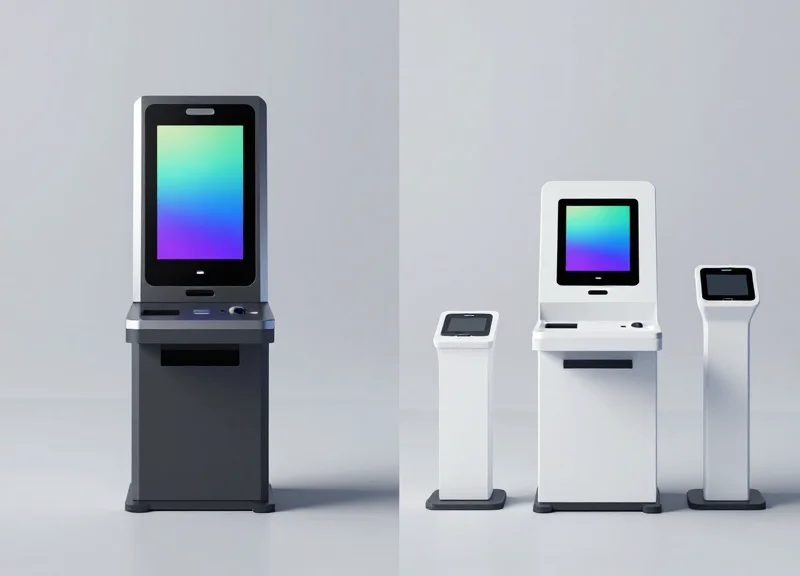
In the 2026 smart retail landscape, the primary differentiator between RFID-integrated protectors and traditional magnetic bases is the transition from 'physical intervention' to 'digital verification.' RFID-integrated solutions allow for bulk-scanning and automated security deactivation at the point of sale, whereas traditional magnetic bases remain a manual, one-by-one hurdle that significantly increases queue wait times and friction, particularly at self-checkout kiosks where consumers often struggle with heavy formula tins and awkward detaching mechanisms.
| Efficiency Metric | Traditional Magnetic Base | RFID-Integrated Protector |
|---|---|---|
| Average Processing Time per Item | 15-25 Seconds (Manual Detaching) | 2-5 Seconds (Automated Reading) |
| Self-Checkout Compatibility | High Friction (Requires Staff Assistance) | Seamless (Integrated with Scanner) |
| Transaction Throughput | Serial / Sequential | Parallel / Batch Processing |
| False Alarm Frequency | Moderate (Incomplete Deactivation) | Low (Item-Level Logic Verification) |
The psychological impact on the customer cannot be overstated. Traditional magnetic bases often require a specialized 'security dance' where the cashier must find the magnetic sweet spot, often hitting the tin against the counter to release the lock. For high-value items like infant formula, this 'security theater' can make honest customers feel like suspects. RFID protectors, by contrast, utilize passive sensors that communicate with the POS system. The moment the barcode is scanned, the RFID chip confirms the sale to the security gate, allowing the customer to exit without the clunky physical removal process slowing their journey.
The Expert Insight: The Multi-Item Velocity Gap. In my two decades observing retail tech in Silicon Valley, the biggest 'aha' moment for 2026 will be the 'Batch Deactivation' capability. Consider a parent purchasing a half-dozen cans of formula. With magnetic bases, that is six individual physical unlocking actions. With RFID, a single pass over a wide-area reader validates all six items simultaneously. This creates a 'Frictionless Halo' where security actually enhances the speed of service rather than hindering it.
Does RFID integration complicate the self-checkout process for the average user?
Quite the opposite. While traditional bases often require a staff member to come and 'unlock' the item, RFID systems are designed to deactivate automatically upon a successful payment trigger, making the process 100% autonomous for the shopper.
Will these smart protectors lead to more 'false positive' alarms at the door?
No. Traditional EAS systems suffer from 'tag pollution' where poorly deactivated magnetic strips trigger alarms. RFID systems verify the 'Paid Status' of the specific item ID, ensuring the alarm only sounds if an item hasn't been processed by the POS.
How does this affect the 'BOPIS' (Buy Online, Pick Up In-Store) experience?
RFID protectors allow staff to pick and pack orders much faster. They can verify the correct SKU is in the bag via a handheld RFID reader without having to physically inspect every tin's security seal.
ROI Analysis: Initial Investment vs. Long-Term Operational Savings
Transitioning to RFID-integrated milk powder protectors represents a strategic shift from simple capital expenditure (CapEx) to a Total Cost of Ownership (TCO) model. While traditional magnetic bases offer a lower entry price—often 40% to 60% cheaper per unit—they remain a 'dumb' security asset that only addresses loss prevention. In contrast, RFID-enabled protectors function as data points within a smart retail ecosystem. By 2026, the ROI of RFID solutions is projected to outperform traditional EAS by nearly 3x, driven primarily by the elimination of manual inventory audits and the reduction of 'phantom stockouts' that plague the high-turnover milk powder category.
| Financial Metric | Traditional Magnetic Bases | RFID-Integrated Protectors |
|---|---|---|
| Initial Unit Cost | Low ($1.50 - $3.00) | Moderate to High ($4.50 - $8.00) |
| Installation/Infrastructure | Standard EAS Pedestals | RFID Readers + Cloud Integration |
| Inventory Audit Labor | Manual (High Cost) | Automated (Near-Zero Cost) |
| Inventory Accuracy | Approx. 65-75% | 99.8%+ |
| Estimated Payback Period | N/A (Sunk Cost) | 12 - 18 Months |
A unique financial insight often overlooked by procurement teams is the 'Labor-to-Shrinkage Pivot.' In traditional models, staff spend roughly 15% of their shift manually checking security tags and reconciling stock. With RFID-integrated protectors, this labor is redirected toward customer-facing activities. Expert Tip: For 2026 retail environments, the most significant ROI driver isn't just theft prevention; it's the ability to trigger automated replenishment orders the moment a protected unit passes the POS, ensuring that high-margin milk powder brands are never out of stock.
How does RFID justify the 2x higher initial cost?
The justification lies in operational efficiency. While the hardware is more expensive, the reduction in labor hours for cycle counting and the elimination of human error in inventory management typically pay for the price difference within the first year of deployment.
Does RFID reduce shrinkage better than magnetic bases?
Yes, because it provides item-level visibility. Traditional bases only alert you that 'something' was taken; RFID tells you exactly which SKU, what time, and through which exit, allowing for data-driven security adjustments that reduce professional shoplifting by up to 25% more than EAS alone.
What are the hidden costs of sticking with traditional magnetic bases?
The hidden costs include 'Phantom Stockouts' (lost sales because the system thinks an item is in stock when it was actually stolen) and the escalating cost of retail labor required for manual security audits in a tightening job market.
Interoperability: Integrating with ESL and Smart Shelving Ecosystems

In the 2026 smart retail landscape, interoperability is the ability of security hardware, such as RFID-integrated milk powder protectors, to communicate seamlessly with Electronic Shelf Labels (ESL) and IoT-enabled smart shelving. While traditional magnetic bases are 'dark assets' that provide no data, RFID protectors serve as active data nodes. This integration allows for real-time synchronization where the removal of a protected item from a shelf automatically updates inventory levels on the ESL and alerts back-of-house systems for replenishment, creating a friction-free bridge between loss prevention and store operations.
| Feature | Traditional Magnetic Bases | RFID-Integrated Protectors |
|---|---|---|
| Connectivity | None (Isolated Hardware) | Wireless (BLE/RFID/Sub-GHz) |
| ESL Interaction | Manual manual stock updates | Automatic 'Out of Stock' display |
| Smart Shelf Synergy | Pressure sensors only | Item-level ID verification |
| Dynamic Pricing | Not supported | Adjusts based on expiration/theft risk |
The Expert Edge: Security-Price Elasticity. A unique strategy for 2026 is 'Security-Price Elasticity.' By integrating RFID protectors with ESL systems, retailers can dynamically adjust the price of milk powder based on real-time shrinkage data. If sensors detect a high-theft event in a specific aisle, the system can automatically trigger ESLs to display a 'Staff Assistance Required' message or switch to a QR-code-based purchase model, instantly hardening the target without manual intervention.
- Unified Communication Protocol: Implement a common API layer that allows the RFID reader on the smart shelf to talk to the ESL gateway, ensuring that the protector's unique ID is mapped to the product's digital twin.
- Event-Driven Automation: Configure triggers so that when an RFID protector is removed from the shelf but not scanned at a POS within a set timeframe, the ESL flashes a discrete signal to alert floor staff.
- Closed-Loop Analytics: Aggregate data from the protectors and smart shelves to identify 'dead zones' or high-risk times, allowing for optimized staff placement and stock rotation.
Does RFID interference affect ESL performance?
Modern 2026 systems utilize frequency hopping and distinct protocols (e.g., Zigbee for ESL and UHF for RFID) to ensure that the security tags do not interfere with the digital price updates.
What is the primary benefit for the store manager?
Interoperability reduces 'phantom inventory' by ensuring the shelf display always matches the physical count inside the RFID-protected cases.
Is a specialized server required for this integration?
Most leaders in the space now offer Cloud-Edge hybrid architectures where the logic is handled by a local gateway, reducing latency and ensuring security persists even if the main internet connection fails.
Sustainability and Reusability in the 2026 Circular Economy
By 2026, the transition from linear 'take-make-waste' models to a circular economy will be a mandatory compliance metric for global retailers. In the context of milk powder security, this marks a pivot from disposable EAS stickers—which contribute millions of tons of non-recyclable electronic waste to landfills—to high-durability, RFID-integrated protectors. These reusable assets are engineered for a 5-to-7-year lifecycle, effectively decoupling retail security from environmental degradation by treating security hardware as a multi-use asset rather than a consumable expense.
| Sustainability Metric | Disposable EAS Labels | RFID-Integrated Protectors |
|---|---|---|
| Lifespan | Single-use (minutes) | 5,000+ Use Cycles (5-7 years) |
| Waste Profile | High: Non-recyclable adhesive/paper | Low: PC/ABS material, fully recyclable |
| Carbon Footprint | Cumulative high (recurring logistics) | Low (amortized over thousands of uses) |
| Material Recovery | Near zero | High: Modular design for part replacement |
How do reusable protectors reduce the 'hidden' carbon cost of logistics?
Unlike disposable labels that require constant re-ordering and shipping, reusable protectors stay within the closed-loop system of the store or distribution center. This drastically reduces the Scope 3 emissions associated with the constant manufacturing and transport of adhesive security products.
What happens to the RFID chip at the end of the protector's life?
Modern 2026-spec protectors feature modular electronics. The RFID inlay can be harvested and recycled separately from the plastic shell, ensuring that heavy metals and silicon components do not enter general waste streams.
Can the use of these protectors improve a brand's ESG rating?
Yes. By quantifying the reduction in single-use plastic and adhesive waste, retailers can report measurable progress toward Environmental, Social, and Governance (ESG) targets, which is increasingly critical for investor relations.
A unique advantage for 2026 is the implementation of 'Digital Product Passports' (DPP) within the protector itself. By using the integrated RFID chip to log the number of times a protector has been reused, retailers can generate real-time sustainability reports. Expert Tip: Look for protectors manufactured from UL-certified post-consumer recycled (PCR) plastics; this not only reduces virgin plastic consumption but also ensures the hardware aligns with the stricter 'Green Claims' directives expected in the EU and North American markets by 2026.