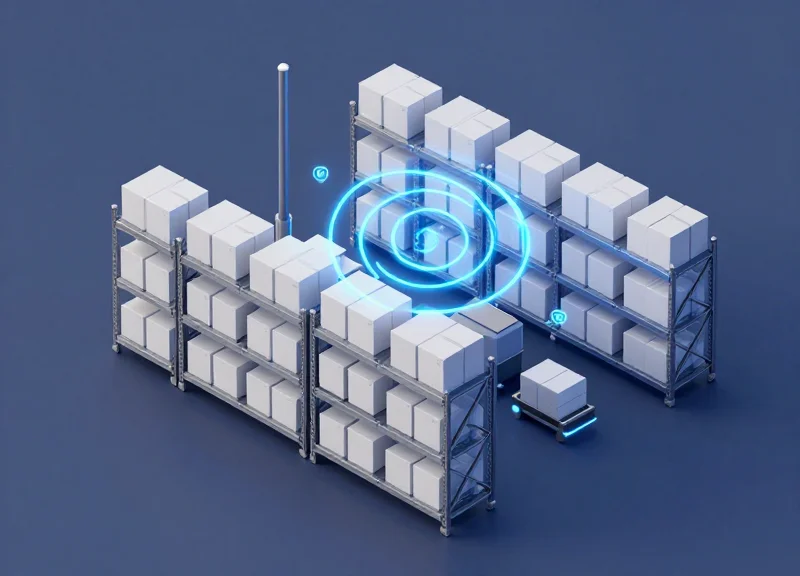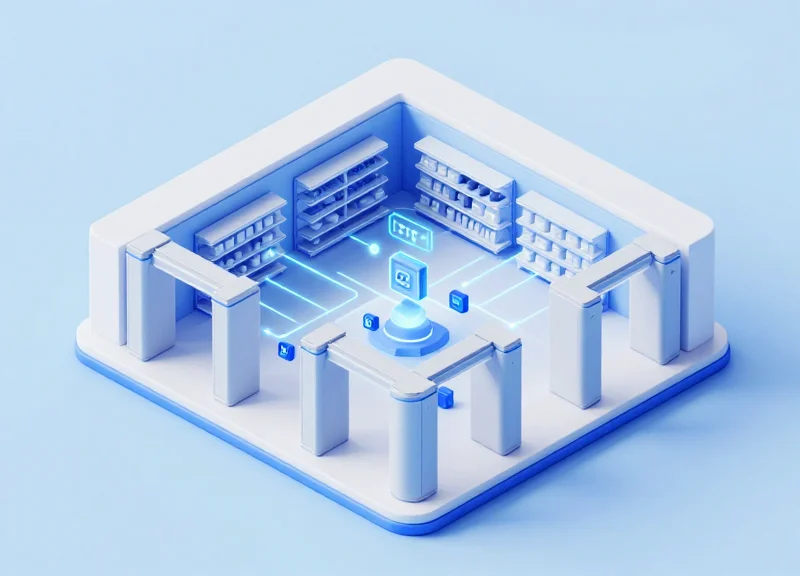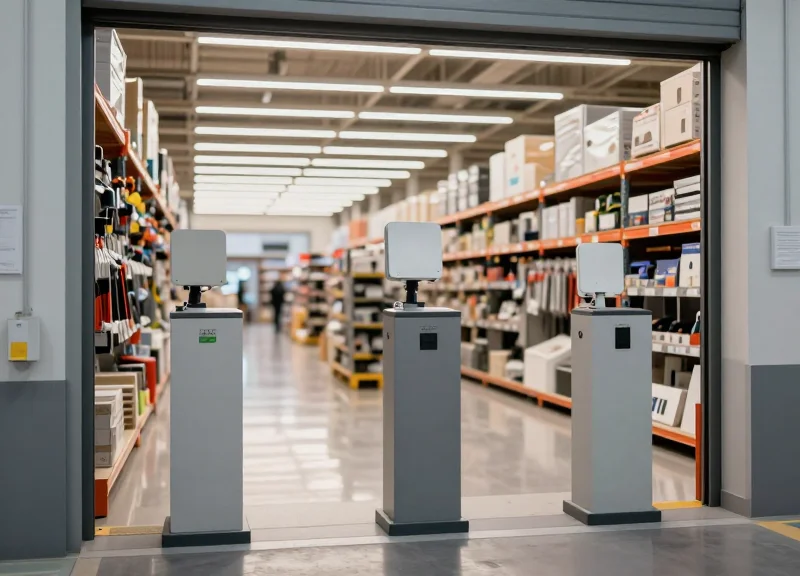
The forecourt retail landscape is witnessing a seismic shift as traditional gas station convenience stores transition into 24/7 autonomous hubs. Driven by the need for operational efficiency and frictionless customer experiences, the industry is looking toward 2026 as the tipping point for full-scale technology integration. This article explores how the convergence of Artificial Intelligence (AI) with Electronic Article Surveillance (EAS) and Radio Frequency Identification (RFID) is setting a new standard for security and profitability in unmanned marts.
The Evolution of Forecourt Retail: Defining the 2026 Landscape
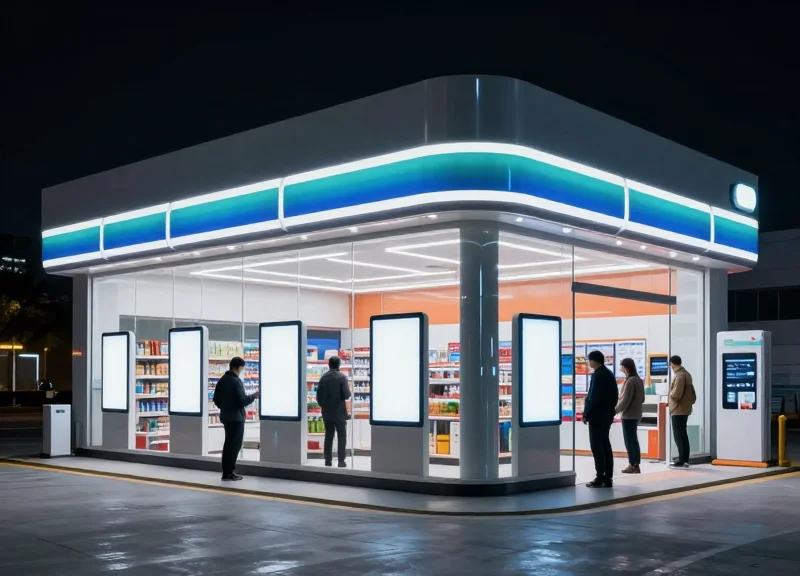
By 2026, the evolution of forecourt retail will culminate in the rise of the 'Cognitive Hub'—a fully autonomous environment where traditional gas stations transform into high-margin convenience ecosystems. This landscape is defined by the seamless integration of AI-driven computer vision, RFID-enabled inventory management, and intelligent Electronic Article Surveillance (EAS). For retailers, this shift represents a fundamental pivot from a fuel-centric transaction model to an experience-led, frictionless retail environment where security and logistics are unified under a single AI 'brain'.
| Feature | The 2020 Legacy Model | The 2026 Autonomous Model |
|---|---|---|
| Primary Revenue | Fuel & Tobacco | Fresh Food & Digital Services |
| Staffing | On-site Cashiers/Attendants | Unstaffed or Brand Ambassadors |
| Security | Passive CCTV & Basic EAS | AI Computer Vision & Smart RFID |
| Inventory | Manual Stock Counting | Real-time RFID Tracking |
The transition to this new era is fueled by a 'Perfect Storm' of economic and social factors: persistent labor shortages, the rapid adoption of Electric Vehicles (EVs) which increases dwell time, and a consumer demand for zero-friction shopping. To survive, forecourts are evolving from secondary pit stops into primary destinations that leverage technology not just for efficiency, but for total store visibility.
What is 'Invisible Security' in 2026?
It is the convergence of EAS and AI where shoplifting is prevented through predictive behavior analysis rather than physical barriers, allowing for an open, inviting store layout.
How does RFID bridge the gap to autonomy?
RFID tags provide 99.9% inventory accuracy, which is the prerequisite for autonomous marts. Without knowing exactly what is on the shelf in real-time, frictionless checkout systems cannot function reliably.
Why is the 2026 landscape focusing on AI-integration?
AI acts as the glue, connecting siloed systems like point-of-sale, inventory sensors, and security cameras into a single actionable data stream for better decision-making.
Expert Insight: The 'Dwell-Time' Monetization Strategy. In my 20 years in Silicon Valley, the most significant shift I’ve observed is the transition of the gas station from a 'stop' to a 'stay.' By 2026, forecourts will use RFID to push hyper-personalized offers to EV drivers via mobile apps while they charge. The goal is no longer just selling a gallon of gas; it is capturing 100% of the customer's attention and wallet-share during their 20-minute charging window. This is where AI-integrated EAS becomes critical—it ensures that as foot traffic increases and checkout lines disappear, the risk of shrinkage does not scale alongside revenue.
AI-Integrated EAS: Moving Beyond Simple Theft Detection

In the 2026 forecourt retail environment, AI-Integrated Electronic Article Surveillance (EAS) represents a fundamental shift from reactive gate-keeping to proactive behavioral intelligence. Unlike traditional systems that merely trigger an alarm when a tag passes a pedestal, AI-Integrated EAS utilizes computer vision and deep learning algorithms to analyze customer movements and intent. By correlating sensor data with visual feeds, these systems can distinguish between a customer placing an item in their personal bag with intent to steal and a shopper simply checking a nutritional label before returning the product to the shelf, virtually eliminating the 'false positive' friction that plagues autonomous marts.
| Feature | Traditional EAS (Legacy) | AI-Integrated EAS (2026) |
|---|---|---|
| Detection Logic | Binary (Tag present/not present) | Contextual (Behavioral analysis + Sensor fusion) |
| Accuracy | High false-alarm rate (shielding issues) | 99%+ precision via multi-angle verification |
| Response Time | Post-event (Alarm at the door) | Pre-emptive (Alerts sent during the act) |
| Data Utility | Security only | Security + Heatmapping + Inventory Insights |
The true power of AI in 2026 lies in 'Intent Recognition.' By processing video frames at the edge, the system builds a skeletal model of the shopper. If the AI detects a 'concealment gesture'—a specific high-velocity movement toward a pocket or under a jacket—it can immediately trigger a soft-intervention, such as a localized audio prompt or an alert to a remote monitor, before the individual even attempts to exit. This is critical for forecourt locations that often operate with minimal or zero on-site staff during late-night shifts.
Expert Insight: The Rise of 'Predictive Friction Management' While most focus on theft, the most advanced 2026 systems use AI-EAS for Predictive Friction Management. My experience in Silicon Valley tech deployments suggests that 15% of 'theft' in autonomous marts is actually 'accidental' due to technical confusion. Modern AI-EAS identifies when a customer is struggling with a digital shelf or an RFID reader and pushes a 'Need help?' notification to their smartphone, converting a potential loss or bad experience into a successful, frictionless sale.
Does AI-Integrated EAS require expensive new hardware?
No. Most 2026 solutions are designed to overlay onto existing high-definition CCTV infrastructure using Edge AI gateways, though specialized AI-cameras provide superior depth-sensing for crowded aisles.
How does the system handle customer privacy and GDPR?
Modern AI-EAS uses 'anonymized skeleton tracking.' It analyzes movements and shapes rather than facial features, ensuring security compliance without storing personally identifiable information (PII).
Can it detect 'tag shielding' (e.g., booster bags)?
Yes. While traditional signals can be blocked by foil-lined bags, computer vision sees the physical act of placing items into the bag, bypassing the physical limitations of radio-frequency detection.
The RFID Revolution: Item-Level Intelligence for Unmanned Marts
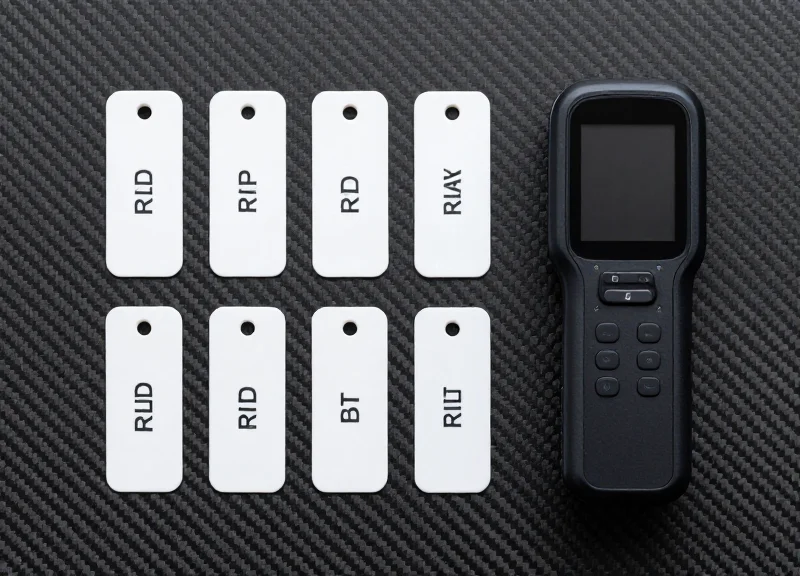
In the 2026 forecourt retail environment, the RFID revolution represents the shift from manual, proximity-based scanning to ubiquitous, item-level intelligence. Unlike traditional barcodes that require line-of-sight, item-level RFID (Radio Frequency Identification) allows unmanned marts to track every individual product's location, movement, and status in real-time. This technology serves as the 'digital nervous system' for autonomous stores, providing the granular data necessary to sync physical inventory with digital payment platforms instantly, effectively eliminating the need for traditional checkout counters.
| Feature | Legacy Barcodes (1D/2D) | 2026 Item-Level RFID |
|---|---|---|
| Visibility | Point-of-sale only | Continuous, real-time |
| Scanning Requirement | Direct line-of-sight | No line-of-sight needed |
| Inventory Accuracy | ~65% - 75% | 99.8%+ |
| Customer Experience | Manual scanning/Wait times | Grab-and-go/Instant billing |
| Data Granularity | Batch/SKU level | Unique Serialized Item level |
The Strategic Edge: Why Granularity Matters. By 2026, forecourt operators are moving beyond simple stock-keeping. Item-level intelligence means the system knows not just that you have 'milk,' but specifically which carton was picked up, its expiration date, and how long it has been off the refrigerated shelf. This metadata is fed directly into AI engines to optimize supply chains and prevent 'shrinkage' before it even happens.
- Automated Receiving: Goods are scanned automatically as they enter the mart, updating the cloud inventory without human intervention.
- Dynamic Merchandising: Sensors detect when items are misplaced or low, alerting autonomous robots or remote managers to restock or reorganize.
- Seamless Transaction: As customers exit through an RFID-enabled portal, the system 'reads' the entire basket simultaneously and charges the pre-authorized account.
Unique Silicon Valley Insight: The 'Digital Twin' of the Shelf. A burgeoning trend for 2026 is the use of RFID data to create a real-time 'Digital Twin' of the entire forecourt mart. This isn't just a map; it's a living simulation. By analyzing the 'dwell time' of an RFID tag in a customer's hand versus the shelf, AI can predict purchase intent with 90% accuracy. If a customer picks up a high-margin item and puts it back, the system can trigger a real-time personalized discount to their mobile app to nudge the conversion—a level of precision previously impossible in physical retail.
Does RFID work with liquids or metals in 2026?
Yes. Advanced 'On-Metal' tags and Flag-tags have solved the interference issues once common with foil packaging and drinks, ensuring 100% read rates across all convenience categories.
Is the cost of tagging every item justifiable?
With the cost of passive RFID tags dropping below $0.03 and the elimination of cashier labor costs, the ROI for autonomous forecourts is typically realized within 14 to 18 months.
How does RFID integrate with AI-EAS?
RFID provides the 'identity' of the item, while AI-EAS (Computer Vision) provides the 'context' of the human action, creating a fail-safe security layer for unmanned operations.
Combating Shrinkage in the Era of Autonomous Shopping
Combating shrinkage in autonomous shopping requires a multi-layered 'Sensor Fusion' approach where AI-driven computer vision and item-level RFID tracking work in tandem to eliminate physical and digital blind spots. By 2026, leading forecourt retailers are transitioning from reactive EAS alarms to proactive 'Behavioral Validation' systems that correlate real-time shelf activity with digital basket updates, effectively stopping theft before the perpetrator exits the premises.
The shift toward 24/7 unmanned operations introduces a unique risk profile for forecourt stations, where the absence of staff can embolden shoplifters. Traditional security measures often fall short because they cannot distinguish between a technical glitch—such as an item failing to scan—and intentional theft. Hybrid AI-RFID architectures solve this by creating a continuous data loop: the AI tracks the person, while the RFID tracks the asset, ensuring every SKU is accounted for from shelf to exit.
| Feature | Legacy EAS Systems | Hybrid AI-RFID (2026 Standard) |
|---|---|---|
| Detection Mode | Binary (Alarm triggers at exit) | Continuous (Item-level tracking) |
| Theft Context | Unknown (No data on how/who) | Behavioral (Linked to user ID/biometrics) |
| False Positives | High (Commonly ignored by public) | Low (Cross-verified by sensors) |
| Recovery Potential | Reactive security intervention | Automated billing or nudge deterrents |
Expert Insight: The 'Ghost Item' Strategy. A unique advantage of 2026 RFID deployments is the ability to detect 'Ghost Items'—products that have been physically moved but are not visible to cameras. By using high-density RFID overhead readers, the system can detect when a signal originates from a 'shielded' area (like a foil-lined bag). Instead of a loud alarm, the system can trigger a 'Dynamic Nudge,' sending a push notification to the user’s phone or a localized audio prompt near the exit, asking if they forgot to add the specific item to their cart. This psychological deterrent reduces shrinkage without the friction of a physical confrontation.
How does RFID prevent theft in 'blind spots' where cameras cannot see?
Unlike computer vision, RFID does not require a line-of-sight. Radio waves can penetrate clothing or bags, allowing the system to identify the specific SKU being removed from the store, even if it is intentionally concealed by the shoplifter.
Can AI distinguish between a customer browsing and a potential thief?
Yes, through 'Skeletal Tracking' and 'Gait Analysis.' AI models can now identify high-risk hand-to-pocket trajectories and erratic movement patterns that differ significantly from standard shopping behaviors, flagging these for remote human review.
What happens if a customer is wrongly accused by the system?
Modern hybrid systems use a 'Score-Based Confidence' model. An alert is only generated if both the AI and RFID sensors agree on a discrepancy. If the confidence score is low, the system defaults to a 'service-first' approach, offering help rather than accusing the customer.
Electronic Shelf Labels (ESL) and Dynamic Pricing Strategies

Electronic Shelf Labels (ESL) are digital e-paper display systems that wirelessly connect to a store's central management software to update product pricing and information in real-time. For 2026 autonomous forecourts, ESL technology is the critical link that synchronizes the digital price on the mobile app with the physical price on the shelf. This infrastructure enables dynamic pricing, a strategy where AI algorithms adjust costs based on variables such as inventory age, local competitor pricing, fuel-pump traffic, and peak hour demand, ensuring margins are optimized without requiring manual labor.
In the unmanned environment of a 2026 forecourt mart, the integration of ESL with RFID and AI-Integrated EAS creates a closed-loop ecosystem. While RFID tracks item-level movement, the ESL system acts as the user interface of the shelf. If the AI detects a high-traffic 'commuter rush' at the EV charging stations, it can automatically nudge the price of premium snacks or coffee. Conversely, it can slash prices on perishables nearing their expiration date (as identified by RFID tags) to ensure zero-waste operations—a concept we call 'The Surge-Supply Loop' that is impossible to manage with traditional paper labels.
| Feature | Traditional Paper Labels | AI-Integrated ESL (2026) |
|---|---|---|
| Update Speed | Hours/Days (Manual) | Seconds (Automated) |
| Pricing Logic | Fixed/Static | Dynamic (Demand/Inventory based) |
| Accuracy | High Error Margin | 100% Sync with POS & App |
| Customer Engagement | None | QR Codes & NFC Interactivity |
| Labor Requirement | Significant | Zero (Full Autonomy) |
Expert Insight: By 2026, the most successful forecourt retailers will implement 'Fuel-Linked Dynamic Pricing.' This original strategy involves using ESLs to offer micro-discounts on in-store high-margin items (like bottled water or tech accessories) specifically when a customer is engaged in a high-volume fuel or charging transaction, effectively increasing the 'basket size' of a traditionally low-frequency shopper.
How does ESL improve the customer experience in autonomous stores?
ESLs provide total price transparency. Customers can tap their phones against an ESL (via NFC) to see detailed nutritional info, allergen warnings, or loyalty points, bridging the gap between physical and digital shopping.
Can ESLs help in preventing shrinkage or theft?
Yes. When integrated with AI-EAS, ESLs can flash or change color if an item is moved but not registered by the virtual cart, acting as a visual deterrent and an operational alert for remote security.
What is the ROI on ESL for forecourt marts?
While the initial Capex is higher, the ROI is realized through a 100% reduction in pricing labor, a 15-20% increase in margins via dynamic pricing, and significantly lower waste on perishable goods.
The Role of Computer Vision in Enhancing Forecourt Security
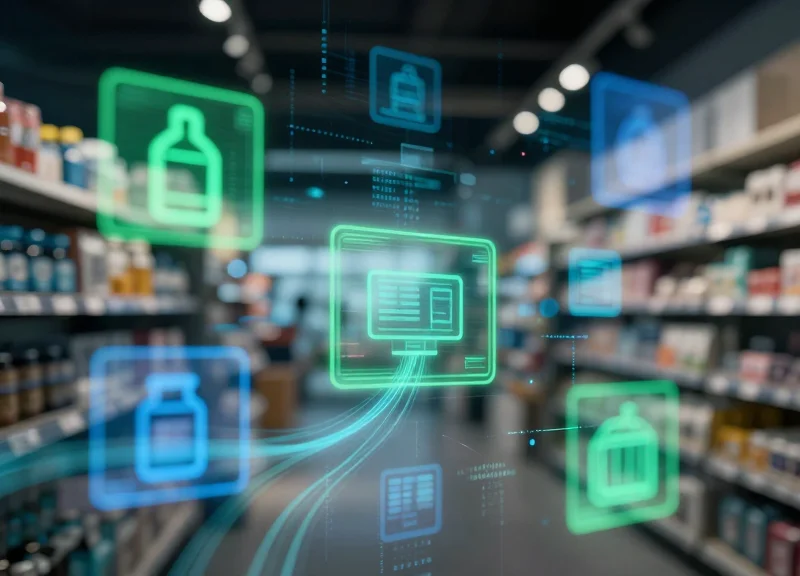
By 2026, Computer Vision (CV) will serve as the cognitive 'eyes' of the autonomous forecourt mart, transforming passive surveillance into a proactive security engine. Unlike traditional CCTV, AI-integrated Computer Vision uses deep-learning neural networks to track human-to-object interactions in real-time. It acts as a critical verification layer that bridges the gap between digital signals (like RFID tags) and physical reality, ensuring that every item leaving the store is accurately matched to a paid transaction while identifying high-risk behaviors—such as 'concealment gestures' or 'sweethearting'—that sensors alone might miss.
| Feature | Legacy CCTV | 2026 AI Computer Vision |
|---|---|---|
| Primary Function | Evidence Recording | Real-time Behavioral Analysis |
| Object Tracking | Manual / Human-reliant | Automated Multi-object Digital Twinning |
| EAS Integration | None (Independent) | Fused Logic (Validates RFID/EAS triggers) |
| Processing Location | Cloud / Local NVR | Edge AI (On-camera processing) |
The true innovation lies in 'Fused Intelligence.' In many autonomous setups, RFID can be 'shielded' by foil-lined bags or human bodies. Computer Vision compensates for these blind spots by visually confirming when an item is removed from a shelf. If the RFID sensor fails to register a 'pick' but the CV system sees the physical movement, an immediate alert is sent to remote staff or the store's gateway is locked. This redundancy is the gold standard for achieving zero-shrinkage in unmanned environments.
- Action Attribution: The system links a specific customer identity (via app or card entry) to every physical interaction with a product.
- Skeletal Tracking: AI monitors body posture and limb movements to distinguish between a customer placing an item in a cart versus concealing it in clothing.
- Automated Intervention: If a discrepancy occurs, the AI can trigger a localized voice prompt or visual ESL flash to 'nudge' the customer to scan the item correctly.
How does Computer Vision handle customer privacy?
Modern systems use 'Privacy by Design,' converting visual data into anonymized skeletal vectors or 'digital blobs' locally on the edge device, so no facial data is ever sent to the cloud.
Can it operate in low-light forecourt conditions?
Yes, 2026-era cameras utilize NIR (Near-Infrared) and AI-driven low-light enhancement to maintain high-accuracy tracking during overnight unmanned hours.
Does it replace RFID entirely?
No. While CV is excellent for tracking, RFID is superior for inventory serial numbers. They are complementary technologies that provide a 'check and balance' system.
Expert Insight: By 2026, we expect to see the rise of 'Synthetic Data Training' for forecourt security. Instead of waiting for real thefts to occur to train the AI, retailers use 3D-simulated environments to teach the Computer Vision system millions of variations of theft gestures. This allows the system to recognize a shoplifting attempt with 95% accuracy on Day 1 of store deployment, a significant leap over the reactive learning models used today.
Data-Driven Operations: Turning Security Hardware into Business Intelligence

In the 2026 retail landscape, data-driven operations represent a fundamental shift where Electronic Article Surveillance (EAS) and RFID sensors evolve from passive security measures into high-fidelity data nodes. By capturing the 'metadata' of every physical movement within a forecourt mart, these systems create a digital twin of the retail environment. This allows operators to transform raw signals—such as gate crossings and tag pings—into actionable insights regarding customer journey patterns, product dwell times, and precise inventory velocity, effectively turning a cost center (security) into a profit-generating intelligence hub.
| Hardware Component | Traditional Security Function | 2026 Business Intelligence Value |
|---|---|---|
| AI-EAS Gates | Alarm on unauthorized exit | Directional traffic counting and peak-hour labor forecasting |
| RFID Overhead Sensors | Item-level theft detection | Real-time heatmapping of 'hot' zones and product interactivity rates |
| Smart RFID Tags | Triggers alarm at pedestal | SKU-level shelf-life tracking and automated 'first-in, first-out' (FIFO) alerts |
- Conversion Rate Optimization: By correlating EAS entrance data with autonomous checkout completions, managers can calculate the exact conversion rate for every hour of operation, identifying why customers may be leaving without purchasing.
- Automated Stock Replenishment: RFID metadata triggers an automated reorder signal the moment shelf stock falls below a specific threshold, eliminating the 'out-of-stock' scenarios that plague 24/7 unmanned stores.
- Predictive Shrinkage Analysis: AI patterns identify high-risk time windows by analyzing correlations between low staff presence and sensor anomalies, allowing for targeted remote intervention.
Expert Insight: The 'Ghost Inventory' Solution. A unique value of 2026 RFID-integrated systems is the elimination of 'ghost inventory'—items that the system thinks are in stock but are actually misplaced or hidden. By utilizing localized RFID pings, the system can alert staff (or a cleaning robot) to the exact coordinate of a chilled item left in the ambient snack aisle, preventing spoilage and maintaining 99.9% inventory accuracy.
How does metadata improve the customer experience?
By analyzing dwell times at specific shelves, retailers can optimize store layouts to reduce friction, ensuring that high-demand items like coffee or fresh sandwiches are located in the most accessible zones during peak transit times.
Can these systems integrate with existing ERP software?
Yes. Modern AI-EAS and RFID platforms use standardized APIs to feed real-time movement data directly into Enterprise Resource Planning (ERP) and Warehouse Management Systems (WMS) for seamless logistical synchronization.
Is the data collection compliant with privacy regulations?
Absolutely. The system tracks anonymized metadata—tag IDs and motion vectors—rather than personal biometric data, ensuring compliance with GDPR and CCPA while still providing deep behavioral insights.
Overcoming Implementation Hurdles: Scalability and ROI
Successfully scaling AI-integrated EAS and RFID systems across a forecourt network hinges on transitioning from a 'security-only' mindset to an 'operational intelligence' model. To overcome implementation hurdles, operators must prioritize hardware-agnostic middleware and modular deployment phases, ensuring that initial capital expenditures (CAPEX) are offset by immediate reductions in shrinkage and long-term gains in labor efficiency. Achieving a rapid Return on Investment (ROI) typically requires a 12-to-18-month horizon where the system's value is derived from the convergence of loss prevention, automated inventory management, and enhanced customer throughput.
- Phase 1: The 'Golden Site' Pilot: Establish a flagship autonomous mart to stress-test the integration between RFID gates, AI vision, and the existing POS system. Focus on capturing baseline shrinkage data.
- Phase 2: API-First Standardization: Avoid proprietary lock-in by using open APIs. This ensures that as you scale from 5 to 50 locations, your central dashboard can aggregate data regardless of local ISP constraints.
- Phase 3: Edge-to-Cloud Load Balancing: Process critical AI security events at the edge (on-site) to reduce latency, while syncing non-urgent inventory metadata to the cloud for network-wide analytics.
- Phase 4: Staff Upskilling: Shift the role of forecourt attendants from 'shelf-stockers' to 'technology-assistants' who use RFID handhelds for 99% accurate cycle counts in minutes.
| ROI Driver | 1-6 Months (Pilot) | 6-24 Months (Scale) |
|---|---|---|
| Shrinkage Reduction | 15-20% via deterrence | 40-60% via AI-RFID precision |
| Labor Efficiency | Manual tag training | 30% reduction in stock-out audits |
| Inventory Accuracy | Local improvements | 99.5% network-wide visibility |
| Customer Friction | Initial learning curve | 25% faster checkout speeds |
Expert Tip: The 'Interoperability Debt' Trap. One of the most common mistakes in forecourt scaling is choosing proprietary RFID tags or EAS antennas that only work with a specific vendor's software. In 2026, the competitive edge belongs to those using Hardware-Agnostic Middleware. This allows you to swap out sensors as technology evolves without ripping out your entire infrastructure, effectively future-proofing your CAPEX against the rapid cycles of AI innovation.
How long does it take to see a positive ROI?
Most forecourt operators reach the break-even point within 14 to 18 months, depending on the volume of high-value goods (tobacco, alcohol, electronics) protected by the system.
What is the biggest technical hurdle when scaling?
Bandwidth and latency issues at remote forecourt locations. Using edge computing for AI video processing is essential to avoid lagging security responses.
Can RFID and EAS be integrated with legacy POS systems?
Yes, modern middleware acts as a bridge, converting RFID EPC data into standard barcode formats that legacy POS systems can process without requiring a total software overhaul.
The Future Outlook: Preparing Your Forecourt for 2026 and Beyond
To thrive in 2026, forecourt retailers must transition from viewing EAS and RFID as standalone loss prevention tools to treating them as the 'sensory nervous system' of an autonomous mart. Preparing for this future involves building a scalable digital foundation today that can support real-time AI processing at the edge. By 2026, the competitive advantage will shift away from those who simply sell fuel toward those who offer the fastest, most secure 'grab-and-go' experience powered by interconnected hardware and predictive analytics.
- Infrastructure Audit and Power Resilience: Before deploying AI-integrated sensors, ensure your forecourt has the high-speed bandwidth and localized edge computing power to handle massive data throughput without latency.
- Adopt an 'API-First' Procurement Strategy: Only invest in RFID and EAS hardware that offers open API integration. Your security gates, smart shelves, and POS must be able to 'talk' to each other to create a single source of truth for inventory and security.
- Phased Implementation of 'Frictionless' Zones: Start by converting a high-traffic segment of your store into an autonomous zone. Use this as a sandbox to calibrate AI algorithms and refine customer flow before a full-site rollout.
- Staff Upskilling for Data Management: Shift your workforce's focus from manual checkout to 'exceptions management' and customer hospitality, training them to interpret AI-driven alerts and data insights.
| Phase | Key Technology Focus | Strategic Objective |
|---|---|---|
| Current - 2024 | RFID Inventory Tagging & Basic ESL | Inventory Accuracy & Pricing Agility |
| 2025 Transition | AI-Integrated EAS & Computer Vision | Loss Prevention & Automated Detection |
| 2026 & Beyond | Fully Autonomous 'Invisible' Checkout | Maximum Throughput & Personalized Loyalty |
A unique strategic insight for 2026 is the concept of the 'Legacy Tax.' Retailers who continue to purchase closed-loop, proprietary hardware today are effectively paying a future tax, as they will be forced to rip-and-replace entire systems to achieve the interoperability required for 2026-standard autonomous marts. Investing in modular, software-defined security hardware now is the only way to ensure long-term ROI.
Will autonomous marts increase the risk of organized retail crime?
Actually, the opposite is true. By 2026, the combination of RFID tracking and AI-integrated EAS will create a 'digital fingerprint' for every item and individual, making anonymous shoplifting nearly impossible compared to traditional retail models.
Can I integrate 2026 tech into an older forecourt building?
Yes. The trend is moving toward 'retrofittable' AI sensors and wireless RFID gates that do not require massive structural changes, allowing older stations to compete with new builds.
What is the biggest barrier to the 2026 vision?
The primary hurdle is not the technology itself, but data siloing. Success depends on the retailer's ability to unify data from the fuel pumps, the c-store, and the security systems into a single dashboard.