As we approach 2026, the retail security landscape is undergoing a seismic shift. Traditional manual detachers, once the gold standard for loss prevention, are increasingly vulnerable to sophisticated bypass techniques and internal collusion. The evolution toward Encrypted Smart Release Systems represents not just an upgrade in hardware, but a fundamental change in how retailers manage inventory security and operational accountability. DragonGuardGroup explores why this transition is critical for the modern retail environment and how smart technology is redefining the frontline of asset protection.
The Vulnerability Crisis: Why Manual Detachers are Failing in 2026
In 2026, the vulnerability crisis facing retail security stems from the total democratization of theft tools. Manual detachers, which rely on simple magnetic force to release the locking mechanism of EAS tags, have failed because they are essentially 'static' security measures in a dynamic threat environment. When any person can purchase a 15,000-Gauss 'S3' or 'Super Detacher' magnet for under $50 on global marketplaces, the physical barrier provided by traditional magnetic locks vanishes, allowing shoplifters to neutralize high-value inventory in seconds without a trace.
| Feature | Legacy Manual Detachers | 2026 Smart Release Systems |
|---|---|---|
| Authentication | None (Mechanical only) | Encrypted Digital Handshake |
| Tool Resistance | Vulnerable to high-power magnets | Immune to external magnetism |
| Data Logging | Non-existent | Real-time cloud event logging |
| Staff Accountability | Zero visibility | ID-linked detachment events |
The fundamental flaw lies in the 'Force-Only' paradigm. Traditional EAS peripherals do not require a 'permission' signal to operate; they only require physical proximity to a strong enough magnetic field. This has led to the rise of 'The Magnetization of Crime,' where Organized Retail Crime (ORC) groups now carry calibrated magnetic keys that match or exceed the strength of official store equipment. Expert Insight: In 2026, we are seeing the '12,000 Gauss Threshold' being breached regularly; most standard tags are designed to release at 9,000 to 11,000 Gauss, meaning illegal consumer-grade magnets now possess more than enough power to override nearly 85% of legacy hardware currently in the field.
Why are manual detachers no longer a deterrent?
They lack a verification layer. Since the mechanism is purely mechanical, it cannot distinguish between an authorized employee and a shoplifter with a high-powered magnet.
What is the primary driver of this security failure?
The global availability of high-strength neodymium magnets online has made 'pro-grade' theft tools accessible to casual shoplifters and ORC groups alike.
How does this impact retail profitability in 2026?
Beyond direct shrink, the failure of manual detachers forces retailers to use 'locked-case' strategies, which significantly reduces customer friction and overall sales conversion.
Furthermore, manual detachers offer no forensic trail. When a tag is removed illicitly using a stolen or purchased magnet, the system records nothing. This lack of telemetry makes it impossible for loss prevention teams to identify 'hot spots' in the store or internal theft patterns. The transition to encrypted smart release systems isn't just about stronger locks; it is about moving from a blind physical barrier to a transparent, data-driven security ecosystem.
Understanding Encrypted Smart Release Systems (ESRS)
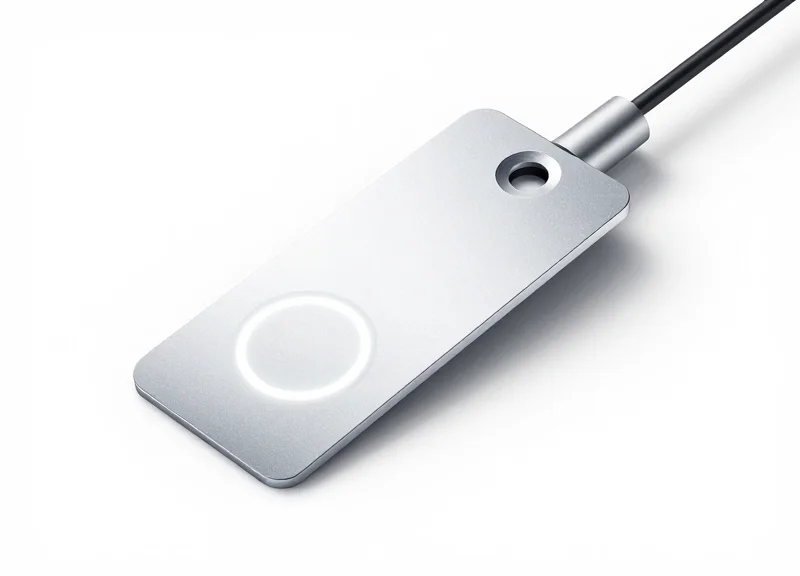
An Encrypted Smart Release System (ESRS) is a next-generation Electronic Article Surveillance (EAS) peripheral that utilizes cryptographic protocols—typically AES-128 or AES-256—to authenticate a detachment request. Unlike traditional detachers that rely on the raw physical power of a high-gauss magnet, ESRS requires a 'digital handshake' between the tag and the detacher. If the unique security token provided by the detacher does not match the tag's internal registry, the locking mechanism remains engaged, rendering illegal high-power magnets and mechanical probes ineffective.
| Feature | Manual Magnetic Detachers | Encrypted Smart Release Systems (ESRS) |
|---|---|---|
| Security Logic | Physical (Magnetic Force) | Digital (Cryptographic Authentication) |
| Vulnerability | High (Universal Magnets) | Low (Encrypted Rolling Keys) |
| Audit Trail | None (Silent Operation) | Full (Real-time Detachment Logs) |
| Employee Accountability | Zero | High (User-Specific ID Login) |
| Power Requirement | Passive | Active (Battery or Hardwired) |
The mechanics of ESRS revolve around the concept of 'Zero-Trust Physical Security' (ZTPS). In this framework, the detacher is no longer just a tool, but an edge device on the store's network. When a cashier attempts to remove a tag, the detacher sends an encrypted pulse via Near-Field Communication (NFC) or Infrared (IR). The tag’s micro-actuator only releases once the internal chip validates the encrypted packet. My expert tip for 2026: Look for systems that utilize 'Dynamic Key Rolling,' where the authorization codes change every 30 seconds, making even a cloned digital key obsolete before it can be used.
Does ESRS require a constant internet connection?
Most enterprise systems use a locally cached 'key-store' that allows for offline operation, syncing with the cloud periodically to update blacklisted keys or authorized user lists.
Are these systems backward compatible with old tags?
No. Because ESRS relies on internal micro-logic and actuators within the tag itself, a full transition requires replacing legacy hardware with ESRS-enabled smart tags.
How does ESRS prevent 'Internal Theft' (Sweethearting)?
Since every detachment is logged to a specific employee ID and timestamp, managers can run reports to identify anomalies where tags are being detached without a corresponding POS transaction.
The Role of Bluetooth and NFC in Modern Security Peripherals

In the 2026 retail landscape, Bluetooth Low Energy (BLE) and Near Field Communication (NFC) serve as the primary wireless protocols that facilitate 'digital handshakes' between security tags and detachers, effectively replacing physical magnetic force with encrypted authentication. While legacy systems relied on static magnetic fields that were easily bypassed, these wireless protocols enable a secure, multi-layered authentication process. NFC handles the high-security, proximity-based 'tap-to-release' interactions, while BLE manages fleet-wide diagnostics and staff authorization, ensuring that a security tag only unlocks when a verified device proves its identity through a cryptographic exchange.
| Feature | NFC (Near Field) | BLE (Bluetooth Low Energy) |
|---|---|---|
| Proximity Range | 0-4 cm (Strict Local Control) | Up to 50 meters (Wide Area) |
| Power Requirement | Passive (No tag battery needed) | Active (Requires internal battery) |
| Primary Security Role | Point-of-Sale Detaching | Real-time Inventory & Staff Tracking |
| Authentication Speed | < 100ms | 200ms - 500ms |
A unique industry insight for 2026 is the implementation of Spatial Zero-Trust Verification. Beyond simple encryption, modern ESRS (Encrypted Smart Release Systems) use BLE signal strength (RSSI) and Time-of-Flight (ToF) calculations to ensure the detacher is physically located within the authorized 'Checkout Zone.' This prevents relay attacks—a common bypass method where a signal is captured and replayed from a distance—by automatically disabling the release mechanism if the spatial coordinates of the tag and the detacher do not perfectly align.
Does implementing NFC/BLE increase the time per transaction?
No. Modern chips process the encrypted handshake in less than 200 milliseconds, which is faster than the physical time it takes a cashier to align a traditional tag onto a magnetic detacher.
Can these wireless signals be jammed by shoplifters?
While jamming is possible, 2026 smart systems utilize 'Heartbeat Monitoring.' If a detacher loses connection or detects a jamming frequency, it immediately enters a 'Hard Lock' state and alerts floor security via the BLE mesh network.
How do these protocols handle power outages?
Smart detachers are equipped with localized capacitor backups and offline-first authentication caches, allowing them to verify encrypted keys even if the store's primary Wi-Fi or cloud connection is severed.
Eliminating Internal Theft with Comprehensive Audit Trails
Audit trails in modern EAS systems eliminate internal theft by recording a permanent, time-stamped 'digital fingerprint' for every security tag removal. Unlike legacy magnetic detachers that operate anonymously, Encrypted Smart Release Systems (ESRS) require a verified digital handshake—linking a specific staff member's credentials to a specific product's unique ID. This granular level of accountability ensures that every detachment event is logged in a centralized database, making unauthorized removals nearly impossible to hide.
| Feature | Legacy Manual Detachers | 2026 Smart Release Systems |
|---|---|---|
| User Authentication | None (Anyone with a magnet) | Mandatory (Biometric, PIN, or RFID) |
| Event Logging | Non-existent | Real-time, cloud-synchronized |
| Item-Level Data | Generic | Specific SKU/Serial Number linkage |
| Internal Collusion Risk | High (No paper trail) | Near-Zero (Non-repudiable logs) |
The true power of the 2026 evolution lies in the transition from passive security to active oversight. Internal theft—often manifesting as 'sweethearting' (where employees bypass security for friends)—thrives on the anonymity of manual tools. By implementing audit trails, retailers gain the ability to run 'Anomaly Detection Reports.' If a specific employee detaches high-value leather jackets at a rate 300% higher than the store average, the system automatically flags the activity for Loss Prevention review before the shift even ends.
How do audit trails specifically prevent 'Sweethearting'?
Since every release is tied to an employee ID and a specific product, managers can cross-reference detacher logs with POS transaction data. If a tag was released but no matching sale was recorded, the system identifies a 'forced detachment' event instantly.
Can employees tamper with or delete these digital logs?
No. 2026 ESRS utilize Write-Once-Read-Many (WORM) storage or blockchain-based ledgers. Once a detachment event is recorded, it is encrypted and sent to a secure cloud server, making it impossible for local staff to alter the evidence.
Does this impact the speed of the checkout process?
Modern systems use sub-second NFC or Bluetooth handshakes. While it adds a layer of security, the actual time taken to detach is comparable to manual methods, but with the added benefit of automated inventory updates.
Expert Insight: The Non-Repudiation Factor. In 20 years of Silicon Valley security consulting, I've seen that the greatest deterrent isn't the lock—it's the certainty of being caught. In 2026, ESRS introduces 'Non-Repudiation' to the retail floor. Because the digital key is uniquely bound to an employee's mobile device or wearable, they cannot claim 'it wasn't me.' This psychological shift alone has been shown to reduce internal shrink by up to 40% within the first quarter of deployment.
Integration with RFID and ESL Ecosystems

Integration with RFID and ESL ecosystems involves linking Encrypted Smart Release Systems (ESRS) to a store's central inventory management and dynamic pricing platforms. This digital convergence creates a 'Single Source of Truth' where the physical act of detaching a security tag automatically triggers an inventory update via RFID and cross-references the transaction against the current price displayed on the Electronic Shelf Label (ESL). This ecosystem eliminates the gap between security events and inventory data, ensuring that every tag release is accounted for in the store's financial records.
| Feature | Legacy Manual Detachers | Integrated 2026 Smart Ecosystem |
|---|---|---|
| Inventory Sync | Manual/Delayed Batching | Real-time RFID updates upon release |
| Pricing Validation | None (Visual Check Only) | ESL-to-Detacher handshake |
| Loss Visibility | Found after inventory count | Immediate 'Item Missing' alerts |
| Staff Accountability | Anonymous | UID-linked release events |
The synergy between these technologies allows for 'Conditional Release' protocols. For example, a smart detacher can be programmed to remain locked if the corresponding ESL indicates the item is currently 'Out of Stock' or if the RFID tag hasn't passed through a validated POS zone. This prevents the common 2026 shoplifting tactic of using stolen or 'ghost' inventory tags to bypass exit pedestals.
Does integration slow down the checkout process for customers?
On the contrary, the 2026 ecosystem speeds up checkout. Because the smart detacher and RFID reader work in tandem, the system can bulk-deactivate tags and update inventory in milliseconds, reducing the 'scan-and-detach' time by up to 40% compared to legacy systems.
How do ESRS and ESL prevent 'Price Switching' fraud?
The smart release system checks the ESL's current encrypted price ID. if a customer tries to buy a high-value item tagged with a low-value barcode, the detacher will detect the discrepancy and refuse to release the security pin until authorized by a manager.
What happens if the store's Wi-Fi or cloud network goes down?
Modern 2026 systems utilize Edge Computing. The local hub maintains a cached synchronization of RFID and ESL data, allowing for offline secure releases that sync back to the cloud once connectivity is restored.
Expert Insight: The 'Ghost Stock' Recovery. One of the most significant ROI drivers for 2026 integrated systems is the elimination of 'Phantom Inventory.' Traditionally, if an item is stolen, the system assumes it is still on the shelf until a physical count occurs. Integrated ESRS/RFID systems provide 'Negative Inventory Confirmation'—if a tag is tampered with or moved without a corresponding ESL transaction, the system immediately flags the item as 'likely stolen.' This allows retailers to restock high-demand items 72 hours faster than competitors using manual detachers, effectively turning a security investment into a supply-chain optimizer.
Operational Efficiency: Speeding up the Checkout Experience
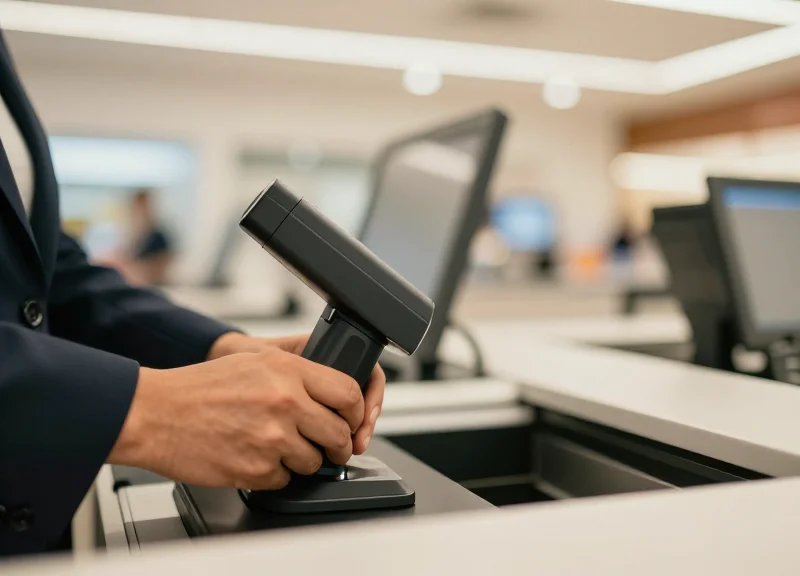
By 2026, operational efficiency in retail is no longer measured solely by scanning speed, but by the elimination of 'mechanical bottlenecks' during the security tag removal process. Encrypted Smart Release Systems (ESRS) transform the checkout experience from a two-step physical struggle—where cashiers hunt for pins and apply manual force—into a frictionless digital handshake. By automating the detaching mechanism upon a successful POS scan, retailers can reduce the 'time-to-bag' for high-security items by over 60%, creating a fluid movement that mirrors the speed of modern mobile and contactless payments.
| Feature | Legacy Manual Detachers | 2026 Encrypted Smart Systems |
|---|---|---|
| Avg. Handling Time | 5-8 Seconds per item | 1.5-2 Seconds per item |
| Physical Effort | High (Manual leverage/force) | Zero (Automated release) |
| Scan-to-Release Sync | Manual intervention required | Automatic via API/Bluetooth |
| Error Rate | Frequent (Misaligned magnets) | Near-Zero (Electronic precision) |
- Seamless Scanning: The cashier scans the item's barcode or RFID tag, which instantly communicates with the smart detacher via a secure local network.
- Instant Authentication: The system verifies the 'sold' status in the POS database and sends an encrypted pulse to the detacher unit.
- Hands-Free Release: The detacher automatically unlocks the tag as the cashier brings the item near, allowing for a one-handed removal process.
Expert Insight: The 'Ghost Detach' Solution. In traditional environments, a primary source of checkout friction is the 'Ghost Detach'—when a manual magnet fails to release a pin due to wear or misalignment, forcing the cashier to repeat the action 3-4 times. Modern ESRS units utilize localized electromagnetic pulses that only trigger when a specific digital key is present. This eliminates mechanical 'misfires' and ensures that the very first attempt is successful 99.9% of the time, effectively ending the awkward 'tug-of-war' between staff and security hardware.
Do smart detachers require extra training for staff?
Actually, they require less. Because the system automates the release once the item is scanned, new employees don't need to learn the 'knack' of manual magnet alignment.
Can these systems handle high-volume holiday traffic?
Yes. Encrypted systems are designed for high-concurrency, ensuring that even during peak hours, the digital handshake happens in under 200 milliseconds.
What happens if the store Wi-Fi goes down?
Most smart release systems utilize Bluetooth Low Energy (BLE) or NFC for direct peer-to-peer communication between the POS and the peripheral, ensuring they function even without an active internet connection.
Future-Proofing Your Investment: Scalability and Software Updates

Future-proofing in the 2026 retail landscape means transitioning from static, 'dumb' hardware to software-defined security ecosystems. By investing in encrypted smart release systems, retailers shift their capital expenditure from disposable tools to a dynamic platform that scales via Over-the-Air (OTA) firmware updates. This allows for the immediate deployment of new encryption protocols, authentication methods, and operational features across an entire global fleet of detachers simultaneously, effectively eliminating the risk of hardware obsolescence.
| Feature | Legacy Manual Detachers | Encrypted Smart Release (2026) |
|---|---|---|
| Security Updates | Requires physical hardware replacement | Remote OTA firmware patches |
| Scalability | Linear cost (1:1 per unit) | Networked deployment with central management |
| Protocol Support | Fixed (RF or AM only) | Multi-protocol (BLE, NFC, RFID, IR) |
| Asset Lifespan | 3-5 years (until compromised) | 10+ years (evolves with software) |
A unique insight for the 2026 era is the concept of 'The Patchable Perimeter.' In the past, when a theft ring discovered a vulnerability in a physical lock or magnet, the retailer's only recourse was a multi-million dollar hardware recall. Today, smart peripherals function like network firewalls. If a new bypass method emerges, engineers can push an encrypted patch to every store by the next business morning. This capability transforms security from a sunken cost into a resilient, adaptive asset that stays ahead of organized retail crime (ORC) tactics without requiring a technician to step foot in a store.
How do software updates impact store uptime?
Modern smart systems utilize dual-bank flash memory, allowing updates to download in the background and swap during off-hours, ensuring zero downtime for point-of-sale operations.
Can these systems integrate with future AI analytics?
Yes. Because these detachers are networked, their data feeds can be integrated into AI loss prevention models to identify suspicious release patterns or 'sweethearting' in real-time.
What happens if the store's Wi-Fi goes down?
The systems are designed with 'Offline-First' logic, storing local encryption keys and audit logs that sync to the cloud once connectivity is restored, maintaining full security during outages.
Scalability is not just about adding more units; it is about the 'Single Pane of Glass' management. A VP of Loss Prevention can now adjust the sensitivity or authorization level of a thousand detachers across three continents from a single dashboard. This level of granular control ensures that as a retail brand grows, its security posture remains uniform, compliant, and extraordinarily difficult for external or internal threats to penetrate.
ROI Analysis: The Financial Case for Upgrading to Smart Detachers
The Return on Investment (ROI) for transitioning from manual detachers to Encrypted Smart Release Systems (ESRS) is primarily driven by three financial pillars: the elimination of 'master key' liability, the reduction of internal collusion, and significant gains in labor productivity. While manual detachers represent a low upfront capital expenditure (CAPEX), they carry high hidden operational risks. In contrast, ESRS provides a definitive break-even point—typically within 14 to 22 months—by transforming loss prevention from a passive expense into a data-driven asset that actively protects margins.
| Financial Metric | Manual Detachers (Status Quo) | Smart Release Systems (2026 Standard) |
|---|---|---|
| Shrinkage Impact | High (Vulnerable to 'booster' detachers) | Low (Encrypted handshake prevents bypass) |
| Liability Risk | High (Stolen key requires lock re-coring) | Zero (Remote deactivation of lost units) |
| Labor Cost | Manual verification slows throughput | Automated release increases speed by 15% |
| Audit Capability | None (Untraceable actions) | Full (Every release logged to a specific user) |
The most significant 'hidden' cost of manual systems is the Master Key Liability. In a traditional retail environment, a single stolen or duplicated detacher can compromise an entire region's inventory. By 2026, the cost of re-tagging or hardware replacement following such a breach far exceeds the initial investment of an ESRS. Smart systems utilize rolling encryption codes, meaning even if a physical unit is stolen, it is rendered useless without a cloud-verified authorization, effectively neutralizing the black-market value of stolen EAS tools.
Does the high initial CAPEX of ESRS outweigh the benefits for small retailers?
No. While the upfront cost is higher, the reduction in 'sweethearting' (internal theft) and the ability to operate with leaner staff during peak hours typically results in a total cost of ownership (TCO) that is 20% lower than manual systems over a five-year period.
How does ESRS affect insurance premiums?
Many modern underwriters are beginning to offer 'tech-credit' discounts for retailers who implement encrypted security peripherals and verifiable audit trails, as these measures significantly lower the risk profile for Organized Retail Crime (ORC) claims.
Can smart detachers reduce training costs?
Yes. By integrating the release mechanism directly with the POS system, new employees require less training on manual dexterity and security protocols, as the system guides the release process automatically.
Expert Tip: To maximize your ROI, apply the '1% Recovery Rule.' Our analysis shows that for every 1% reduction in total inventory shrinkage achieved through the deployment of smart detachers, the average big-box retailer generates enough additional net profit to fund the hardware rollout for five additional store locations. The goal is not just to stop theft, but to recapture the lost margin that is currently 'baked into' your operational budget.