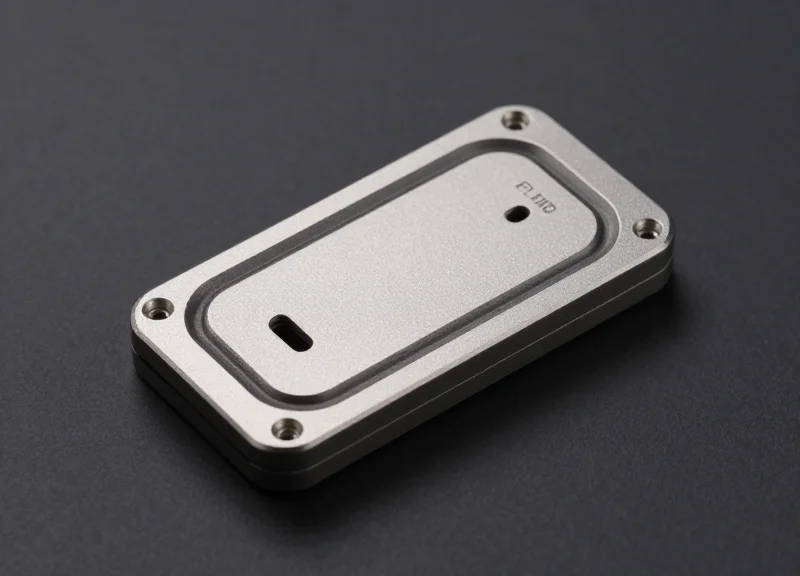
In extreme industrial environments like paint shops, foundries, and medical sterilization, standard RFID tags fail instantly. When temperatures exceed 250°C, the challenge shifts from simple identification to physical survival. Selecting the right ultra-high-temperature RFID tag is critical for operational efficiency and data integrity. This guide explores the essential factors to consider when deploying RFID solutions in the most demanding thermal conditions, ensuring your assets stay visible even when the heat is on.
The Evolution of RFID in High-Heat Industrial Applications
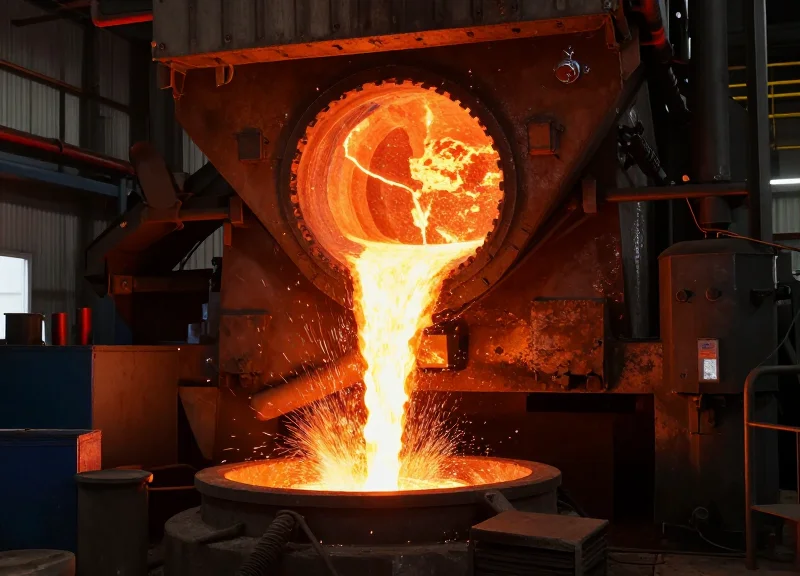
The evolution of RFID in high-heat industrial applications represents a transition from 'thermal resistance' to 'thermal survivability.' While standard RFID tags are designed for climate-controlled logistics, ultra-high-temperature RFID tags (250°C+) are specialized instruments engineered to maintain data integrity and physical structure during extreme thermal cycling. This evolution was driven by the need for continuous asset visibility in sectors like automotive paint shops, aerospace autoclaves, and metal smelting, where traditional labels would char and standard electronic components would delaminate or lose memory due to heat-induced molecular agitation.
| Feature | Standard RFID | Industrial High-Temp | Ultra-High Temp (250°C+) |
|---|---|---|---|
| Typical Substrate | PET / Paper | FR4 / Nylon | Ceramic / PEEK / Teflon |
| Bonding Method | Flip-chip / Solder | High-temp Solder | Eutectic Die Bonding |
| Common Use Case | Retail / Inventory | Food Processing | Powder Coating / Smelting |
| Thermal Limit | 85°C | 150°C | 250°C to 300°C+ |
The critical engineering breakthrough in this evolution is the management of the Coefficient of Thermal Expansion (CTE). In the past, tags failed not just because they 'melted,' but because the antenna, the chip, and the substrate expanded at different rates, physically tearing the electrical connections apart. Modern 250°C+ tags utilize ceramic cores or specialized thermoplastic encapsulants like PEEK (Polyether ether ketone) that mirror the expansion rates of the silicon chip, ensuring the tag remains functional throughout repeated heating and cooling cycles.
Why do traditional RFID tags fail at 250°C?
Standard tags use epoxy or low-lead solder that liquifies or becomes brittle at high temperatures. Additionally, the volatile organic compounds (VOCs) in standard plastics can outgas, causing the tag housing to swell and crack.
What is the 'Eutectic Bonding' advantage?
Unlike standard adhesives, eutectic bonding creates a gold-silicon alloy connection between the chip and the antenna. This molecular bond has a much higher melting point than the environment, preventing signal loss during peak heat exposure.
Does heat affect the data stored on the chip?
Yes. At temperatures above 200°C, 'data retention' becomes a challenge as the electrons representing the memory bits can gain enough energy to escape their traps. Modern high-temp chips use specialized non-volatile memory architectures to prevent this data leakage.
Expert Insight: When selecting tags for 250°C+ environments, ignore the 'peak temperature' rating and look for 'cyclic durability.' A tag that survives one-time exposure to 300°C may fail on its fifth pass through a 220°C oven due to cumulative mechanical stress. True industrial evolution is measured by the tag's ability to maintain its read range after 1,000 thermal cycles, not just its performance at the highest heat point.
Factor 1: Material Composition—Ceramic vs. Engineering Plastics
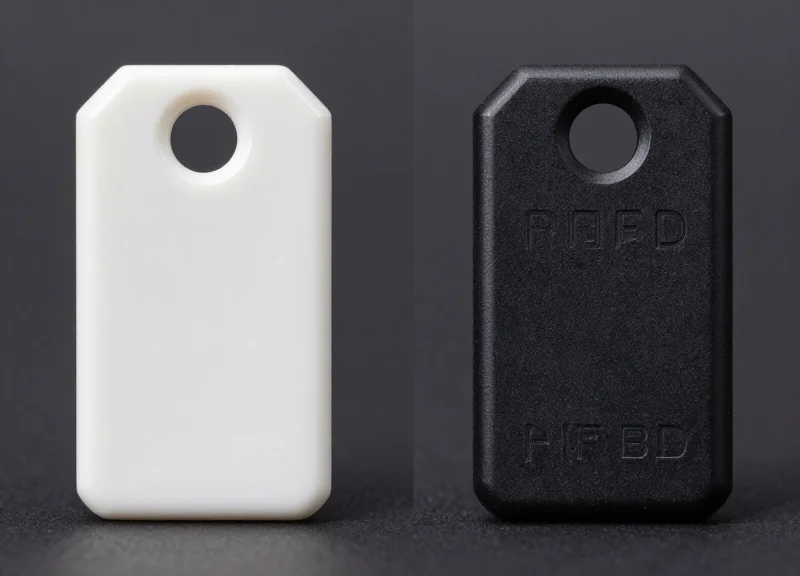
In industrial environments exceeding 250°C, the material composition of an RFID tag is the single most important factor for long-term reliability. The substrate must not only withstand the heat but also maintain dimensional stability to protect the delicate internal chip and antenna. Today, the industry standard for ultra-high-temperature applications is a choice between technical ceramics and advanced engineering plastics like PEEK (Polyether ether ketone). While ceramics are virtually immune to thermal degradation, engineering plastics offer a level of resilience and impact resistance that brittle ceramics cannot match.
| Feature | Technical Ceramics | Engineering Plastics (PEEK/PPS) |
|---|---|---|
| Max Operating Temp | 600°C+ | 250°C to 300°C |
| Thermal Expansion | Ultra-Low (Stable) | Moderate to High |
| Impact Resistance | Low (Brittle) | High (Durable) |
| Chemical Resistance | Excellent | Very High |
| Typical Application | Foundries, Kilns | Autoclaves, Paint Lines |
Expert Insight: The hidden killer of high-temp RFID tags is the Coefficient of Thermal Expansion (CTE) mismatch. When a tag is heated to 250°C, the internal silicon chip, the bonding adhesive, and the outer casing all expand at different rates. Ceramic substrates have a CTE very close to that of silicon, meaning they expand together, reducing mechanical stress on the chip. Conversely, plastics expand much more than silicon; if the tag design doesn't account for this, the internal bond wires can literally be ripped off the chip during thermal cycling.
When should I choose Ceramic?
Ceramic is the gold standard for 'fry-cook' environments where temperatures are extreme (above 300°C) and the tag is not subject to heavy mechanical impacts. They are ideal for tracking assets in heat-treatment furnaces or metal casting.
When is PEEK or Engineering Plastic better?
If your process involves high-pressure washdowns, chemical exposure, or physical shock (like hitting conveyor rails), PEEK-encapsulated tags are superior. They are common in automotive paint shops and medical sterilization processes.
Does the material affect the RF read range?
Yes. Ceramic tags often utilize the material's dielectric properties to achieve a smaller footprint with a decent read range, but they are more sensitive to being mounted directly on metal without a proper spacer compared to some specialized plastic housings.
Factor 2: Attachment Methods—High-Bond Adhesives vs. Mechanical Fasteners
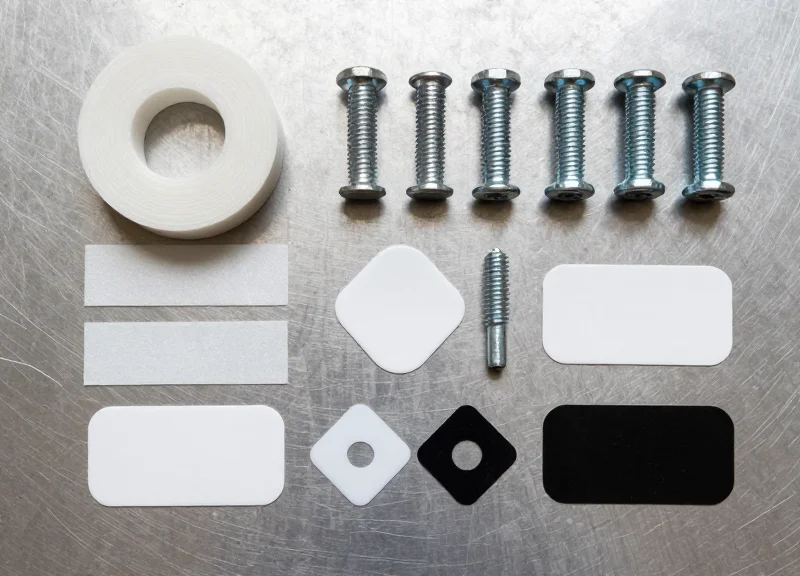
In 250°C+ environments, the attachment method is often the 'weakest link' in an RFID deployment. While the tag itself may be rated for extreme heat, the bond between the tag and the asset must withstand the Coefficient of Thermal Expansion (CTE) mismatch—where the metal asset and the RFID tag expand and contract at different rates. If the attachment is too rigid, the resulting shear stress can snap a ceramic tag or peel away an adhesive bond, leading to lost data and damaged equipment.
| Feature | High-Bond Adhesives (Liquid/Film) | Mechanical Fasteners (Screws/Rivets) | Welded/Embedded Solutions |
|---|---|---|---|
| Temperature Ceiling | Typically 200°C to 280°C | 300°C+ (Limited by fastener material) | 1000°C+ (Standard for metal-only tags) |
| Stress Distribution | Uniform across surface area | Concentrated at point of contact | Integrated with asset structure |
| Installation Speed | Fast (seconds/minutes) | Slow (requires drilling/tapping) | Very slow (requires specialized tools) |
| Best Use Case | Curved surfaces or light assets | Heavy industrial bins, kiln cars | Permanent molds or steel billets |
One critical, often-overlooked factor is the 'Thermal Buffer Zone.' When using high-bond adhesives like specialized silicones or epoxy films, the adhesive layer acts as a shock absorber. However, at temperatures exceeding 250°C, organic adhesives begin to outgas and lose structural integrity. For these extreme ranges, mechanical fasteners are generally superior, provided they are installed with 'expansion gaps'—slotted holes that allow the tag to move slightly as the metal substrate expands, preventing the tag from being crushed or sheared off.
Can I use standard 3M VHB tape for 250°C environments?
No. Most standard VHB tapes fail at 150°C. For 250°C+, you require specialized acrylic or silicone-based pressure-sensitive adhesives (PSAs) specifically engineered for thermal cycling, or liquid ceramics.
Why do ceramic tags crack when screwed down tightly?
This is due to CTE mismatch. The metal asset expands more than the ceramic tag. If the screw is overtightened, the tag cannot move, and the expansion force of the metal will crack the brittle ceramic substrate.
Is welding an RFID tag a viable option?
Only if using specialized metal-frame tags designed for spot welding. This is the most durable method for assets undergoing extreme mechanical abuse alongside high heat.
Expert Tip: For the most demanding 250°C+ applications, consider a 'Floating Mount' strategy. Use a metal bracket or carrier that is welded to the asset, and place the RFID tag inside the carrier with a high-temperature glass-wool cushion. This decouples the tag from the physical expansion of the asset entirely, significantly extending the tag’s life cycle beyond what traditional adhesives or direct bolting can achieve.
Factor 3: Thermal Cycle Endurance—Beyond the Peak Temperature
Thermal cycle endurance is the capacity of an RFID tag to maintain structural and functional integrity through repeated transitions between extreme heat (250°C+) and ambient temperatures. In industrial workflows like automotive paint shops or aerospace composite curing, the ability to survive the cooling phase is often more critical than surviving the oven itself. This endurance is measured by the number of 'cycles' a tag can complete before the mechanical stress of expansion and contraction causes internal components to delaminate or the antenna to lose its connection to the IC (Integrated Circuit).
The primary culprit in tag failure during thermal cycling is the Coefficient of Thermal Expansion (CTE) mismatch. When a tag is heated, the internal chip, the antenna metal, and the protective housing all expand at different rates. If the materials are not perfectly matched or lack sufficient internal cushioning, the repeated 'breathing' of the materials creates micro-fractures. Over time, these fractures lead to a complete loss of communication, even if the tag shows no external signs of damage.
| Feature | Steady-State Heat (Constant 250°C) | Thermal Cycling (Ambient to 250°C) |
|---|---|---|
| Primary Stress | Material degradation and oxidation | Mechanical fatigue and shear stress |
| Internal Impact | Adhesive softening | Solder joint cracking and delamination |
| Risk Level | Moderate (Predictable) | High (Cumulative damage) |
| Common Application | Kilns and Continuous Ovens | Autoclaves, Batch Ovens, and Quenching |
Why do tags fail during the cooling phase rather than the heating phase?
Cooling often happens more rapidly than heating (thermal shock), especially if fans or liquid cooling are used. Rapid contraction creates higher 'G-forces' at the molecular level on the bond between the chip and antenna, leading to immediate fracture.
How many cycles should a high-quality 250°C tag withstand?
Premium industrial tags are typically rated for 500 to 2,000+ cycles. If your process involves three cycles per day, a tag rated for 1,000 cycles provides a theoretical lifespan of approximately one year.
Does the 'Soak Time' affect thermal cycle endurance?
Yes. Longer soak times allow materials to reach full thermal equilibrium, which can actually be less taxing than short, 'spiky' heat bursts that create internal temperature gradients within the tag housing.
Expert Insight: The Delta-T (ΔT) Gradient. In my 20 years of observing RFID failures in Silicon Valley foundries, I’ve found that the absolute temperature is a vanity metric; the Delta-T—the speed and range of the temperature change—is the sanity metric. A tag moving from 20°C to 250°C in 60 seconds experiences significantly more internal shear than a tag moving to 300°C over 20 minutes. Always ask your vendor for the 'maximum ramp rate' their tag can support, not just the peak temperature.
Factor 4: Read Range Performance in Metal-Rich Environments
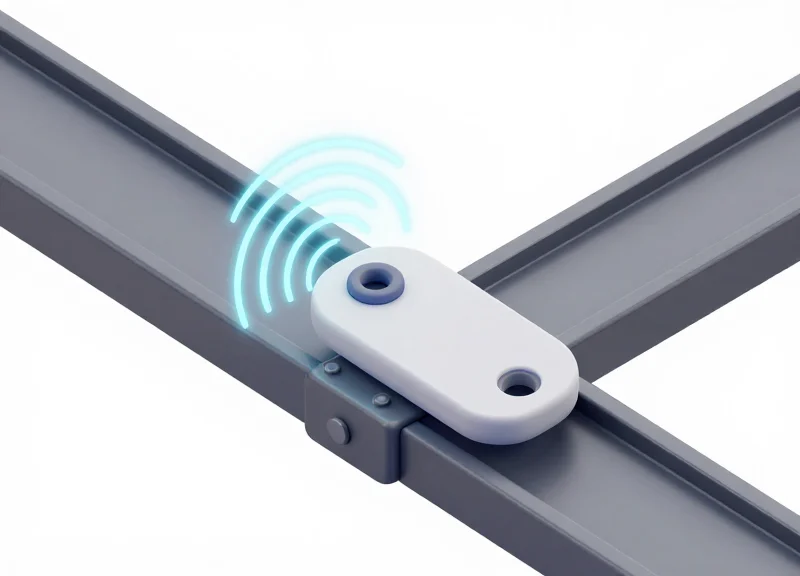
In industrial environments exceeding 250°C, such as paint curing lines or heat-treatment facilities, RFID tags are almost always mounted on metallic substrates. Standard RFID tags fail in these scenarios because metal reflects RF energy and creates eddy currents that negate the tag's antenna field. To overcome this, ultra-high-temperature tags utilize 'on-metal' engineering, incorporating a functional gap or a ceramic dielectric layer between the antenna and the metal surface. This design uses the metal itself to actually enhance the signal reflection, provided the tag is tuned correctly for the specific frequency (UHF) used in the facility.
| Environmental Factor | Impact on Read Range | Mitigation Strategy |
|---|---|---|
| Metallic Proximity | Signal cancellation/Short circuiting | Use ceramic-based on-metal spacers |
| Dense Machinery | Multipath interference & Dead zones | Circularly polarized antennas |
| 250°C+ Heat | Thermal detuning of resonant frequency | Wide-band antenna calibration |
| Chemical Vapors | Signal attenuation | IP68/69K rated encapsulation |
The Expert Insight: Beware of Thermal Detuning. Most engineers test read ranges at room temperature, but physics changes at 250°C. As the temperature climbs, the dielectric constant of the tag's substrate (ceramic or PEEK) shifts, causing the antenna’s resonant frequency to 'drift.' A tag that reads perfectly at 10 meters in the staging area might drop to 4 meters inside a hot oven because its resonance no longer perfectly matches the reader's frequency. When selecting a tag, always request 'thermal drift' data to ensure the antenna is wide-band enough to maintain performance across the entire temperature gradient.
Why does metal interfere with RFID in high-heat zones?
Metal surfaces reflect UHF energy, causing destructive interference. In high-heat zones, the density of the metal (ovens, racks, conveyors) creates a 'Faraday cage' effect that requires high-gain readers and tags with specialized standoff layers.
How can I improve read rates in a dense metal layout?
Utilize circular polarization for your reader antennas to capture signals regardless of tag orientation, and ensure tags are placed away from internal corners where RF 'dead zones' typically occur.
Does the attachment method affect the read range?
Yes. If a tag is designed to be 'on-metal,' it must be flush with the surface. Gaps caused by poor adhesive application or mechanical wobbling can change the capacitive coupling and reduce range by up to 50%.
Factor 5: Data Retention and Silicon Stability at 250°C Plus
Data retention and silicon stability at 250°C+ refer to the ability of an RFID chip’s non-volatile memory (EEPROM or FRAM) to maintain stored information despite the massive thermal energy that promotes electron leakage. In ultra-high temperature environments, the physical survival of the tag's casing is irrelevant if the internal silicon experiences 'bit-rot'—a phenomenon where thermal agitation allows electrons to escape the chip's floating gate, resulting in permanent data loss or corrupted identification codes.
At temperatures exceeding 250°C, standard semiconductor physics change. Most commercial RFID chips are rated for a maximum storage temperature of 125°C to 150°C. When pushed to 250°C, the dielectric barriers that hold electrical charges (representing your data) become porous. This is governed by the Arrhenius Equation: for every 10°C increase in temperature, the rate of chemical and physical degradation—including electron leakage—roughly doubles. Therefore, a tag rated for 10 years at room temperature may lose its data in just a few hours if the silicon is not specifically hardened for extreme heat.
| Feature | Standard Industrial RFID | Ultra-High Temp RFID (250°C+) |
|---|---|---|
| Memory Type | Standard EEPROM | Hardened EEPROM or High-Retention FRAM |
| Data Retention @ 250°C | Minutes to Hours | Months to Years (Application Dependent) |
| Silicon Junction Limit | Approx. 175°C | Specialized Passivation (>250°C) |
| Failure Mode | Charge Leakage / Bit-Flip | Gradual Degradation / Interconnect Stress |
Expert Insight: The 'Data Refresh' Strategy. Most engineers assume RFID data is static. However, for assets spending hundreds of hours in 250°C+ ovens (like automotive paint shop skids), we recommend a 'Write-Refresh' protocol. By periodically re-writing the EPC or User Memory during a cooling cycle, you effectively 'refill' the floating gates with electrons, resetting the data retention clock and extending the functional life of the tag by years.
Does the RFID tag lose its ID immediately at 250°C?
No, but the 'leakage' begins immediately. High-quality ultra-temp tags use thicker oxide layers to slow this process, allowing the tag to remain readable throughout the heat cycle.
Can I write data to the tag while it is inside a 250°C oven?
Generally, no. Writing to EEPROM requires a higher voltage 'charge pump' within the chip which is highly unstable at extreme temperatures. Reading is possible, but writing should be reserved for temperatures below 100°C.
What is the difference between storage and operating temperature for silicon?
Storage temperature refers to data survival while the tag is inactive. Operating temperature refers to the chip's ability to modulate a signal. At 250°C+, most tags are in 'Survival/Storage' mode and are read only after a brief cooling phase.
Common Use Cases: Paint Shops, Foundries, and Autoclaves

In the most aggressive industrial sectors, "blackout zones" occur where heat prevents standard electronic tracking, leading to lost assets and production bottlenecks. Ultra-high temperature RFID tags, specifically engineered for 250°C and above, eliminate these gaps by providing a persistent digital twin for parts moving through automotive paint shops, heavy foundries, and medical autoclaves. These tags allow for automated Work-in-Progress (WIP) tracking in conditions where barcodes would char and standard RFID sensors would fail instantaneously.
| Application | Thermal Peak | Environmental Factors | RFID Value Proposition |
|---|---|---|---|
| Automotive Paint Shop | 200°C - 260°C | Chemical sprays & volatile solvents | Tracking car bodies through E-coat and drying ovens without manual scans. |
| Foundries & Smelting | 250°C - 400°C (External) | Molten metal & electromagnetic noise | Identifying molds and ladles to prevent mix-ups in high-value alloy casting. |
| Medical Autoclaves | 134°C - 150°C + High Pressure | Saturated steam & vacuum cycles | Ensuring 100% sterilization compliance for surgical trays and equipment. |
How does RFID survive the corrosive chemicals in paint pretreatment?
Tags designed for paint shops use Engineering Plastics or PEEK encapsulation, which is chemically inert to the detergents and phosphate baths used before the oven stage.
Can tags be read while inside a metal autoclave or foundry furnace?
While metal enclosures create multipath interference, strategically placed ruggedized antennas or "portal" readers at entry and exit points provide 99.9% reliable data capture.
What is the biggest failure point in these high-temp use cases?
Thermal shock is the primary killer. Rapid cooling, such as quenching a cast part, causes material contraction. Using tags with matched thermal expansion coefficients is critical for longevity.
Unique Industry Insight: Most engineers focus strictly on the peak temperature rating, but in high-throughput environments like foundries, the "Total Thermal Load" is the more accurate predictor of failure. A veteran strategy is to calculate the Time-Temperature Integral—tracking the cumulative minutes a tag spends above its nominal operating temperature. By using the RFID system to log its own thermal exposure history, manufacturers can implement predictive replacement schedules, swapping out tags before silicon degradation leads to data loss, rather than waiting for a failure to occur mid-process.
Cost vs. Reliability: Calculating the ROI of Durable Tagging
Return on Investment (ROI) for ultra-high temperature RFID tags is measured not by the initial purchase price, but by the 'Cost Per Successful Read' over the entire lifecycle of the asset. In 250°C+ environments, a cheaper tag that fails prematurely doesn't just cost a few dollars to replace; it triggers a cascade of hidden expenses including production downtime, manual data entry errors, and the labor-intensive process of re-tagging assets in hazardous zones. True ROI is achieved when the tag's durability matches or exceeds the service life of the asset it tracks, ensuring 100% data transparency without manual intervention.
| Cost Factor | Standard High-Temp Tag (Sub-200°C) | Ultra High-Temp Tag (250°C+) |
|---|---|---|
| Unit Price | $2.00 - $5.00 | $15.00 - $35.00 |
| Failure Rate (at 250°C) | High (>40% after 10 cycles) | Near Zero (<1% after 100+ cycles) |
| Labor Cost (Replacement) | High (Frequent re-tagging) | Minimal (One-time installation) |
| Data Integrity | Frequent 'Ghost' Assets | Continuous Visibility |
| Total 2-Year Cost | $150+ per asset (inc. downtime) | $35 per asset |
Expert Insight: Beware of the 'Hidden Labor Tax.' In my two decades of industrial IoT deployments, the biggest ROI killer is the labor cost associated with 'Ghost Assets'—items that enter a high-heat zone and lose their digital identity. In a typical automotive paint shop, a single failed tag can result in 15 minutes of manual auditing. If 5% of your tags fail daily, you aren't just losing tags; you are losing hundreds of man-hours per year. Premium tags eliminate this tax entirely by maintaining silicon stability even under extreme thermal expansion.
- Identify Downtime Value: Calculate the revenue lost per minute when a production line stops due to a missing asset record.
- Quantify Manual Intervention: Measure the time staff spends manually searching for or re-entering data for assets with failed tags.
- Calculate Replacement Frequency: Estimate how many times a lower-grade tag must be replaced over a 3-year period compared to a one-time premium installation.
- Factor in Regulatory Risk: For industries like aerospace or medical, include the potential fines or scrap costs resulting from a loss of process traceability.
Is the higher upfront cost of 250°C tags always justified?
Yes, if the asset is critical to the production flow. If a tag failure requires the line to stop or causes a batch to be scrapped, the premium tag pays for itself in the first week of operation.
How does reliability impact 'Big Data' initiatives?
Reliable tagging is the foundation of AI and predictive maintenance. Dirty data from failing tags renders your analytics useless, making durable hardware a prerequisite for Digital Twin strategies.
Can I mix tag types to save money?
It is rarely recommended. Using different tags creates inconsistent read ranges and necessitates complex reader tuning, which often costs more in engineering time than the savings on the tags themselves.
Why Expert Consultation Matters for Extreme RFID Deployment
Deploying RFID technology in environments exceeding 250°C is an engineering challenge that goes far beyond simple hardware procurement. While a datasheet may list a maximum temperature, it cannot account for the unique physics of your facility, such as localized thermal pockets, chemical vapor interference, or the specific electromagnetic profile of your machinery. Expert consultation from specialists like DragonGuardGroup bridge the gap between theoretical specifications and real-world reliability, ensuring that your investment doesn't melt, detach, or lose data during its first thermal cycle.
| Feature | DIY / Off-the-Shelf Approach | Expert-Guided Deployment |
|---|---|---|
| Failure Analysis | Reactive: Fixed after downtime occurs | Proactive: Predictive modeling of thermal stress |
| Attachment Method | Generic adhesive or standard screws | Thermal-expansion matched bonding solutions |
| RF Calibration | Assumed based on tag specs | On-site tuning for metal-reflective interference |
| ROI Guarantee | High risk of pilot project abandonment | Verified durability through accelerated life testing |
Expert Insight: One critical factor often overlooked is 'Thermal Path Latency.' Even if an oven is set to 250°C, the rate at which the tag's internal chip reaches that temperature depends on the mounting substrate's density. An expert will perform a Thermal Lag Analysis to determine if your cycle times allow the tag to stay within its safe operating window, a nuance that prevents 'silent data corruption' common in high-speed industrial kilns.
- Phase 1: Environmental Discovery: Consultants analyze the full lifecycle of the asset, including peak heat duration, chemical exposure (like paints or degreasers), and mechanical shock points.
- Phase 2: Laboratory Stress Testing: Tags are subjected to 'soak tests' that mimic your specific thermal ramps to ensure the encapsulation material doesn't become brittle or delaminate over 1,000+ cycles.
- Phase 3: RF Path Profiling: Engineers map the 'read zones' within your high-heat area to account for signal bounce from metal walls and thermal distortion of the radio waves.
- Phase 4: Integration & Validation: Final implementation includes training on proper tag orientation and the setup of robust data handshakes to ensure 100% read rates during peak production.
Why do tags fail even if they are rated for the correct temperature?
Most failures occur due to the coefficient of thermal expansion (CTE) mismatch between the tag and the surface it is mounted on, causing the tag to 'pop' off or the internal antenna to snap.
Is on-site testing always necessary?
For 250°C+ environments, yes. Lab conditions rarely capture the RF noise and physical vibrations found in real-world foundries or automotive paint shops.
How does DragonGuardGroup help reduce total cost of ownership?
By selecting the right tag the first time and designing a fail-safe mounting strategy, we eliminate the costs of replacement hardware and unplanned production line stoppages.