Museum gift shops face a unique challenge: protecting curated collections and high-value souvenirs while maintaining a sophisticated, welcoming atmosphere. Unlike traditional retail, a museum environment demands that security technology be invisible or complementary to the architectural design. However, with the rise of boutique retail theft, museum curators cannot afford to sacrifice safety. This guide explores how modern EAS (Electronic Article Surveillance) technology provides 99.9% detection accuracy while blending seamlessly into your shop's aesthetic, ensuring that your security measures are as refined as your exhibits.
The Unique Security Challenges of Museum Gift Shops
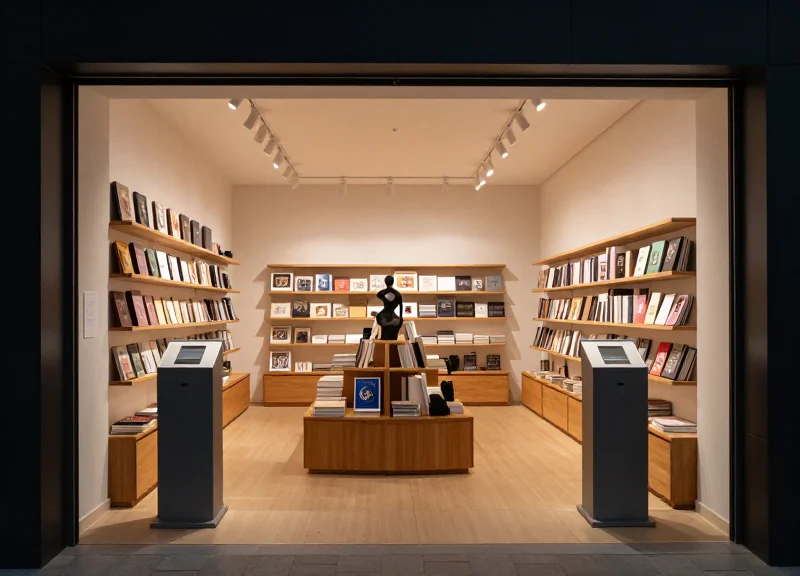
Museum gift shop security is defined by the 'Aesthetic-Security Paradox': the need to protect diverse, high-margin inventory—ranging from small jewelry and limited-edition prints to large-scale replicas—without implementing obtrusive hardware that disrupts the carefully curated visitor experience. Unlike standard big-box retail, museum stores must maintain a 'cultural immersion' where the security measures are invisible to the visitor yet 99.9% effective against loss, particularly during high-traffic periods following blockbuster exhibitions.
| Feature | Traditional Big-Box Retail | Museum Gift Shop |
|---|---|---|
| Shrinkage Focus | High-volume, low-cost essentials | Niche, high-value artistic replicas |
| Store Layout | Standardized grid patterns | Aesthetic, fluid, or boutique designs |
| Security Priority | Overt deterrence (Visible tags) | Covert protection (Hidden sensors) |
| Traffic Flow | Steady and predictable | Extreme 'surge' periods post-exhibition |
Why does standard EAS often fail in museums?
Most standard EAS pedestals are designed for industrial durability rather than design. They are often too bulky for narrow, architecturally significant entryways and use visible frequencies that can be easily shielded by the metallic packaging common in high-end souvenir gift sets.
How does visitor psychology impact museum theft?
Visitors often perceive museum shops as extensions of the public gallery rather than private retail spaces. This leads to a 'social contract' mindset where overt security measures can actually decrease the average transaction value by making the environment feel transactional rather than aspirational.
What is the 'Post-Exhibition Surge' challenge?
When a special exhibition ends, hundreds of visitors enter the shop simultaneously. This creates a high-pressure environment for staff, making manual bag checks impossible and increasing the reliance on automated, high-accuracy detection systems.
Expert Insight: The Trust Buffer. In my two decades of retail strategy, I’ve observed that museum visitors operate under a higher 'social contract' than supermarket shoppers. Excessive overt security—like large, heavy plastic tags on silk scarves—doesn't just deter thieves; it insults the patron. This 'Aesthetic Friction' can reduce dwell time by up to 15%. To maintain a 99.9% detection rate without compromising the brand, museums must transition from visible deterrence to 'Intelligent Invisible Boundaries' using floor-concealed or architectural-integrated antennas.
Understanding EAS Technology: AM vs. RF for Cultural Institutions
For museum gift shops, the choice between Acousto-Magnetic (AM) and Radio Frequency (RF) technologies isn't just about price; it’s about the physics of your inventory. AM systems (58 kHz) are the gold standard for high-end boutiques and museums selling metal-based jewelry or liquid-filled gifts because they are less prone to interference from conductive materials. In contrast, RF systems (8.2 MHz) are the global retail standard, offering ultra-thin, cost-effective paper labels ideal for flat surfaces like books, postcards, and stationery, though they struggle with signal 'shielding' when placed near metals.
| Feature | Acousto-Magnetic (AM) | Radio Frequency (RF) |
|---|---|---|
| Primary Frequency | 58 kHz | 8.2 MHz |
| Material Tolerance | High (Works with metals/liquids) | Low (Interference with foil/metal) |
| Tag Aesthetics | Narrow but 3D (plastic housing) | Flat, paper-thin (discreet stickers) |
| Detection Width | Up to 2.4m between pedestals | Up to 1.8m between pedestals |
| Ideal Museum Items | Jewelry, sculptures, luxury items | Books, postcards, apparel |
The Veteran's Insight: The 'Lead Glass' Variable. A nuance often missed by generic installers is the composition of museum display cases and historical architecture. Many museum shops use high-clarity lead glass or UV-filtered coatings that contain trace metallic elements. These materials can 'detune' an RF system, leading to false alarms or dead zones. If your gift shop is situated within a historic wing featuring structural iron or uses metallic-finished display vitrines, AM technology provides a more stable magnetic field that ignores these environmental factors, ensuring 99.9% detection without constant recalibration.
Can I hide the antennas to preserve the museum's aesthetic?
Yes. While RF systems are often limited to visible pedestals, AM technology can be installed as 'Floor Loops' or 'Concealed Overheads' that are completely invisible to visitors, maintaining the architectural integrity of the gallery entrance.
Which technology is better for delicate artisan items?
AM is generally preferred for artisan crafts. Its tags don't require direct contact with the item's surface and are less likely to be 'shielded' by the metal-flecked wrapping paper or foil-stamped boxes often used in high-end museum gift packaging.
Is there a hybrid solution available?
Some modern controllers can support dual-frequency environments, but for most cultural institutions, standardizing on a single technology—usually AM for its versatility—is the most cost-effective way to manage tag inventory and staff training.
Prioritizing Aesthetic Integrity: Invisible and Sleek Security Solutions

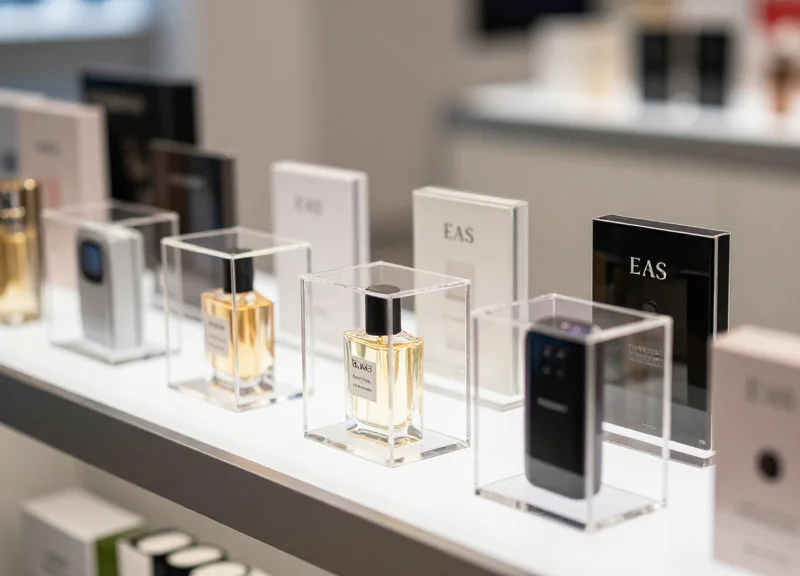
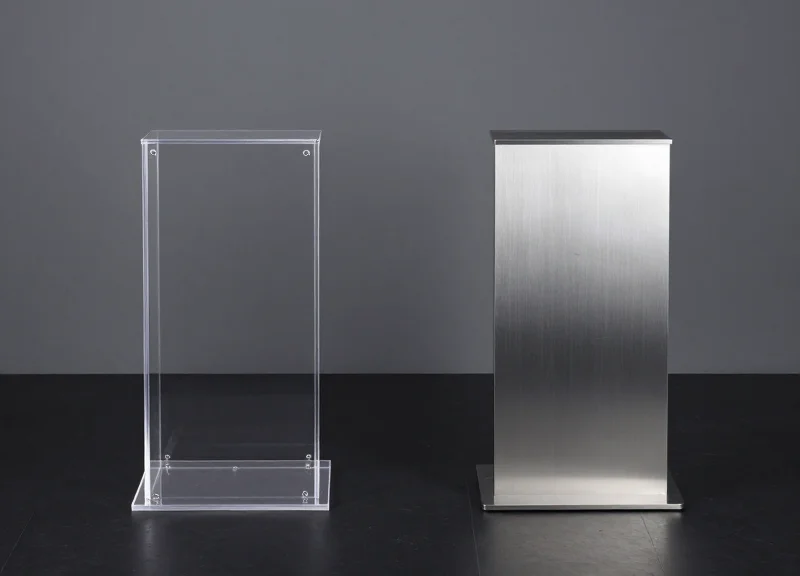
Aesthetic integrity in museum retail is achieved by transitioning from bulky, opaque security pedestals to 'invisible' Electronic Article Surveillance (EAS) solutions—such as under-floor antennas, door-frame concealed loops, and ultra-clear acrylic pedestals. These modern systems ensure that the architectural flow and curated atmosphere of the museum are preserved, allowing high-performance security detection to operate discreetly in the background without creating a 'big-box retail' feel.
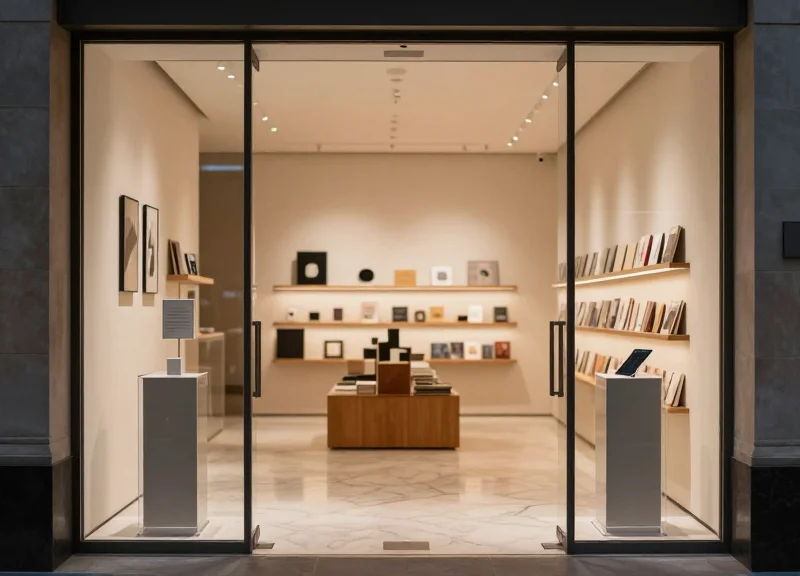
In a museum environment, the transition from the exhibit to the gift shop should feel like a continuation of the cultural experience, not a sudden entry into a high-security zone. Traditional EAS pedestals often act as visual barriers that disrupt this flow. To combat this, leading institutions are adopting 'design-first' hardware that prioritizes transparency and concealment.
| EAS Solution | Visual Impact | Installation Method | Detection Range |
|---|---|---|---|
| Under-Floor Antennas | Zero (100% Invisible) | Embedded beneath floor finishes during renovation. | Wide (up to 2.5m depending on tag type) |
| Door-Frame Concealed | Minimal (Hidden in frame) | Integrated directly into the door header and jambs. | Standard doorway widths |
| Acrylic Pedestals | Low (Transparent) | Floor-mounted with minimalist wiring. | High-performance (optimized for AM technology) |
| Overhead Sensors | Negligible (Ceiling-mounted) | Mounted at the entrance ceiling. | Best for high-ceiling architectural entrances |
Can invisible systems reach the same 99.9% detection rate as pedestals?
Yes. When properly calibrated and using AM (Acoustic Magnetic) technology, under-floor and concealed systems match the detection accuracy of traditional pedestals, provided the tag quality is high and the entrance width is within manufacturer specifications.
Are acrylic pedestals more fragile than standard ones?
Modern acrylic EAS pedestals are constructed from high-impact, scratch-resistant polymers designed for high-traffic environments. They offer the same durability as plastic shells but with a premium, glass-like finish.
What is the best option for historic buildings where floor drilling is prohibited?
Door-frame concealed loops or overhead sensors are the preferred choices for heritage sites, as they avoid structural floor modifications while still maintaining the shop's visual elegance.
Expert Insight: The 'Ghost' Deterrence Strategy. While standard retail relies on visible pedestals as a psychological deterrent, museum retailers often find better success with 'Invisible Security.' By using sleek, transparent systems, you prevent the 'shoplifter’s challenge'—where visible security encourages tech-savvy thieves to find blind spots. When the security is invisible, the unknown variable of where detection begins often acts as a more sophisticated deterrent for professional shoplifters while keeping honest visitors at ease.
Achieving 99.9% Detection: Why Precision Matters in High-End Retail
Achieving 99.9% detection in Electronic Article Surveillance (EAS) signifies a system's ability to near-perfectly distinguish between a legitimate security tag and background electronic 'noise.' In the context of high-end museum retail, this precision is driven by a high Signal-to-Noise Ratio (SNR) and advanced Digital Signal Processing (DSP). These technologies allow the system to filter out interference from nearby LED lighting, motorized displays, or automatic doors while maintaining ultra-high sensitivity for small, discreet tags on luxury items. For museum gift shops, where items range from fragile artisan jewelry to heavy catalogs, this precision is the only way to ensure security without compromising the open, inviting atmosphere required for cultural patrons.
| Feature | Standard EAS Systems | Precision 99.9% Systems | |||
|---|---|---|---|---|---|
| Signal Processing | Basic Analog Filtering | Multi-Phase Digital Signal Processing (DSP) | |||
| Detection Rate | 75% - 85% | 99.9% Benchmark | |||
| False Alarm Frequency | High (due to ambient noise) | Ultra-Low (intelligent filtering) | Interference Handling | Manual Tuning Required | Dynamic Auto-Tuning & Noise Mapping |
The technical 'secret sauce' behind 99.9% detection is the Signal-to-Noise Ratio. In a busy museum environment, electronic noise is everywhere. Cheap systems struggle to tell the difference between a high-value silk scarf's tag and a nearby visitor's smartphone. High-end DSP systems use complex algorithms to 'fingerprint' the exact frequency of the tag, ignoring everything else. This prevents the 'Cry Wolf' syndrome, where staff begin to ignore alarms because they are so frequently false. In a high-end retail environment, every alarm must be treated as a real event, making the elimination of false positives just as important as the detection of real theft.
Why is the orientation of the tag so important for 99.9% detection?
In standard systems, a tag might pass through the pedestals 'edge-on,' making it invisible to the magnetic field. Precision systems use multi-phase antenna coils to create a 3D detection zone, ensuring the tag is identified regardless of its angle.
Does museum lighting affect EAS performance?
Yes, modern LED drivers and ballast lighting can create significant electromagnetic interference. High-precision systems use adaptive filtering to map this noise floor and subtract it from the signal in real-time.
Can 99.9% detection work with very small tags?
Yes, but it requires higher 'Q-factor' tags and antennas with superior sensitivity. This allows gift shops to use smaller, more aesthetic tags that don't obscure product branding or artist information.
Expert Insight: The 'Spherical Detection' Advantage. Most museum gift shops fail at 100% detection because they use linear antenna fields that have 'dead zones.' To achieve 99.9% reliability, we recommend systems that utilize circular polarization or multi-axis coils. This creates a 'spherical' field of detection, meaning even if a shoplifter attempts to shield a tag or rotate it to a vertical 'blind spot,' the system’s DSP can still reconstruct the signal. This is the difference between a deterrent and a true security solution.
Integrating RFID for Beyond-Security Benefits: Inventory and Analytics

Modern museum retail demands more than just theft prevention; it requires a sophisticated understanding of asset movement and visitor engagement. While traditional Electronic Article Surveillance (EAS) systems function as a 'digital fence,' integrating Radio Frequency Identification (RFID) elevates this infrastructure into a comprehensive business intelligence tool. By utilizing dual-technology tags that house both an EAS element (for 99.9% detection) and an RFID chip, museum gift shops can achieve 99% inventory accuracy and gain real-time visibility into their stock without manual cycle counts.
| Feature | Traditional EAS (AM/RF) | Integrated RFID + EAS |
|---|---|---|
| Primary Function | Loss Prevention | Security + Inventory Intelligence |
| Inventory Accuracy | Approx. 65-75% | 99%+ |
| Stock Counting | Manual / Labor Intensive | Automated / Instantaneous |
| Data Insights | Alarm events only | Item-level movement and analytics |
For museum administrators, the ROI of RFID extends far beyond reducing 'shrink.' In an environment where merchandise often includes unique exhibition-specific items or high-value replicas, knowing exactly what is on the floor versus in the stockroom is critical. RFID allows for 'smart fitting rooms' or interactive kiosks that can recognize an item and display the historical context of the artifact it represents, bridging the gap between commerce and education.
How does RFID integration improve the visitor experience?
By automating inventory, staff spend less time scanning barcodes and more time engaging with visitors. Additionally, RFID enables faster checkout processes and ensures that popular exhibition-related items are always in stock.
Can RFID help in identifying 'internal shrink'?
Yes. Because RFID tracks the movement of individual items through various zones (stockroom, floor, point of sale, and exit), it provides a digital audit trail that can pinpoint exactly where and when an item went missing.
Is RFID compatible with aesthetic-focused systems?
Absolutely. Modern RFID-EAS hybrid systems can be embedded into the same sleek, transparent, or concealed hardware discussed in previous sections, maintaining the museum's visual integrity.
Expert Insight: Use 'Dwell Time' Analytics for Curatorial Success. An often-overlooked benefit of RFID in museum shops is the ability to track 'non-transactional' data. By placing RFID readers near key displays, you can measure how many people pick up a specific replica or book, even if they don't buy it. If an item has high engagement but low conversion, it tells your retail team to investigate the price point or the accompanying educational signage, effectively applying curatorial precision to retail strategy.
Best Practices for Tagging Fragile and High-Value Museum Merchandise

Tagging fragile and high-value museum merchandise demands a preservation-first approach where security hardware is selected based on chemical compatibility with product surfaces and the physical delicacy of the item. To balance aesthetic integrity with security, gift shops must deploy a mix of pH-neutral adhesive labels, non-marring lanyards, and micro-form factor tags that provide a 99.9% detection rate without leaving permanent marks or causing structural stress to the merchandise.
| Material Category | Recommended Tag Type | Application Method | Preservation Note |
|---|---|---|---|
| Fine Jewelry | Micro-Rat-Tail Labels | Loop-around (Adhesive-free tail) | Prevents adhesive transfer to metals/stones |
| Glass & Ceramics | Clear PE Labels | External surface placement | Requires low-tack, residue-free adhesive |
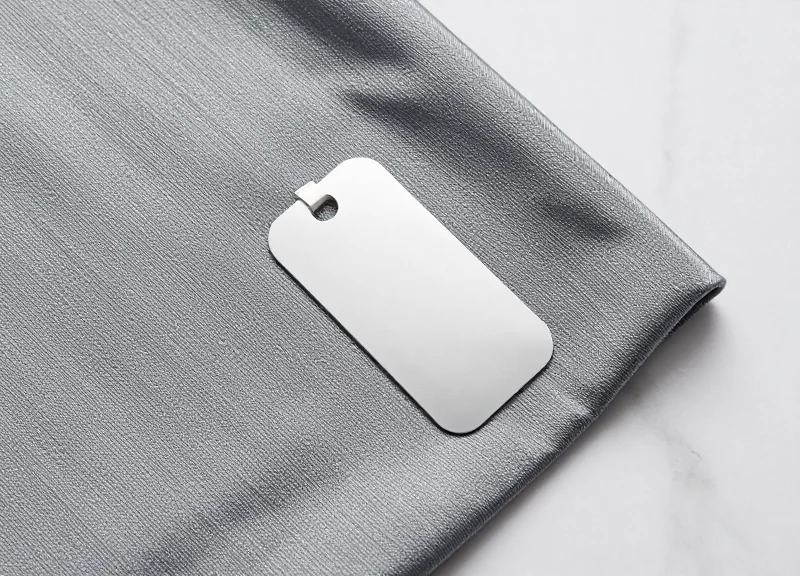
| Textiles & Apparel | Smooth-Pin Hard Tags | Through-seam insertion | Prevents fiber tearing or permanent holes |
| Books & Prints | Ultra-thin AM/RF Strips | Inside back cover/spine | pH-neutral strips prevent paper yellowing |
- Surface Compatibility Testing: Before bulk tagging, test adhesives on a hidden area of the merchandise to ensure no chemical reaction occurs with glazes or finishes.
- Strategic Placement for Aesthetics: Place labels near barcodes or on the underside of items to maintain the visual story of the product while keeping the tag accessible for deactivation.
- Mechanical Tension Management: For items secured with lanyards, ensure the cable is loose enough to prevent friction wear but tight enough to prevent easy removal.
Expert Tip: For extremely high-value items where direct contact is prohibited, utilize 'Sacrificial Packaging.' Instead of tagging the item itself, embed the EAS sensor within high-quality, branded outer packaging or use a static-cling security overlay. This ensures the museum-quality piece remains untouched while the security system maintains its 99.9% detection capability at the exit pedestals.
Will security labels damage delicate paper or book spines?
Only if using standard retail labels. Museum shops should use archival-grade, pH-neutral security strips designed specifically for libraries to prevent acidic degradation of paper.
How do I secure items that are too small for standard tags?
Micro-tags and ferrite-core labels offer high detection sensitivity in formats as small as 25mm, making them ideal for small collectibles or trinkets.
Is there a risk of 'shielding' with metallic high-value items?
Yes, metal-lined items can shield RF signals. For museum shops with many metallic replicas or jewelry, Acoustic Magnetic (AM) technology is preferred due to its superior performance around conductive materials.
Reducing False Alarms to Maintain a Serene Museum Environment
Reducing false alarms in a museum gift shop is the process of calibrating Electronic Article Surveillance (EAS) systems to distinguish between legitimate security threats and environmental 'noise' caused by electromagnetic interference (EMI). By utilizing advanced Digital Signal Processing (DSP), modern systems can filter out signals from LED drivers, automatic doors, and heavy machinery, ensuring that the acoustic peace of the museum is only interrupted by actual security breaches. This precision prevents 'alarm fatigue' among staff and preserves the dignified atmosphere expected by patrons.
| Source of Interference | Effect on EAS System | Mitigation Strategy |
|---|---|---|
| LED Lighting Drivers | High-frequency flicker mimics tag signals. | Install ferrite core chokes on lighting power cables. |
| Automatic Sliding Doors | Motor-driven EMI creates intermittent phantom alarms. | Synchronize gate phase with motor frequency or relocate pedestals. |
| Patron 'Tag Pollution' | Tags from other retailers trigger alarms upon entry. | Implement 'Inbound Filtering' logic to ignore incoming signals. |
| Metal Displays | Conductive loops shift the magnetic field of antennas. | Maintain a 3-foot 'Metal-Free Zone' around pedestals. |
Expert Insight: The 'Acoustic Signature' Protocol. A unique strategy employed by elite security engineers is 'Environmental Noise Mapping.' Before the system is commissioned, we use an oscilloscope to map the specific electromagnetic footprint of your museum's shop floor. By identifying the unique 'pulse' of your HVAC and lighting systems, we can program the EAS controller to treat those specific frequencies as background static. This custom-tailored profile is why high-end museum systems achieve a 99.9% accuracy rate compared to 'out-of-the-box' retail solutions that rely on generic sensitivity settings.
Why do my security gates beep when nobody is walking through them?
This is usually caused by 'phantom' signals from nearby electronics or power cables. High-performance systems use 'Auto-Phase Tuning' to automatically adjust to these shifts in the electrical environment, but older systems may require manual recalibration to account for new hardware installations nearby.
Can visitors carrying tags from other stores set off our alarms?
Yes, this is known as 'Tag Pollution.' Advanced DSP controllers can differentiate between a tag entering the store (inbound) and a tag exiting (outbound), effectively silencing the alarm for visitors who are simply entering with shopping bags from other boutiques.
Does the proximity of metal sculptures or artifacts affect detection?
Absolutely. Metal causes 'detuning' of the antenna's magnetic field. If your shop features metal-heavy displays or is near large metallic exhibits, you must use a 'Remote-Tuned' system that allows engineers to adjust the resonance frequency to compensate for the surrounding environment.
- Site Survey: Identify all active EMI sources within a 5-meter radius of the planned gate installation.
- Phase Synchronization: Align the EAS system's operating frequency with the local power grid to cancel out 50/60Hz hum.
- Sensitivity Thresholding: Set the minimum signal strength required to trigger an alarm just above the mapped 'floor' of environmental noise.
- Staff Testing: Conduct a 'Walk-Test' with various merchandise to ensure the system detects small tags while ignoring nearby static objects.
Cost-Benefit Analysis: The ROI of Premium EAS Systems
Calculating the ROI of a premium Electronic Article Surveillance (EAS) system goes far beyond the initial price tag; it requires an evaluation of Total Cost of Ownership (TCO) against the recovery of lost revenue. For museum gift shops, where items are often unique or high-margin, a premium system typically pays for itself within 12 to 18 months by eliminating the 'silent tax' of shrinkage—the combination of external theft, internal loss, and the operational inefficiencies caused by unreliable, low-cost security hardware.
| Metric | Entry-Level Budget System | Premium High-Precision System |
|---|---|---|
| Average Detection Rate | 85% - 90% | 99.0% - 99.9% |
| False Alarm Frequency | High (Intermittent Interference) | Near-Zero (Advanced DSP/Filtering) |
| Equipment Lifespan | 3 - 5 Years | 10 - 15 Years |
| Maintenance Needs | Frequent Recalibration | Remote Diagnostics / Low Drift |
| Aesthetic Impact | Bulky, Industrial Plastic | Discreet Acrylic or Concealed |
The 'Signal Integrity Premium' Insight: In high-end retail, the cost of a false alarm is often higher than the cost of the theft itself. An 'Expert Tip' for museum directors: Every false alarm creates a 'security fatigue' effect where staff eventually ignore the system, and genuine visitors feel alienated. Premium systems utilize Digital Signal Processing (DSP) to distinguish between a tag and environmental noise (like elevator motors or automatic doors), ensuring that your security investment protects your brand reputation as much as your inventory.
- Quantify Current Shrinkage: Audit your annual physical inventory versus sales records to determine your current loss percentage. Museum gift shops typically see 1.5% to 3% shrinkage, which can be halved with 99.9% detection.
- Factor in Labor Savings: Calculate the hours staff spend responding to false alarms or manually double-checking high-theft zones. Premium EAS allows staff to focus on visitor engagement rather than surveillance.
- Project Lifespan and Depreciation: A $5,000 system that lasts 10 years costs $500/year, whereas a $2,500 system that fails in 3 years costs $833/year. High-quality hardware significantly lowers the long-term capital expenditure.
- Assess Brand Equity Protection: Determine the value of maintaining an open, welcoming environment. Concealed or aesthetically integrated systems prevent the 'fortress' look that can discourage high-spending museum patrons.
How does a premium system reduce maintenance costs?
High-end systems often include remote tuning capabilities, allowing technicians to fix sensitivity issues via the cloud without a costly on-site service call.
Can EAS systems prevent internal 'sweethearting'?
Yes, when integrated with CCTV and POS data, premium EAS provides a timestamped audit trail of every alarm, discouraging internal theft and improper discount scanning.
Is the ROI different for high-volume vs. high-value shops?
High-value shops see faster ROI through the prevention of a few luxury item thefts, while high-volume shops benefit more from the reduction in staff labor and false-alarm disruptions.
Selecting a Partner: Why Expertise in Museum Security Matters

Selecting a partner for museum security goes beyond finding a vendor who can install hardware; it requires a specialist capable of balancing rigorous 99.9% detection rates with the preservation of a venue's aesthetic and historical integrity. Unlike standard retail environments, museum gift shops often exist within architecturally sensitive spaces where drilling into original masonry or obstructing sightlines is prohibited. A specialized partner brings a 'security-by-design' philosophy, ensuring that antennas, wiring, and pedestals are either invisible or complementary to the exhibit design, while maintaining peak performance in high-interference environments common in older buildings.
| Feature | General Retail Provider | Museum Security Specialist |
|---|---|---|
| Installation Style | Standardized/Surface-mounted | Bespoke/Integrated/Invisible |
| Architectural Knowledge | Minimal (Drywall/Drop-ceiling focus) | High (Stone, Marble, Historic Retrofits) |
| Design Flexibility | Off-the-shelf plastic pedestals | Acrylic, glass, or hidden antennas |
| Calibration Context | High-volume throughput | Quiet, serene, low-false-alarm sensitivity |
Expert Insight: The 'Shadow Audit' Requirement. A veteran museum security partner won't just provide a quote; they will perform a 'Shadow Audit' during the design phase. This involves mapping the electromagnetic environment of the building to identify how historic structural elements—like lead-lined walls or iron beams—might interfere with RF or AM frequencies. This foresight prevents the 'trial and error' installation phase that often plagues museum projects, saving thousands in potential rework.
- Portfolio Verification: Review previous work specifically within cultural institutions or Grade-I/II listed buildings to confirm their ability to work around non-standard constraints.
- Customization Capability: Ensure the provider can modify the physical housing of the EAS equipment, such as custom-painting pedestals to match a specific gallery palette or using ultra-slim acrylic antennas.
- Post-Installation Support: Verify that the partner offers remote tuning capabilities to adjust sensitivity without requiring a technician to enter the quiet museum space frequently.
Can you install EAS antennas under the floor or within door frames?
A qualified museum partner should offer 'concealed' solutions, such as floor-loop systems or frame-integrated antennas, specifically for areas where floor-standing pedestals would disrupt the flow or aesthetic.
How do you handle installations in buildings with thick stone walls?
Specialists use specialized wireless relay modules and high-penetration frequencies to ensure signal stability without the need for invasive cabling through historical masonry.
What is your approach to aesthetic integration?
Look for partners who collaborate with the museum's exhibition designers to ensure security hardware feels like a natural extension of the shop's furniture and fixtures.