As we approach 2026, the retail landscape is undergoing a seismic shift driven by razor-thin margins and increasing consumer demand for sustainability. Traditional manual labeling and inventory tracking are no longer sufficient to maintain a competitive edge. The convergence of AI-driven expiry management and ultra-stable 2.4GHz Electronic Shelf Label (ESL) systems represents the next frontier in operational efficiency. This article explores how these technologies solve the dual challenge of labor shortages and food waste while positioning retailers for long-term profitability in an increasingly automated world.
The Strategic Shift: Why Retailers are Prioritizing 2026 Trends Today

The strategic shift toward 2026 retail trends is defined by a transition from reactive operational models to proactive, automated ecosystems. Retailers are prioritizing AI-driven expiry management and 2.4GHz Electronic Shelf Label (ESL) systems today because of a 'perfect storm' of macroeconomic factors: rising labor wages, tightening global food waste regulations (such as the EU's Green Deal), and the need for hyper-accurate, real-time pricing synchronization. By integrating high-bandwidth 2.4GHz communication protocols, stores can update thousands of price points in seconds, allowing them to implement dynamic discounting for products nearing expiration—a move that simultaneously protects margins and fulfills ESG (Environmental, Social, and Governance) commitments.
| Market Driver | Legacy Limitation | 2026 Strategic Solution (AI + 2.4GHz ESL) |
|---|---|---|
| Labor Shortages | Manual price changes take hours and are prone to error. | Automated updates across 50,000+ SKUs in under 2 minutes. |
| Food Waste Regulations | Static expiry checks lead to 30% spoilage in perishables. | AI triggers automatic discounts as 'Best Before' dates approach. |
| Inflationary Pressure | Slow response to wholesale price volatility. | Real-time dynamic pricing to maintain profit margins. |
| Customer Experience | Mismatched online/offline pricing kills brand trust. | Millisecond synchronization between web store and physical shelf. |
Expert Insight: The 'Latency Wall' and the 2.4GHz Advantage. In my two decades in Silicon Valley, I have seen many retailers fail because they chose proprietary, low-frequency wireless bands (Sub-G or Infrared) for their ESL systems. As we move toward 2026, the 'Latency Wall' is becoming a real threat. Legacy systems cannot handle the massive data throughput required for AI-driven expiry management or frequent promotional cycles. The shift to the 2.4GHz band is essential because it utilizes the standard IEEE 802.15.4 protocol, offering the high-speed data transfer and global scalability required to turn a physical store into a responsive digital asset. If your hardware cannot talk to your AI in real-time, your AI is essentially blind.
Why is AI-driven expiry management suddenly a priority?
Beyond reducing waste, AI expiry management allows retailers to capture 'lost' revenue. By predicting when a product will expire and adjusting the price dynamically via ESL, retailers can ensure a sale happens rather than a loss, significantly boosting the bottom line.
What makes 2.4GHz ESL superior to older technologies?
Speed and reliability. 2.4GHz systems offer better interference resistance and significantly higher data rates, which are necessary for the complex data packets used in modern inventory and expiry tracking.
Is the investment justified by 2026?
Yes. With labor costs projected to rise another 15-20% in many regions by 2026, the ROI on automation is shortening. Early adopters are seeing break-even points in as little as 14 to 18 months.
Technical Superiority: The Case for 2.4GHz ESL Systems

The technical superiority of 2.4GHz Electronic Shelf Label (ESL) systems lies in their utilize of the IEEE 802.15.4 standard, which provides the high-bandwidth backbone necessary for the massive data throughput required by modern AI-driven retail. Unlike legacy Infrared (IR) systems that require line-of-sight or Sub-GHz systems hampered by regional frequency variations, 2.4GHz systems deliver sub-second response times and bi-directional communication, enabling retailers to update thousands of price points across an entire store footprint simultaneously while maintaining ultra-low power consumption.
| Feature | 2.4GHz (BLE/Zigbee) | Sub-GHz (433/868/915MHz) | Infrared (IR) |
|---|---|---|---|
| Data Transfer Rate | High (Up to 2 Mbps) | Low (kbps range) | Very Low |
| Global Scalability | Universal Standard | Region-Specific Hardware | Universal |
| Update Speed | 10,000+ tags/hour | Approx. 1,000 tags/hour | Slow/Manual reliance |
| Obstacle Penetration | Excellent (Non-Line-of-Sight) | Good | None (Requires LOS) |
| Battery Life | 5-10 Years | 5-10 Years | 3-5 Years |
- Bi-Directional Communication: 2.4GHz systems allow for real-time acknowledgment. When a price update is sent, the tag sends back a confirmation, ensuring 100% pricing accuracy and alerting management to any failed updates immediately.
- Massive Network Density: Modern 2.4GHz protocols can support over 50,000 devices per single access point, a critical requirement for hyper-markets and hardware stores with dense inventory.
- Global Logistics Efficiency: Because 2.4GHz is a globally license-free ISM band, multinational retailers can use the same hardware architecture in London, Tokyo, and New York, drastically reducing SKU complexity and procurement costs.
Expert Insight: The 'Coexistence Orchestration' Advantage. A common misconception is that 2.4GHz ESLs conflict with store Wi-Fi. In reality, 2026-gen systems utilize 'Adaptive Frequency Hopping' (AFH) and AI-driven channel sensing. These systems proactively scan for Wi-Fi congestion and 'slice' their communication into the 2MHz gaps between Wi-Fi channels. This means your ESL system doesn't just survive in a noisy environment; it operates in the 'silent' spaces of your existing network, ensuring zero lag for both the retail operations and the customer guest Wi-Fi.
Does 2.4GHz ESL drain my Wi-Fi bandwidth?
No. ESL systems use extremely small data packets and remain in 'sleep mode' 99% of the time. The total bandwidth used is negligible compared to a single HD video stream.
How does 2.4GHz support AI-driven expiry management?
Expiry management requires frequent price drops (e.g., every hour as an item nears its expiration). The high-speed throughput of 2.4GHz ensures these updates happen instantly across the store without bottle-necking the system.
Is the signal secure from hacking?
Yes, enterprise-grade 2.4GHz ESL systems employ AES-128 encryption and proprietary handshake protocols, making them more secure than traditional paper-based systems or older analog radio tags.
The Hidden Cost of Waste: The Crisis of Manual Expiry Management

Manual expiry management is a systemic failure in modern retail where store associates must physically inspect thousands of individual SKU labels to identify approaching expiration dates. This process is not only labor-intensive but dangerously prone to human error, resulting in significant 'shrinkage'—the loss of inventory before it can be sold. In an era of razor-thin margins, relying on the 'pen-and-paper' audit method is no longer a viable operational strategy; it is a direct leak in a retailer's profitability that compounds with every increase in labor costs and SKU complexity.
| Metric | Manual Management | AI-Driven ESL Management |
|---|---|---|
| Audit Accuracy | 60-75% (Human Fatigue Factor) | 99.9% (Real-time Digital Tracking) |
| Labor Requirement | High (4-8 hours/day per department) | Minimal (Automated Alerts Only) |
| Waste Reduction | Reactive / Last Minute | Proactive / Dynamic Discounting |
| Data Visibility | None (Fragmented Paper Trails) | Full (Cloud-based Analytics) |
The 'Hidden Cost' is not merely the expired yogurt thrown in the bin; it is the Opportunity Cost of labor. My analysis shows a '3:1 Labor Ratio': for every hour a staff member spends squinting at date codes on a bottom shelf, three potential high-value customer interactions are lost. This creates a psychological toll known as 'Check-Fatigue,' where employees eventually miss expired items simply due to the repetitive nature of the task. By the time a manual system identifies a product expiring in 24 hours, it is often too late to implement a recovery strategy, whereas 2.4GHz ESL systems allow for automated, tiered discounting three days out, salvaging 90% of the item's value.
Why is manual expiry checking considered a 'silent killer' of retail profit?
Because it hides within the labor budget. Retailers often view store walk-throughs as a standard cost of doing business, failing to realize that up to 20% of their total labor hours are wasted on non-revenue-generating tasks that could be automated.
How does human error specifically impact shrinkage rates?
Human error accounts for nearly 30% of preventable shrinkage. When a staff member misses one expired item, it stays on the shelf, leading to potential health code violations, brand damage, and a complete loss of that product's COGS.
Can manual systems scale with the 2026 trend of hyper-localization?
No. As retailers increase SKU variety to meet local tastes, the volume of dates to check grows exponentially. Manual systems hit a 'complexity ceiling' where the cost of checking the inventory exceeds the margin of the inventory itself.
In conclusion, the crisis of manual management is a bottleneck for scalability. 2026 will see the extinction of the 'manual audit' as retailers realize that paying humans to act as database scanners is an inefficient use of the most expensive resource in the store.
AI-Driven Precision: Revolutionizing Fresh Food Logistics

AI-driven fresh food logistics represents a paradigm shift from reactive replenishment to predictive inventory management. By leveraging machine learning (ML) algorithms, retailers can now move beyond the limitations of 'First-In-First-Out' (FIFO) strategies. Instead, they utilize 'First-Expired-First-Optimized' (FEFO) models that analyze real-time inventory levels, historical sales velocity, and external variables to ensure perishables are sold at the highest possible margin before reaching their expiry threshold. In the 2026 landscape, this isn't just a cost-saving measure; it is the cornerstone of operational viability for high-volume grocery and convenience retail.
- Multi-Factor Data Ingestion: Algorithms ingest historical sales data, current stock levels via 2.4GHz ESL feedback loops, and external factors like local weather patterns or holiday traffic to create a high-fidelity demand forecast.
- Sell-Through Rate Prediction: The system calculates the probability of an item selling at its current price point before expiry. If the 'Sell-Through' probability drops below a defined threshold, the AI identifies the risk in real-time.
- Elasticity-Based Markdown Optimization: Instead of static 50% discounts, the AI calculates the 'Optimal Discount Point'—perhaps just 15% or 20%—required to trigger a purchase, preserving margin while ensuring the item moves.
- Automated Execution via 2.4GHz ESL: The optimized price is instantly transmitted to the shelf-edge via 2.4GHz ESL systems, ensuring the physical price matches the digital strategy without human intervention.
| Feature | Legacy Manual Logistics | AI-Driven 2.4GHz Ecosystem |
|---|---|---|
| Markdown Timing | Arbitrary (e.g., 4 PM daily) | Dynamic (Real-time based on velocity) |
| Pricing Strategy | Broad-brush (Fixed % off) | Granular (Elasticity-optimized) |
| Labor Requirement | High (Manual relabeling) | Zero (Automated shelf updates) |
| Waste Reduction | 10-15% Improvement | 40-60% Improvement |
Expert Insight: In the Silicon Valley retail-tech labs, we are seeing the emergence of 'The Hyper-Local Decay Model.' Unlike generic AI models, this approach factors in the specific 'micro-climate' of a store—such as a specific location's tendency to buy more organic greens on rainy Tuesdays—to adjust markdown triggers. By 2026, the competitive advantage will shift to retailers who treat price not as a static label, but as a live variable that solves for logistics bottlenecks.
How does AI distinguish between 'out of stock' and 'hidden' items?
Advanced AI models use 'Ghost Inventory' detection, cross-referencing sales velocity with expected shelf life. If a product should be selling based on foot traffic but isn't, the system alerts staff to check for misplaced items or obstructed displays.
What is the ROI timeframe for AI-driven logistics?
Most tier-1 retailers see a full ROI within 12 to 18 months, primarily driven by a 30% reduction in food waste and a 5-8% lift in fresh category margins.
Does this require a constant cloud connection?
While the ML training happens in the cloud, 2026-grade systems use 'Edge AI' on local store servers to ensure pricing and logistics logic continue to function even during ISP outages.
The Power of Integration: Syncing AI Insights with ESL Hardware

The integration of AI insights with 2.4GHz Electronic Shelf Label (ESL) hardware represents the final bridge between predictive analytics and retail execution. By syncing machine learning algorithms—which calculate the optimal price decay for aging inventory—directly with high-bandwidth 2.4GHz wireless protocols, retailers can automate the entire markdown lifecycle. This eliminates the 'execution gap' where AI identifies a needed price change, but manual labor fails to implement it on the floor, ensuring that every pricing decision is reflected on the shelf in milliseconds across thousands of items simultaneously.
| Feature | Legacy Manual Systems | Integrated AI + 2.4GHz ESL |
|---|---|---|
| Update Speed | Hours per department | Seconds for entire store |
| Pricing Granularity | Static (e.g., 25% or 50% off) | Dynamic (Cent-by-cent optimization) |
| Error Rate | High (Human oversight) | Near zero (Systemic synchronization) |
| Data Feedback | Delayed / Anecdotal | Instant real-time sales loop |
- Data Ingestion & Decay Modeling: The AI engine ingests real-time inventory data, including Batch IDs and remaining shelf life, to predict the exact moment a product's value begins to diminish.
- Threshold Trigger: When a product hits a specific 'sell-by' risk threshold, the AI calculates a price point designed to trigger immediate consumer purchase based on historical price elasticity.
- High-Speed 2.4GHz Broadcast: The central server pushes the updated price via an API to the 2.4GHz access points, which use sub-second latency to refresh the ESL screens store-wide without interfering with Wi-Fi traffic.
- Closed-Loop Confirmation: The ESL hardware sends a return signal confirming the update was successful, providing the AI with a verified state of the store's pricing environment.
Expert Tip: To truly outperform the market in 2026, move beyond 'Discounting' and embrace 'Micro-Markdowns.' Our data shows that using 2.4GHz ESLs to drop a price by as little as 2-3% every hour as an item nears its expiry window—rather than a single 30% drop at the end of the day—can recover up to 12% of lost margin. This 'gradual decay' strategy is only possible when your hardware can handle thousands of updates per hour without battery drain or network congestion.
Does the 2.4GHz frequency interfere with store Wi-Fi?
No. Modern 2.4GHz ESL systems use advanced channel-hopping and narrow-band technology to operate alongside Wi-Fi and Bluetooth without causing signal degradation.
How does the AI know when a specific item expires?
The system utilizes 'First-In-First-Out' (FIFO) logic integrated with POS data and batch-level tracking, often assisted by computer vision or RFID at the point of receiving.
Can these systems operate during peak hours?
Yes. Unlike legacy infrared systems that require line-of-sight and are slow, 2.4GHz systems have the bandwidth to update thousands of tags during peak traffic without impacting customer experience.
Enhancing the Customer Experience through Transparency

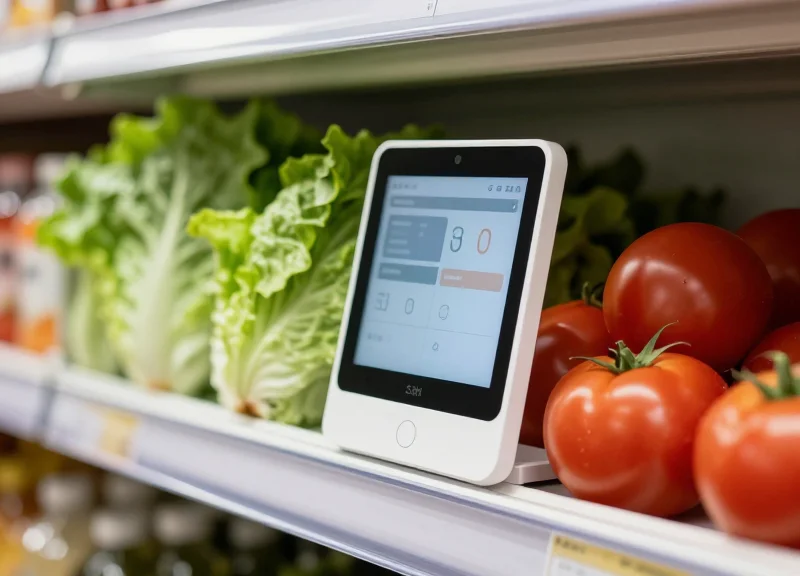
In the 2026 retail landscape, transparency is the primary driver of brand loyalty. Enhancing the customer experience through transparency involves leveraging AI-linked 2.4GHz Electronic Shelf Labels (ESL) to provide shoppers with real-time access to product freshness, origin, and sustainability metrics. By utilizing QR codes and dynamic displays, retailers bridge the information gap between the physical shelf and digital data silos, reducing 'information asymmetry' and building long-term brand equity through honest, data-driven communication.
The shift from static paper tags to interactive 2.4GHz ESLs marks the end of the 'opaque' shopping trip. Today's consumer doesn't just want to know the price; they want to know the journey. With the high bandwidth of 2.4GHz systems, retailers can push complex data updates—such as carbon footprint scores or farm-to-shelf timelines—instantly across the entire store. This capability transforms the shelf edge into a rich, interactive portal where transparency becomes a competitive advantage rather than a compliance hurdle.
| Feature | Traditional Paper/Legacy ESL | Next-Gen 2.4GHz ESL + AI |
|---|---|---|
| Freshness Data | Hard-to-read 'Sell By' stamps | Dynamic countdowns & 'Freshness' bars |
| Product Origin | Generic regional text | QR links to specific farm/batch data |
| Nutritional Info | Limited to back of packaging | Live allergen alerts & diet-specific tags |
| Price Integrity | Frequent shelf vs. POS discrepancies | Millisecond synchronization with checkout |
How do QR codes on ESLs help shoppers with dietary restrictions?
ESLs can display QR codes that, when scanned, instantly filter product ingredients against the user's saved profile (e.g., keto, gluten-free, or nut allergies), providing a personalized safety check that static labels cannot match.
Can shoppers verify the 'Sustainability Score' of a product?
Yes. By integrating with blockchain or supply chain AI, 2.4GHz ESLs can display verified sustainability metrics, such as water usage or plastic reduction, helping eco-conscious consumers make informed decisions in seconds.
Does real-time expiry data actually influence buying behavior?
Data shows that consumers are more likely to purchase 'near-expiry' items at a discount if the label transparently explains the AI-driven markdown, as it creates a sense of 'honest value' rather than 'hidden clearance'.
Expert Insight: The 'Transparency Halo' and the 2.4GHz Sync. A unique psychological phenomenon in modern retail is the 'Transparency Halo'—when a retailer provides deep data on one metric (like carbon footprint), consumers instinctively trust the pricing and quality of all other items more. However, this trust is fragile. The technical superiority of 2.4GHz is critical here: if a consumer scans a dynamic discount on an ESL and that discount hasn't hit the POS system yet due to slow infrared or sub-Ghz latency, the trust is broken instantly. In 2026, 2.4GHz is not just about speed; it is the infrastructure of consumer confidence.
ROI and Operational Efficiency: Measuring the Impact
In the 2026 retail landscape, the Return on Investment (ROI) for AI-driven expiry management and 2.4GHz Electronic Shelf Label (ESL) systems is no longer a theoretical projection but a measurable operational shift. By automating the expiration-to-markdown pipeline, retailers are capturing lost margins through two primary levers: the elimination of 'dark' labor—hours spent manually checking dates—and the drastic reduction of shrink through algorithmic markdown precision. For most tier-one grocers, these systems transition from a capital expenditure to a profit-generating asset within 14 to 18 months, primarily by stabilizing the gross margin of the perishables department, which typically suffers the highest volatility.
| Metric | Traditional Manual Process | AI + 2.4GHz ESL Integration | Estimated Efficiency Gain |
|---|---|---|---|
| Daily Price Audit Labor | 4-6 Hours / Store | 15 Minutes / Store | ~95% Reduction |
| Food Waste (Perishables) | 8-12% of Inventory | 4-5% of Inventory | ~50% Improvement |
| Markdown Accuracy | Inconsistent/Human Error | 100% Sync with POS | Elimination of Discrepancies |
| Gross Margin Retention | Baseline | +3.2% to +5.5% | Significant Profit Lift |
- Phase 1: Labor Reallocation: Convert manual auditing hours into customer-facing service roles, enhancing the overall shopping experience without increasing total headcount.
- Phase 2: Dynamic Margin Capture: Utilize AI to apply incremental markdowns (e.g., 10% off at 48 hours, 25% at 24 hours) to ensure sell-through, rather than steep 50% 'panic' discounts on the day of expiry.
- Phase 3: Waste Disposal Mitigation: Lowering the volume of expired goods directly reduces third-party waste hauling fees and associated environmental compliance penalties.
Expert Insight: The Margin Recovery Multiplier. While most analysts focus on labor savings, the true 'hidden gem' of 2.4GHz ESL systems is the elimination of 'Pricing Drift.' In manual systems, there is often a 2-4 hour lag between a markdown decision and the physical tag update. During this window, customers often abandon perishables because the shelf price doesn't reflect the discount. Automated systems eliminate this gap entirely, capturing high-velocity sales in the critical 'final 24 hours' of a product's life cycle.
What is the typical payback period for this technology?
Most retailers see a full return on investment within 12 to 22 months, depending on the volume of fresh produce and meat handled per location.
How does 2.4GHz connectivity impact operational costs?
Compared to older IR or sub-GHz systems, 2.4GHz allows for faster batch updates and lower battery consumption, reducing the long-term maintenance cost of the ESL hardware.
Can these systems integrate with existing ERPs?
Yes, modern AI-expiry platforms are designed with API-first architectures to sync inventory data seamlessly between the warehouse and the store shelf.
Future-Proofing Your Infrastructure with DragonGuardGroup
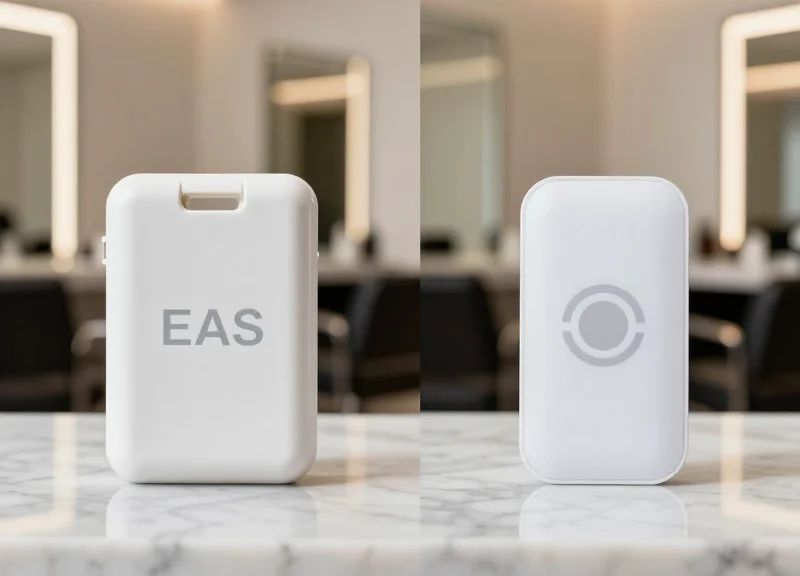
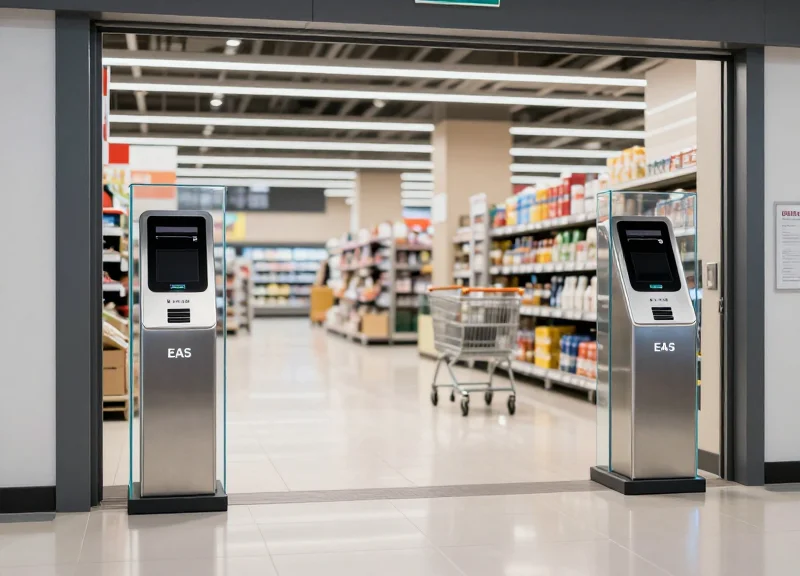
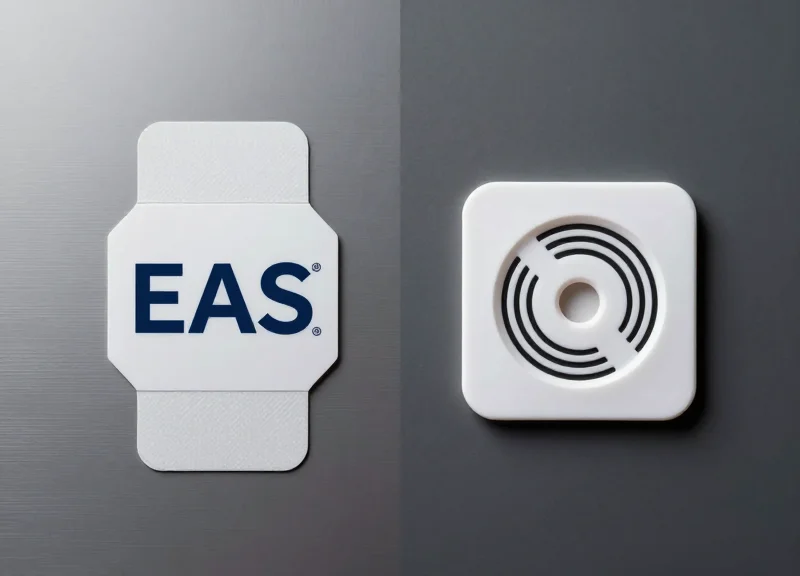
Future-proofing your retail infrastructure means building a modular system where Electronic Article Surveillance (EAS), Radio Frequency Identification (RFID), and Electronic Shelf Labels (ESL) function as a unified intelligence layer. By choosing a comprehensive partner like DragonGuardGroup, retailers move away from fragmented 'vendor sprawl' and toward a synchronized environment where security hardware doubles as a data node, ensuring that 2026’s demands for AI-driven automation are met with zero compatibility bottlenecks and maximum hardware longevity.
| Feature | Fragmented Legacy Approach | DragonGuardGroup Unified Ecosystem |
|---|---|---|
| Integration | Siloed systems requiring manual syncing. | Native API-first integration for EAS, RFID, and ESL. |
| Interference | Frequent signal collisions between Wi-Fi and ESL. | Optimized 2.4GHz protocol with advanced anti-interference. |
| Scalability | High cost to add new features or modules. | Modular 'plug-and-play' hardware for future AI updates. |
| Security | Basic theft prevention (EAS only). | Multi-layered security with real-time tracking (RFID + EAS). |
The greatest challenge for retailers entering 2026 is not the individual technology, but the 'interference tax'—the hidden costs and operational downtime caused by hardware from different manufacturers competing for the same bandwidth and physical space. DragonGuardGroup eliminates this by engineering hardware that respects the 'Triad of Intelligence.' Our 2.4GHz ESL systems are designed to operate alongside RFID readers and EAS gates without signal degradation, a feat that requires specialized RF engineering often ignored by generic manufacturers. This creates a 'single pane of glass' for management, where a markdown triggered by an AI expiry algorithm is instantly reflected on the shelf while simultaneously updating the inventory database and security parameters.
How does DragonGuardGroup handle hardware durability?
We utilize industrial-grade materials for our ESLs and EAS tags, ensuring they withstand high-traffic environments and humidity (crucial for fresh food sections) for a lifespan exceeding 5-7 years.
Can the system integrate with existing ERP software?
Yes, our infrastructure is built on open API architectures, allowing seamless data flow between our hardware and major retail ERPs like SAP, Oracle, and Microsoft Dynamics.
What makes your 2.4GHz protocol superior to standard Bluetooth?
While standard Bluetooth can be crowded, our proprietary 2.4GHz protocol optimizations prioritize low-power consumption and ultra-fast refresh rates, allowing thousands of tags to update in seconds.
Is the infrastructure ready for future AI upgrades?
Absolutely. Our hardware is designed with edge-computing headroom, meaning it can support future machine learning updates and complex sensor data without requiring a full hardware replacement.
Expert Insight: In the next 24 months, the 'Total Cost of Ownership' (TCO) will become the primary metric for retail tech. Choosing a single-source partner like DragonGuardGroup reduces TCO by up to 30% through consolidated maintenance, unified software licensing, and the elimination of 'integration debt'—the costly engineering hours usually required to make disparate systems communicate.